Tennessee Paternity Law and Procedure Handbook
About this form
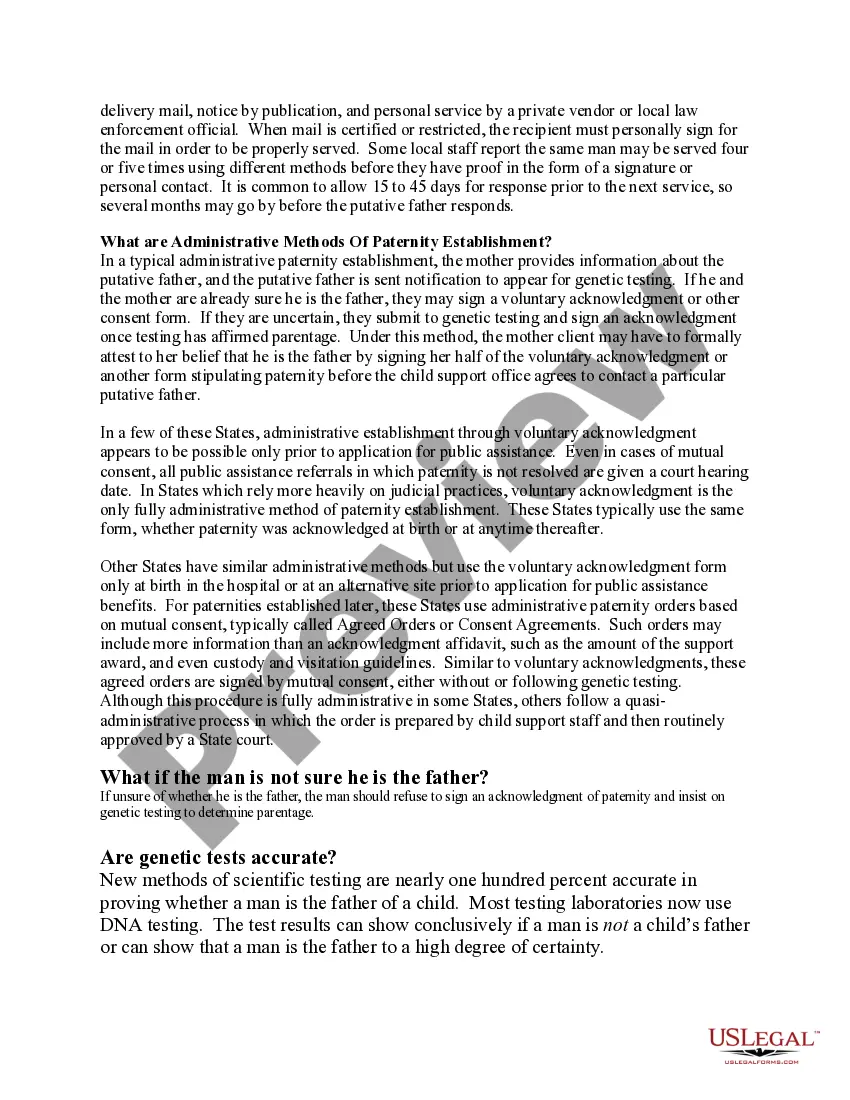
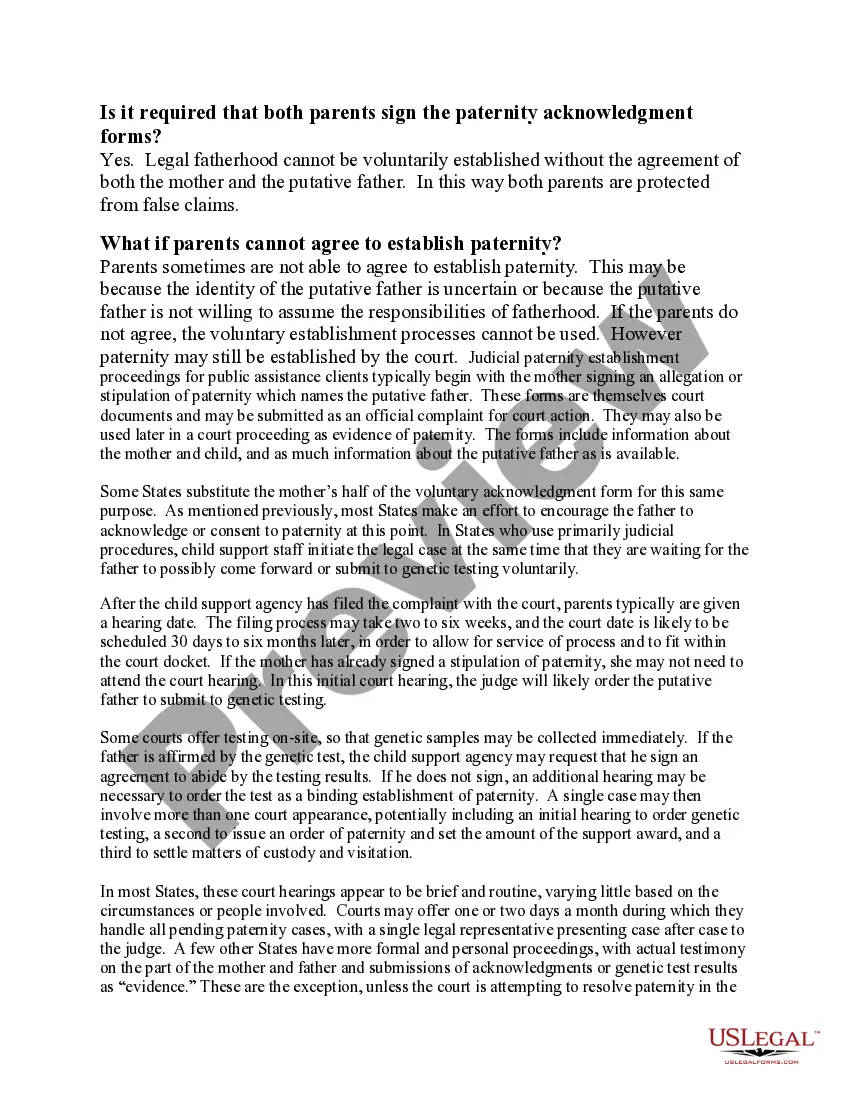
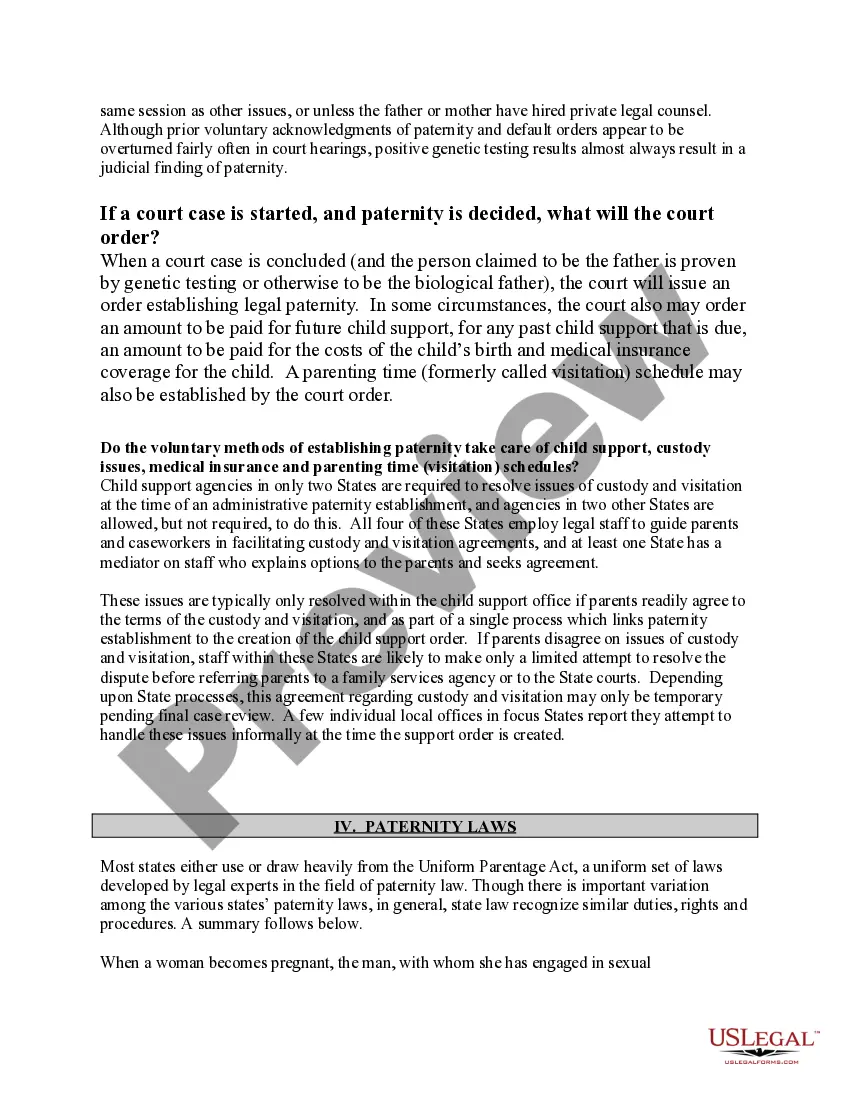
The Paternity Law and Procedure Handbook is a comprehensive guide that outlines the laws and procedures related to establishing paternity. It is specifically designed for individuals navigating the complex issues surrounding paternity, providing clear insights into the voluntary establishment of paternity as well as judicial processes. This handbook is distinct from other documents as it includes state-specific resources, making it an essential tool for parents seeking to establish or contest paternity in a legally recognized manner.
Main sections of this form
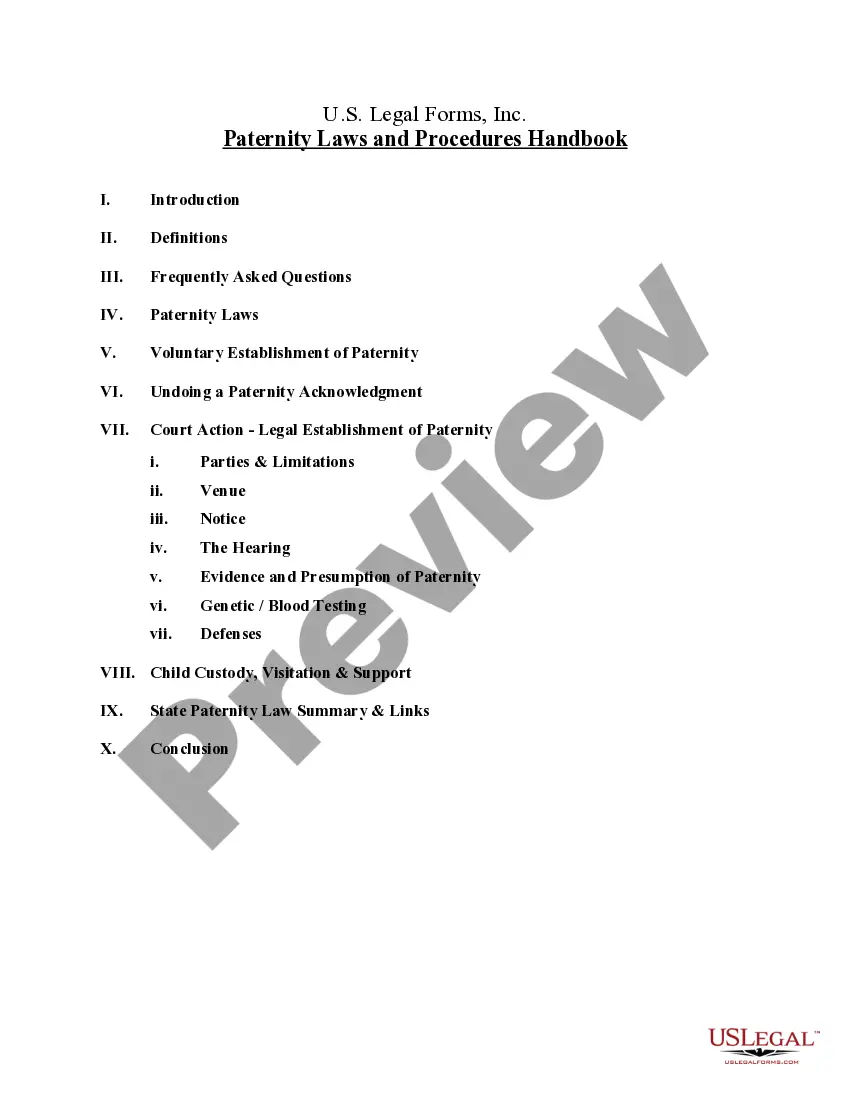
- Introduction to paternity laws and their importance.
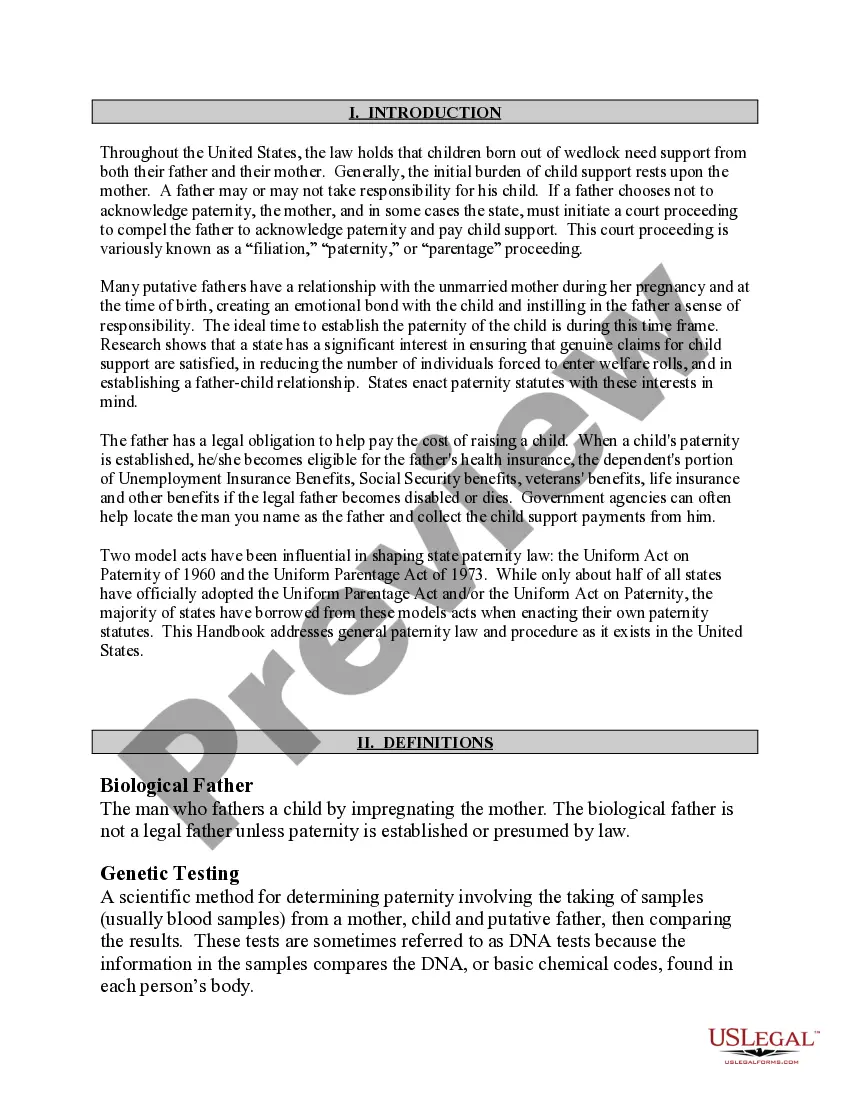
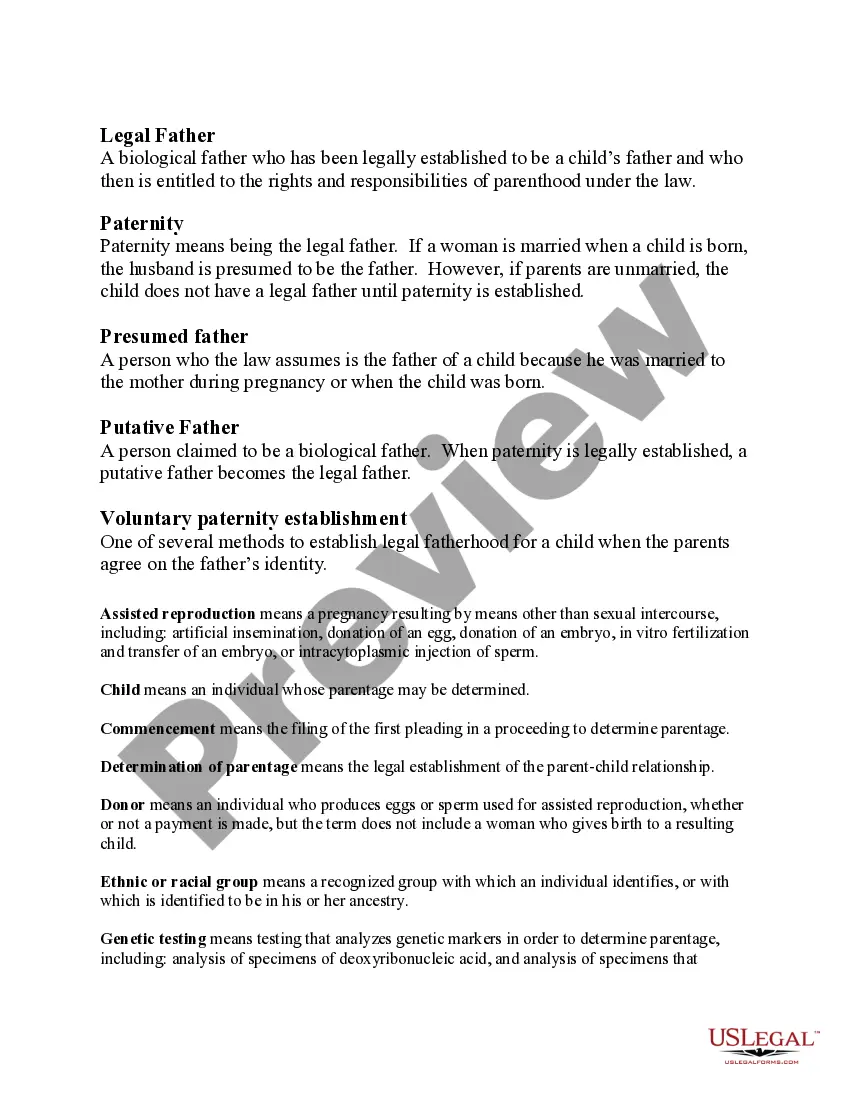
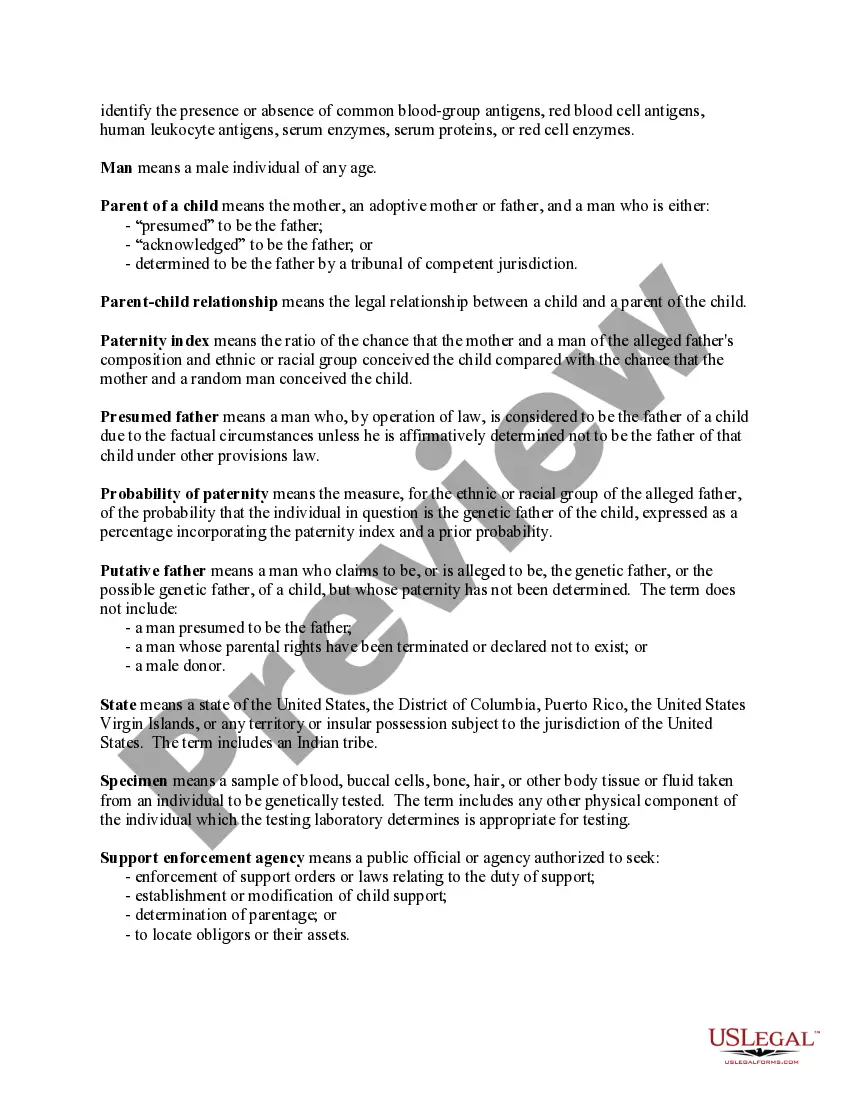
- Definitions of key terms such as biological father, legal father, and voluntary paternity establishment.
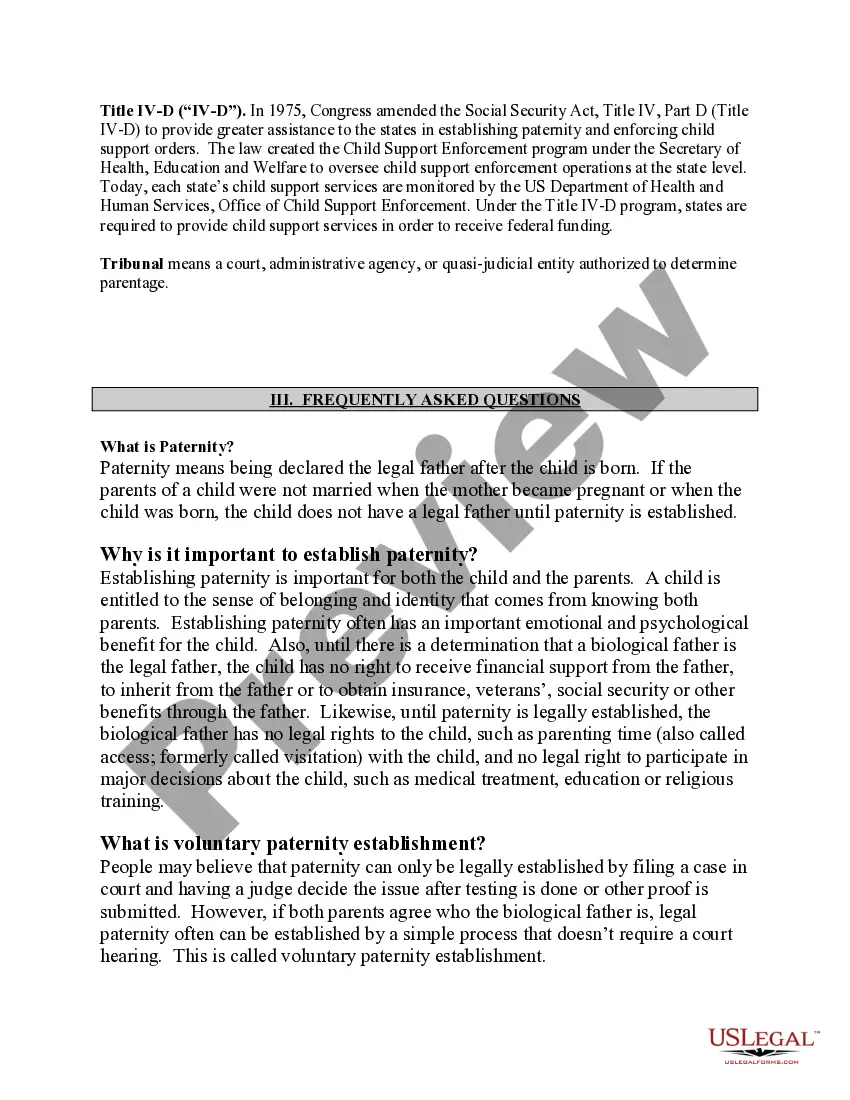
- Frequently asked questions addressing common concerns regarding paternity.
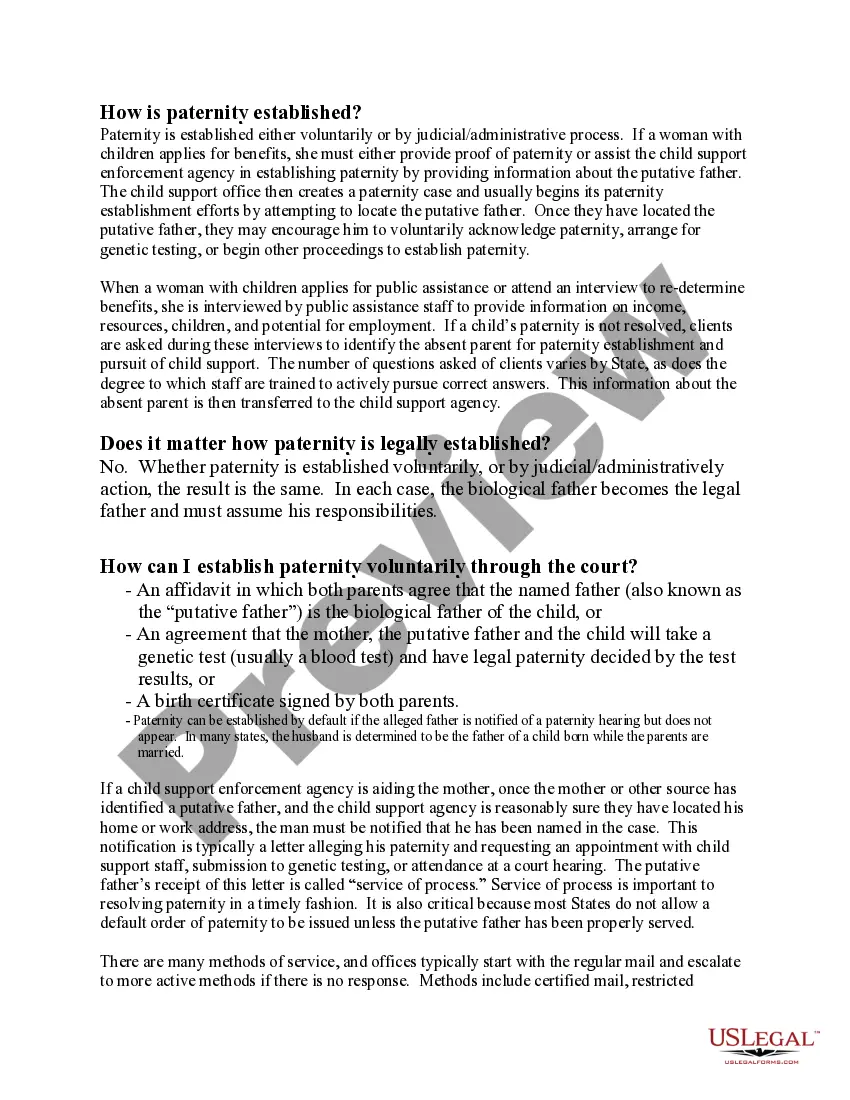
- Step-by-step processes for voluntary paternity establishment and court actions.
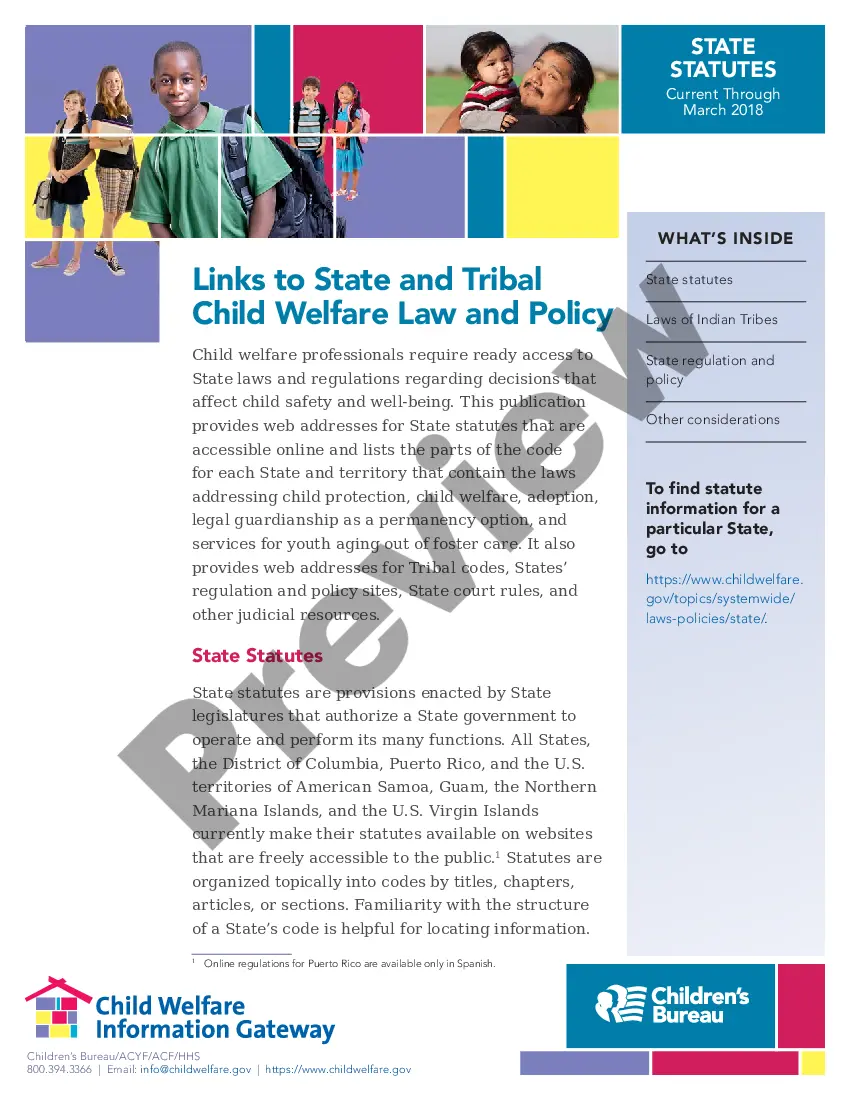
- State-specific summaries of paternity laws with relevant links to resources.
- Conclusion summarizing the importance of understanding paternity laws.


Common use cases
This handbook should be utilized when navigating the legalities surrounding paternity, especially in scenarios such as:
- When a child is born to unmarried parents and paternity needs to be established.
- When a father wishes to assert his rights or responsibilities regarding a child.
- When a mother is seeking financial support for her child from a father who does not acknowledge paternity.
- When legal proceedings concerning child support, custody, or visitation are necessary.
Who can use this document
- Unmarried parents looking to establish legal paternity for their child.
- Fathers wanting to assert their rights and obligations.
- Mothers seeking financial support and formal recognition of paternity.
- Legal representatives assisting clients with paternity issues.
Completing this form step by step
- Read through the entire handbook thoroughly to understand your rights and obligations regarding paternity.
- Identify whether you will pursue voluntary paternity establishment or require a court order.
- Gather necessary documents such as birth certificates and identification needed for establishing paternity.
- Follow the outlined process for establishing paternity either voluntarily or through court action, as detailed in the handbook.
- Contact the appropriate state resources or legal professionals if you require further assistance.
Notarization requirements for this form
Notarization is not commonly needed for this form. However, certain documents or local rules may make it necessary. Our notarization service, powered by Notarize, allows you to finalize it securely online anytime, day or night.
Get your form ready online
Our built-in tools help you complete, sign, share, and store your documents in one place.
Make edits, fill in missing information, and update formatting in US Legal Forms—just like you would in MS Word.
Download a copy, print it, send it by email, or mail it via USPS—whatever works best for your next step.
Sign and collect signatures with our SignNow integration. Send to multiple recipients, set reminders, and more. Go Premium to unlock E-Sign.
If this form requires notarization, complete it online through a secure video call—no need to meet a notary in person or wait for an appointment.
We protect your documents and personal data by following strict security and privacy standards.

Make edits, fill in missing information, and update formatting in US Legal Forms—just like you would in MS Word.

Download a copy, print it, send it by email, or mail it via USPS—whatever works best for your next step.

Sign and collect signatures with our SignNow integration. Send to multiple recipients, set reminders, and more. Go Premium to unlock E-Sign.

If this form requires notarization, complete it online through a secure video call—no need to meet a notary in person or wait for an appointment.

We protect your documents and personal data by following strict security and privacy standards.
Mistakes to watch out for
- Failing to clarify the distinction between biological and legal paternity.
- Delaying the paternity establishment process after the birth of the child.
- Not seeking legal advice when unsure of rights and responsibilities.
- Assuming that signing an acknowledgment of paternity is the only step needed for legal recognition.
Benefits of completing this form online
- Convenience of accessing comprehensive paternity information from anywhere.
- Ease of downloading and printing necessary forms instantly.
- Guidance from licensed attorneys to help understand the legal process.
- Utilization of state-specific resources for accurate legal navigation.
Looking for another form?


Form popularity
FAQ
Although a child can never decide issues relating to custody or visitation, Tennessee law requires a court to consider the wishes of a child over the age of 12 when making visitation related decisions.
In cases where parents can't agree, a judge will decide visitation and custody based on the child's best interests.Both parents are bound by the terms of a custody order. If your child refuses to go to visits with the other parent, you could still be on the hook for failing to comply with a custody order.
In Tennessee, an unmarried mother automatically has both physical and legal custody of the child until the father establishes paternity. However, once paternity is established, you have the same rights as any father does, under the law.
An action to establish parentage may be brought before or after the birth of the child until three (3) years after the age of majority. The age of majority in Tennessee is 18, thus a Petition in order to establish paternity may be brought until the child is 21 years old.
Fathers have the same right to participate in the lives of their children as mothers regardless of whether or not the parties were married when their child was born.
Usually, for a vaginal delivery, you may have 24 to 48 hours to name your baby before the mom is discharged home. If you have a C-section, you may have up to 72 hours to name your baby prior to being discharged home." But yes, it is possible to leave the hospital without a name.
How do you establish paternity in Tennessee? In Tennessee, paternity can be established either voluntarily or involuntarily until the child turns 21 years old. When the mother and father agree that the father is in fact the biological father, paternity can be established voluntarily.