Tennessee Letter from Tenant to Landlord containing Notice to landlord to cease retaliatory threats to evict or retaliatory eviction
What this document covers
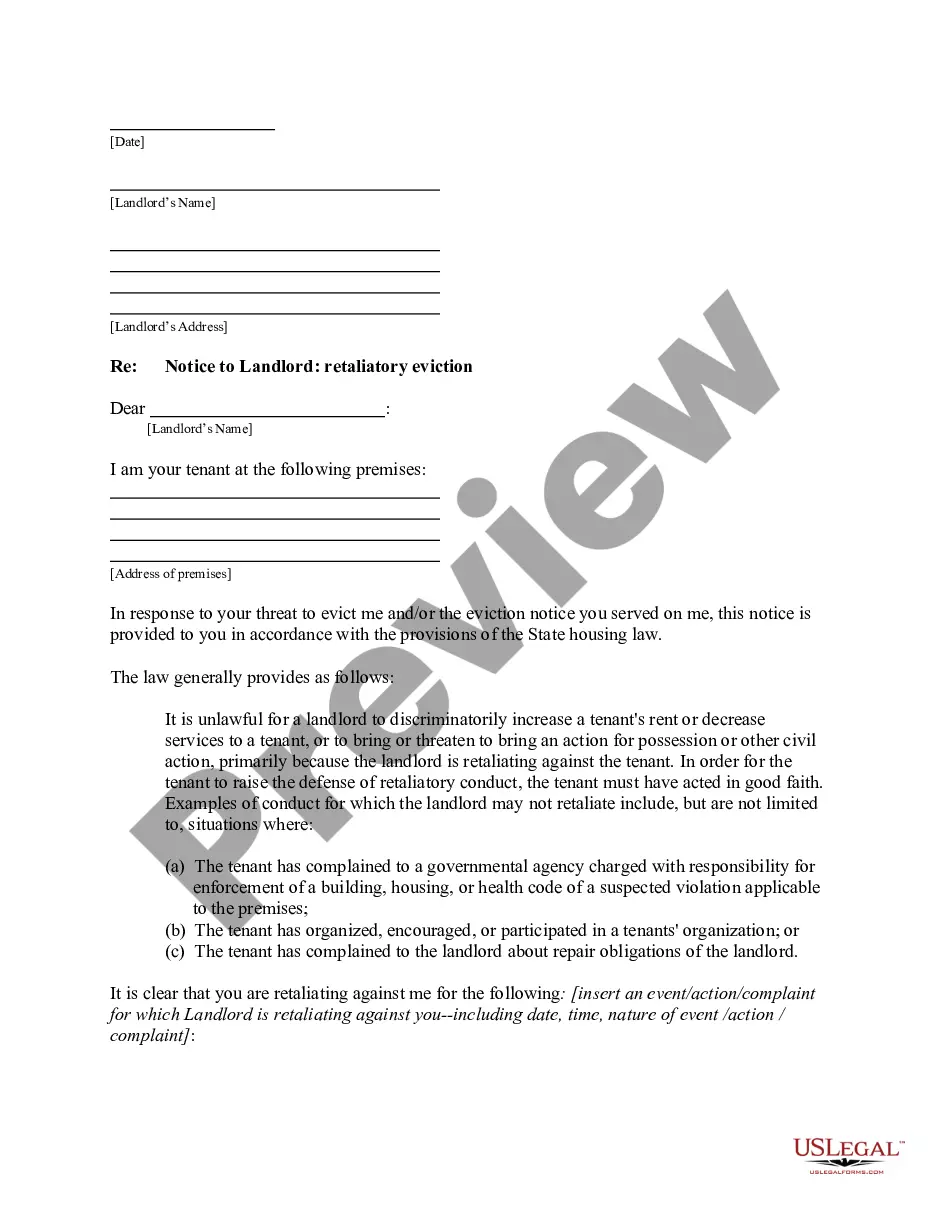
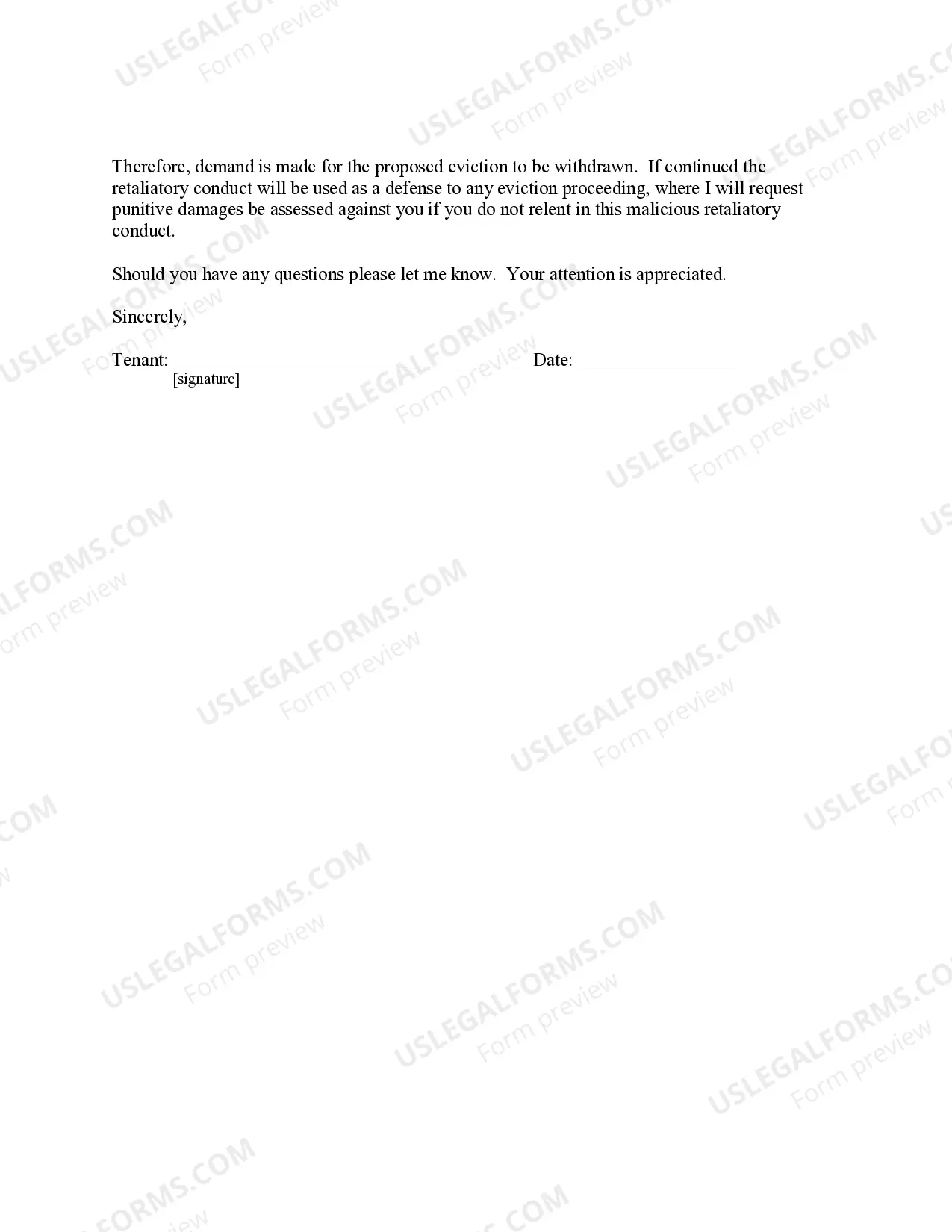
This Letter from Tenant to Landlord containing Notice to landlord to cease retaliatory threats to evict or retaliatory eviction serves as a formal notification from a tenant to a landlord. The tenant asserts that threats of eviction are retaliatory and in response to specific actions taken by the tenant, such as complaints about living conditions or participation in tenant organizations. This form is designed to comply with state housing laws and protects the tenant's rights in circumstances where landlord retaliation is suspected.
Form components explained
- Identification of the tenant and landlord
- Description of the alleged retaliatory threats
- Specification of tenant actions that triggered the landlord's threat
- Statement of the tenant's rights under state housing laws
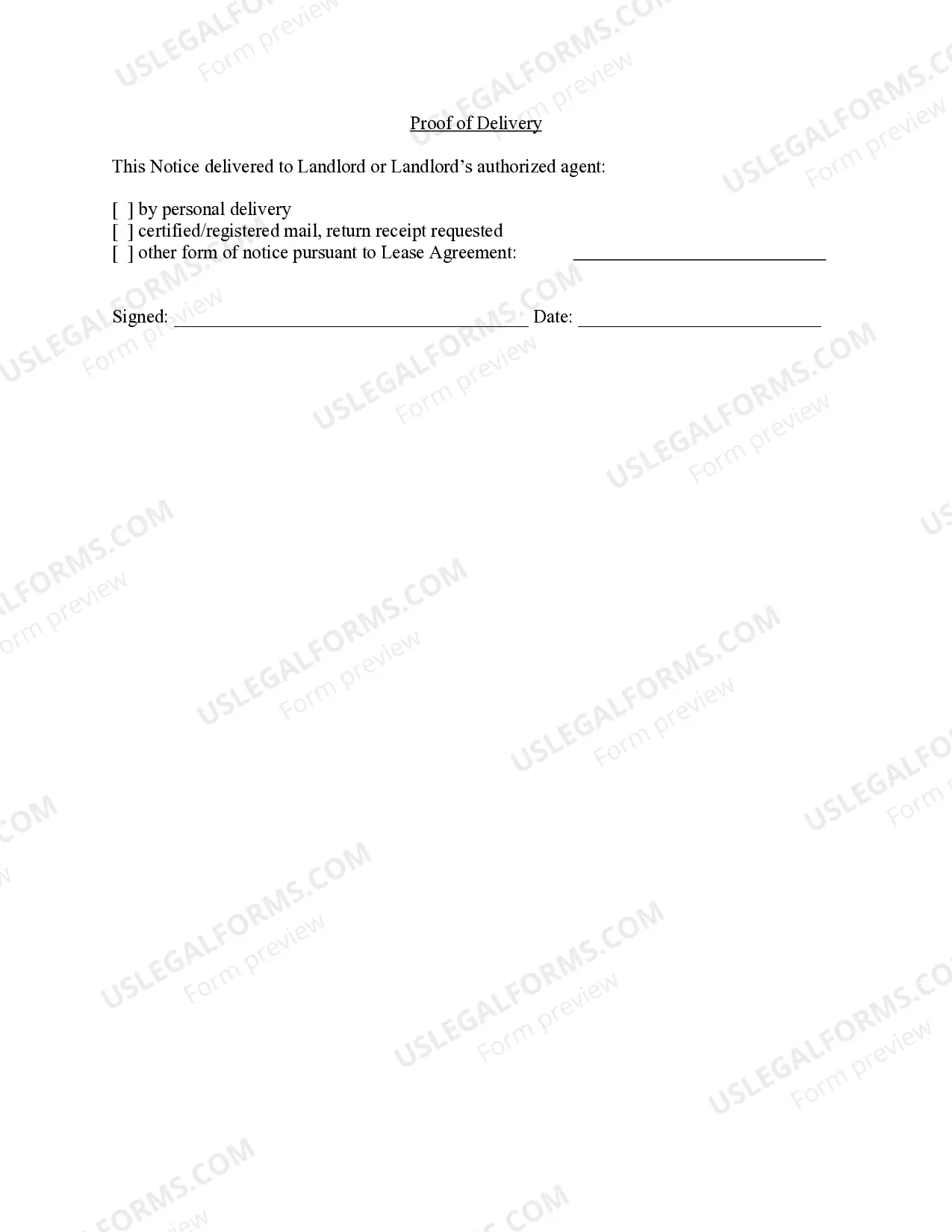
- Proof of delivery section for notifying the landlord

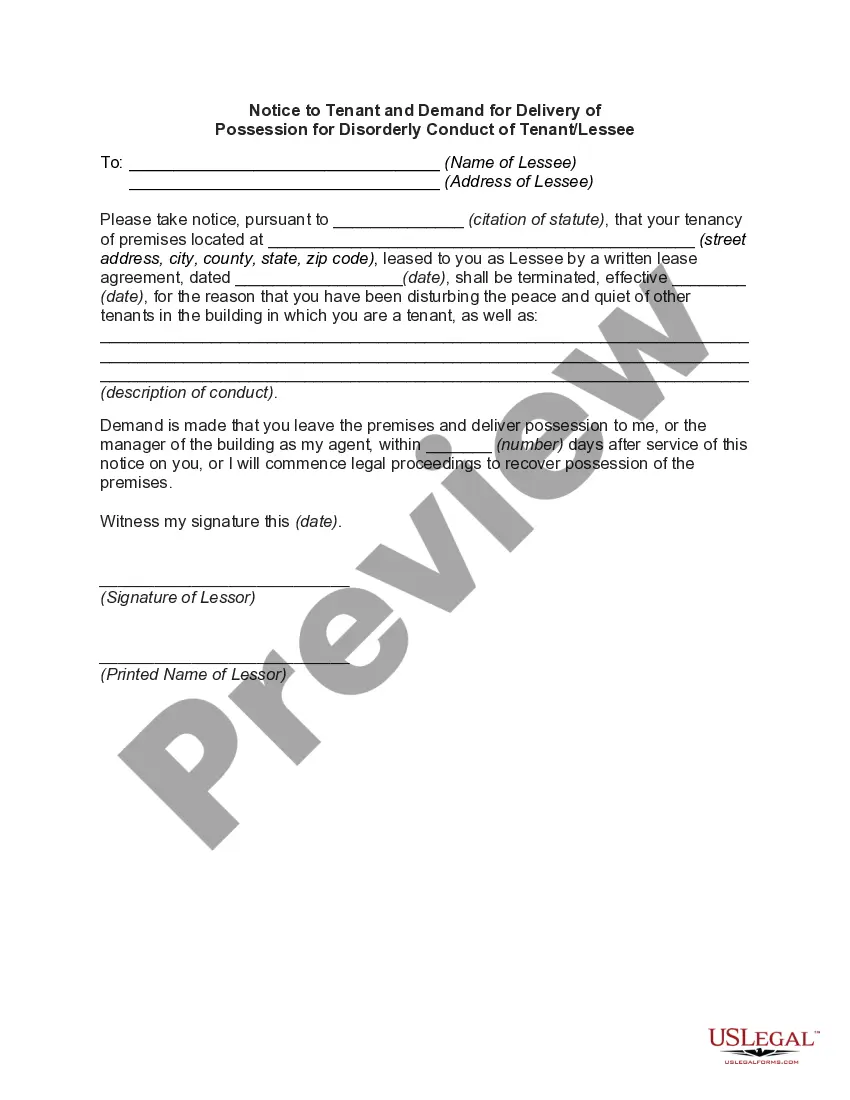
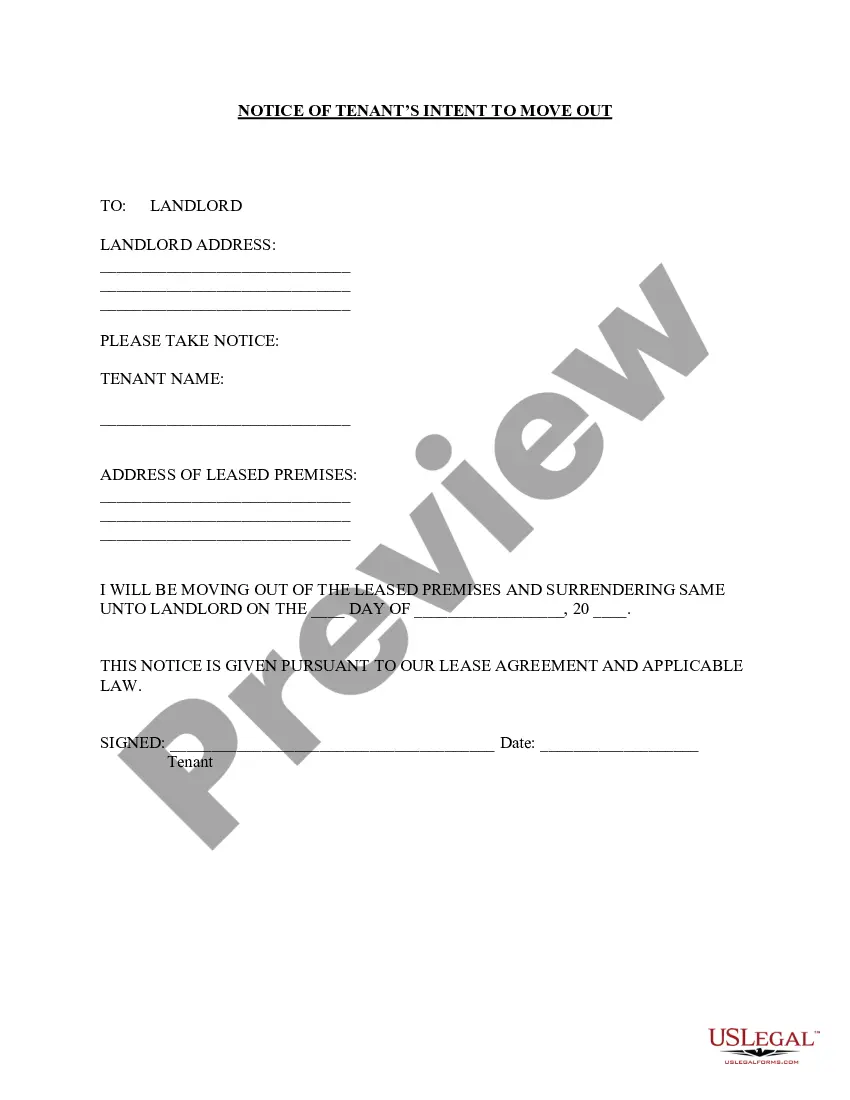


Situations where this form applies
This form should be used when a tenant believes that they are facing retaliatory eviction from their landlord. Typical scenarios include harassment after reporting housing complaints to authorities, organizing tenant rights groups, or requesting necessary repairs. By using this form, the tenant formally communicates their stance and may help prevent unjust eviction actions.
Who this form is for
- Tenants who have received threats of eviction from their landlord
- Individuals who have engaged in protected activities, such as making complaints about living conditions
- Renters in need of legal documentation to assert their rights against landlord retaliation
Completing this form step by step
- Identify the parties involved by entering the names of the tenant and landlord.
- Describe the retaliatory threats made by the landlord in clear terms.
- Specify the actions taken by the tenant that prompted the landlord's threats.
- Sign and date the form to validate it as a notice.
- Ensure delivery of the notice to the landlord or their authorized agent, keeping proof of delivery.
Notarization requirements for this form
This form does not typically require notarization unless specified by local law. However, ensure that you check your jurisdiction's requirements for authenticity and legal validity.
Get your form ready online
Our built-in tools help you complete, sign, share, and store your documents in one place.
Make edits, fill in missing information, and update formatting in US Legal Forms—just like you would in MS Word.
Download a copy, print it, send it by email, or mail it via USPS—whatever works best for your next step.
Sign and collect signatures with our SignNow integration. Send to multiple recipients, set reminders, and more. Go Premium to unlock E-Sign.
If this form requires notarization, complete it online through a secure video call—no need to meet a notary in person or wait for an appointment.
We protect your documents and personal data by following strict security and privacy standards.

Make edits, fill in missing information, and update formatting in US Legal Forms—just like you would in MS Word.

Download a copy, print it, send it by email, or mail it via USPS—whatever works best for your next step.

Sign and collect signatures with our SignNow integration. Send to multiple recipients, set reminders, and more. Go Premium to unlock E-Sign.

If this form requires notarization, complete it online through a secure video call—no need to meet a notary in person or wait for an appointment.

We protect your documents and personal data by following strict security and privacy standards.
Typical mistakes to avoid
- Not clearly detailing the landlord's retaliatory threats.
- Failing to specify the tenant's actions that triggered the response.
- Neglecting to sign and date the form before delivery.
- Not keeping proof of delivery, which is crucial for legal proceedings.
Benefits of using this form online
- Convenience of downloading and completing the form at your own pace.
- Editability that allows for personalized details relevant to your situation.
- Increased reliability as the form is drafted by licensed attorneys.
Legal use & context
- The form acts as a formal notice under state housing laws.
- It helps protect tenants from eviction actions that are deemed retaliatory.
- Filing this notice can serve as evidence of tenant rights if disputes arise later.
Quick recap
- This form is essential for tenants facing retaliatory eviction threats.
- Clearly documenting the context and threats can strengthen your case.
- Using this form properly can help uphold tenant rights under state law.
Looking for another form?
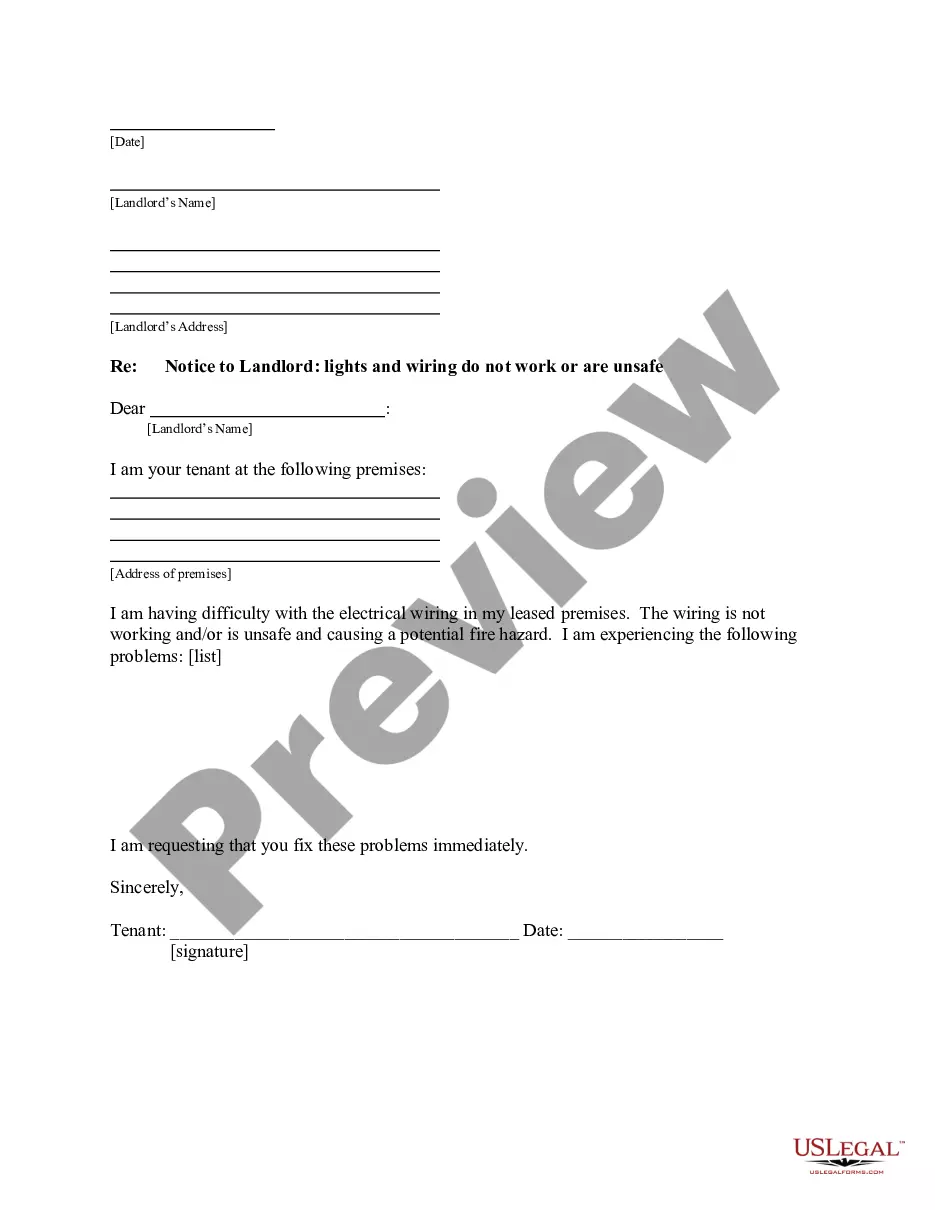
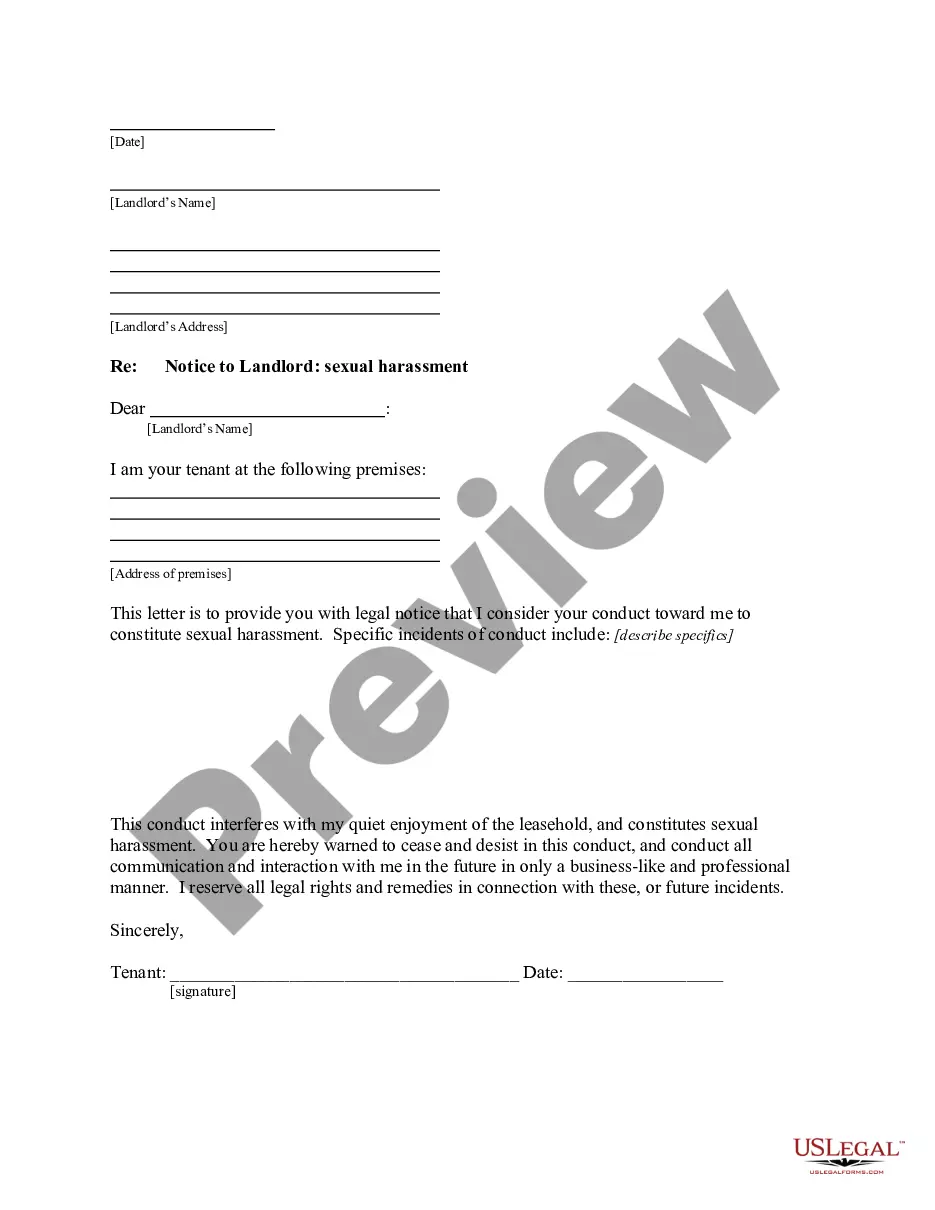
Form popularity
FAQ
Talk to Your Landlord You may be able to come to an agreement without going to court. An eviction will cost both of you money (as well as time), and your landlord may be willing to stop the eviction if you agree to certain terms, such as paying rent you owe or stopping behavior that violates the lease.
There is no direct way to stop a landlord from serving an eviction notice. Although, there are indirect ways. One is through a public authority or agency. By filing a complaint with the local housing authority, a tenant may be able to stop eviction.
A Notice to Vacate is a notice written by the landlord or property manager giving a notice to leave the premises within a specified time frame. This type of notice is typically given during the end of a lease period, or due to an infringement of the lease agreement.
If a tenant does not pay the outstanding rent by the fourteenth day, they have 16 days to vacate the property. If a tenant does not leave the property by the end of the 16-day period (30 days after the landlord delivered the notice to quit) the landlord can go to court to request a detainer warrant for the tenant.
Eviction notices When written by a landlord, a notice to vacate is commonly known as an "eviction notice," which tells the tenant they must move out of the rental property.
An eviction is a legal proceeding in which a landlord asks a court to order the tenant to leave the property. Giving a tenant a notice to terminate is often a first step in the eviction process, but it isn't the same as an eviction.
When responding to the notice to quit, there are several options available to the tenant: Pay any delinquent rent that is due to the landlord within the allotted time of the notice. Move out of the premises within the allotted time of the notice. File an answer with the judicial court.