Tennessee Insulation Contract for Contractor
Overview of this form
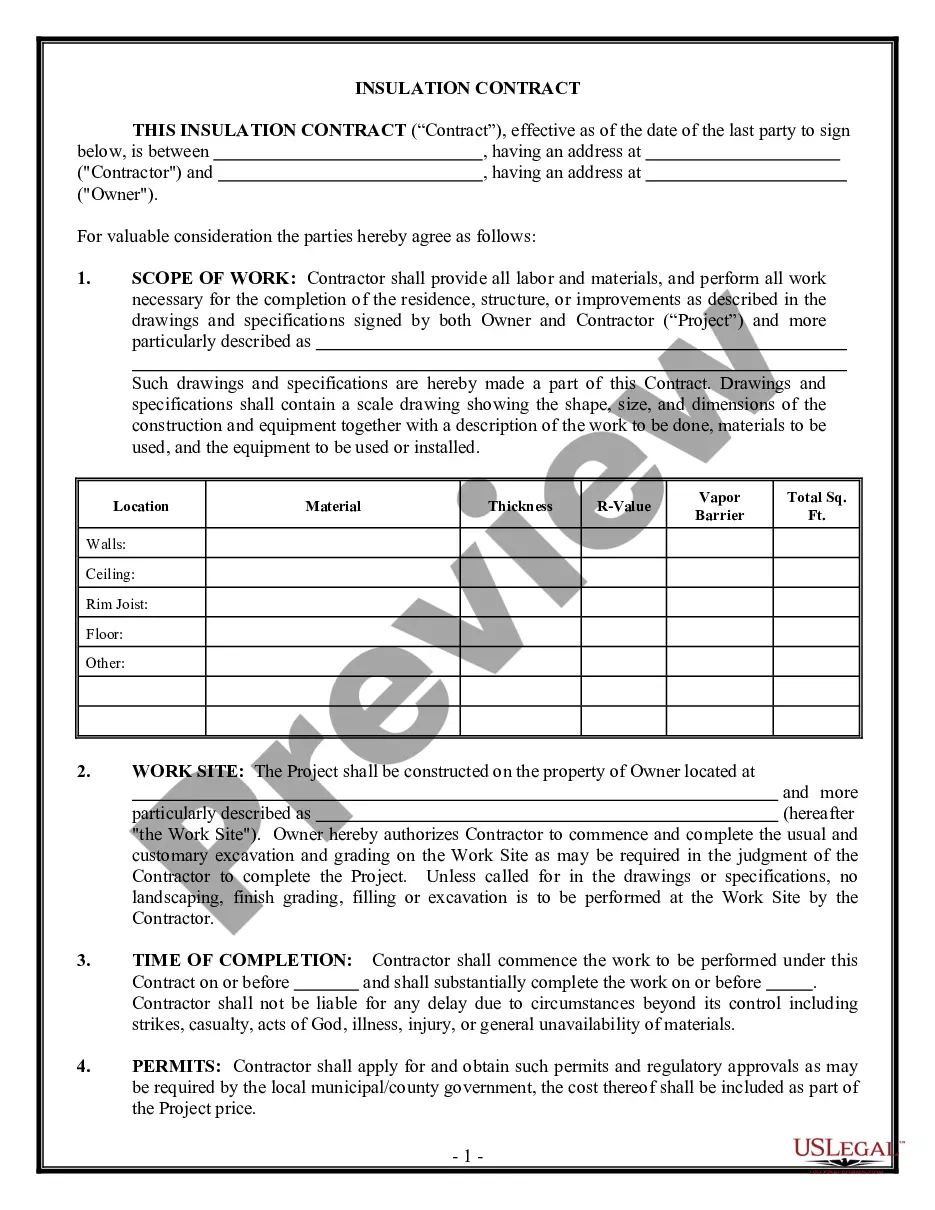
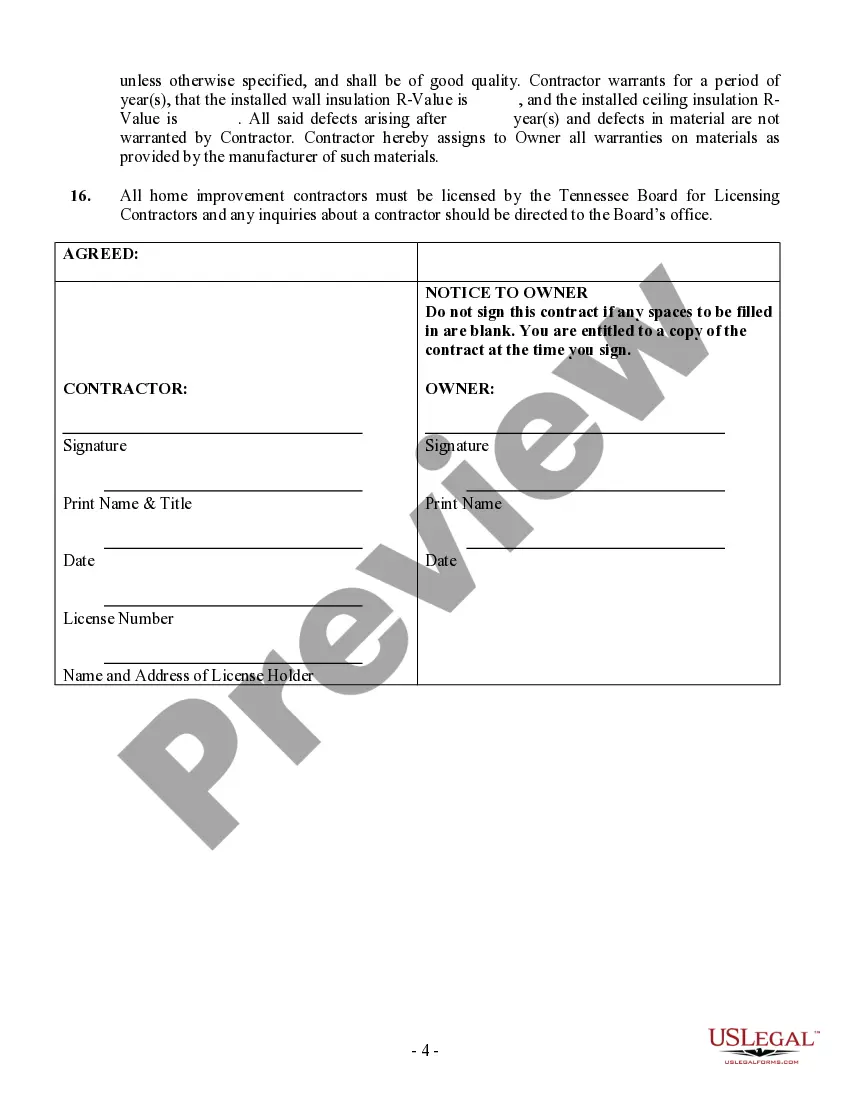
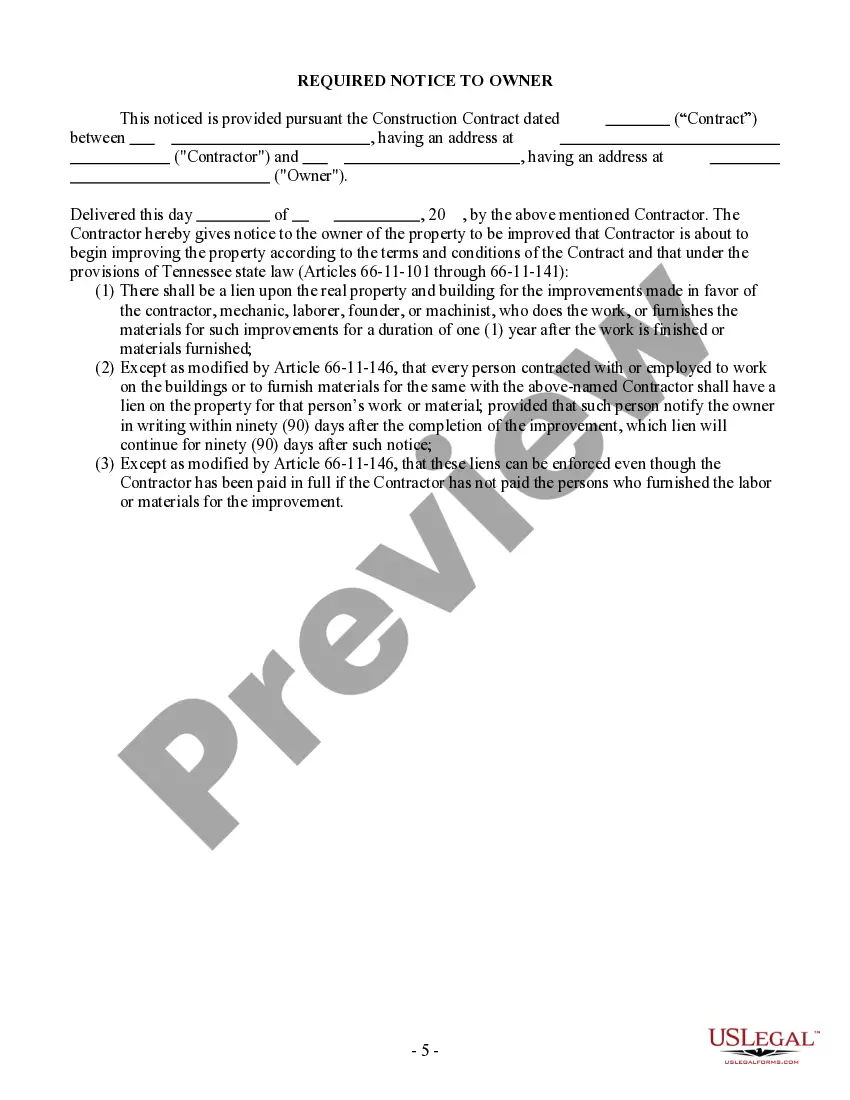
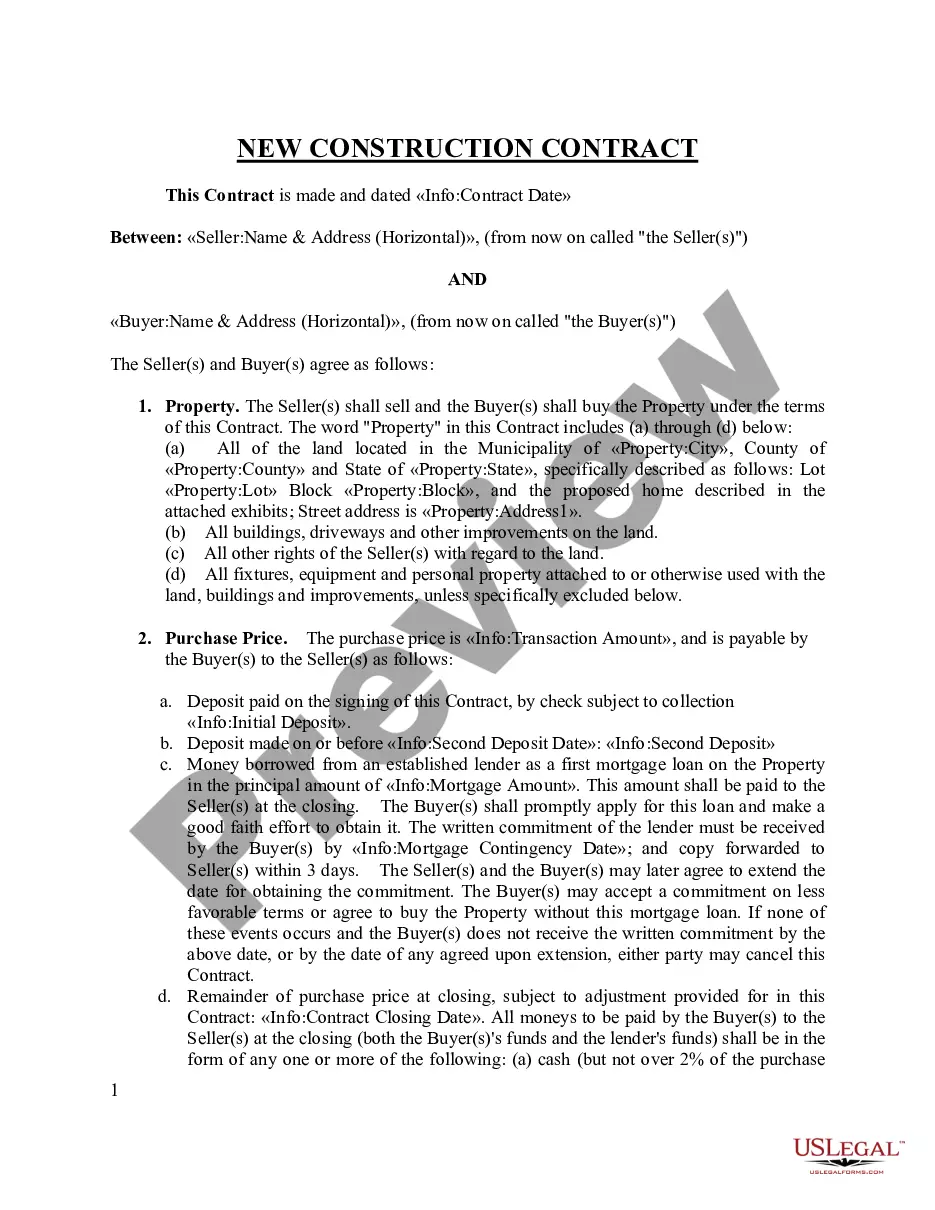
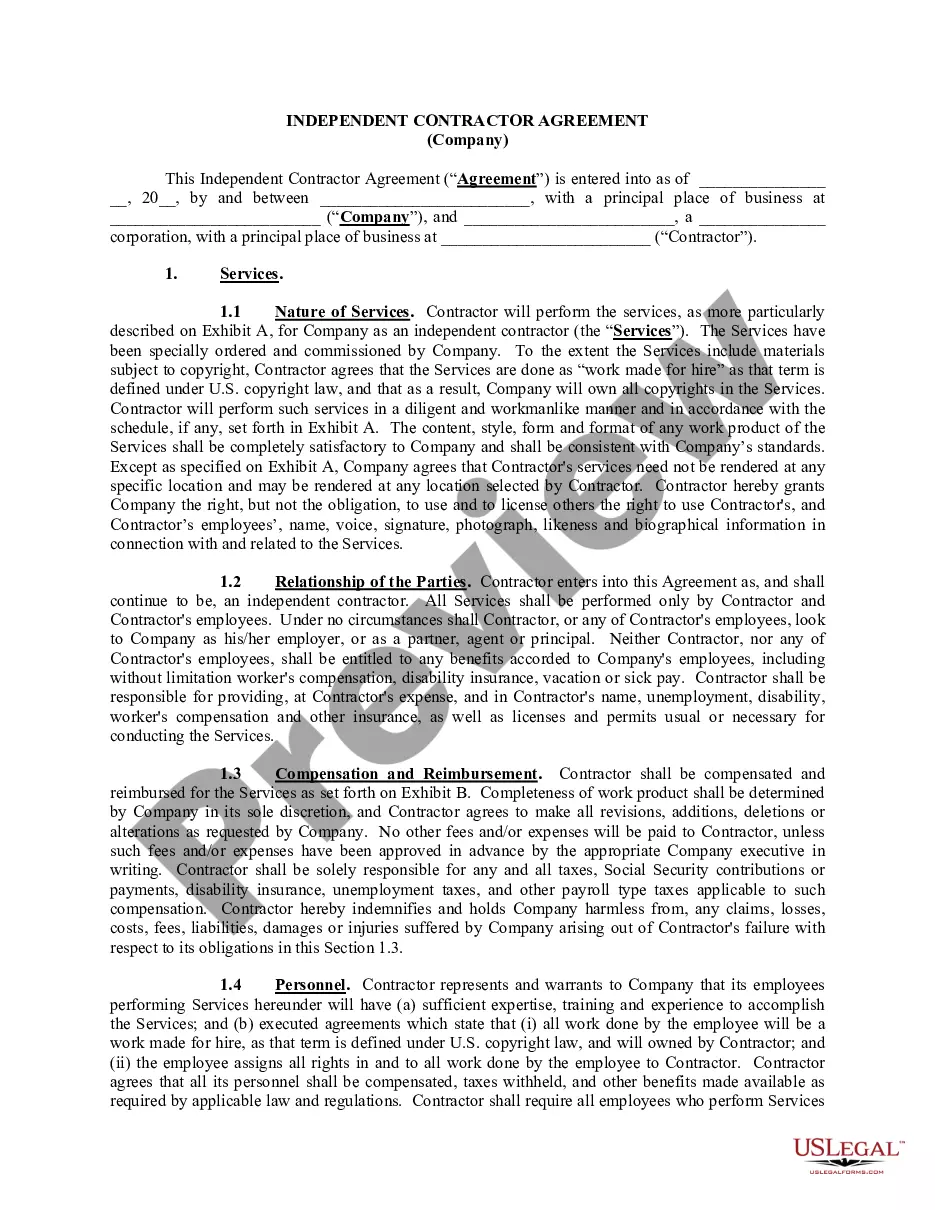
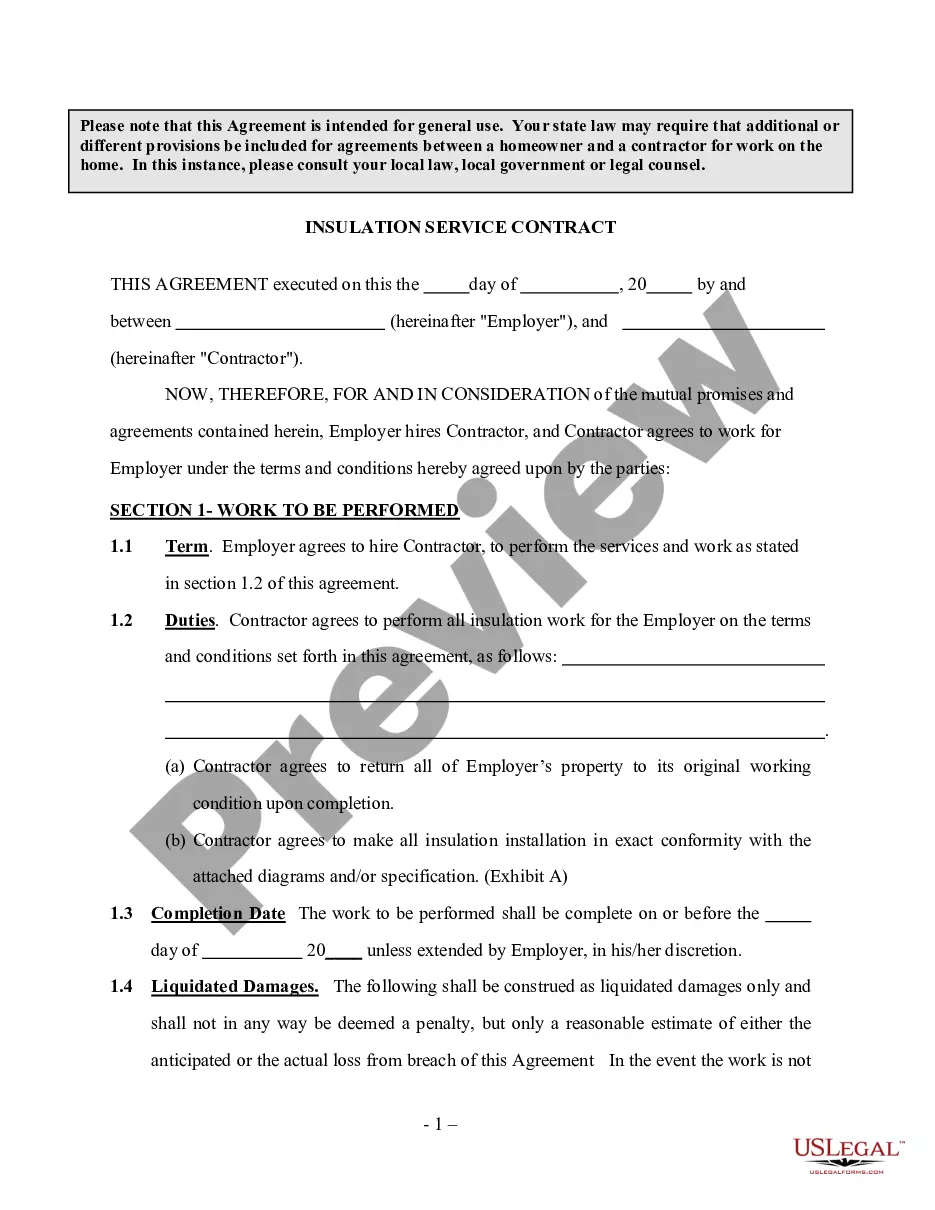
The Insulation Contract for Contractor is a legal document that formalizes an agreement between insulation contractors and property owners. This contract outlines the terms of work, payment structures, and responsibilities of both parties for insulation projects. Unlike general contracts, this form is specifically tailored to comply with Tennessee laws and addresses important aspects such as change orders, insurance, and project specifications, making it essential for ensuring a smooth working relationship and protecting the interests of both the contractor and the owner.
Key components of this form
- Location details of the insulation work
- Specifications for materials and R-Value requirements
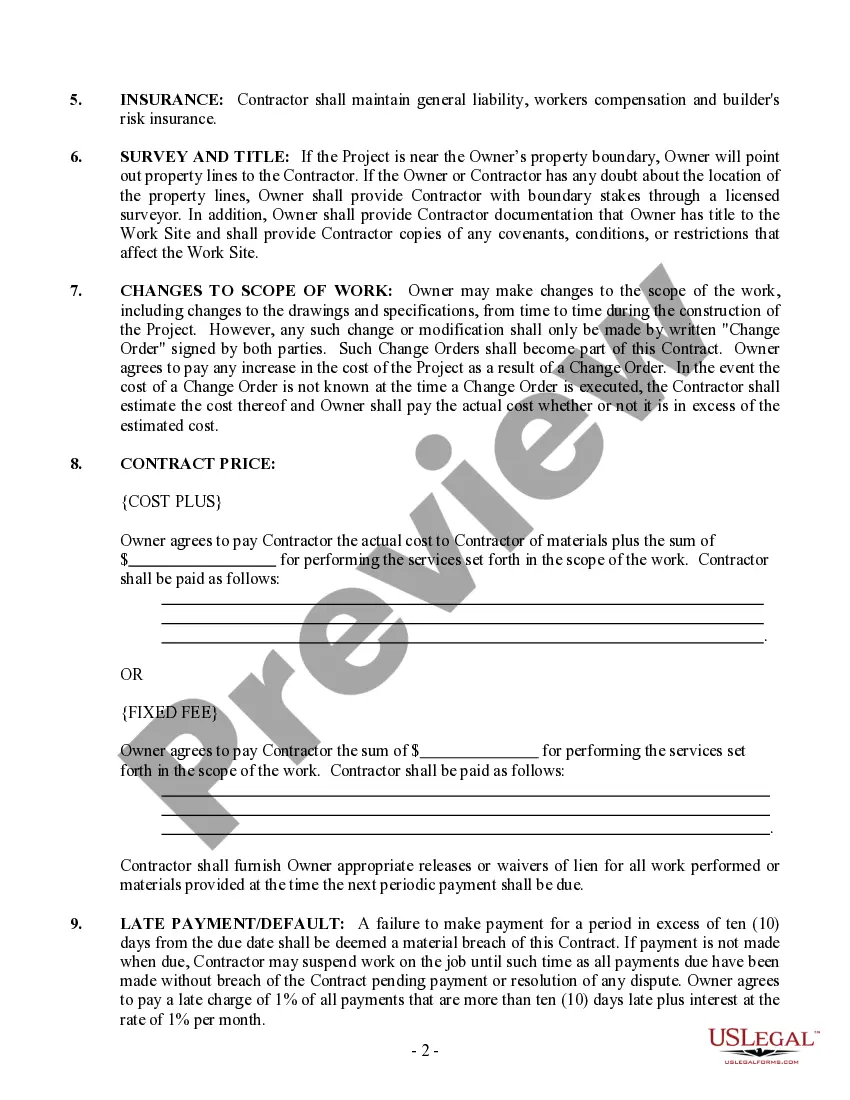
- Clarifications on permits and insurance responsibilities
- Procedures for change orders and scope adjustments
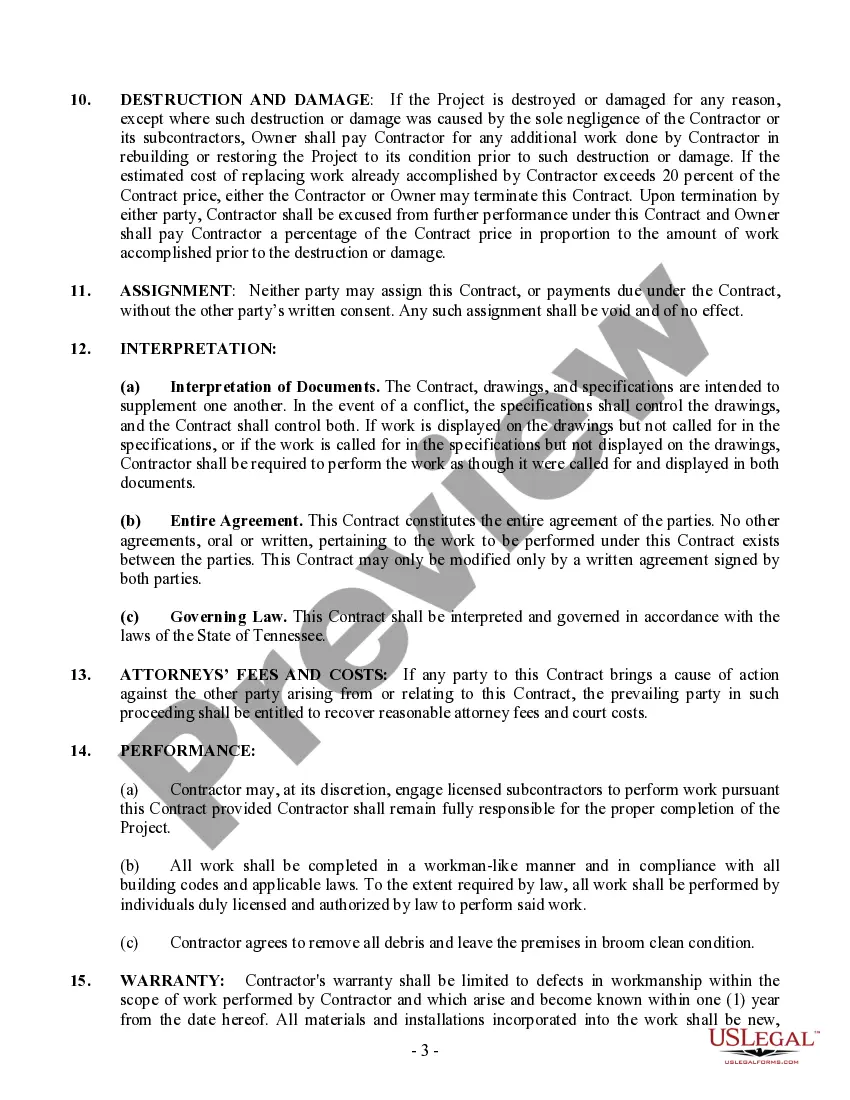
- Liability for damage and destruction related to the project
- Assignment and governing law clauses specific to Tennessee
When to use this document
This form should be used when a property owner wants to hire an insulation contractor to perform installation or remediation work. It is appropriate for both residential and commercial properties and is particularly useful when the payment structure is either cost-plus or a fixed fee. Use this contract to clarify expectations, ensure compliance with local regulations, and protect the rights of both parties involved in the insulation project.
Intended users of this form
- Insulation contractors seeking a clear contractual agreement with clients
- Property owners who wish to outline the specifics of insulation projects
- Individuals or businesses that require legal protection during construction or renovation efforts
- Professionals needing a contract that complies with Tennessee state law
Completing this form step by step
- Identify the parties involved, including the contractor and property owner.
- Specify the location where the insulation work will be performed.
- Fill in details about the materials to be used, including thickness and R-Value.
- Address applicable permits and insurance requirements related to the project.
- Enter any change order terms and the process for making adjustments to the scope of work.
- Ensure all parties sign and date the contract to make it legally binding.
Does this form need to be notarized?
This form does not typically require notarization unless specified by local law. However, it is advisable to consult with a legal professional or local authority to ensure that all necessary formalities are observed before the execution of the contract.
Get your form ready online
Our built-in tools help you complete, sign, share, and store your documents in one place.
Make edits, fill in missing information, and update formatting in US Legal Forms—just like you would in MS Word.
Download a copy, print it, send it by email, or mail it via USPS—whatever works best for your next step.
Sign and collect signatures with our SignNow integration. Send to multiple recipients, set reminders, and more. Go Premium to unlock E-Sign.
If this form requires notarization, complete it online through a secure video call—no need to meet a notary in person or wait for an appointment.
We protect your documents and personal data by following strict security and privacy standards.

Make edits, fill in missing information, and update formatting in US Legal Forms—just like you would in MS Word.

Download a copy, print it, send it by email, or mail it via USPS—whatever works best for your next step.

Sign and collect signatures with our SignNow integration. Send to multiple recipients, set reminders, and more. Go Premium to unlock E-Sign.

If this form requires notarization, complete it online through a secure video call—no need to meet a notary in person or wait for an appointment.

We protect your documents and personal data by following strict security and privacy standards.
Common mistakes
- Failing to specify all project details, including material specifications and worksite information.
- Not addressing change order procedures, which can lead to disputes later.
- Overlooking insurance and permit responsibilities, resulting in potential legal issues.
- Not obtaining signatures from both parties, making the contract unenforceable.
Benefits of using this form online
- Convenience of downloading and customizing the form at your own pace.
- Immediate access to professional, attorney-drafted contract templates.
- Ability to revise and edit terms to meet specific project needs effectively.
- Integration of helpful guidance to ensure correct completion and submission.
Legal use & context
- This contract is a binding agreement that protects the interests of both parties involved in the insulation work.
- It outlines essential legal requirements in Tennessee and provides a framework for dispute resolution.
Main things to remember
- The Insulation Contract for Contractor is essential for outlining terms between property owners and insulation contractors.
- This form is designed to meet the legal standards of Tennessee.
- Follow the outlined steps to complete the contract properly and avoid common mistakes.
Looking for another form?


Form popularity
FAQ
You can ask the police to file criminal charges, but this sounds more like a breach of contract action to be taken to civil court.
A Tennessee contractor's license is required BEFORE bidding or offering a price, for projects $25,000 and up (includes materials and labor), as a prime (general) contractor; and also subcontractors performing electrical, mechanical, plumbing, HVAC, roofing and masonry are also required to be licensed as a contractor,
You may contact our Complaint Section Coordinator at 1-800-544-7693; or the direct line is (615) 532-3996; or by email to check the complaint history. The Better Business Bureau (BBB) serves as a resource to check and also report a complaint. We encourage consumers to report to them, as well as to our Board.
Generally speaking, a general contractor is someone who manages a team of subcontractors to help do various types of construction projects in your home. A custom home builder, however, is specialized in building custom homes and is able to complete this specific type of project start to finish on their own.
A Tennessee contractor's license is required BEFORE bidding or offering a price, for projects $25,000 and up (includes materials and labor), as a prime (general) contractor; and also subcontractors performing electrical, mechanical, plumbing, HVAC, roofing and masonry are also required to be licensed as a contractor,
Register the complaint online at https://first.tn.gov/Complaints/UI/Defaulta.aspx (Important: The online consumer complaint form will time the user out, if the online submission is not completed within approximately 10 minutes.
A homeowner of the residential property may perform work themselves ( individual use), without a contractor's license, as long as the residential structure is not open to the public; or for sale, lease or rent). Allowed one homeowner permit once every two (2) years.
Contact the agent or the company and request a certificate of insurance. This certificate will prove that the contractor has liability insurance coverage and worker's comp.