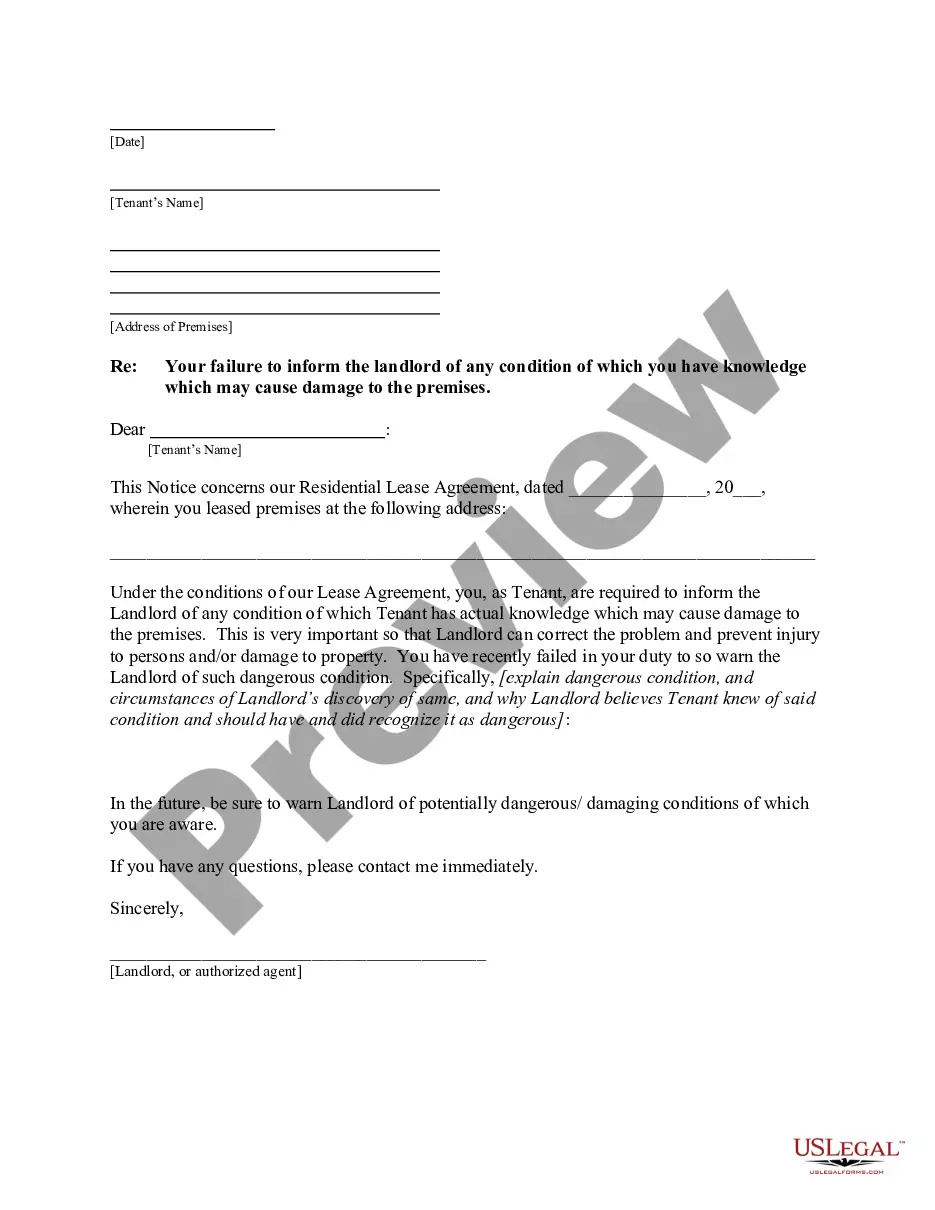
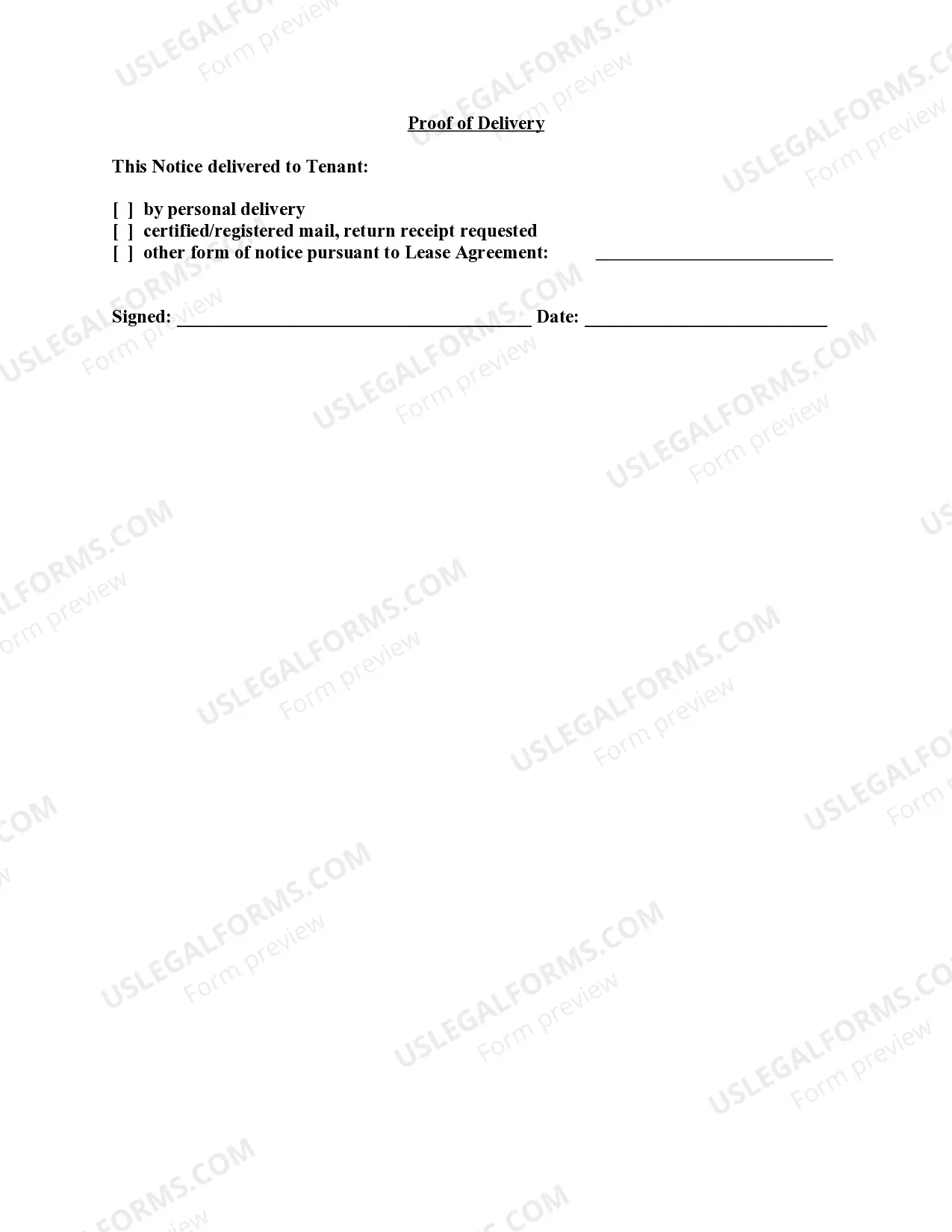
This is a letter from the Landlord to Tenant indicating that under the conditions of the Lease Agreement, Tenant is required to inform the Landlord of any condition of which Tenant has actual knowledge which may cause damage to the premises. Landlord can then correct the problem and prevent injury to persons and/or damage to property.
South Dakota Letter from Landlord to Tenant as Notice to tenant to inform landlord of tenant's knowledge of condition causing damage to premises
State:
South Dakota
Control #:
SD-1048LT
Format:
Word;
Rich Text
Instant download
Description
Free preview
How to fill out South Dakota Letter From Landlord To Tenant As Notice To Tenant To Inform Landlord Of Tenant's Knowledge Of Condition Causing Damage To Premises?
The work with papers isn't the most straightforward process, especially for people who rarely work with legal papers. That's why we advise making use of accurate South Dakota Letter from Landlord to Tenant as Notice to tenant to inform landlord of tenant's knowledge of condition causing damage to premises samples created by professional lawyers. It allows you to stay away from difficulties when in court or working with formal organizations. Find the documents you need on our site for top-quality forms and accurate descriptions.
If you’re a user having a US Legal Forms subscription, just log in your account. As soon as you’re in, the Download button will automatically appear on the template page. Right after accessing the sample, it’ll be stored in the My Forms menu.
Users without an activated subscription can quickly get an account. Look at this short step-by-step help guide to get your South Dakota Letter from Landlord to Tenant as Notice to tenant to inform landlord of tenant's knowledge of condition causing damage to premises:
- Ensure that the document you found is eligible for use in the state it’s needed in.
- Confirm the file. Make use of the Preview feature or read its description (if readily available).
- Buy Now if this form is the thing you need or go back to the Search field to find another one.
- Select a convenient subscription and create your account.
- Use your PayPal or credit card to pay for the service.
- Download your document in a wanted format.
After doing these simple actions, it is possible to fill out the form in a preferred editor. Recheck filled in details and consider requesting a legal professional to review your South Dakota Letter from Landlord to Tenant as Notice to tenant to inform landlord of tenant's knowledge of condition causing damage to premises for correctness. With US Legal Forms, everything becomes much easier. Give it a try now!