South Dakota Demand for Lien Account - Individual
About this form
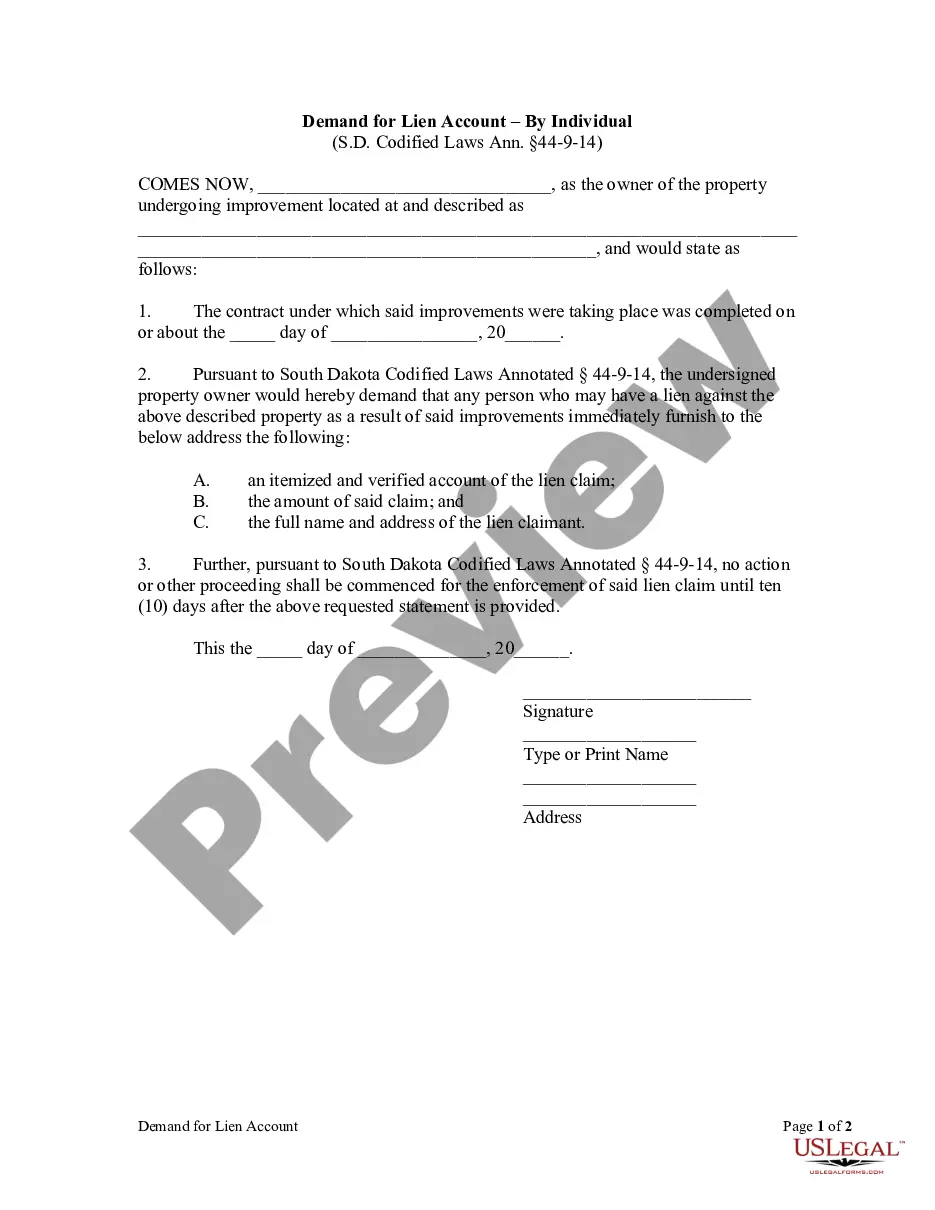
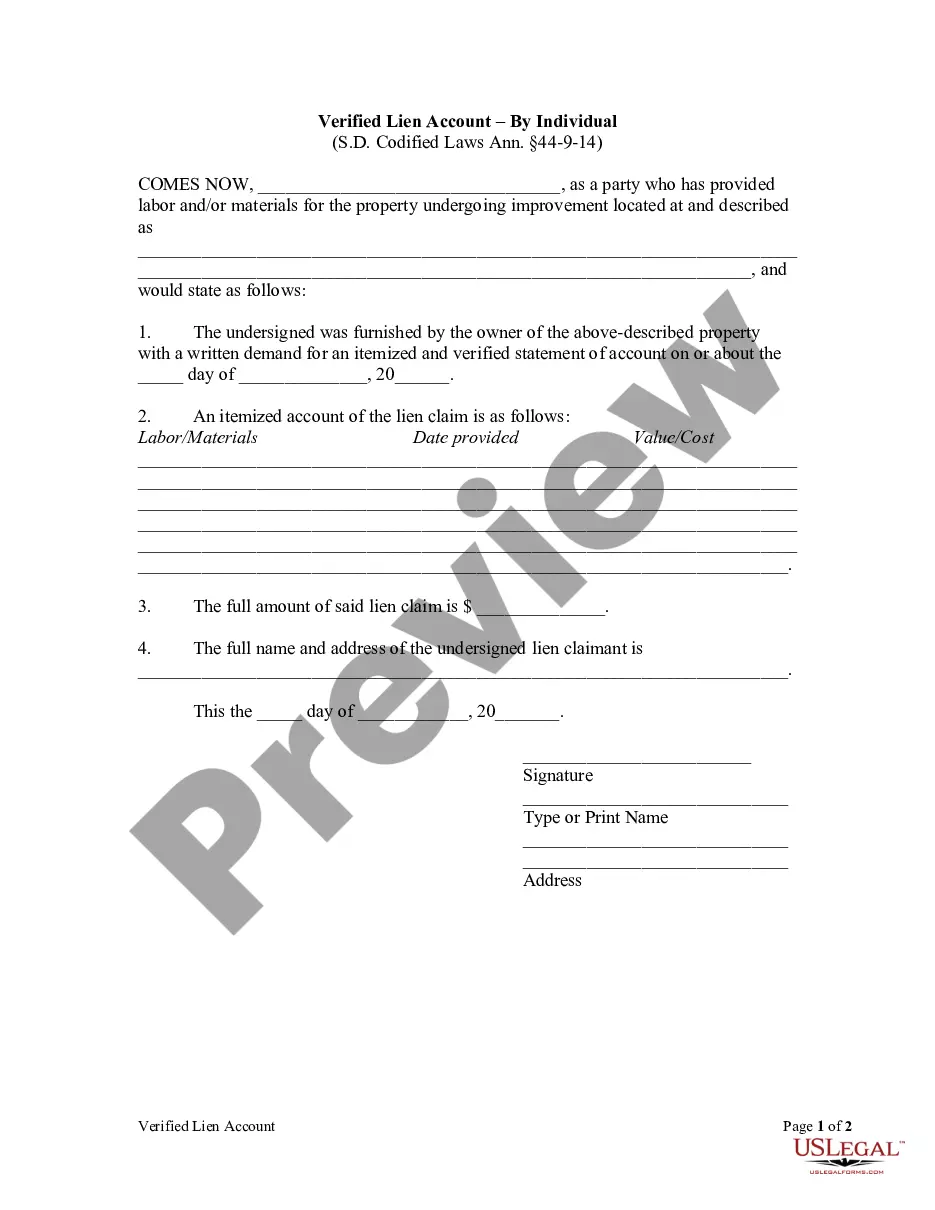
The Demand for Lien Account - Individual is a legal document that allows property owners to formally request an itemized account of any lien claims against their property. This form is essential for ensuring transparency and verification of lien amounts after a construction contract is completed. Unlike other lien-related forms, this demand specifically initiates a request for evidence of a lien claim, which is a necessary step before any legal action can be pursued regarding that lien.
What’s included in this form
- Property owner's name and address
- Description of the property undergoing improvements
- Date of completion of the construction contract
- Request for itemized lien claim details
- Signature of the property owner
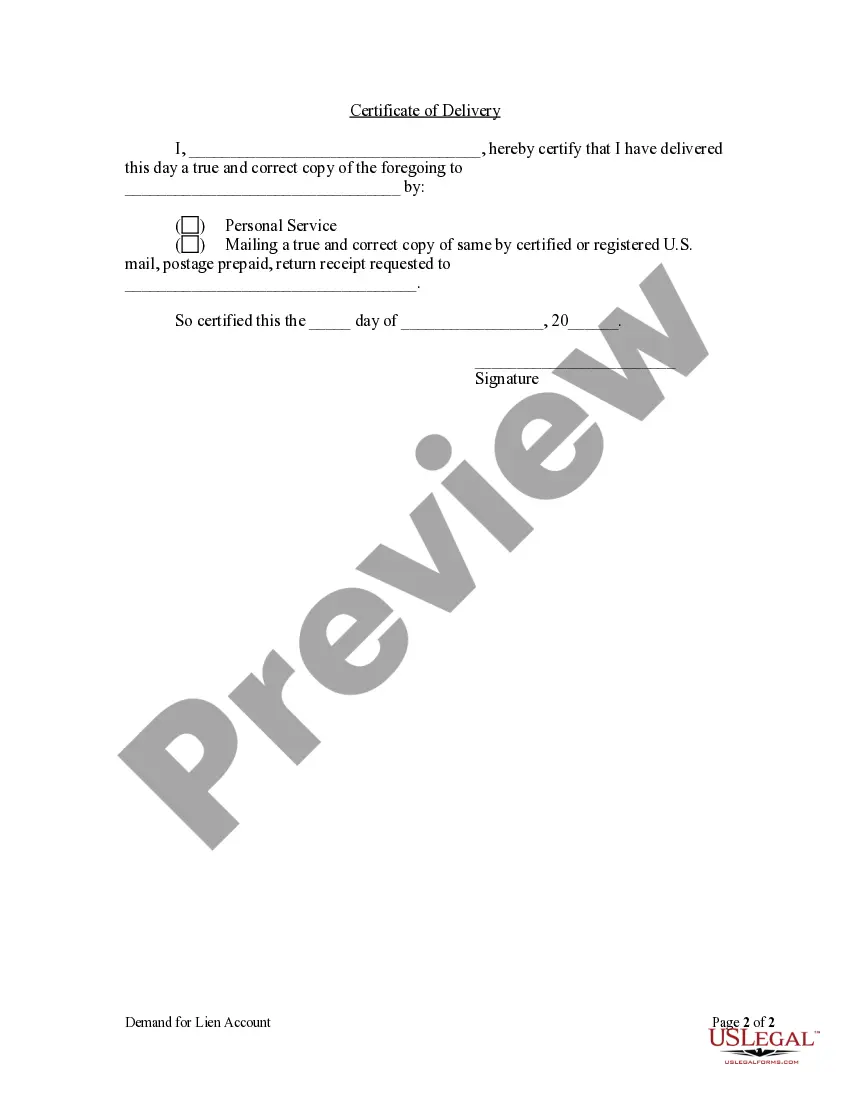
- Certificate of delivery to the lien claimant
When this form is needed
You should use the Demand for Lien Account - Individual form when you, as a property owner, need to request detailed information about any potential liens against your property following improvements or construction. This is typically necessary when you have completed a construction project and want to ensure that you have accurate and complete records of any claims before any further legal actions are taken.
Who can use this document
- Property owners who have recently completed construction or renovation projects
- Individuals who are seeking to verify lien claims against their property
- Those who wish to ensure compliance with state lien laws
Completing this form step by step
- Identify yourself as the property owner and provide your contact information.
- Describe the property in detail, including its location.
- Specify the date when the contract for improvements was completed.
- Request that lien claimants furnish an itemized account, including their name and address.
- Sign and date the form, certifying the delivery of the demand.
Notarization requirements for this form
Notarization is not commonly needed for this form. However, certain documents or local rules may make it necessary. Our notarization service, powered by Notarize, allows you to finalize it securely online anytime, day or night.
Get your form ready online
Our built-in tools help you complete, sign, share, and store your documents in one place.
Make edits, fill in missing information, and update formatting in US Legal Forms—just like you would in MS Word.
Download a copy, print it, send it by email, or mail it via USPS—whatever works best for your next step.
Sign and collect signatures with our SignNow integration. Send to multiple recipients, set reminders, and more. Go Premium to unlock E-Sign.
If this form requires notarization, complete it online through a secure video call—no need to meet a notary in person or wait for an appointment.
We protect your documents and personal data by following strict security and privacy standards.

Make edits, fill in missing information, and update formatting in US Legal Forms—just like you would in MS Word.

Download a copy, print it, send it by email, or mail it via USPS—whatever works best for your next step.

Sign and collect signatures with our SignNow integration. Send to multiple recipients, set reminders, and more. Go Premium to unlock E-Sign.

If this form requires notarization, complete it online through a secure video call—no need to meet a notary in person or wait for an appointment.

We protect your documents and personal data by following strict security and privacy standards.
Typical mistakes to avoid
- Failing to provide complete property descriptions
- Not signing the form or including the date
- Sending the demand outside the required fifteen-day timeframe
Benefits of using this form online
- Immediate access to legally drafted templates
- Convenient download options for easy completion
- Editable forms to tailor to specific situations
Legal use & context
- This form ensures that lien claimants provide necessary details before any enforcement action can take place.
- It serves as a protective measure for property owners against unjustified lien claims.
- Utilizing this form helps formalize communications between property owners and potential lien holders.
Key takeaways
- The Demand for Lien Account - Individual is a vital step in managing lien claims.
- Completing this form ensures you have a formal request for itemized lien claims.
- Be mindful of the deadlines set by South Dakota state law when using this form.
Looking for another form?
Form popularity
FAQ
A Lien Demand Letter or Notice of Intent to Lien is a formal demand for payment.A lien demand letter puts a debtor on notice of your intent to lien the job site property by a specific date deadline. Increase your odds of getting paid with a lien demand letter.
The simplest way to prevent liens and ensure that subcontractors and suppliers are paid is to pay with joint checks. This is when both parties endorse the check. Compare the contractor's materials or labor bill to the schedule of payments in your contract and the Preliminary Notices.
Most states require all mechanics lien claims be filed with the county recorder or clerk of court. In South Dakota, however, there are at least 2 offices where mechanics lien claims can be filed, and the lien claimant must make certain they file their lien claim in the right office.
What Is a Fraudulent Lien?the claimant is owed money on another job by the same general contractor or property owner, but didn't file a lien on that project before time expired; or. the claimant wants to file a lien because of personal reasons generally related to the identity of the property owner.
Be sure to include the following pieces of information in your lien: The name, company name and address (including county) of the property owner against whom your lien is filed; the same information about the delinquent client, if different; the beginning and ending dates of the unpaid service; the due date for payment
Subject to some exceptions, a lien for materials, services, or wages may be registered any time up to 45 days from the day the last materials, services, or wages were provided, or since the contract was abandoned. After those 45 days elapse, the lien expires.
A contractor's lien (often known as a mechanic's lien, or a construction lien) is a claim made by contractors or subcontractors who have performed work on a property, and have not yet been paid.After all, contractors would rather work out a deal than go through the hassle of filing a lien against your property.
Placing the Lien With a direct contractor, the notice is part of her contract with you. If the bills go unpaid, the contractor or sub sends you a notice along with her claim of lien. She then files the lien with the county within 90 days of the project being finished or your acceptance of the work.
It basically states that you've paid the subcontractor what is owed, they accept the payment in full, and they waive the right to put a lien on your property. Simply present this form to the subcontractor with your payment and ask them to sign it. Make sure you get their signature!