South Carolina Last Will and Testament for Married person with Minor Children
Understanding this form
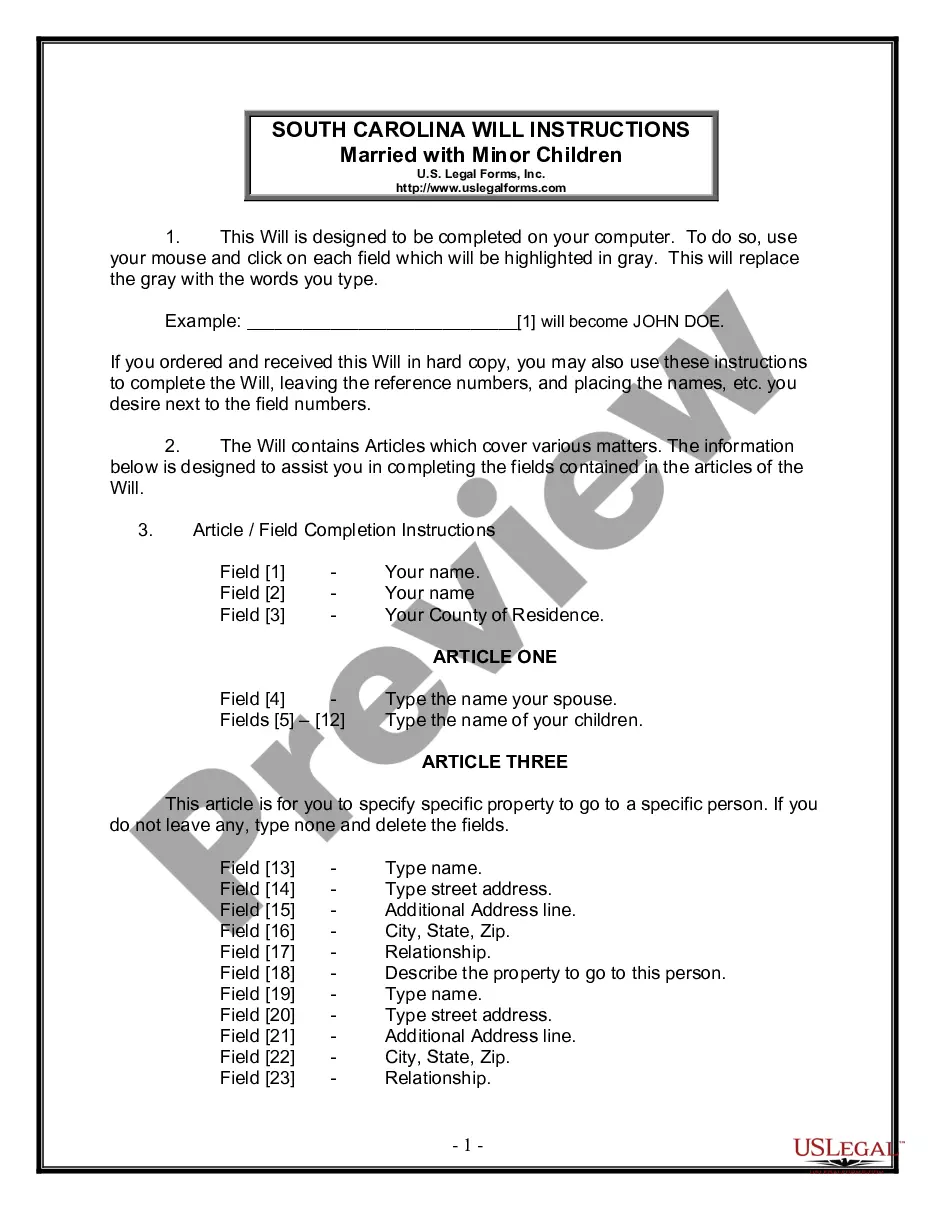
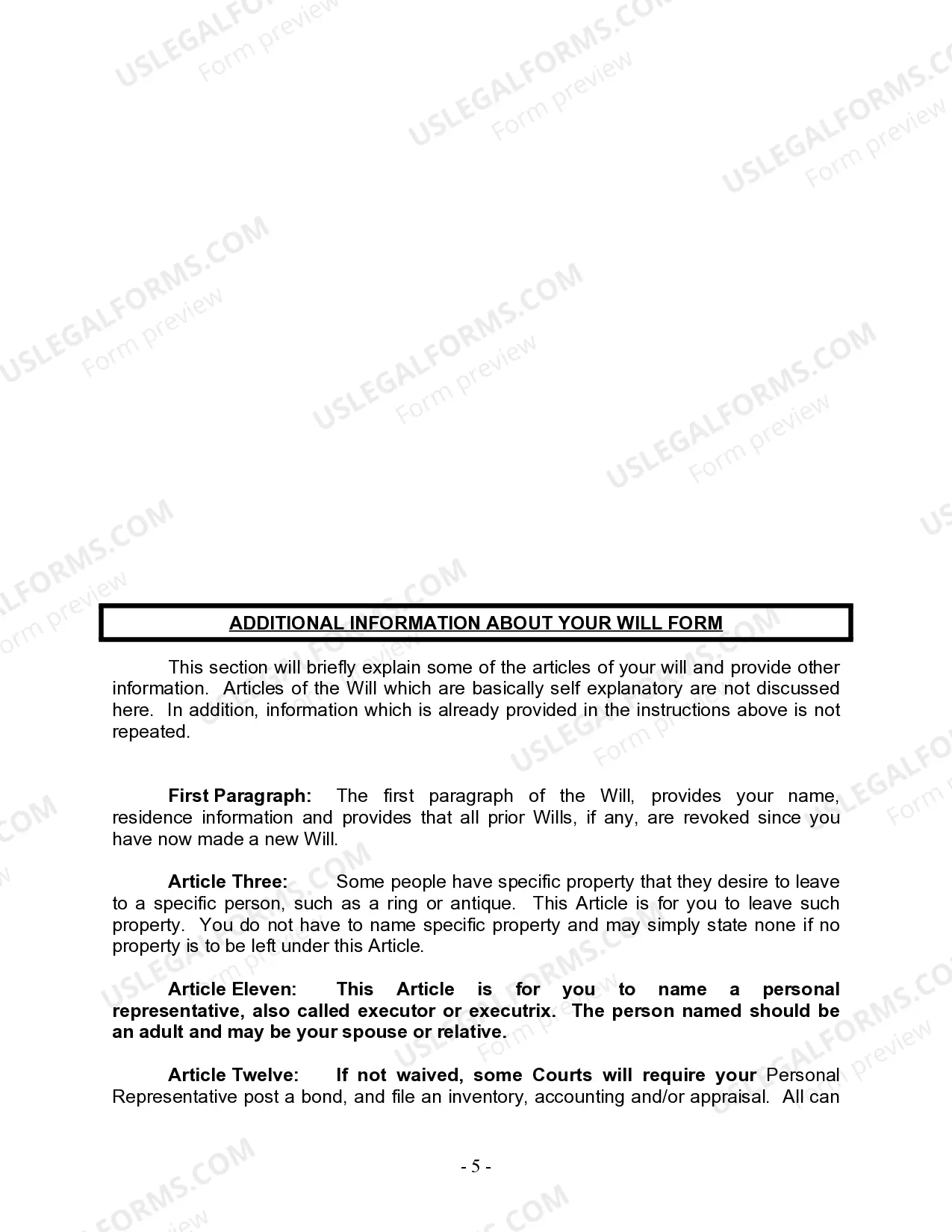
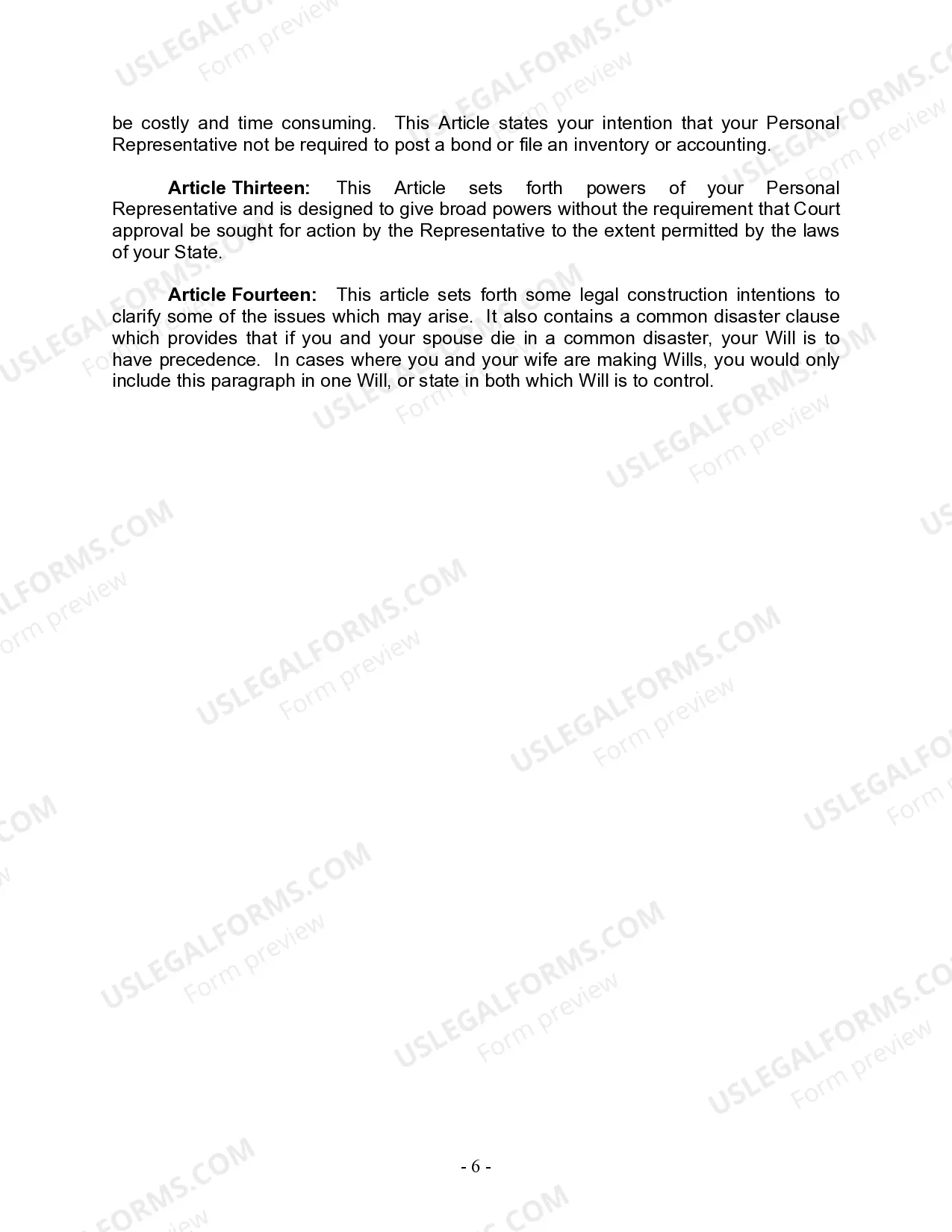
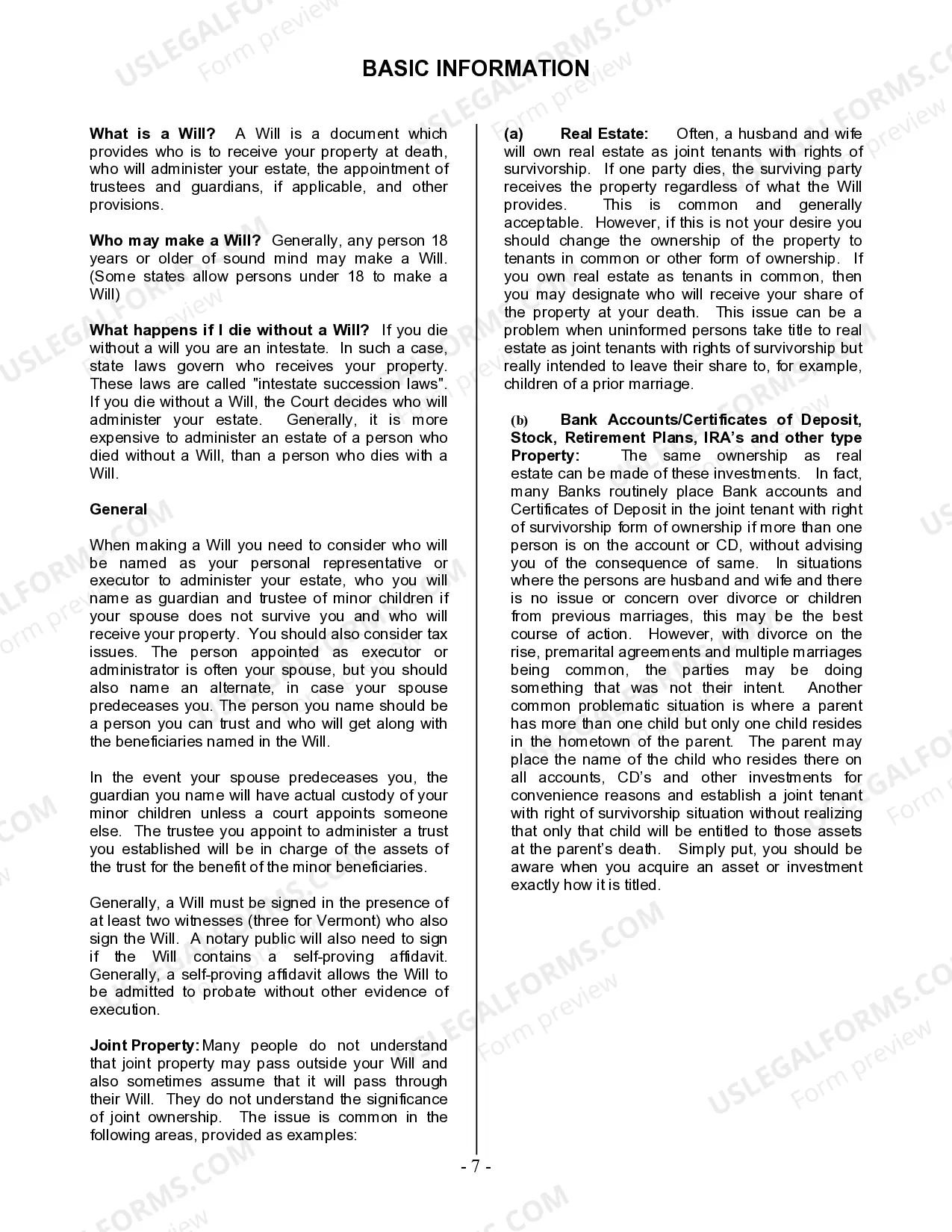
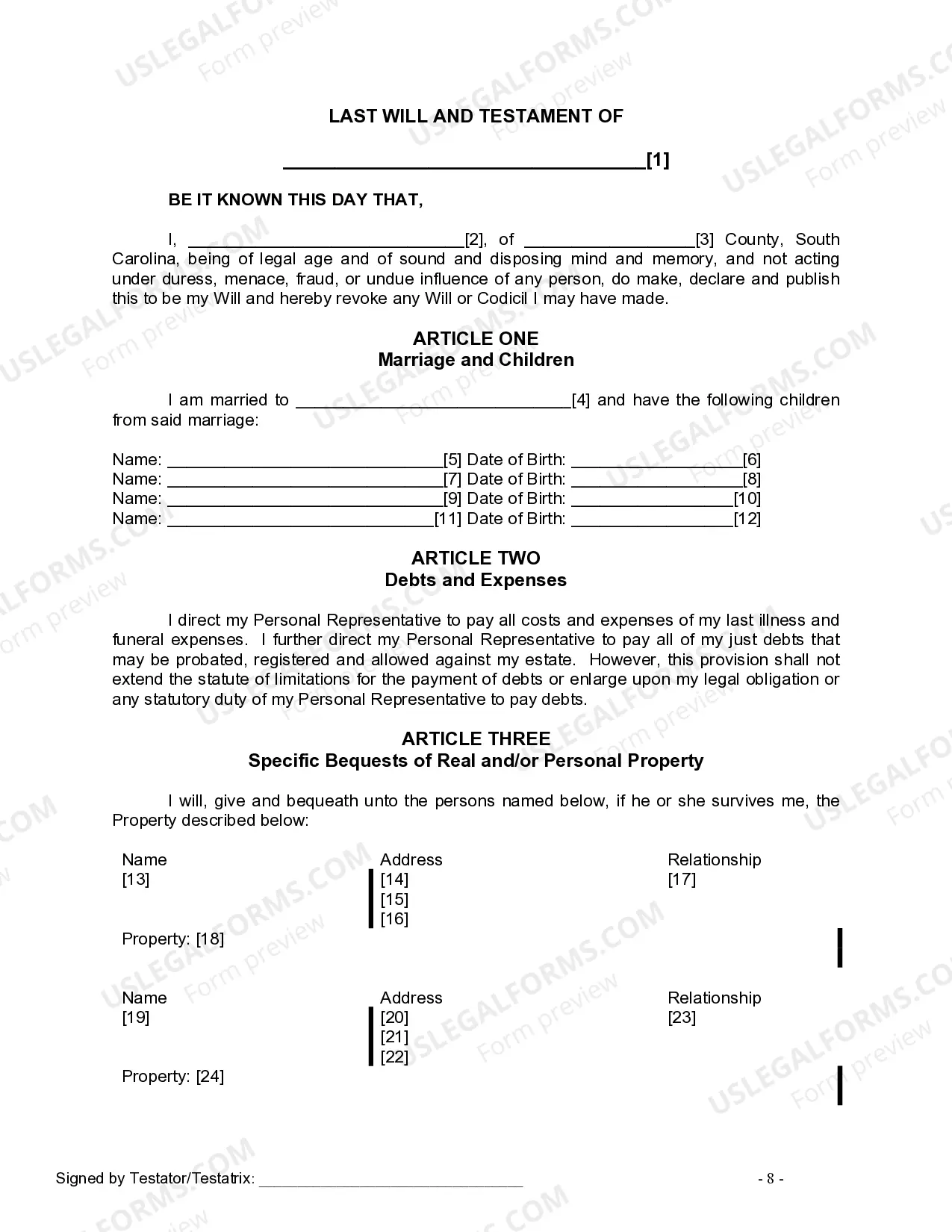
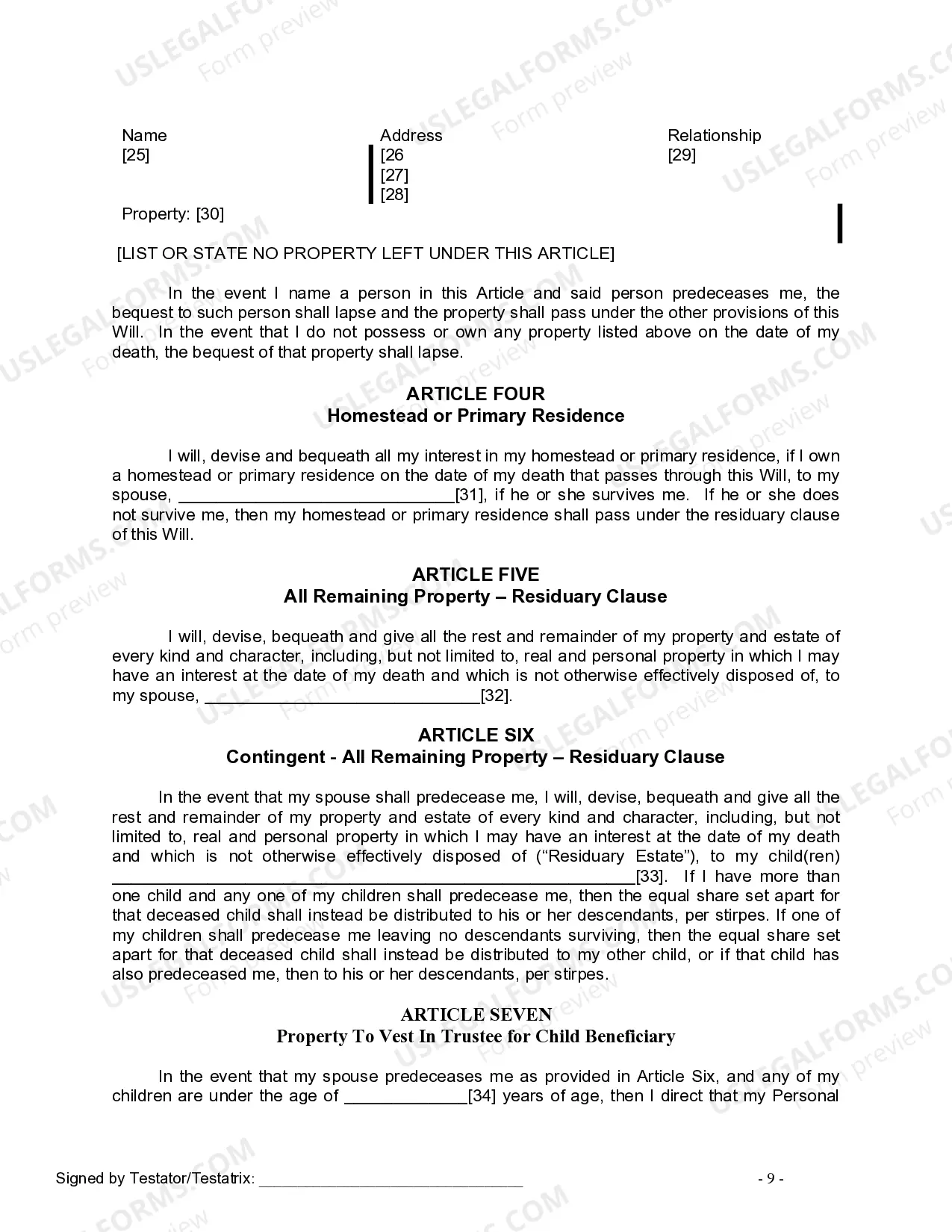
The Last Will and Testament for Married Person with Minor Children is a legal document that outlines how your assets will be distributed after your death, specifically for a married individual who has children under the age of majority. This form allows you to appoint a personal representative to manage your estate, specify beneficiaries for your property, establish a trust for your minor children, and make important decisions regarding guardianship. By using this Will, you ensure that your family is protected and your wishes are clearly stated.
What’s included in this form
- Article concerning marriage and children, listing your spouse and any minor children.
- Provisions for the payment of debts and funeral expenses from your estate.
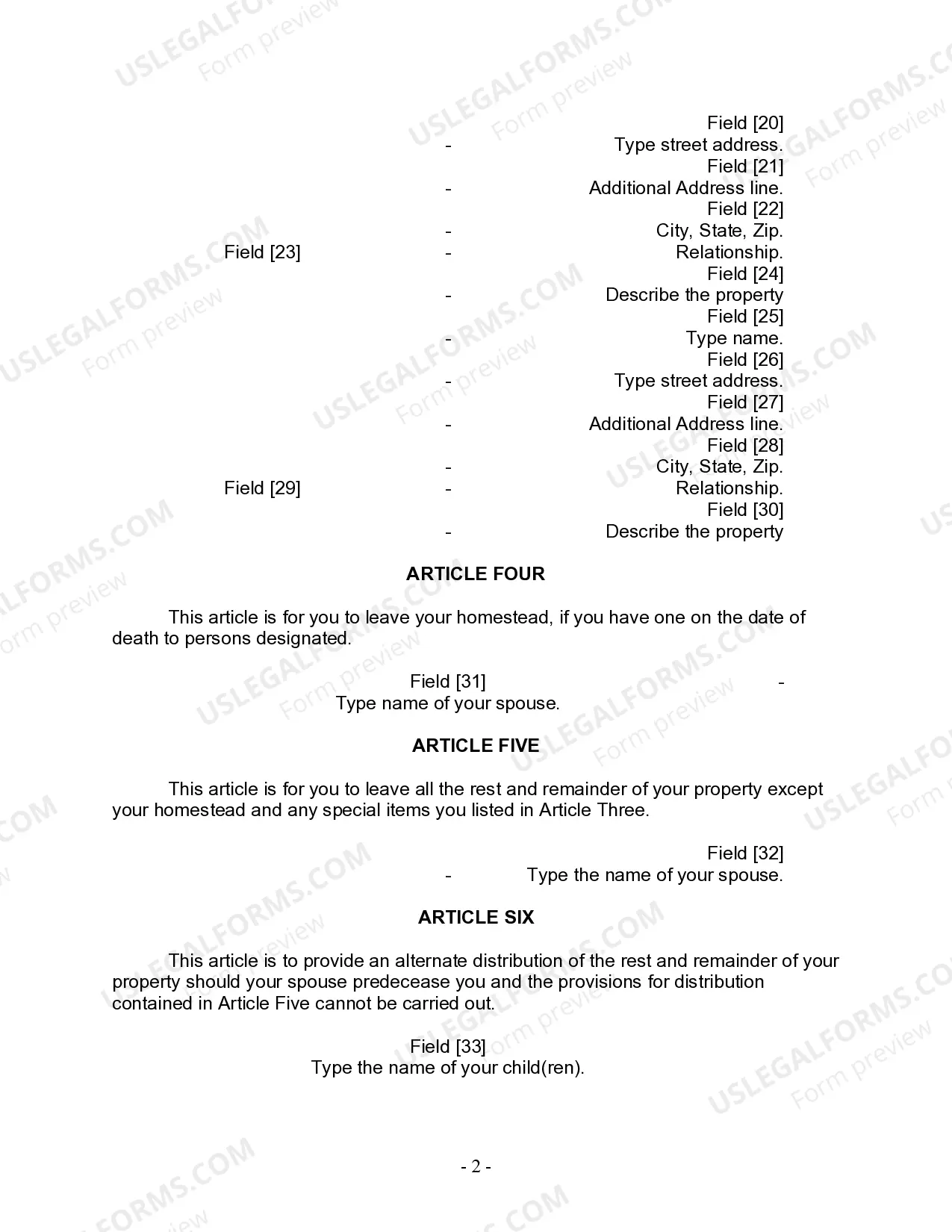
- Specific bequests of property including real and personal assets.
- Residuum clause detailing the distribution of remaining assets.
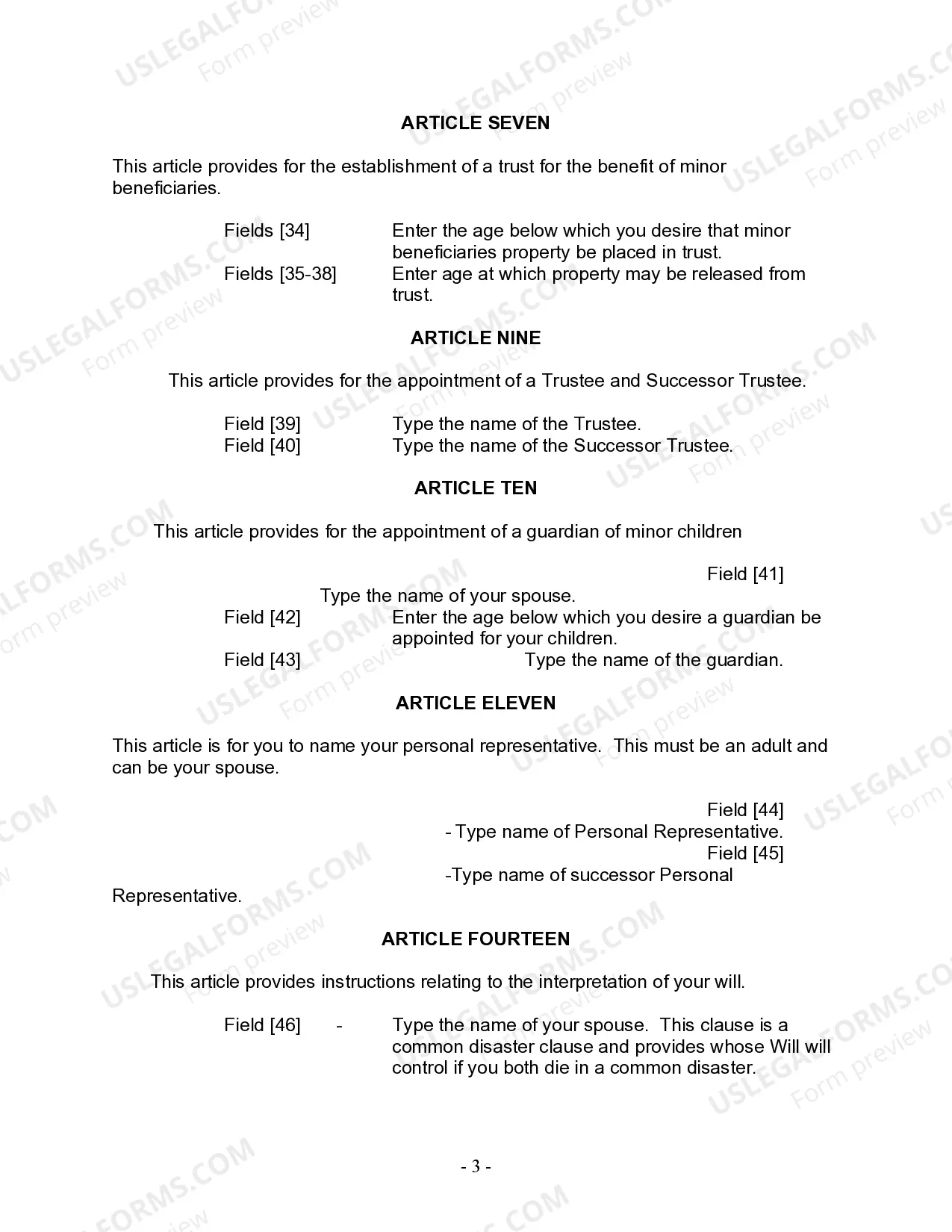
- Trust provisions for managing assets on behalf of minor children.
- Appointment of a guardian for minor children in the event both parents pass away.





When to use this form
This form is necessary when a married person with minor children wants to ensure their wishes regarding asset distribution, guardianship of their children, and management of their estate are legally recognized. It is particularly useful in scenarios such as preparing for unforeseen events, planning for your children's future, or providing clarity during times of emotional distress for surviving family members.
Who needs this form
- Married individuals with minor children who wish to establish a clear plan for their estate.
- Individuals wanting to specify guardianship for their children in the event of their passing.
- Those looking to appoint a trusted individual as a personal representative to manage their estate.
Completing this form step by step
- Identify yourself as the testator, including your full name and county of residence.
- List your spouse's name and the names and birthdates of your minor children.
- Specify your debts and funeral arrangements under the appropriate article.
- Detail any specific bequests of property and designate beneficiaries.
- Appoint a guardian for your children and a personal representative for your estate.
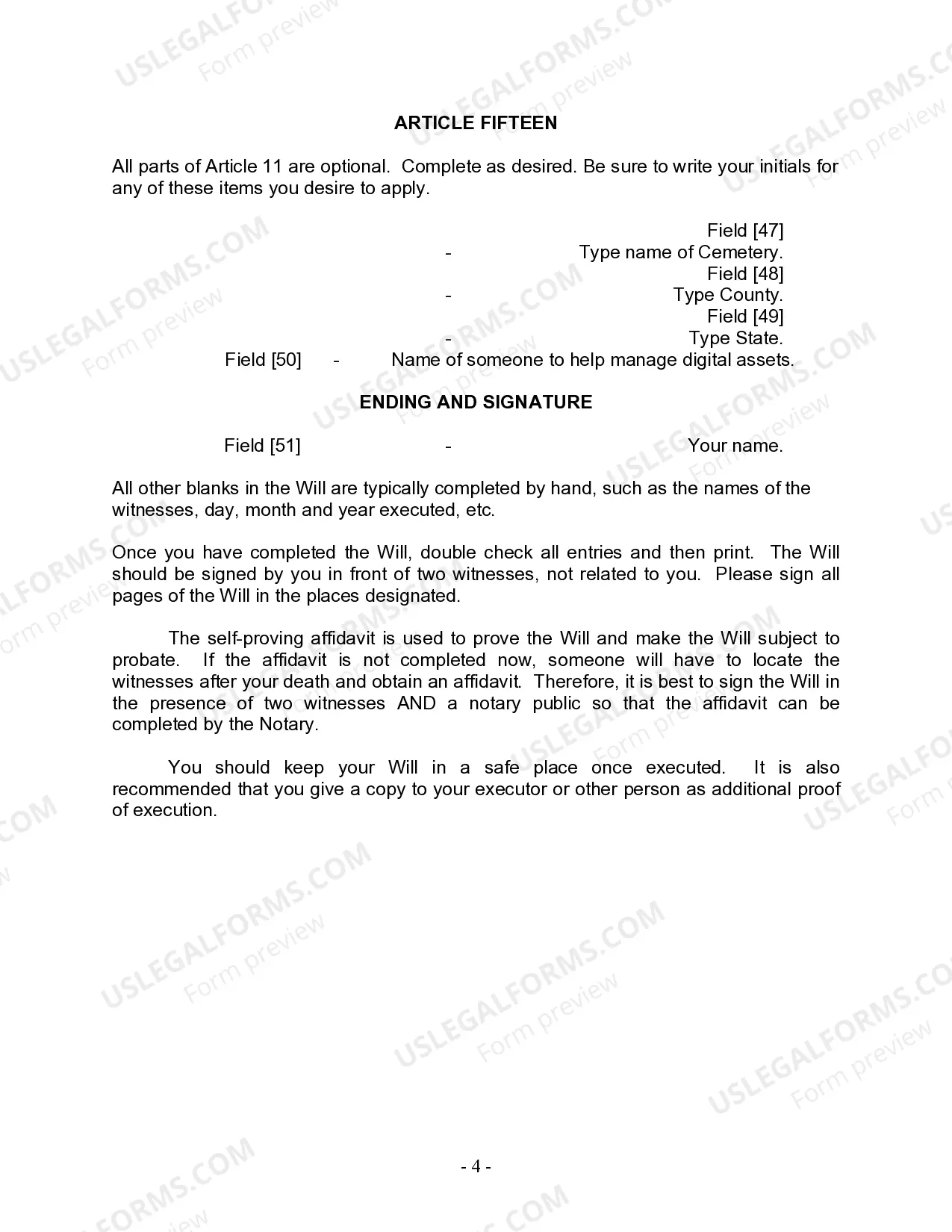
- Sign the document in front of two witnesses and a notary public, if required.
Notarization guidance
Yes, this form must be notarized to be legally valid in jurisdictions that require a self-proving affidavit. The process can be easily completed through integrated online notarization services available 24/7, ensuring secure video calls and legal equivalence without the need to travel.
Get your form ready online
Our built-in tools help you complete, sign, share, and store your documents in one place.
Make edits, fill in missing information, and update formatting in US Legal Forms—just like you would in MS Word.
Download a copy, print it, send it by email, or mail it via USPS—whatever works best for your next step.
Sign and collect signatures with our SignNow integration. Send to multiple recipients, set reminders, and more. Go Premium to unlock E-Sign.
If this form requires notarization, complete it online through a secure video call—no need to meet a notary in person or wait for an appointment.
We protect your documents and personal data by following strict security and privacy standards.

Make edits, fill in missing information, and update formatting in US Legal Forms—just like you would in MS Word.

Download a copy, print it, send it by email, or mail it via USPS—whatever works best for your next step.

Sign and collect signatures with our SignNow integration. Send to multiple recipients, set reminders, and more. Go Premium to unlock E-Sign.

If this form requires notarization, complete it online through a secure video call—no need to meet a notary in person or wait for an appointment.

We protect your documents and personal data by following strict security and privacy standards.
Mistakes to watch out for
- Failing to have the Will signed by the required witnesses.
- Not updating the Will after major life changes, such as divorce or the birth of additional children.
- Overlooking the need for a guardian designation for minor children.
- Leaving out important assets or properties from the Will.
Benefits of using this form online
- Convenient access to a legally vetted template tailored for your needs.
- Easy to fill out and modify as personal circumstances change.
- Immediate download allows you to print and execute the document at your convenience.
- Ensures compliance with state laws, reducing the risk of legal issues.
Key takeaways
- This document is essential for married persons with minor children to outline their estate plans clearly.
- It includes provisions for trust creation, asset management, and guardianship.
- Proper execution involves witnesses and may require notarization depending on your state.
- Online access allows for convenience and reliability in preparing your Last Will and Testament.
Looking for another form?
Form popularity
FAQ
All wills must be property signed and witnessed to be effective. For example, South Carolina requires two witnesses for a will to be valid. A notary is not sufficient, or even required.Another reason is that having an interested witness may invalidate the bequest to the beneficiary who serves as a witness.
Kids under 18 will need someone to take care of them. A legal guardian is named for minor children in the event of the death of both parents. If neither you nor your children's other parent have a will that names a legal guardian, the state will choose one for you.
Handwritten wills prepared in South Carolina are not legal. However, a holographic will created in another state may be valid in South Carolina.
Children who are under the age of 18 are deemed to lack legal capacity to receive a gift. Where a gift in your will is going to a child under 18 (which may be a child of a deceased beneficiary), you can give your executors and trustees the option to make the gift to the child's parent or guardian.
You can make your own will in South Carolina, using Nolo's do-it-yourself will software or online will programs. However, you may want to consult a lawyer in some situations. For example, if you think that your will might be contested or if you want to disinherit your spouse, you should talk with an attorney.
In most states, you must be 18 or older to write a legally valid will, according to USA.gov.
California's Probate Code Section 6100: (a) An individual 18 or more years of age who is of sound mind may make a will.
Do I Need to Have My Will Notarized? No, in South Carolina, you do not need to notarize your will to make it legal.A self-proving will speeds up probate because the court can accept the will without contacting the witnesses who signed it.