South Carolina Employment or Job Termination Package
What is this form package?
The South Carolina Employment or Job Termination Package provides essential forms designed to assist businesses in effectively managing employee terminations. This package aims to limit the risk of employment litigation while promoting a positive workplace environment. Unlike other general termination resources, this package includes specialized documents tailored to South Carolina laws and regulations.
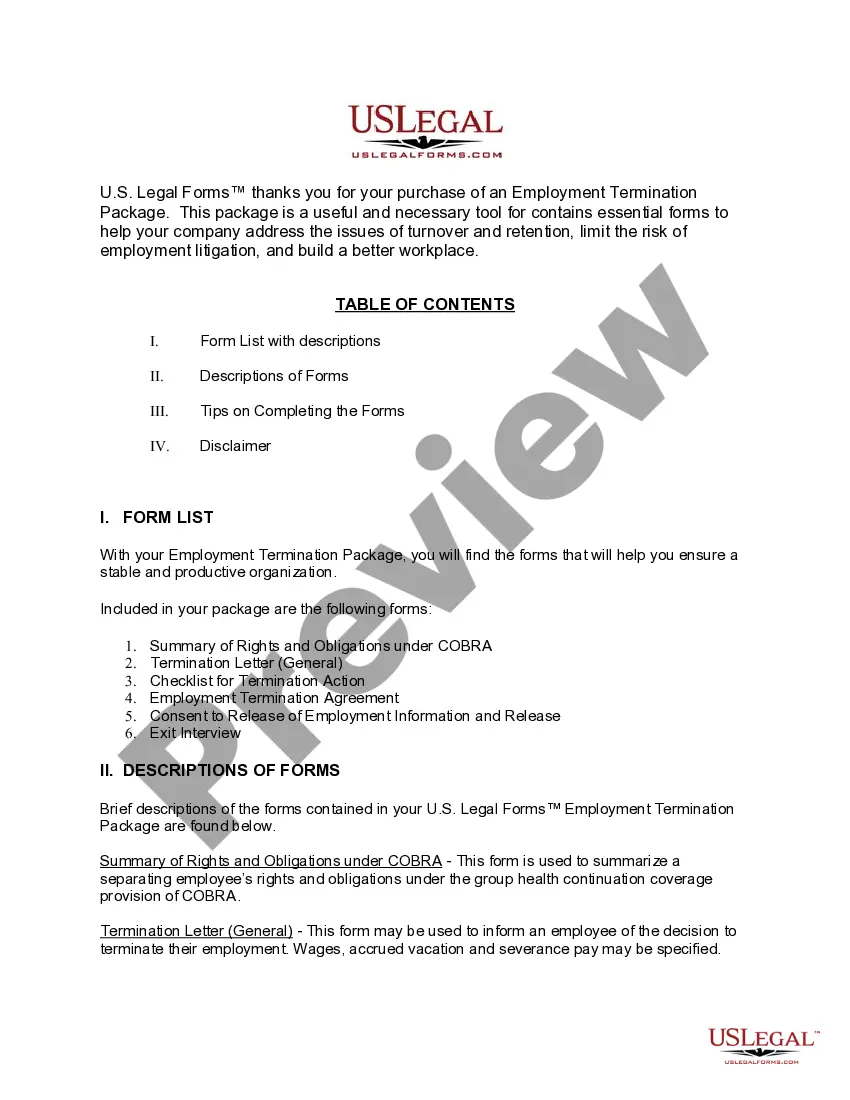
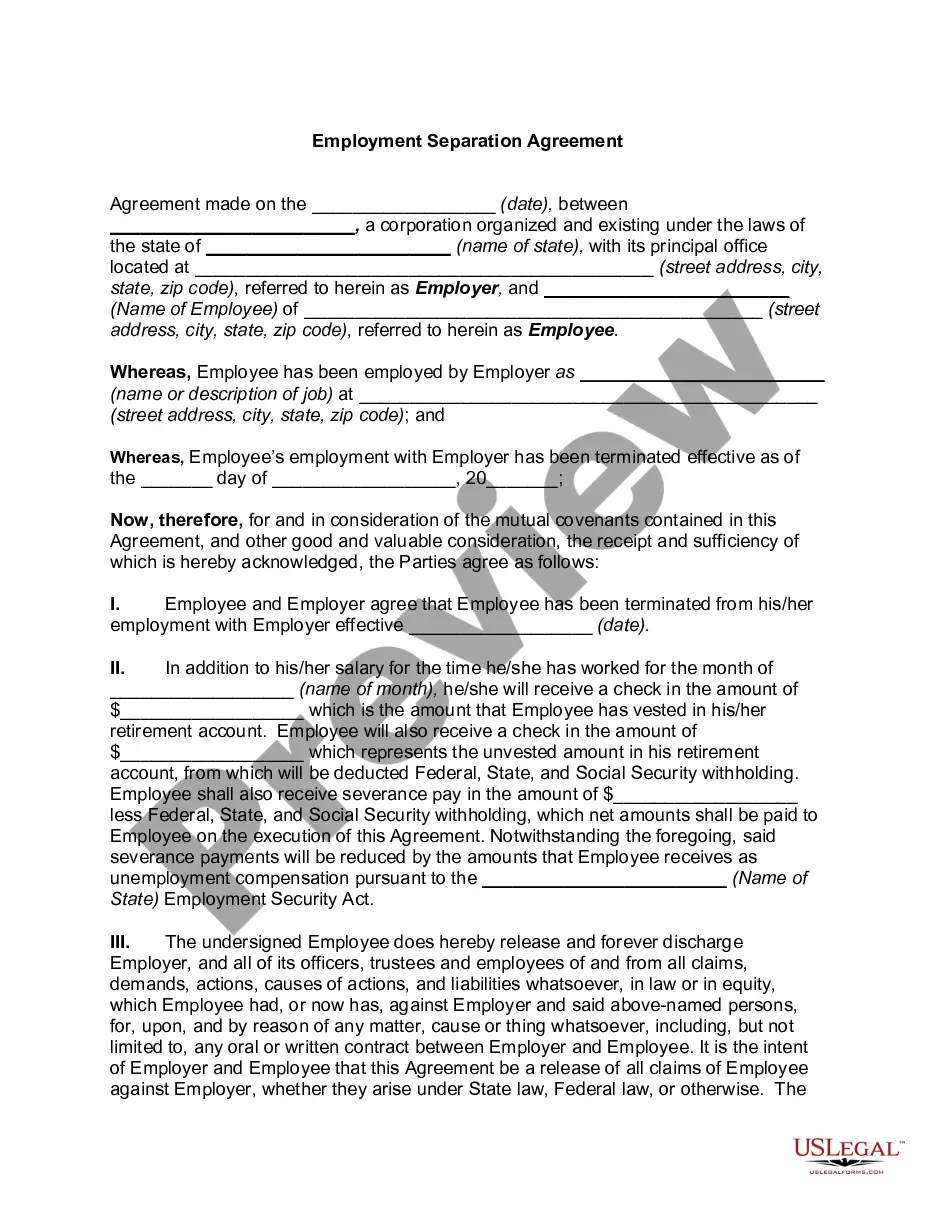
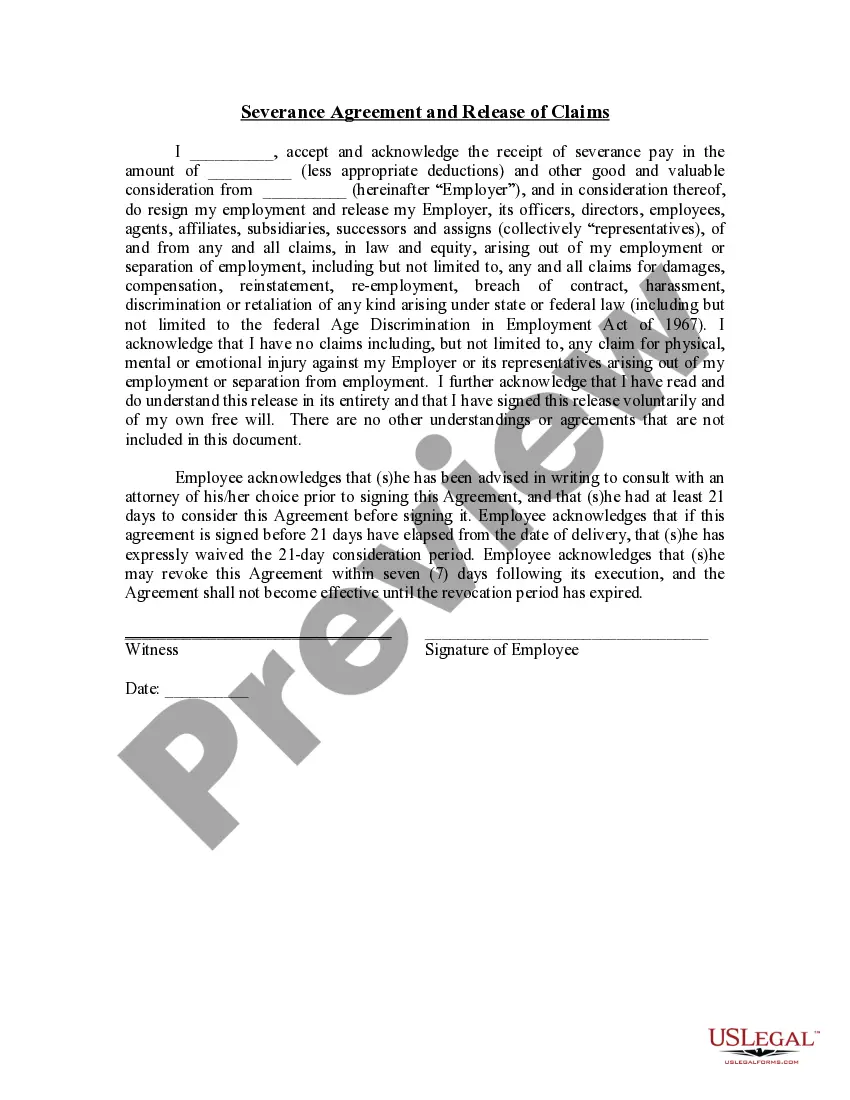
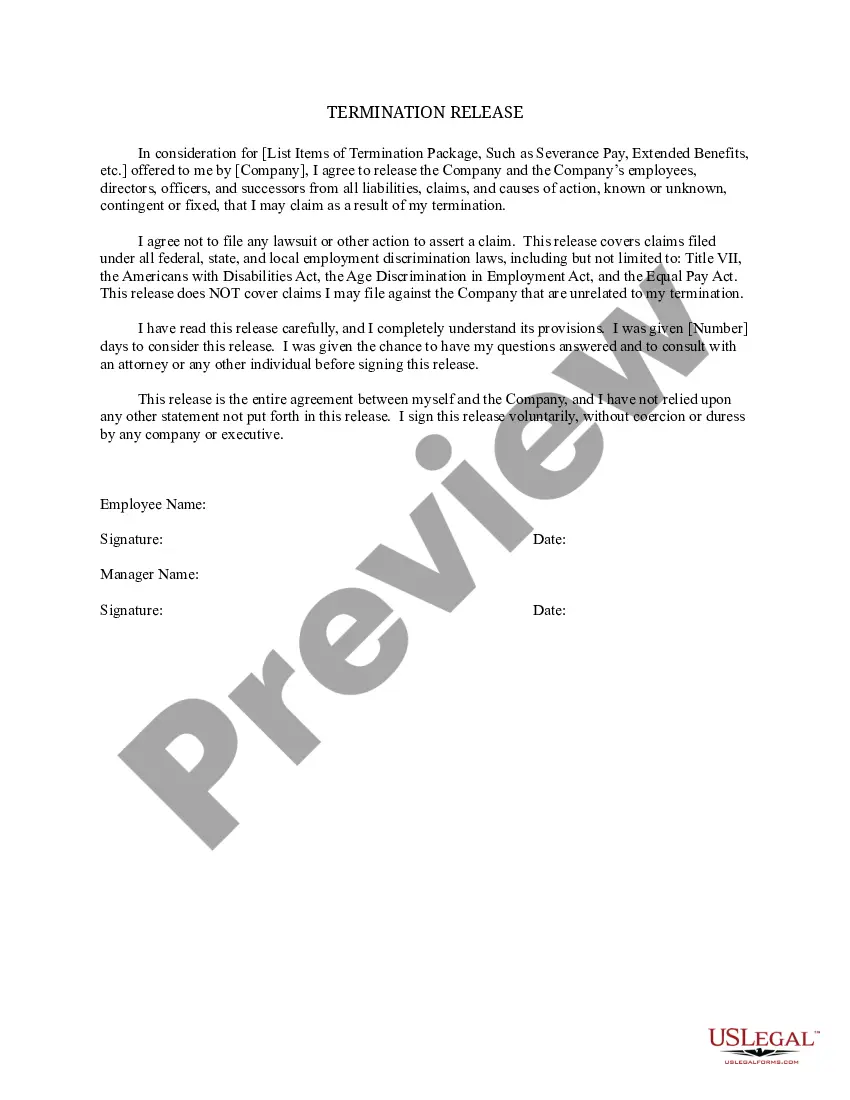
Forms you’ll find in this package
When to use this form package
This form package is beneficial in various circumstances where an employee needs to be terminated. Common scenarios include:
- When an employee's performance is not meeting company standards.
- In cases of downsizing or layoffs due to economic reasons.
- When dealing with employee misconduct or breaches of company policy.
- During the end of a probationary period for a new hire.
Who needs this form package
- Business owners looking to streamline their termination process.
- Human resources professionals responsible for managing employee relationships.
- Managers needing guidance on legal procedures during terminations.
- Companies wanting to ensure compliance with South Carolina employment laws.
How to complete these forms
- Review each included form to understand its purpose and requirements.
- Identify the employee's details and gather any necessary company documentation.
- Complete the Termination Letter, specifying final pay and benefits.
- Utilize the Checklist for Termination Action to ensure compliance with legal guidelines.
- Schedule and conduct an Exit Interview to gather feedback from the departing employee.
Do forms in this package need to be notarized?
Forms in this package typically do not require notarization unless required by local law. Review each form carefully to ensure compliance with any jurisdiction-specific requirements.
Get your form ready online
Our built-in tools help you complete, sign, share, and store your documents in one place.
Make edits, fill in missing information, and update formatting in US Legal Forms—just like you would in MS Word.
Download a copy, print it, send it by email, or mail it via USPS—whatever works best for your next step.
Sign and collect signatures with our SignNow integration. Send to multiple recipients, set reminders, and more. Go Premium to unlock E-Sign.
If this form requires notarization, complete it online through a secure video call—no need to meet a notary in person or wait for an appointment.
We protect your documents and personal data by following strict security and privacy standards.

Make edits, fill in missing information, and update formatting in US Legal Forms—just like you would in MS Word.

Download a copy, print it, send it by email, or mail it via USPS—whatever works best for your next step.

Sign and collect signatures with our SignNow integration. Send to multiple recipients, set reminders, and more. Go Premium to unlock E-Sign.

If this form requires notarization, complete it online through a secure video call—no need to meet a notary in person or wait for an appointment.

We protect your documents and personal data by following strict security and privacy standards.
Typical mistakes to avoid
- Failing to document the reasons for termination consistently.
- Not providing required final pay or benefits in accordance with state laws.
- Overlooking the necessity of conducting an Exit Interview for valuable insights.
- Neglecting to customize the Termination Letter for individual circumstances.
Why complete this package online
- Convenience of downloading forms instantly, allowing for quick access.
- Editability ensures that each document can be tailored to specific termination situations.
- Reliability of attorney-drafted materials, which helps ensure compliance with relevant laws.
Legal use & context
The forms in this package are designed to comply with South Carolina employment laws, offering a framework for valid and enforceable termination processes. Proper completion and adherence to the guidelines can protect employers from potential legal disputes.
Quick recap
- Use the South Carolina Employment or Job Termination Package to manage employee departures legally and effectively.
- Ensure all forms are filled out accurately to reduce the risk of legal complications.
- Refer to the checklist to maintain compliance with state regulations during the termination process.
- Keep completed forms in the employeeâs personnel file for record-keeping purposes.
Looking for another form?

Form popularity
FAQ
What is unlawful termination? Section 772 of the Act says that an employer must not terminate an employee's employment for one or more of the following unlawful reasons:trade union membership or participation in trade union activities outside working hours (or during working hours with the employer's consent)
Get right to the point. Skip the small talk. Break the bad news. State the reason for the termination in one or two short sentences and then tell the person directly that he or she has been terminated. Listen to what the employee has to say. Cover everything essential. Wrap it up graciously.
Wrongful Termination After Firing Before you can file a lawsuit for retaliation or discrimination, you must first file a complaint with the right government agency. The South Carolina Human Affairs Agency handles all discrimination complaints and enforces South Carolina's laws as they pertain to discrimination.
South Carolina is an at-will state, which means that employers can terminate employees at any time, with or without cause and with or without notice.
While South Carolina is an at-will employment state, an employer may be liable for wrongful termination when discharging an employee. In general, local, state, or federal laws protect the employee's right to enjoy specific benefits or engage in particular behaviors.
Yes, you can sue your employer if they wrongfully fired you. But you need to know if your employer actually broke the law, and you need to determine how strong your case is. All too often, people want to sue for being fired when the company had a legitimate reason to fire them. Not every firing is illegal.
There is no requirement under South Carolina law for an employer to provide employees with breaks or a lunch period.
Employee name. Company name. Name of the manager overseeing the termination. Date of letter. Date of termination. Reason for termination. List of verbal and written warnings.
Be prepared with documentation. Write a termination letter. Schedule a meeting. Keep the meeting short. Don't be tempted to apologize, give a second chance, or discuss personal traits.