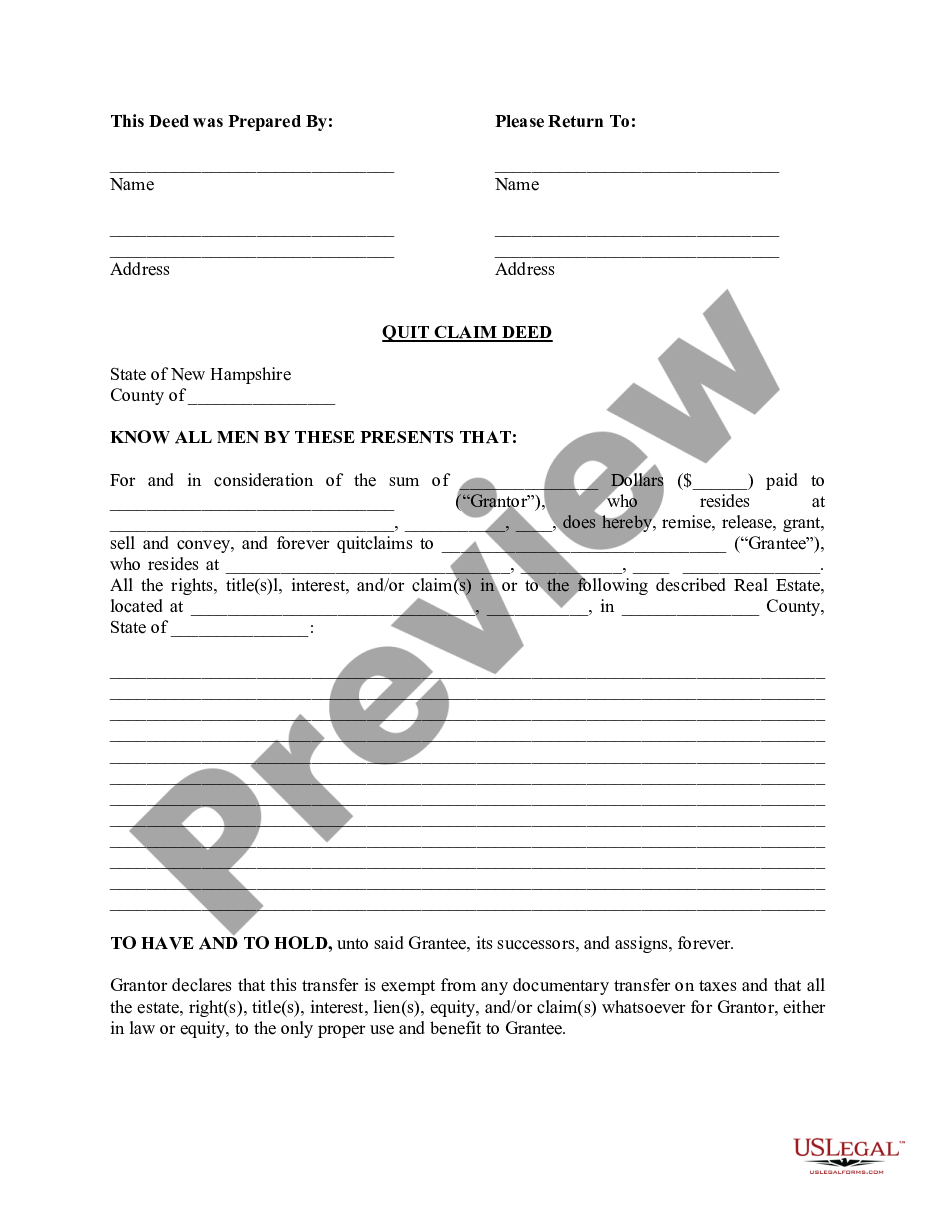
South Carolina Living Trust for Husband and Wife with One Child
What is this form?
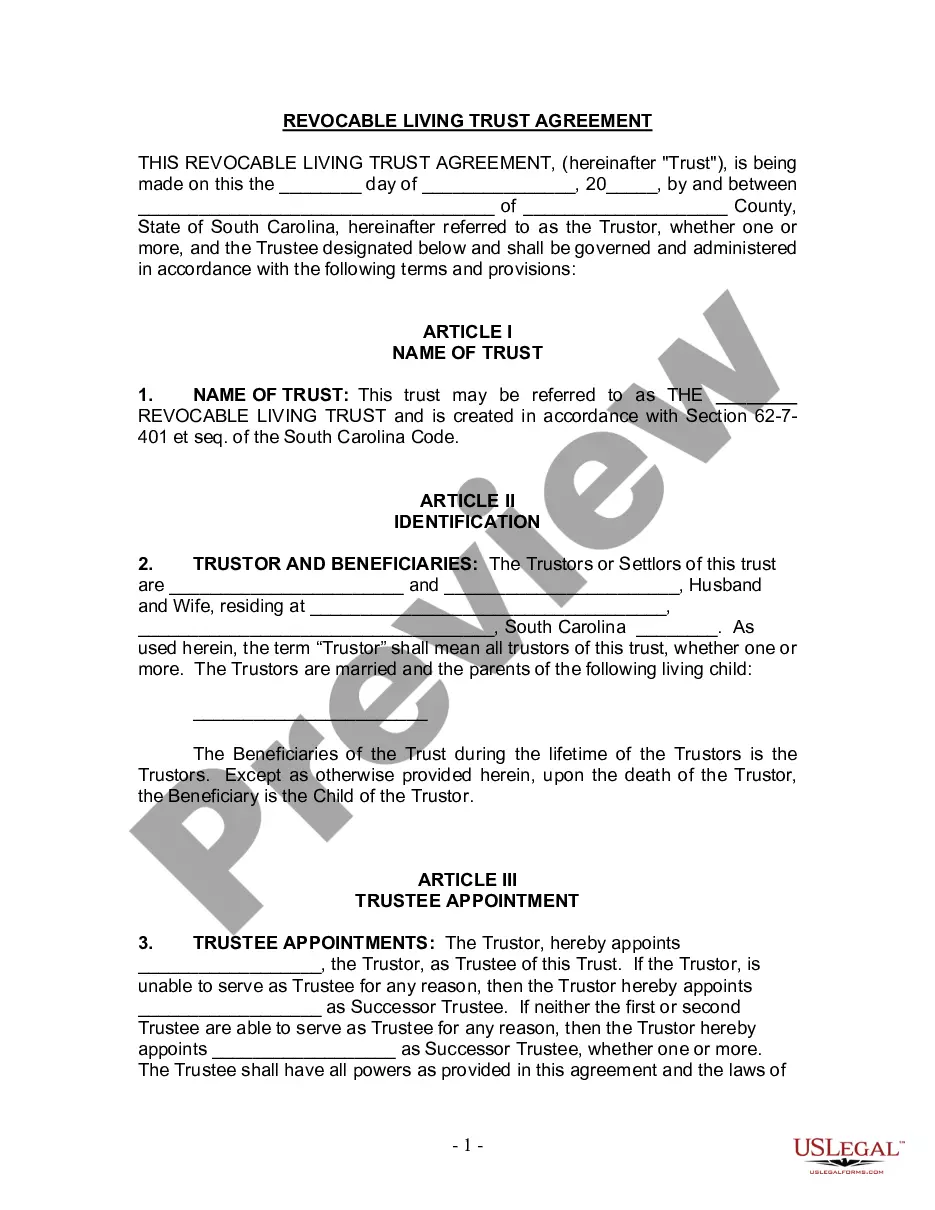
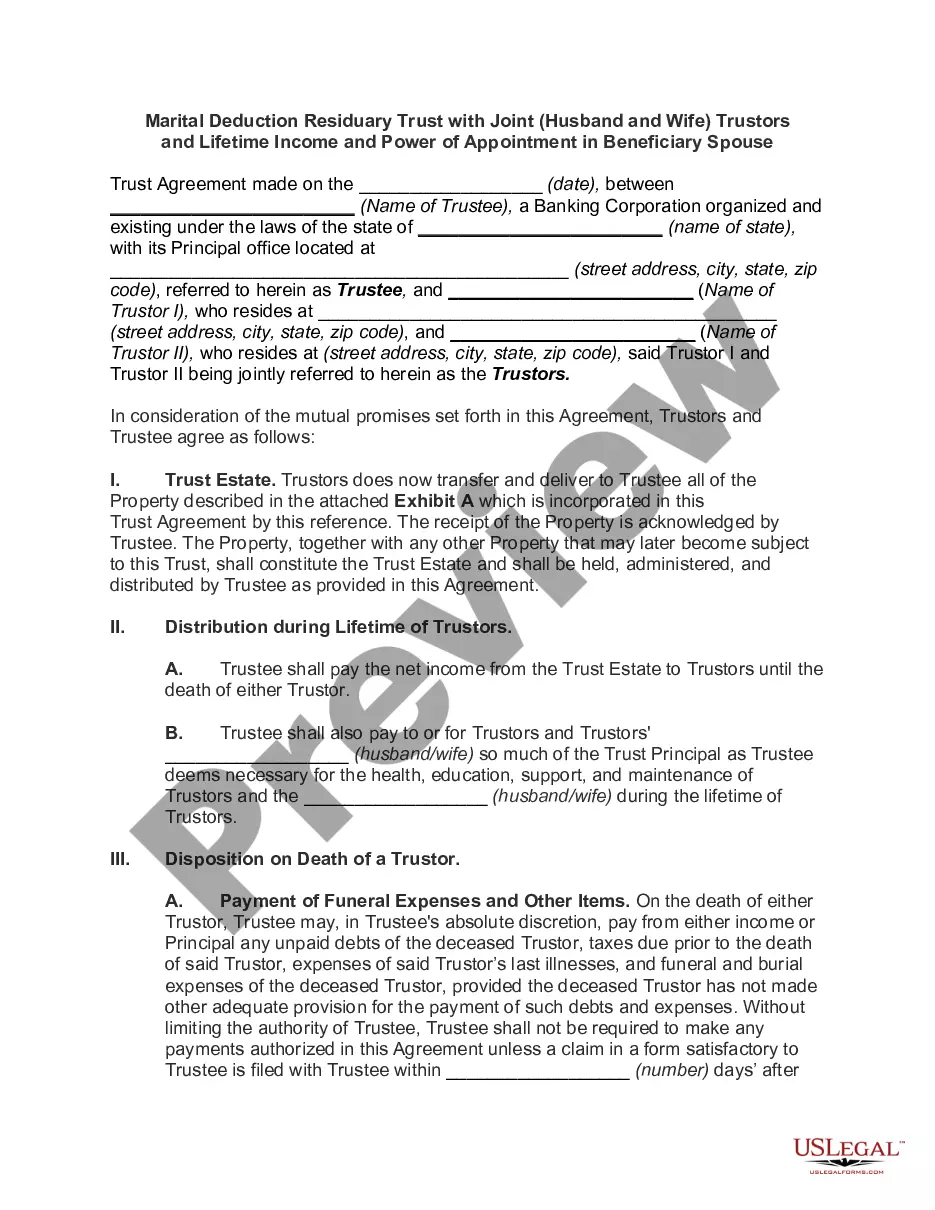
This Living Trust for Husband and Wife with One Child is a legal document that establishes a revocable trust to manage and distribute assets of a married couple with one child. Unlike a will, a living trust helps avoid probate, ensuring a smoother transition of assets upon the death of either spouse. This trust allows both spouses to retain control over their assets during their lifetime while providing financial security for their child as the named beneficiary after their death.
What’s included in this form
- Name of Trust: Specifies the official title of the trust.
- Identification of Trustors: Names the husband and wife establishing the trust.
- Trustee Appointments: Designates who will manage the trust, including successor trustees.
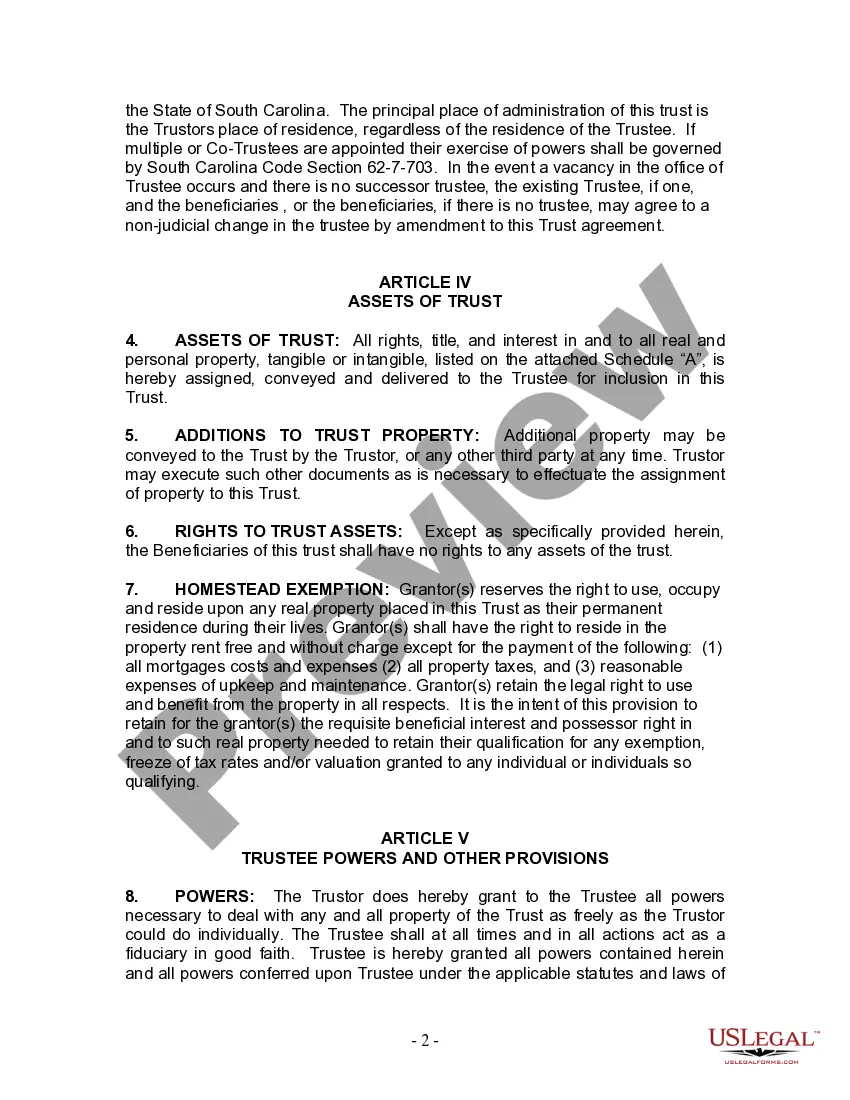
- Assets of the Trust: Details the property and assets transferred into the trust.
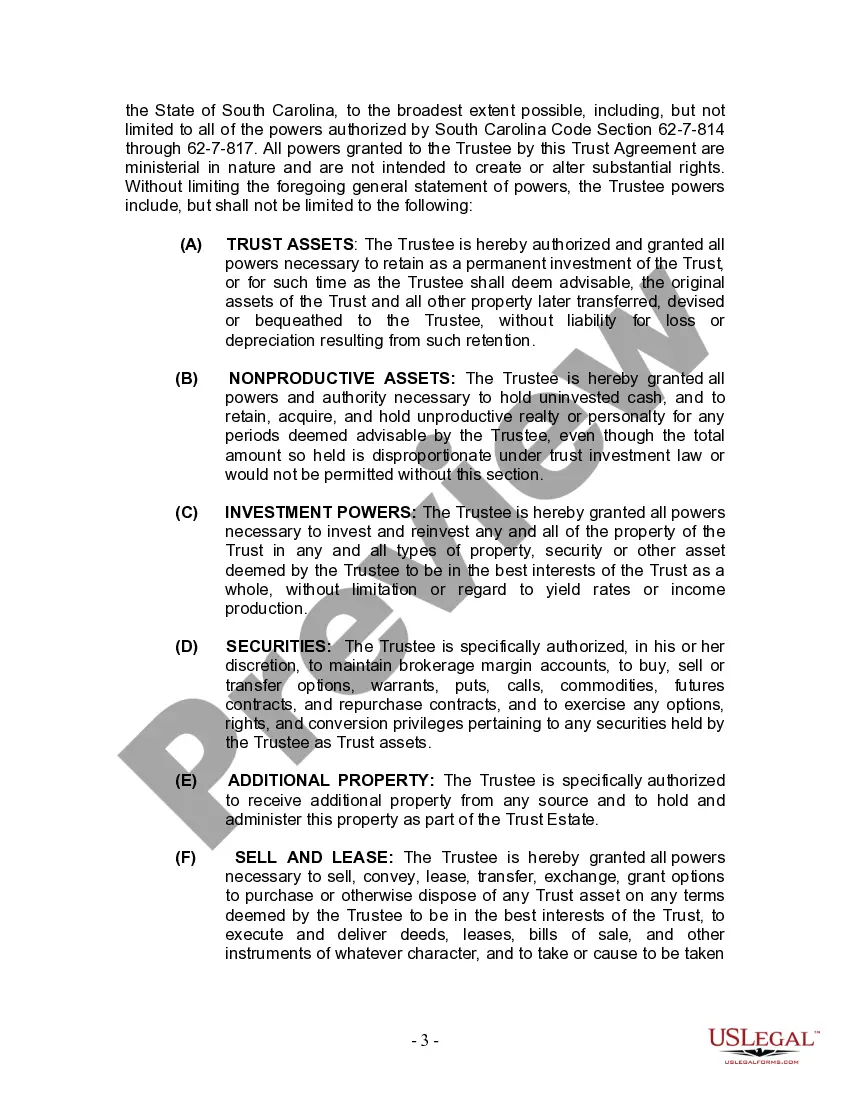
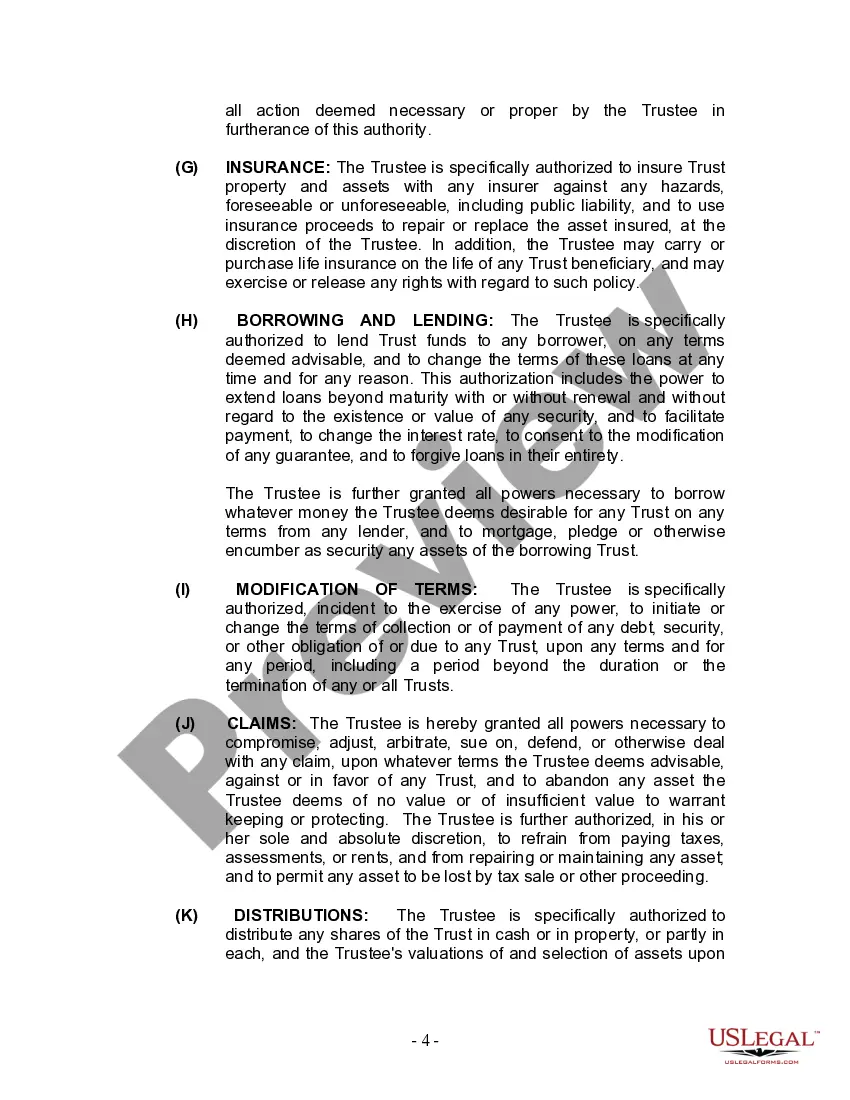
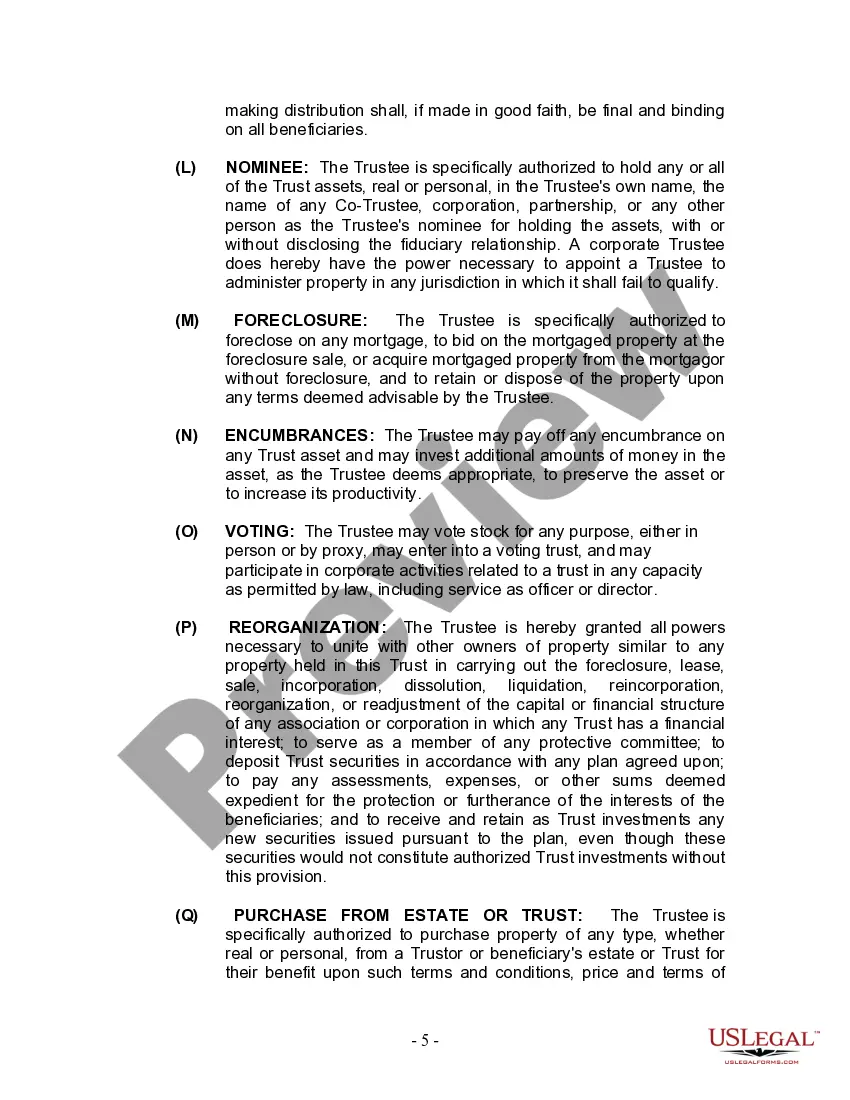
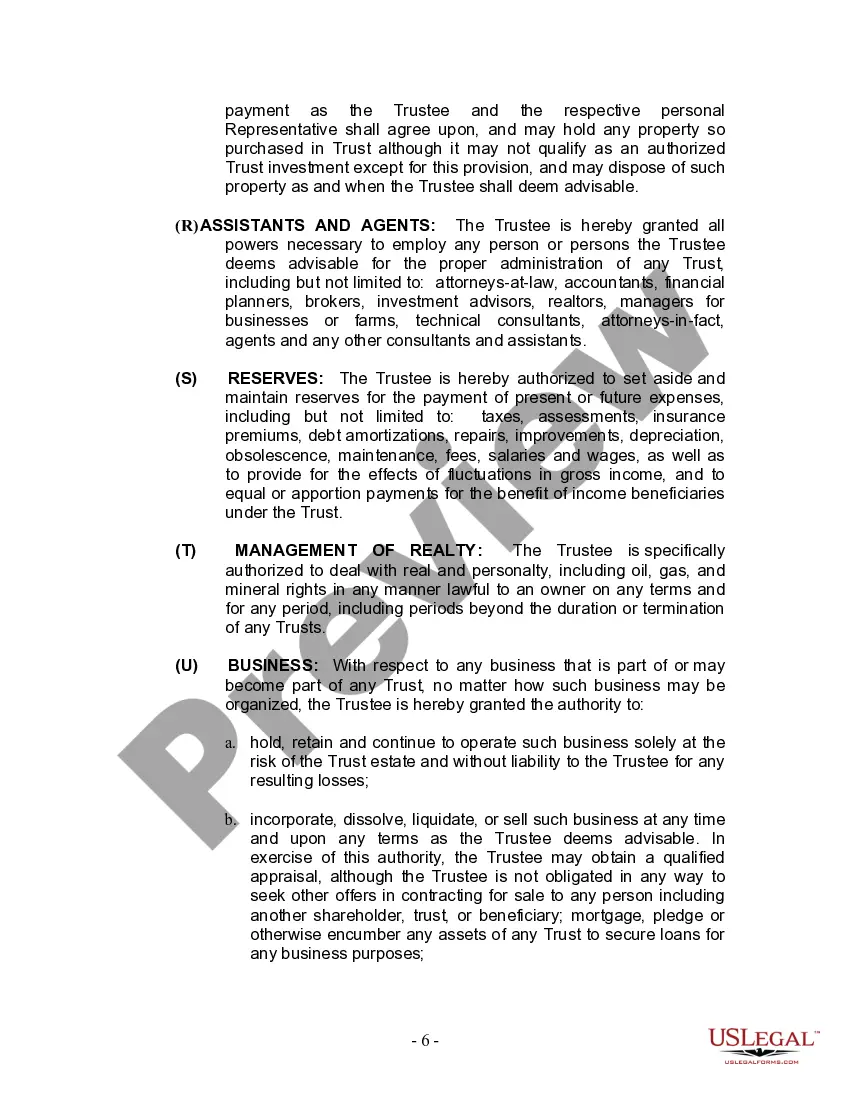
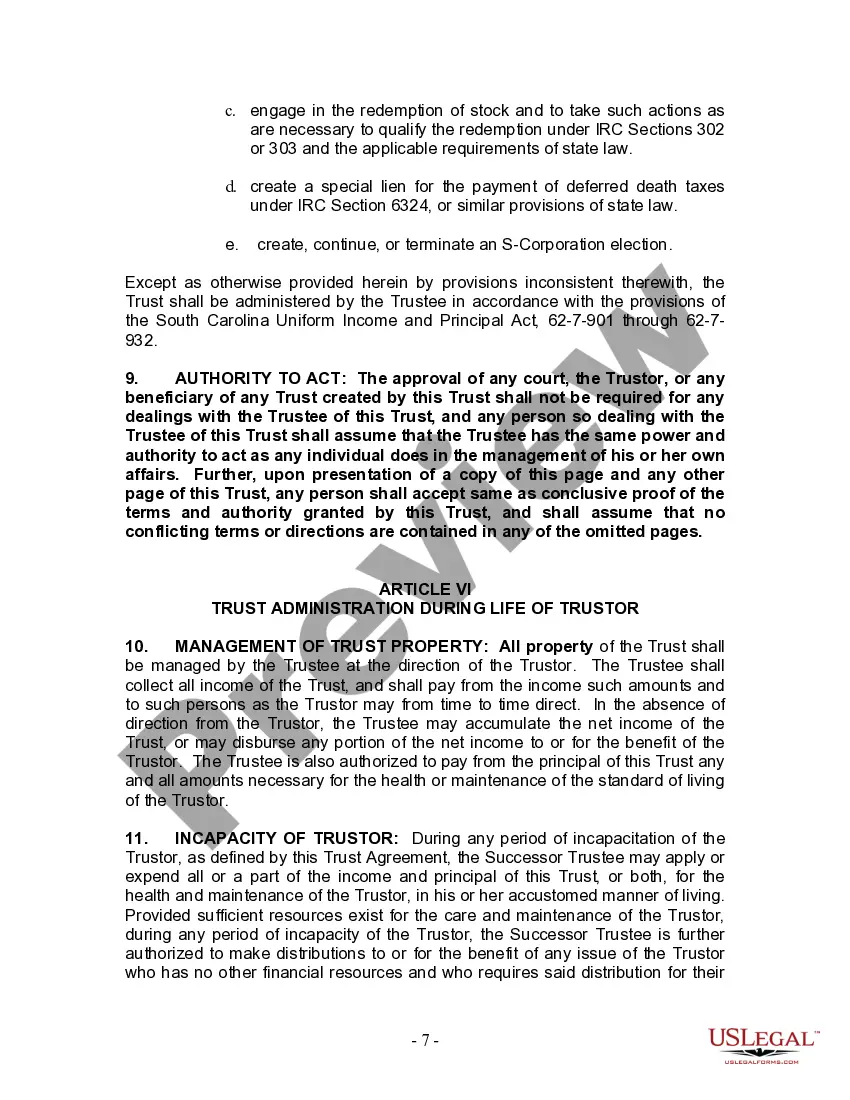
- Trustee Powers: Outlines the authority granted to the trustee for managing the trust's assets.
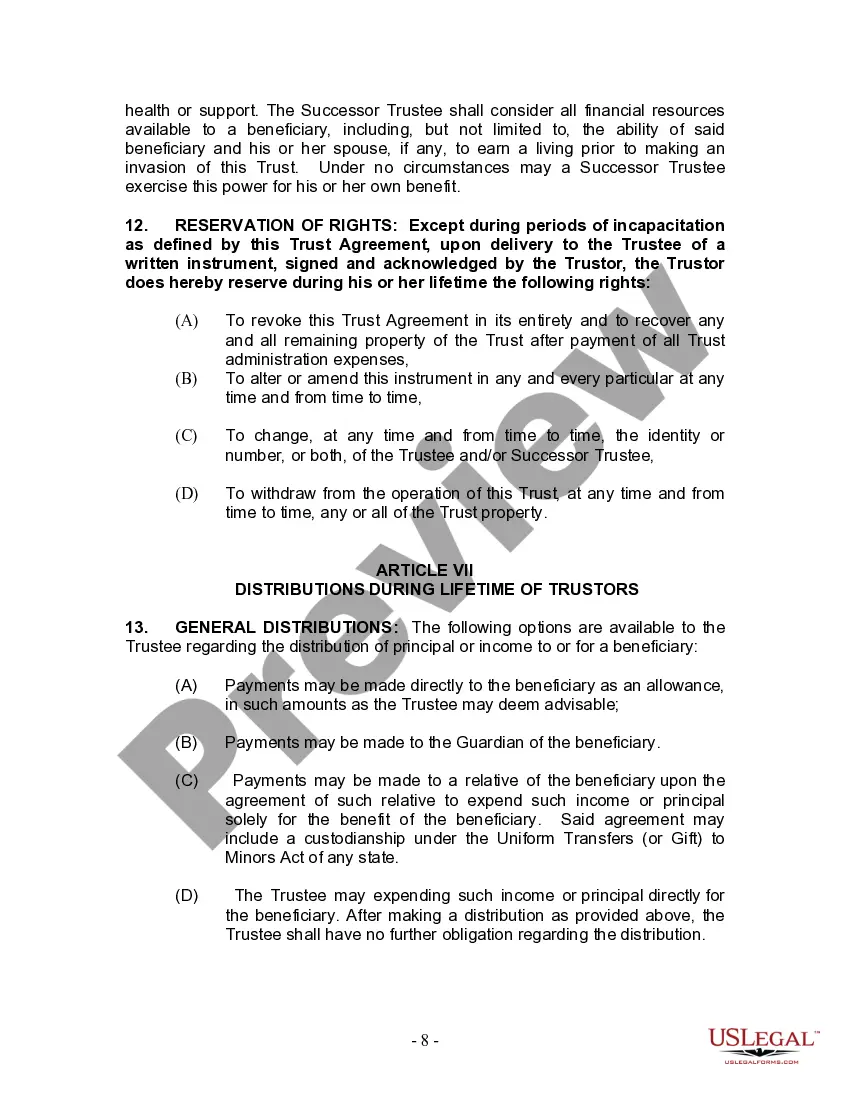
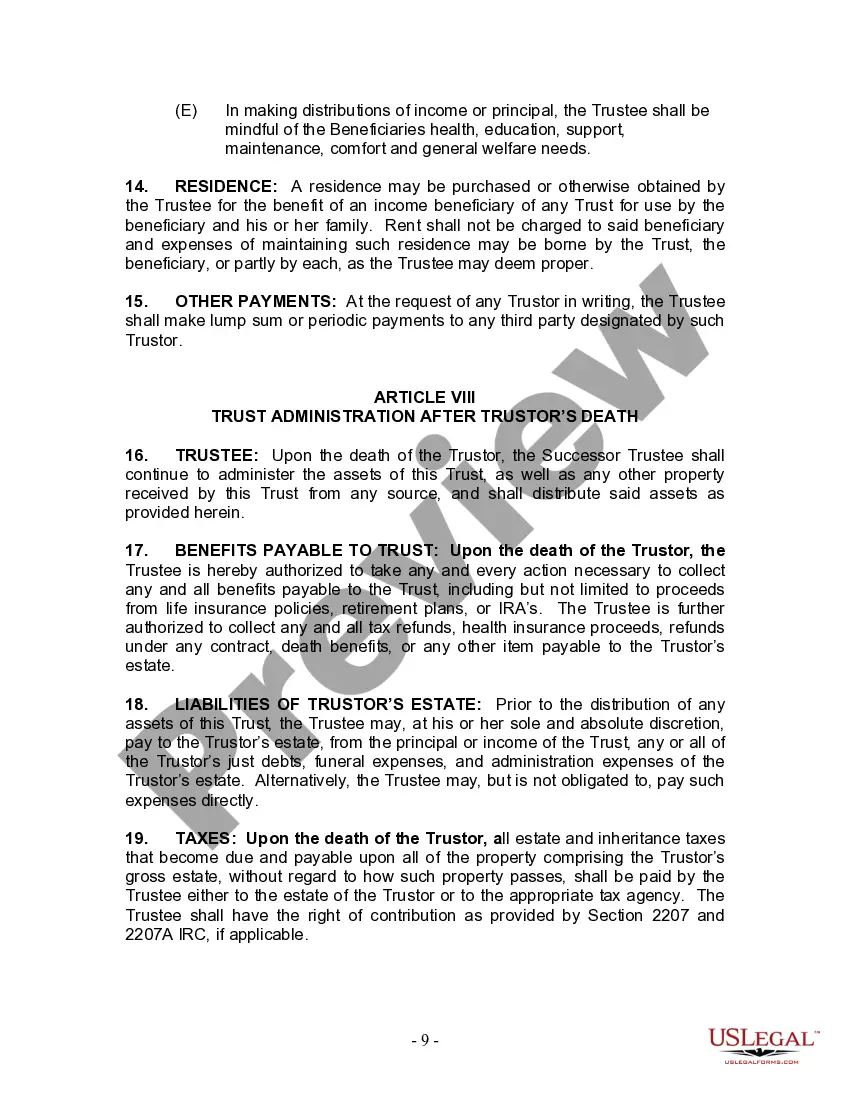
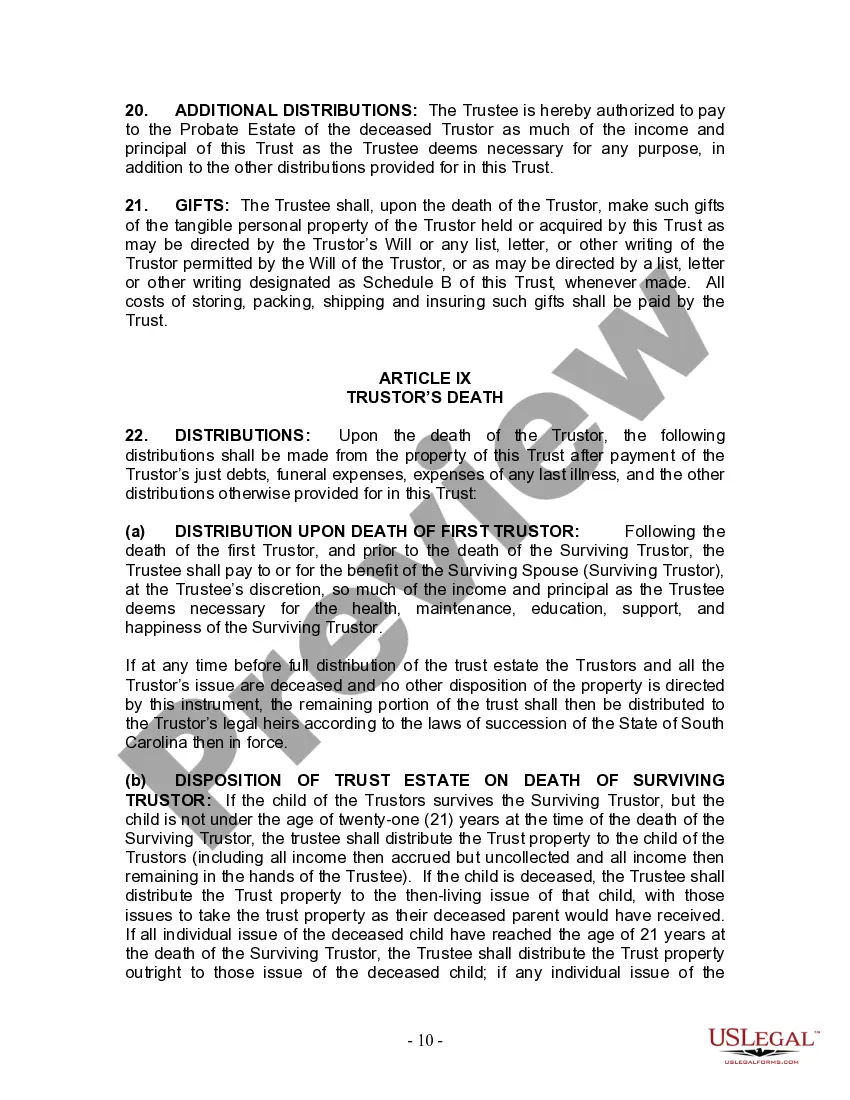
- Distribution Instructions: Specifies how assets will be distributed upon the death of the Trustors.




Common use cases
This form should be used when a husband and wife wish to establish a living trust to manage their assets and plan for their child's inheritance. It is suitable for couples who want to maintain control over their assets during their lifetime while ensuring that their child inherits their property without going through the lengthy probate process. It is especially important if the couple has specific wishes regarding asset distribution upon their death.
Who needs this form
- Married couples in South Carolina with one child.
- Couples seeking to avoid probate for their estate.
- Individuals wishing to manage how their assets are distributed after death.
- Parents wanting to ensure that their child is provided for in the event of their deaths.
How to complete this form
- Identify the parties involved: Enter the names of the husband and wife as Trustors.
- Name the Trust: Specify the name of the trust you are creating.
- Designate the Trustee: Choose and name the primary trustee and any successor trustees.
- List the assets: Prepare a schedule detailing all assets being transferred into the trust.
- Sign and date the document: The Trustors must sign the trust document in the presence of a notary.
Does this form need to be notarized?
Yes, this form must be notarized to be legally valid. US Legal Forms offers integrated online notarization services, providing secure video calls with licensed notaries available 24/7, ensuring your trust can be executed without the need for travel.
Get your form ready online
Our built-in tools help you complete, sign, share, and store your documents in one place.
Make edits, fill in missing information, and update formatting in US Legal Forms—just like you would in MS Word.
Download a copy, print it, send it by email, or mail it via USPS—whatever works best for your next step.
Sign and collect signatures with our SignNow integration. Send to multiple recipients, set reminders, and more. Go Premium to unlock E-Sign.
If this form requires notarization, complete it online through a secure video call—no need to meet a notary in person or wait for an appointment.
We protect your documents and personal data by following strict security and privacy standards.

Make edits, fill in missing information, and update formatting in US Legal Forms—just like you would in MS Word.

Download a copy, print it, send it by email, or mail it via USPS—whatever works best for your next step.

Sign and collect signatures with our SignNow integration. Send to multiple recipients, set reminders, and more. Go Premium to unlock E-Sign.

If this form requires notarization, complete it online through a secure video call—no need to meet a notary in person or wait for an appointment.

We protect your documents and personal data by following strict security and privacy standards.
Typical mistakes to avoid
- Failing to list all assets in the trust.
- Not specifying a successor trustee, leading to potential management issues.
- Omitting necessary signatures or failing to notarize the document.
Benefits of using this form online
- Convenience of downloading and filling out the form at your own pace.
- Editability allows for easy customization to fit your specific needs.
- Reliable templates drafted by licensed attorneys ensure compliance with state laws.
Legal use & context
- A living trust can minimize estate taxes and avoid probate, facilitating a smoother transition of assets.
- This form allows for flexible management of assets during the trustors' lifetime and specifies distributions after death.
- Creating a living trust can provide greater privacy than a will, as it does not become a matter of public record once it is executed.
What to keep in mind
- A living trust is essential for couples with children to manage their estate effectively.
- This form helps bypass probate, saving time and costs after death.
- Ensure proper notarization and compliance with state laws for validity.
Looking for another form?

Form popularity
FAQ
Houses and other real estate (even if they're mortgaged) stock, bond, and other security accounts held by brokerages (but think about naming a TOD beneficiary instead) small business interests (stock in a closely held corporation, partnership interests, or limited liability company shares)
There are five grounds for divorce in South Carolina: adultery, habitual drunkenness, physical cruelty, abandonment and no fault, which is based on the parties living separate and apart for at least one year. Mental abuse/cruelty is not a basis for divorce in South Carolina.
South Carolina's intestacy law says that if you die without a Will and have children and a spouse, your spouse will receive one-half of your intestate estate and your children will receive the other half. If there are no children, the surviving spouse would receive the entire intestate estate.
Marital property is all the real and personal property acquired by the parties during the marriage and owned at the date of filing for divorce. It doesn't matter if the family home bought during the marriage in only one spouse's name; the other spouse also has a right to it.
In an equitable distribution state such as South Carolina, only marital property is subject to division. Marital property includes any assets which the couple acquired together during the marriage.As long as the couple bought the home or other asset with marital funds, it is considered to be marital property.
There are basically four types of alimony in South Carolina: permanent periodic alimony, rehabilitative alimony, lump sum alimony and reimbursement alimony. Alimony is designed to allow the supported spouse to maintain the marital lifestyle.
A common-law marriage, like any other marriage, is a contract. The parties must agree between themselves to be married. They show their agreement by acting like a married couple: living together, treating each other as a spouse, and holding themselves out in the community as a married couple.
Qualified retirement accounts 401ks, IRAs, 403(b)s, qualified annuities. Health saving accounts (HSAs) Medical saving accounts (MSAs) Uniform Transfers to Minors (UTMAs) Uniform Gifts to Minors (UGMAs) Life insurance. Motor vehicles.