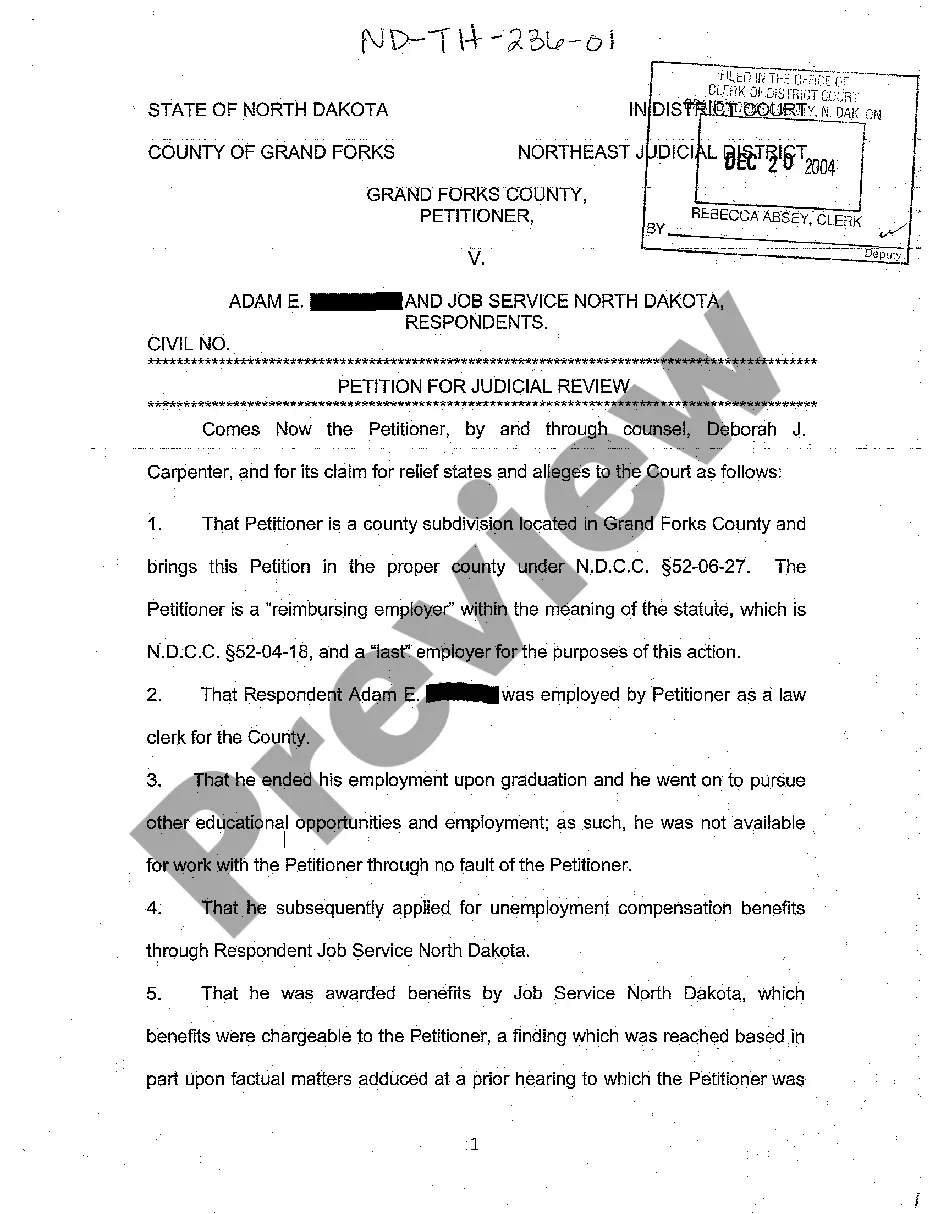
South Carolina Assignment of Contract for Deed by Seller
What this document covers
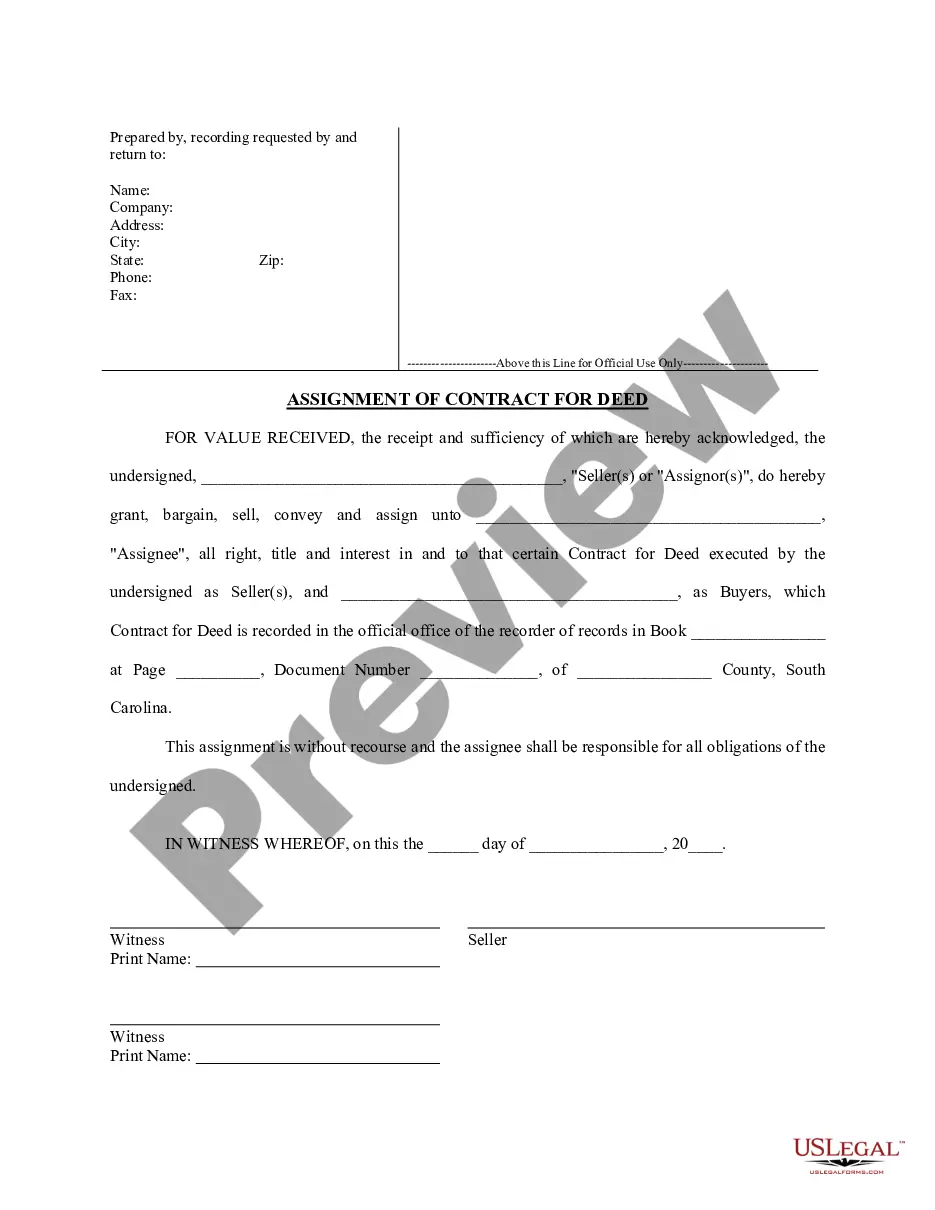
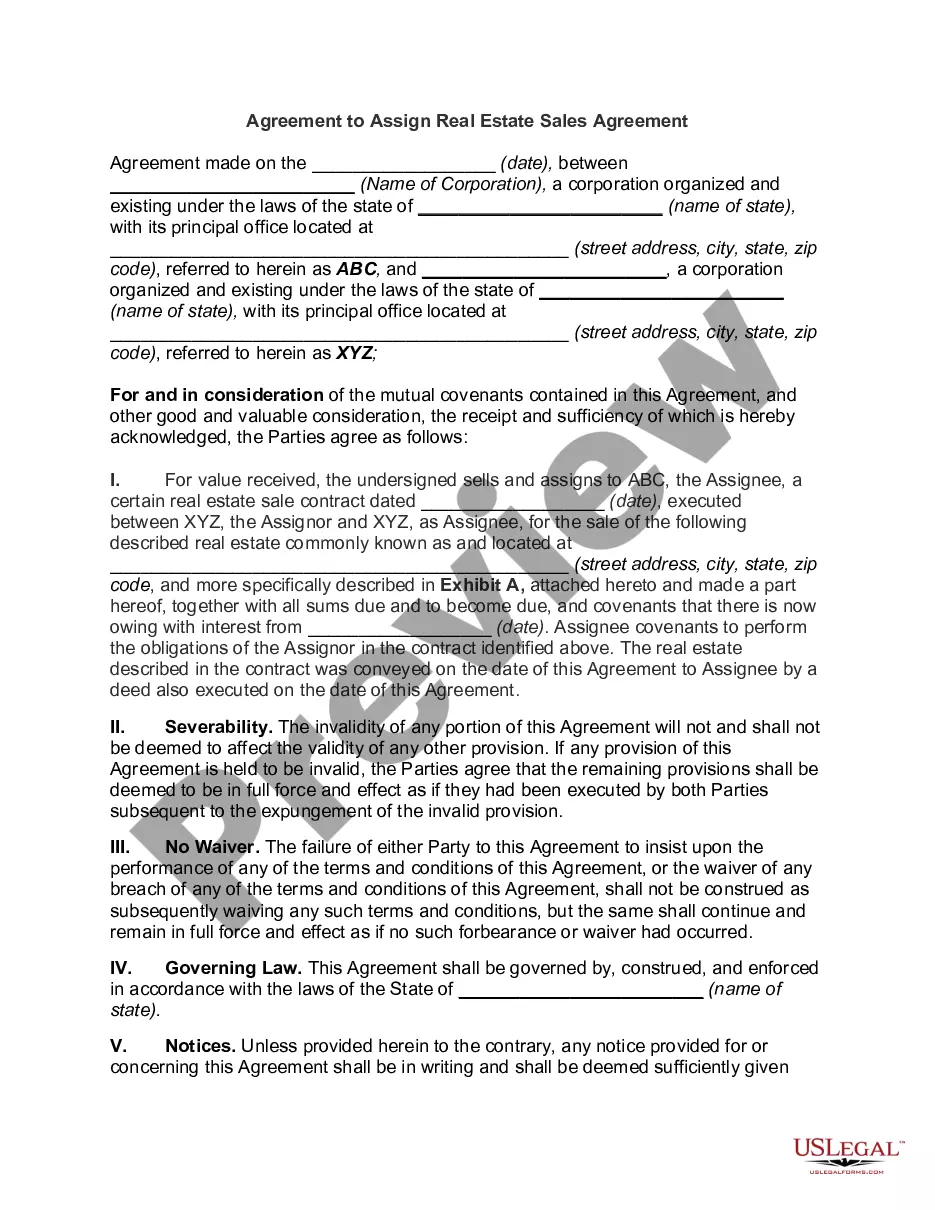
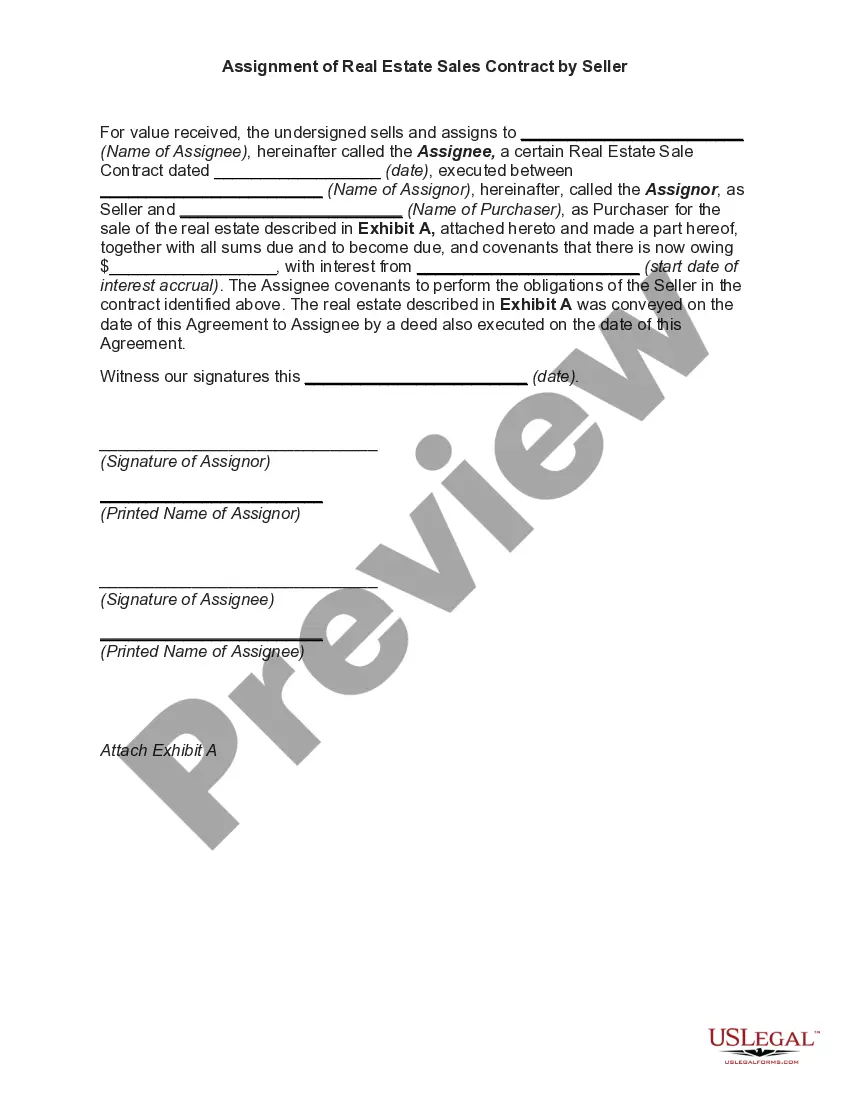
The Assignment of Contract for Deed by Seller is a legal document used to transfer a seller's rights and obligations under a contract for deed to a third party. This form enables the seller to assign the contract in exchange for cash, typically at a discounted value. By using this assignment, the assignee acquires the seller's payment rights from the original purchaser. This form is distinct from other real estate documents because it specifically addresses the assignment of contract rights rather than a traditional property deed transfer.
Main sections of this form
- Identification of the seller and the assignee.
- Details specifying the original contract for deed.
- Provision stating that the assignment is without recourse.
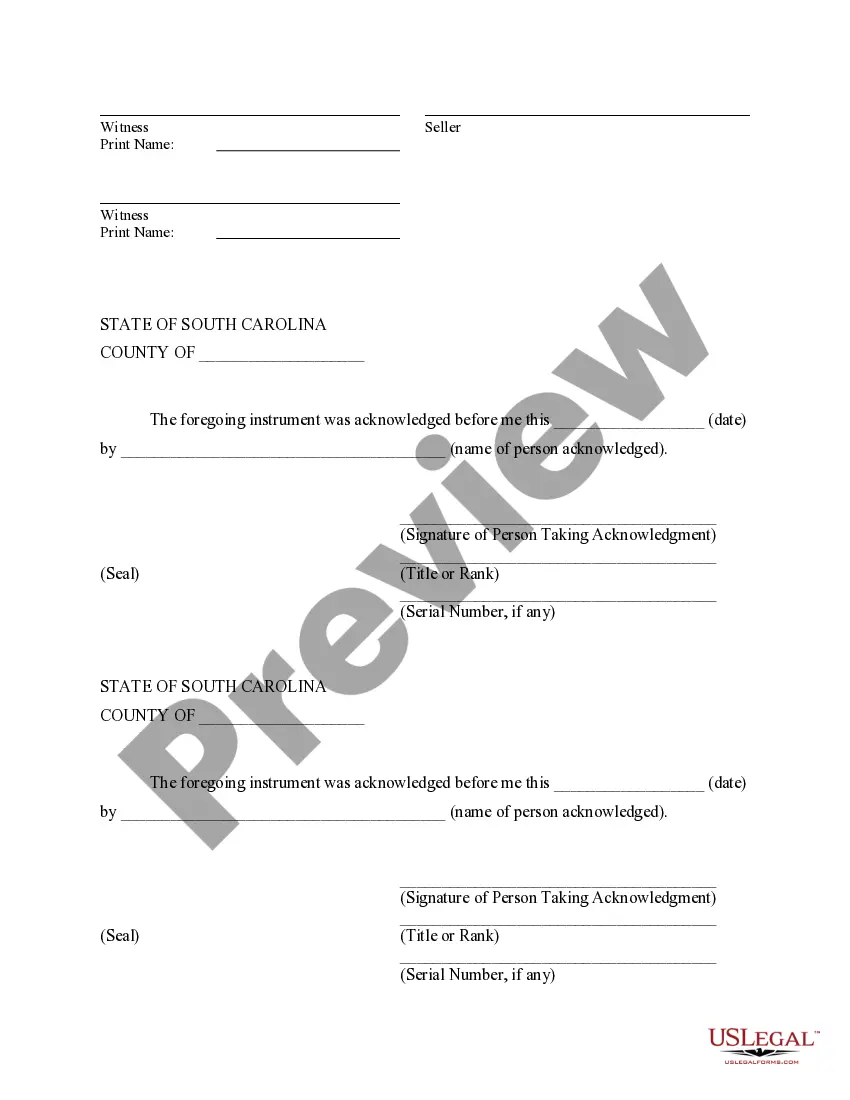
- Signatures of all parties involved and a witness.
- Date of acknowledgment before a notary public.
When to use this document
This form is useful when a seller who holds a contract for deed wishes to transfer their contractual rights to a third party. Scenarios may include the seller needing immediate cash or wanting to divest of responsibilities related to the original purchase agreement. Additionally, this form is used when the assignee is prepared to take over the future payment obligations from the original purchaser.
Intended users of this form
- Sellers who wish to assign their rights under a contract for deed.
- Assignees who are willing to take over future payment obligations from the original purchaser.
- Real estate investors seeking to acquire rights under existing contracts for deed.
Steps to complete this form
- Identify the parties: clearly list the seller and the assignee's names.
- Specify the original contract: include relevant details about the contract for deed being assigned.
- Enter the date for the assignment: indicate the effective date of the assignment.
- Obtain signatures: ensure the seller and any witnesses sign the document to validate the assignment.
- Have the document notarized: complete the acknowledgment section in front of a notary public, if required.
Notarization guidance
This form needs to be notarized to ensure legal validity. US Legal Forms provides secure online notarization powered by Notarize, allowing you to complete the process through a verified video call, available anytime.
Get your form ready online
Our built-in tools help you complete, sign, share, and store your documents in one place.
Make edits, fill in missing information, and update formatting in US Legal Forms—just like you would in MS Word.
Download a copy, print it, send it by email, or mail it via USPS—whatever works best for your next step.
Sign and collect signatures with our SignNow integration. Send to multiple recipients, set reminders, and more. Go Premium to unlock E-Sign.
If this form requires notarization, complete it online through a secure video call—no need to meet a notary in person or wait for an appointment.
We protect your documents and personal data by following strict security and privacy standards.

Make edits, fill in missing information, and update formatting in US Legal Forms—just like you would in MS Word.

Download a copy, print it, send it by email, or mail it via USPS—whatever works best for your next step.

Sign and collect signatures with our SignNow integration. Send to multiple recipients, set reminders, and more. Go Premium to unlock E-Sign.

If this form requires notarization, complete it online through a secure video call—no need to meet a notary in person or wait for an appointment.

We protect your documents and personal data by following strict security and privacy standards.
Typical mistakes to avoid
- Failing to include all necessary signatures from parties and witnesses.
- Not specifying the details of the original contract clearly.
- Neglecting to have the document notarized, if applicable.
- Using an outdated version of the form that may not comply with current laws.
Benefits of completing this form online
- Convenient access: download and complete the form anywhere and anytime.
- Editability: make necessary changes easily before finalizing the document.
- Reliability: forms drafted by licensed attorneys, ensuring legal validity.
- Time-saving: instant access without the need for a physical visit to an attorney.
Looking for another form?
Form popularity
FAQ
A real estate deal can take a turn for the worst if the contract is not carefully written to include all the legal stipulations for both the buyer and seller.You can write your own real estate purchase agreement without paying any money as long as you include certain specifics about your home.
An assignment of contract occurs when one party to an existing contract (the "assignor") hands off the contract's obligations and benefits to another party (the "assignee"). Ideally, the assignor wants the assignee to step into his shoes and assume all of his contractual obligations and rights.
An assignment is a legal term used in the context of the law of contract and of property. In both instances, assignment is the process whereby a person, the assignor, transfers rights or benefits to another, the assignee.The rights may be vested or contingent, and may include an equitable interest.
Buyers can have real estate agreements drawn up by a real estate attorney or agent. A title company or Realtor can help the buyer find someone to write a contract if necessary.You and the seller can negotiate the terms of the agreement, including the interest rate on the loan.
Find the right property. Acquire a real estate contract template. Submit the contract. Assign the contract. Collect the fee.
Failure to record a deed effectively makes it impossible for the public to know about the transfer of a property. That means the legal owner of the property appears to be someone other than the buyer, a situation that can generate serious ramifications.
Find a motivated seller. First, let's understand what a motivated seller is. Get the contract. Submit contract to title. Assign the contract to the buyer. Get paid!
Find a motivated seller. First, let's understand what a motivated seller is. Get the contract. Submit contract to title. Assign the contract to the buyer. Get paid!
In the first instance, if your deed is not recorded, there is nothing in the public record to stop the seller from conveying the property to another person.The second situation could happen if your seller fails to pay his or her debts and the seller's creditors file liens or judgments against your property.