Rhode Island Essential Legal Life Documents for New Parents
Overview of this form package
The Rhode Island Essential Legal Life Documents for New Parents form package provides crucial legal documents tailored specifically for new parents. This package is designed to help parents navigate the important changes that come with adding a child to their family. Unlike general form packages, this one focuses on laws specific to Rhode Island, ensuring that each document meets state requirements and effectively addresses your legal needs as a new parent.
What’s included in this form package
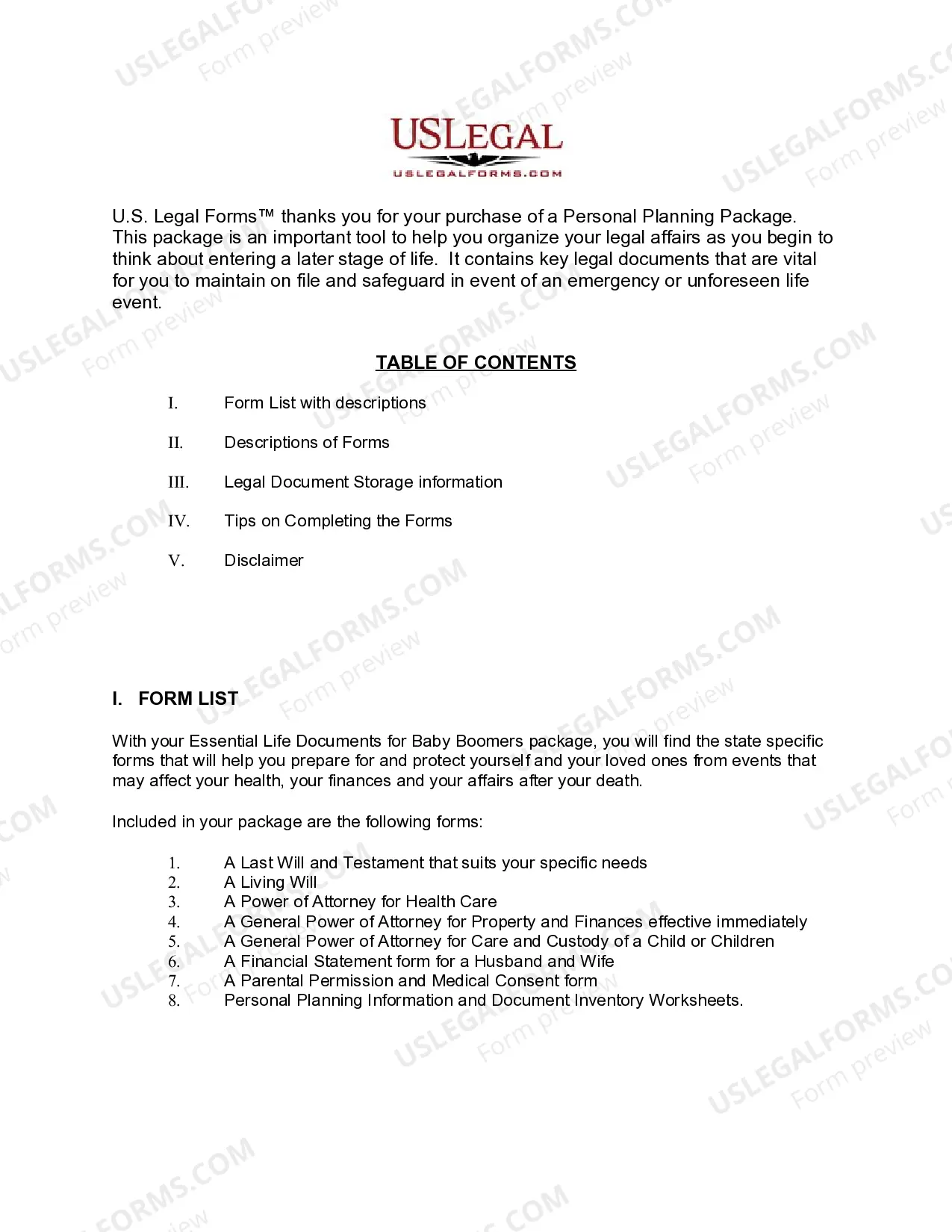
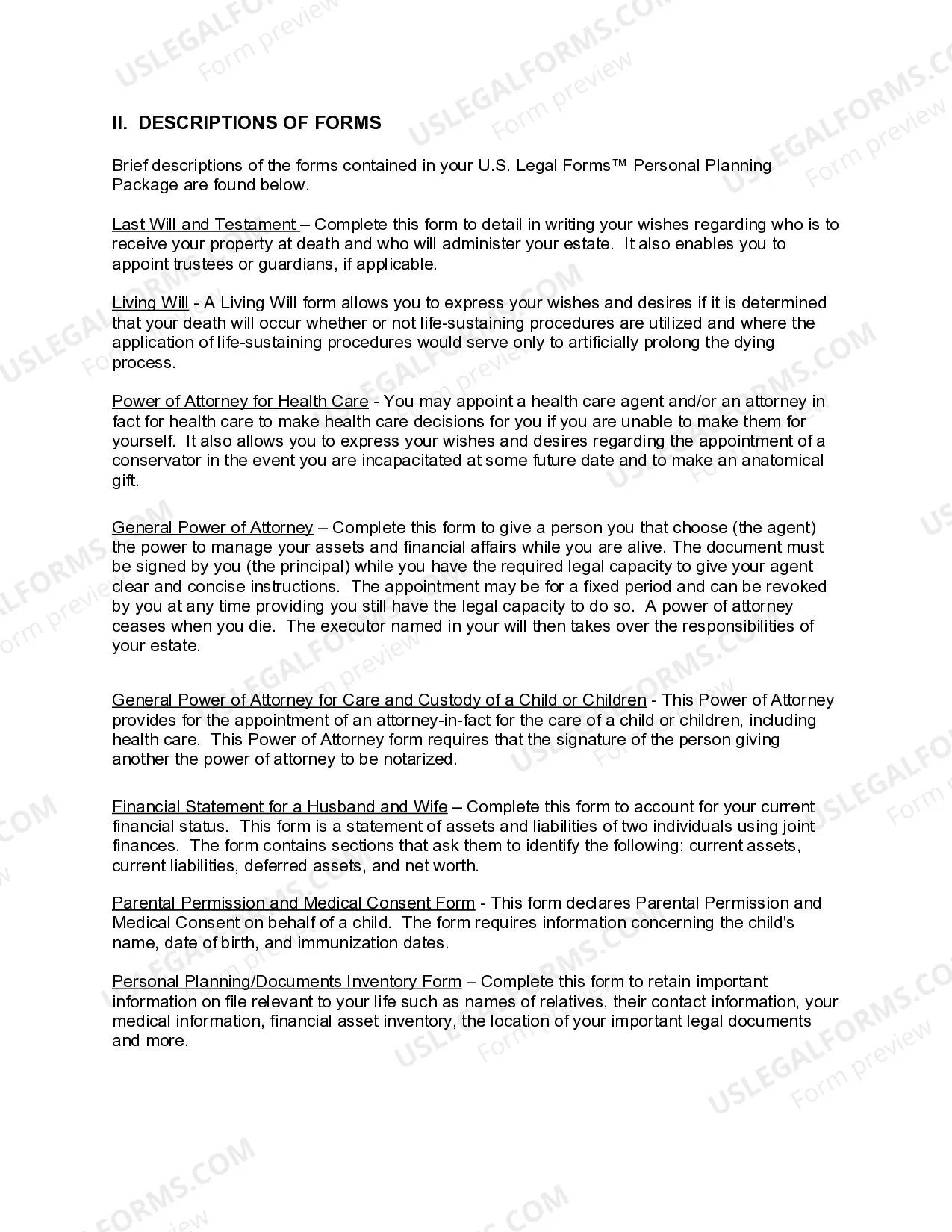
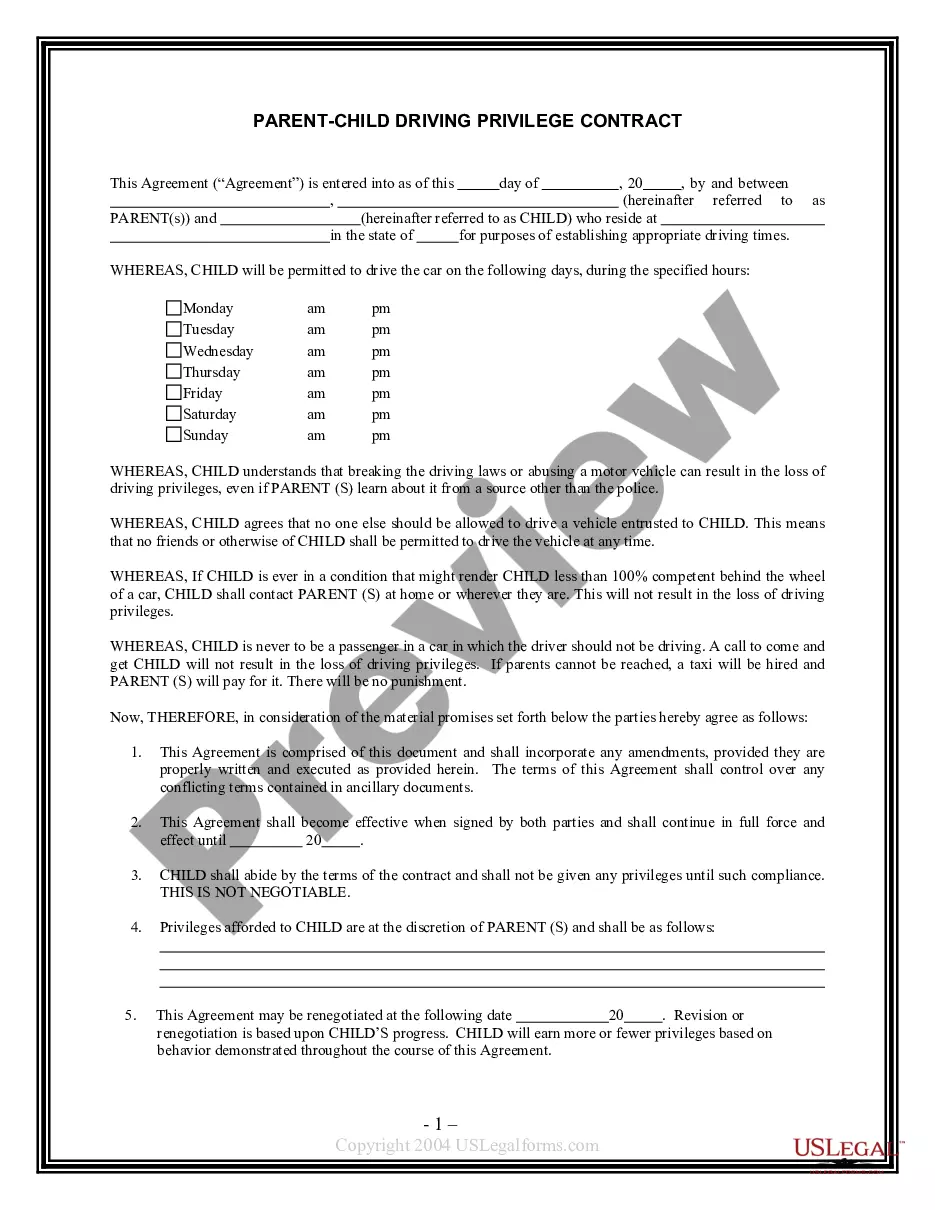
- General Power of Attorney for Care and Custody of Child or Children
- Statutory Short Form Power of Attorney
- Statutory Durable Power of Attorney for Health Care
- Statutory Equivalent of Living Will or Declaration
- Financial Statement Form - Husband and Wife Joint
- Parental Permission and Medical Consent Form
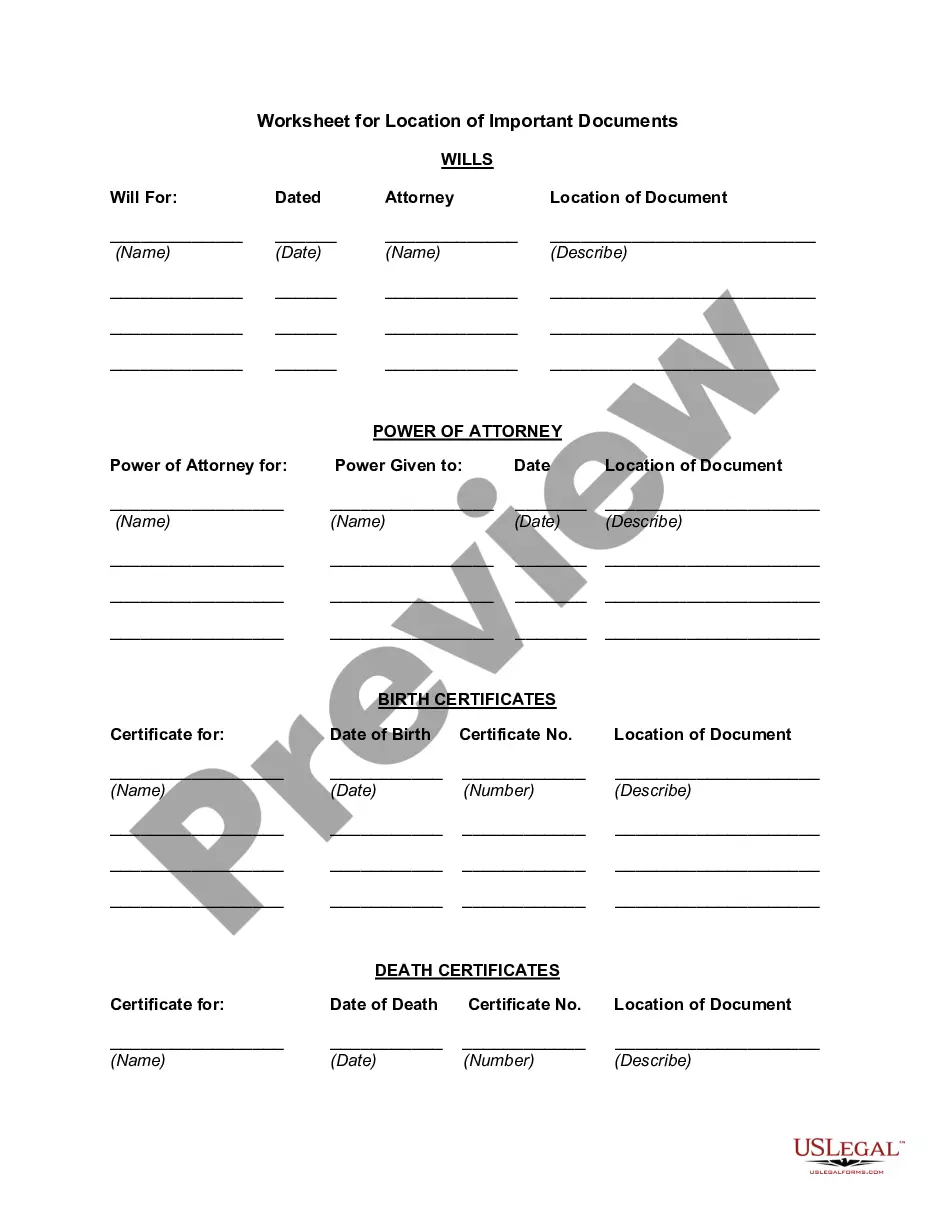
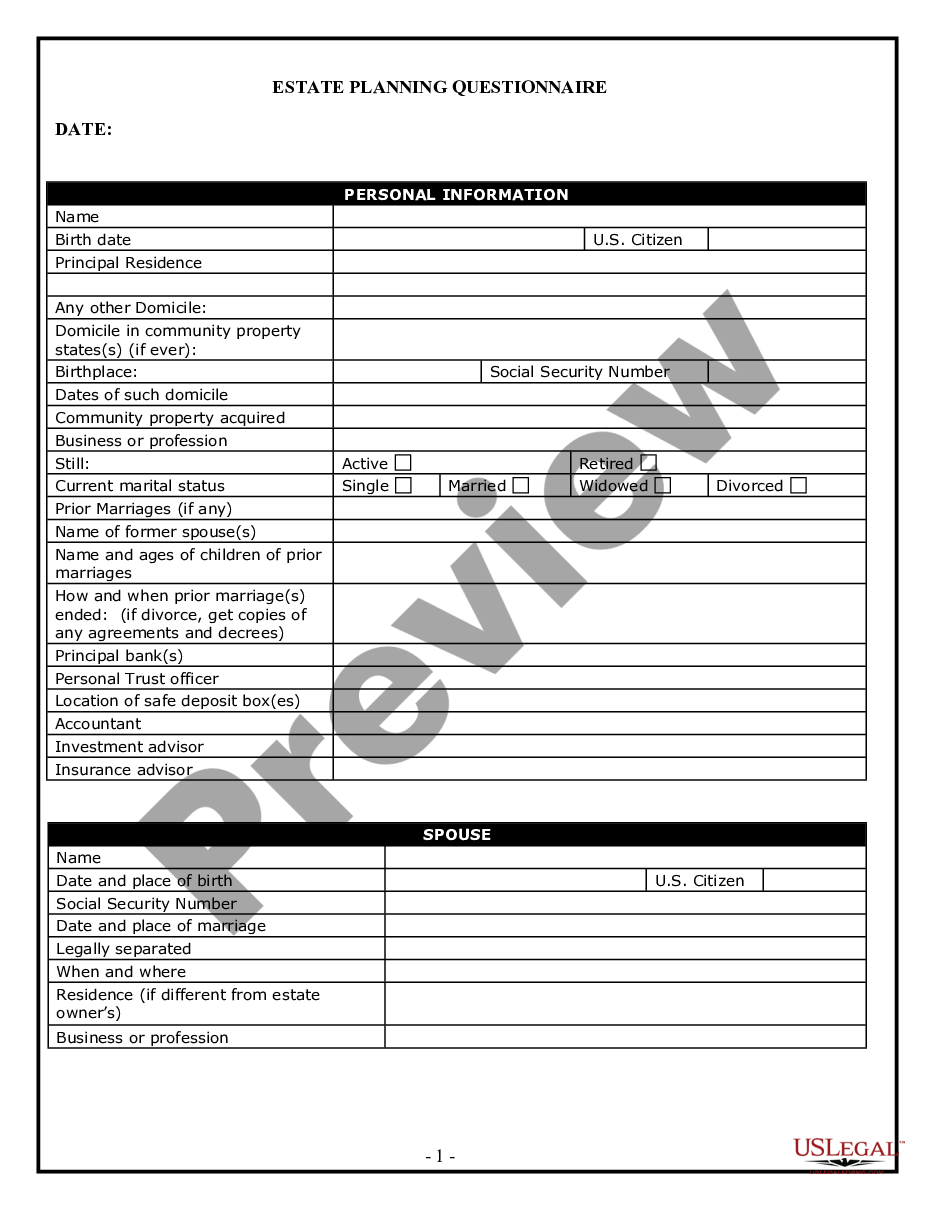
- Personal Planning Information and Document Inventory Worksheets - A Legal Life Document
When to use this document
This form package is ideal for new parents who want to ensure their legal affairs are in order after the birth or adoption of a child. Use this package when you need to:
- Establish a will to protect your child's future.
- Document your healthcare preferences in case of an emergency.
- Assign a power of attorney for both health care and financial matters.
- Provide medical consent for your child.
- Create a comprehensive inventory of important documents for your family.
Intended users of this form package
- New parents in Rhode Island.
- Expectant parents looking to prepare for their child's arrival.
- Adoptive parents planning for the legal well-being of their adopted child.
- Parents who want to establish clear legal documents for their family's future.
Completing these forms step by step
- Review the included forms carefully to understand their purposes.
- Identify and enter all relevant personal information in the appropriate fields.
- Gather necessary information such as medical preferences and financial details.
- Sign the forms where indicated, ensuring proper witnessing or notarization if necessary.
- Store completed documents securely, such as in a safe deposit box.
Notarization guidance for this package
Yes, some forms in this package must be notarized to be legally valid. This typically applies to power of attorney documents and may also affect other forms as required by local law. US Legal Forms offers integrated online notarization, allowing you to complete this step securely via video call without needing to leave your home.
Get your form ready online
Our built-in tools help you complete, sign, share, and store your documents in one place.
Make edits, fill in missing information, and update formatting in US Legal Forms—just like you would in MS Word.
Download a copy, print it, send it by email, or mail it via USPS—whatever works best for your next step.
Sign and collect signatures with our SignNow integration. Send to multiple recipients, set reminders, and more. Go Premium to unlock E-Sign.
If this form requires notarization, complete it online through a secure video call—no need to meet a notary in person or wait for an appointment.
We protect your documents and personal data by following strict security and privacy standards.

Make edits, fill in missing information, and update formatting in US Legal Forms—just like you would in MS Word.

Download a copy, print it, send it by email, or mail it via USPS—whatever works best for your next step.

Sign and collect signatures with our SignNow integration. Send to multiple recipients, set reminders, and more. Go Premium to unlock E-Sign.

If this form requires notarization, complete it online through a secure video call—no need to meet a notary in person or wait for an appointment.

We protect your documents and personal data by following strict security and privacy standards.
Mistakes to watch out for
- Not updating your will after significant life changes.
- Failing to assign a power of attorney for health care and finances.
- Leaving out important details in medical consent forms.
- Not storing legal documents in a secure and accessible location.
Benefits of using this package online
- Convenience of instant access to essential legal documents.
- Editability allows you to tailor documents to fit your specific needs.
- Reliability with forms drafted by licensed attorneys familiar with Rhode Island law.
- A significant cost-saving of up to 40% compared to purchasing forms individually.
Quick recap
- The package includes vital documents for new parents in Rhode Island.
- It covers wills, power of attorney, medical consent, and more.
- Documents are state-specific, ensuring compliance with local laws.
- Availability of online notarization for select forms enhances convenience.
Looking for another form?

Form popularity
FAQ
In situations where the parents are unmarried, courts will generally grant physical placement to one parent. However, legal custody may be shared between both parents.
Establishing paternity ensures a father's legal rights and various rights and privileges for their children, such as rights to inheritance, father's medical and life insurance benefits, and Social Security and veterans' benefits, plus access to paternal family health history.
Under Rhode Island law, the obligation to pay child support should end when a child turns 18 and graduates high school, whichever is later, but in no event beyond age 19. No motion to terminate child support is necessary if the support is for an only child and there is no garnishment of the support.
If you get married after the child is born, it can establish paternity retroactively. This is not an automatic process, and it is in you and your child's best interest to work with a family lawyer to establish paternity in this way. Both parents can sign an Affidavit of Paternity, which establishes paternity.
The answer is usually no, a parent cannot stop a child from seeing the other parent unless a court order states otherwise. This question often comes up in the following situations.The parents have an existing court order, and a parent is violating the court order by interfering with the other parent's parenting time.
A father has parental responsibility if he's married to the mother at the time of the child's birth.An unmarried father has parental responsibility if he's named, or becomes named, on the child's birth certificate (from 15 April 2002).
Get on the birth certificate. Once your child is born, the easiest way to establish paternity is by getting your name on the birth certificate. Get an order through an administrative agency. Get a court order.
A Parental Responsibility Agreement is an agreement made between the mother and the father to allow him to have Parental Responsibility if the parents are not married or in a civil partnership together. Both parents will have to agree to this.
Although many people assume that moms have more child custody rights than dads, the truth is, U.S. custody laws don't give mothers an edge in custody proceedings.However, the fact is that no custody laws in the U.S. give mothers a preference or additional rights to custody of their children.