Rhode Island Letter from Landlord to Tenant about Intent to increase rent and effective date of rental increase
What this document covers
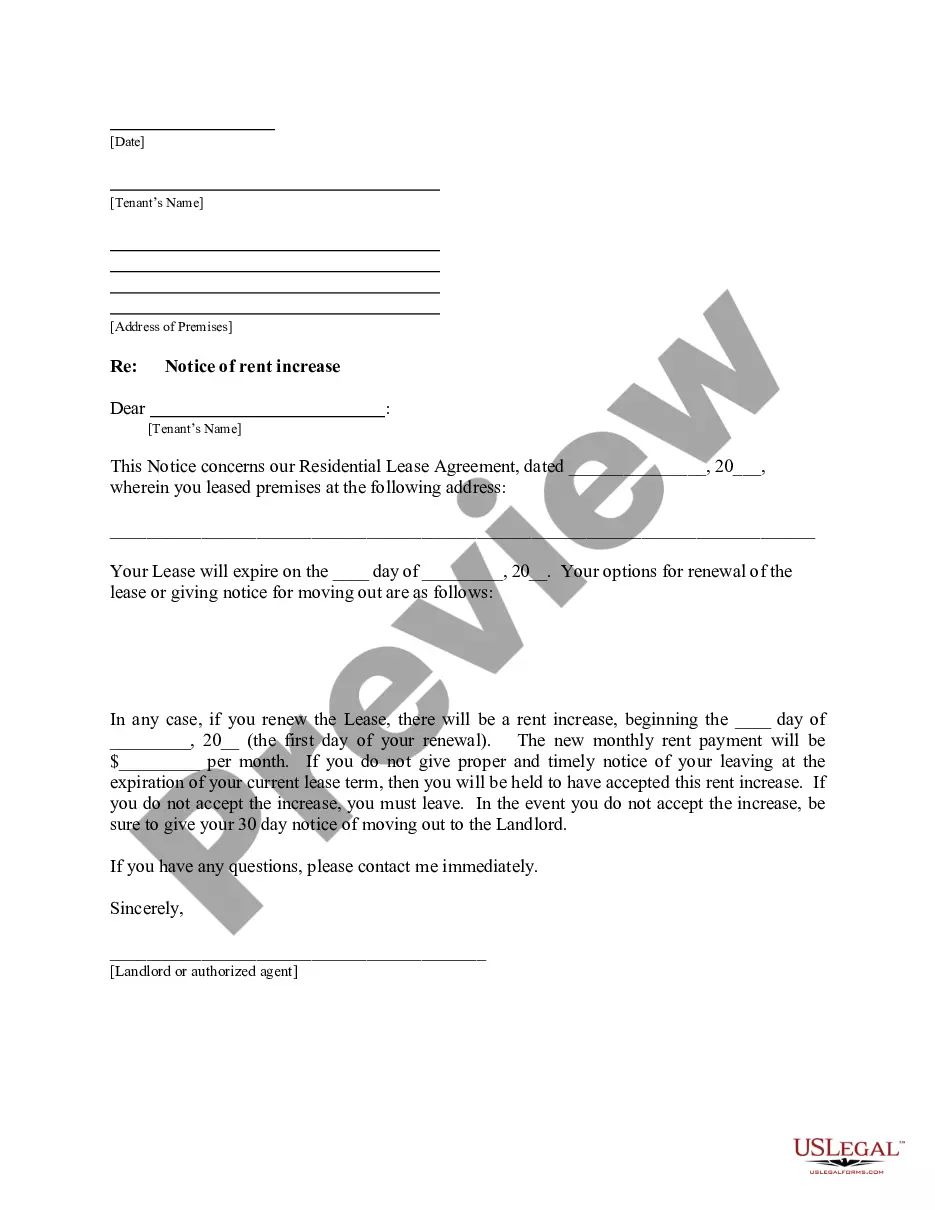
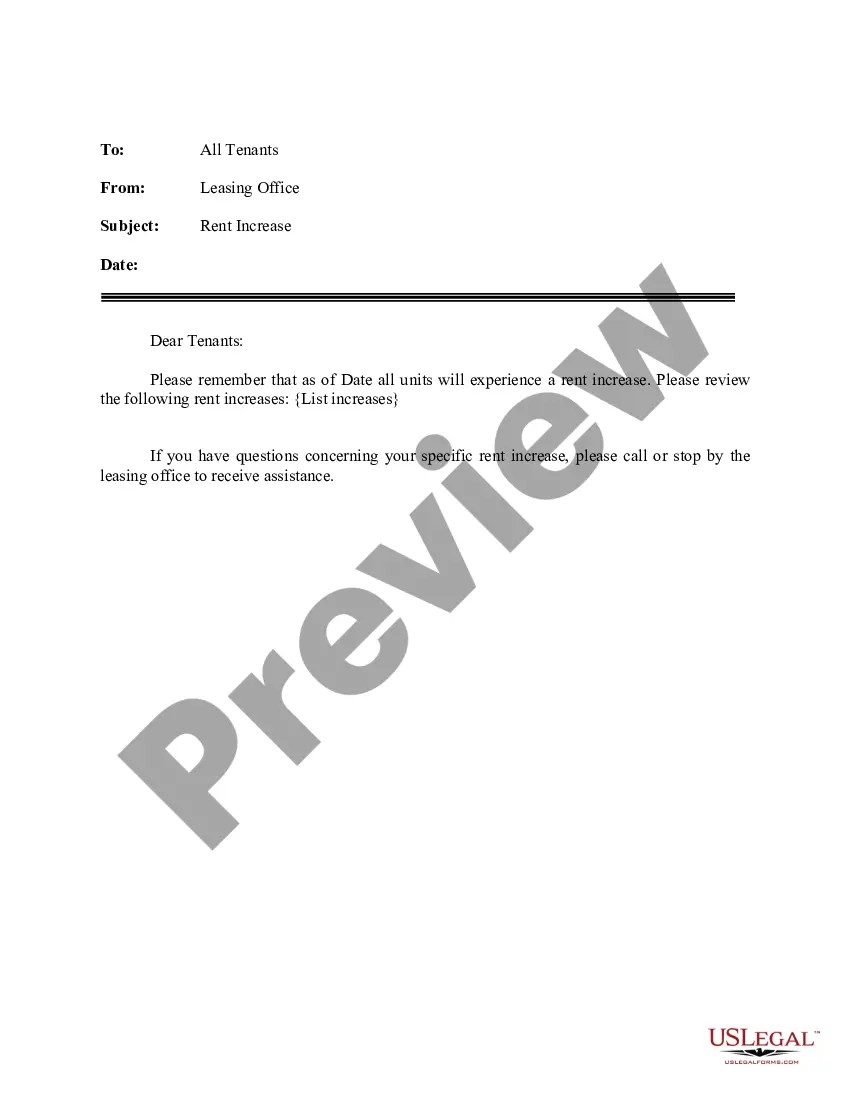
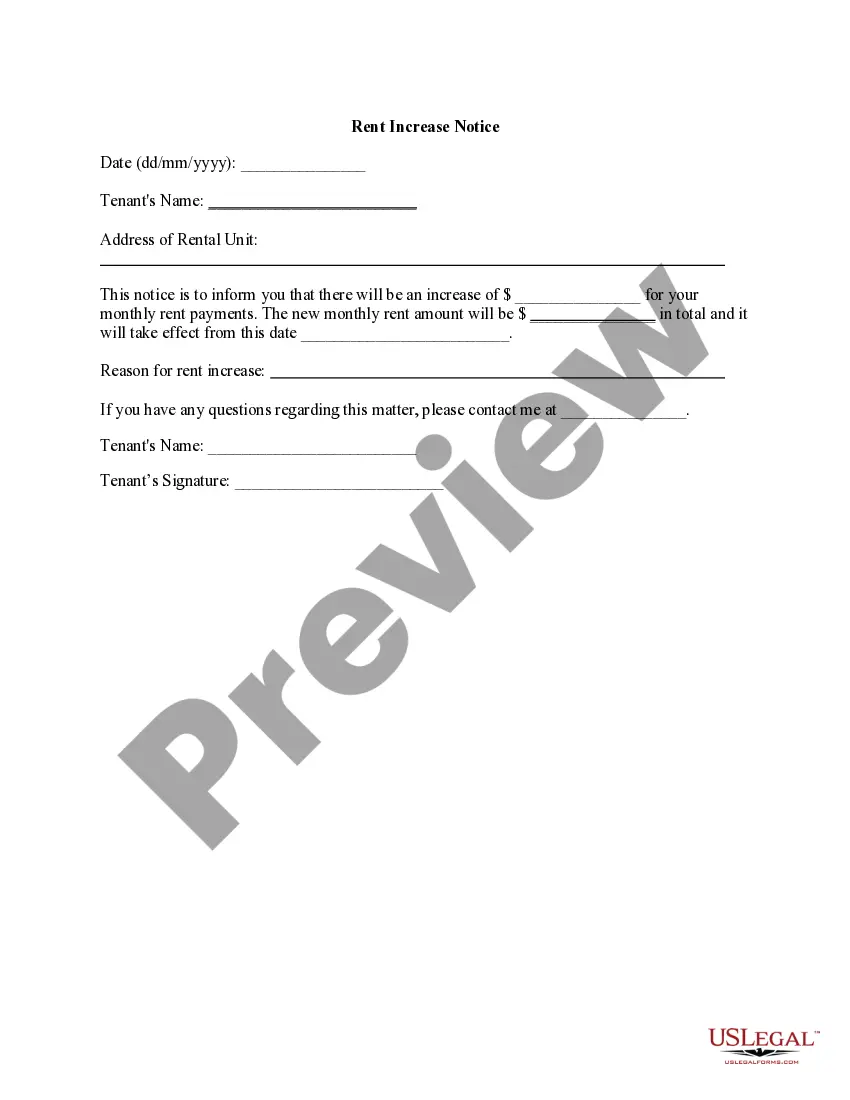
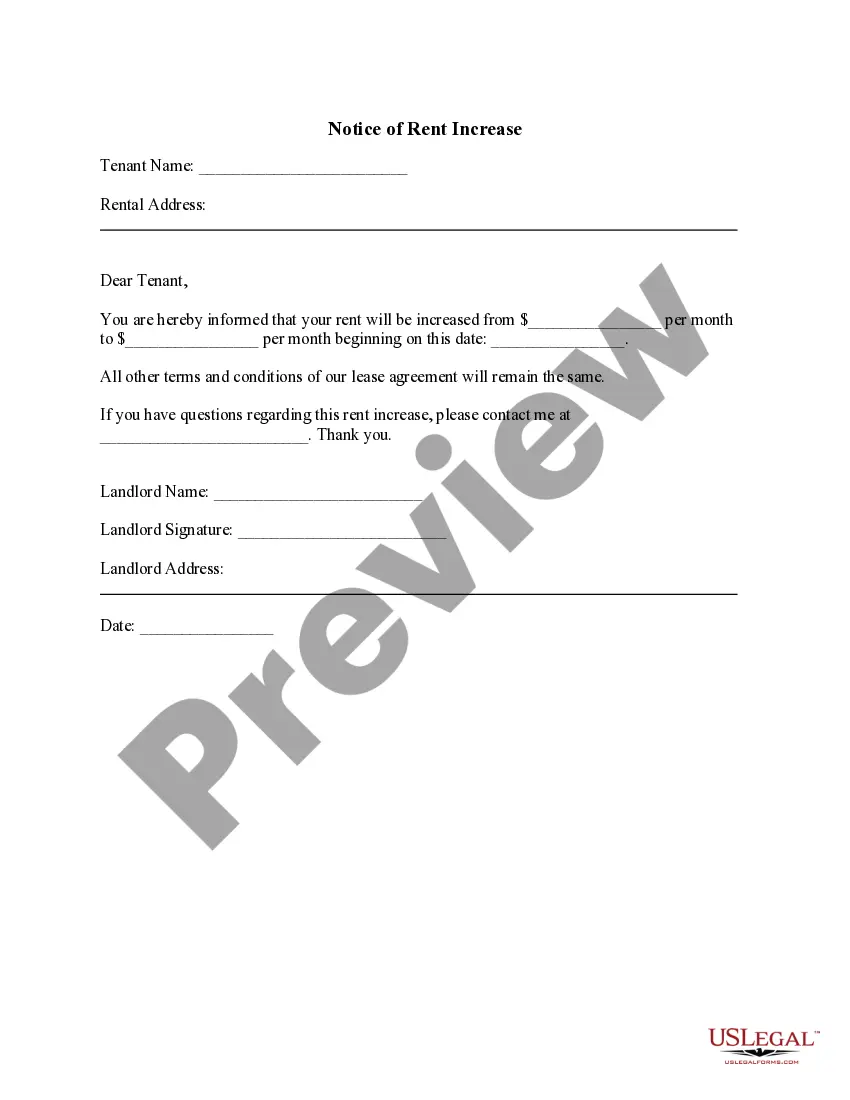
This form is a notice from a landlord to a tenant about the intent to increase rent and the effective date of that increase. It serves as a formal communication indicating changes to the rental terms after the lease term has expired. Unlike other notices, this letter specifically addresses rental increases and outlines the tenant's options regarding their lease agreement.
Key components of this form
- Reference to the original residential lease agreement and its expiration date.
- Notification of the proposed rent increase amount.
- Outline of the tenant's options to either vacate or remain with new terms.
- Contact information for the landlord or authorized agent.
- Signature line for the landlord or agent.
When this form is needed
This form should be used when a landlord intends to raise the rent after the tenantâs lease term has expired. It is essential for informing tenants about the new rental terms and provides them with clear options for their next steps, whether that be renewing the lease or vacating the premises.
Who needs this form
- Landlords who are planning to increase rent after a lease expiration.
- Property managers acting on behalf of landlords to manage lease agreements.
- Tenants wishing to ensure they are properly notified of any rent increase.
Instructions for completing this form
- Identify the original lease agreement date.
- Specify the address of the leased premises.
- State the new effective date of the rent increase.
- Clearly outline the options available to the tenant.
- Sign the document to validate it.
Does this document require notarization?
This form does not typically require notarization unless specified by local law. Check your state regulations to ensure compliance with any specific requirements.
Get your form ready online
Our built-in tools help you complete, sign, share, and store your documents in one place.
Make edits, fill in missing information, and update formatting in US Legal Forms—just like you would in MS Word.
Download a copy, print it, send it by email, or mail it via USPS—whatever works best for your next step.
Sign and collect signatures with our SignNow integration. Send to multiple recipients, set reminders, and more. Go Premium to unlock E-Sign.
If this form requires notarization, complete it online through a secure video call—no need to meet a notary in person or wait for an appointment.
We protect your documents and personal data by following strict security and privacy standards.

Make edits, fill in missing information, and update formatting in US Legal Forms—just like you would in MS Word.

Download a copy, print it, send it by email, or mail it via USPS—whatever works best for your next step.

Sign and collect signatures with our SignNow integration. Send to multiple recipients, set reminders, and more. Go Premium to unlock E-Sign.

If this form requires notarization, complete it online through a secure video call—no need to meet a notary in person or wait for an appointment.

We protect your documents and personal data by following strict security and privacy standards.
Common mistakes to avoid
- Failing to provide adequate notice as required by state law.
- Not clearly stating the amount of the rent increase.
- Omitting the contact information for follow-up questions.
- Using unclear language that may confuse the tenant about their options.
Benefits of using this form online
- Immediate access to a professionally drafted legal form.
- Easy customization to meet specific circumstances.
- Convenient downloading for timely distribution.
- Accessibility for individuals unfamiliar with legal jargon.
Legal use & context
- This form provides a clear method for landlords to communicate changes in rental terms legally.
- Helps prevent disputes by ensuring that both parties understand the new rental terms.
Main things to remember
- Always communicate rental increases formally and legally.
- Ensure compliance with state-specific regulations to avoid conflicts.
- This form clarifies tenant options and responsibilities effectively.
Looking for another form?
Form popularity
FAQ
Under Rhode Island law, the rental agreement between a tenant and a landlord is a contract. A landlord is permitted to attempt to increase a tenant's rent by any amount for any reason, as long as the increase was not done for an illegal reason, and as long as the increase was done by proper procedures.
The average rent increase per year is, give or take, somewhere between 3% and 5%. For a monthly rent payment of $1,500, for example, we're talking between $45 and $75 more per month.
Essentially, this means your landlord can only raise rents if they're in line with the current market. The AST often has a section suggesting how much rents could increase by. The percentage is typically between 0.5 and 5%, with market rents expected to be somewhere in that bracket after a 12-month AST comes to an end.
A. In a month-to-month tenancy, the landlord may raise the rent after giving the tenant 45 days' written notice.
In most states, a landlord must give tenants notice at least 30 days before they'll enforce a rent increase. However, in other states like California, the notice can increase to 60 days' notice if the increase is more than 10% of the current rent rate.
There is no rent control in Rhode Island, so a landlord is free to set the rent at whatever s/he decides. You and the landlord can agree on the date that rent will be paid. If your rent is more than 15 days late, you can be evicted for non-payment and the landlord can use a quick court proceeding.
Tenant's name. Property address. Landlord name and contact information. Date the letter is written. Date the rent increase will take effect. Amount of rent increase. Current cost of rent.
Remember you're a business. Do your research. Raise the rent all at once or incrementally. Don't negotiate or ask tenants what they think a fair rent increase would be. Be courteous and firm. Find a template you like. Send a formal letter by certified mail. Give the tenant notice.