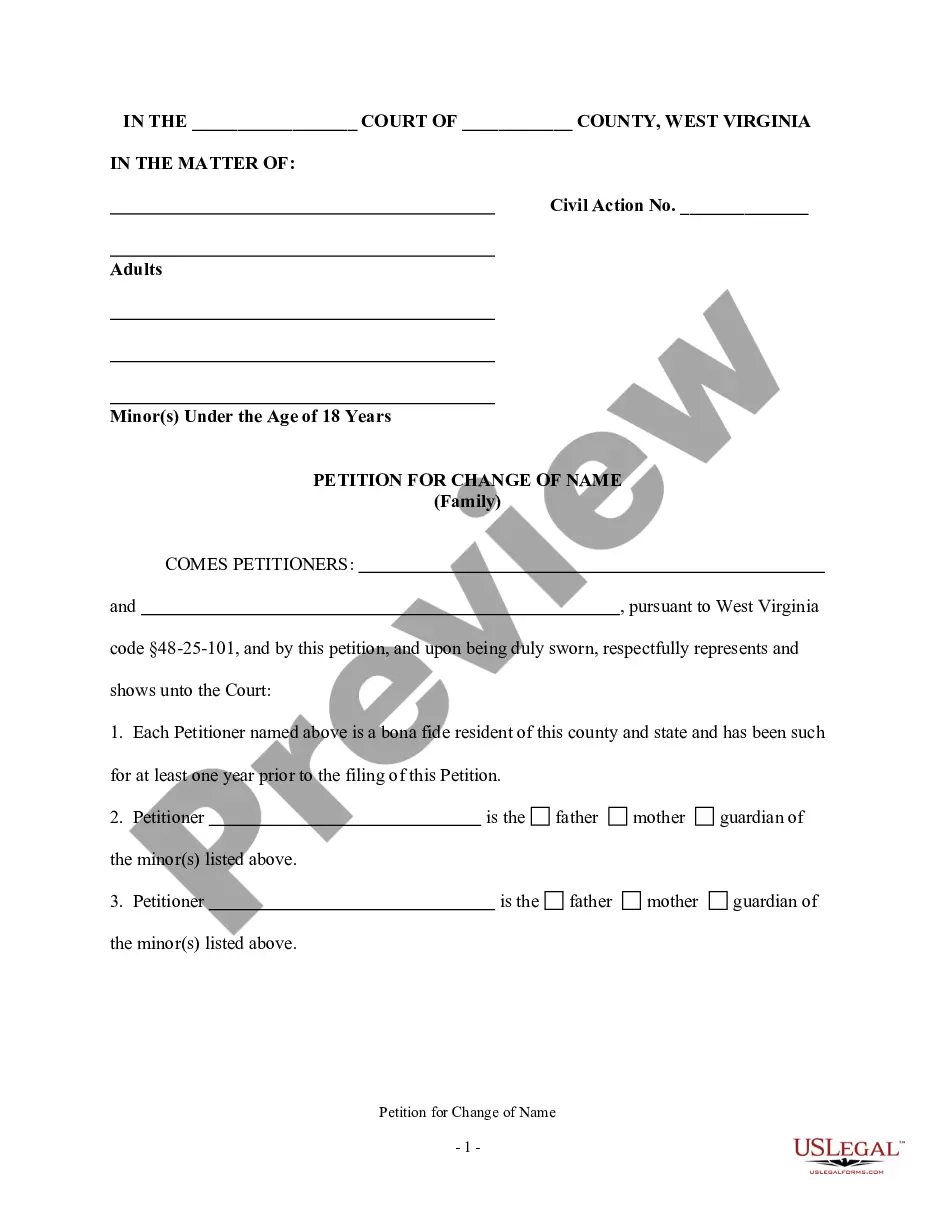
Rhode Island Letter from Landlord to Tenant as Notice to tenant to inform landlord of tenant's knowledge of condition causing damage to premises
What this document covers
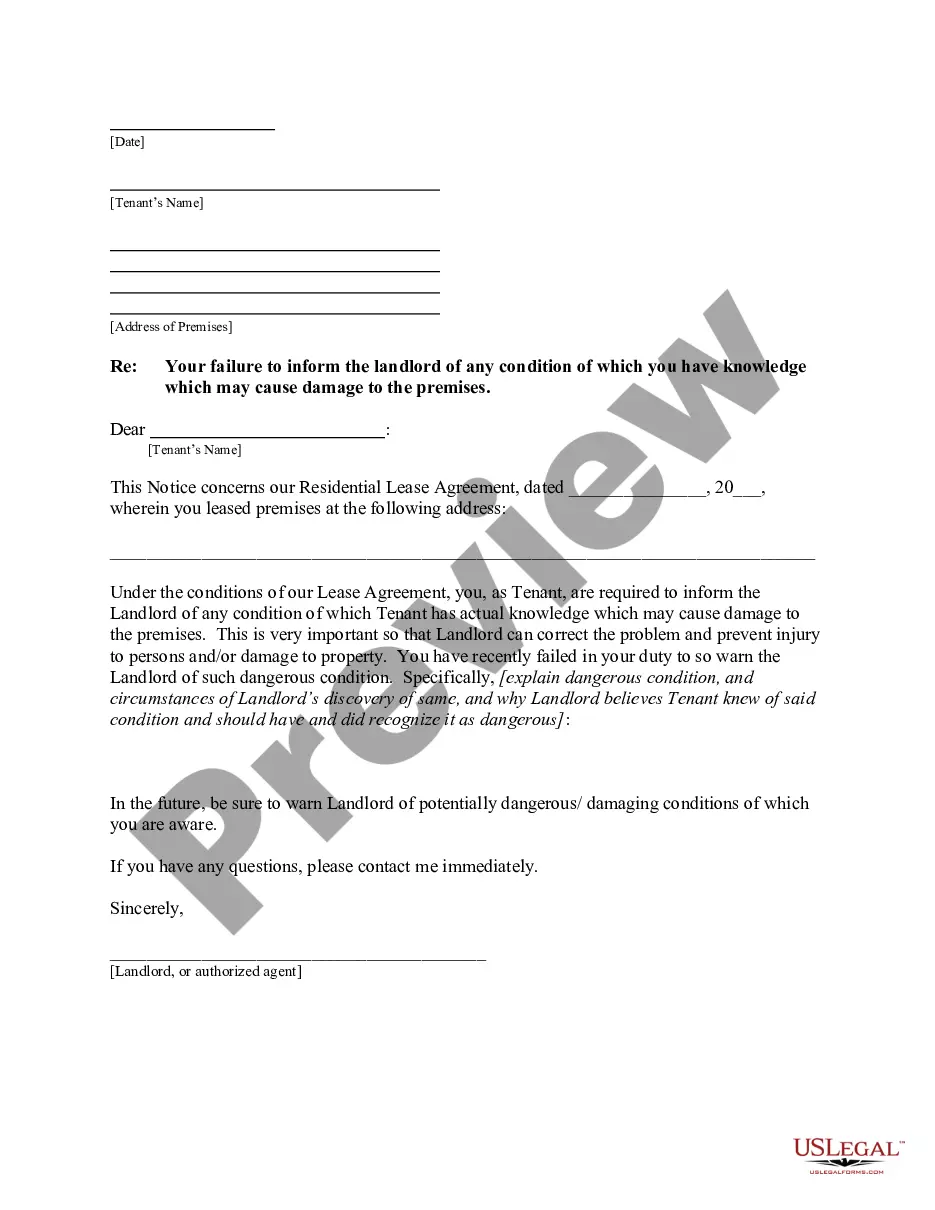
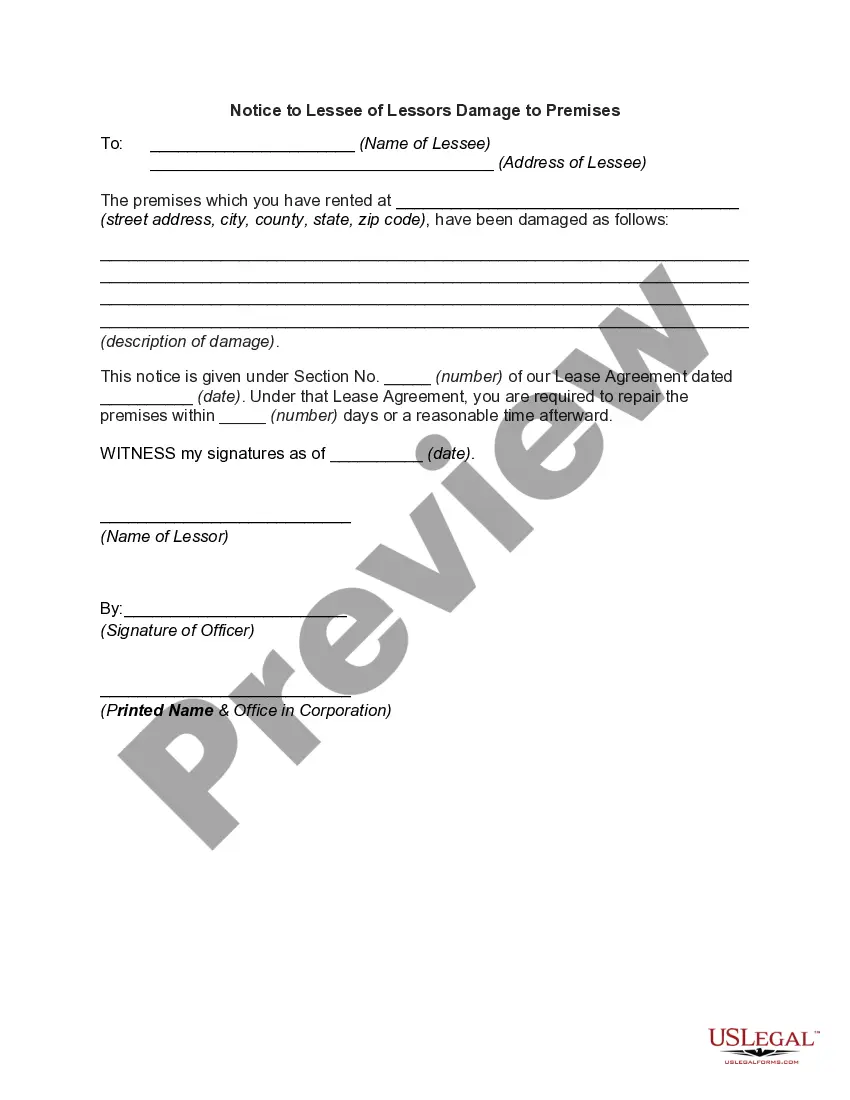
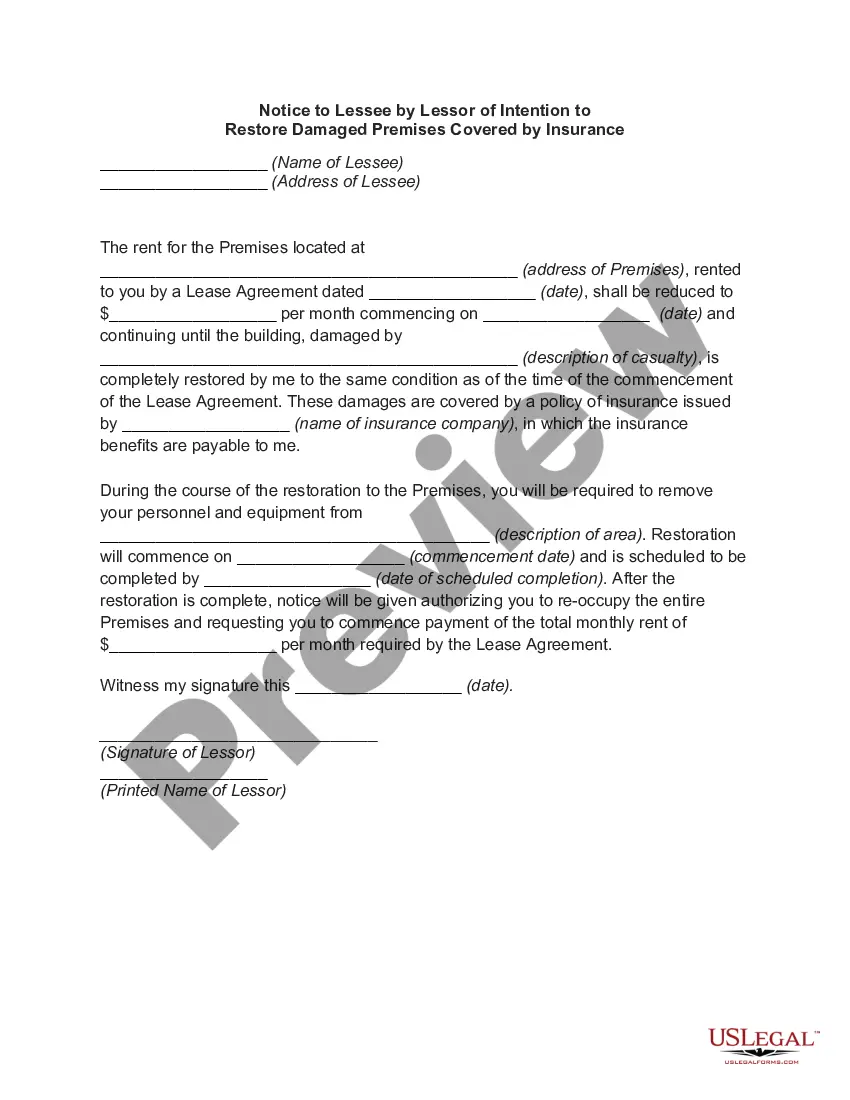
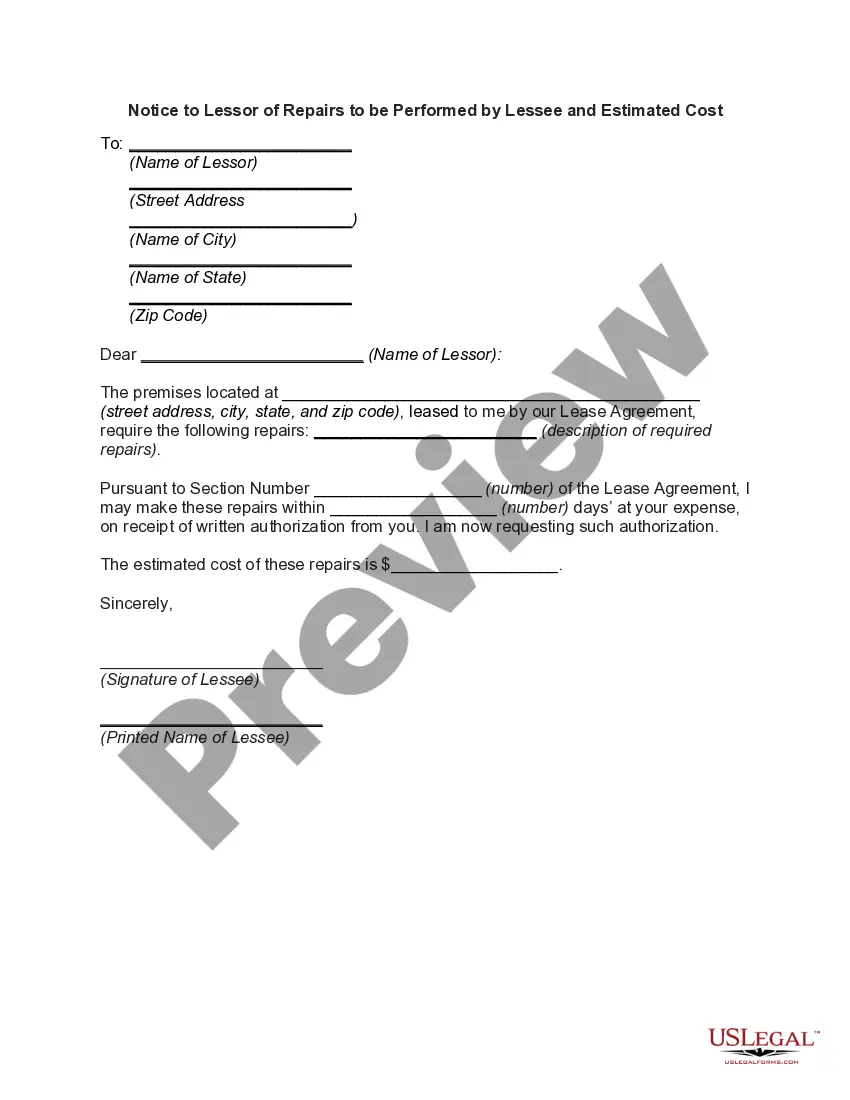
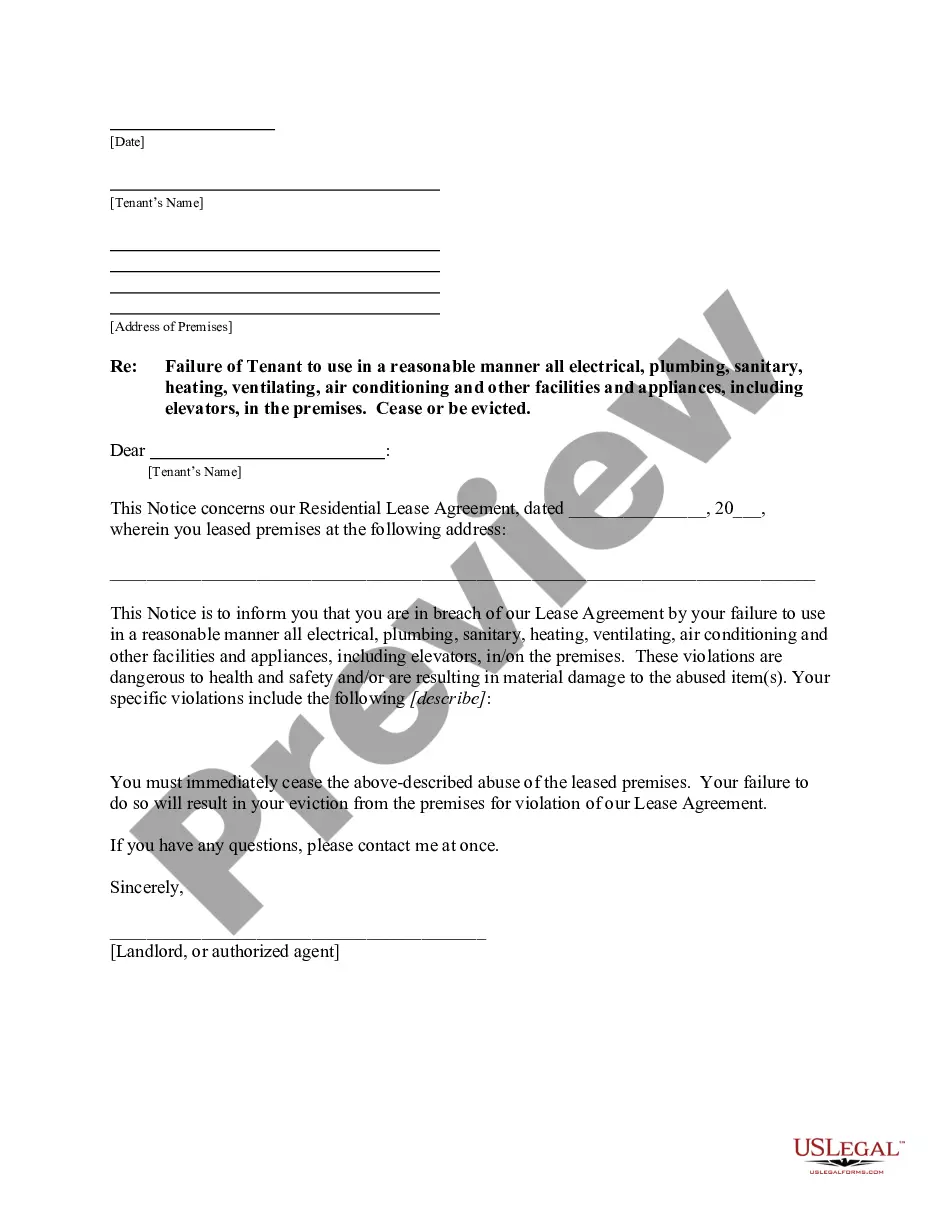
This form is a letter from the landlord to the tenant that serves as a notice to inform the landlord of any conditions that the tenant knows may cause damage to the premises. Under the lease agreement, the tenant has a responsibility to report such issues, allowing the landlord to address them promptly. This proactive communication helps prevent further damage and safeguards the property and its occupants.
What’s included in this form
- Identification of the landlord and tenant.
- A statement outlining the tenant's obligations to report known conditions.
- A reminder of the lease agreement terms related to property condition.
- A section for the landlord's signature or authorized agent's signature.
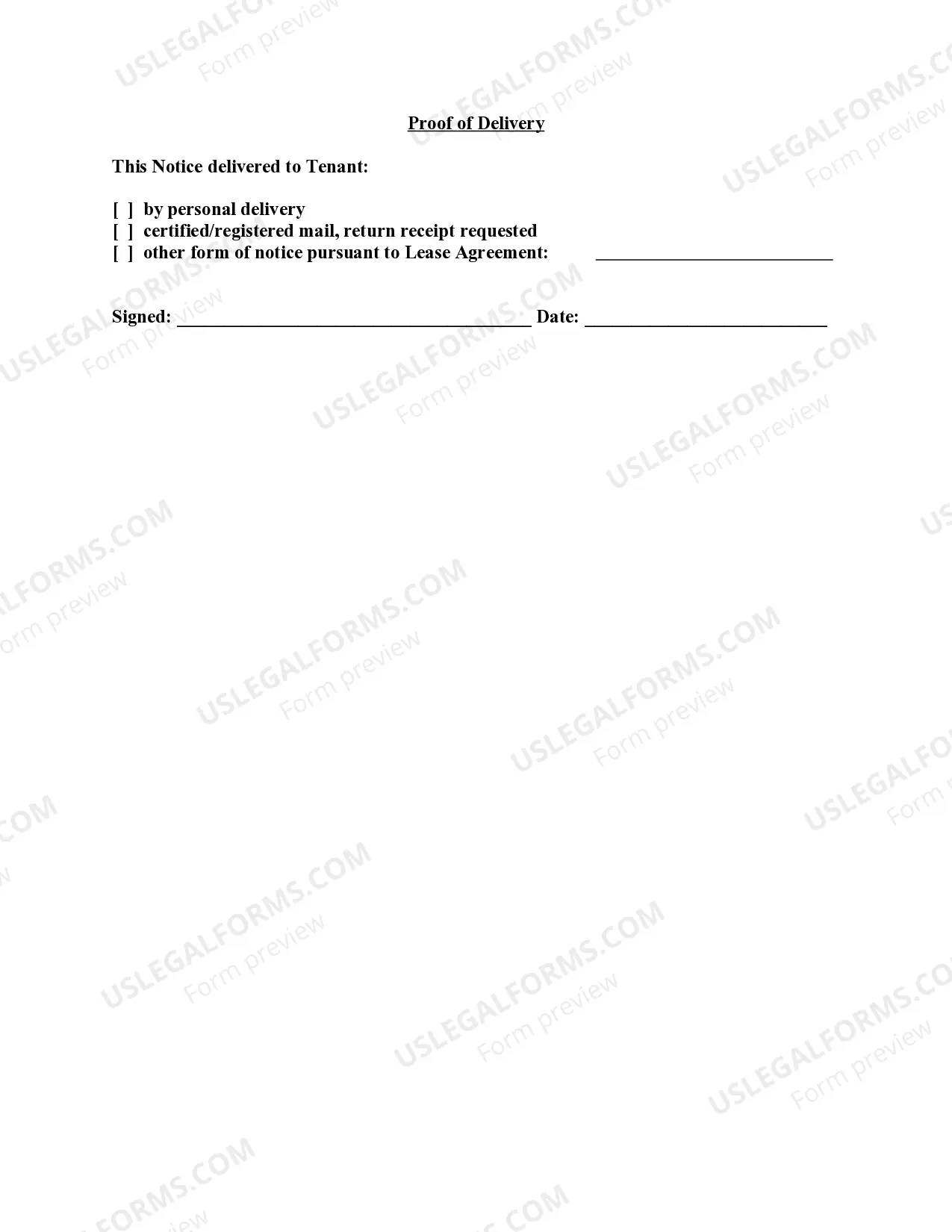
- Proof of delivery options for the notice.

Situations where this form applies
Use this form when a tenant becomes aware of a problem in the rental property that could lead to damage. Such conditions may include water leaks, structural issues, mold, or other hazards. By sending this letter, the landlord can ensure that necessary repairs are made quickly to protect the property and the safety of the tenants.
Who needs this form
- Landlords who manage rental properties.
- Property managers acting on behalf of landlords.
- Tenants who need to formally notify their landlord of an issue.
- Real estate professionals involved in rental agreements.
How to complete this form
- Identify the landlord and tenant by entering their full names and addresses.
- Clearly state the property address that is the subject of the lease agreement.
- Describe the condition or issue that the tenant is aware of.
- Include a request for the tenant to notify the landlord of any future problems.
- Sign the letter as the landlord or authorized agent and select an appropriate method for proof of delivery.
Is notarization required?
Notarization is not commonly needed for this form. However, certain documents or local rules may make it necessary. Our notarization service, powered by Notarize, allows you to finalize it securely online anytime, day or night.
Get your form ready online
Our built-in tools help you complete, sign, share, and store your documents in one place.
Make edits, fill in missing information, and update formatting in US Legal Forms—just like you would in MS Word.
Download a copy, print it, send it by email, or mail it via USPS—whatever works best for your next step.
Sign and collect signatures with our SignNow integration. Send to multiple recipients, set reminders, and more. Go Premium to unlock E-Sign.
If this form requires notarization, complete it online through a secure video call—no need to meet a notary in person or wait for an appointment.
We protect your documents and personal data by following strict security and privacy standards.
Make edits, fill in missing information, and update formatting in US Legal Forms—just like you would in MS Word.
Download a copy, print it, send it by email, or mail it via USPS—whatever works best for your next step.
Sign and collect signatures with our SignNow integration. Send to multiple recipients, set reminders, and more. Go Premium to unlock E-Sign.
If this form requires notarization, complete it online through a secure video call—no need to meet a notary in person or wait for an appointment.
We protect your documents and personal data by following strict security and privacy standards.
Typical mistakes to avoid
- Failing to provide specific details about the condition.
- Not including the proof of delivery section.
- Using outdated lease terms or references.
- Omitting signatures or dates.
- Neglecting to keep a copy for personal records.
Benefits of completing this form online
- Convenient access to templates drafted by licensed attorneys.
- Easy to download, fill out, and customize for your specific needs.
- Immediate availability without needing to visit a legal office.
- Reliable form structure that follows legal standards.
Legal use & context
- This form reinforces the tenant's responsibility under the lease agreement.
- It serves as a protective measure for landlords, promoting tenant compliance and property upkeep.
Quick recap
- This letter serves to remind tenants of their obligation to report damages.
- Landlords can prevent further problems by addressing conditions early.
- Tenants benefit from clear communication regarding their responsibilities.
Looking for another form?
Form popularity
FAQ
Addresses. Date. Tenant names. Status and date of the lease. Why the eviction notice is served (clear and concise explanation) Date tenant must vacate the property. Proof of service or delivery of notice.
It should spell out the terms of the eviction. The letter should be dated and state that the roommate has to be out within 30 days. You can also give a specific date by which the roommate has to leave. Make it clear that you'll bring legal action if he doesn't vacate the premises within the specified time.
A landlord cannot legally evict you without a court order, whether or not you have a lease.) How long does it take for a landlord to evict a tenant? A landlord can evict a tenant only by going through a formal eviction proceeding, which can take a few weeks from start to finish.
Today's Date. Landlord's Name. Property Address and Unit Number. State Your Desire to Move Out of the Apartment. Include Desired Move-Out Date. That You Expect the Return of Your Security Deposit Under State Law. A Forwarding Address Where Your Security Deposit Can Be Sent. Your Signature.
You can send your letter by email if your tenancy agreement says you can. You should say something like: I am giving 1 month's notice to end my tenancy, as required by law. I will be leaving the property on (date xxxxx).
If you're an assured tenant or a protected tenant Your landlord will have to give you notice if they want you to leave. They have to give the reasons why they want to evict you - for example, if you have rent arrears or you've damaged the property. Your landlord will have to go to court and get a court order.
Step 1: Mention the Reason for Giving a Notice. Step 2: Use Formal Language. Step 3: Mention the Date for Vacating. Step 4: Address the Formalities to Be Taken Care Of. Step 5: Proofread the Letter.
Assuming you are paying on the first of the month, your 30-day notice should be given 30 days before and specify the first of the month as the date you are out. For example, if you want to vacate in May, draft and deliver the notice before April 1 and list April 1 as the date the 30-day notice takes effect.
Explain the Situation Tell your tenant in straightforward terms what the problem is, and explain that they cannot stay on the property any longer. Describe the Consequences Calmly explain that they will be evicted with necessary court orders if they remain on the property.