Pennsylvania Last Will and Testament for a Married Person with No Children
About this form
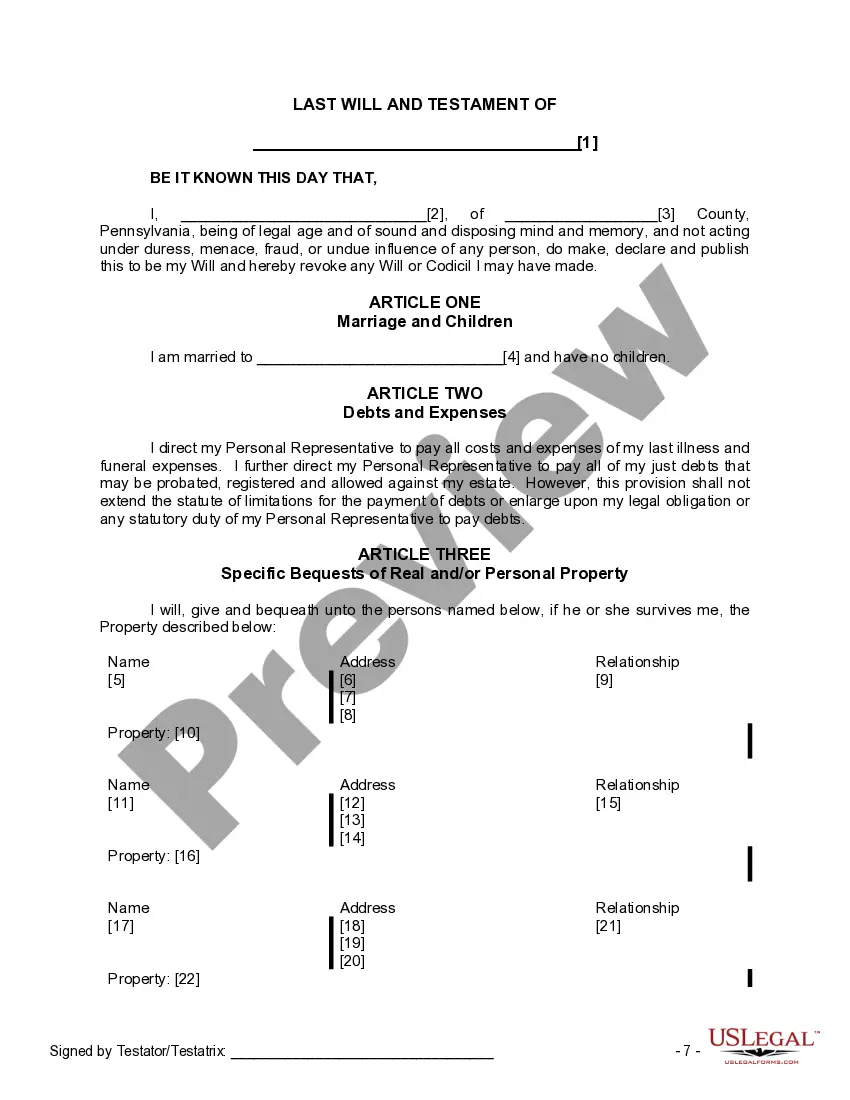
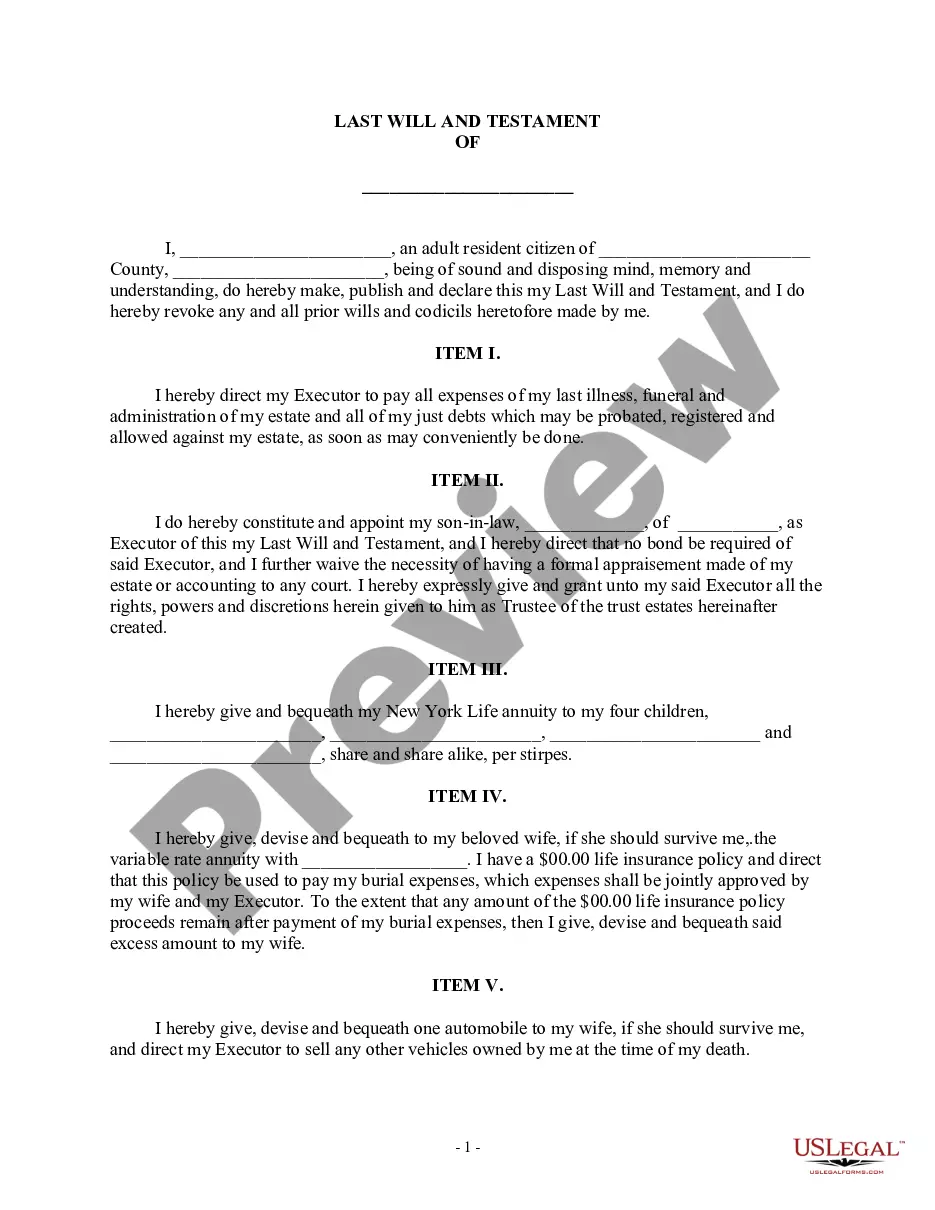
The Last Will and Testament for a Married Person with No Children is a legal document that outlines how a married individual wishes to distribute their assets upon their death. This form specifically caters to those without children, allowing for the appointment of an executor, the designation of beneficiaries, and provisions for the spouse. It serves to ensure that the testator's wishes are clearly documented and legally binding, distinguishing it from wills intended for individuals with children or other family structures.
What’s included in this form
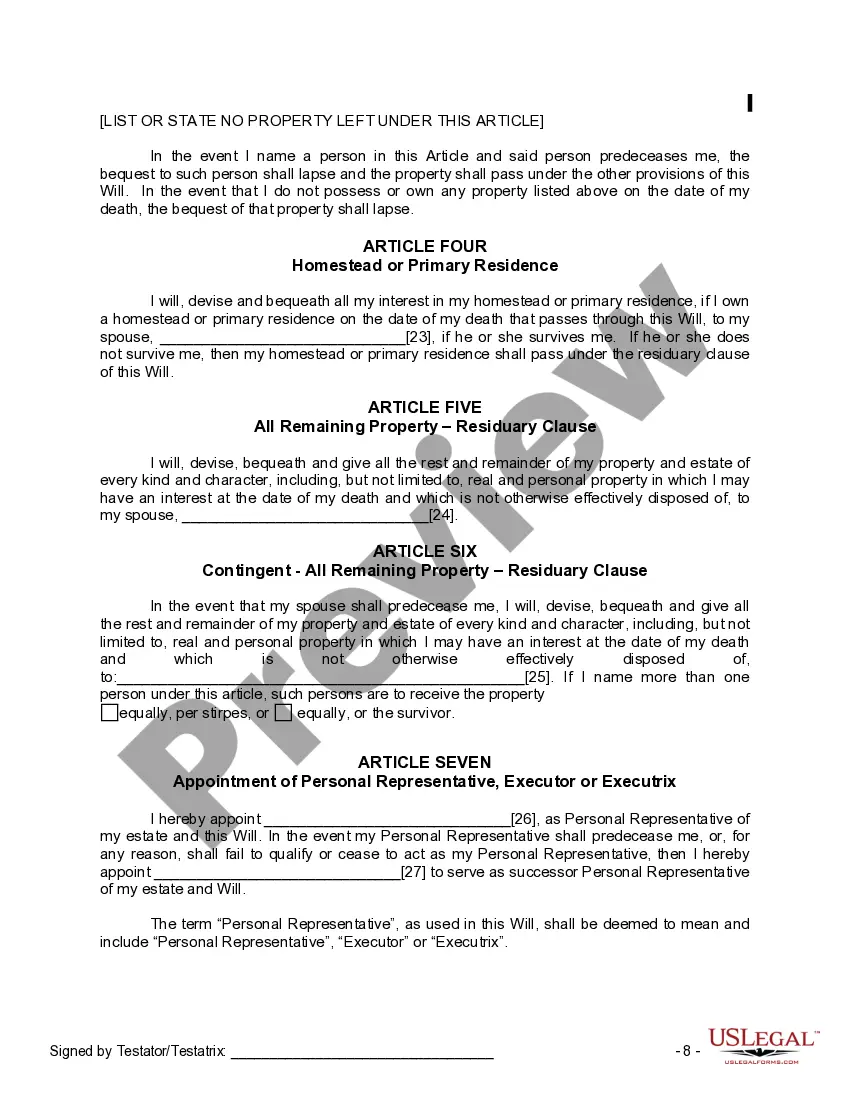
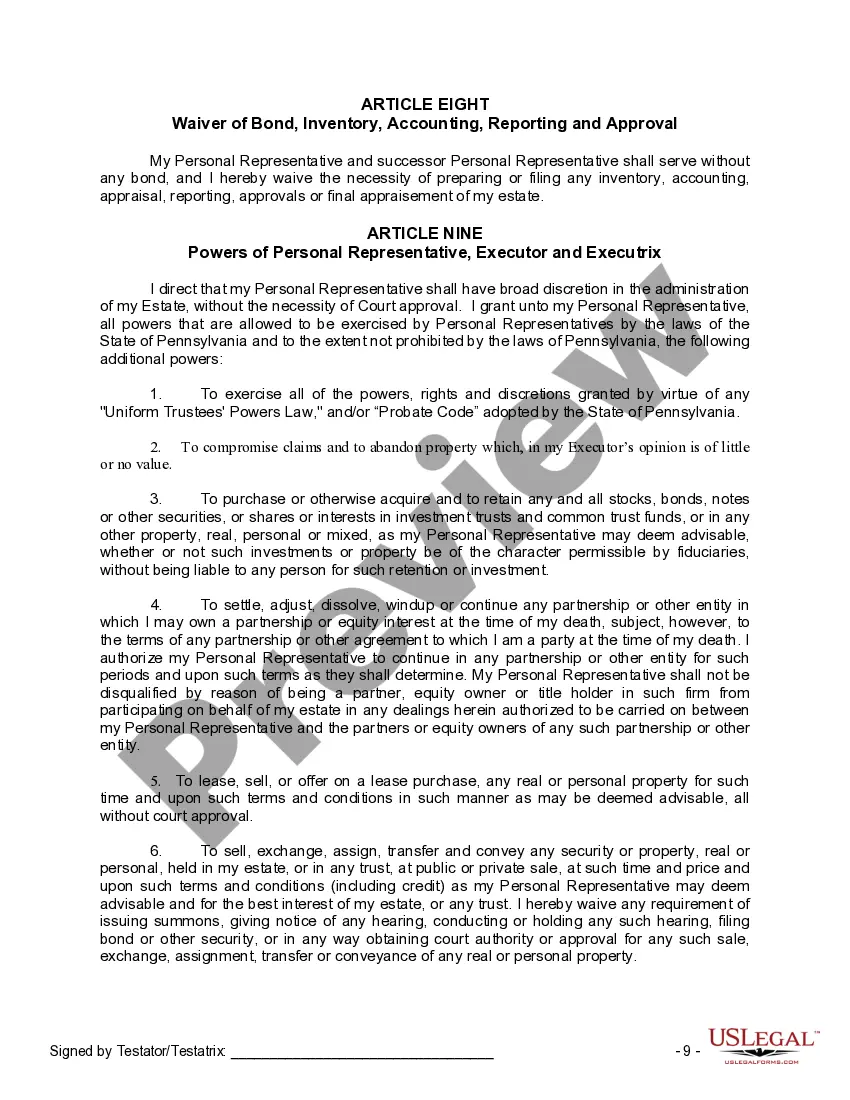
- Appointment of a personal representative or executor to manage the estate.
- Designation of specific bequests of real or personal property to individuals named in the will.
- Provisions for the payment of debts and funeral expenses from the estate.
- Residuary clause that distributes remaining property to the spouse or other named individuals.
- Self-proving affidavit requirements if applicable in the state of execution.
- Possibility of including provisions related to digital assets.




When to use this document
This form should be used by married individuals without children who wish to clearly articulate their wishes regarding asset distribution after death. It is particularly useful in situations where one spouse desires to ensure that their properties, financial assets, and personal items are passed on according to their preferences, especially if they wish to avoid misunderstandings or disputes among surviving relatives.
Who should use this form
This form is intended for:
- Married individuals who do not have children.
- Persons looking to establish a clear distribution plan for their estate.
- Individuals wanting to simplify the probate process for their surviving spouse and family members.
Instructions for completing this form
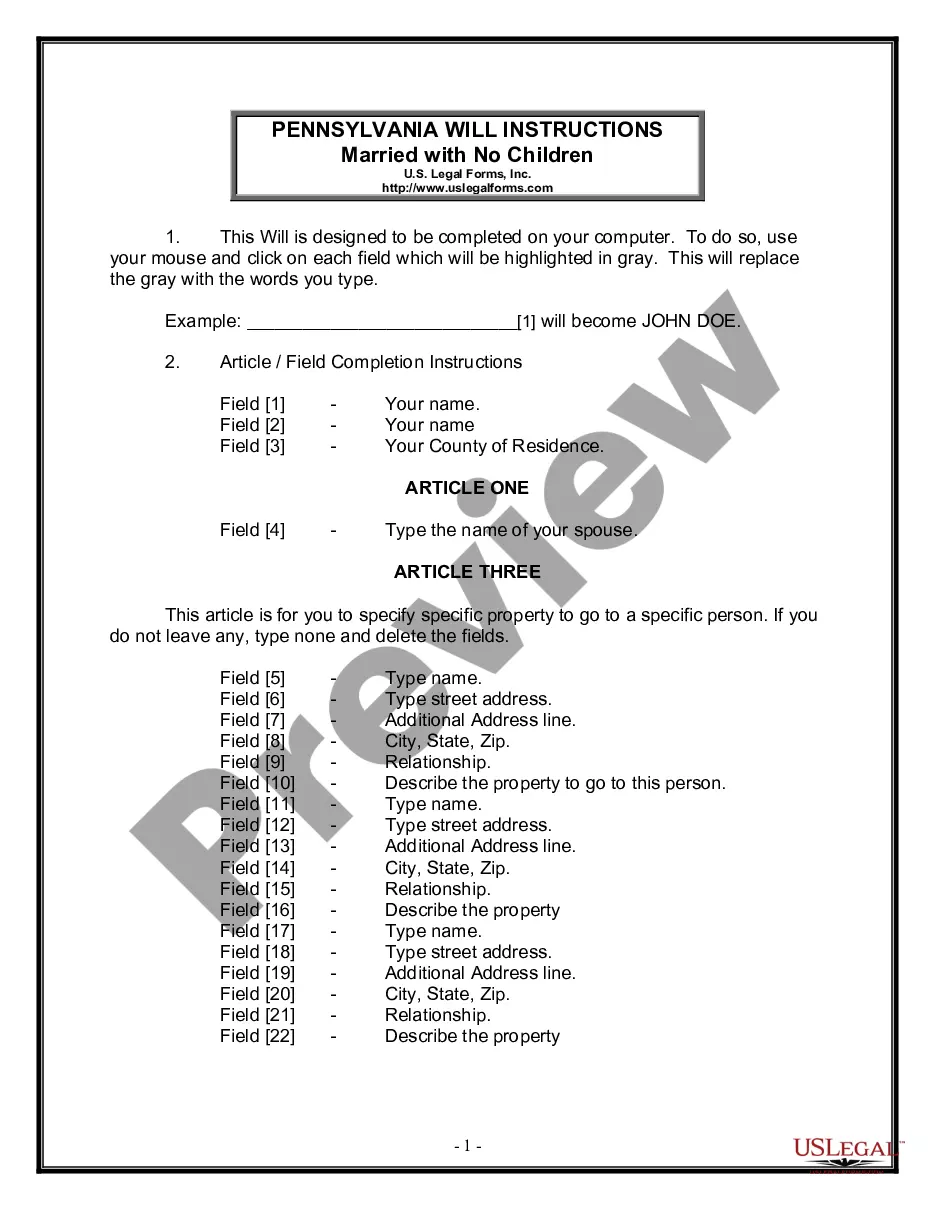
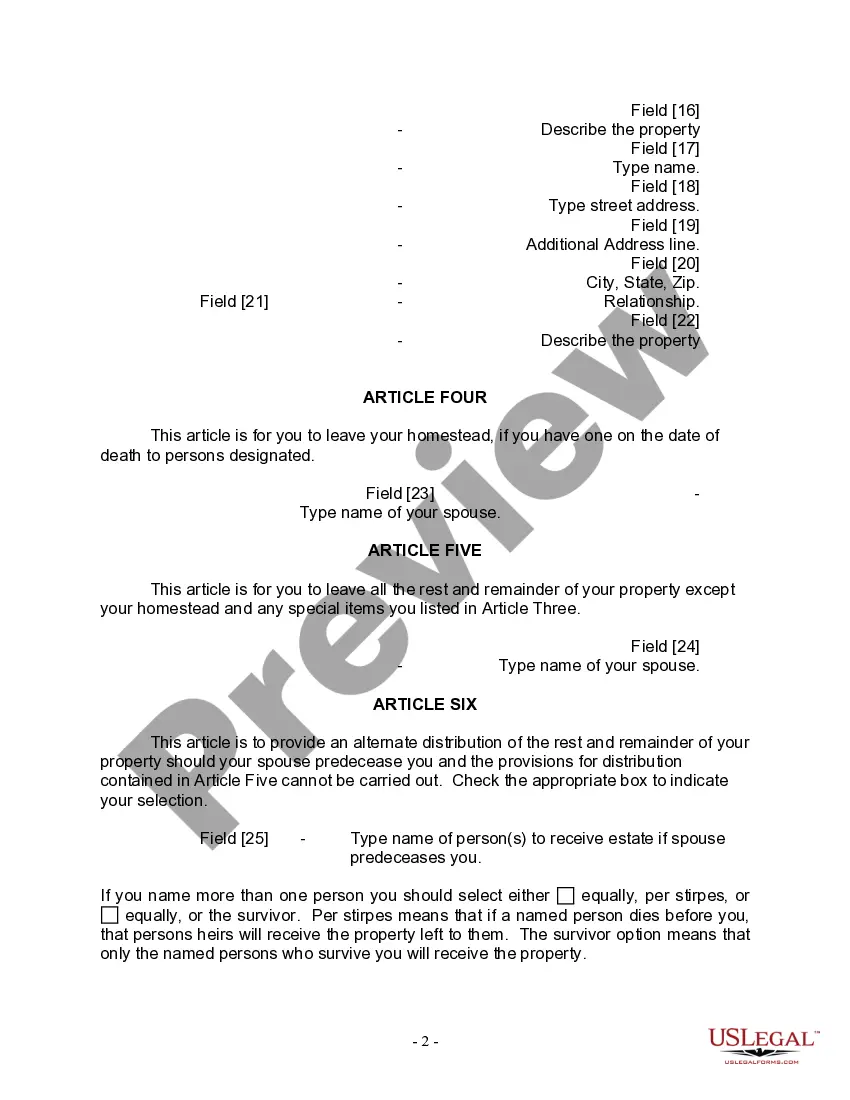
- Begin by entering your full name and county of residence.
- Clearly state your marital status and the name of your spouse.
- List specific bequests of any property you wish to leave to individuals.
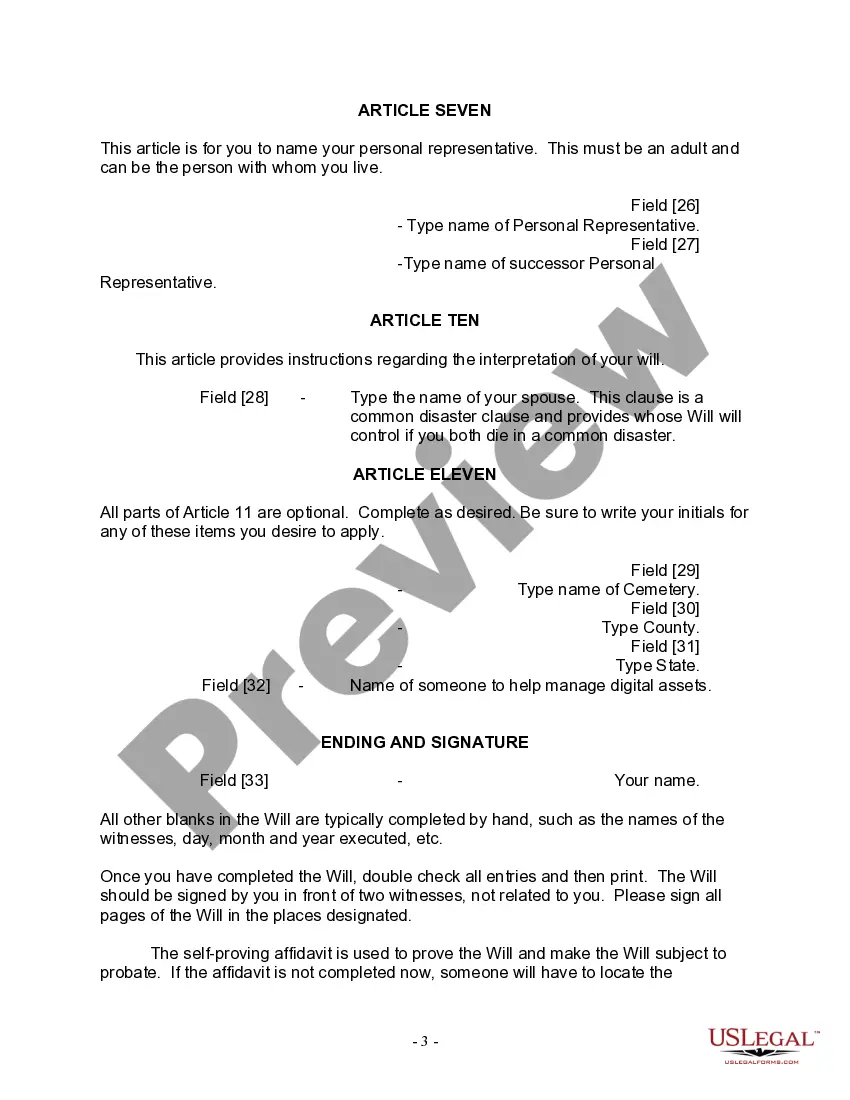
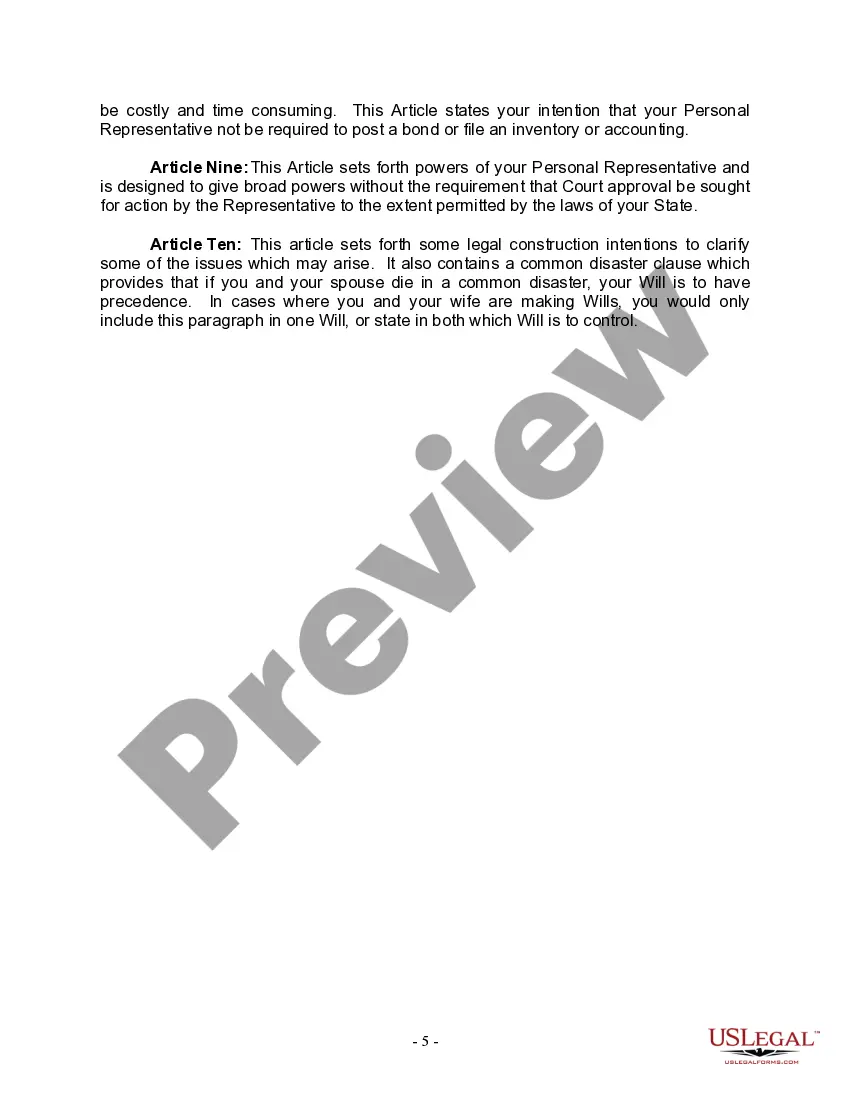
- Identify your personal representative and any successors if they are unable or unwilling to serve.
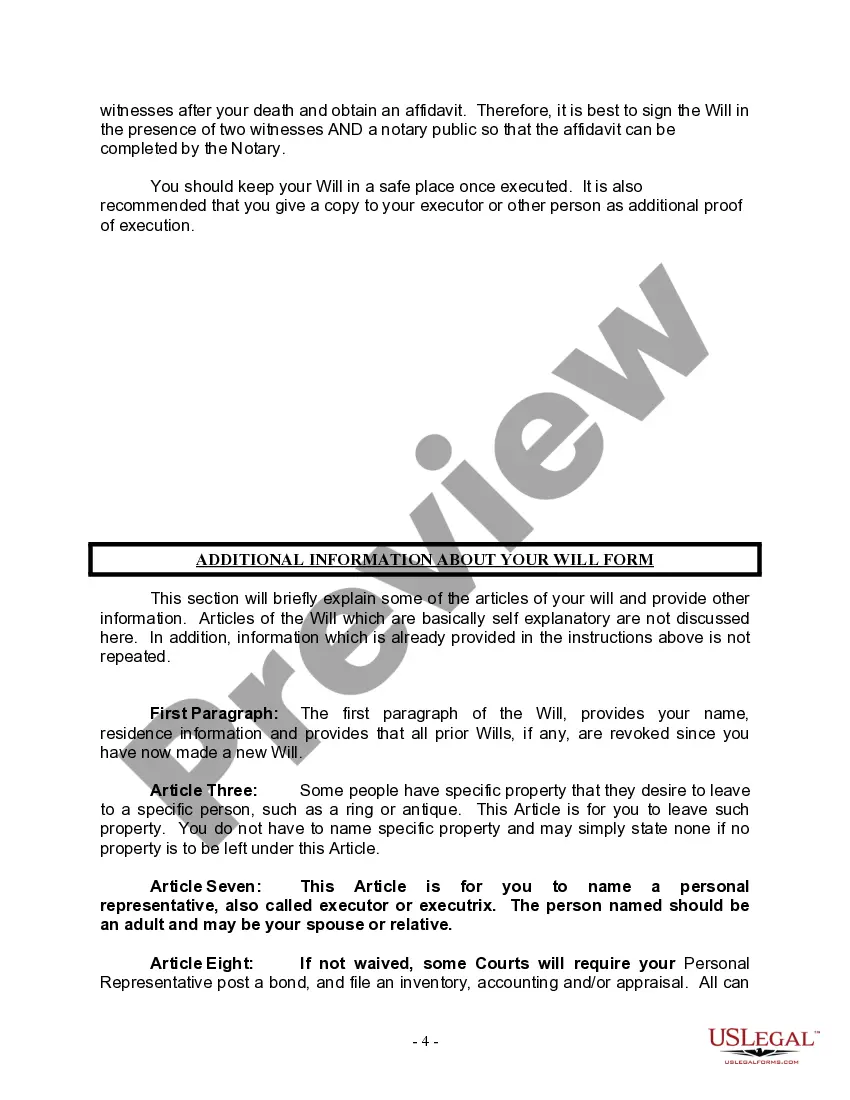
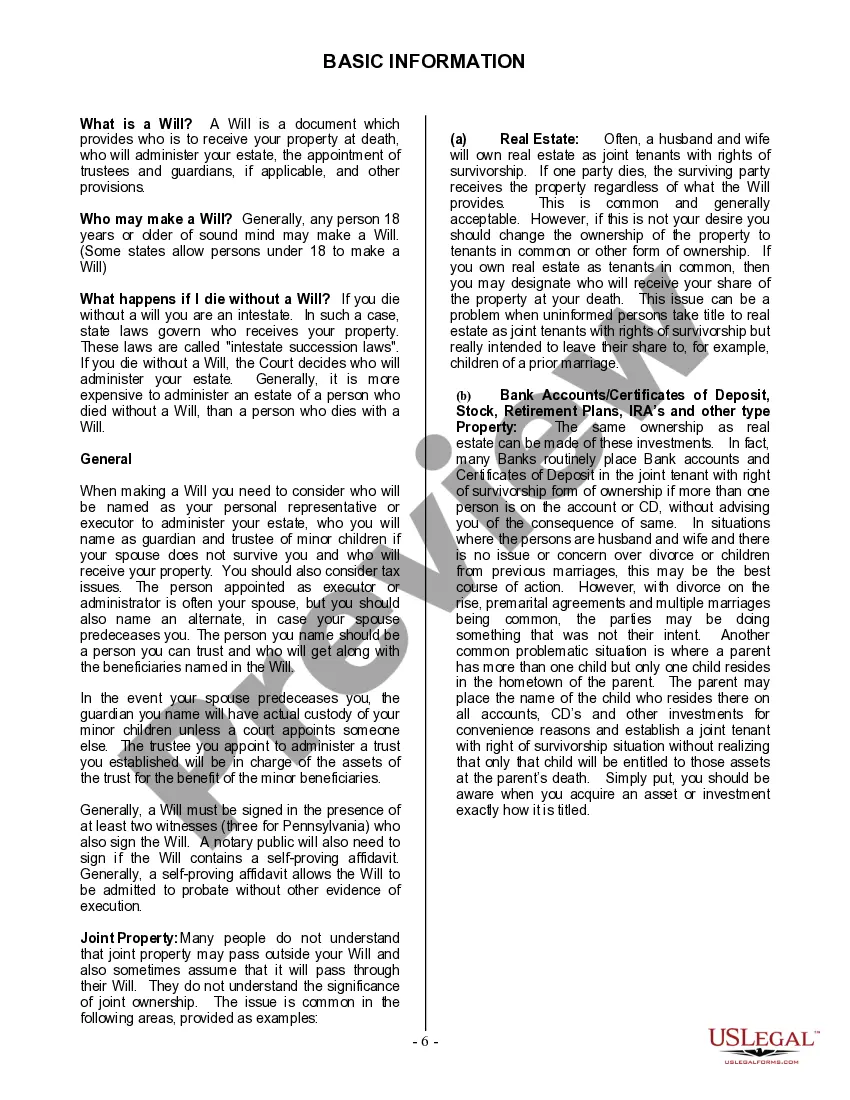
- Sign the form in the presence of two witnesses and ensure they also sign.
- If applicable, complete the self-proving affidavit in the presence of a notary.
Is notarization required?
Yes, this form must be notarized to be legally valid. A notary public must witness the signing of the will to ensure its authenticity, particularly if you choose to include a self-proving affidavit as part of the document.
Get your form ready online
Our built-in tools help you complete, sign, share, and store your documents in one place.
Make edits, fill in missing information, and update formatting in US Legal Forms—just like you would in MS Word.
Download a copy, print it, send it by email, or mail it via USPS—whatever works best for your next step.
Sign and collect signatures with our SignNow integration. Send to multiple recipients, set reminders, and more. Go Premium to unlock E-Sign.
If this form requires notarization, complete it online through a secure video call—no need to meet a notary in person or wait for an appointment.
We protect your documents and personal data by following strict security and privacy standards.

Make edits, fill in missing information, and update formatting in US Legal Forms—just like you would in MS Word.

Download a copy, print it, send it by email, or mail it via USPS—whatever works best for your next step.

Sign and collect signatures with our SignNow integration. Send to multiple recipients, set reminders, and more. Go Premium to unlock E-Sign.

If this form requires notarization, complete it online through a secure video call—no need to meet a notary in person or wait for an appointment.

We protect your documents and personal data by following strict security and privacy standards.
Common mistakes to avoid
- Failing to properly sign the will in the presence of witnesses.
- Not naming a personal representative, which can complicate estate administration.
- Neglecting to clarify specific bequests, leading to confusion among heirs.
- Omitting necessary details about debts and expenses.
Benefits of completing this form online
- Convenience of completing the form from home without needing legal assistance.
- Access to easy-to-understand templates drafted by licensed attorneys.
- Editable fields allow for customization based on personal circumstances.
- Instant downloadable format ensures immediate availability.
What to keep in mind
- This Last Will and Testament is tailored for married individuals without children.
- It includes specific provisions for your spouse and how to manage your estate.
- Sign and witness the will appropriately, ensuring compliance with state laws.
- Consider using this online form for ease of use and legal reliability.
Looking for another form?

Form popularity
FAQ
A valid will in Pennsylvania must be in writing, either typed or handwritten. Pennsylvania only accepts oral wills in very narrow circumstances. In all cases, the testator, or person drafting the document, must also sign it.
In Pennsylvania, you are not required to have your living will notarized, however, if you are contemplating using the document in another state you should find out if the other state requires notarization.
The Free Last Will and Testament Template for Word is compatible with Word 2003 or later versions.
The Pennsylvania self-proving affidavit form is a legal instrument which acts as sworn testimony on behalf of two (2) witnesses and the Testator for the Testator's Last Will and Testament.Both witnesses must be impartial and, therefore, cannot be named beneficiaries themselves.
In most situations, a will template is an easy and inexpensive way to make sure your wishes are known and carried out. Most people can get everything they need by using a will template, with little cost or hassle.
To create a valid will in Pennsylvania, the will creator (testator) must be 18 years of age and must possess a sound mind. Possessing a sound mind means that the testator is mentally competent and fully understands what property they own and who they are conveying their property to.
To create a valid will in Pennsylvania, the will creator (testator) must be 18 years of age and must possess a sound mind. Possessing a sound mind means that the testator is mentally competent and fully understands what property they own and who they are conveying their property to.
Notarization is not required in California to make your will legal. Some states allow you to make your will self-proving by signing a special affidavit in front of a notary that accompanies the will. However, California allows your will to be self-proved without a self-proving affidavit.
No. You can make your own will in Pennsylvania, using Nolo's do-it-yourself will software or online will programs. However, you may want to consult a lawyer in some situations. For example, if you think that your will might be contested or if you want to disinherit your spouse, you should talk with an attorney.