Pennsylvania Last Will and Testament for Single Person with Adult and Minor Children
What this document covers
The Last Will and Testament for Single Person with Adult and Minor Children is a legal document that provides a single individual the means to distribute their assets upon death while ensuring the care of their children. Specifically tailored for those with both adult and minor children, this will allows the testator to designate guardians, appoint personal representatives (executors), and specify how their property should be divided among heirs. Unlike other wills, this form acknowledges the unique needs of a single parent managing an estate that includes both adult and minor children.
Key components of this form
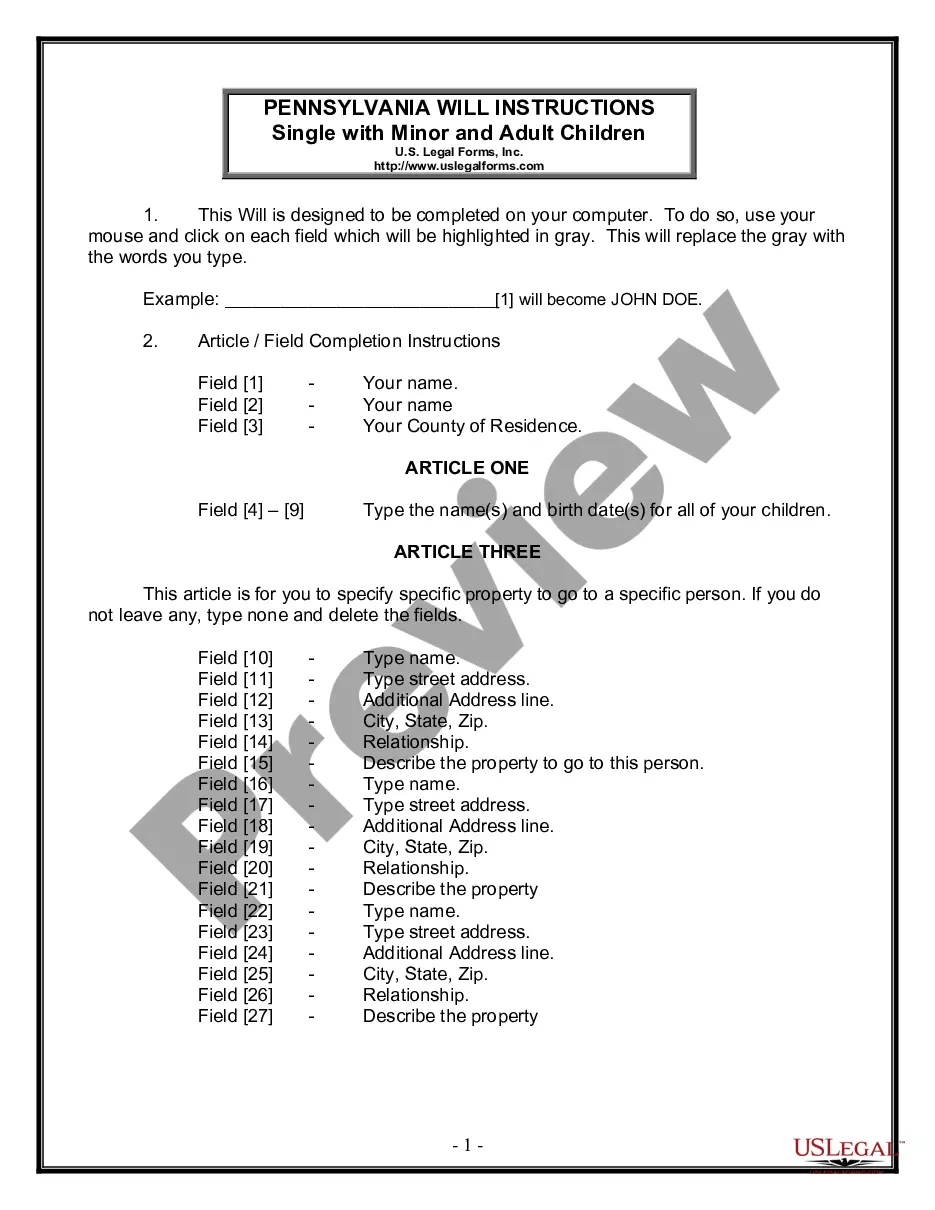
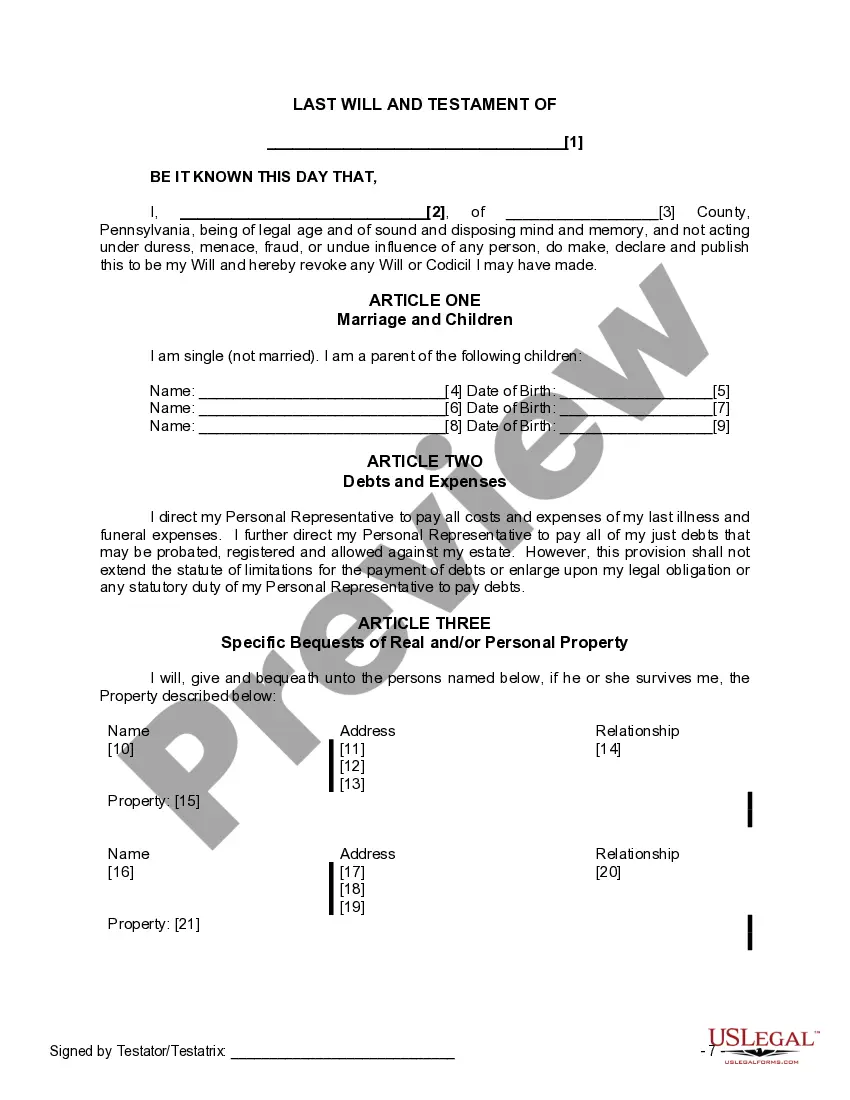
- Article One: Personal information including name and county of residence.
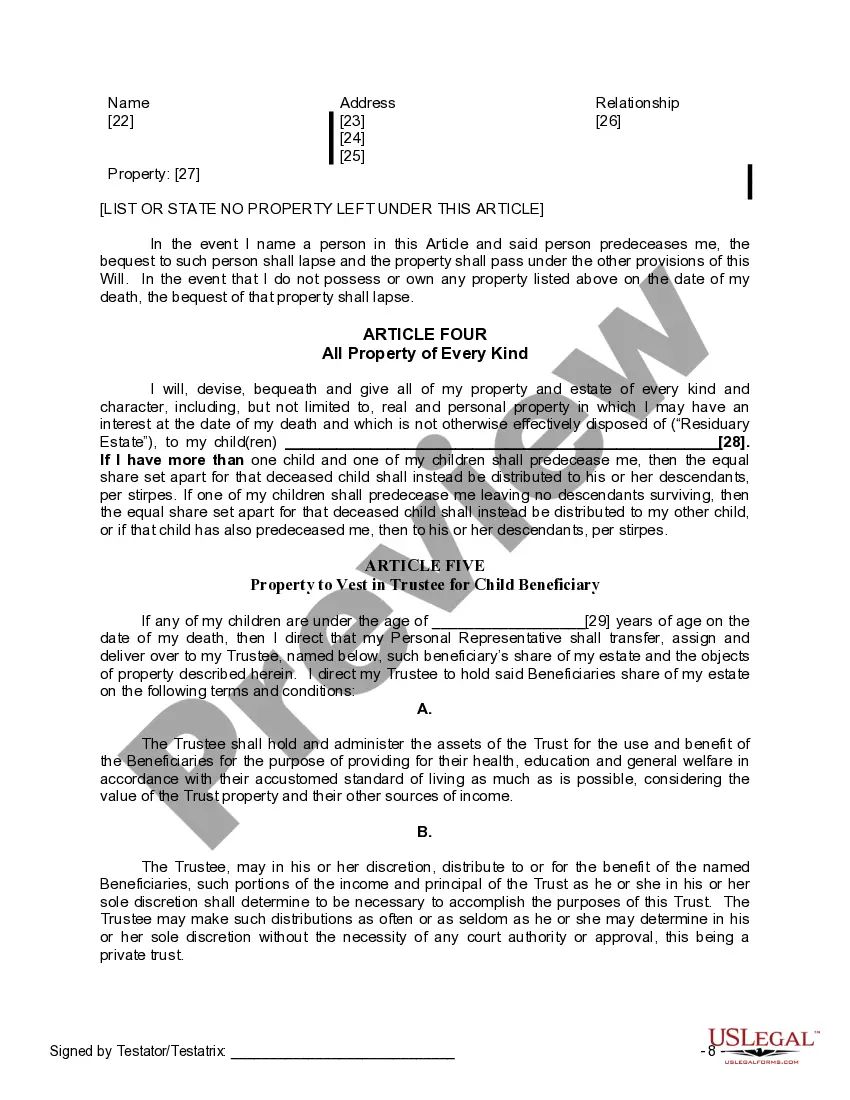
- Article Three: Specific bequests of property to designated individuals.
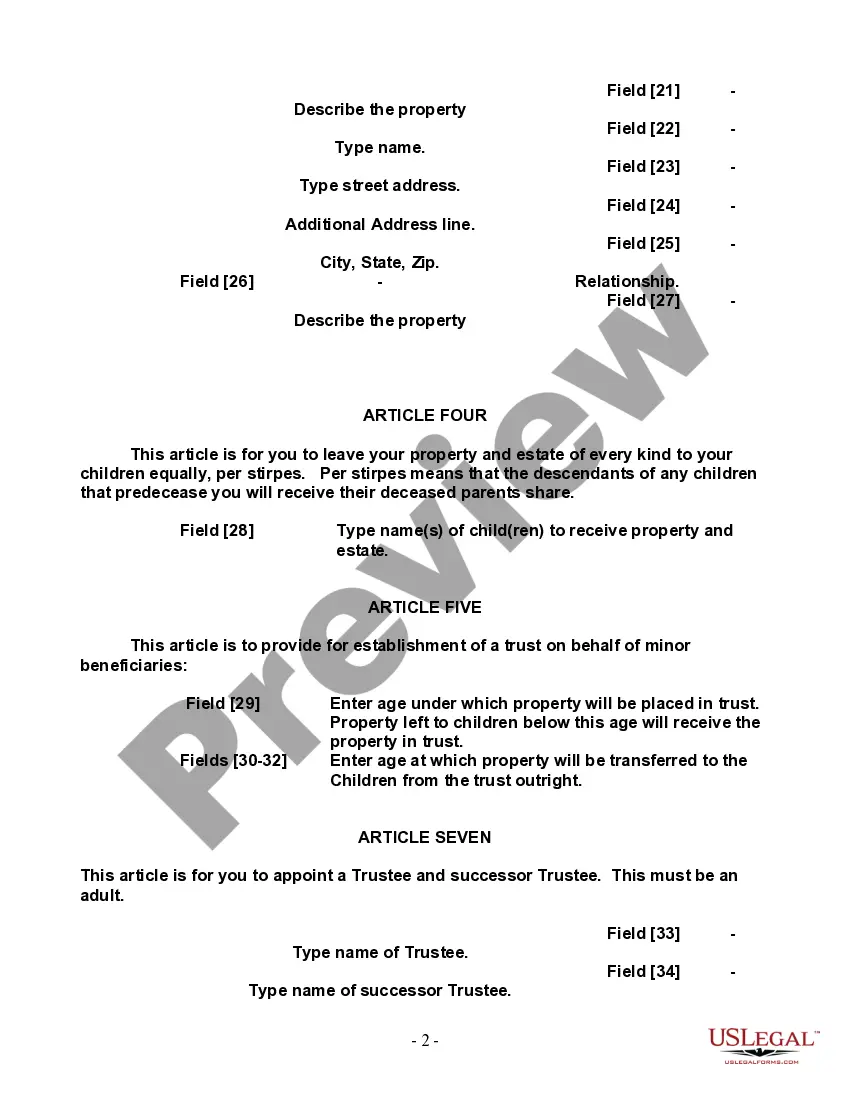
- Article Four: Distribution of remaining estate equally among children.
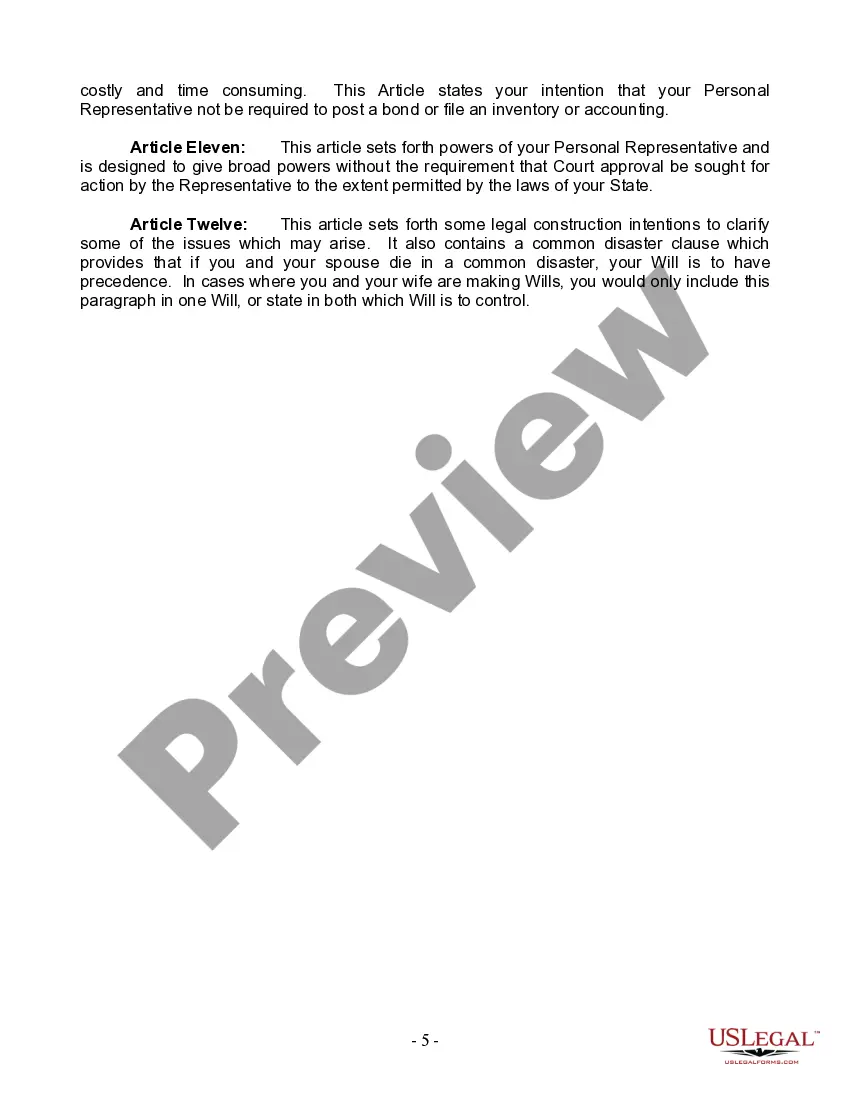
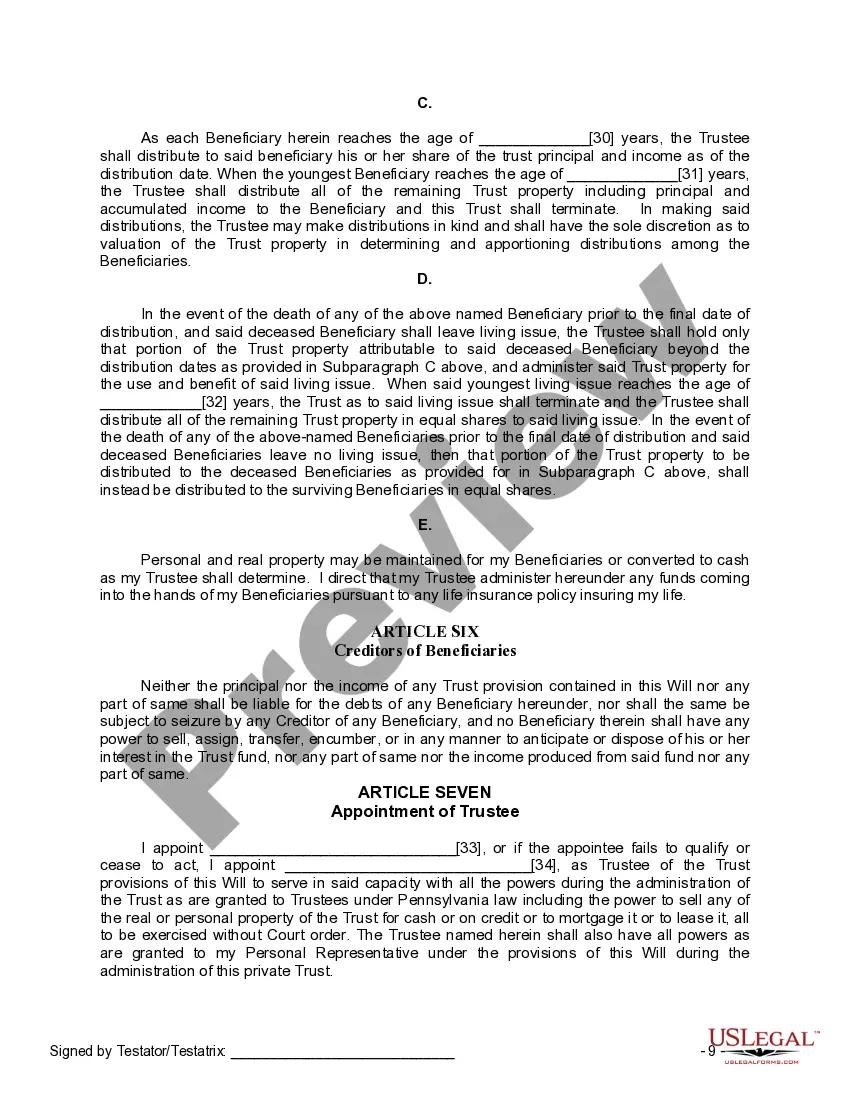
- Article Five: Establishment of a trust for minor children.
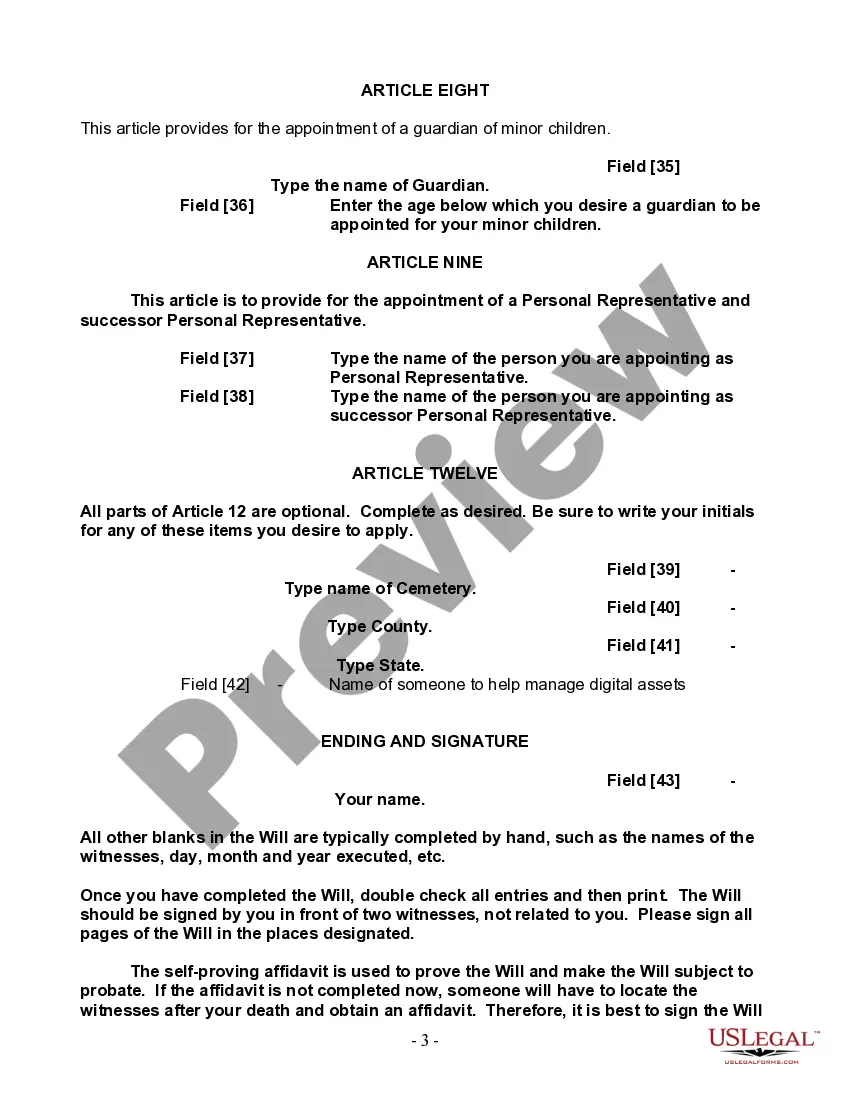
- Article Eight: Appointment of a guardian for minor children.
- Article Nine: Designation of a personal representative to manage the estate.





When to use this form
This form should be used when a single individual wishes to prepare a will that addresses the distribution of their estate and guardianship of their children. It is essential when one wants to ensure that their adult and minor children are cared for according to their wishes upon their passing. Specific situations include planning for unforeseen circumstances such as illness or accidents, providing for children's education and welfare, and ensuring equitable distribution of assets among beneficiaries.
Who can use this document
- Single parents who wish to establish a clear will for their estate.
- Individuals with both adult and minor children wanting to ensure proper guardianship and support for their kids.
- Anyone seeking to outline their wishes regarding asset distribution upon their death.
Steps to complete this form
- Enter your personal information, including your full name and county of residence.
- List the names and birth dates of all children, both minor and adult, in the specified fields.
- Designate any specific assets to be distributed to particular individuals under Article Three.
- Determine the trust details for minor beneficiaries, including which assets should be held and the age when they will gain outright ownership.
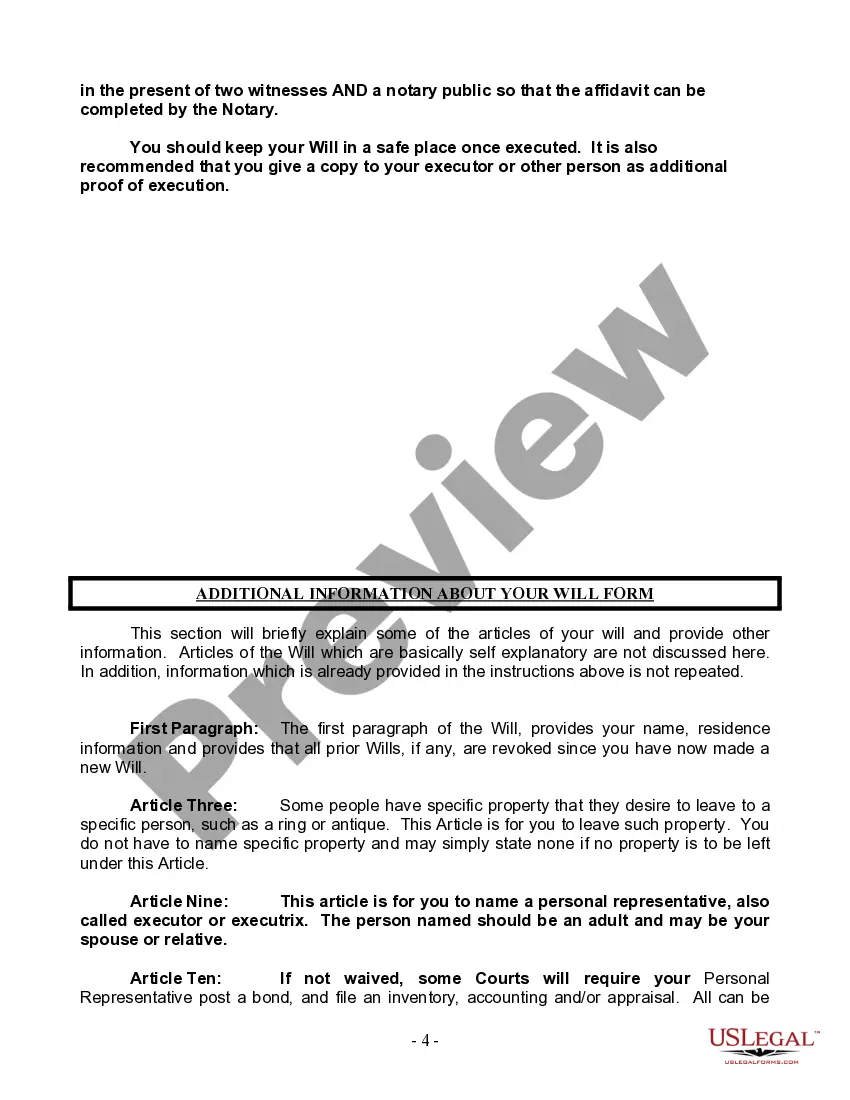
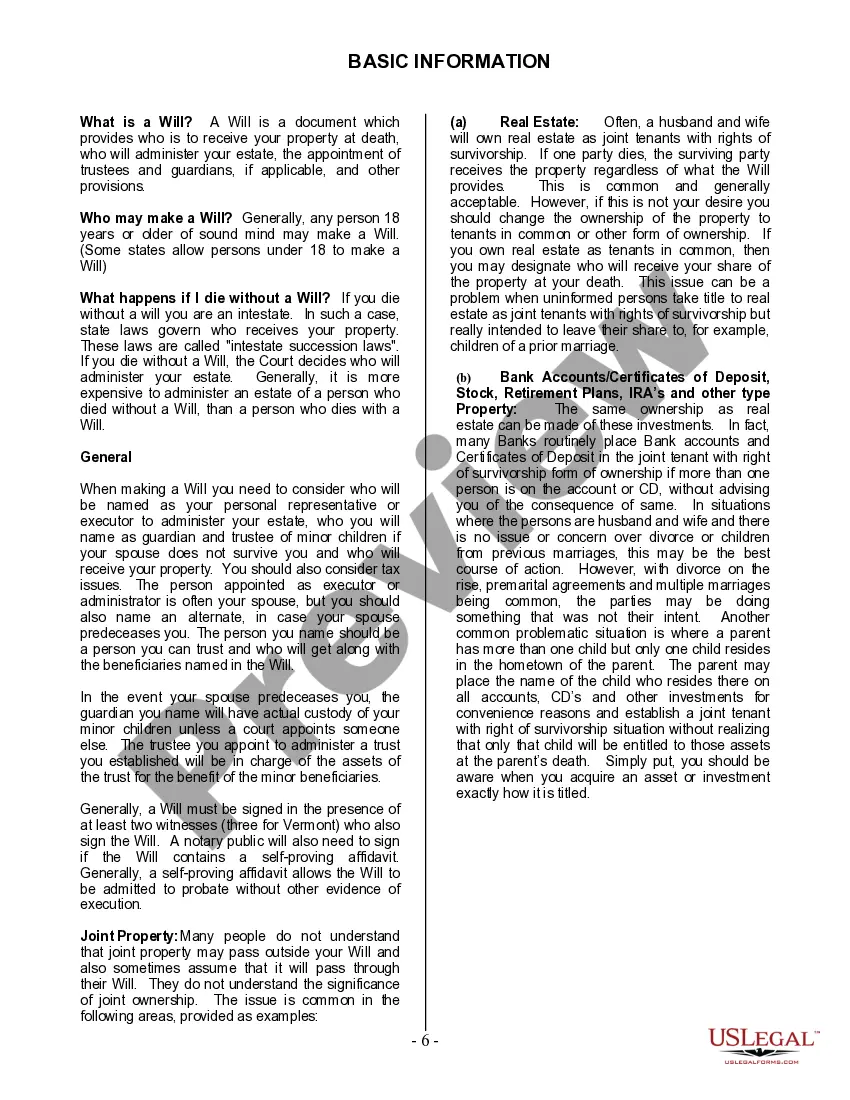
- Sign the document in the presence of two witnesses and have it notarized if required by your state.
Is notarization required?
Notarization is required for this form to take effect. Our online notarization service, powered by Notarize, lets you verify and sign documents remotely through an encrypted video session, available 24/7.
Get your form ready online
Our built-in tools help you complete, sign, share, and store your documents in one place.
Make edits, fill in missing information, and update formatting in US Legal Forms—just like you would in MS Word.
Download a copy, print it, send it by email, or mail it via USPS—whatever works best for your next step.
Sign and collect signatures with our SignNow integration. Send to multiple recipients, set reminders, and more. Go Premium to unlock E-Sign.
If this form requires notarization, complete it online through a secure video call—no need to meet a notary in person or wait for an appointment.
We protect your documents and personal data by following strict security and privacy standards.

Make edits, fill in missing information, and update formatting in US Legal Forms—just like you would in MS Word.

Download a copy, print it, send it by email, or mail it via USPS—whatever works best for your next step.

Sign and collect signatures with our SignNow integration. Send to multiple recipients, set reminders, and more. Go Premium to unlock E-Sign.

If this form requires notarization, complete it online through a secure video call—no need to meet a notary in person or wait for an appointment.

We protect your documents and personal data by following strict security and privacy standards.
Avoid these common issues
- Not having the will witnessed properly, violating state laws on witness requirements.
- Failing to specify how assets are to be divided, leading to potential disputes among heirs.
- Omitting essential information such as the appointment of guardians for minor children.
Benefits of using this form online
- Convenient access to legal templates that can be completed from home.
- Editability to tailor the will to specific needs and circumstances.
- Reliable guidance to ensure compliance with legal standards.
Looking for another form?

Form popularity
FAQ
A handwritten will may be legal in Pennsylvania depending on the individual circumstances. Under Pennsylvania state code, wills must be in writing and signed by the person making the will, known as the testator.The state of Pennsylvania therefore makes no legal distinction between a handwritten and typed will.
Include personal identifying information. Include a statement about your age and mental status. Designate an executor. Decide who will take care of your children. Choose your beneficiaries. List your funeral details. Sign and date your Last Will and Testament.
Contrary to popular belief, you do not need to have an attorney draft a will for you. Anyone can write this document on their own, and as long as it meets all of the legal requirements of the state, courts will recognize one you wrote yourself.
To create a valid will in Pennsylvania, the will creator (testator) must be 18 years of age and must possess a sound mind. Possessing a sound mind means that the testator is mentally competent and fully understands what property they own and who they are conveying their property to.
A valid will in Pennsylvania must be in writing, either typed or handwritten. Pennsylvania only accepts oral wills in very narrow circumstances. In all cases, the testator, or person drafting the document, must also sign it.
No, in Pennsylvania, you do not need to notarize your will to make it legal. However, you must go to a notary to make your will self-proving, see above.
Most single people should have a will. A will can help you determine who will get your property (including your home, business, pets, and digital assets), name guardians for your children, and name an executor. A will also puts your wishes in writing so there's no confusion about your intentions.
In most situations, a will template is an easy and inexpensive way to make sure your wishes are known and carried out. Most people can get everything they need by using a will template, with little cost or hassle.
In Pennsylvania it is not necessary for the signing of your will to be witnessed by anyone; however, it is customary to have at least two people witness the signing of your will. Pennsylvania does accept self-proved wills. Such a will includes a separate page which is notarized and signed by the testator and witnesses.