Pennsylvania Fiduciary Deed for use by Executors, Trustees, Trustors, Administrators and other Fiduciaries
Overview of this form
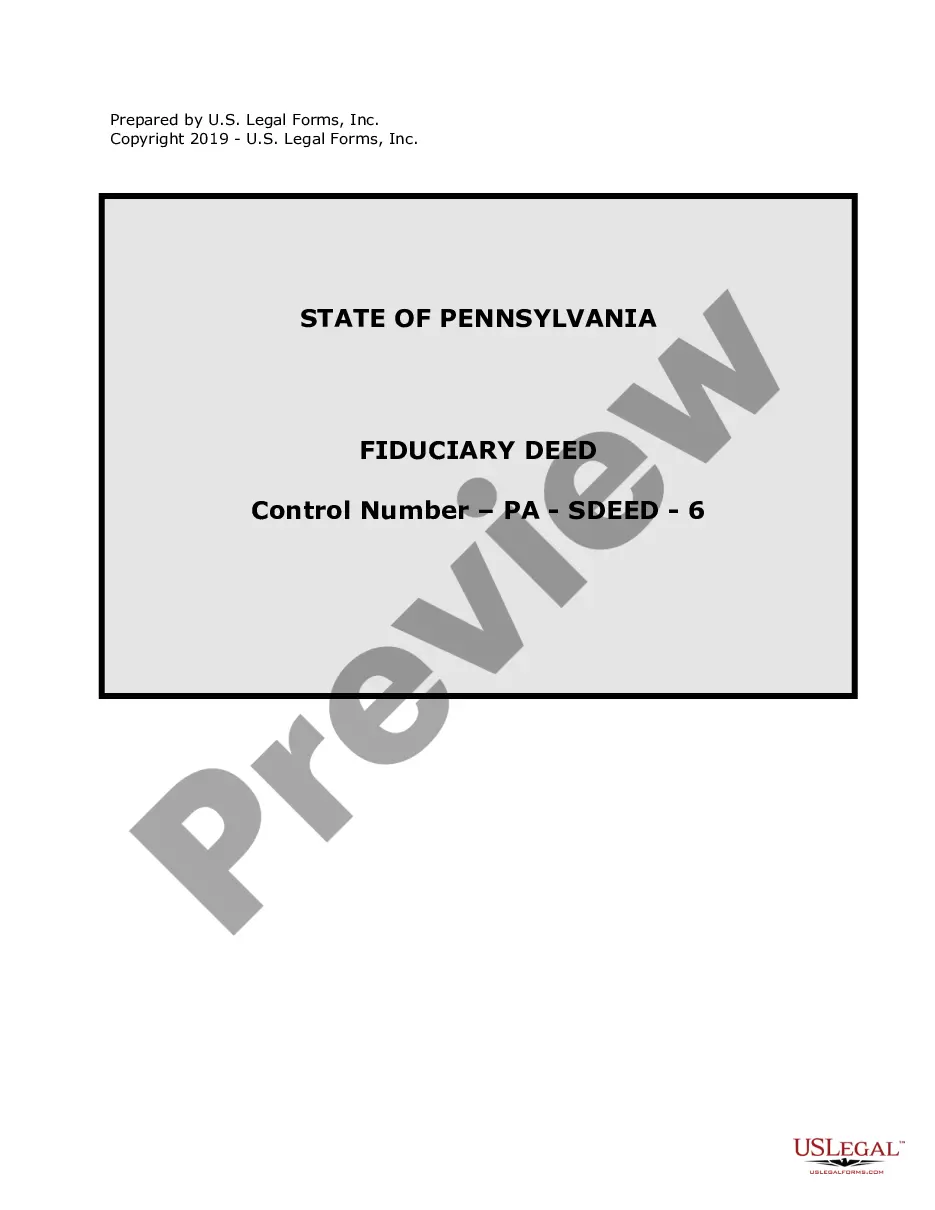
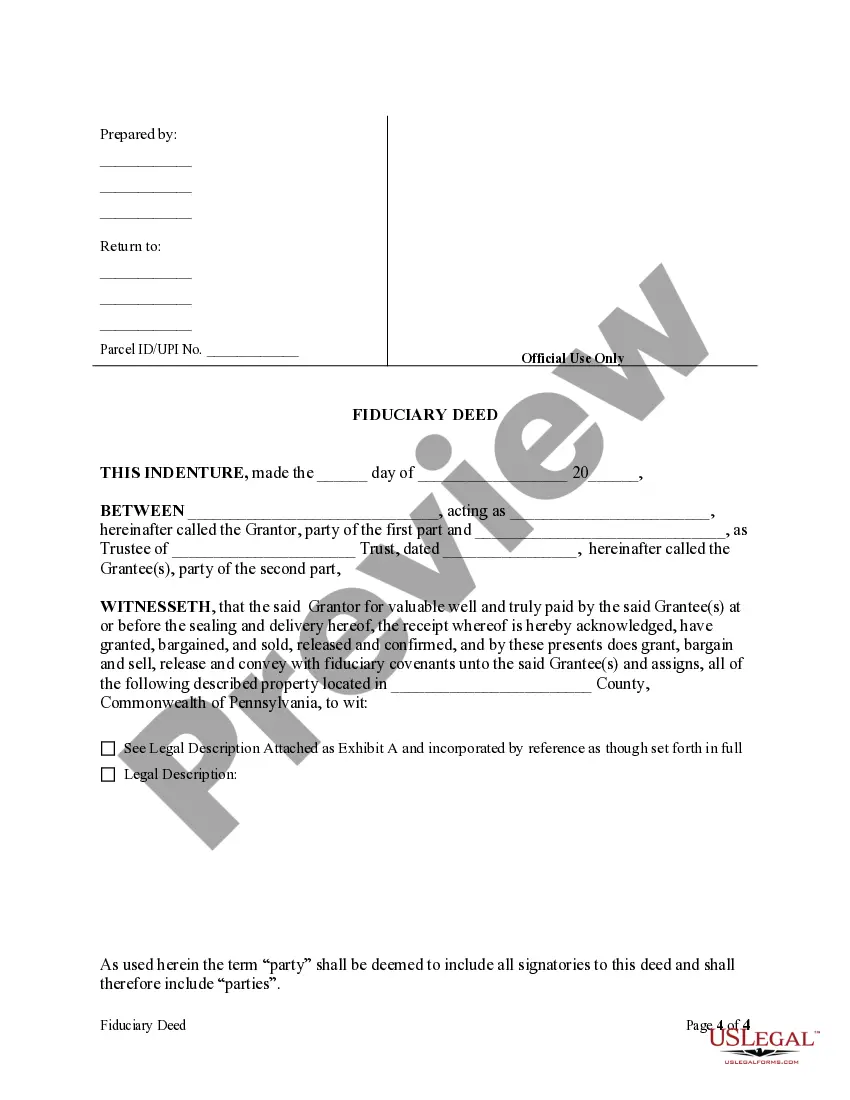
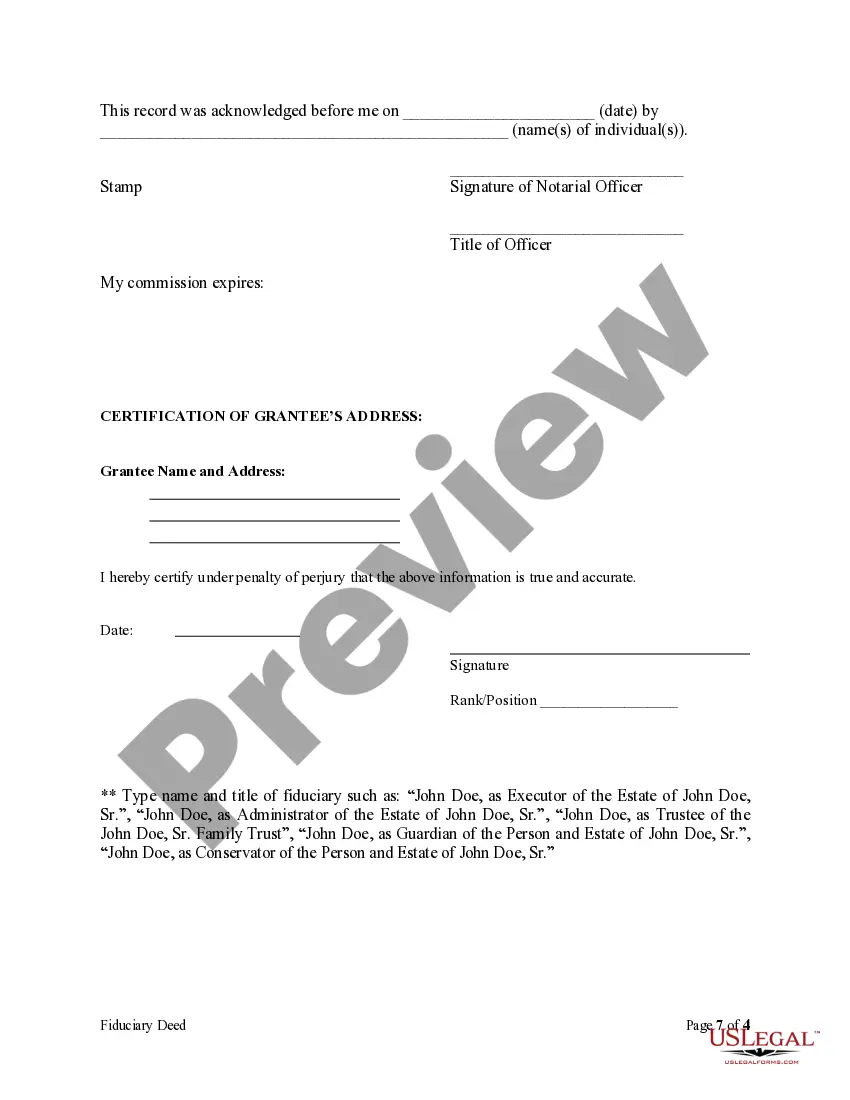
The Fiduciary Deed is a legal document used by executors, trustees, trustors, administrators, and other fiduciaries to convey property ownership. This form facilitates the transfer of real estate from the grantor to the grantee, ensuring clear authority is established in the transaction. Unlike other deeds, the Fiduciary Deed specifically addresses the roles of fiduciaries and their unique responsibilities under the law.
Key parts of this document
- Identification of the grantor and grantee, including their roles as fiduciaries.
- Description of the property to be conveyed.
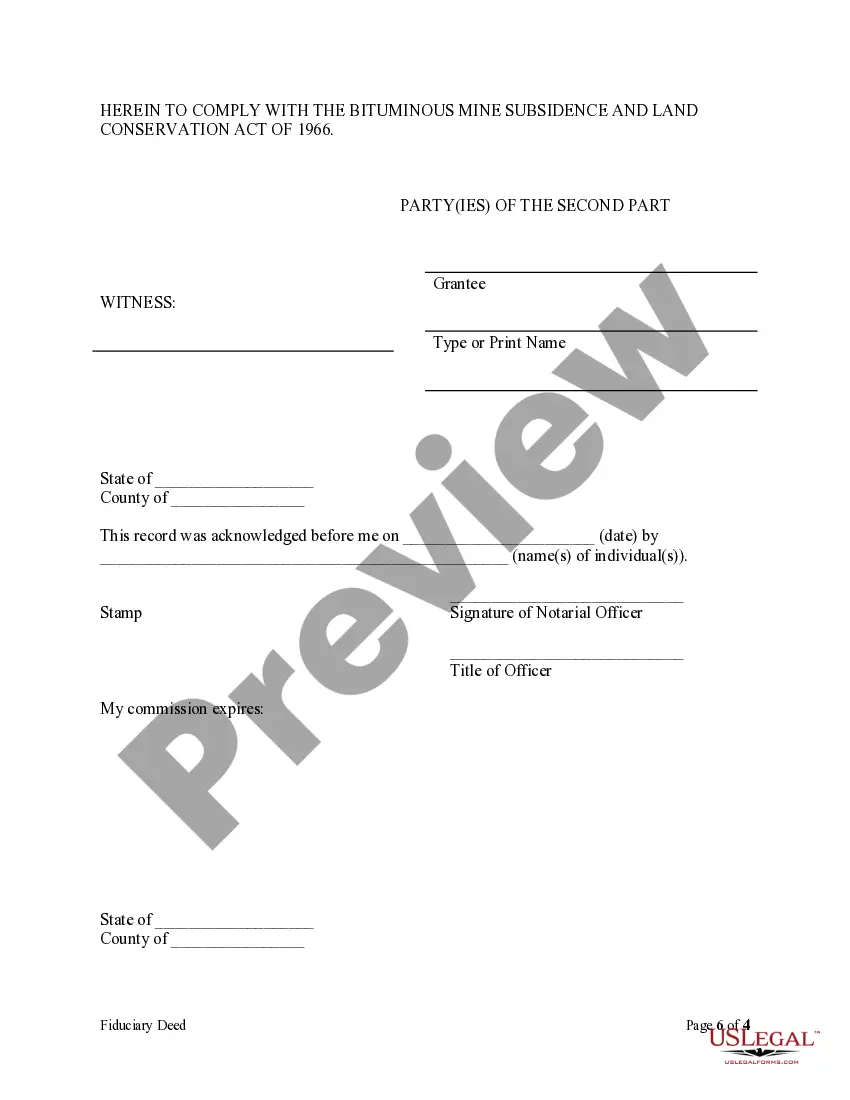
- Official acknowledgment of the transaction by a notary public.
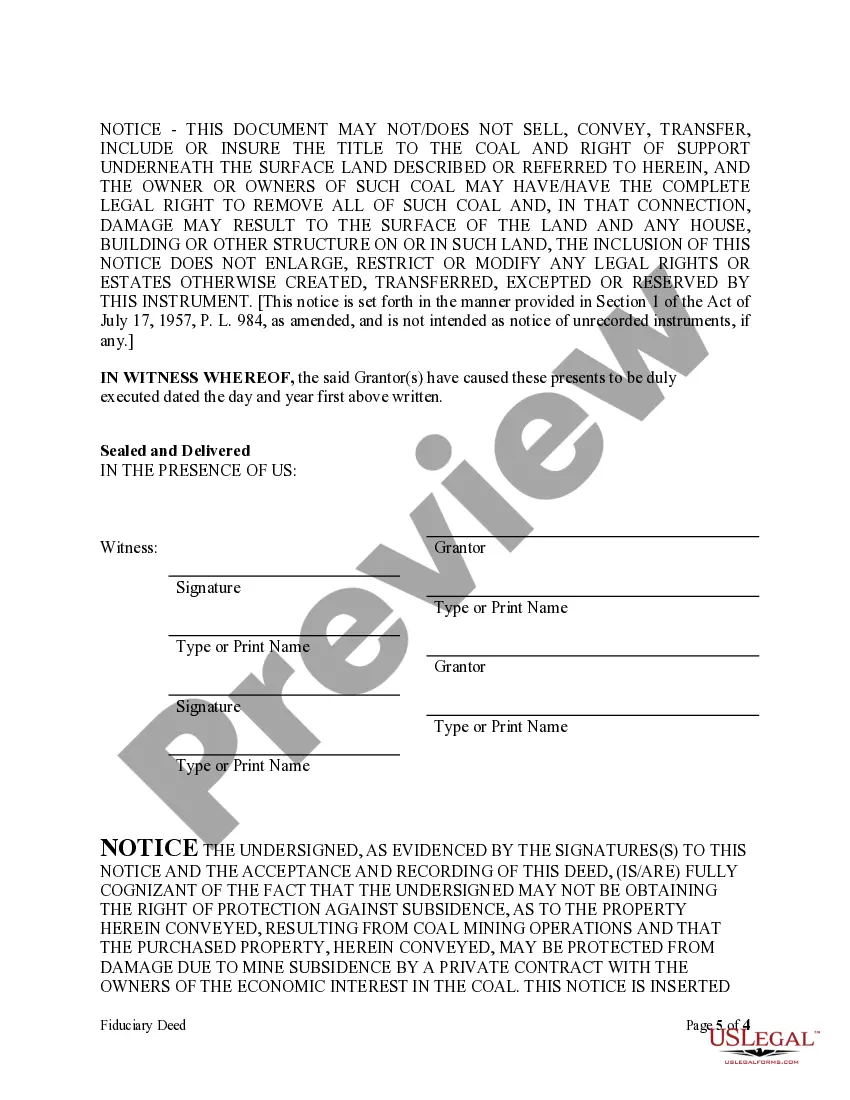
- Signature lines for the grantor and witnesses.
- Certification of grantee's address.



Common use cases
This form should be used when a fiduciary, such as an executor of a will or a trustee, needs to transfer property ownership following the terms of a trust or estate. Common scenarios include the distribution of assets after a loved one's passing or the management of property held in trust. Using the Fiduciary Deed ensures proper legal standing and protects the interests of all parties involved.
Who this form is for
This form is intended for:
- Executors of wills managing the distribution of assets.
- Trustees overseeing the transfer of assets from a trust.
- Administrators of estates or guardians managing property on behalf of another.
- Anyone acting under fiduciary responsibilities who must convey real estate.
How to prepare this document
- Identify the parties involved, listing the grantor and grantee with their specified roles.
- Provide a clear description of the property, including Parcel ID or UPI number if applicable.
- Enter the date of the transaction and sign the document in the presence of witnesses.
- Have the document notarized to confirm the authenticity of the signatures.
- Submit the completed deed to the proper county office for recording.
Does this document require notarization?
To make this form legally binding, it must be notarized. Our online notarization service, powered by Notarize, lets you verify and sign documents remotely through an encrypted video session.
Get your form ready online
Our built-in tools help you complete, sign, share, and store your documents in one place.
Make edits, fill in missing information, and update formatting in US Legal Forms—just like you would in MS Word.
Download a copy, print it, send it by email, or mail it via USPS—whatever works best for your next step.
Sign and collect signatures with our SignNow integration. Send to multiple recipients, set reminders, and more. Go Premium to unlock E-Sign.
If this form requires notarization, complete it online through a secure video call—no need to meet a notary in person or wait for an appointment.
We protect your documents and personal data by following strict security and privacy standards.

Make edits, fill in missing information, and update formatting in US Legal Forms—just like you would in MS Word.

Download a copy, print it, send it by email, or mail it via USPS—whatever works best for your next step.

Sign and collect signatures with our SignNow integration. Send to multiple recipients, set reminders, and more. Go Premium to unlock E-Sign.

If this form requires notarization, complete it online through a secure video call—no need to meet a notary in person or wait for an appointment.

We protect your documents and personal data by following strict security and privacy standards.
Common mistakes
- Failing to include a complete legal description of the property.
- Not obtaining the necessary notarization before submitting the deed.
- Leaving fields blank that are essential for identifying the parties involved.
- Not having enough witnesses sign the document if required by state law.
Benefits of using this form online
- Convenient access to pre-drafted legal documents without the need for an attorney.
- Edit and fill out the form digitally, reducing errors and saving time.
- Availability of customer support if you have questions or need assistance during the process.
Summary of main points
- The Fiduciary Deed is essential for legally transferring property by a fiduciary.
- Ensure the form is completed accurately to avoid legal complications.
- Always have the document notarized as required to maintain its validity.
Looking for another form?

Form popularity
FAQ
Three basic types of deeds commonly used are the grant deed, the quitclaim deed, and the warranty deed. A sample grant deed. the property he or she is transferring is implied from such language.
The words with fiduciary covenants means the seller promises to the buyer that he or she is duly appointed, qualified and acting in his or her fiduciary capacity, is duly authorized to make the sale and convey the property to buyer.
A fiduciary deed is for use by a fiduciary such as an executor or administrator of an estate or a trustee of a trust. In this type of deed there is a warranty, but only as a fiduciary. A fiduciary does not own the property, rather they essentially manage it for another.
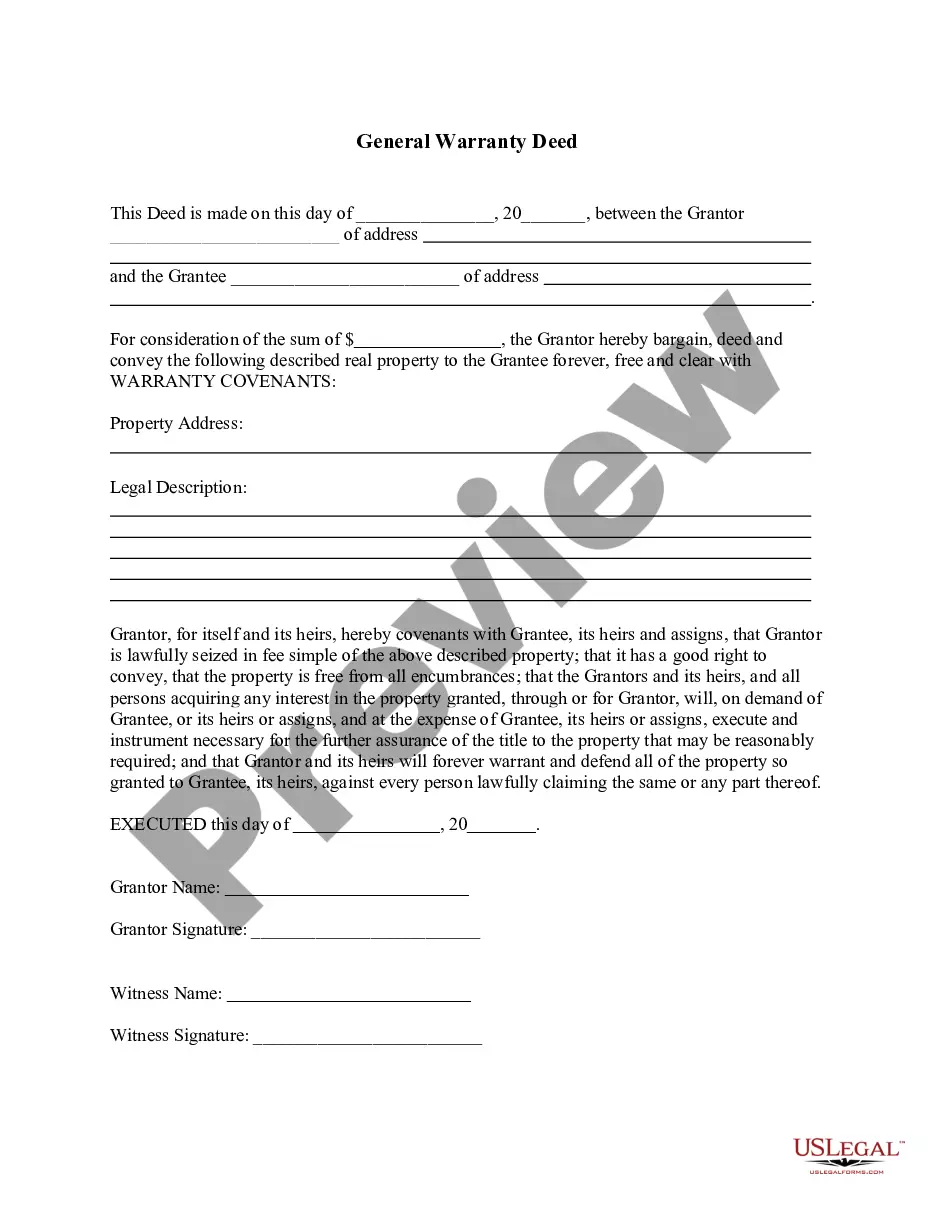
The General Warranty Deed. A general warranty deed provides the highest level of protection for the buyer because it includes significant covenants or warranties conveyed by the grantor to the grantee. The Special Warranty Deed. The Bargain and Sale Deed. The Quitclaim Deed.