Pennsylvania Living Trust for Individual Who is Single, Divorced or Widow (or Widower) with No Children
Overview of this form
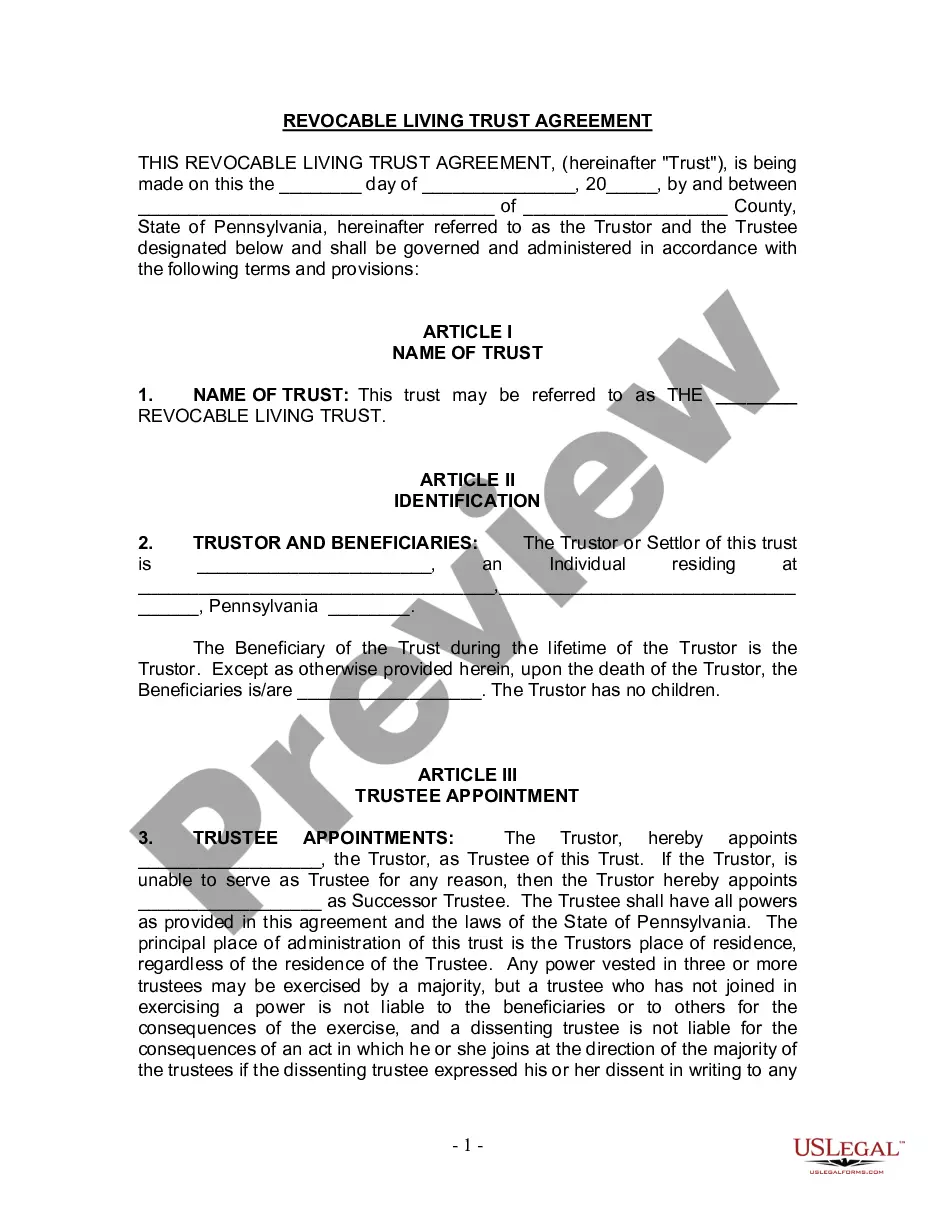
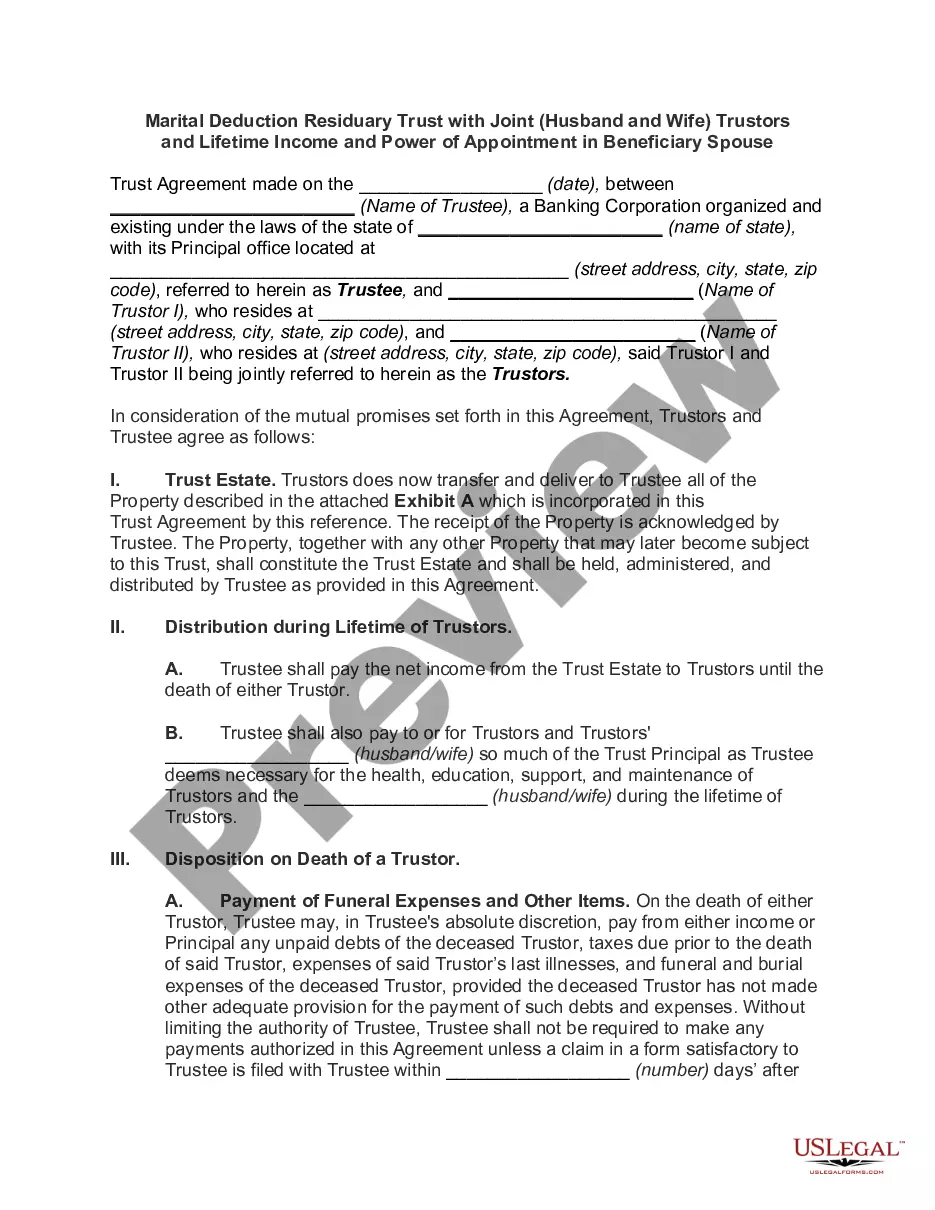
This Living Trust for an Individual Who is Single, Divorced, or Widowed with No Children is a legal document that allows you to manage your assets during your lifetime and designate how they will be distributed after your death. Unlike a Last Will and Testament, a living trust enables assets to bypass probate, ensuring a more efficient transfer of property. This trust is specifically designed for individuals who do not have children and wish to maintain control over their assets while simplifying the estate planning process.
Key parts of this document
- Name of Trust: Designate a unique name for the trust.
- Trustor and Beneficiaries: Identify the trust creator and their beneficiaries.
- Appointment of Trustee: Specify who will manage the trust and outline succession plans.
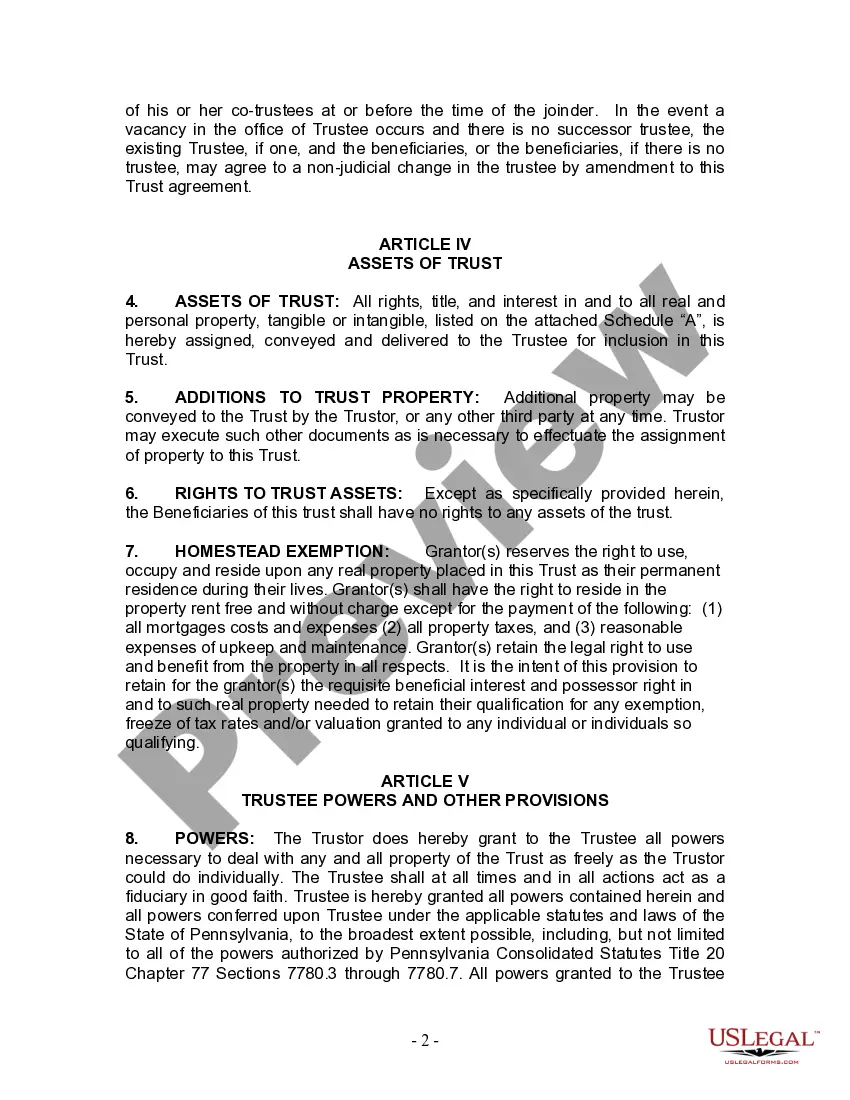
- Assets of Trust: List all property and assets transferred into the trust.
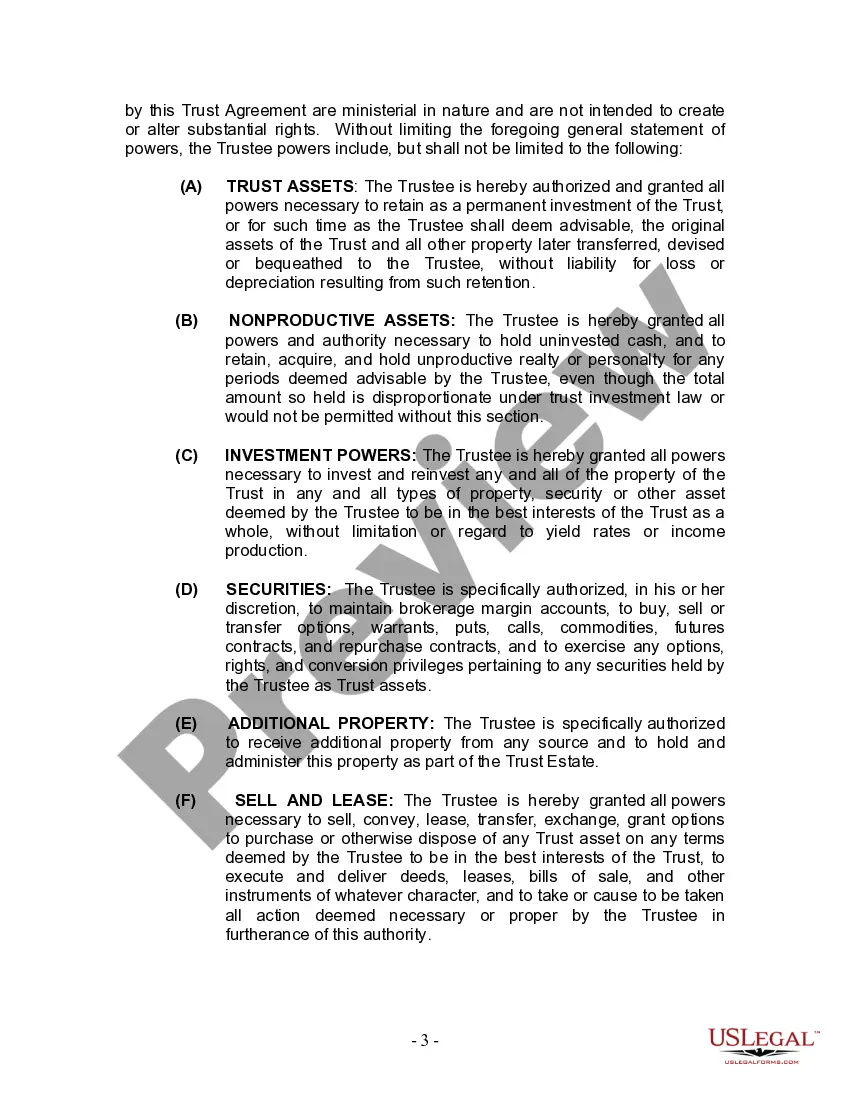
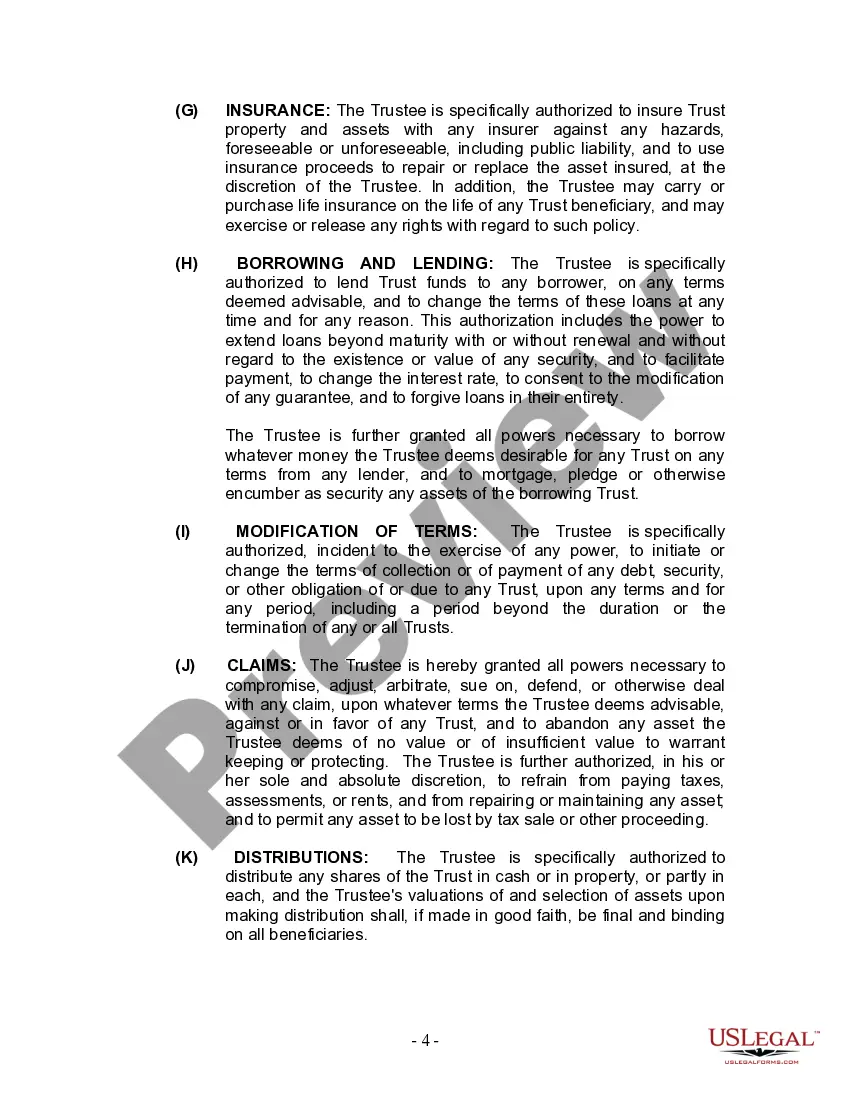
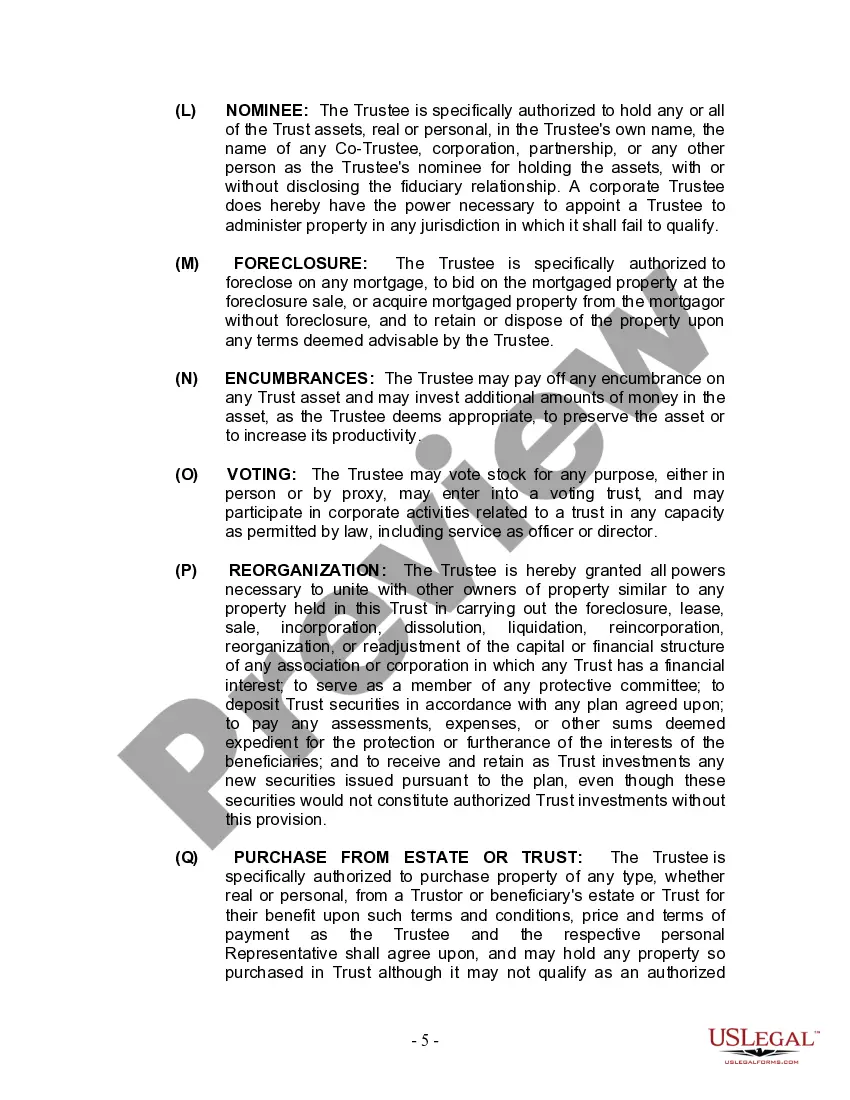
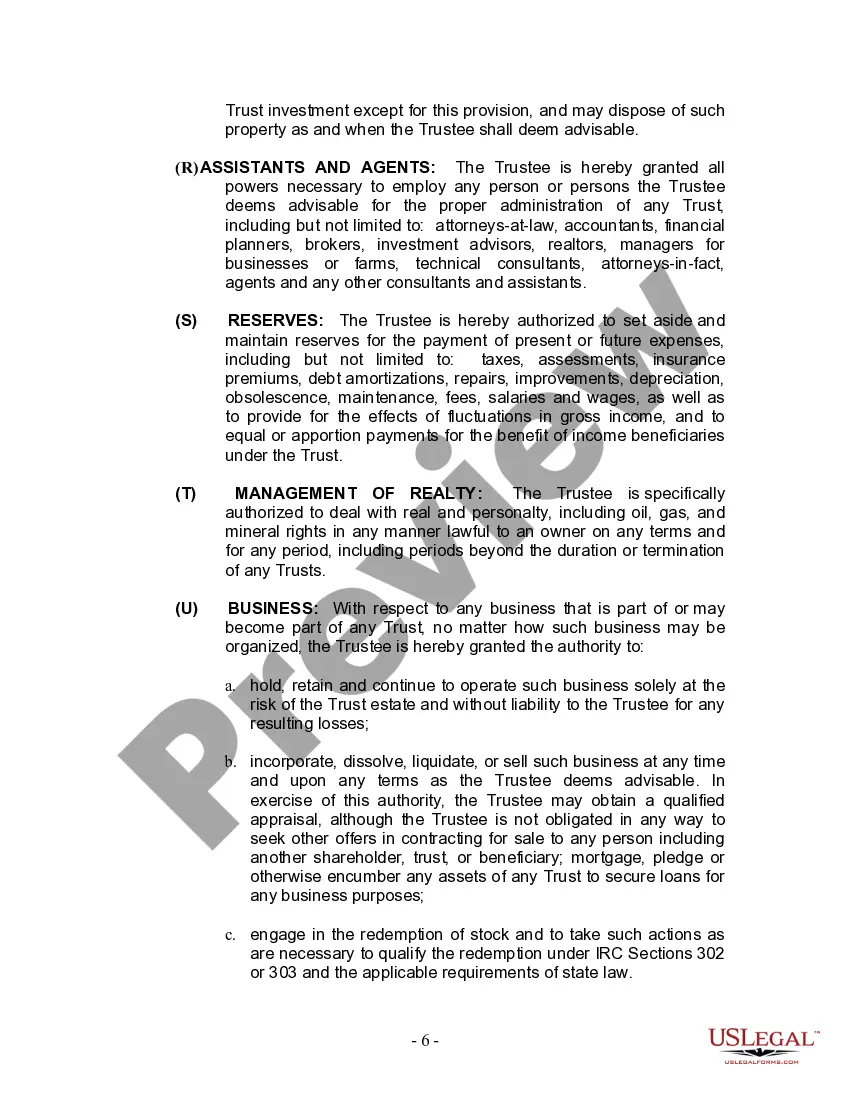
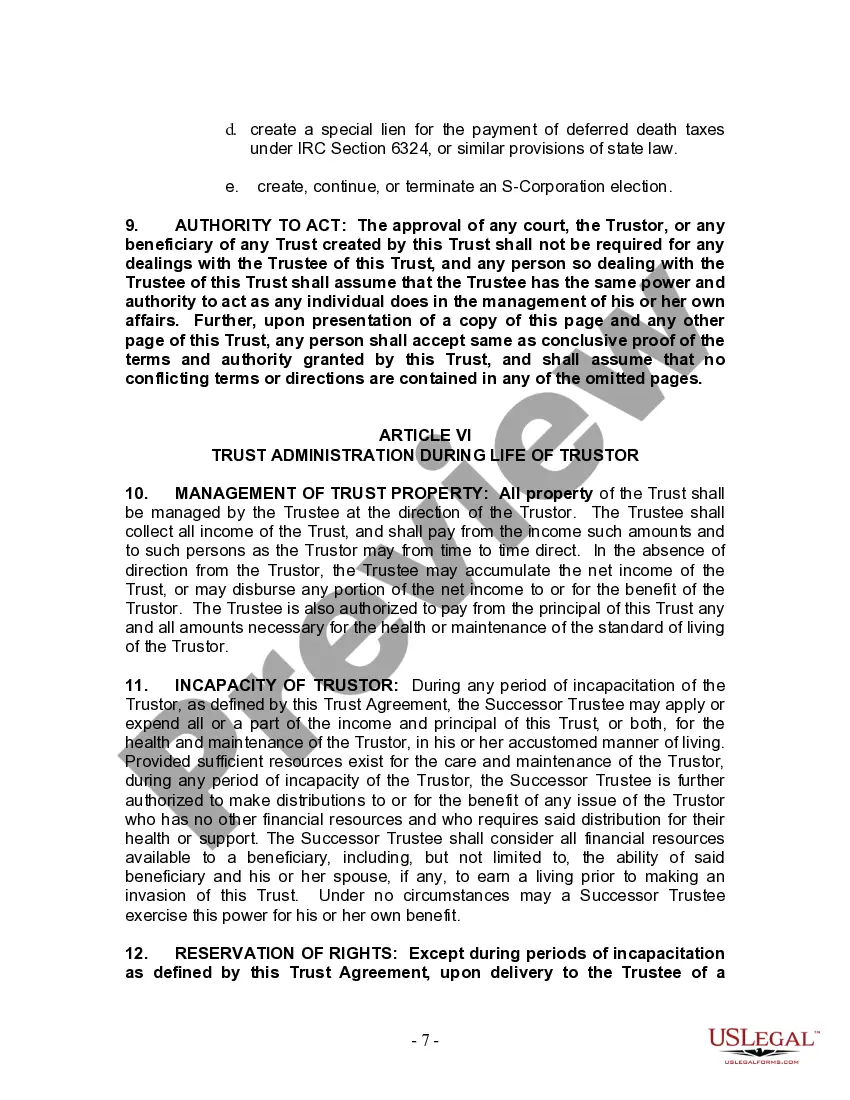
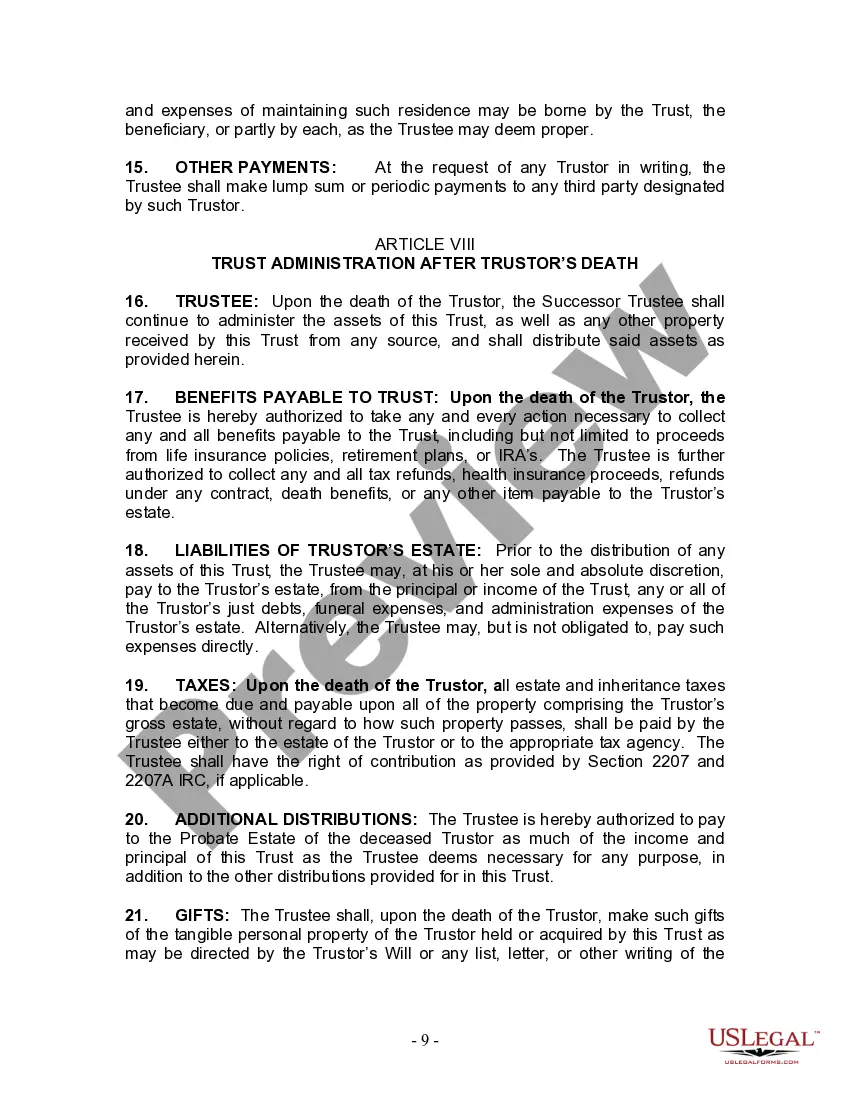
- Trustee Powers: Grant the trustee authority to manage, invest, and distribute trust assets.
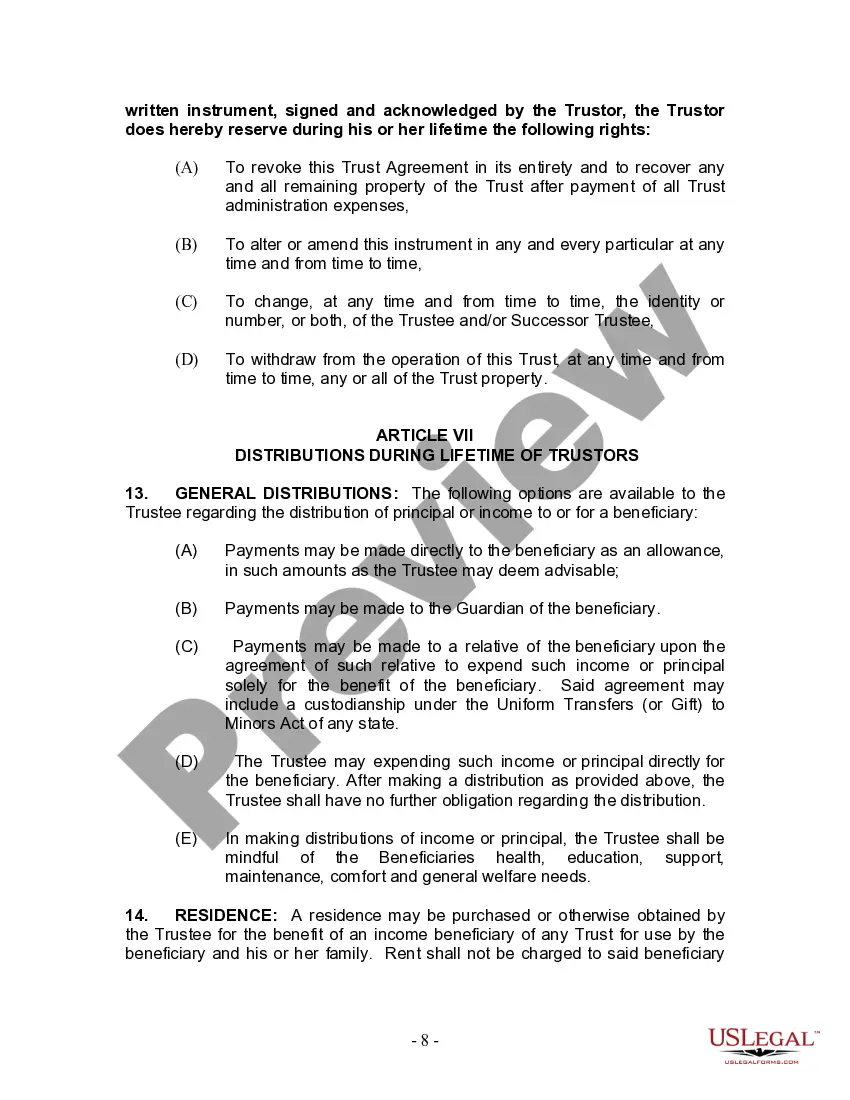
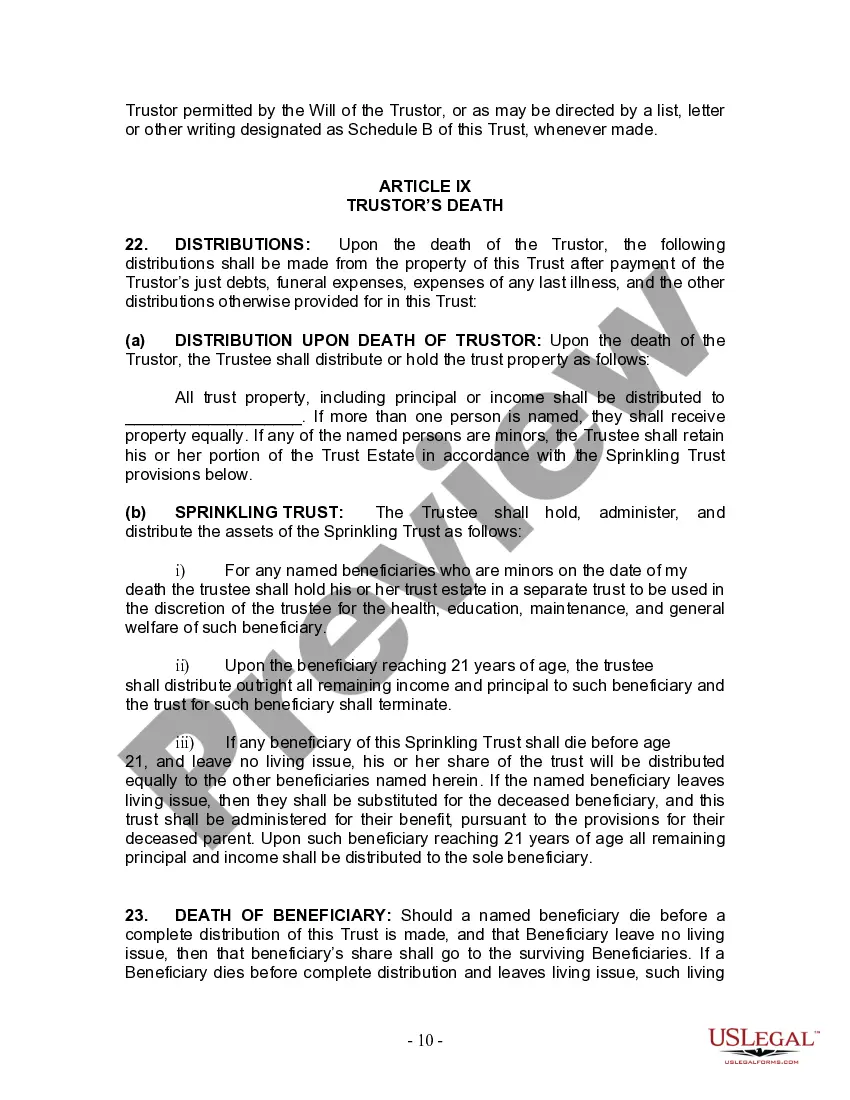
- Distribution Upon Death: Outline how the trust assets should be distributed after the trustor's death.




When to use this form
This form is essential in various scenarios, such as when an individual recently divorced, is single, or is a widow/widower without children and wants to ensure their assets are managed according to their wishes. It is also useful for those looking to avoid probate or when seeking greater control over their estate planning.
Who can use this document
Who should consider using this form:
- Individuals who are single, divorced, or widowed without children.
- People looking for an effective method to manage assets during their lifetime.
- Those seeking to simplify the estate process and avoid probate complications.
- Anyone wanting to designate specific beneficiaries for their assets.
How to prepare this document
Steps to Complete the Living Trust Form:
- Identify the parties involved, including the trustor and trustee.
- Fill in the name of the trust and designate the beneficiaries.
- List all assets that will be placed into the trust on the attached Schedule A.
- Specify the powers granted to the trustee and any successor trustees.
- Provide instructions for the distribution of assets upon the trustorâs death.
- Sign the document in front of a notary if required.
Does this document require notarization?
This form does not typically require notarization unless specified by local law.
Get your form ready online
Our built-in tools help you complete, sign, share, and store your documents in one place.
Make edits, fill in missing information, and update formatting in US Legal Forms—just like you would in MS Word.
Download a copy, print it, send it by email, or mail it via USPS—whatever works best for your next step.
Sign and collect signatures with our SignNow integration. Send to multiple recipients, set reminders, and more. Go Premium to unlock E-Sign.
If this form requires notarization, complete it online through a secure video call—no need to meet a notary in person or wait for an appointment.
We protect your documents and personal data by following strict security and privacy standards.

Make edits, fill in missing information, and update formatting in US Legal Forms—just like you would in MS Word.

Download a copy, print it, send it by email, or mail it via USPS—whatever works best for your next step.

Sign and collect signatures with our SignNow integration. Send to multiple recipients, set reminders, and more. Go Premium to unlock E-Sign.

If this form requires notarization, complete it online through a secure video call—no need to meet a notary in person or wait for an appointment.

We protect your documents and personal data by following strict security and privacy standards.
Common mistakes
- Failing to update the trust with new assets or after personal changes.
- Not clearly defining the trustee's powers, which can lead to complications.
- Leaving out important details about asset distribution or beneficiary designation.
- Neglecting to have the document signed and notarized, if necessary.
Why complete this form online
- Convenience: Easily download and complete the trust form from home.
- Editability: Modify the document as needed to suit changing circumstances.
- Reliability: Professionally drafted, ensuring compliance with legal standards.
Looking for another form?
Form popularity
FAQ
But for estates in Pennsylvania that exceed the small estate's threshold, and for which there is either no Will, or a Will (but not a Living Trust), probate will be required before an estate can be tranferred to the decedent's heirs or beneficiaries.
How long does probate in Pennsylvania take? In Pennsylvania, most probates can be done in 9 to 18 months.
In Pennsylvania, you can make a living trust to avoid probate for virtually any asset you ownreal estate, bank accounts, vehicles, and so on. You need to create a trust document (it's similar to a will), naming someone to take over as trustee after your death (called a successor trustee).
Examples of probate assets include: Single name bank or investment accounts. Assets owned jointly as tenants in common (as opposed to joint tenancy) Art and collectibles.
At its most basic level, the probate process in Pennsylvania involves two steps: paying your debts and transferring any assets to your beneficiaries. A probate proceeding begins when the court appoints someone to handle the administration of estate, i.e. a personal representative.
The Probate Process in Pennsylvania Inheritance Laws Essentially any estate worth more than $50,000, not including real property like land or a home and other final expenses, must go through the probate court process under Pennsylvania inheritance laws.
Typically, the entire process may take up to 12 months. The longest delay seems to be for the PA Department of Revenue to approve a PA Inheritance Tax Return, once submitted...
Property that is held in joint tenancy or as tenants by the entirety. Bank or brokerage accounts held in joint tenancy or with payable on death (POD) or transfer on death (TOD) beneficiaries. Property held in a trust.
How long does probate in Pennsylvania take? In Pennsylvania, most probates can be done in 9 to 18 months.