New York Residential Rental Lease Application
What this document covers
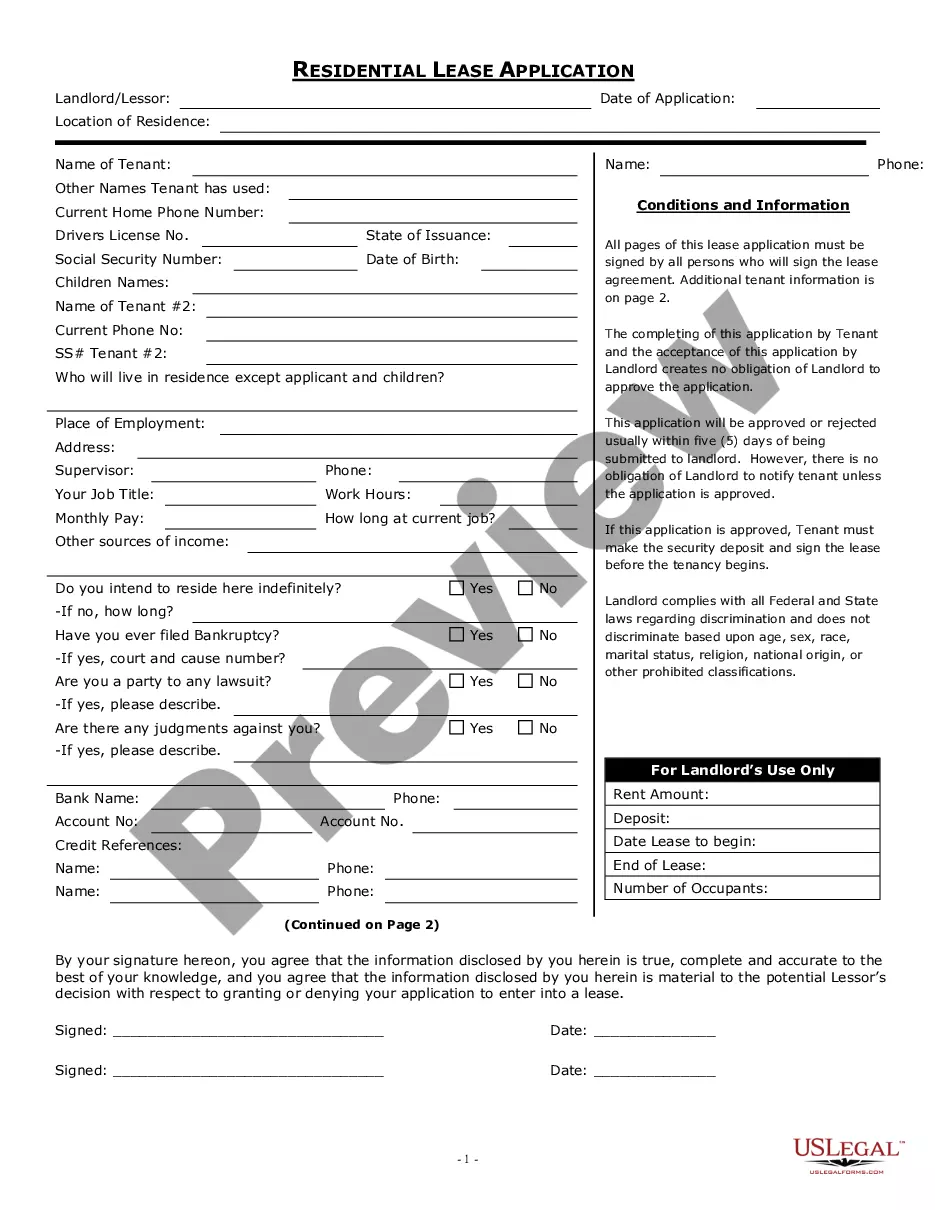
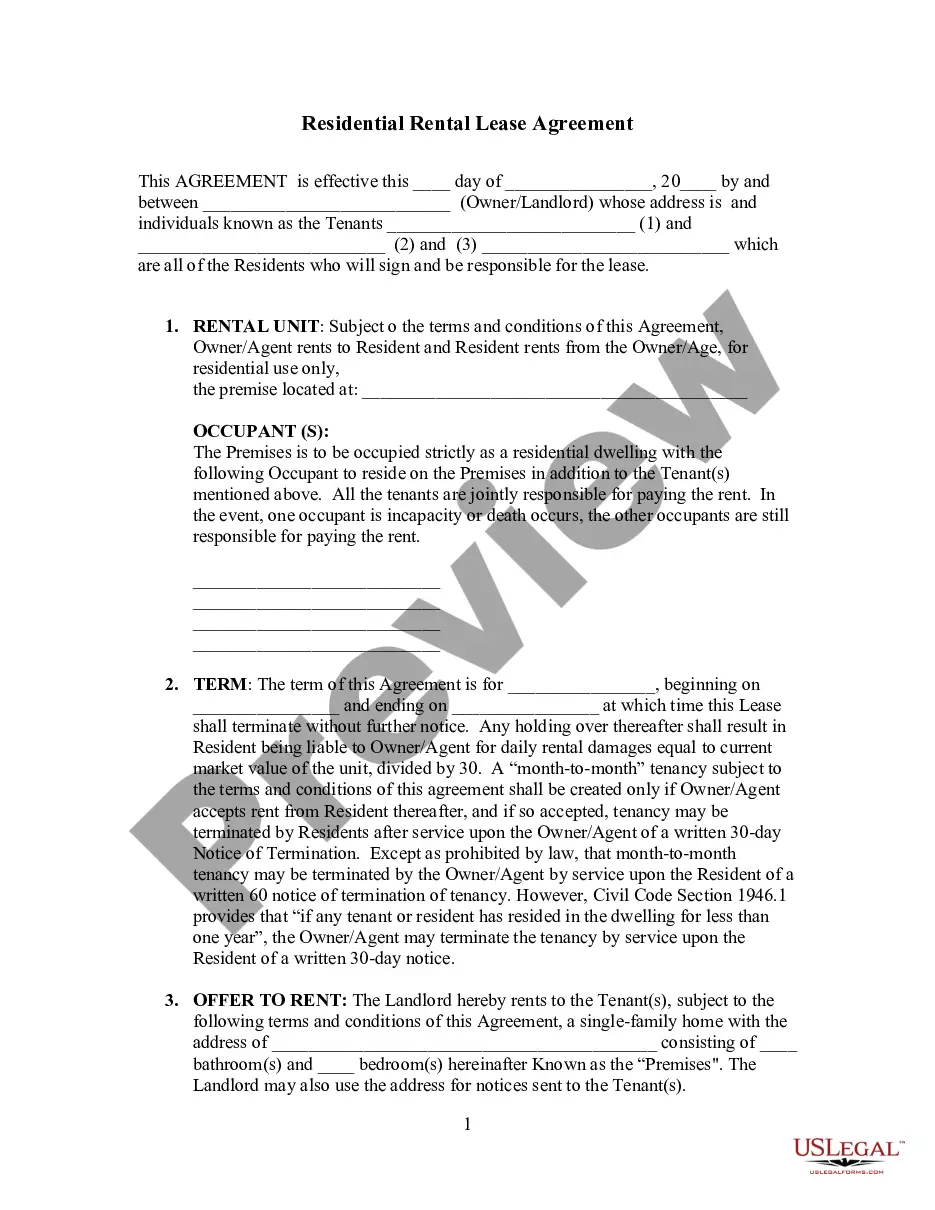
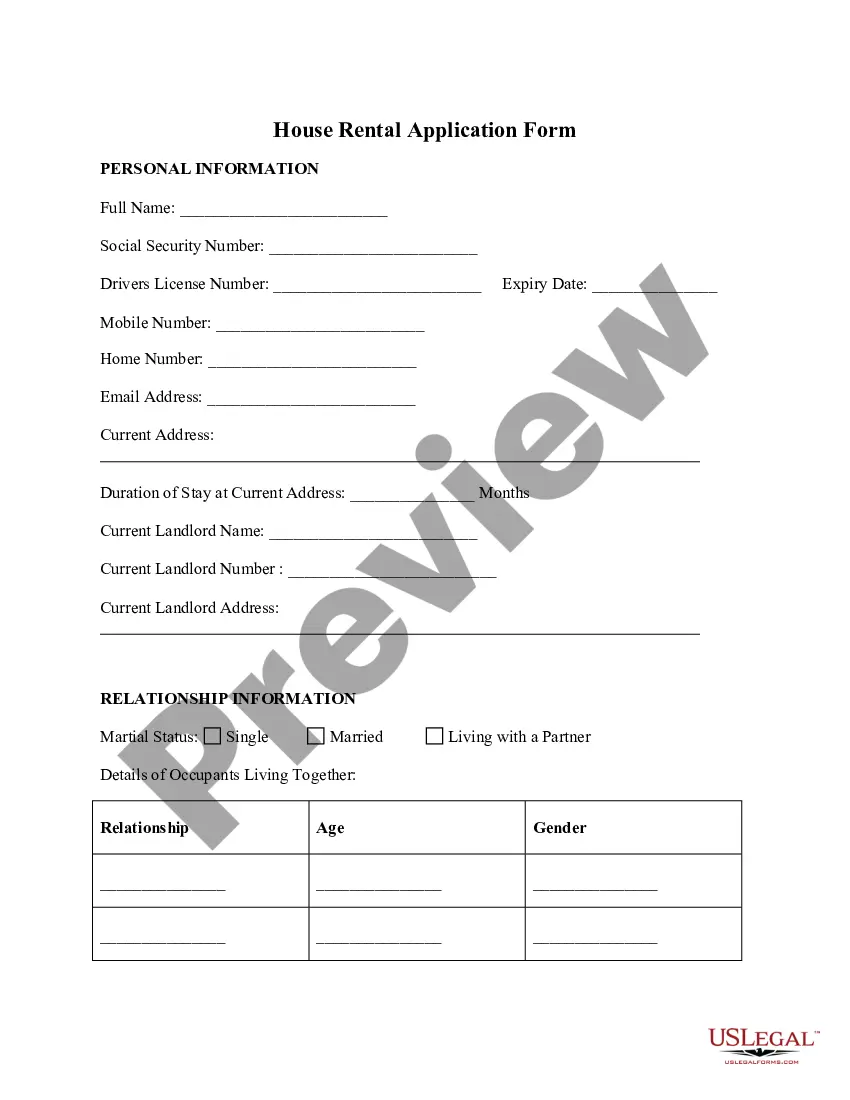
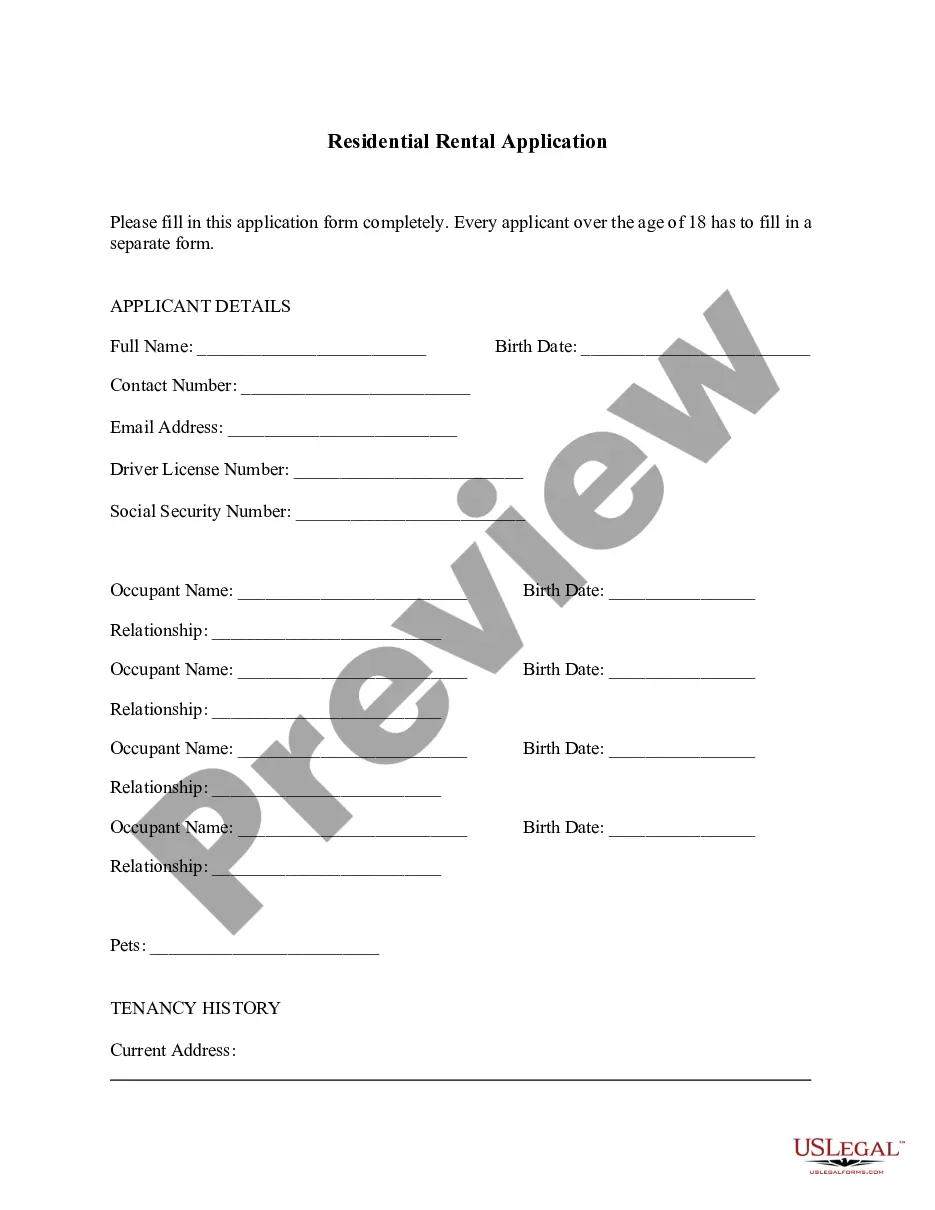
The Residential Rental Lease Application form is a document that allows potential tenants to apply for a rental property. It is designed for landlords to collect crucial information from applicants to evaluate their suitability as tenants. This application is essential for assessing the creditworthiness and background of applicants before renting a property. It differs from rental agreements, which outline the terms of the lease after an application is accepted.
Main sections of this form
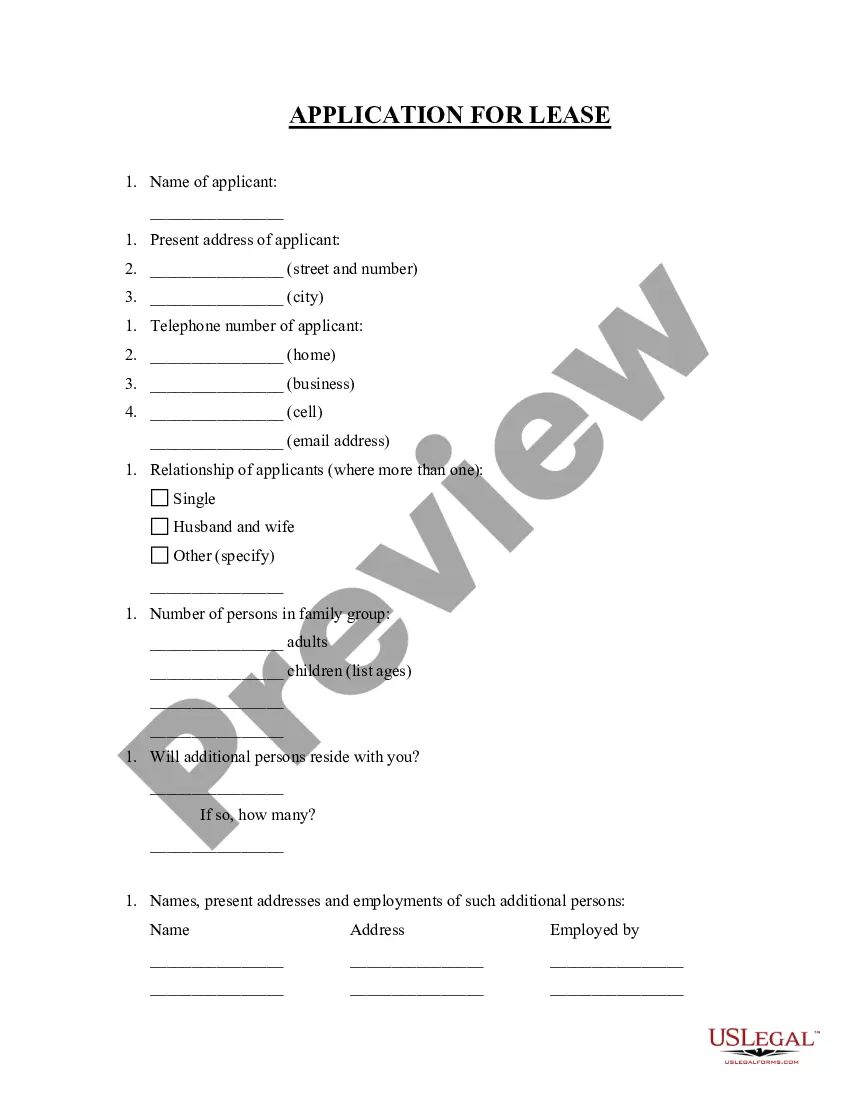
- Applicant's personal information, including name, address, and contact details.
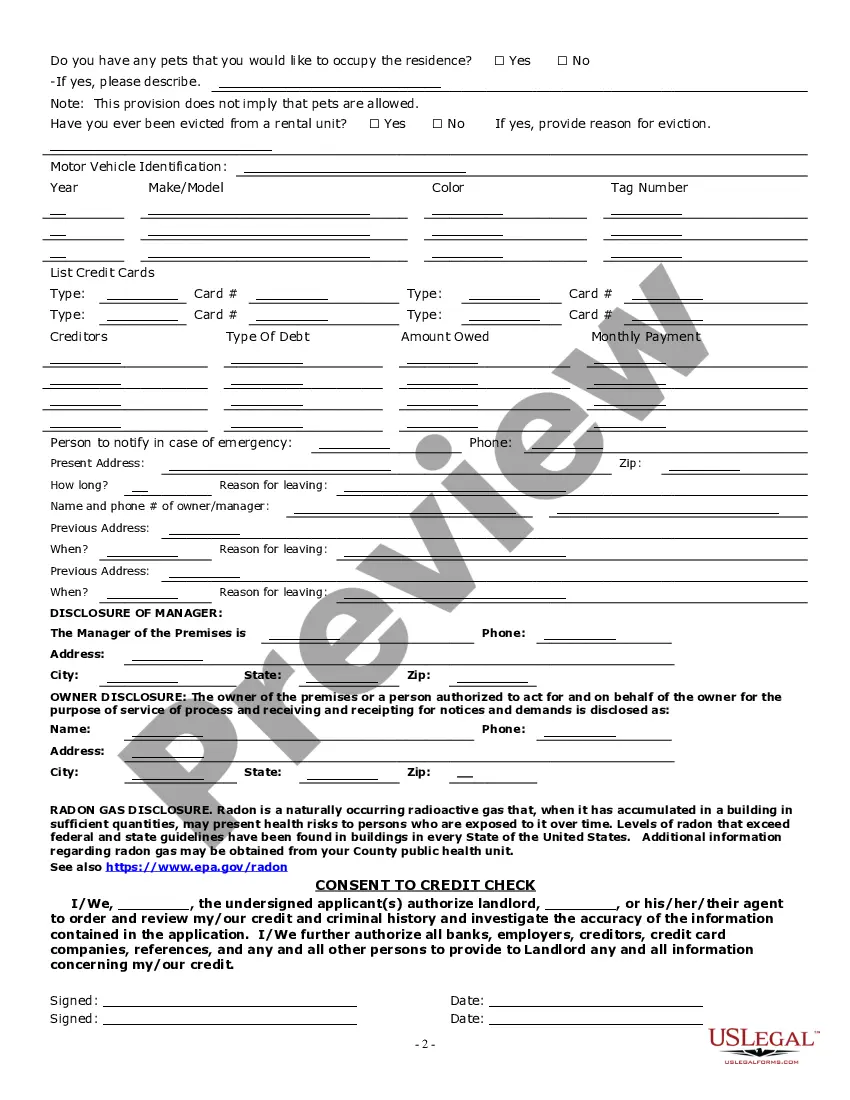
- Authorization for the landlord to conduct credit and background checks.
- Disclosure of the applicant's rental history and employment information.
- Fields for listing the desired rental property and terms of the lease.
- Landlord's evaluation notes and details about the approved or rejected status.

When this form is needed
This application should be used when a prospective tenant wants to rent a residential property. It is particularly useful during the tenant screening process, helping landlords determine if the applicant meets the leasing criteria. Use this form whenever you are considering a new tenant for your rental property, ensuring a clear and structured evaluation of each application received.
Who should use this form
- Landlords or property managers looking to rent out residential properties.
- Tenants seeking to apply for a rental unit.
How to complete this form
- Identify the parties involved by providing the applicant's full name and contact information.
- Enter the rental property details, including the address and desired lease terms.
- Provide relevant personal and financial information, including rental history and employment details.
- Sign the authorization allowing the landlord to perform credit and background checks.
- Ensure all information is accurate and submit the application to the landlord.
Does this form need to be notarized?
In most cases, this form does not require notarization. However, some jurisdictions or signing circumstances might. US Legal Forms offers online notarization powered by Notarize, accessible 24/7 for a quick, remote process.
Get your form ready online
Our built-in tools help you complete, sign, share, and store your documents in one place.
Make edits, fill in missing information, and update formatting in US Legal Forms—just like you would in MS Word.
Download a copy, print it, send it by email, or mail it via USPS—whatever works best for your next step.
Sign and collect signatures with our SignNow integration. Send to multiple recipients, set reminders, and more. Go Premium to unlock E-Sign.
If this form requires notarization, complete it online through a secure video call—no need to meet a notary in person or wait for an appointment.
We protect your documents and personal data by following strict security and privacy standards.

Make edits, fill in missing information, and update formatting in US Legal Forms—just like you would in MS Word.

Download a copy, print it, send it by email, or mail it via USPS—whatever works best for your next step.

Sign and collect signatures with our SignNow integration. Send to multiple recipients, set reminders, and more. Go Premium to unlock E-Sign.

If this form requires notarization, complete it online through a secure video call—no need to meet a notary in person or wait for an appointment.

We protect your documents and personal data by following strict security and privacy standards.
Common mistakes to avoid
- Failing to provide complete or accurate information in the application.
- Not signing the authorization for credit and background checks.
- Submitting multiple applications for different properties without notifying landlords.
Benefits of using this form online
- Convenience: Complete the application from anywhere at any time.
- Editability: Easily make changes to your application before submitting.
- Reliability: Access professionally drafted forms designed by licensed attorneys.
Legal use & context
- This application form helps ensure compliance with rental laws and fair housing regulations.
- It serves a legal purpose in documenting the application process for both parties.
Quick recap
- The Residential Rental Lease Application is essential for landlords during the tenant screening process.
- Completing the form accurately is crucial for both applying tenants and evaluating landlords.
- This form helps maintain compliance with federal and state rental laws.
Looking for another form?


Form popularity
FAQ
If you're thinking of renting out your property, or you're a tenant, and the current owner doesn't already have an agreement drawn up, it's possible to create your own rental contract.
New York considers a lease to be a contract, and most contracts do not need to be notarized. After all, a notarization by a New York State notary does not prove that the contract is legally binding.Other states, such as Ohio, do require leases over three years to be notarized.
Check your landlord's policies. Start looking for a qualified tenant. Review your applicant's information. Prepare a lease assignment agreement for New York. Send the application to your landlord. Sign the agreement.
The lease becomes legally binding when all parties have signed: the landlord and all tenants living in the unit who are 18 and older. If you're worried about situations where a lease needs to end early, learn about breaking a lease and grounds for eviction.
A written agreement can act as a roadmap for the landlord-tenant relationship, especially if a dispute arises. Also, real estate (land) leases for more than one year must be in writing. If a lease for over one year is not in writing, it will generally not be enforceable in court.
The Lease Must be in Writing It does not matter if the lease is handwritten or typed.
Collect each party's information. Include specifics about your property. Consider all of the property's utilities and services. Know the terms of your lease. Set the monthly rent amount and due date. Calculate any additional fees. Determine a payment method. Consider your rights and obligations.
A lease can be written or verbal, but a verbal lease can be very difficult to enforce.Most leases are fairly standard and cover basic components such as rent amount, duration of lease term, resposiblities of each party and penalties for not following the terms.
Collect each party's information. Include specifics about your property. Consider all of the property's utilities and services. Know the terms of your lease. Set the monthly rent amount and due date. Calculate any additional fees. Determine a payment method. Consider your rights and obligations.