Oregon Demand to Produce Copy of Will from Heir to Executor or Person in Possession of Will
About this form
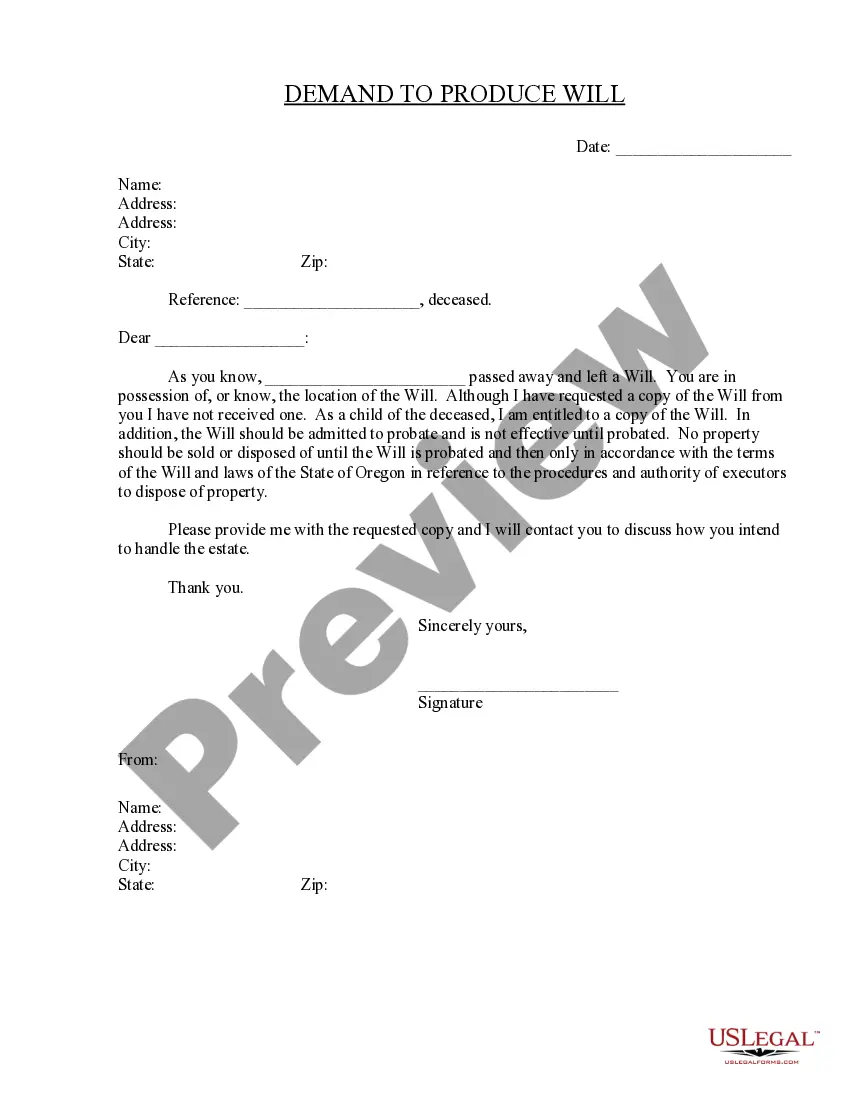
The Demand to Produce Copy of Will from Heir to Executor or Person in Possession of Will is a legal request made by an heir, typically a child of the deceased, demanding that the executor or individual holding the will provide a copy. This form serves an essential purpose by ensuring that heirs can access the will, which is necessary for the estate's probate process. Unlike other legal requests, this form specifically focuses on obtaining a copy of a will when one is known to exist but has not been shared with the heirs.
Form components explained
- Date of the demand
- Name and address of the heir making the request
- Reference to the deceased, including their name
- Statement of the heir's entitlement to a copy of the will
- Request for the executor to provide the will
- Heir's signature and contact information
When to use this form
This form is typically used when a child or heir believes that their deceased parent or family member left a will but has not been given access to it. You may find yourself needing this form if:
- You have requested a copy of the will but not received it.
- You suspect the executor is not fulfilling their duties.
- You need to ensure the will is probated to protect your inheritance rights.
Who can use this document
This form is suitable for:
- Children or heirs of the deceased
- Individuals who are not the executor but believe they have a legal right to the will
- Anyone who is aware that a will exists and wishes to obtain a copy for the purpose of estate administration
Completing this form step by step
- Enter the date at the top of the form.
- Provide your name and address details.
- Clearly state the name of the deceased and any reference related to them.
- Explain your relationship to the deceased and your entitlement to the will.
- Request a copy of the will and include any necessary instructions on how to contact you.
- Sign the document and provide your contact information.
Notarization guidance
In most cases, this form does not require notarization. However, some jurisdictions or signing circumstances might. US Legal Forms offers online notarization powered by Notarize, accessible 24/7 for a quick, remote process.
Get your form ready online
Our built-in tools help you complete, sign, share, and store your documents in one place.
Make edits, fill in missing information, and update formatting in US Legal Forms—just like you would in MS Word.
Download a copy, print it, send it by email, or mail it via USPS—whatever works best for your next step.
Sign and collect signatures with our SignNow integration. Send to multiple recipients, set reminders, and more. Go Premium to unlock E-Sign.
If this form requires notarization, complete it online through a secure video call—no need to meet a notary in person or wait for an appointment.
We protect your documents and personal data by following strict security and privacy standards.
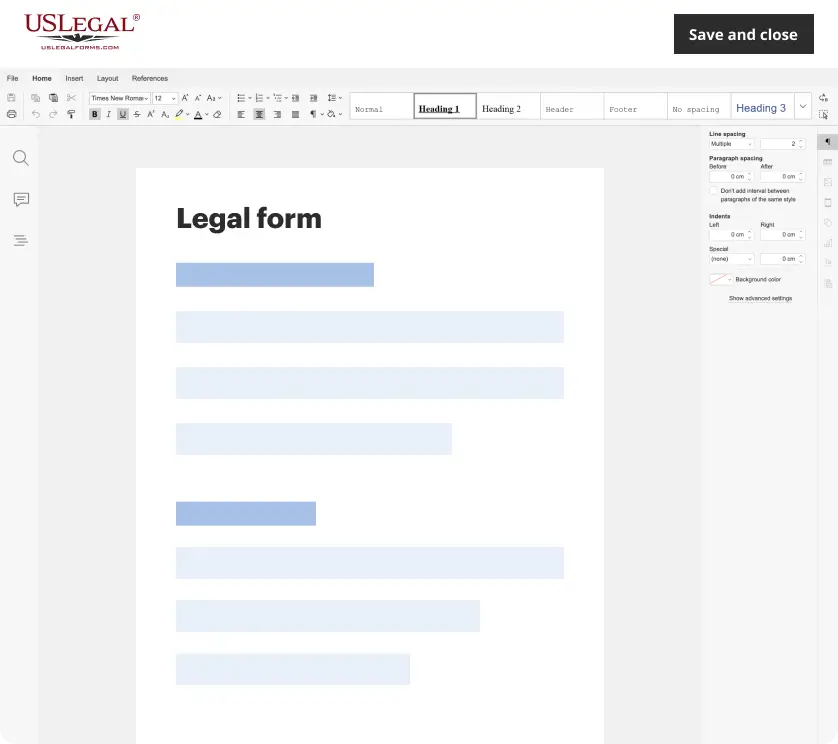
Make edits, fill in missing information, and update formatting in US Legal Forms—just like you would in MS Word.
Download a copy, print it, send it by email, or mail it via USPS—whatever works best for your next step.
Sign and collect signatures with our SignNow integration. Send to multiple recipients, set reminders, and more. Go Premium to unlock E-Sign.

If this form requires notarization, complete it online through a secure video call—no need to meet a notary in person or wait for an appointment.

We protect your documents and personal data by following strict security and privacy standards.
Common mistakes to avoid
- Failing to include all necessary contact details.
- Not providing a clear reference to the deceased.
- Omitting a statement of entitlement.
- Not signing the form.
Benefits of completing this form online
- Convenient: Easily download and complete the form at your own pace.
- Editability: Customize the form according to your specific needs.
- Reliability: Forms are drafted by licensed attorneys, ensuring legal compliance.
Quick recap
- This form is essential for heirs seeking a copy of a will when one is believed to exist.
- Timely submission can help protect your inheritance rights and facilitate the probate process.
- Be clear and concise in your language to avoid misunderstandings with the executor or person in possession of the will.
Looking for another form?
Form popularity
FAQ
The most likely person to hold the document is the Executor selected in the Will. For example, a client names her adult daughter as the Executor of her Will. The client gives her adult daughter the original Will and tells her that she will need to bring this to the probate court upon her death.
Most courts have a website. You can likely find it by typing in something like: (name of county, state) clerk of court. You will need to locate court records or something similar on the website, and then type in your decedent's first and last name.
Once the testator has died, if that will has been filed with the probate court of the county the deceased resided in, the court will open the will and it becomes public record. The best way to view the will is to get the probate court file number. The executor can give you this information.
You must keep your Will in a safe place; however that place must be easily accessible when the document is needed! There are various ways to store your Will. Your solicitor or Will writer may store it for you at their offices.
A lot of attorneys offer to keep the original wills they prepare for their clients, at no charge. They do this so they can probate the estates of their clients. When a client dies, their children read the copy of the will and call the attorney whose name is stamped in big bold letters on the first page.
Most estate planning attorneys take on the responsibility of holding their clients' original wills and other documents. They do this for two reasons. First, they are often better equipped to keep the originals safe where they can be found when needed.
Yes, an executor can override a beneficiary's wishes as long as they are following the will or, alternative, any court orders. Executors have a fiduciary duty to the estate beneficiaries requiring them to distribute estate assets as stated in the will.
All taxes and liabilities paid from the estate, including medical expenses, attorney fees, burial or cremation expenses, estate sale costs, appraisal expenses, and more. The executor should keep all receipts for any services or transactions needed to liquidate the assets of the deceased.
If an original will cannot be found, a copy can be admitted to probate under certain circumstances.If the court finds by clear and convincing evidence that the will copy is a replica of the testator's original will, the court will admit the will copy and the estate will be probated.