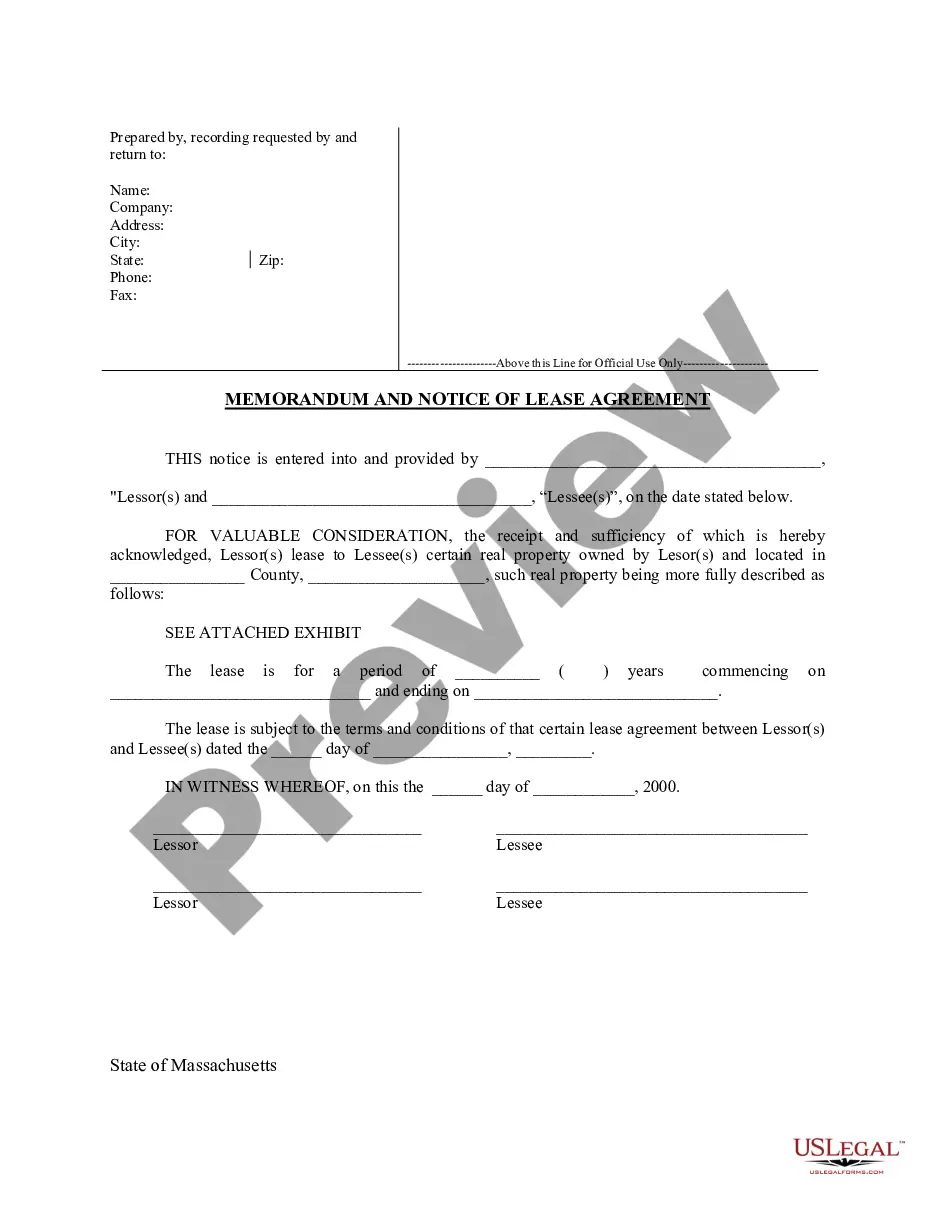
Oregon Mutual Wills package with Last Wills and Testaments for Married Couple with No Children
About this form
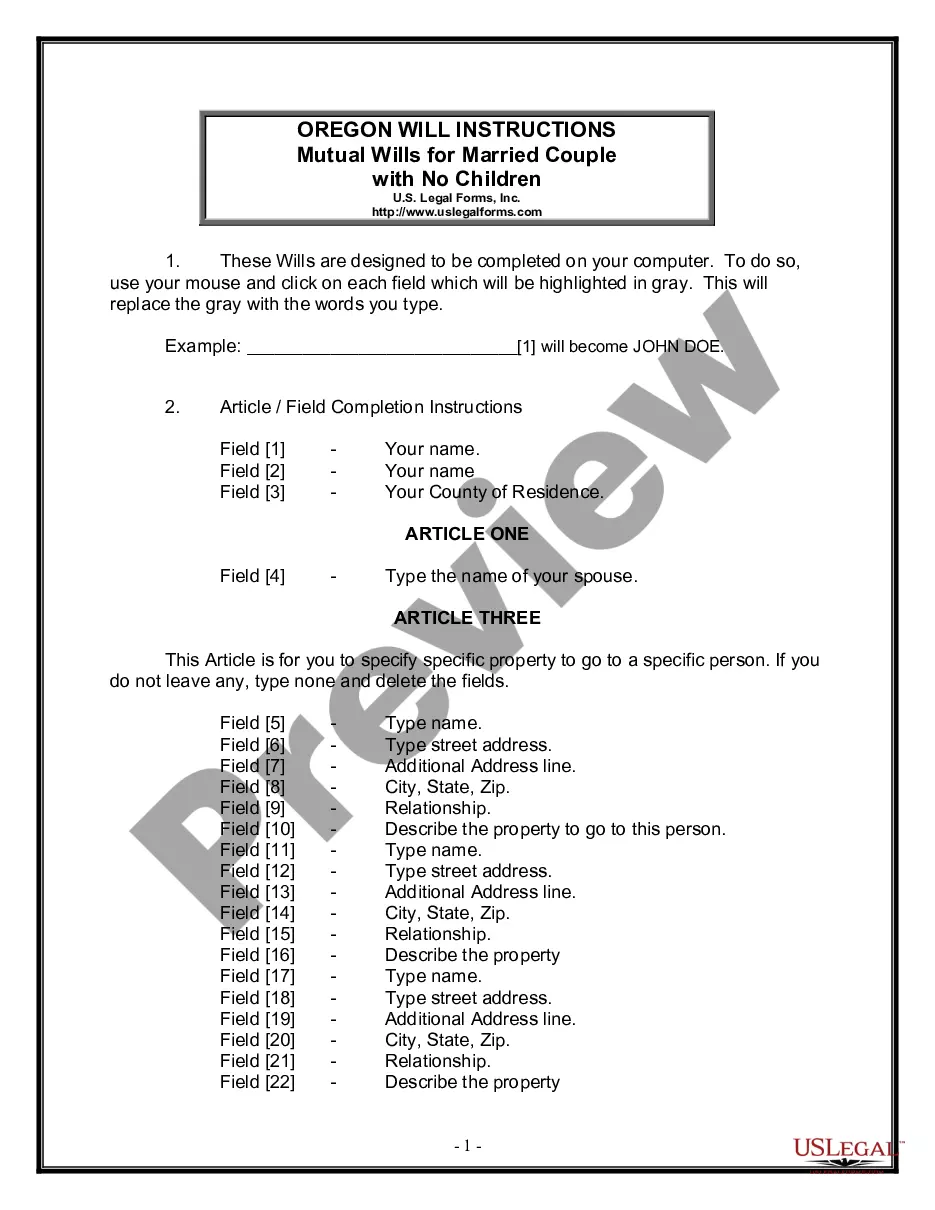
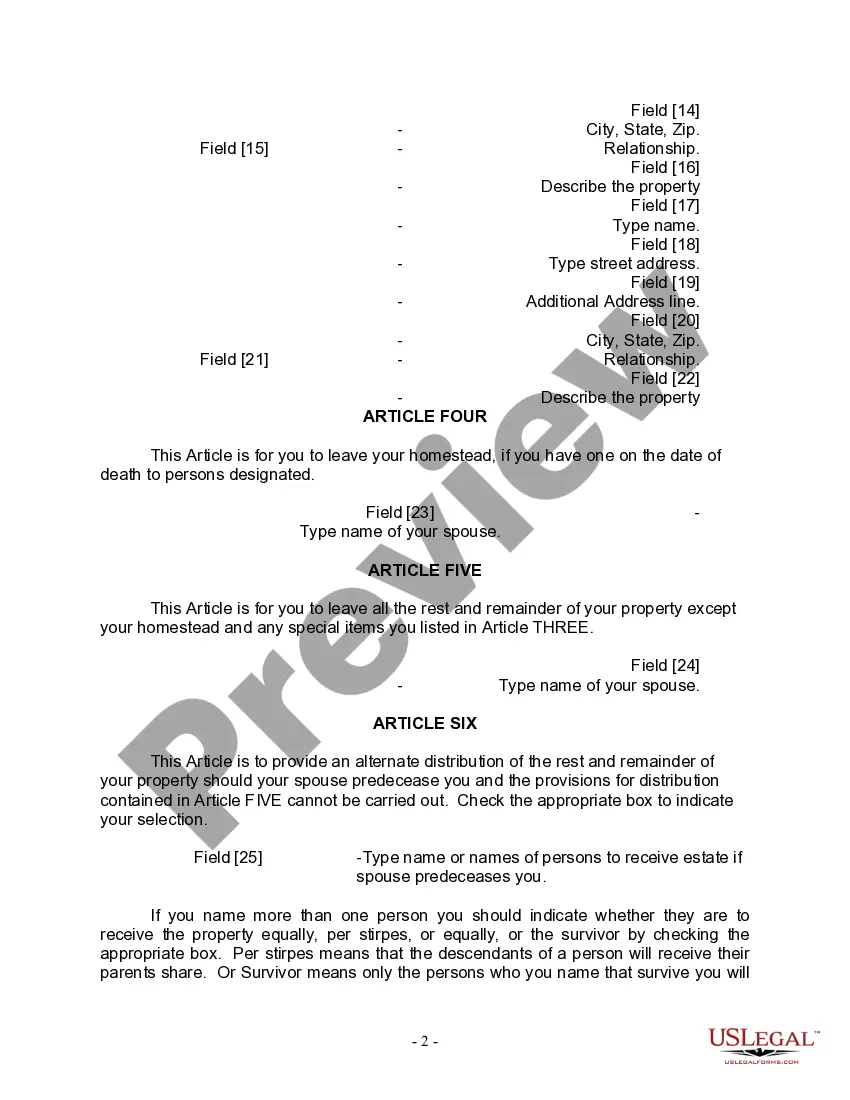
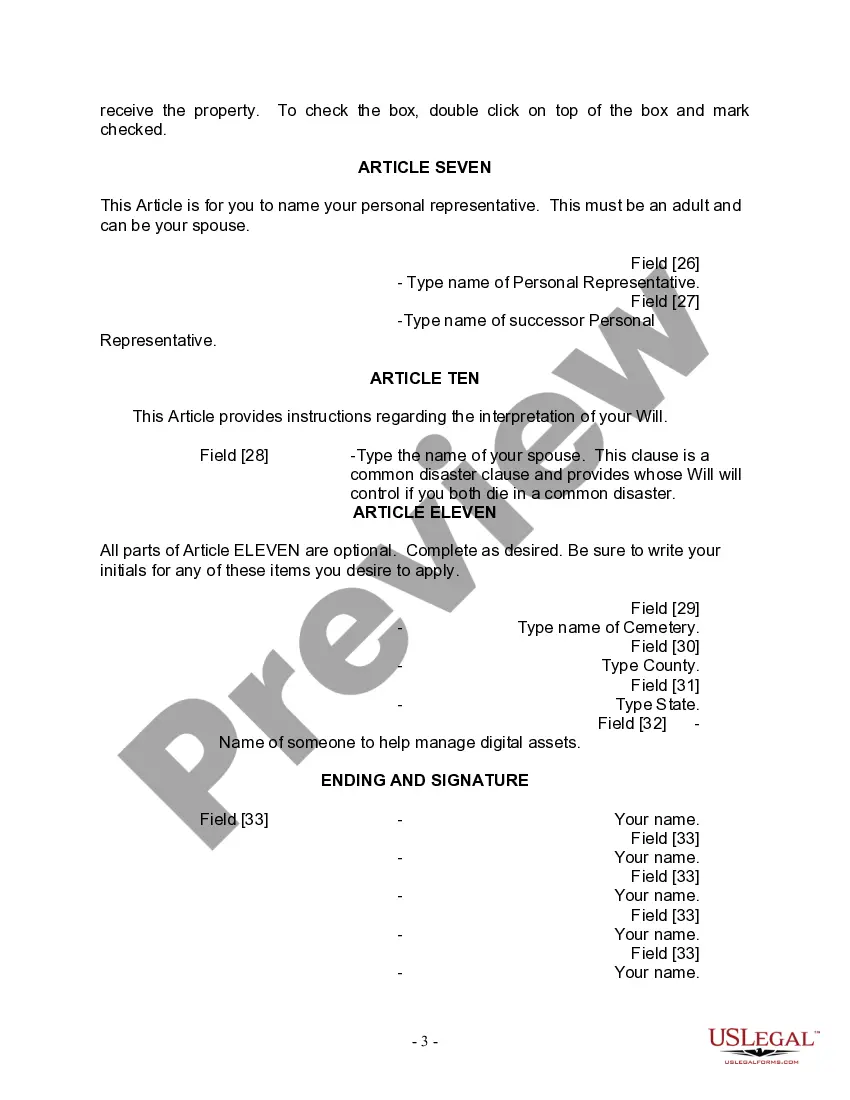
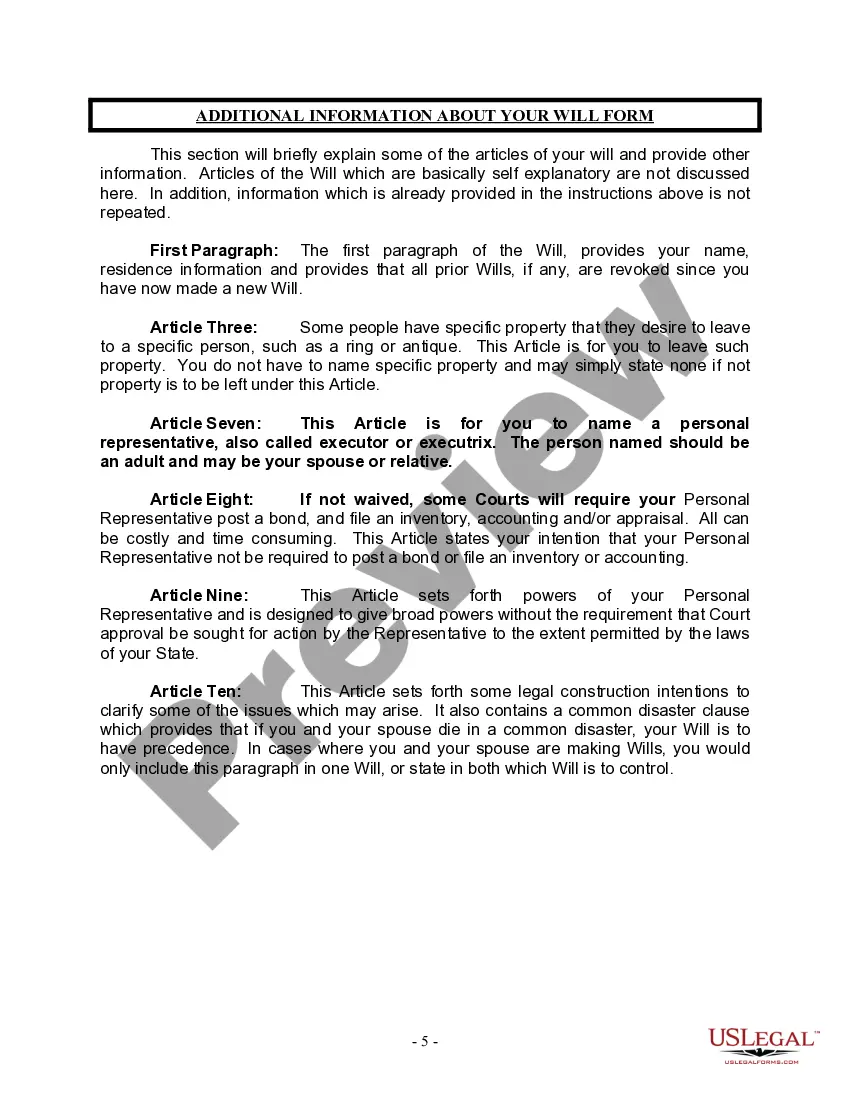
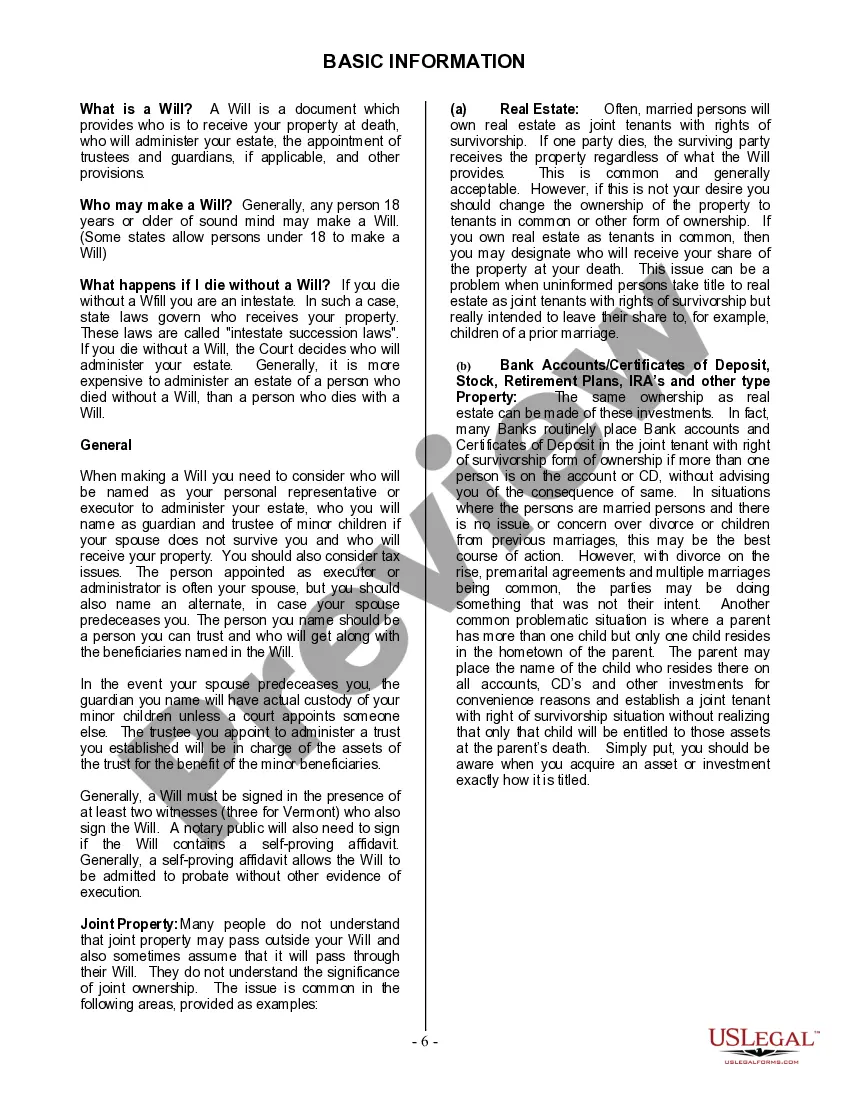
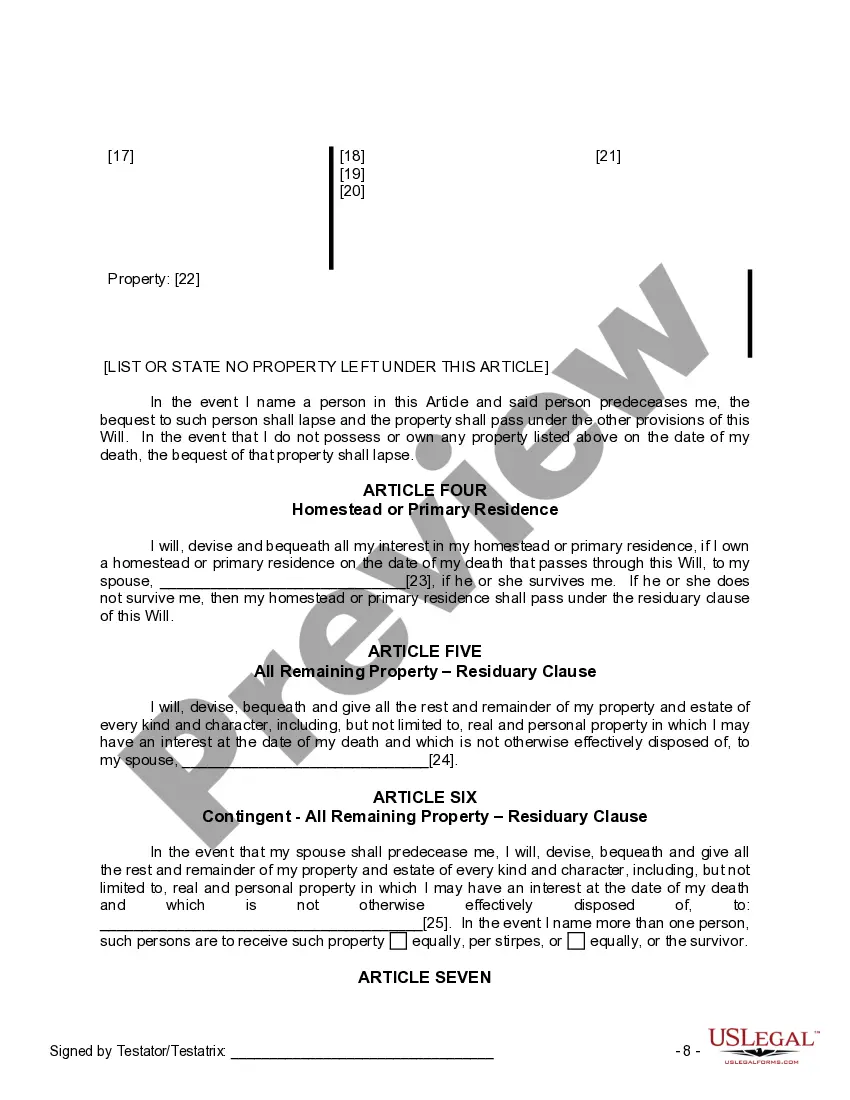
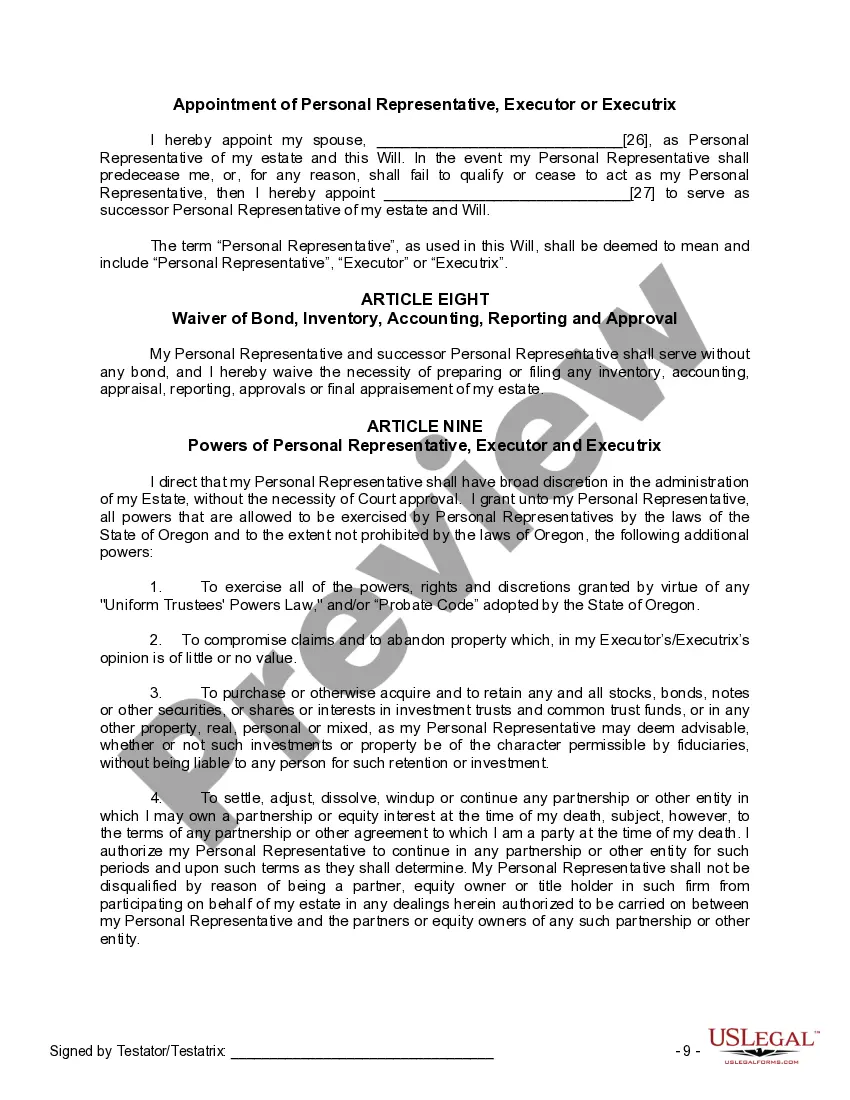
This Mutual Wills package with Last Wills and Testaments is specifically designed for married couples without children. It serves to appoint a personal representative, determine the distribution of assets, and make provisions for spouses. This package includes two individual wills, one for each spouse, along with comprehensive instructions for usage.
What’s included in this form
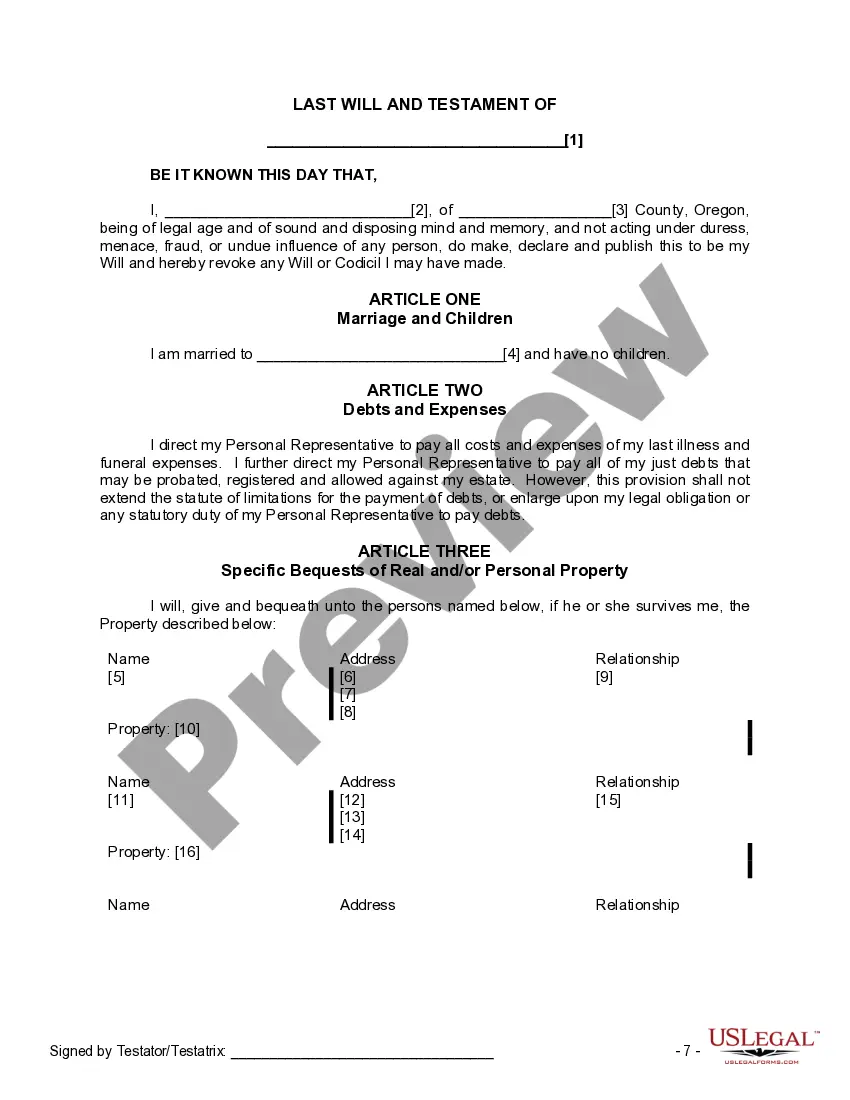
- Declaration of marriage and absence of children.
- Directions for the payment of debts and final expenses.
- Specific bequests of property, specifying beneficiaries and assets.
- Provisions for the homestead or primary residence.
- Residuary clause for remaining property after specified bequests.
- Appointment of a personal representative or executor.





Situations where this form applies
This form is necessary when a married couple without children wants to ensure their assets are distributed according to their wishes after one or both partners pass away. It's particularly useful in situations where traditional estate planning may not sufficiently cover their needs, helping to avoid potential disputes among family members or unintended inheritance outcomes.
Who needs this form
This form is suitable for:
- Married couples without children who want to establish clear instructions for their estates.
- Couples looking to provide for each other without confusion over asset distribution.
- Individuals wanting to streamline the estate administration process by jointly drafting their wills.
How to prepare this document
- Identify both spouses and include their names and relevant information in the designated fields.
- Clearly specify the desired distribution of property by listing beneficiaries and assets in the appropriate sections.
- Designate a personal representative who will manage the estate after either spouse's passing.
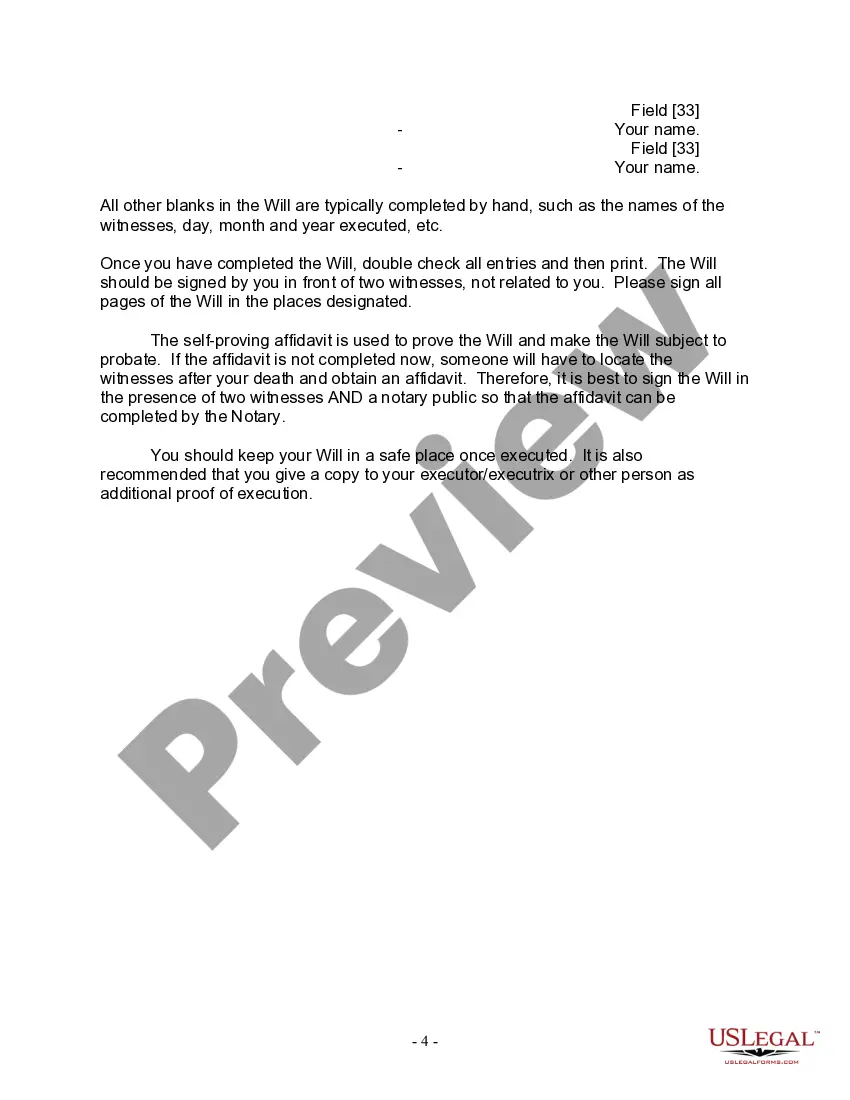
- Ensure both spouses sign the wills in the presence of two qualified witnesses.
- If applicable, have the wills notarized according to local laws.
Notarization requirements for this form
Yes, this form must be notarized to be legally valid. US Legal Forms provides integrated online notarization services, allowing you to complete this process securely via video call at your convenience, eliminating the need for travel.
Get your form ready online
Our built-in tools help you complete, sign, share, and store your documents in one place.
Make edits, fill in missing information, and update formatting in US Legal Forms—just like you would in MS Word.
Download a copy, print it, send it by email, or mail it via USPS—whatever works best for your next step.
Sign and collect signatures with our SignNow integration. Send to multiple recipients, set reminders, and more. Go Premium to unlock E-Sign.
If this form requires notarization, complete it online through a secure video call—no need to meet a notary in person or wait for an appointment.
We protect your documents and personal data by following strict security and privacy standards.

Make edits, fill in missing information, and update formatting in US Legal Forms—just like you would in MS Word.

Download a copy, print it, send it by email, or mail it via USPS—whatever works best for your next step.

Sign and collect signatures with our SignNow integration. Send to multiple recipients, set reminders, and more. Go Premium to unlock E-Sign.

If this form requires notarization, complete it online through a secure video call—no need to meet a notary in person or wait for an appointment.

We protect your documents and personal data by following strict security and privacy standards.
Common mistakes to avoid
- Failing to sign the wills in the presence of the required witnesses.
- Not specifying a personal representative, leaving the estate administration ambiguous.
- Incorrectly identifying property or beneficiaries, leading to potential disputes.
Why complete this form online
- Convenience of downloading and filling out the form at your own pace.
- Editable fields allow customization specific to your circumstances.
- Access to reliable legal templates prepared by licensed attorneys.
Summary of main points
- The Mutual Wills package is tailored for married couples without children.
- It ensures a legally binding agreement on asset distribution between spouses.
- Proper execution with signatures and notary is crucial for validity.
Looking for another form?

Form popularity
FAQ
No, in Oregon, you do not need to notarize your will to make it legal. However, Oregon allows you to make your will "self-proving" and you'll need to go to a notary if you want to do that. A self-proving will speeds up probate because the court can accept the will without contacting the witnesses who signed it.
According to a market survey conducted in 2016 by Southwest Portland Law Group, LLC, the average cost of a Last Will and Testament, prepared by an attorney in Oregon, is between $350 and $1,500.
Create the initial document. Start by titling the document Last Will and Testament" and including your full legal name and address. Designate an executor. Appoint a guardian. Name the beneficiaries. Designate the assets. Ask witnesses to sign your will. Store your will in a safe place.
In Oregon, you must be at least 18 years old and of sound mind to make a will. If you are married or emancipated, you can make a will before you turn 18. Your will must be in writing and must be signed by you and two witnesses.It is important to make sure that all of Oregon's legal formalities are carefully observed.
The short answer is no. Wills that are handwritten and not witnessed are not recognized as valid in Oregon. A handwritten will that is witnessed by two individuals will be considered valid.
Signature: The will must be signed by the testator or by someone else in the testator's name in his presence, by his direction. Witnesses: An Oregon will must be signed by at least two individuals who saw the testator sign the will or heard him acknowledge the signature. Writing: An Oregon will must be in writing.
A will written by a lawyer can cost between about $400 and $3,000 depending on its complexity, a will written by a Public Trustee may be free in certain circumstances, and a will kit can be bought for about $30.
A will is a set of instructions that explains how you want your property distributed after your death. In Oregon, you must be at least 18 years old and of sound mind to make a will.Your will must be in writing and must be signed by you and two witnesses. Some people cannot serve as witnesses to your will.
No, in Oregon, you do not need to notarize your will to make it legal. However, Oregon allows you to make your will "self-proving" and you'll need to go to a notary if you want to do that. A self-proving will speeds up probate because the court can accept the will without contacting the witnesses who signed it.