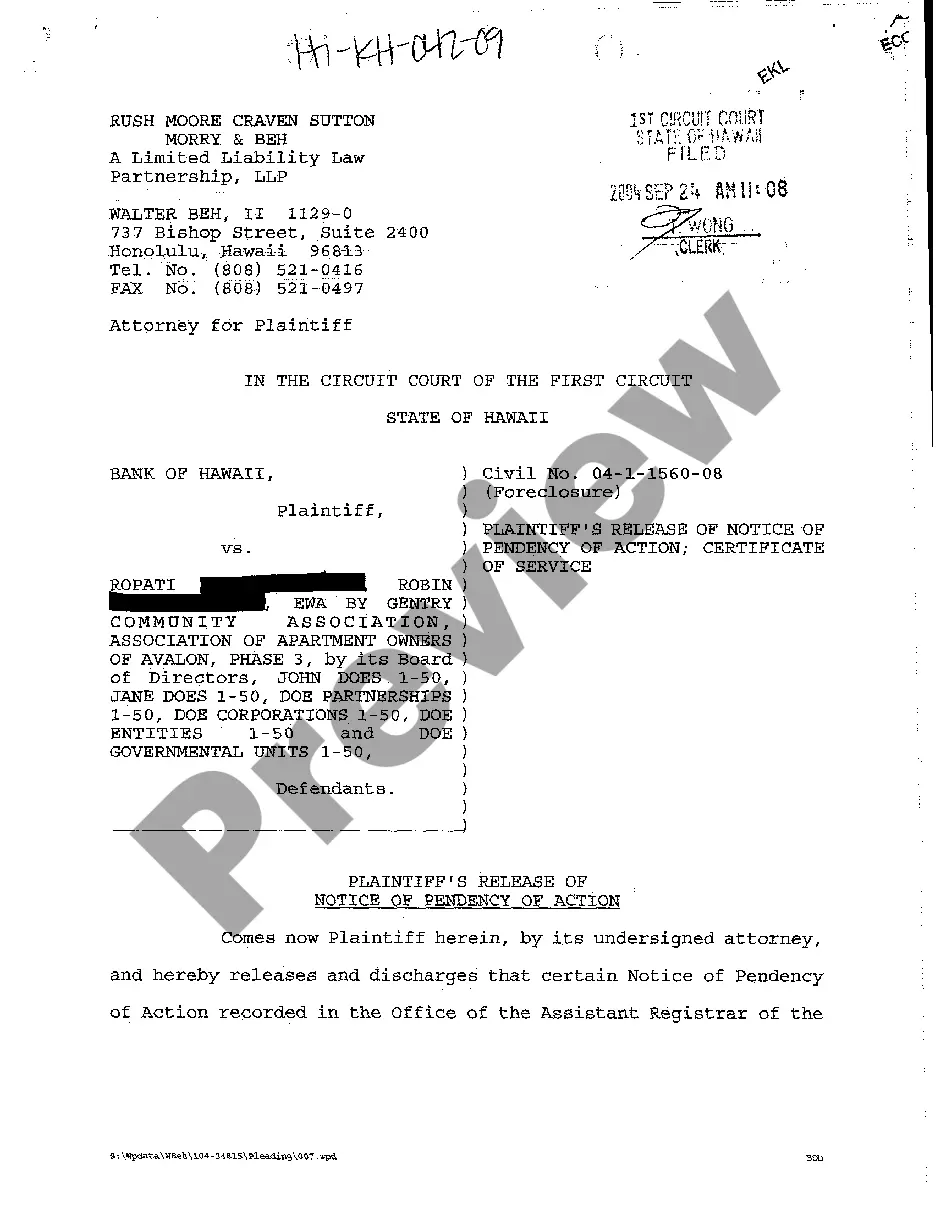
Oregon Living Trust for Individual Who is Single, Divorced or Widow (or Widower) with No Children
Overview of this form
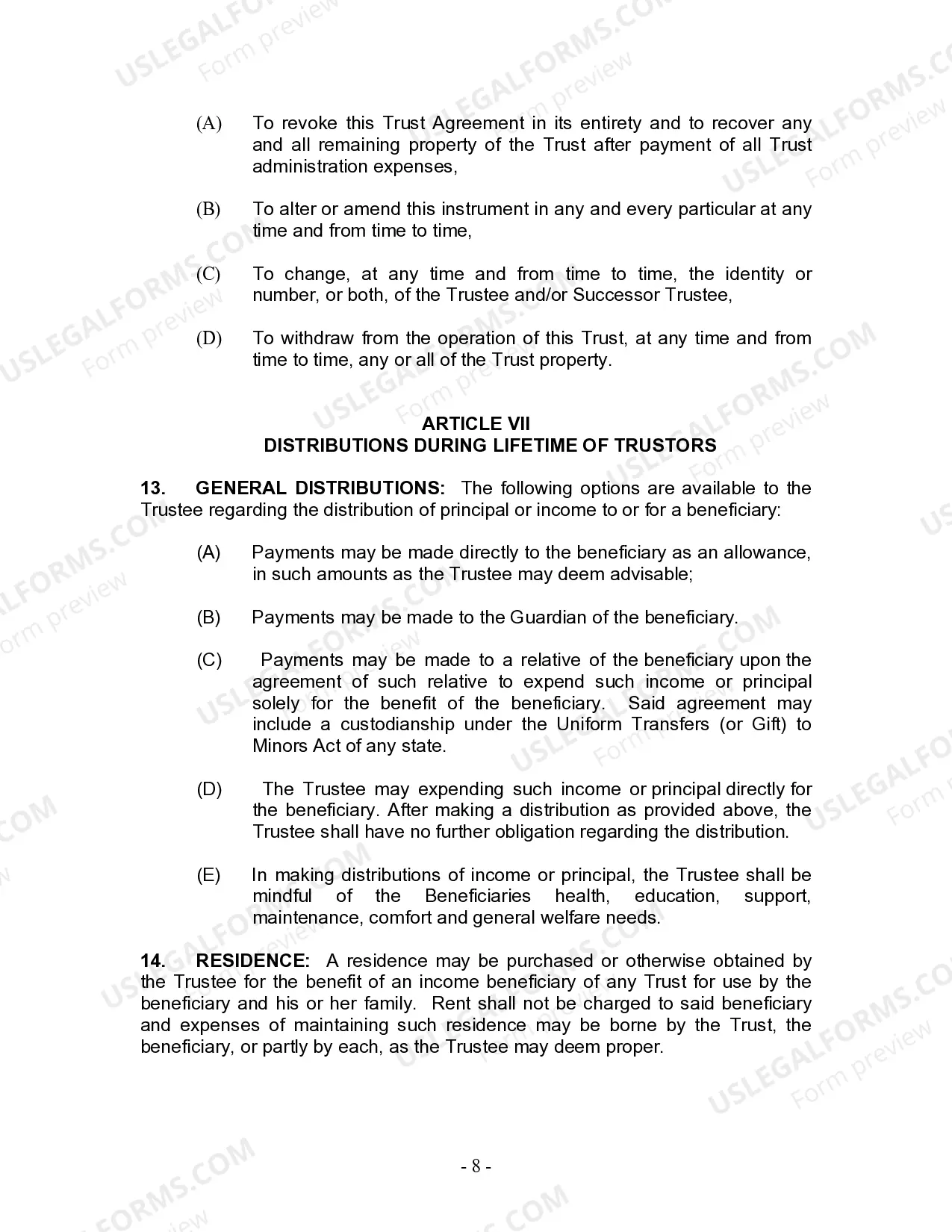
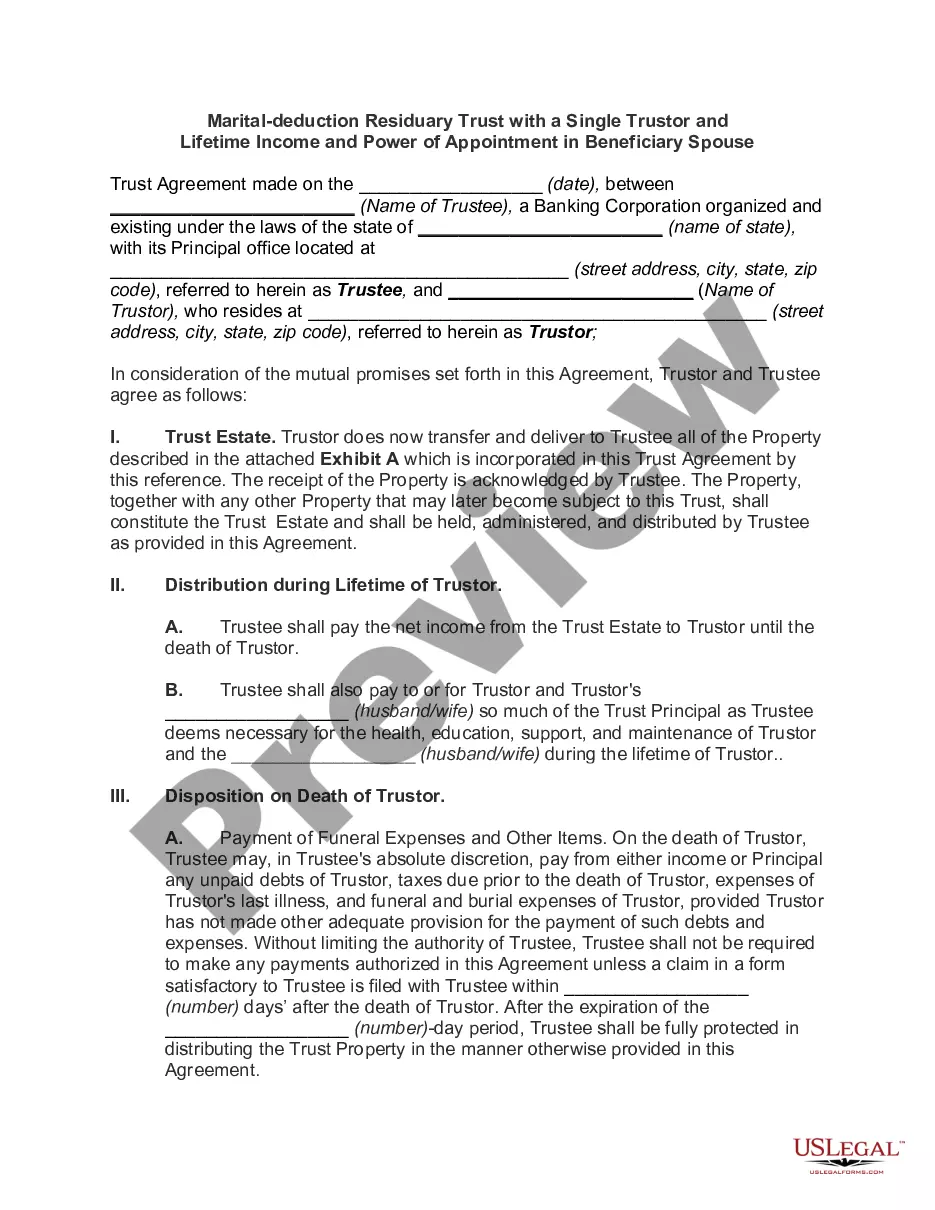
This Living Trust for Individual Who is Single, Divorced or Widow (or Widower) with No Children is a legal document that allows a single person or someone who has been divorced or widowed, without children, to manage their assets during their lifetime and dictate how those assets will be distributed after their death. Unlike a will, a living trust can help avoid the lengthy and costly probate process, ensuring a more efficient transfer of assets to the designated beneficiaries. This trust is particularly designed for individuals without children, providing them with a straightforward estate planning tool that allows for complete control over their assets.
Key components of this form
- Name of Trust: Identifies the trust by a chosen name.
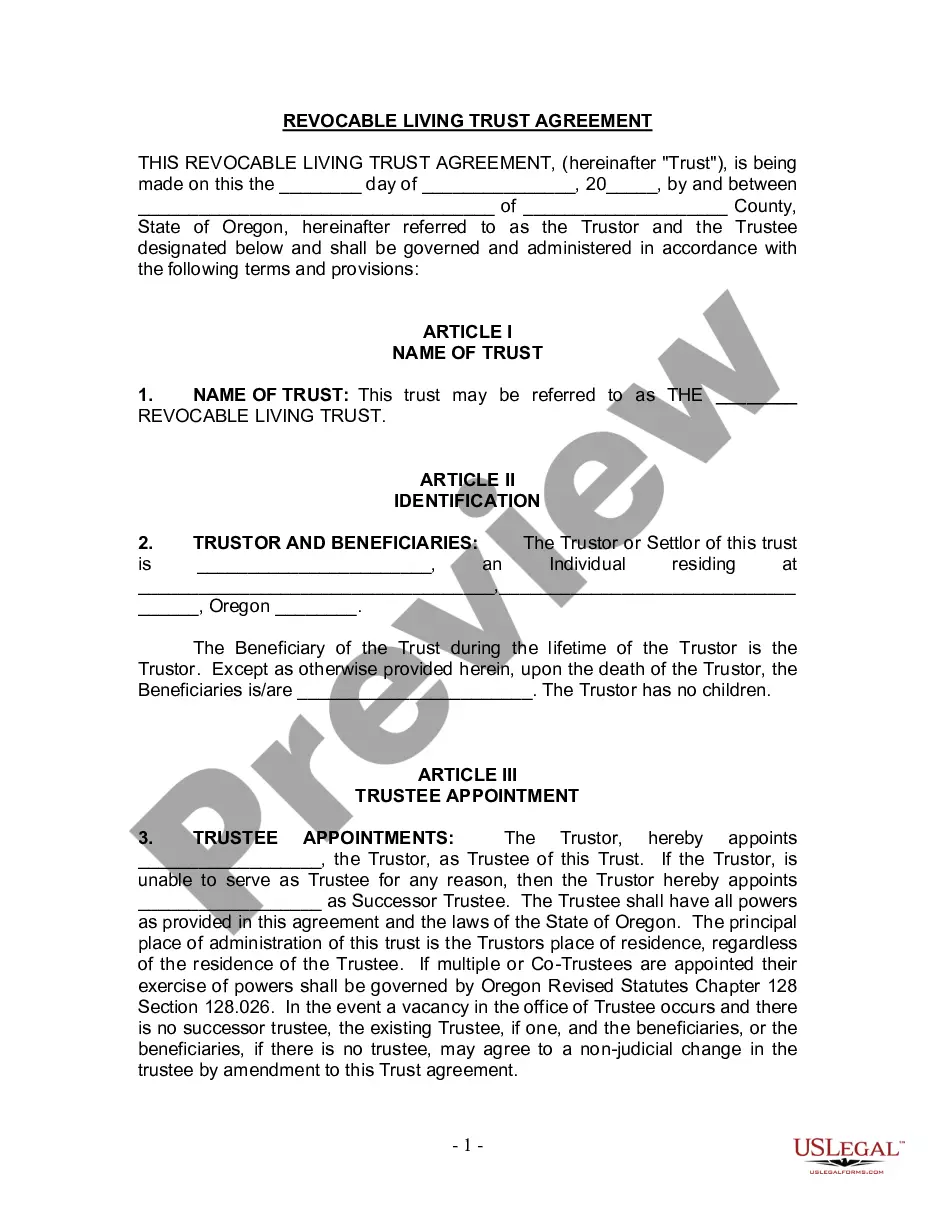
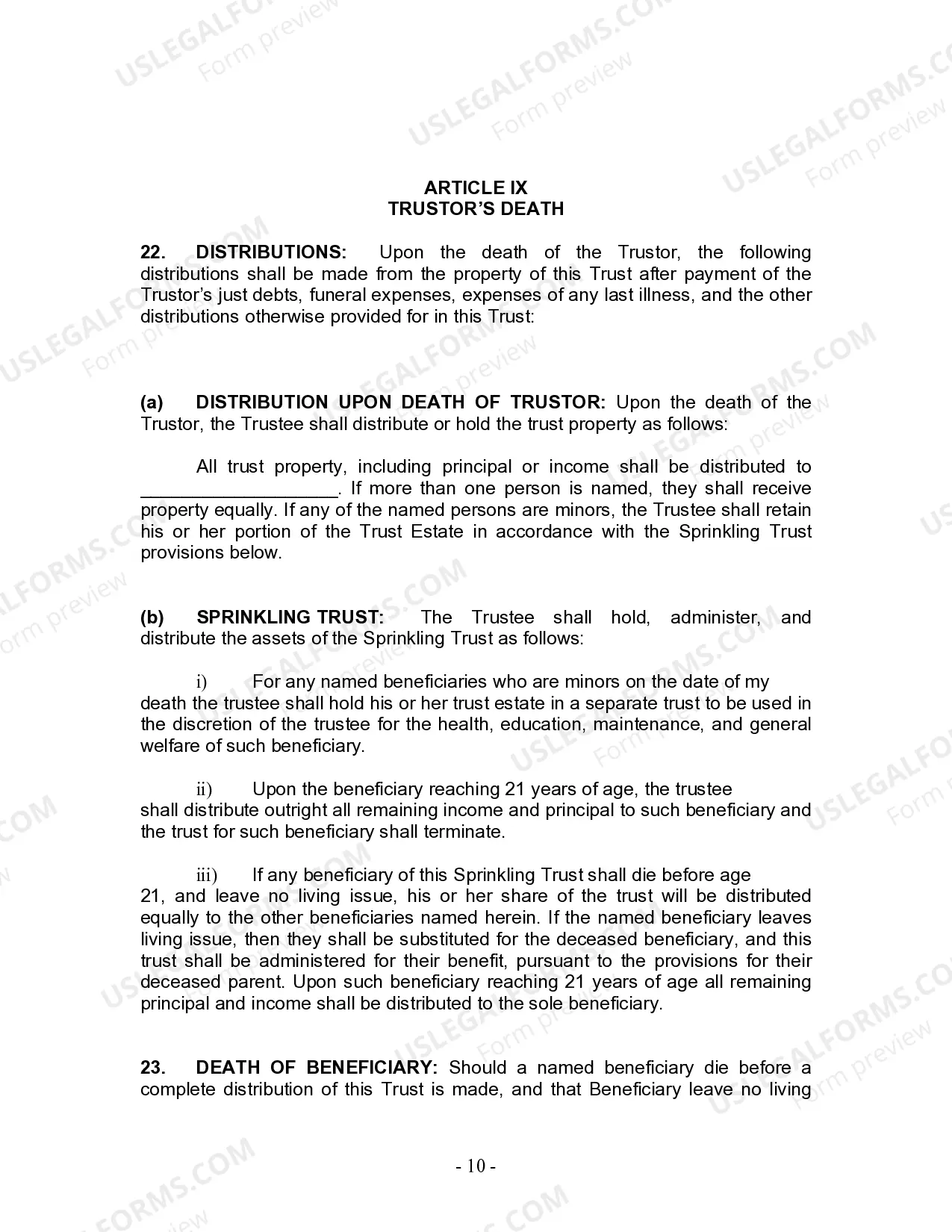
- Trustor and Beneficiaries: Names the individual creating the trust and the beneficiaries who will receive assets upon the Trustor's death.
- Trustee Appointment: Specifies the appointed trustee who will manage the trust's assets.
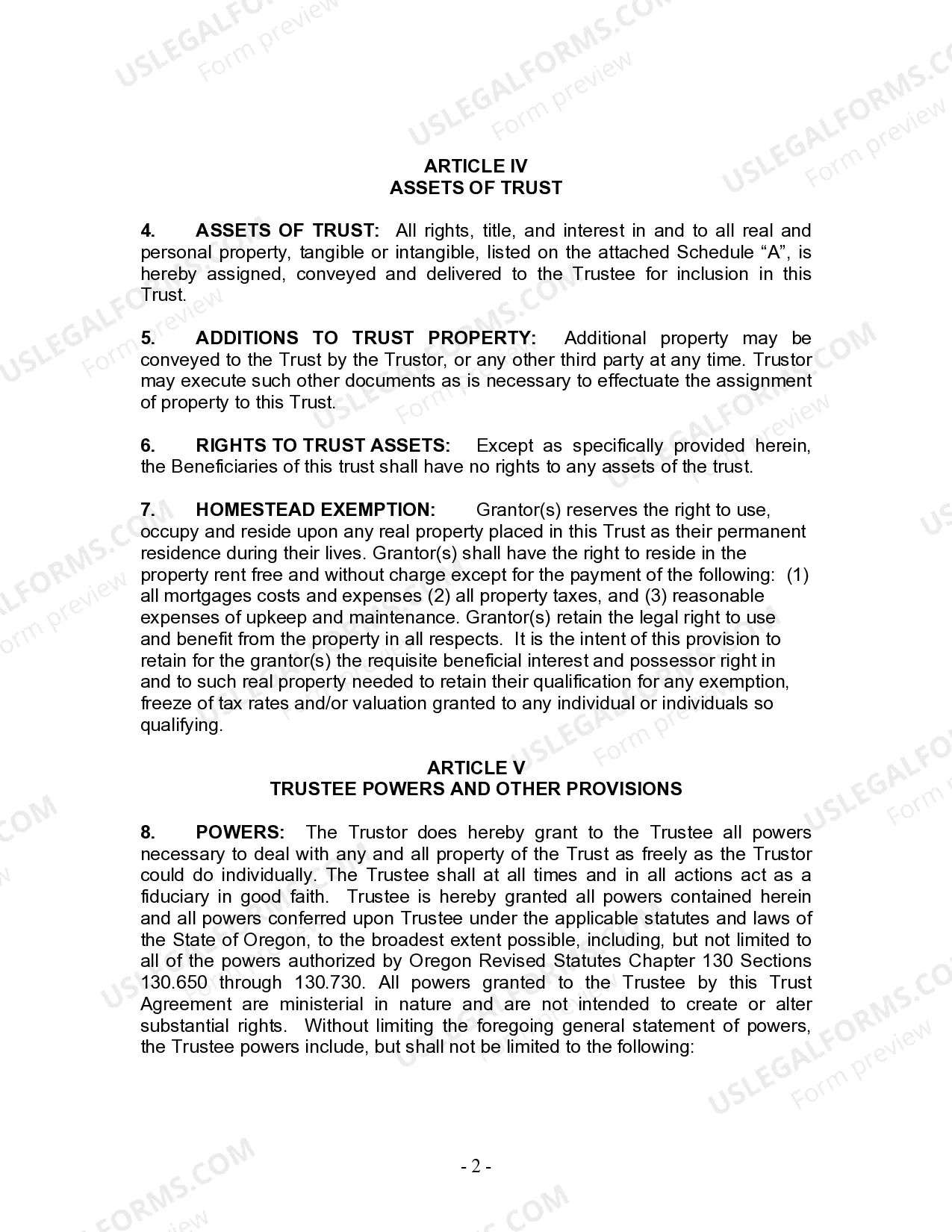
- Assets of Trust: Details the property and assets included in the trust.
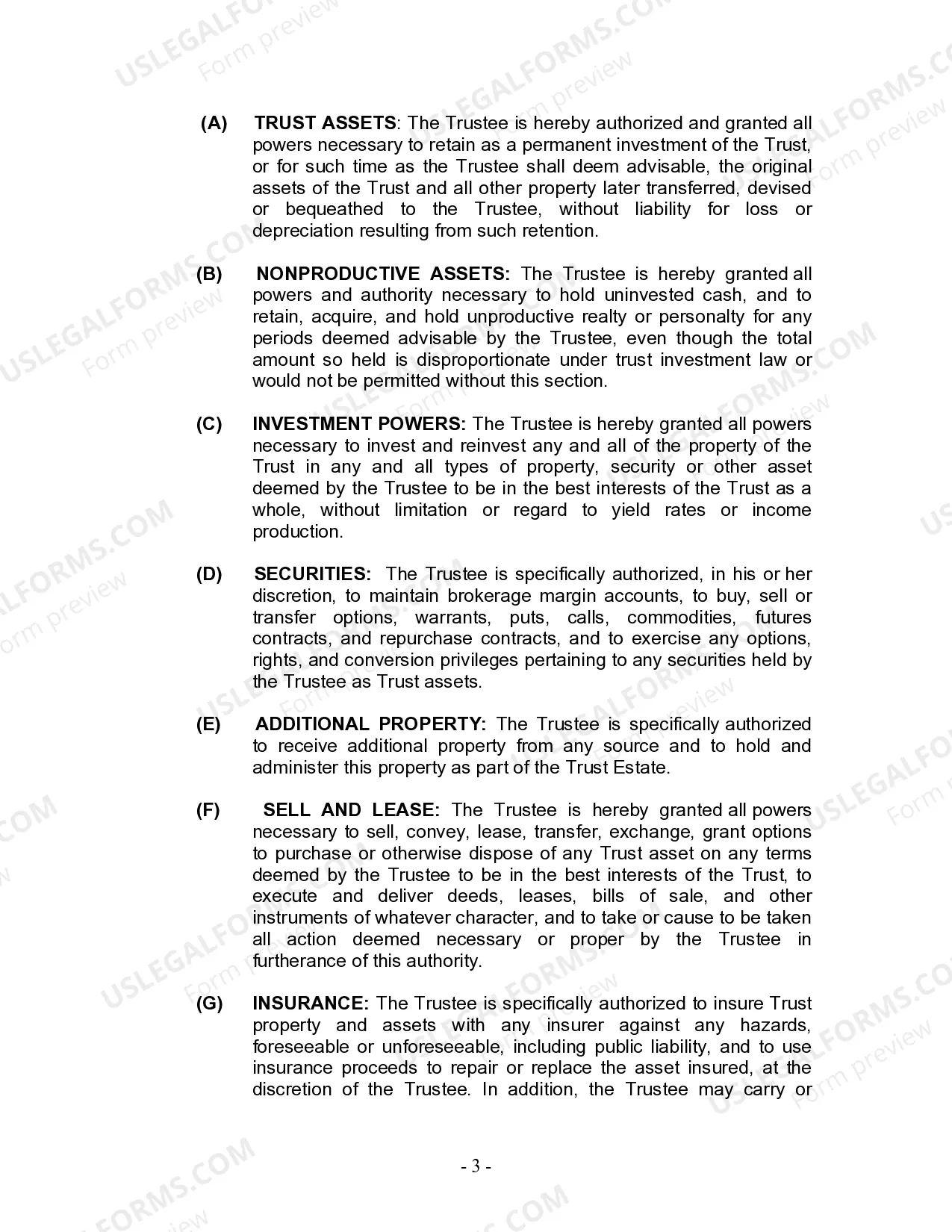
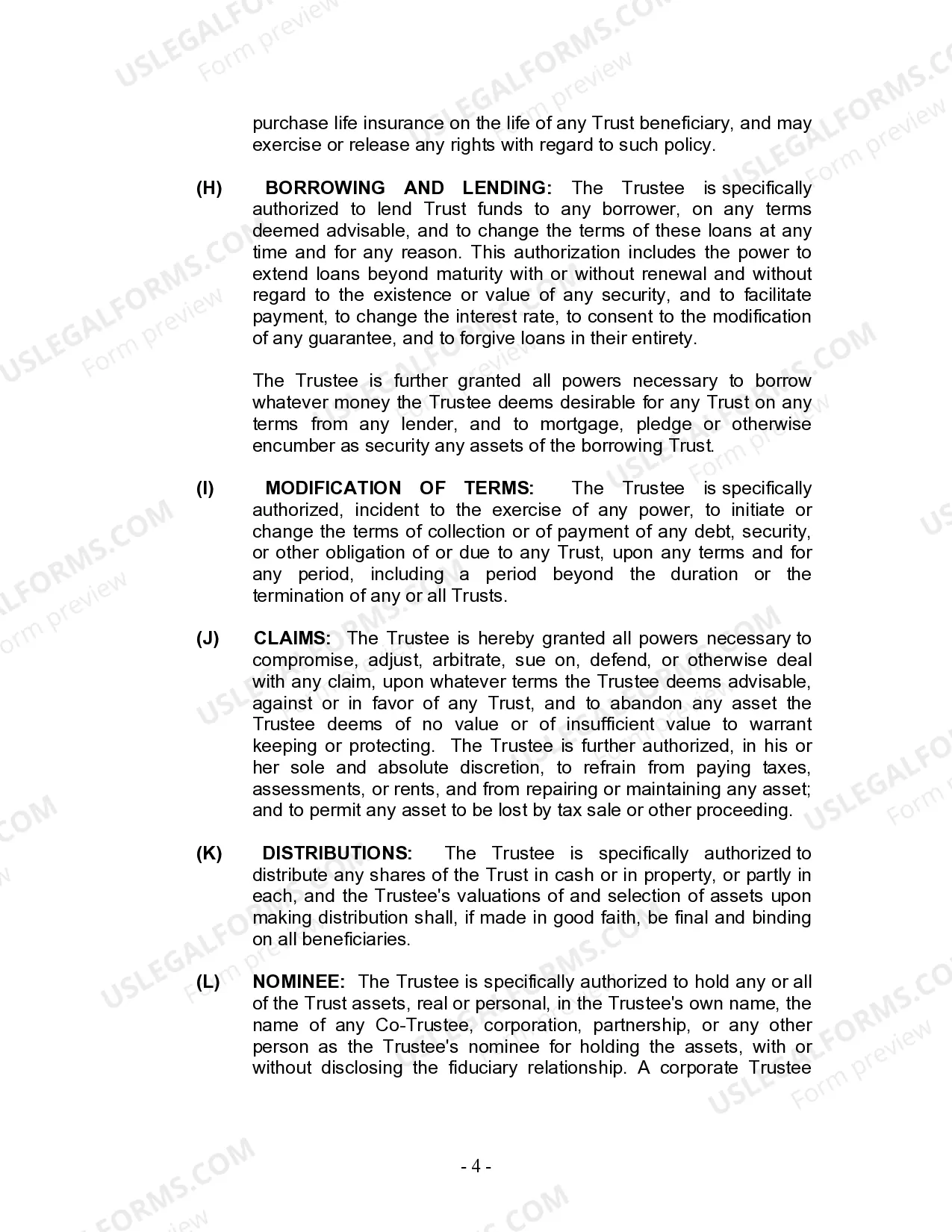
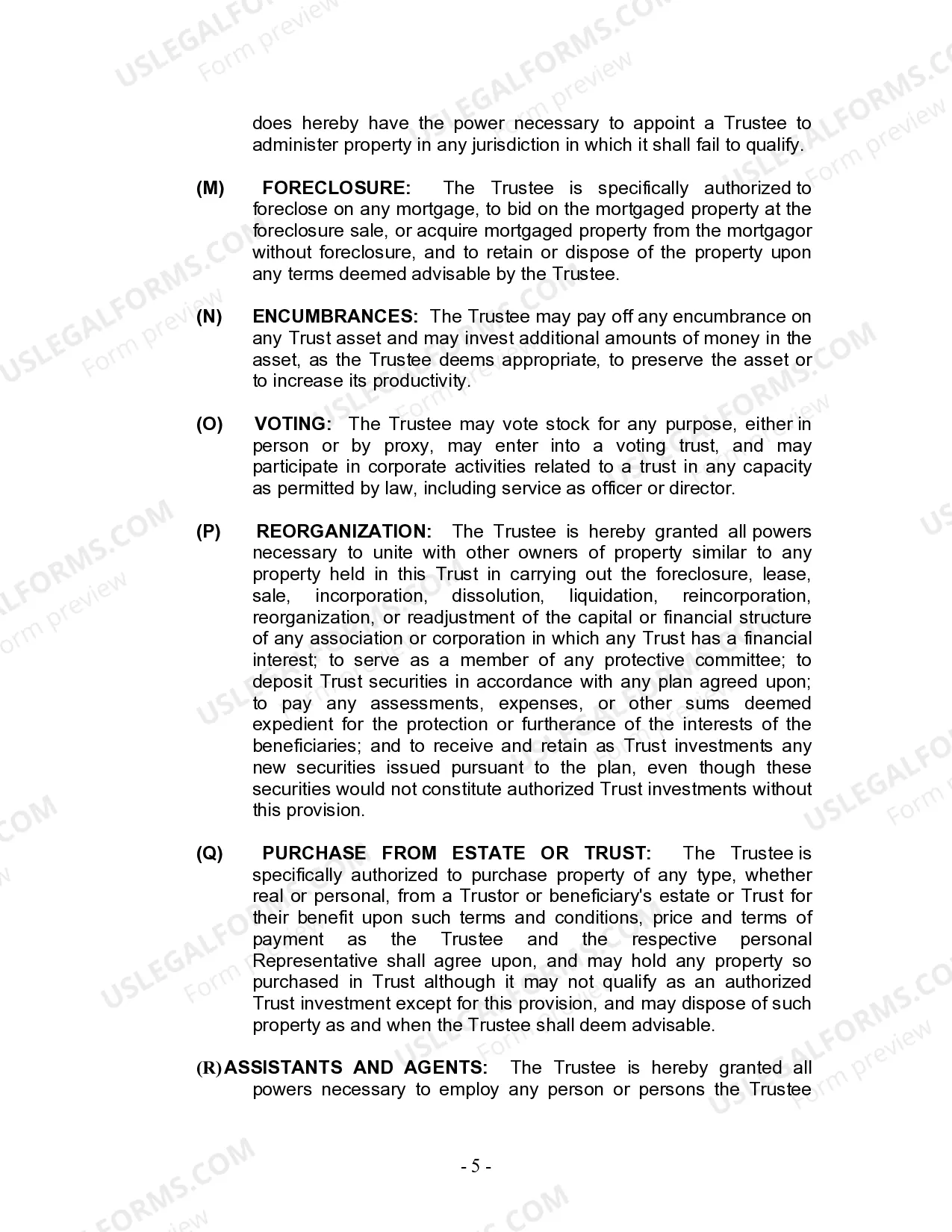
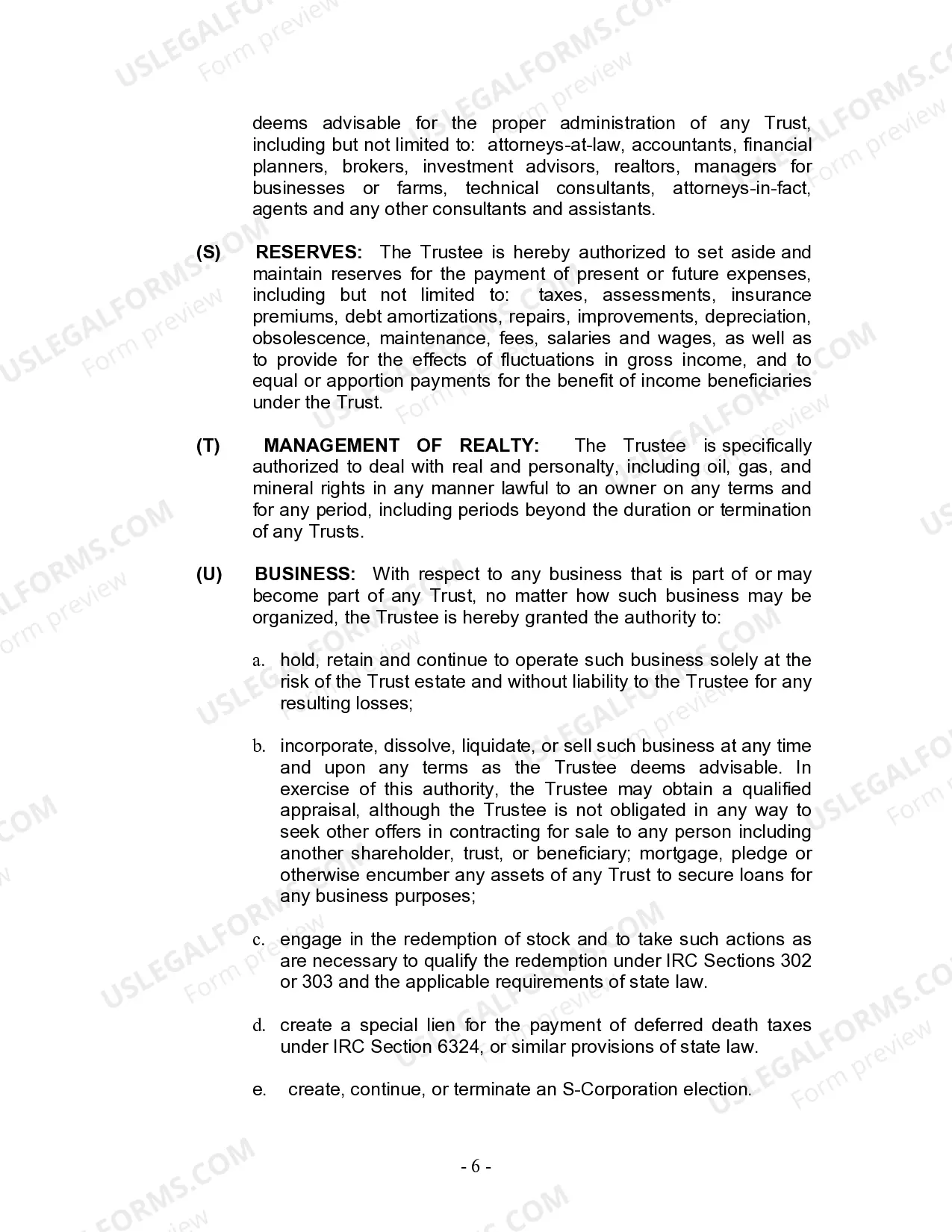
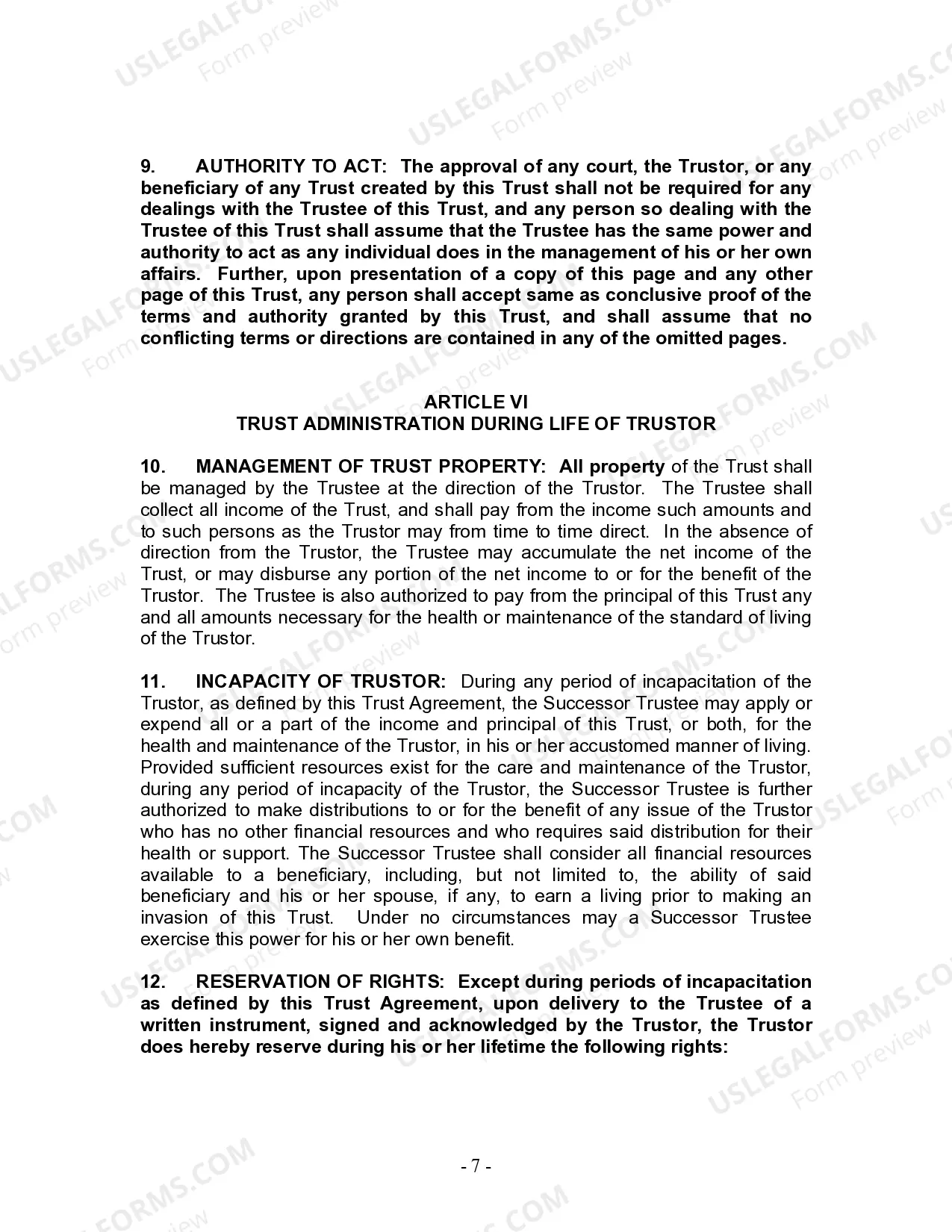
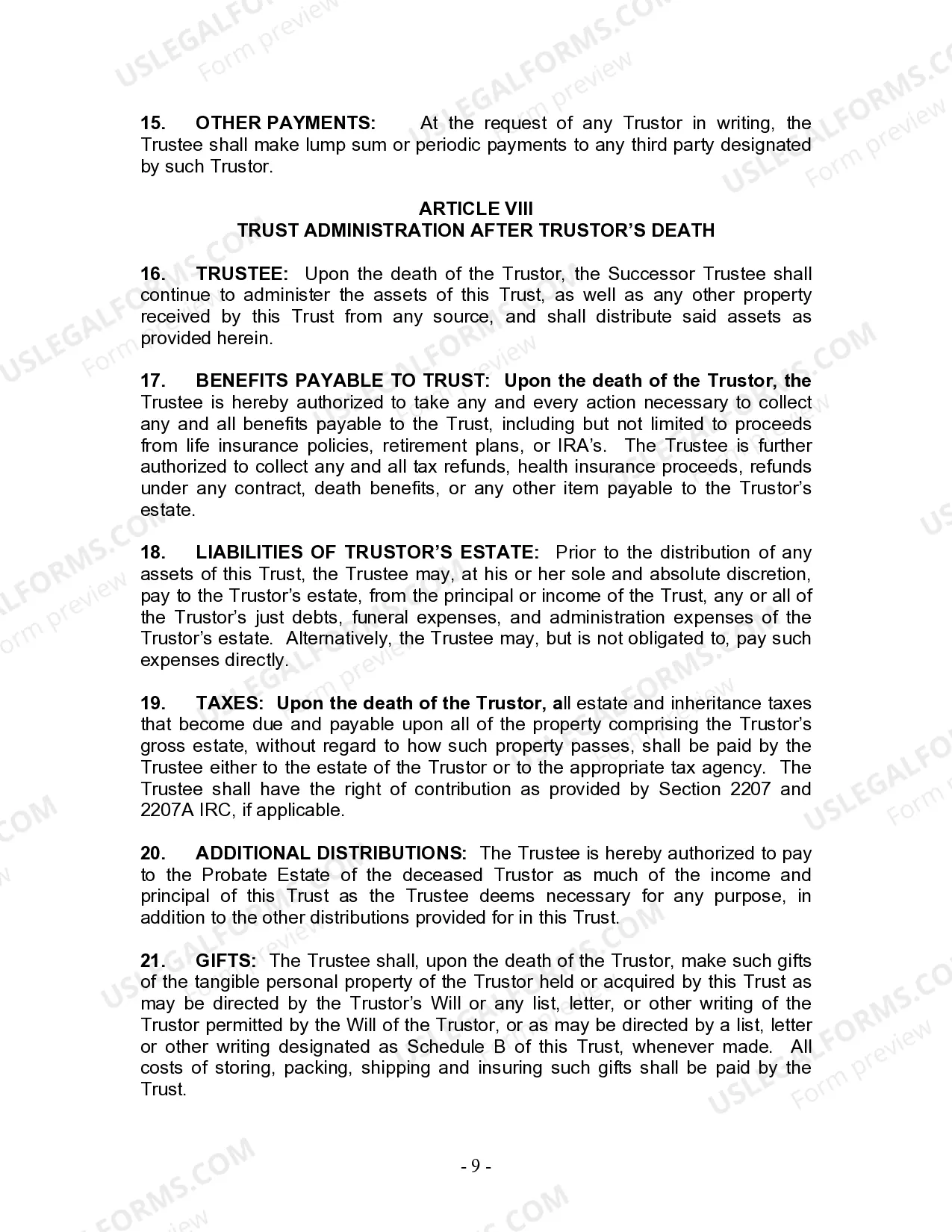
- Trustee Powers: Outlines the authority granted to the trustee for managing and distributing trust assets.
- Distribution Procedures: Defines how and when assets will be distributed to beneficiaries after the Trustor's death.



When this form is needed
This form is useful in various scenarios, such as when an individual wants to ensure that their assets are managed according to their wishes after death, especially if they do not have children to inherit their estate. It is also appropriate for someone who wishes to avoid the probate process, streamline asset distribution, and maintain privacy regarding asset management and distribution.
Intended users of this form
- Individuals who are single, divorced, or widowed and wish to control their estate planning.
- Those without children who want to designate beneficiaries for asset distribution.
- Anyone looking to minimize potential probate complications and ensure their wishes are honored regarding asset management.
Steps to complete this form
- Identify the parties involved: Enter the names of the Trustor and Trustee(s).
- Specify the trust title: Fill in the name of the trust as desired.
- List the assets: Attach a Schedule A to include all property and assets being transferred to the trust.
- Designate beneficiaries: Name individuals who will benefit from the trust after the Trustor's death.
- Sign and date: All parties must sign and date the document in front of a notary public.
Does this form need to be notarized?
Yes, this form must be notarized to be legally valid. US Legal Forms offers integrated online notarization, available 24/7 via secure video calls, ensuring a seamless experience.
Get your form ready online
Our built-in tools help you complete, sign, share, and store your documents in one place.
Make edits, fill in missing information, and update formatting in US Legal Forms—just like you would in MS Word.
Download a copy, print it, send it by email, or mail it via USPS—whatever works best for your next step.
Sign and collect signatures with our SignNow integration. Send to multiple recipients, set reminders, and more. Go Premium to unlock E-Sign.
If this form requires notarization, complete it online through a secure video call—no need to meet a notary in person or wait for an appointment.
We protect your documents and personal data by following strict security and privacy standards.

Make edits, fill in missing information, and update formatting in US Legal Forms—just like you would in MS Word.

Download a copy, print it, send it by email, or mail it via USPS—whatever works best for your next step.

Sign and collect signatures with our SignNow integration. Send to multiple recipients, set reminders, and more. Go Premium to unlock E-Sign.

If this form requires notarization, complete it online through a secure video call—no need to meet a notary in person or wait for an appointment.

We protect your documents and personal data by following strict security and privacy standards.
Typical mistakes to avoid
- Failing to properly sign the trust in front of a notary.
- Not listing all intended assets on Schedule A.
- Neglecting to update the trust when personal circumstances change.
- Forgetting to choose a reliable successor trustee.
Advantages of online completion
- Convenience: Download the form instantly from the comfort of your home.
- Editability: Modify the form as needed to suit your personal circumstances.
- Reliable templates drafted by licensed attorneys to ensure compliance with state laws.
Main things to remember
- This living trust facilitates asset management for individuals without children.
- It helps avoid probate, allowing for direct distribution of assets after death.
- Completing the form requires clear information on the trustor, trustee, and assets.
- It is essential to keep the trust updated as personal circumstances change.
Looking for another form?
Form popularity
FAQ
If you die without a will and do not have any family, your property will go to (escheat) the state. This rarely happens because Oregon's inheritance laws are designed to get your property to your family, however remote.
When one spouse dies, the joint trust will continue to operate for the benefit of the surviving spouse as a Survivor's Trust. Any specific gifts of tangible property from the first spouse to beneficiaries (other than the surviving spouse) will be given to those people.
Get a legal pronouncement of death. Arrange for transportation of the body. Notify the person's doctor or the county coroner. Notify close family and friends. Handle care of dependents and pets. Call the person's employer, if he or she was working.
Children - if there is no surviving married or civil partner If there is no surviving partner, the children of a person who has died without leaving a will inherit the whole estate. This applies however much the estate is worth. If there are two or more children, the estate will be divided equally between them.
If you die without a will in Oregon, your children will receive an intestate share of your property. The size of each child's share depends on how many children you have, whether or not you are married, whether your spouse is also their parent, and whether you have any children from a previous relationship.
No probate is necessary. Joint tenancy often works well when couples (married or not) acquire real estate, vehicles, bank accounts or other valuable property together. In Oregon, each co-owner must own an equal share.
A basic trust plan may run anywhere from $2,000 to $3,000 or more, depending on complexity. There are additional costs for making changes and administration costs after your death. Different types of trusts and trustees can require different fees for administration and wealth management.
A joint revocable living trust is a trust that is set up by two people (joint grantors) and funded with joint or separate property.
Like a will, a living trust can be altered whenever you wish.After one spouse dies, the surviving spouse is free to amend the terms of the trust document that deal with his or her property, but can't change the parts that determine what happens to the deceased spouse's trust property.