Oregon Owner's or Seller's Affidavit of No Liens
What is this form?
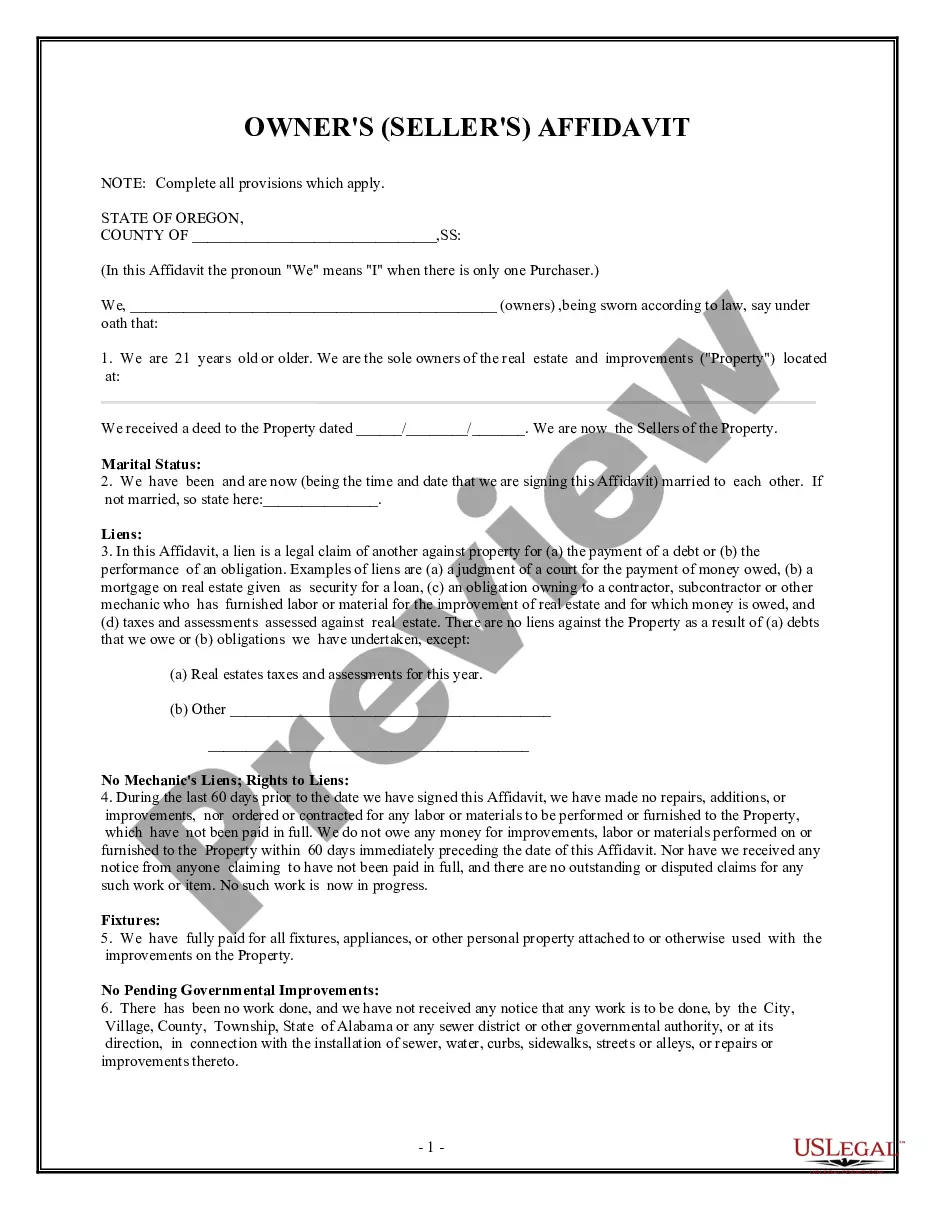
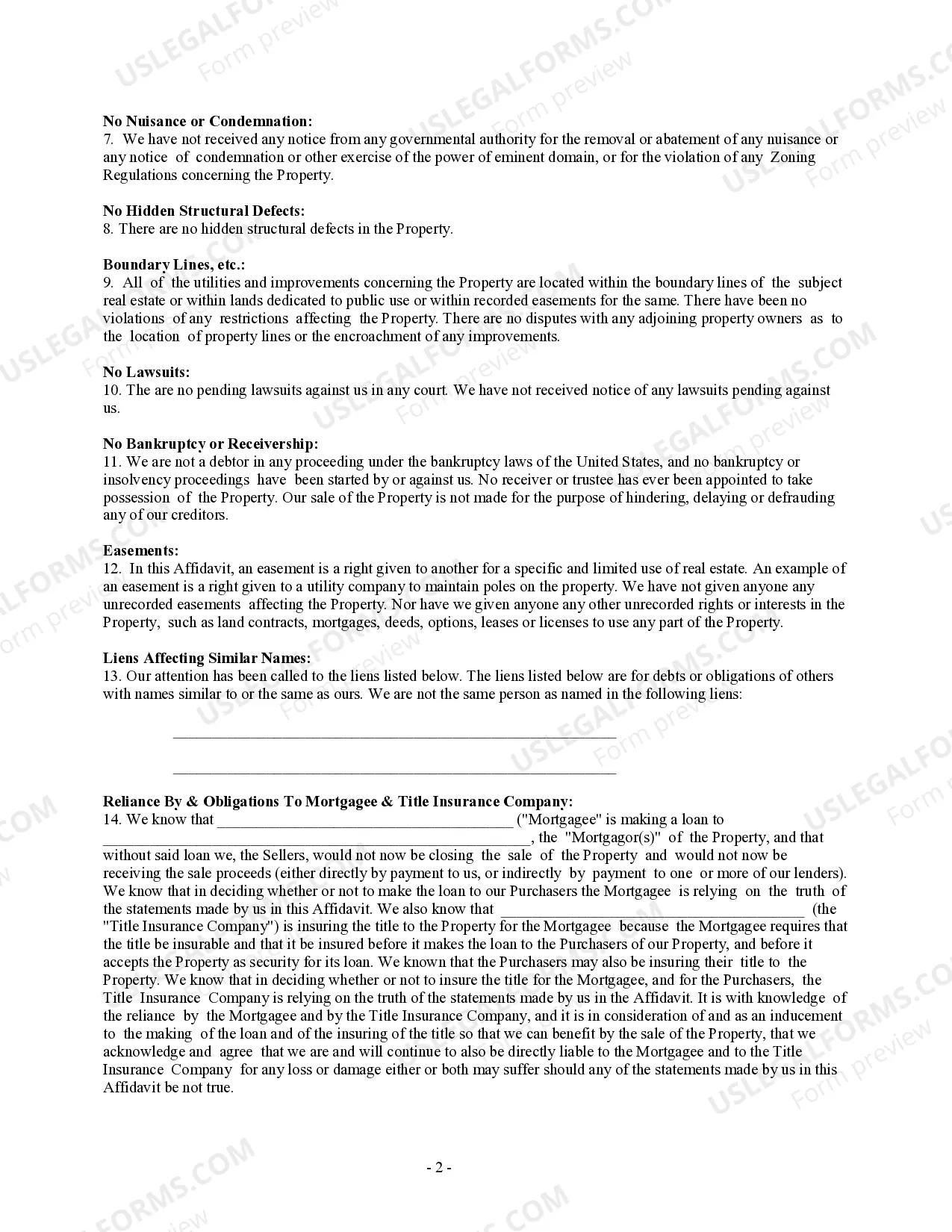
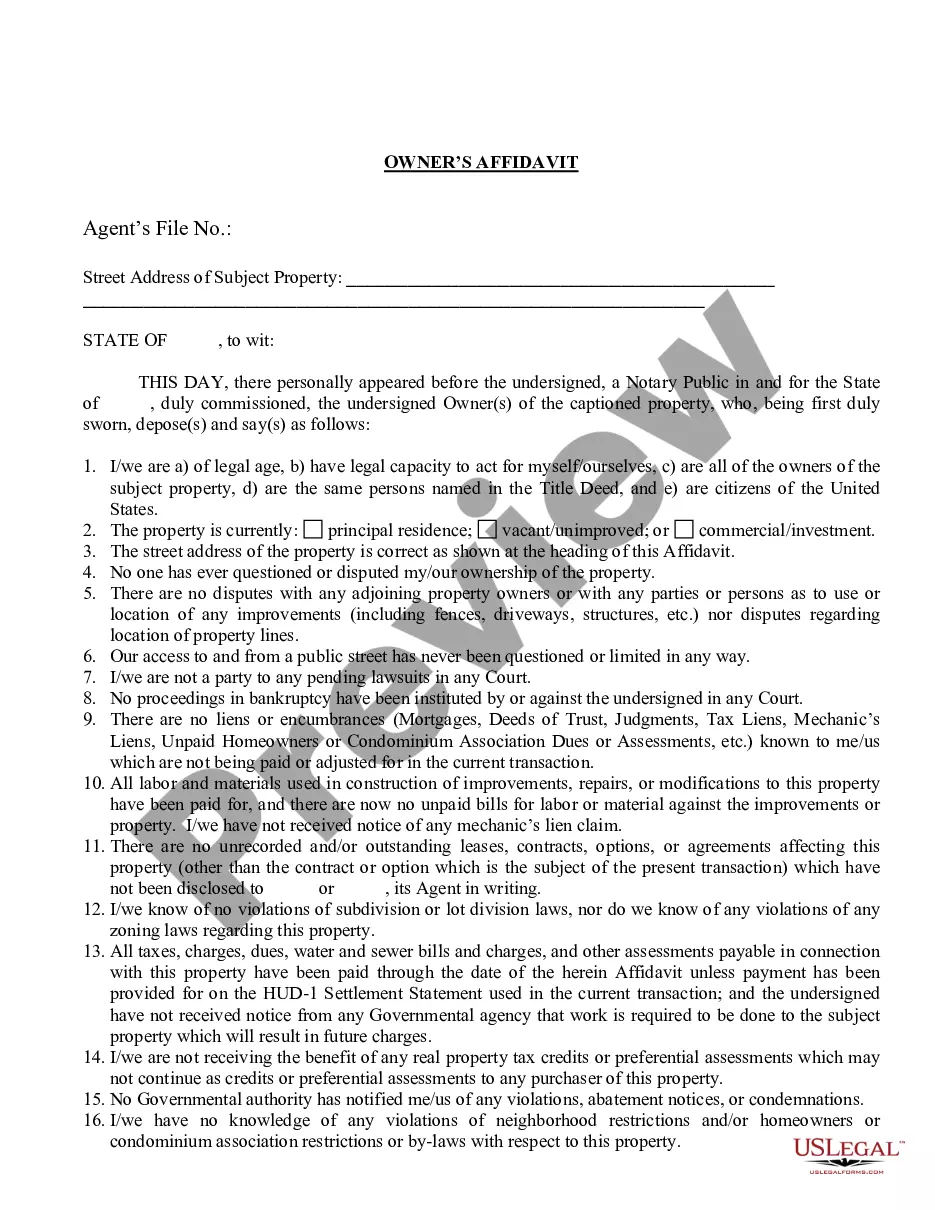
The Owner's or Seller's Affidavit of No Liens is a legal document used by sellers during the closing process of a property sale. This affidavit certifies that the seller is the legitimate owner of the property and assures that there are no liens or claims against it, apart from certain exceptions like unpaid taxes. Unlike other real estate forms, this affidavit specifically addresses any outstanding debts or obligations tied to the property.
Main sections of this form
- Identification of sellers, including their marital status
- Affirmation that the property is free from liens, except specified exceptions
- Confirmation of no mechanics' liens from recent labor or materials
- Attestation of ownership and the absence of pending lawsuits
- Disclosure of any easements or unrecorded rights affecting the property
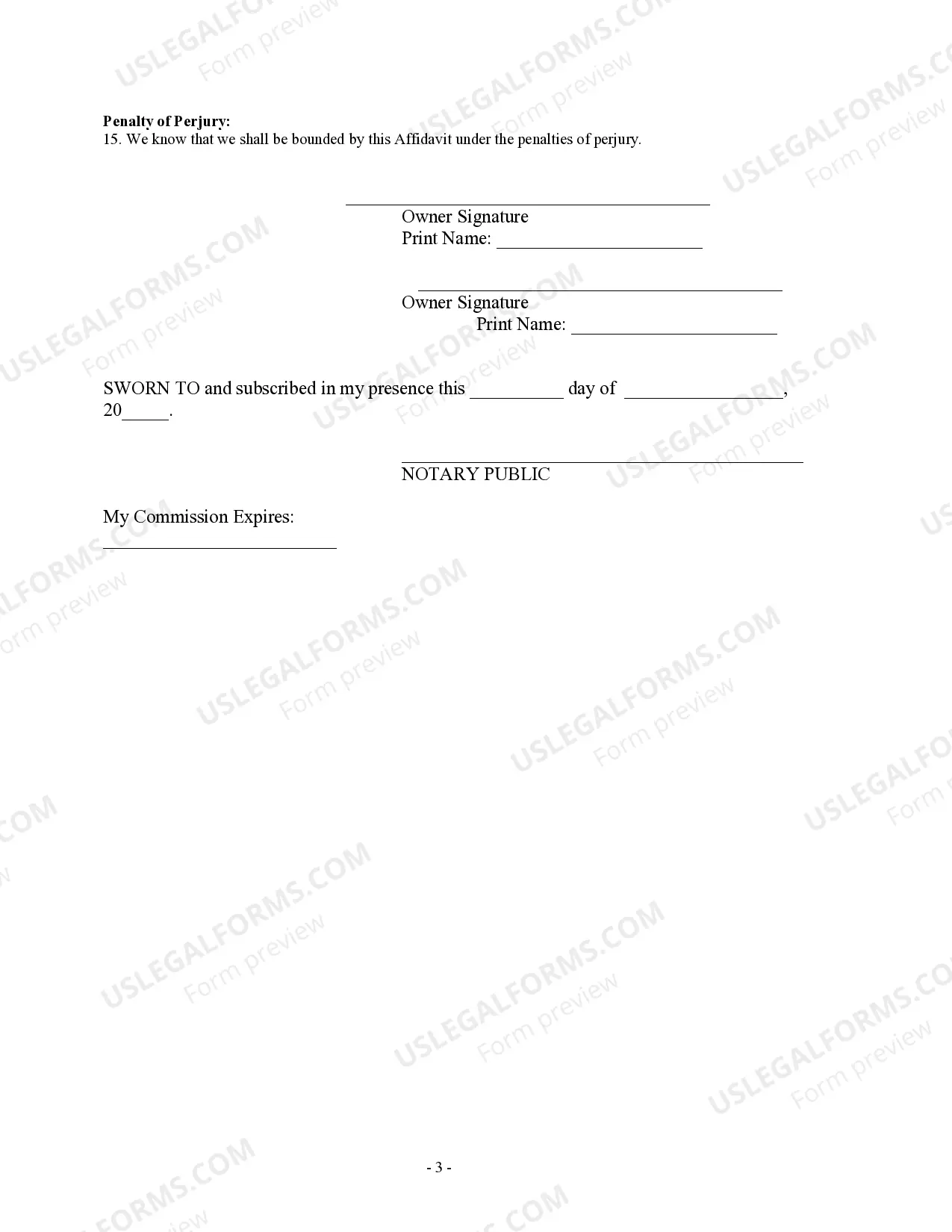
- Signature of owners with a notarization requirement

When this form is needed
This form should be used during the closing of a real estate transaction when the seller needs to certify that there are no liens on the property being sold. It is essential when financing is involved, as lenders require assurance that the property is unencumbered by additional debts. It serves as a crucial document to protect both the seller and buyer from potential legal issues arising from undisclosed claims against the property.
Who this form is for
- Sellers of real estate properties
- Property owners preparing for a closing transaction
- Parties involved in real estate financing requiring lender assurance
Completing this form step by step
- Identify the sellers and their marital status.
- Specify the property details, including location and ownership confirmation.
- Disclose any existing liens or obligations, excluding specific exceptions if applicable.
- Provide information about any easements or rights affecting the property.
- Both sellers should sign in the presence of a notary public to validate the affidavit.
Does this form need to be notarized?
To make this form legally binding, it must be notarized. Our online notarization service, powered by Notarize, lets you verify and sign documents remotely through an encrypted video session.
Get your form ready online
Our built-in tools help you complete, sign, share, and store your documents in one place.
Make edits, fill in missing information, and update formatting in US Legal Forms—just like you would in MS Word.
Download a copy, print it, send it by email, or mail it via USPS—whatever works best for your next step.
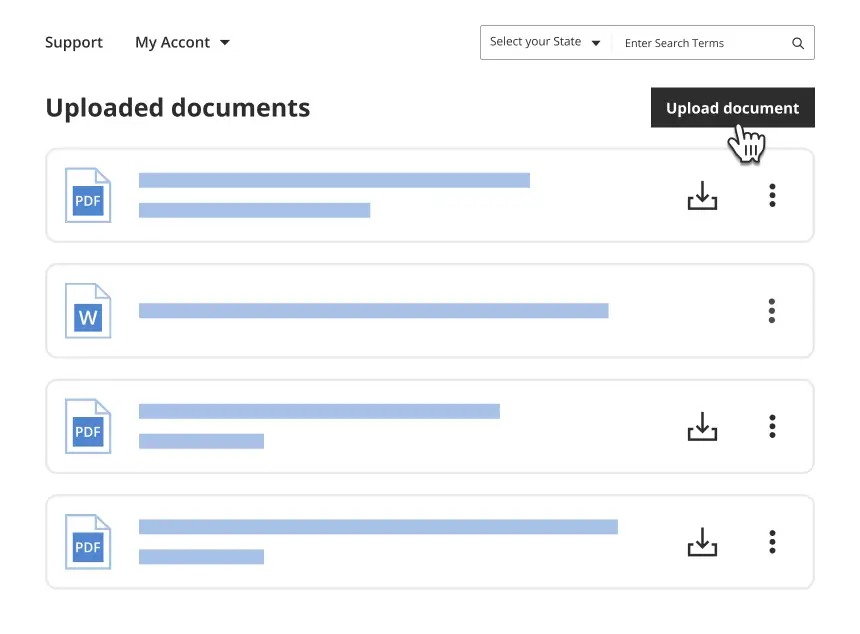
Sign and collect signatures with our SignNow integration. Send to multiple recipients, set reminders, and more. Go Premium to unlock E-Sign.
If this form requires notarization, complete it online through a secure video call—no need to meet a notary in person or wait for an appointment.
We protect your documents and personal data by following strict security and privacy standards.
Make edits, fill in missing information, and update formatting in US Legal Forms—just like you would in MS Word.
Download a copy, print it, send it by email, or mail it via USPS—whatever works best for your next step.
Sign and collect signatures with our SignNow integration. Send to multiple recipients, set reminders, and more. Go Premium to unlock E-Sign.

If this form requires notarization, complete it online through a secure video call—no need to meet a notary in person or wait for an appointment.
We protect your documents and personal data by following strict security and privacy standards.
Mistakes to watch out for
- Failing to provide accurate property details or ownership information.
- Omitting to disclose existing liens or obligations.
- Not having the affidavit notarized, which can invalidate the document.
- Leaving sections incomplete or providing vague answers regarding liabilities.
Benefits of completing this form online
- Convenient access to complete the document from anywhere at any time.
- Edit and customize the form easily to meet specific requirements.
- Reliable templates drafted by licensed attorneys ensuring legal compliance.
- Immediate download availability for faster property transactions.
Summary of main points
- The Owner's or Seller's Affidavit of No Liens is essential for confirming ownership and the absence of liens.
- This form protects buyers by ensuring no undisclosed claims affect the property's title.
- Complete the form accurately and ensure it is notarized for legal validity.
Looking for another form?
Form popularity
FAQ
The title search performed in the prelim title discovers whether or not there are any liens against the title, which would typically be placed by a lender on the property. They also may have you sign a document stating that there are no liens that are not recorded. If there are not, just sign it. Bingo.
Step 1: Determine if you have the right to file a lien. Step 2: Send notice of right to lien. Step 3: Prepare the lien document. Step 4: File the lien. Step 5: Send notice of lien. Step 6: Secure payment. Step 7: Release the lien.
The general warranty deed is the standard instrument for home sales. Your notarized warranty deed is proof of ownership, and that the grantor transferred complete and clear title to you. A quitclaim deed also proves full land ownershipif the person who conveyed the interest to you had full ownership.
A statement showing that your balance is paid in full. Your canceled promissory note. A certificate of satisfaction. Your canceled mortgage or deed of trust.
The front of Oregon titles shows survivorship information. When DMV issued a title with survivorship and one of the owners is deceased, the surviving owner(s) may transfer with proof of death of the deceased owner. By a written request with the current title.
In most states, you can typically search by address with the county recorder, clerk, or assessor's office online. The search for liens is free, though you may have to pay a small fee for a copy of the report, which will vary by county.
Removing a Lien from an OR Car Title Your lienholder must sign off on and mail your title to you once they receive the final loan payment. You will need to remove your lienholder's name from the document by applying for a new title at the Oregon Driver and Motor Vehicle Services Division.
A security interest holder may use a Statement of Lien Satisfaction, Form 524, to release interest in a vehicle when they cannot release directly on the title. A business must sign the business name and the signature of an authorized representative on the Form 524.
Most states now have additional tools available for free property title searches. You can find these on your state government sites under "county assessor." You will have to select your county, and you can then search through the listed properties.