Oregon Paternity Law and Procedure Handbook
Overview of this form
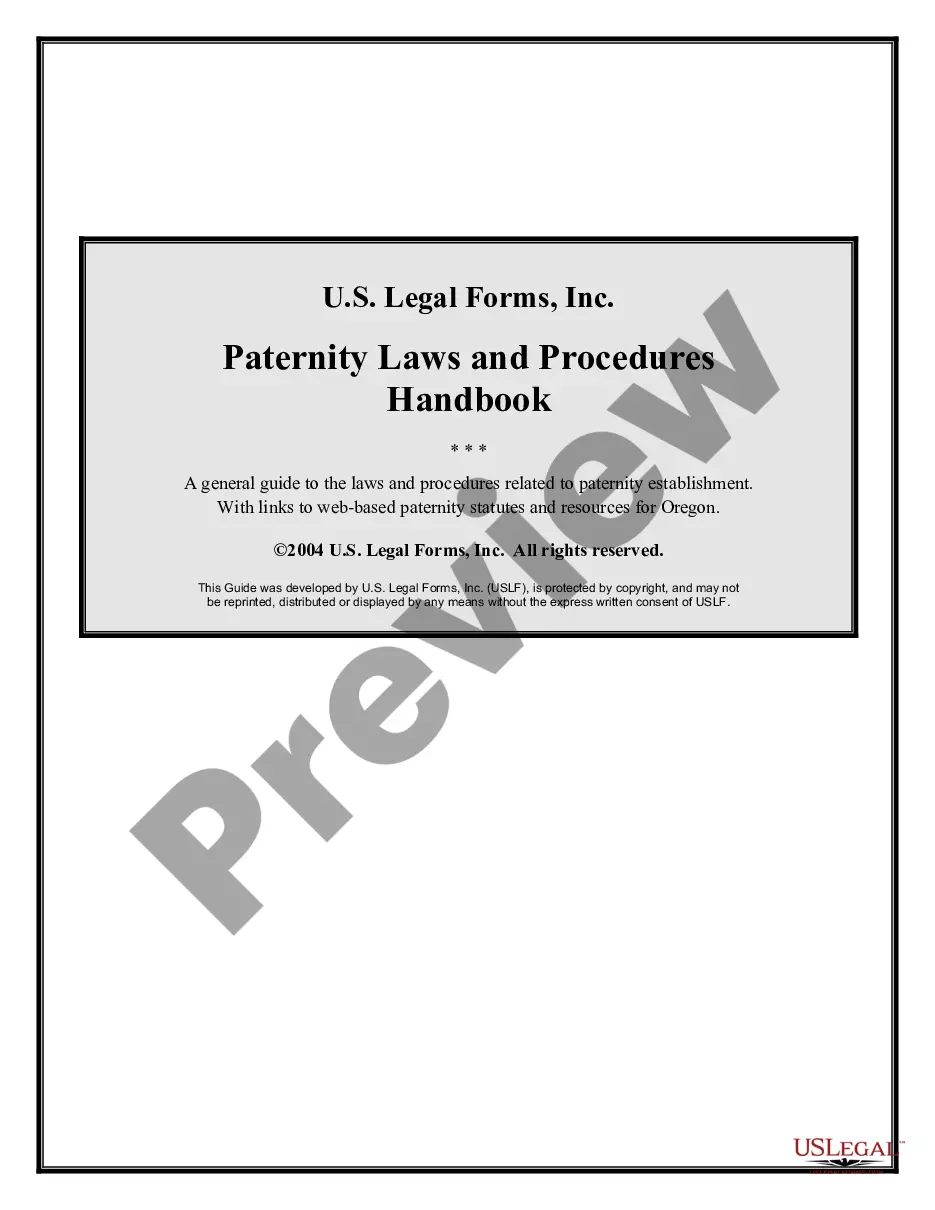
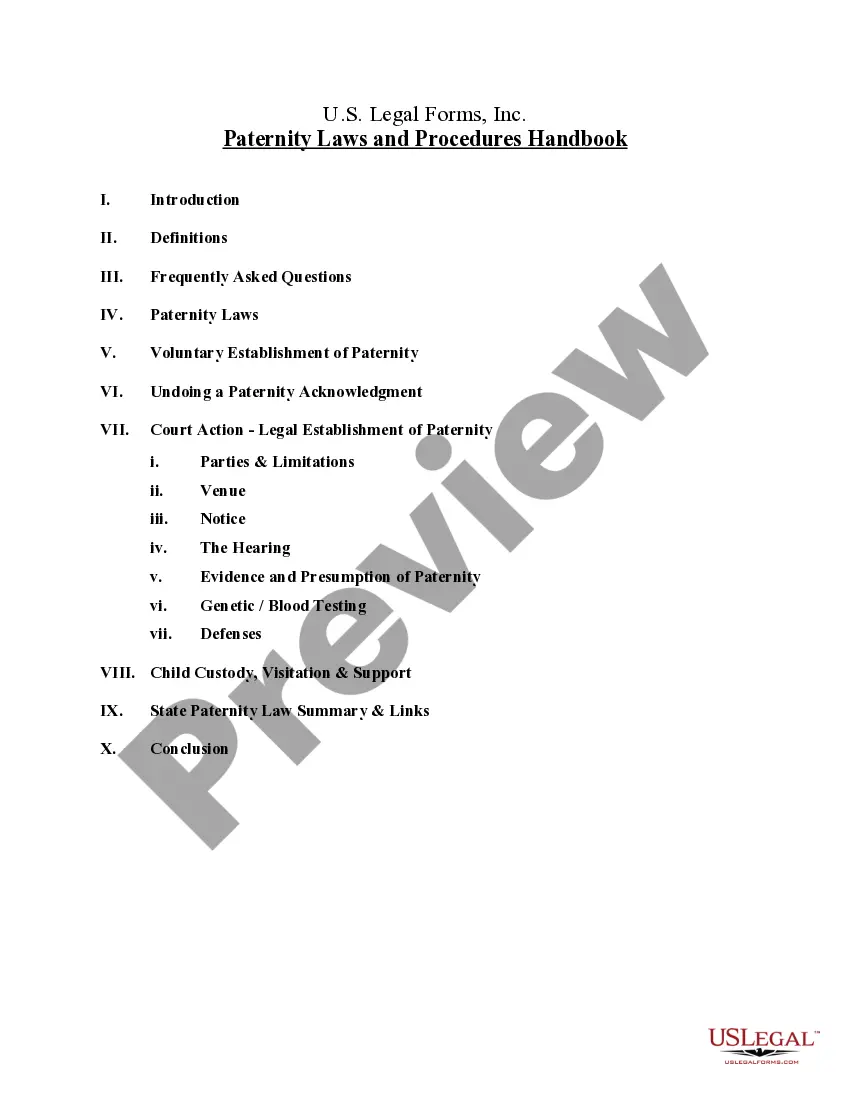
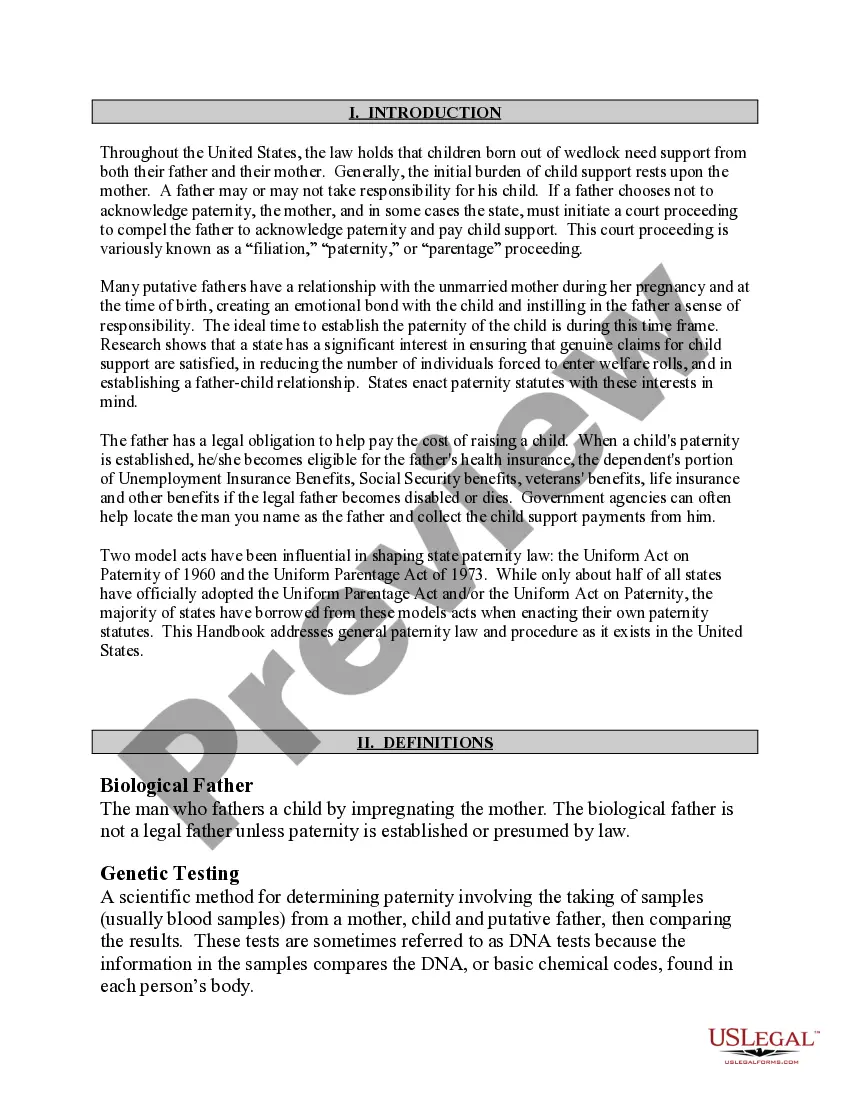
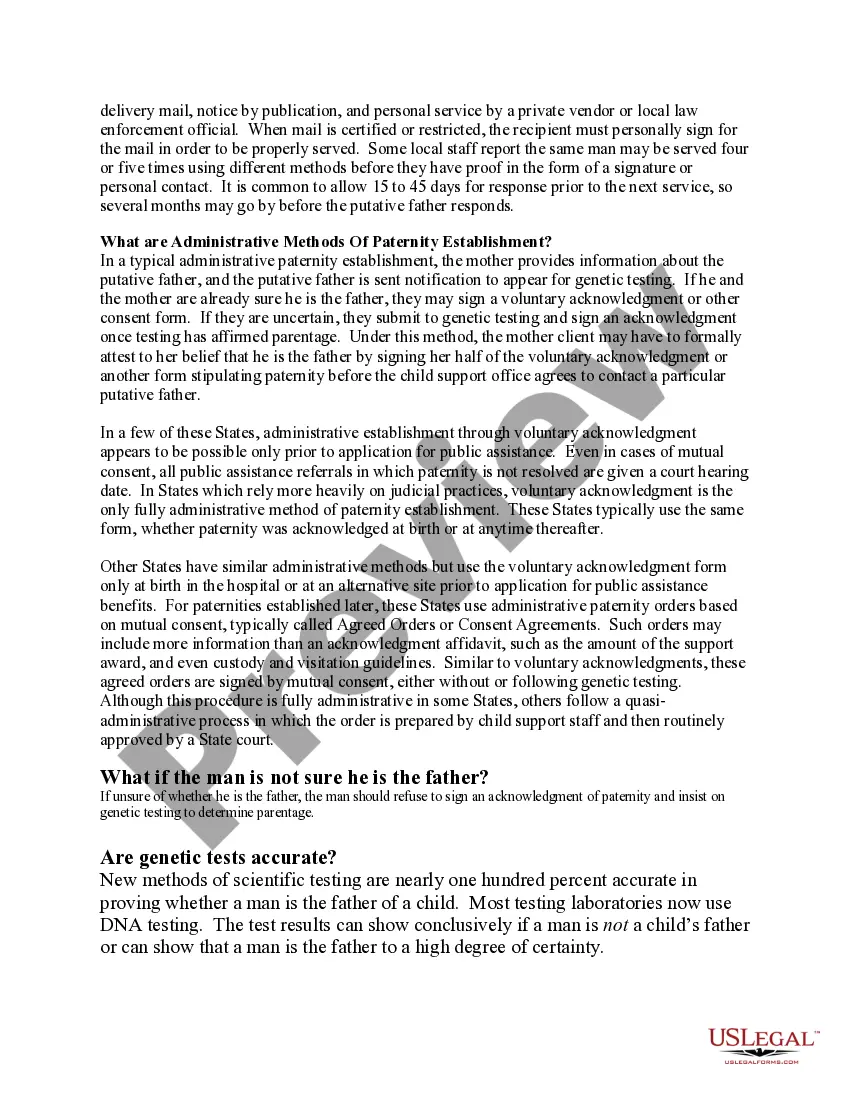
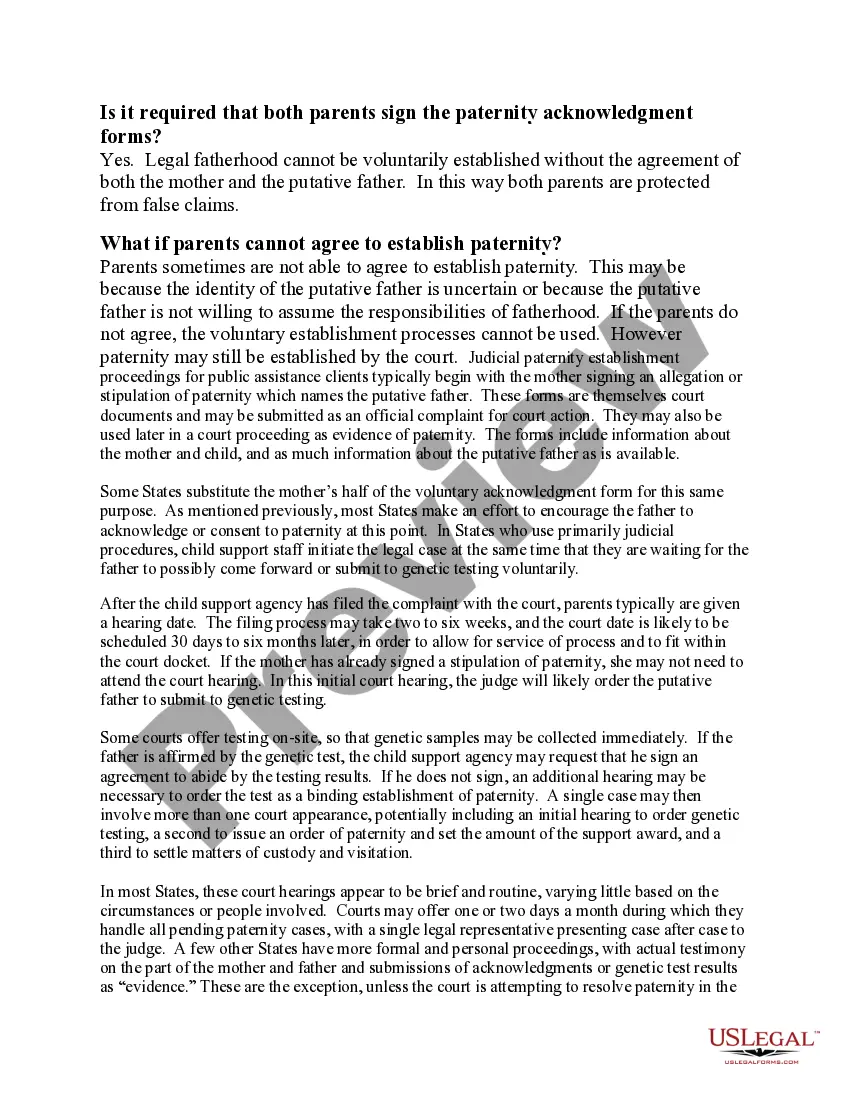
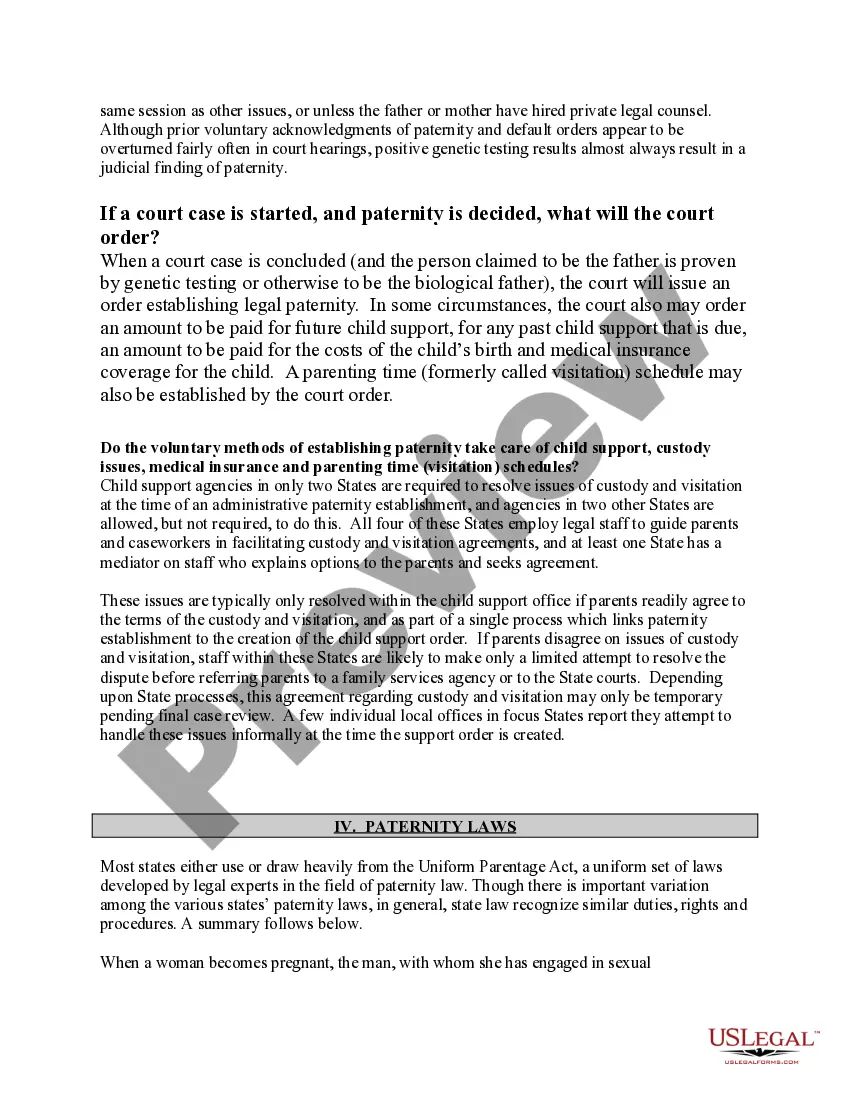
The Paternity Law and Procedure Handbook is a comprehensive guide that outlines the legal processes and statutes surrounding the establishment of paternity in the United States. This handbook provides essential information for unmarried parents who may need to navigate legal requirements to formally establish paternity and ensure the rights and responsibilities of both parents are recognized. Unlike other forms, this handbook offers state-specific resources and insights into relevant laws, making it a valuable resource for understanding paternity law across different jurisdictions.
Key parts of this document
- Introduction to paternity law and its importance
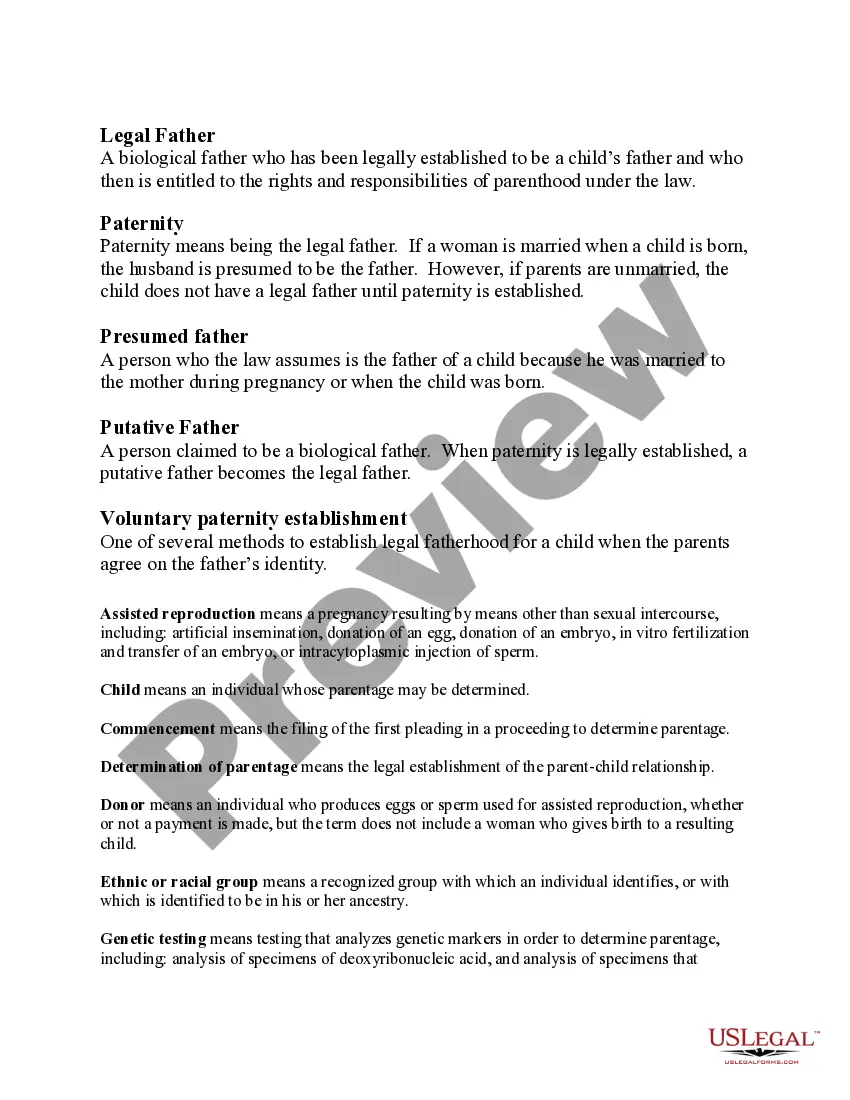
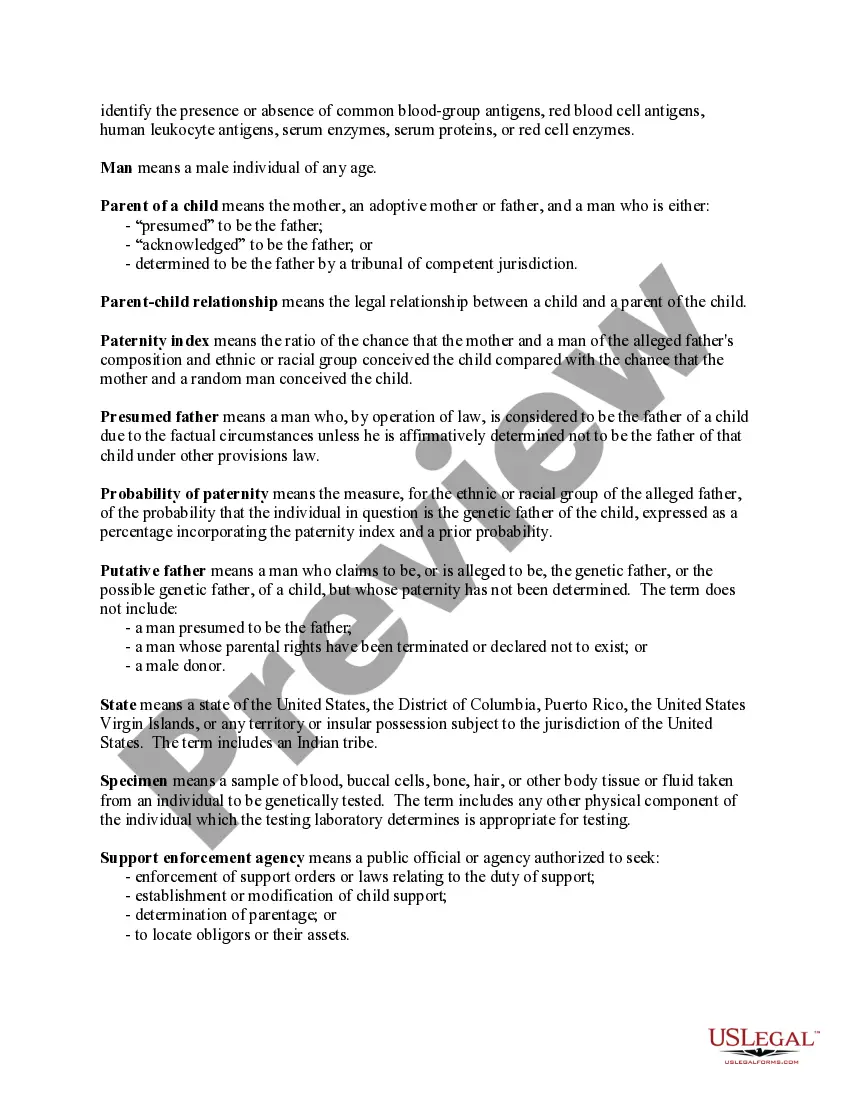
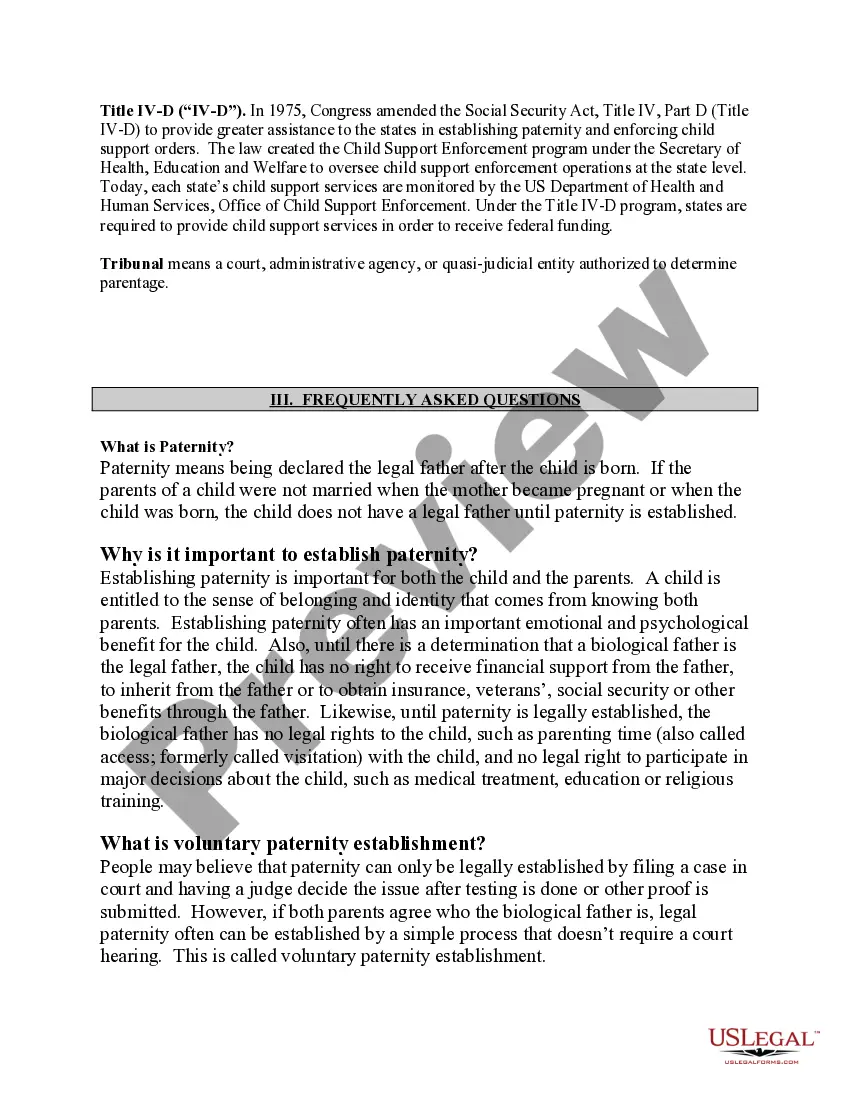
- Definitions of key terms related to paternity
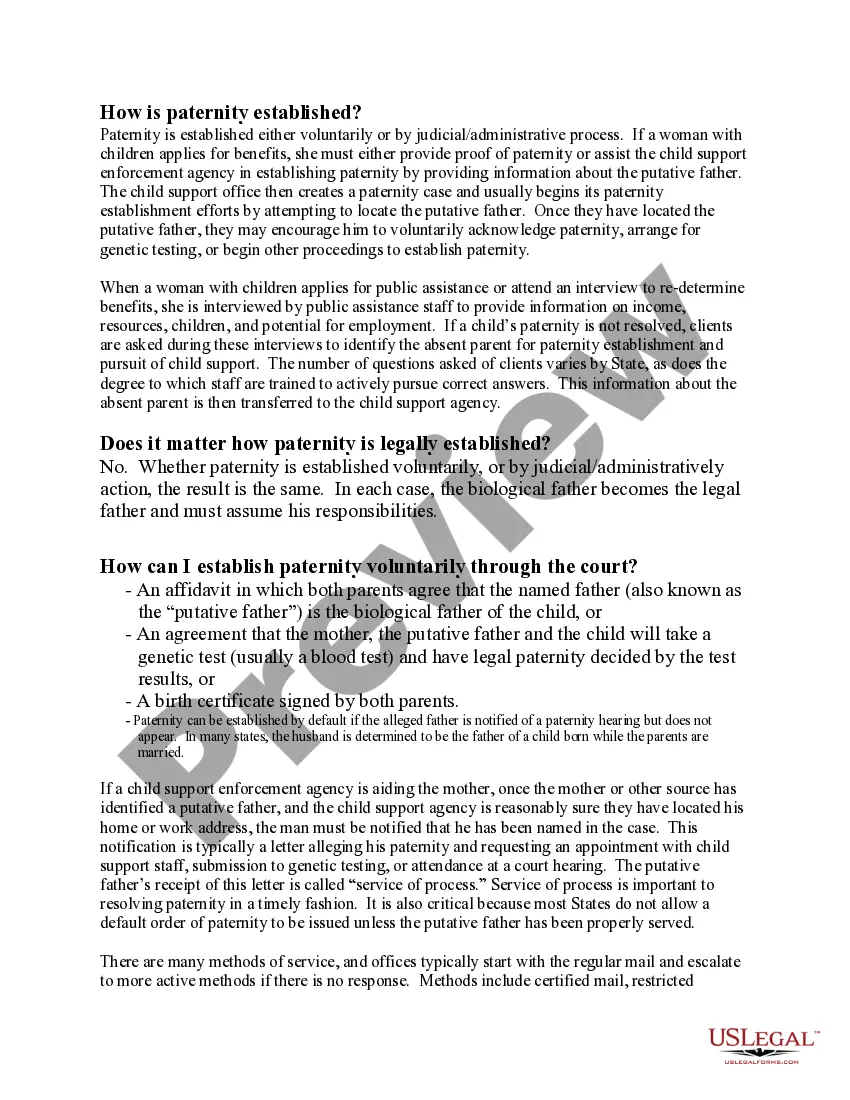
- Frequently Asked Questions (FAQs) concerning paternity establishment
- Details on voluntary and court-based methods for establishing paternity
- Information regarding genetic testing and legal presumption of paternity
- Guidance on child custody, visitation, and support obligations
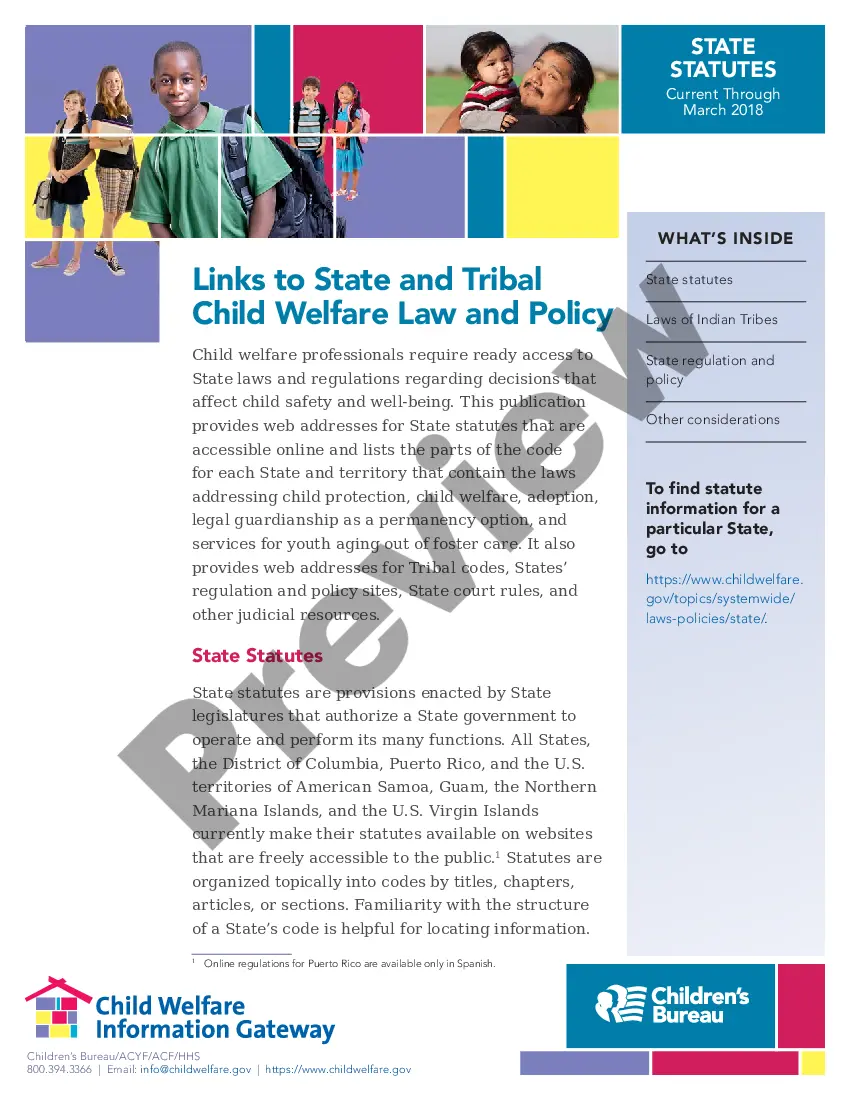
- State-by-state summary of paternity laws


When this form is needed
This handbook is ideal for individuals who need to understand the paternity establishment process, including unmarried parents seeking to formalize their child's paternity, mothers needing to obtain child support, or putative fathers wanting to understand their rights and responsibilities. It is also beneficial for legal professionals and child support enforcement agencies seeking clarity on state-specific laws regarding paternity.
Who should use this form
- Unmarried parents wishing to establish paternity.
- Fathers who want legal recognition of their parental rights.
- Mothers seeking child support from the biological father.
- Legal professionals advising clients on paternity matters.
- Child support enforcement agencies needing legal guidelines.
How to prepare this document
- Read through the sections to understand the definitions and procedures related to paternity.
- Identify the appropriate method for establishing paternity, either voluntarily or through a court.
- If using voluntary acknowledgment, ensure both parents sign the necessary forms.
- Gather required documents, such as birth certificates and identification, for court proceedings if necessary.
- Follow local procedures for filing any required forms or petitions in the appropriate court.
Does this document require notarization?
Notarization is generally not required for this form. However, certain states or situations might demand it. You can complete notarization online through US Legal Forms, powered by Notarize, using a verified video call available anytime.
Get your form ready online
Our built-in tools help you complete, sign, share, and store your documents in one place.
Make edits, fill in missing information, and update formatting in US Legal Forms—just like you would in MS Word.
Download a copy, print it, send it by email, or mail it via USPS—whatever works best for your next step.
Sign and collect signatures with our SignNow integration. Send to multiple recipients, set reminders, and more. Go Premium to unlock E-Sign.
If this form requires notarization, complete it online through a secure video call—no need to meet a notary in person or wait for an appointment.
We protect your documents and personal data by following strict security and privacy standards.

Make edits, fill in missing information, and update formatting in US Legal Forms—just like you would in MS Word.

Download a copy, print it, send it by email, or mail it via USPS—whatever works best for your next step.

Sign and collect signatures with our SignNow integration. Send to multiple recipients, set reminders, and more. Go Premium to unlock E-Sign.

If this form requires notarization, complete it online through a secure video call—no need to meet a notary in person or wait for an appointment.

We protect your documents and personal data by following strict security and privacy standards.
Common mistakes to avoid
- Failing to consult a legal expert for state-specific requirements.
- Not completing the acknowledgment forms correctly or completely.
- Missing deadlines for filing court actions or responding to notices.
- Not understanding the implications of signing a paternity acknowledgment without genetic testing.
- Overlooking the need for child support agreements during the paternity establishment process.
Why complete this form online
- Accessibility: Download and access the handbook from anywhere at any time.
- Convenience: Easily reference specific sections as needed during the paternity establishment process.
- Comprehensive information: Obtain a thorough understanding of paternity laws and procedures in one resource.
- Cost-effective: Save on legal consultation fees for basic information about paternity law.
Legal use & context
- This handbook serves as a guide and is not a substitute for legal advice.
- Paternity laws vary significantly across states; consult a local attorney for specifics.
- Information provided in this handbook should be used to understand rights and obligations related to paternity.
- The handbook covers both voluntary and court-based processes for establishing paternity.
Quick recap
- Understanding the legal definition and implications of paternity is vital.
- Timely action ensures that children receive necessary support and recognition.
- Voluntary processes are available but should be approached with caution, especially regarding legal rights.
Looking for another form?

Form popularity
FAQ
Children are not allowed to decide, only the court can modify visitation/parenting plans. Children over 14 are considered to have some maturity ad the court may listen to their testimony but generally speaking the court frowns on parents...
Get on the birth certificate. Once your child is born, the easiest way to establish paternity is by getting your name on the birth certificate. Get an order through an administrative agency. Get a court order.
When the father and mother agree that the child is his, paternity may be legally established by completing a Voluntary Acknowledgment of Paternity ». The form must be signed by both parents, notarized, and filed with Oregon Vital Records. Your local child support office can help complete this process.
If you get married after the child is born, it can establish paternity retroactively. This is not an automatic process, and it is in you and your child's best interest to work with a family lawyer to establish paternity in this way. Both parents can sign an Affidavit of Paternity, which establishes paternity.
In general, a child cannot legally decide which parent to live with unless they are emancipated or reach the age of majority. However, let us assume that parties in a divorce are dealing with a custody and parenting time dispute related to a 16-year old child.
Birth certificate. If a birth certificate declares the father and he signs it, this is a legally binding qualification of paternity. DNA test. Court order.
There is no specific age at which a child can decide to refuse to visit with a parent or change custody arrangements without the court's approval.
When the father and mother agree that the child is his, paternity may be legally established by completing a Voluntary Acknowledgment of Paternity ». The form must be signed by both parents, notarized, and filed with Oregon Vital Records. Your local child support office can help complete this process.