Illinois Paternity Law and Procedure Handbook
Overview of this form
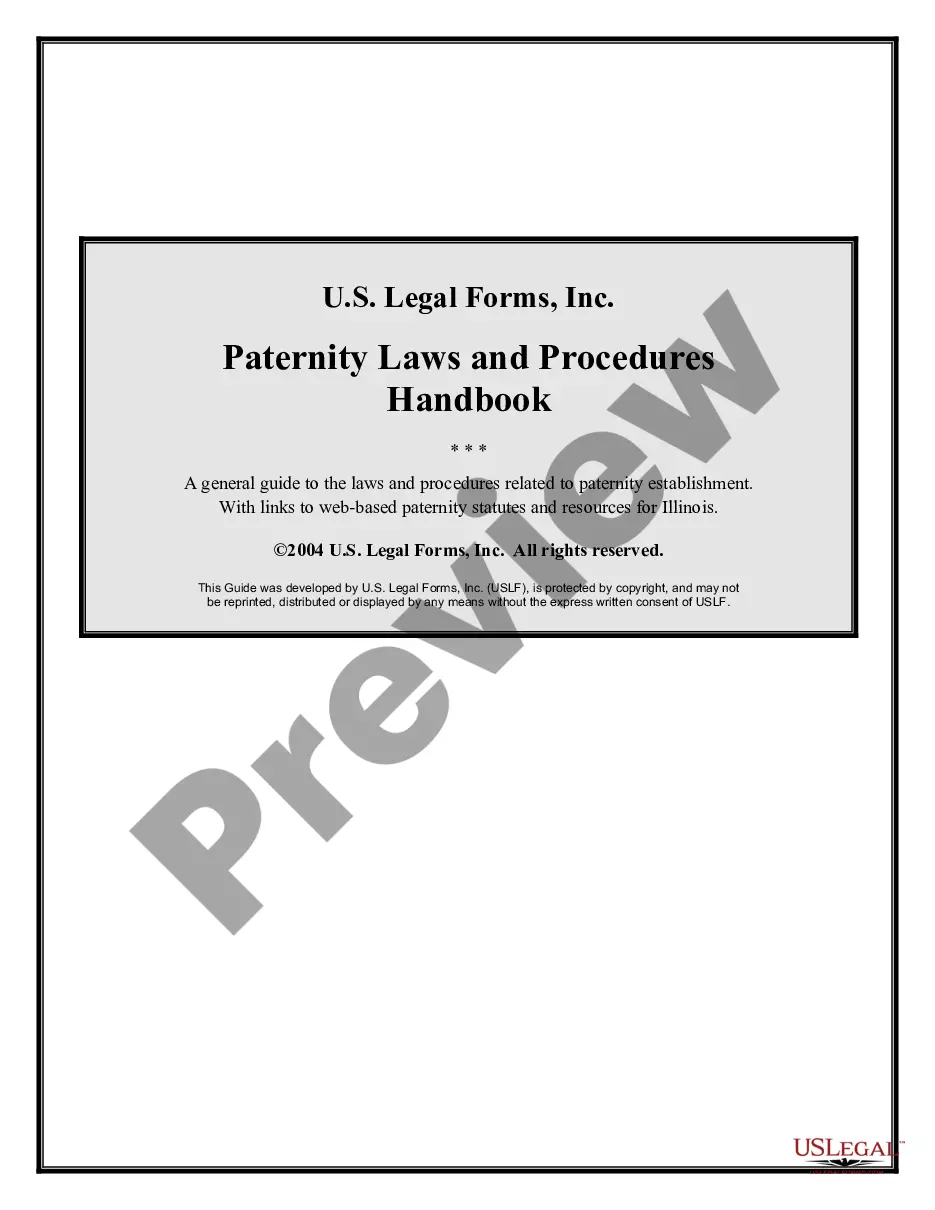
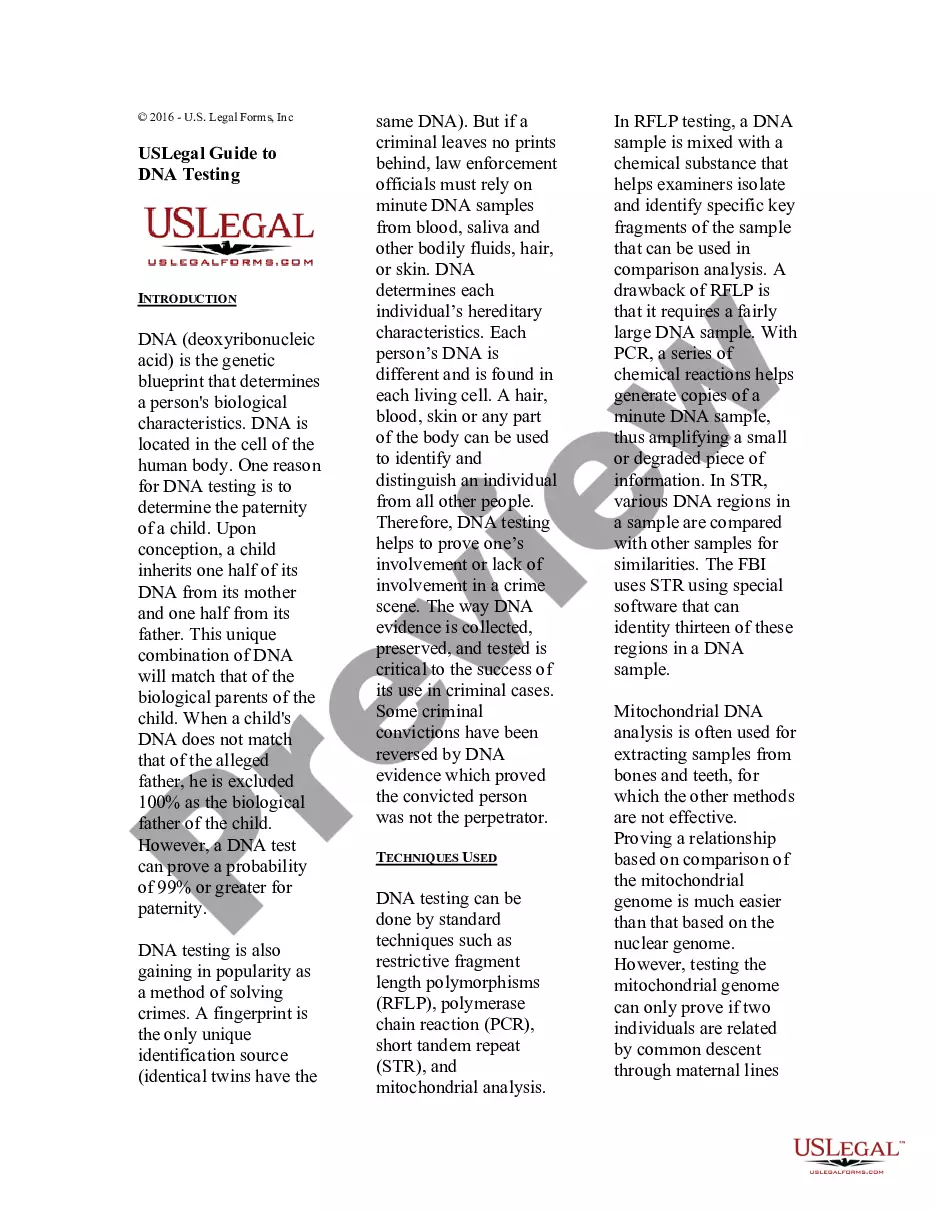
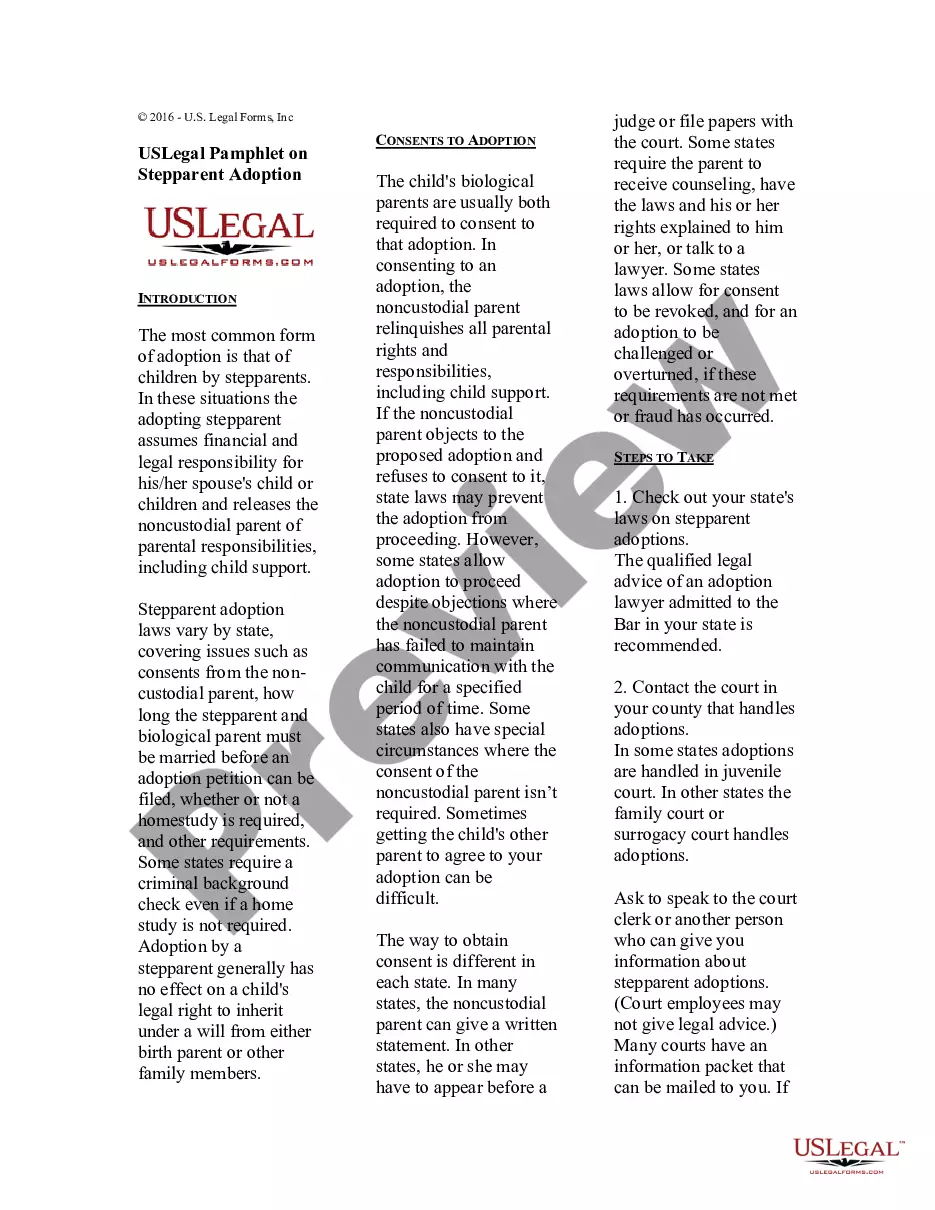
The Paternity Law and Procedure Handbook is designed to provide a comprehensive understanding of paternity laws across the United States. This handbook serves as a guide for unmarried parents looking to establish legal paternity for their child, explaining both voluntary and court-established methods. Unlike other legal forms, this handbook emphasizes state-specific resources and procedures, making it easier for parents to navigate the complexities of paternity laws in their jurisdiction.
Key parts of this document
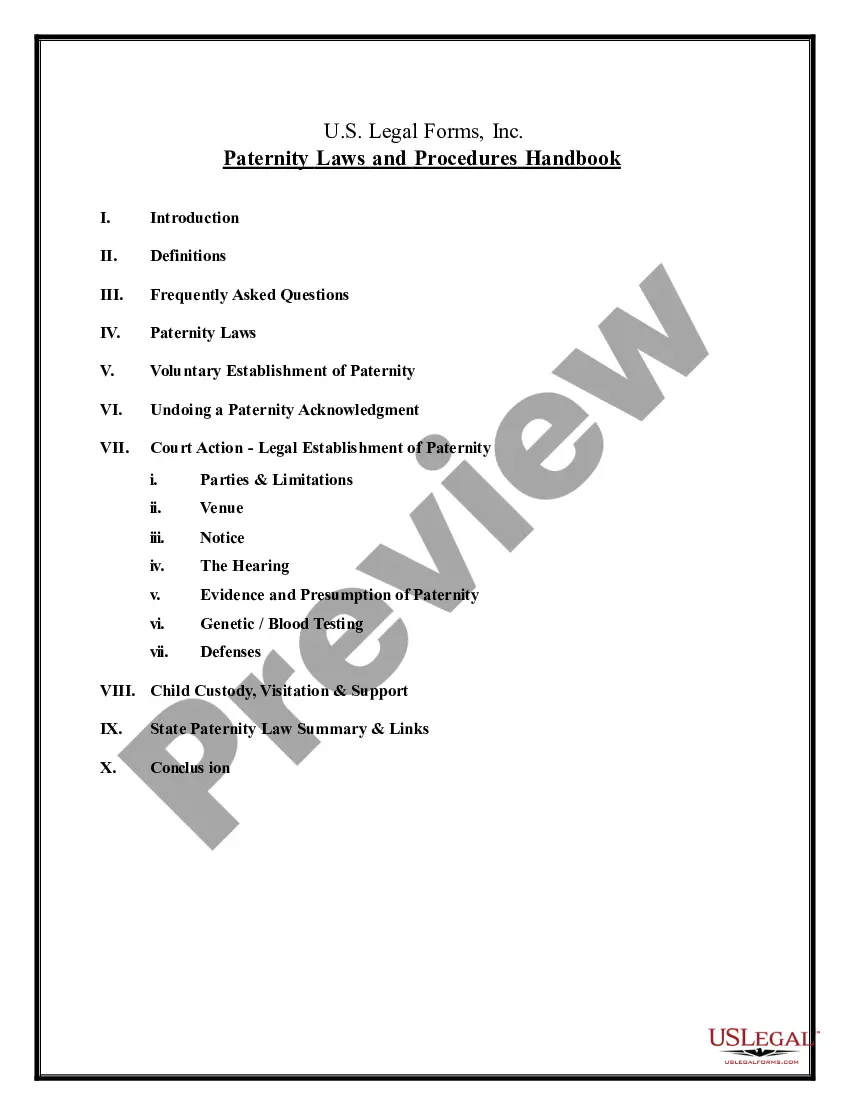
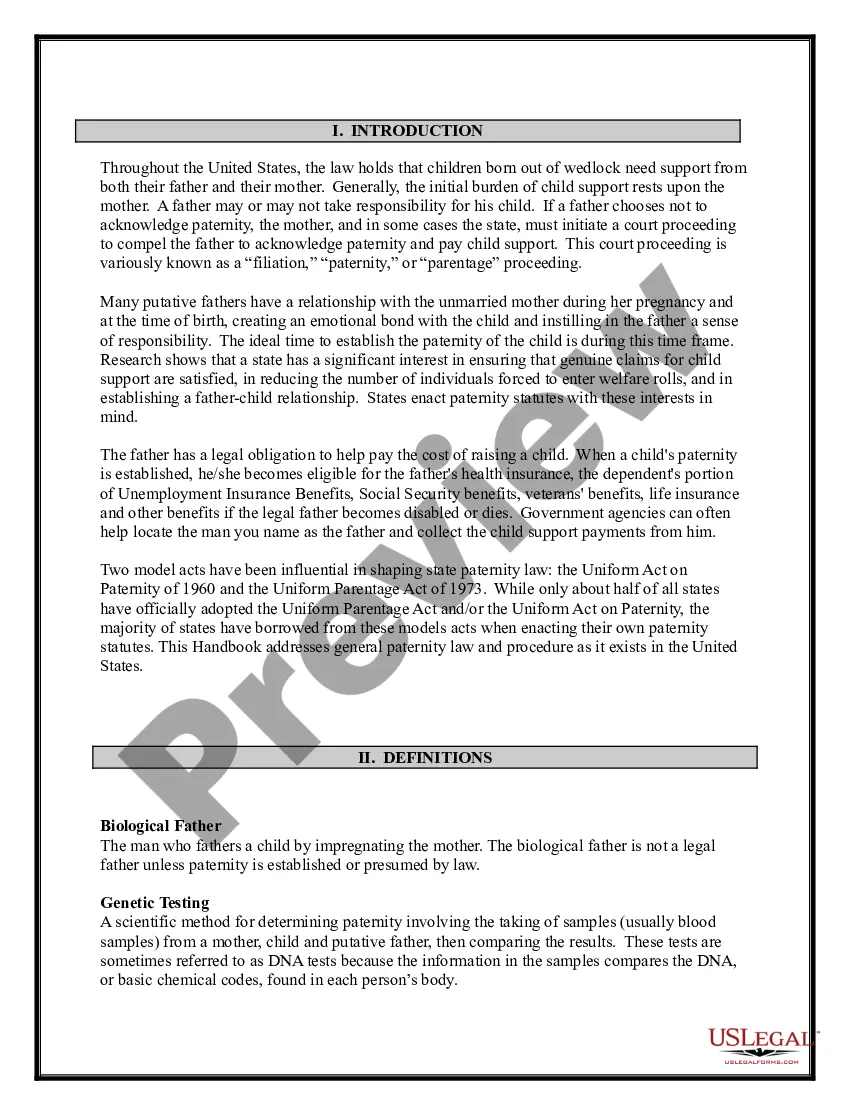
- Introduction to paternity laws and the importance of establishing paternity.
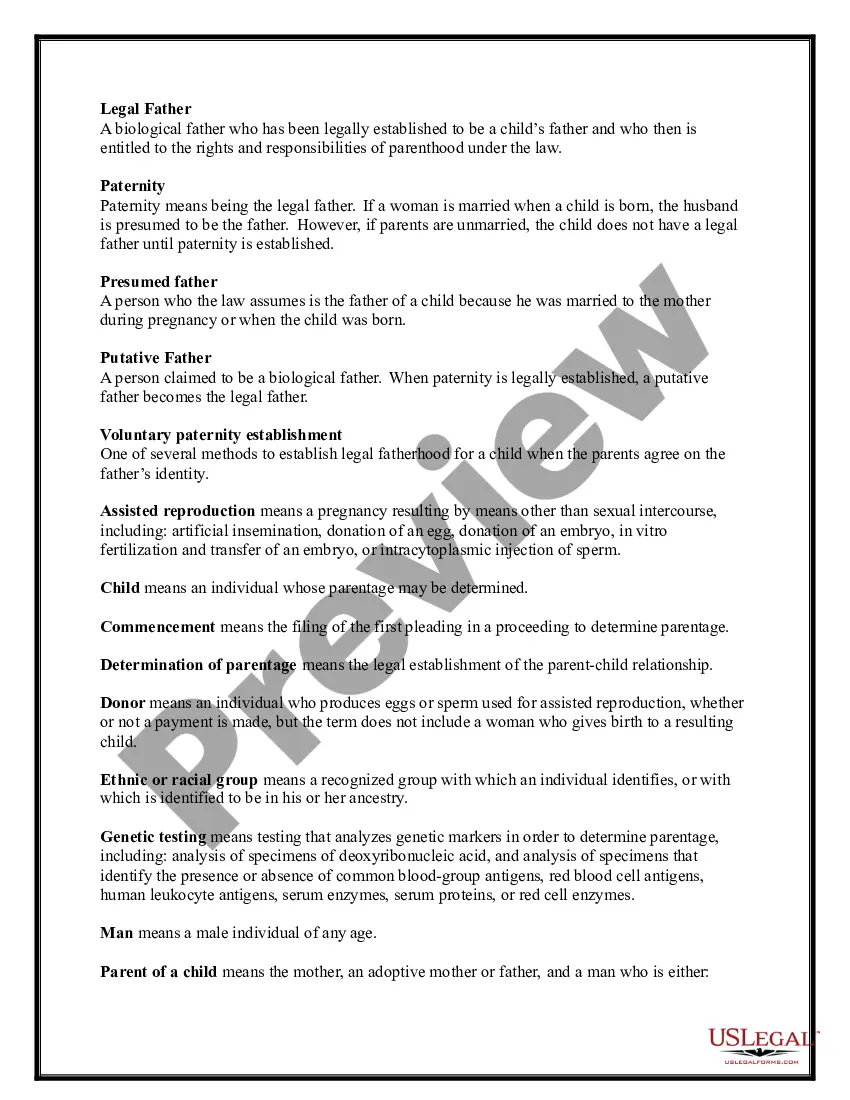
- Definitions of key terms such as biological father, legal father, and voluntary paternity establishment.
- FAQs addressing common concerns related to paternity establishment.
- Detailed explanation of voluntary and judicial methods for establishing paternity.
- State-specific paternity law summaries with resources for further assistance.


When to use this document
This handbook is essential for unmarried parents who need to establish paternity. It is also useful for individuals involved in child support disputes or custody issues. Parents seeking clarity on their rights and responsibilities regarding child support, health insurance benefits, and inheritance should refer to this handbook to understand the paternity establishment process relevant to their state.
Who should use this form
- Unmarried parents wanting to establish legal paternity for their child.
- Individuals involved in child custody or support disputes.
- Legal representatives seeking information on paternity laws in specific states.
- Organizations or agencies providing support to single parents or families in need of paternity establishment resources.
Instructions for completing this form
- Read the introduction to understand the significance of establishing paternity.
- Familiarize yourself with definitions to clarify your understanding of paternity terms.
- Assess the FAQs to identify relevant concerns or questions you may have.
- Review the sections on voluntary and judicial methods of paternity establishment to determine your best course of action.
- Consult the state-specific resources for additional information and guidance on local procedures.
Notarization guidance
This form does not typically require notarization unless specified by local law. However, obtaining notarization can provide additional legal validity, particularly when dealing with acknowledgments or official documents.
Get your form ready online
Our built-in tools help you complete, sign, share, and store your documents in one place.
Make edits, fill in missing information, and update formatting in US Legal Forms—just like you would in MS Word.
Download a copy, print it, send it by email, or mail it via USPS—whatever works best for your next step.
Sign and collect signatures with our SignNow integration. Send to multiple recipients, set reminders, and more. Go Premium to unlock E-Sign.
If this form requires notarization, complete it online through a secure video call—no need to meet a notary in person or wait for an appointment.
We protect your documents and personal data by following strict security and privacy standards.

Make edits, fill in missing information, and update formatting in US Legal Forms—just like you would in MS Word.

Download a copy, print it, send it by email, or mail it via USPS—whatever works best for your next step.

Sign and collect signatures with our SignNow integration. Send to multiple recipients, set reminders, and more. Go Premium to unlock E-Sign.

If this form requires notarization, complete it online through a secure video call—no need to meet a notary in person or wait for an appointment.

We protect your documents and personal data by following strict security and privacy standards.
Avoid these common issues
- Failing to establish paternity promptly, which can limit legal rights and responsibilities.
- Signing acknowledgment forms without proper understanding, leading to future disputes.
- Overlooking state-specific requirements, which may lead to improper filings or missed deadlines.
Benefits of completing this form online
- Convenience of accessing information at any time without the need for an attorneyâs appointment.
- Editable content allows you to tailor the form to your specific circumstances.
- Reliable source of legal guidance from organized and professionally drafted materials.
Legal use & context
- The Paternity Law and Procedure Handbook serves as a foundational resource, but it is not a substitute for legal advice from a qualified attorney.
- State laws regarding paternity can differ; users should verify any specifics with local regulatory agencies.
- The handbook's guidelines aim to inform users about their rights and responsibilities, specifically regarding child support and legal parentage.
Looking for another form?

Form popularity
FAQ
You can obtain acknowledgment of paternity forms from various sources in Illinois, including hospitals, local health departments, and legal aid organizations. Additionally, the Illinois Paternity Law and Procedure Handbook provides guidance on the necessary forms and where to get them. If you're unsure of the process, reaching out to a legal expert can help you access the correct documentation.
While there may be a two-year limitation on seeking reimbursement for birthing expenses, a paternity action (whether raised by the mother or the father) may be brought anytime until two years after the child attains the age of majority, meaning that a child could be 20 years old and a legitimate paternity action could
There are three ways to establish paternity: Both parents complete, sign, and have a Voluntary Acknowledgement of Paternity (VAP) form witnessed and filed with the Department of Healthcare and Family Services. An Administrative Paternity Order is established and entered by HFS' Child Support Services; or.
There are three ways to establish paternity: Both parents complete, sign, and have a Voluntary Acknowledgement of Paternity (VAP) form witnessed and filed with the Department of Healthcare and Family Services. An Administrative Paternity Order is established and entered by HFS' Child Support Services; or.
Both parents complete, sign, and have a Voluntary Acknowledgement of Paternity (VAP) form witnessed and filed with the Department of Healthcare and Family Services. An Administrative Paternity Order is established and entered by HFS' Child Support Services; or.
Birth certificates are generally not a way to establish parentage. Hospital staff is only supposed to put a person's name on a birth certificate if that person is the legal parent of the child. A person's name should not be put on the birth certificate if they are not a legal parent.
Under Illinois law, married parents have joint residential and legal custody of a child born of the marriage while they are married. With unmarried parents, the mother has sole legal and residential custody of the child until a finding of paternity is made and the father petitions the court for some form of custody.
However, Illinois law does give fathers rights in the form of the dad is now on the hook for future financial support, such as child support and medical expenses. He may not be legally allowed to see his child, but the state will certainly ensure his child support payments will be made.
In most situations, parents who give birth in a hospital or birth center, have until they're ready to be discharged from the medical institute to name their baby. This typically means you have 48-72 hours to choose a name and fill out the appropriate birth certificate forms.