Oregon Residential Real Estate Sales Disclosure Statement
What is this form?
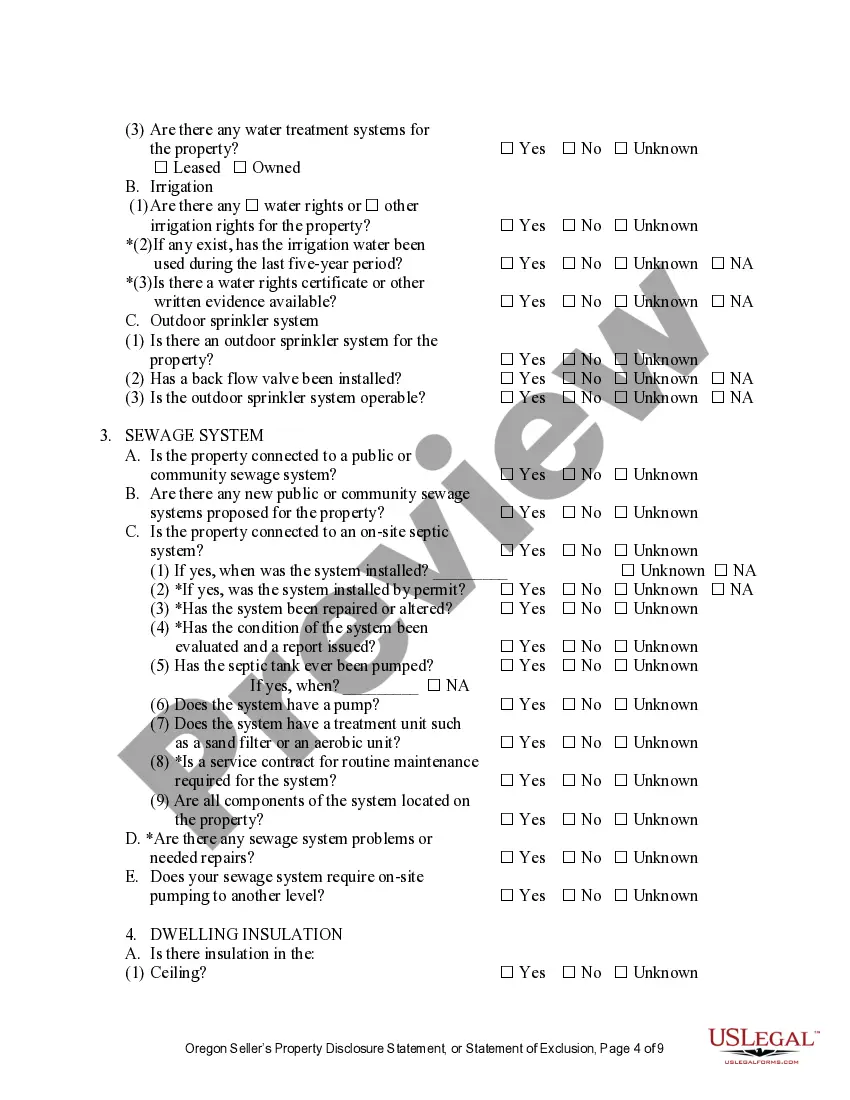
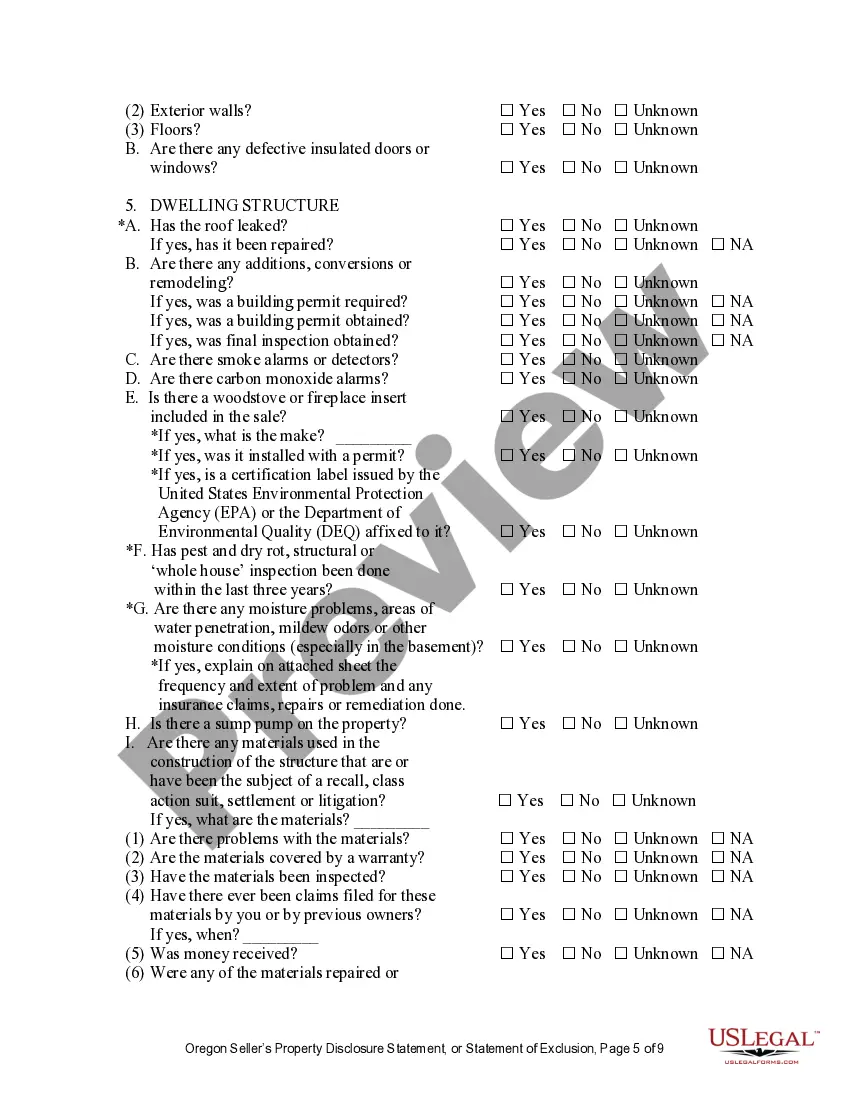
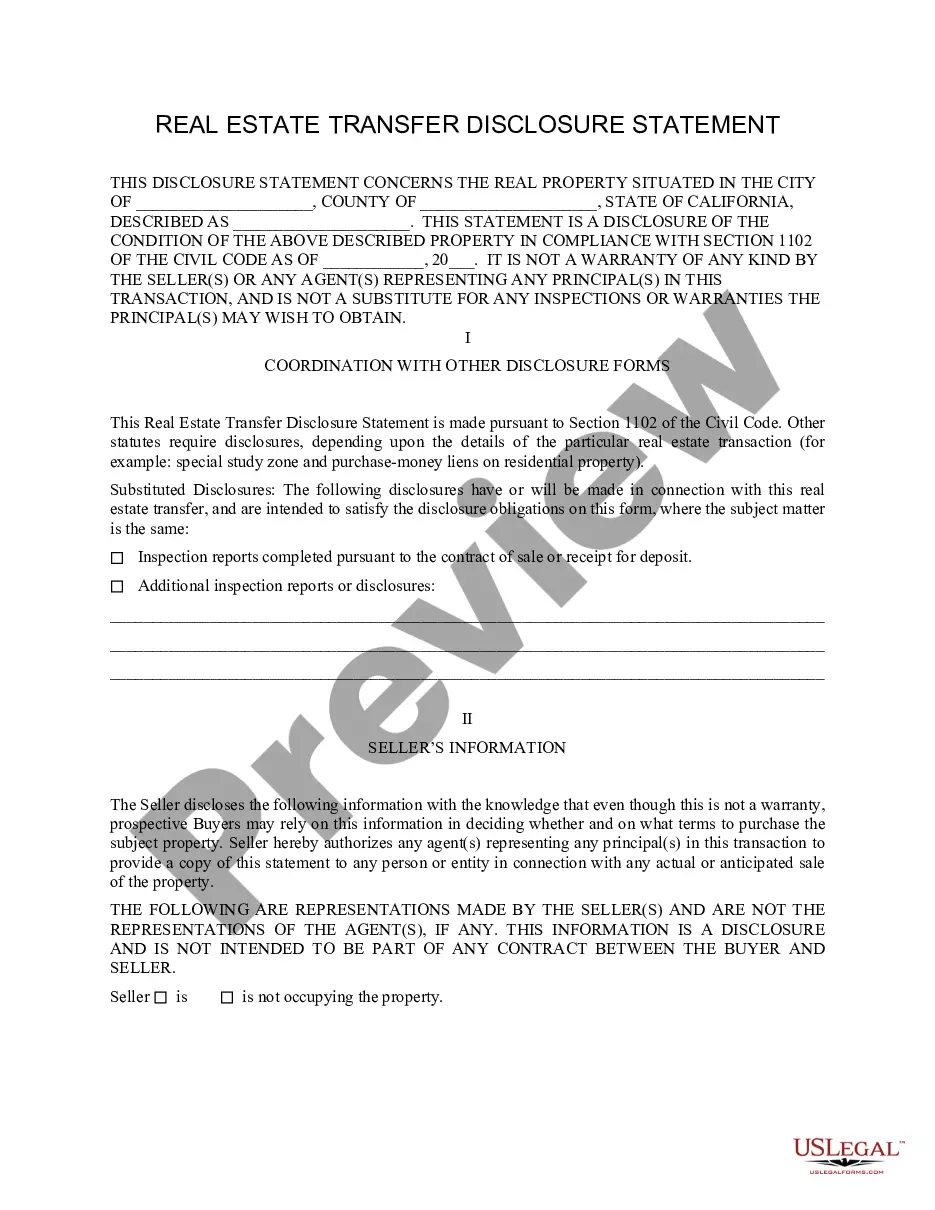
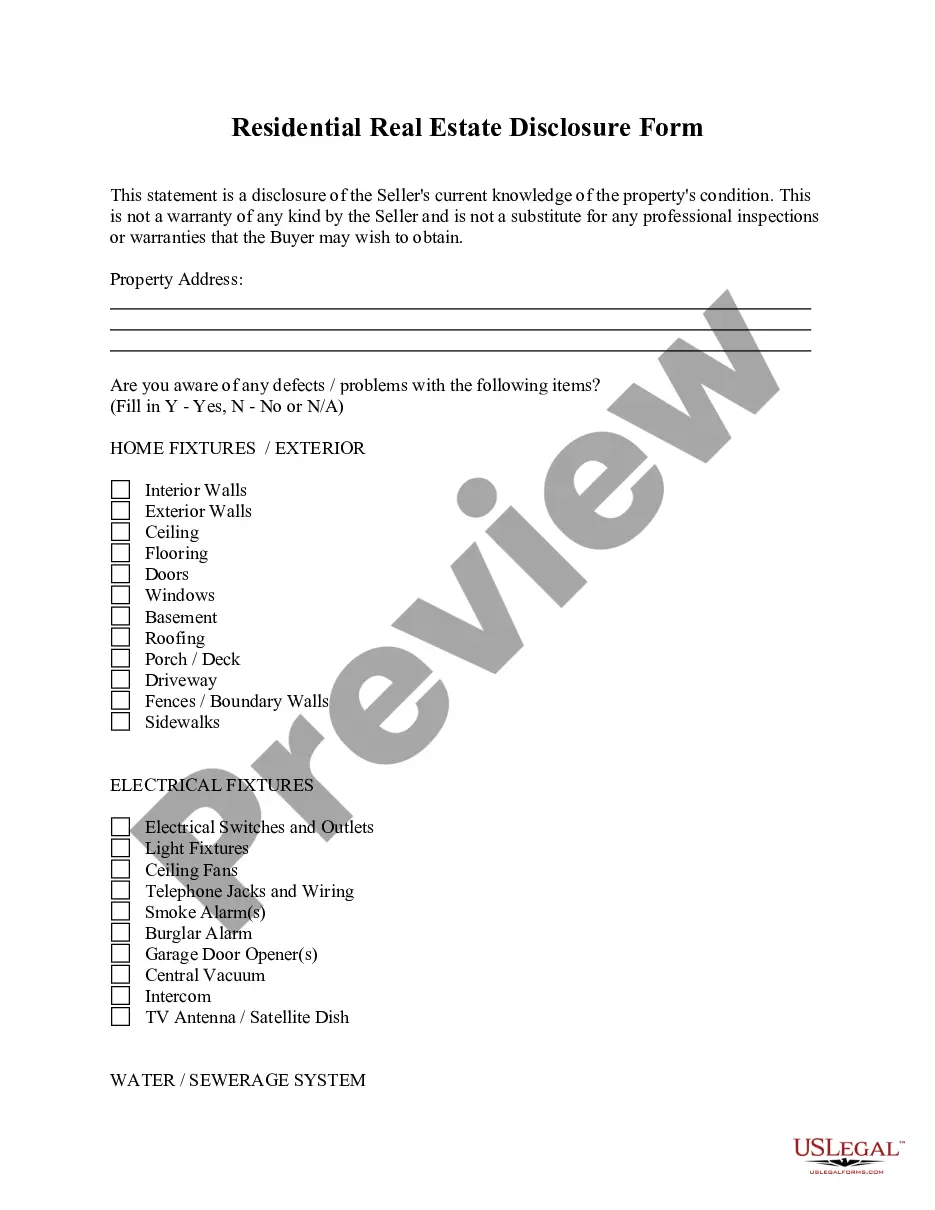
The Residential Real Estate Sales Disclosure Statement is a crucial document for sellers in Oregon's residential real estate market. This form is designed to inform potential buyers about the condition of the property being sold. Unlike other real estate forms, this statement specifically focuses on the sellerâs knowledge regarding the physical condition of the property, including any existing defects or issues. It ensures transparency and protects both the seller and the buyer throughout the transaction process.
Key parts of this document
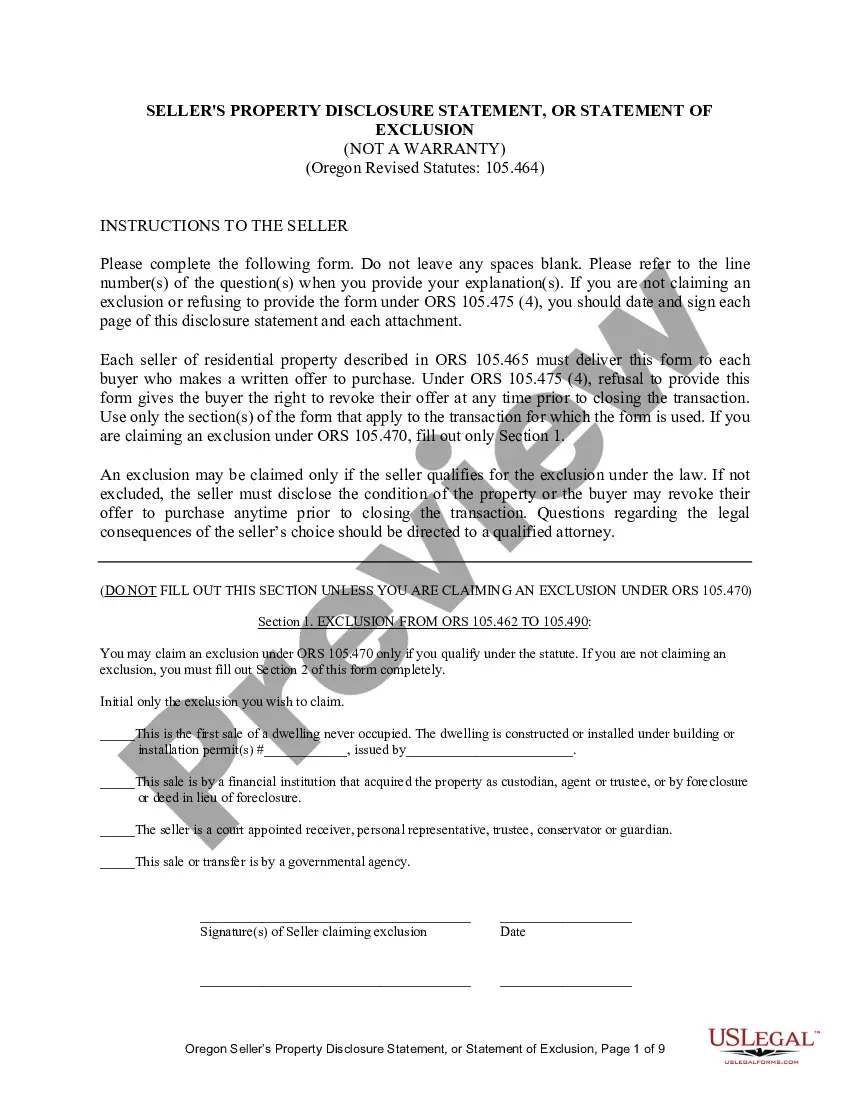
- Section 1: Exclusion criteria for sellers who are not required to complete full disclosures.
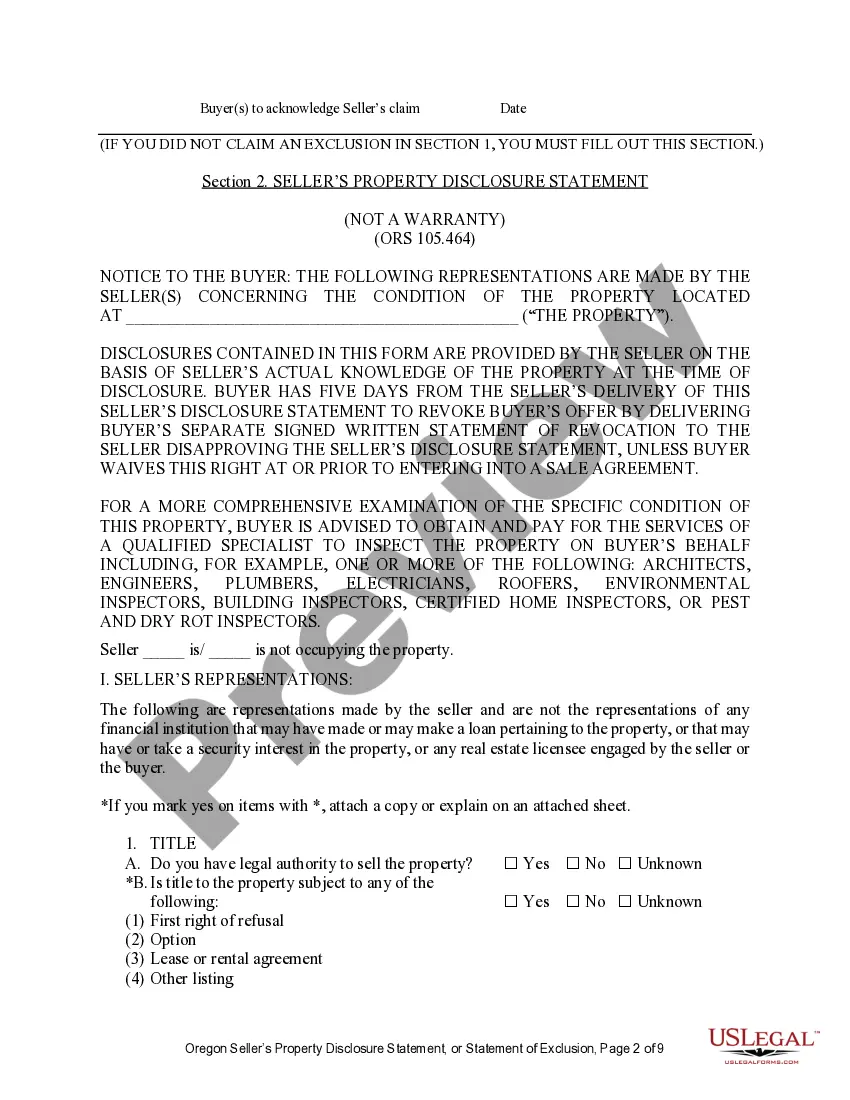
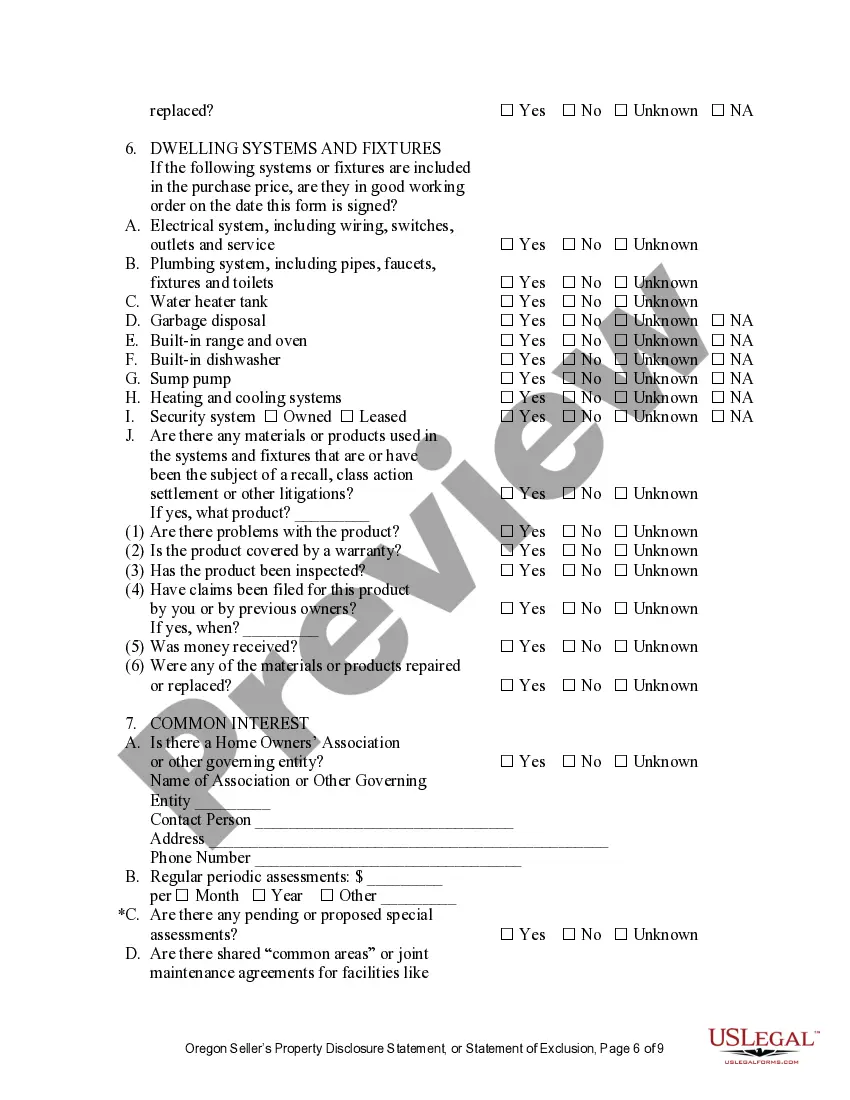
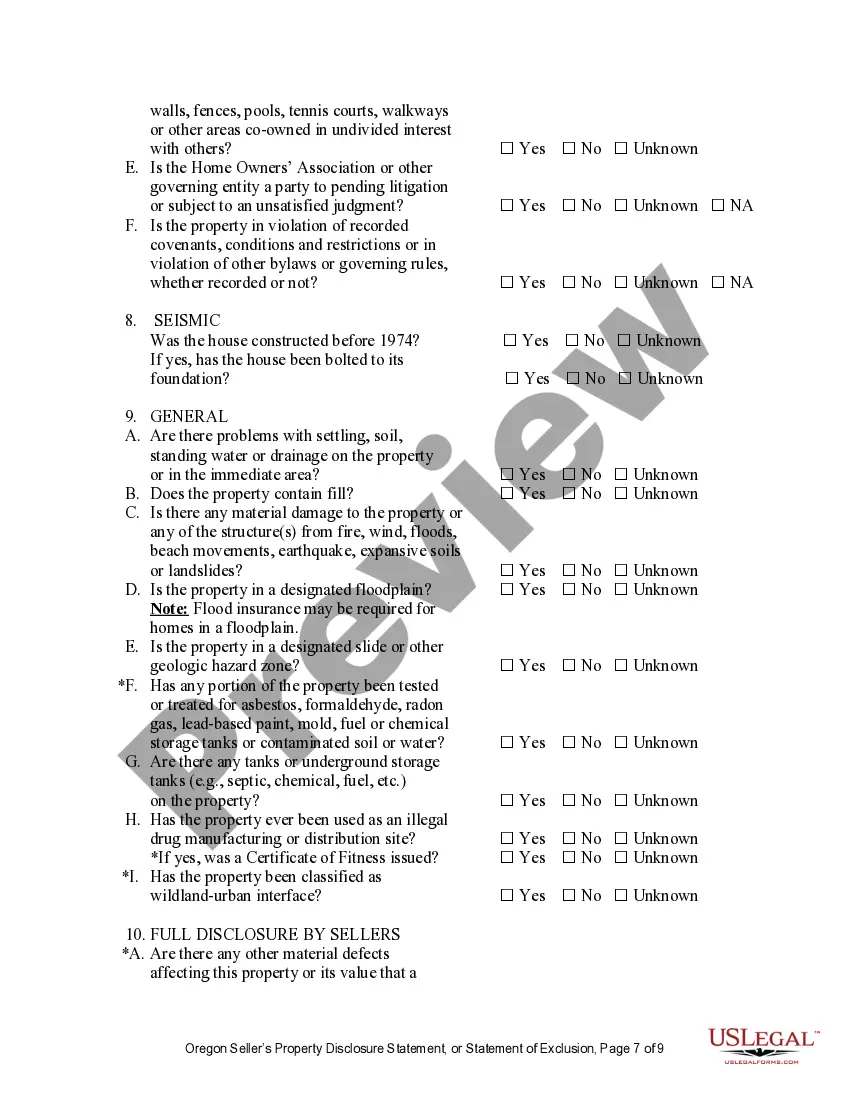
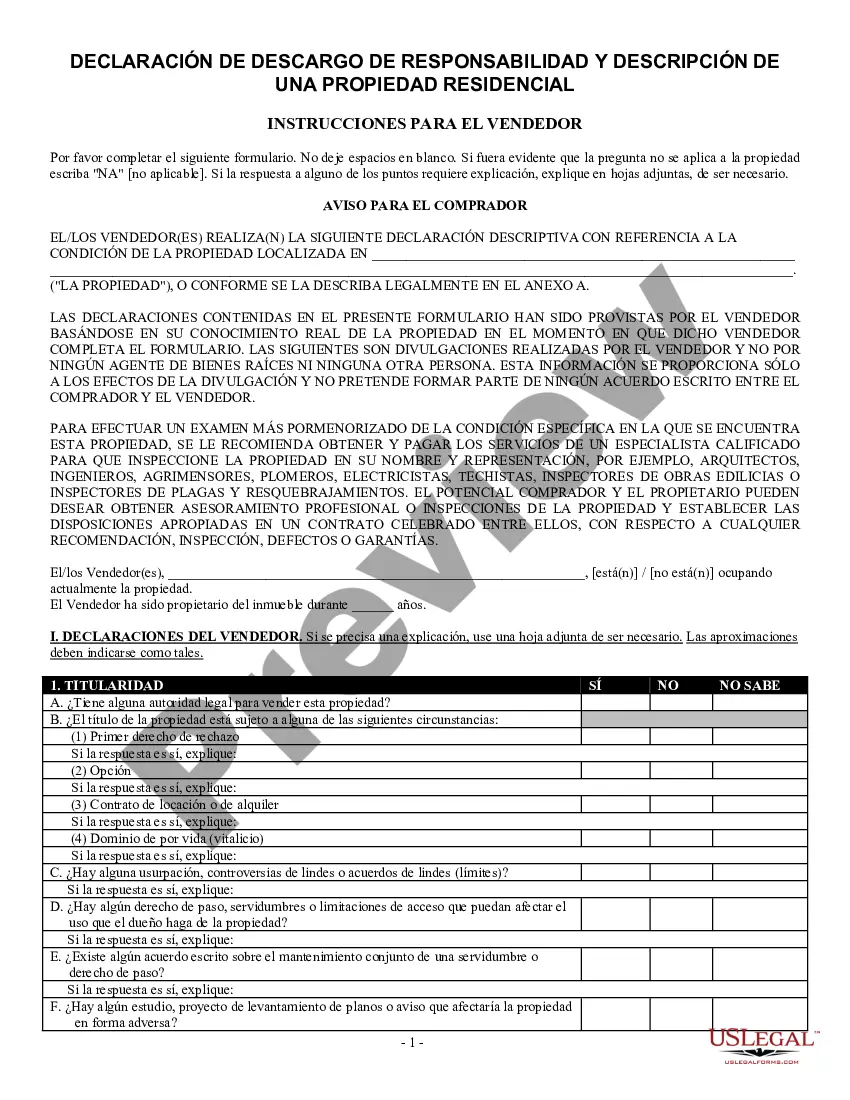
- Section 2: Seller's representations regarding the property's condition, including structural issues and system functionality.
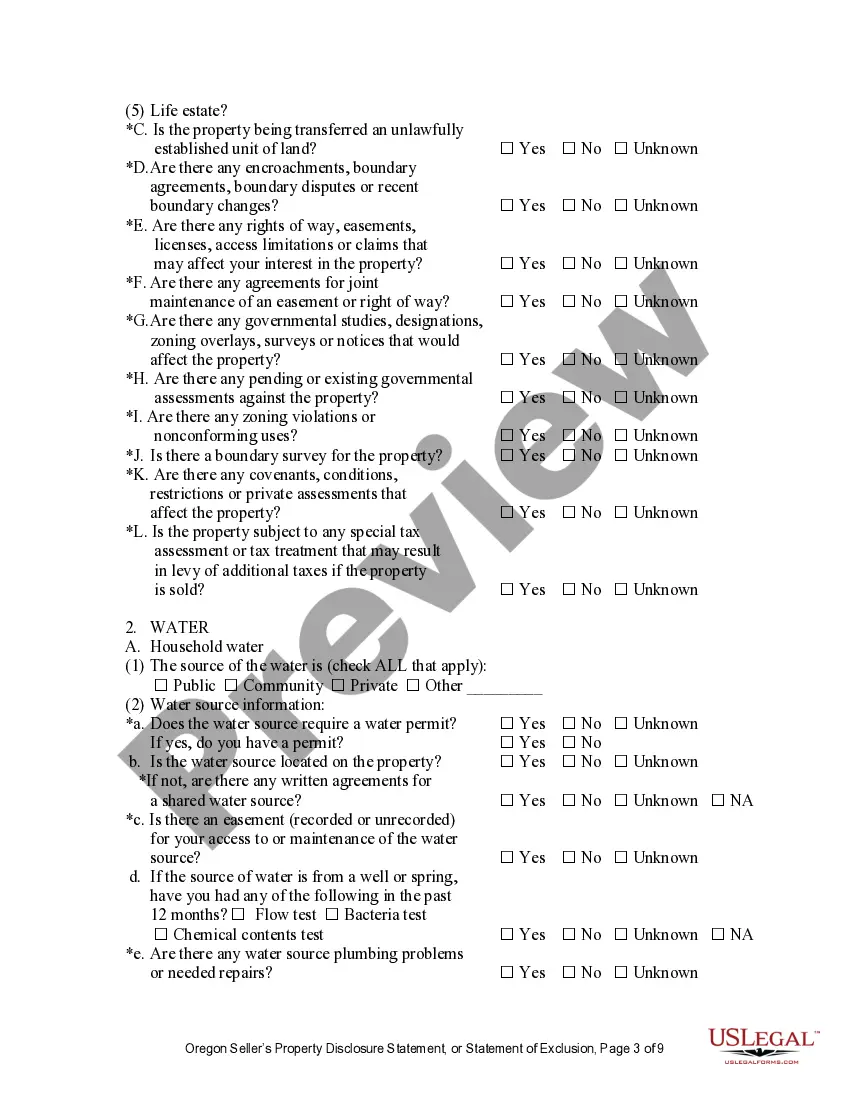
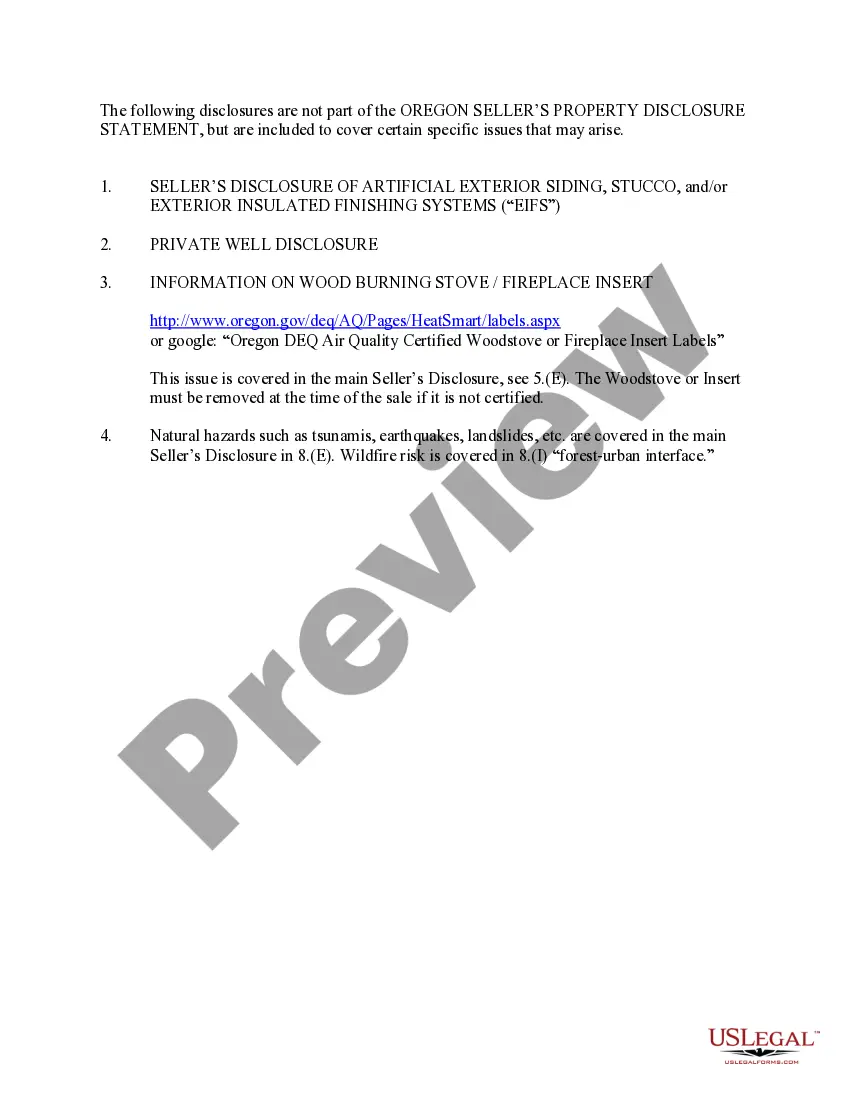
- Detailed questions covering title, water, sewage systems, dwelling structure, and environmental hazards.
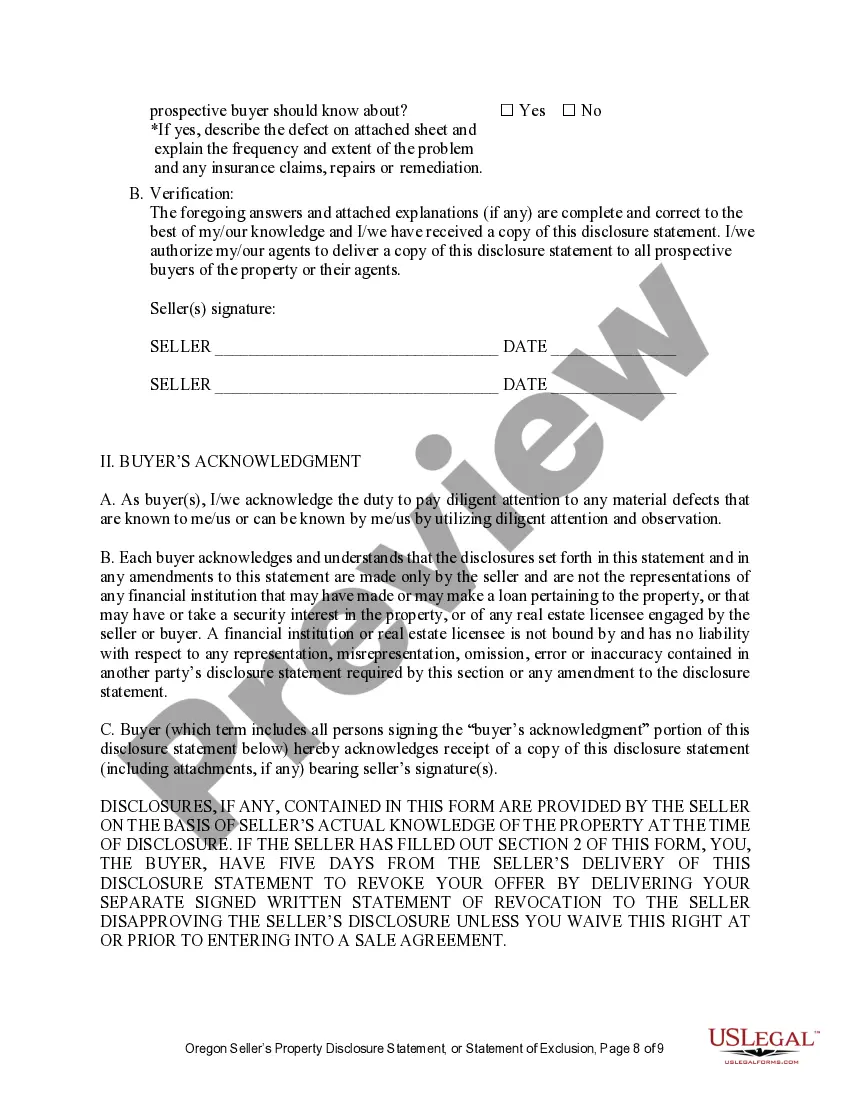
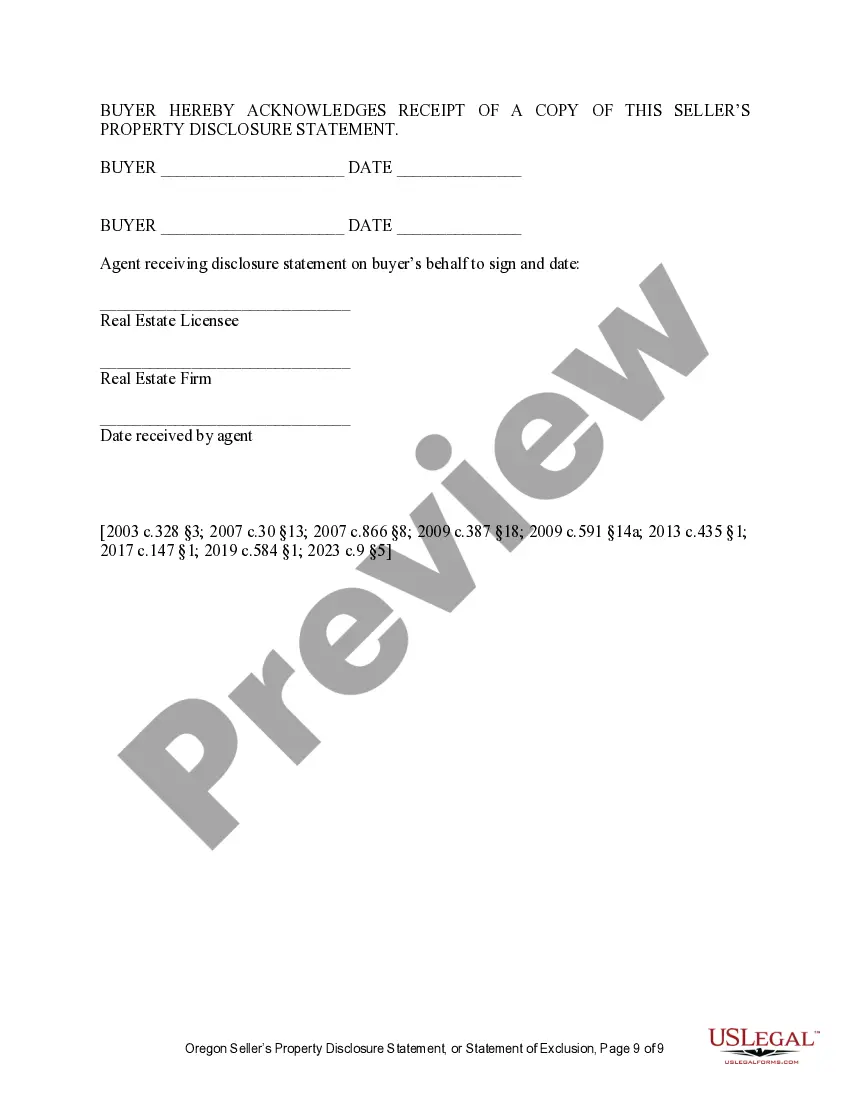
- Buyer's acknowledgment of the disclosure and their rights to revoke an offer based on the information provided.
- Verification statement allowing sellers to affirm the accuracy of their disclosures.

When to use this form
This form should be used whenever a residential property is being sold in Oregon. It is important for sellers to provide this disclosure statement to buyers as part of the purchase process. The form serves as a protective measure for both parties, ensuring that buyers are fully informed of any issues with the property, which may influence their decision to proceed with the transaction.
Who this form is for
Eligible users of this form include:
- Sellers of residential properties in Oregon.
- Real estate agents representing sellers or buyers in negotiations.
- Buyers seeking to understand the condition of a property before completing a purchase.
- Legal professionals advising on real estate transactions.
Completing this form step by step
- Identify the parties involved in the transaction, including the seller(s) and buyer(s).
- Complete Section 1 if claiming an exclusion, marking the specific reason and signing.
- If not claiming an exclusion, complete Section 2 by answering all questions regarding the property's condition.
- Ensure all fields are filled out completely, providing explanations where necessary.
- Sign and date each page of the form to validate the disclosures made.
Is notarization required?
This form does not typically require notarization unless specified by local law. However, it is important for sellers to sign each page to affirm the accuracy of the provided disclosures.
Get your form ready online
Our built-in tools help you complete, sign, share, and store your documents in one place.
Make edits, fill in missing information, and update formatting in US Legal Forms—just like you would in MS Word.
Download a copy, print it, send it by email, or mail it via USPS—whatever works best for your next step.
Sign and collect signatures with our SignNow integration. Send to multiple recipients, set reminders, and more. Go Premium to unlock E-Sign.
If this form requires notarization, complete it online through a secure video call—no need to meet a notary in person or wait for an appointment.
We protect your documents and personal data by following strict security and privacy standards.

Make edits, fill in missing information, and update formatting in US Legal Forms—just like you would in MS Word.

Download a copy, print it, send it by email, or mail it via USPS—whatever works best for your next step.

Sign and collect signatures with our SignNow integration. Send to multiple recipients, set reminders, and more. Go Premium to unlock E-Sign.

If this form requires notarization, complete it online through a secure video call—no need to meet a notary in person or wait for an appointment.

We protect your documents and personal data by following strict security and privacy standards.
Common mistakes
- Leaving sections of the form blankâevery field must be completed or appropriately marked.
- Failing to provide required signatures on each page of the disclosure statement.
- Not clearly understanding or stating the exclusions claimed, which can lead to misunderstandings with buyers.
- Using vague language in explanations, which may not provide the necessary detail to the buyer.
Advantages of online completion
- Convenience of downloading and completing the form at your own pace without time constraints.
- Easy access to updates and revisions of the form to ensure compliance with current laws.
- Editable digital form that simplifies the process for making necessary changes before finalization.
- Access to guidance and support from licensed attorneys throughout the form completion process.
- The disclosure statement is legally binding and must present accurate information known by the seller.
- Sellers are protected from claims regarding undisclosed property issues as long as they have completed the form accurately.
- Buyers retain the right to revoke their offer within five days if discrepancies are found.
What to keep in mind
- The Residential Real Estate Sales Disclosure Statement is essential for ensuring transparency in property sales.
- Completing the form accurately protects sellers and informs buyers of potential issues.
- Oregon law mandates the use of this form in residential transactions, emphasizing its legal importance.
Looking for another form?
Form popularity
FAQ
Do not exclude any information. Be honest. Write clearly. Use simple words in writing your income statement for disclosure. Attach necessary documents to your disclosure statement. Review and revise.
Who Must Make These Seller Disclosures in California. As a broad rule, all sellers of residential real estate property containing one to four units in California must complete and provide written disclosures to the buyer.
It includes the name of the organization, the party of the loans, approval, date, and place at which the document was signed, key terms such as tenure of the loan, interest charged, annual percentage rate, total processing fees, loan statement, prepayment terms, and various other information including the terms
The typical seller disclosure form is several pages long, and it asks the seller to report known defects in the home. This will include the appliances, as well as information about electrical, heating, sewer, water or other mechanical systems.
One question all sellers are required by law to answer on the Real Estate Transfer Disclosure Statement is whether there are any neighborhood noise problems or other nuisances. If the answer is yes, the seller must explain that answer in detail.
Oregon has no inheritance tax. When state residents and individuals who own property in the state begin their estate planning process, they may need to take Oregon's estate tax into consideration.
If you're a resident of Oregon and leave an estate of more than $1 million, your estate may have to pay Oregon estate tax. The $1 million exemption is the current figure; the law in effect at your death will apply to your estate.
Under Oregon law, a small estate affidavit can be filed if the estate has no more than $75,000 in personal property and no more that $200,000 in real property. These limits may be subject to change. A larger estate may require probate.
In Oregon, you can make a living trust to avoid probate for virtually any asset you ownreal estate, bank accounts, vehicles, and so on. You need to create a trust document (it's similar to a will), naming someone to take over as trustee after your death (called a successor trustee).