Oregon Warranty Deed from Individual to Corporation
What this document covers
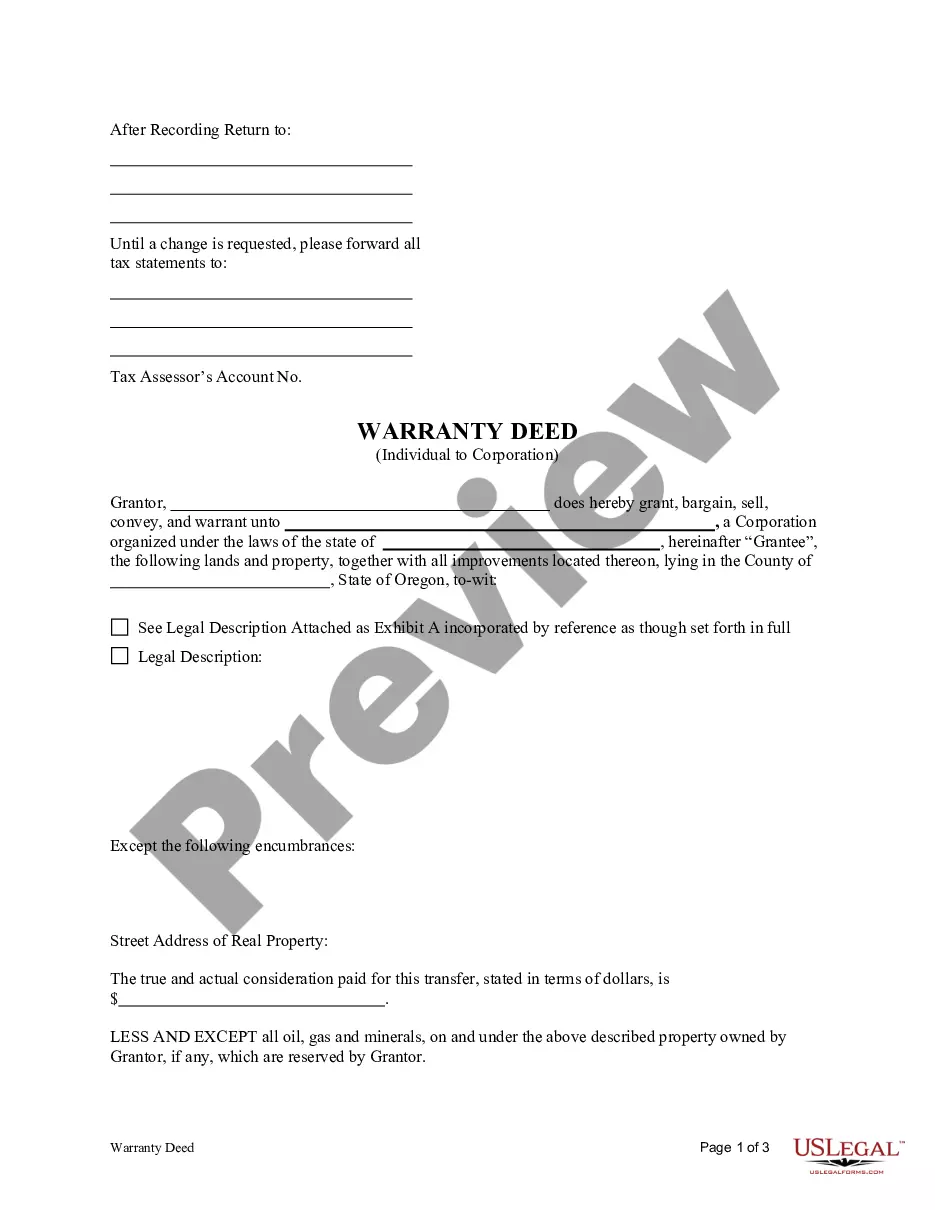
The Warranty Deed from Individual to Corporation is a legal document used to transfer property ownership from an individual (the grantor) to a corporation (the grantee). This form ensures that the grantor conveys clear title to the property, while explicitly reserving any rights to oil, gas, and minerals beneath the land. Unlike other property transfer forms, this warranty deed specifically addresses the rights and assurances relevant to corporate entities as grantees.
Key components of this form
- Identification of the grantor (individual) and grantee (corporation)
- Legal description of the property being transferred
- Warranties regarding the grantor's clear title to the property
- Reservation of rights to minerals under the property
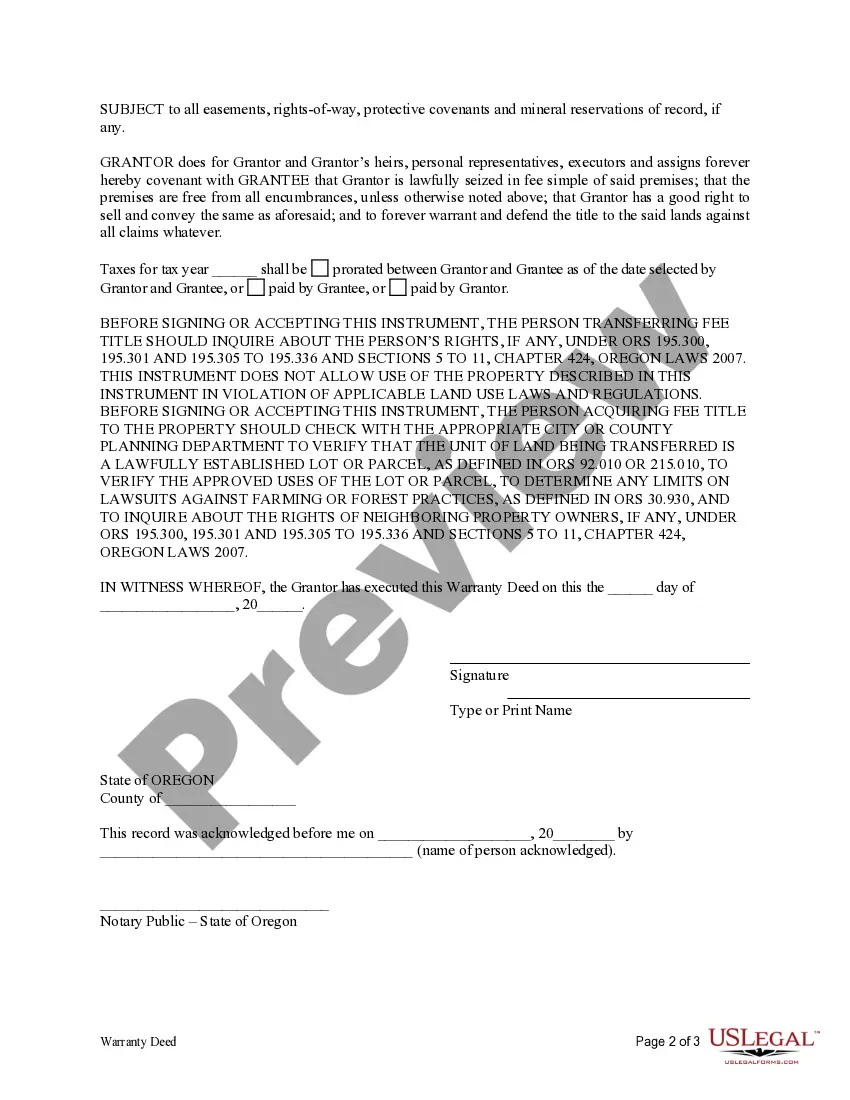
- Provisions for proration of property taxes for the current tax year
- Signature and date line for the execution of the deed


When to use this form
This form is typically used when an individual wishes to transfer ownership of real estate to a corporation. This may occur in various scenarios, such as a private owner selling property to their own business for operational purposes, or when an individual is structuring an estate plan that involves transferring property into a corporate entity. It is crucial to use this deed when the transaction requires the grantor to provide warranties of title to ensure the grantee's security in ownership.
Who can use this document
- Individuals who own property and wish to convey it to a corporation
- Corporate representatives acting on behalf of a corporation acquiring property
- Real estate professionals involved in property transfers between individuals and corporations
- Estate planners looking to structure ownership transfers involving corporate entities
How to prepare this document
- Identify the parties involved by providing the full legal names of both the grantor and the grantee.
- Clearly describe the property being transferred, including its legal description.
- Specify any reservations, such as the rights to oil, gas, and minerals, if applicable.
- Determine and indicate how property taxes will be handled for the current tax year.
- Have the grantor sign and date the deed in the specified section.
Notarization guidance
To make this form legally binding, it must be notarized. Our online notarization service, powered by Notarize, lets you verify and sign documents remotely through an encrypted video session.
Get your form ready online
Our built-in tools help you complete, sign, share, and store your documents in one place.
Make edits, fill in missing information, and update formatting in US Legal Forms—just like you would in MS Word.
Download a copy, print it, send it by email, or mail it via USPS—whatever works best for your next step.
Sign and collect signatures with our SignNow integration. Send to multiple recipients, set reminders, and more. Go Premium to unlock E-Sign.
If this form requires notarization, complete it online through a secure video call—no need to meet a notary in person or wait for an appointment.
We protect your documents and personal data by following strict security and privacy standards.
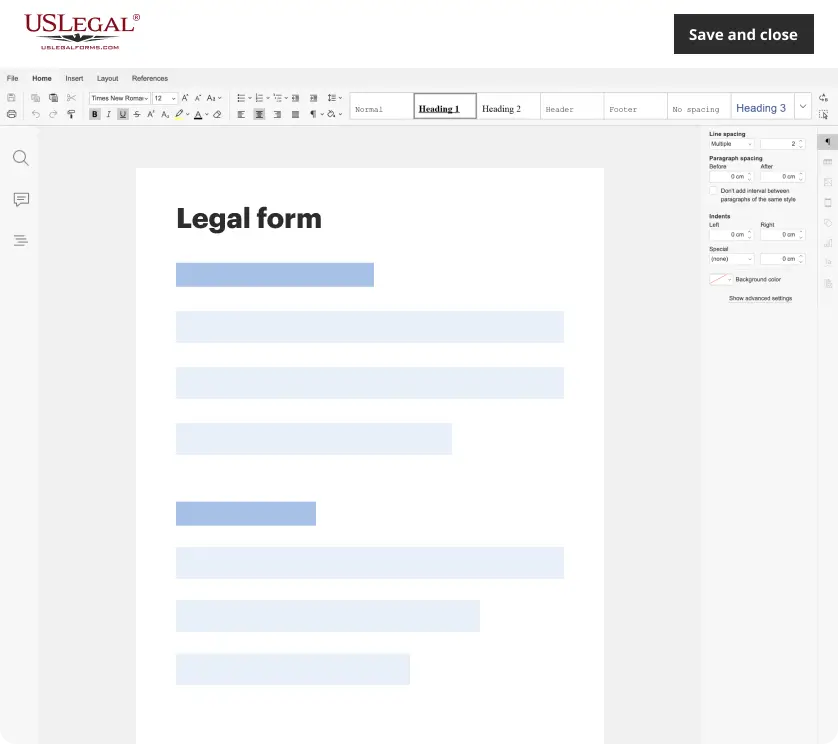
Make edits, fill in missing information, and update formatting in US Legal Forms—just like you would in MS Word.
Download a copy, print it, send it by email, or mail it via USPS—whatever works best for your next step.
Sign and collect signatures with our SignNow integration. Send to multiple recipients, set reminders, and more. Go Premium to unlock E-Sign.

If this form requires notarization, complete it online through a secure video call—no need to meet a notary in person or wait for an appointment.
We protect your documents and personal data by following strict security and privacy standards.
Typical mistakes to avoid
- Failing to include a complete legal description of the property.
- Not specifying the reservation of mineral rights when applicable.
- Omitting required signatures or improperly dating the document.
- Neglecting to properly notify all parties about the proration of property taxes.
Why complete this form online
- Convenience of downloading and completing the form at your own pace.
- Editability allows for adjustments based on specific circumstances.
- Access to forms drafted by licensed attorneys for reliability.
Looking for another form?

Form popularity
FAQ
Bargain and sale deeds are statutory in Oregon under ORS 93.860. A bargain and sale deed conveys the grantor's "entire interest in the described property at the date of the deed which the deed purports to convey" but does not provide covenants of title (ORS 93.860(2, 3)).
Generally, someone else cannot remove you from title without your consent and/or knowledge. You should speak to a local real estate attorney to see how to return your name to title and how it was removed in the first place.
Retrieve your original deed. Get the appropriate deed form. Draft the deed. Sign the deed before a notary. Record the deed with the county recorder. Obtain the new original deed.
A conveyance of land in Oregon, or of any estate or interest therein located in Oregon, can be created, transferred, or declared by a deed in writing and should be signed by the person of lawful age (or their agent) from whom the estate or interest is intended to pass.
Discuss the terms of the deed with the new owners. Hire a real estate attorney to prepare the deed. Review the deed. Sign the deed in front of a notary public, with witnesses present. File the deed on public record.
A special warranty deed to real estate offers protection to the buyer through the seller's guarantee that the title has been free and clear of encumbrances during their ownership of the property. It does not guarantee clear title beyond their ownership.
A warranty deed conveys an interest in real property to the named grantee with full warranties of title. Warranty deeds are statutory in Oregon under ORS 93.850, and they convey real property in fee simple with the most assurance of title.Generally, real property is owned in either sole ownership or in co-ownership.
The Oregon special warranty deed is a legal document transferring property from an owner of an interest in property to another person. This is a warranty deed, but the warranty is limited to the time frame involving seller's ownership of the property.
Adding someone to your house deed requires the filing of a legal form known as a quitclaim deed. When executed and notarized, the quitclaim deed legally overrides the current deed to your home. By filing the quitclaim deed, you can add someone to the title of your home, in effect transferring a share of ownership.