Oregon Notice of Filing of Lien Claim - Individual
Overview of this form
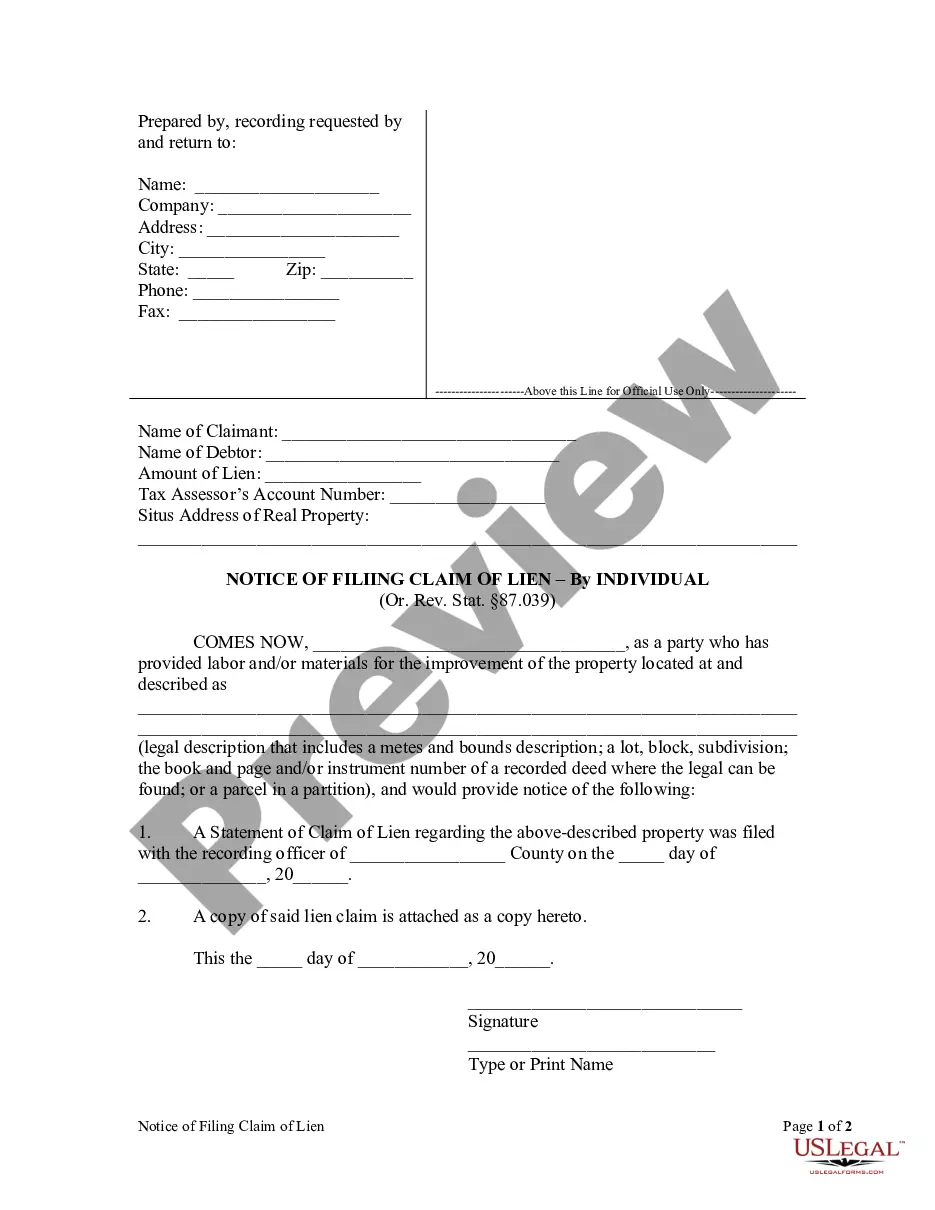
The Notice of Filing of Lien Claim - Individual is a legal document essential for individuals claiming a lien under Oregon law. This form is used to formally notify relevant parties about the filing of a lien against a property for unpaid labor, materials, or equipment. Unlike similar forms, this specific notice emphasizes acknowledgment of the work completed and deadlines for filing, ensuring the claimant's rights to payment are secured.
What’s included in this form
- Name of the claimant and debtor.
- Amount of the lien being claimed.
- Tax assessor's account number.
- Legal description of the property.
- Date of filing the claim of lien.
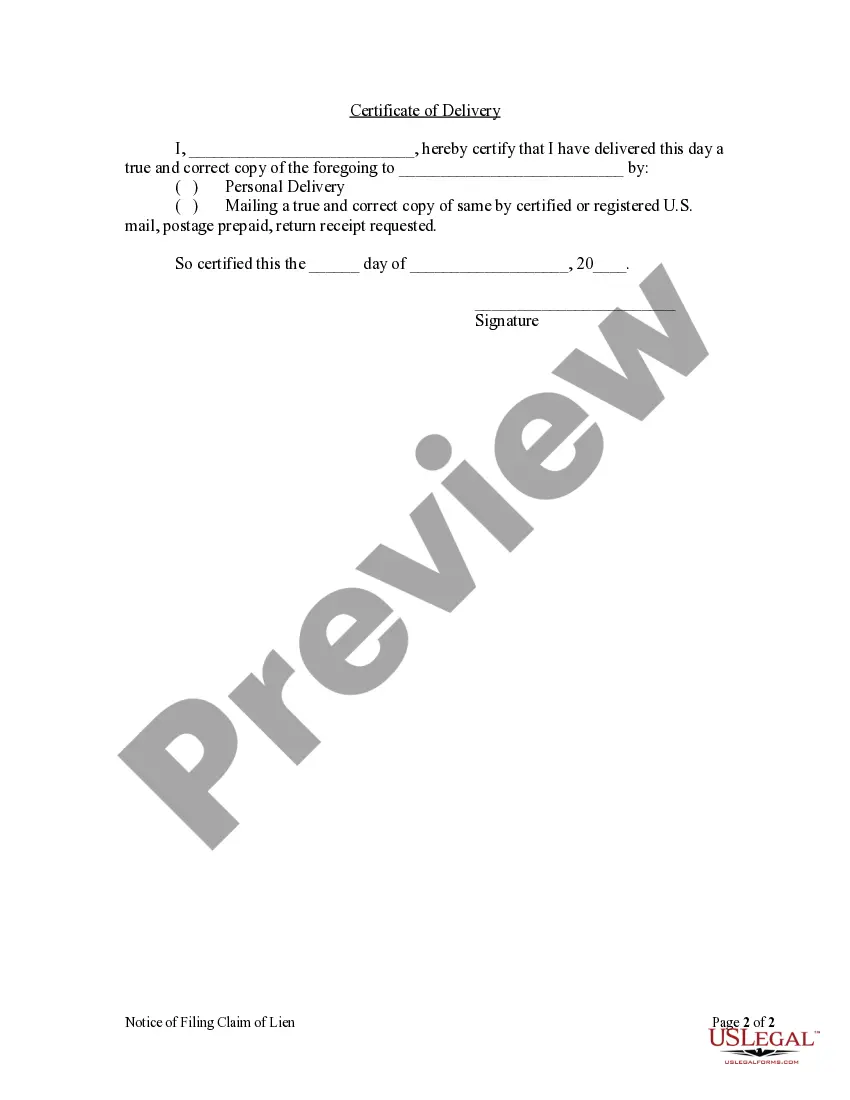
- Signature of the claimant and certification of delivery.
When to use this form
This form should be used when an individual has provided labor or materials for property improvement and needs to establish a legal claim against the property due to non-payment. It is crucial to file this document within 75 days after either ceasing work or completing the construction to secure the right to enforce the lien.
Who this form is for
- Individuals or sole proprietors who have provided labor or materials for property improvements.
- Subcontractors or suppliers seeking to protect their right to payment.
- Anyone involved in construction projects where payment has not been received.
Steps to complete this form
- Identify and enter the names of the claimant and the debtor.
- Specify the amount of the lien being claimed.
- Provide the tax assessor's account number related to the property.
- Input the full legal description of the property, ensuring accuracy.
- Sign the document and date it appropriately.
- Certify delivery by indicating the method used to notify the debtor.
Is notarization required?
This form does not typically require notarization unless specified by local law. However, it is important to check local requirements to ensure compliance when filing your claim.
Get your form ready online
Our built-in tools help you complete, sign, share, and store your documents in one place.
Make edits, fill in missing information, and update formatting in US Legal Forms—just like you would in MS Word.
Download a copy, print it, send it by email, or mail it via USPS—whatever works best for your next step.
Sign and collect signatures with our SignNow integration. Send to multiple recipients, set reminders, and more. Go Premium to unlock E-Sign.
If this form requires notarization, complete it online through a secure video call—no need to meet a notary in person or wait for an appointment.
We protect your documents and personal data by following strict security and privacy standards.

Make edits, fill in missing information, and update formatting in US Legal Forms—just like you would in MS Word.

Download a copy, print it, send it by email, or mail it via USPS—whatever works best for your next step.

Sign and collect signatures with our SignNow integration. Send to multiple recipients, set reminders, and more. Go Premium to unlock E-Sign.

If this form requires notarization, complete it online through a secure video call—no need to meet a notary in person or wait for an appointment.

We protect your documents and personal data by following strict security and privacy standards.
Mistakes to watch out for
- Failing to file the notice within the 75-day deadline.
- Incomplete or incorrect legal description of the property.
- Not including the tax assessor's account number.
- Forgeting to sign the document before submission.
Why use this form online
- Easy access to customizable templates saved on your device.
- Editable fields to ensure accurate information.
- Convenient and time-efficient filing process.
- Reliability of legally vetted templates drafted by licensed attorneys.
Looking for another form?

Form popularity
FAQ
Who you are. The services or materials you provided. The last date you provided the services or materials. How much payment should be. The date on which you will file a lien if you do not receive payment. How the debtor should pay.
In Alberta, for example, your lien is valid for 180 days from the date the lien was placed. In Ontario, liens are only valid for 90 days from the date of last on site working.
Therefore, liens are not officially recorded, and personal property could be sold off to a third party who is unaware of the lien's existence. In most states, judgment liens must be filed by the creditor through the county or state.
In the state of Oregon, a lien must be filed within 75 days after the last day of performing labor or providing materials or within 75 days after the completion of construction.
2. States where the lien law doesn't require a written contract. In these states, contractors and suppliers are generally allowed to file a lien even if they don't have a written contract.These states typically permit parties with verbal, oral, or even implied contracts to claim lien rights.
To place a lien, you must first demonstrate that you have a valid debt that has not been paid by the property holder for example if you performed construction work as a contractor or subcontractor at company headquarters and the business did not pay your bill.
Step 1: Determine if you have the right to file a lien. Step 2: Send notice of right to lien. Step 3: Prepare the lien document. Step 4: File the lien. Step 5: Send notice of lien. Step 6: Secure payment. Step 7: Release the lien.
A contractor's lien (often known as a mechanic's lien, or a construction lien) is a claim made by contractors or subcontractors who have performed work on a property, and have not yet been paid.After all, contractors would rather work out a deal than go through the hassle of filing a lien against your property.
Step 1: Determine if you have the right to file a lien. Step 2: Send notice of right to lien. Step 3: Prepare the lien document. Step 4: File the lien. Step 5: Send notice of lien. Step 6: Secure payment. Step 7: Release the lien.