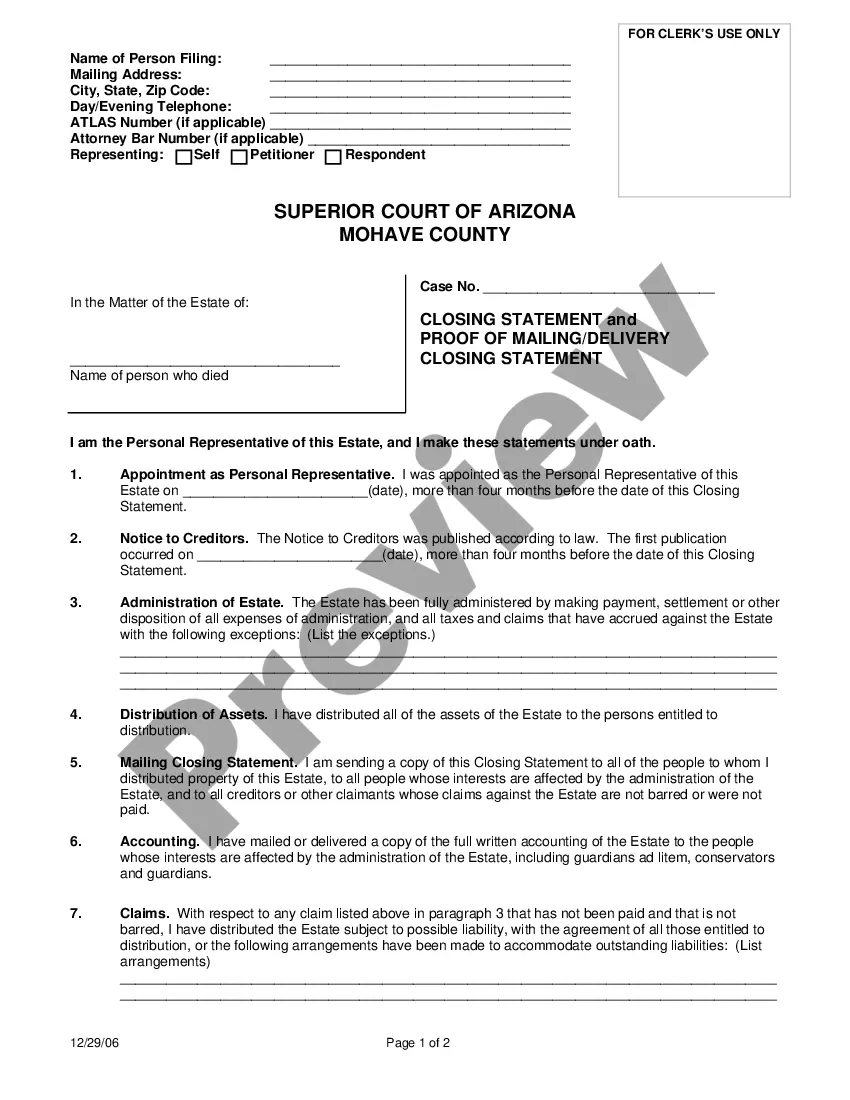
Oklahoma Living Trust for Husband and Wife with Minor and or Adult Children
What this document covers
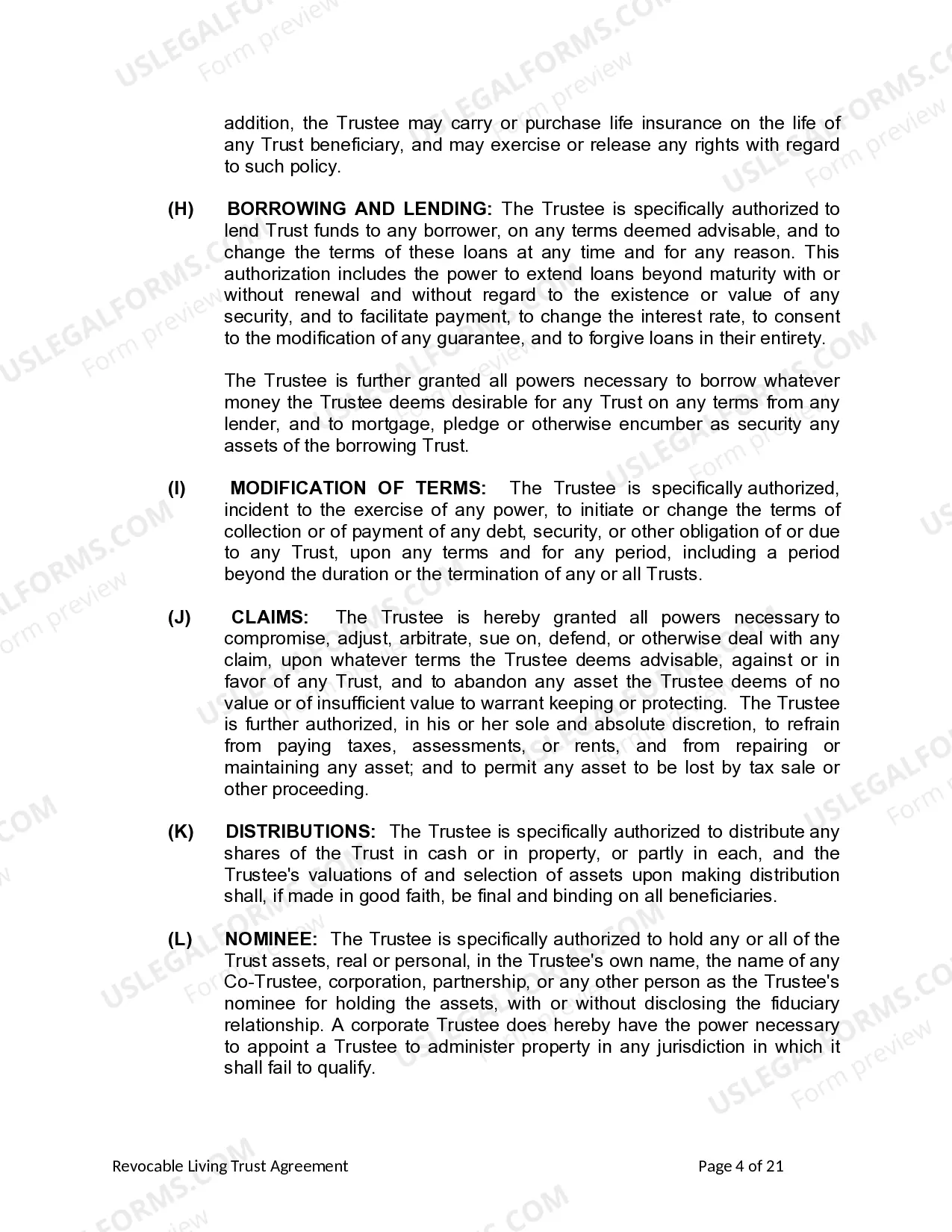
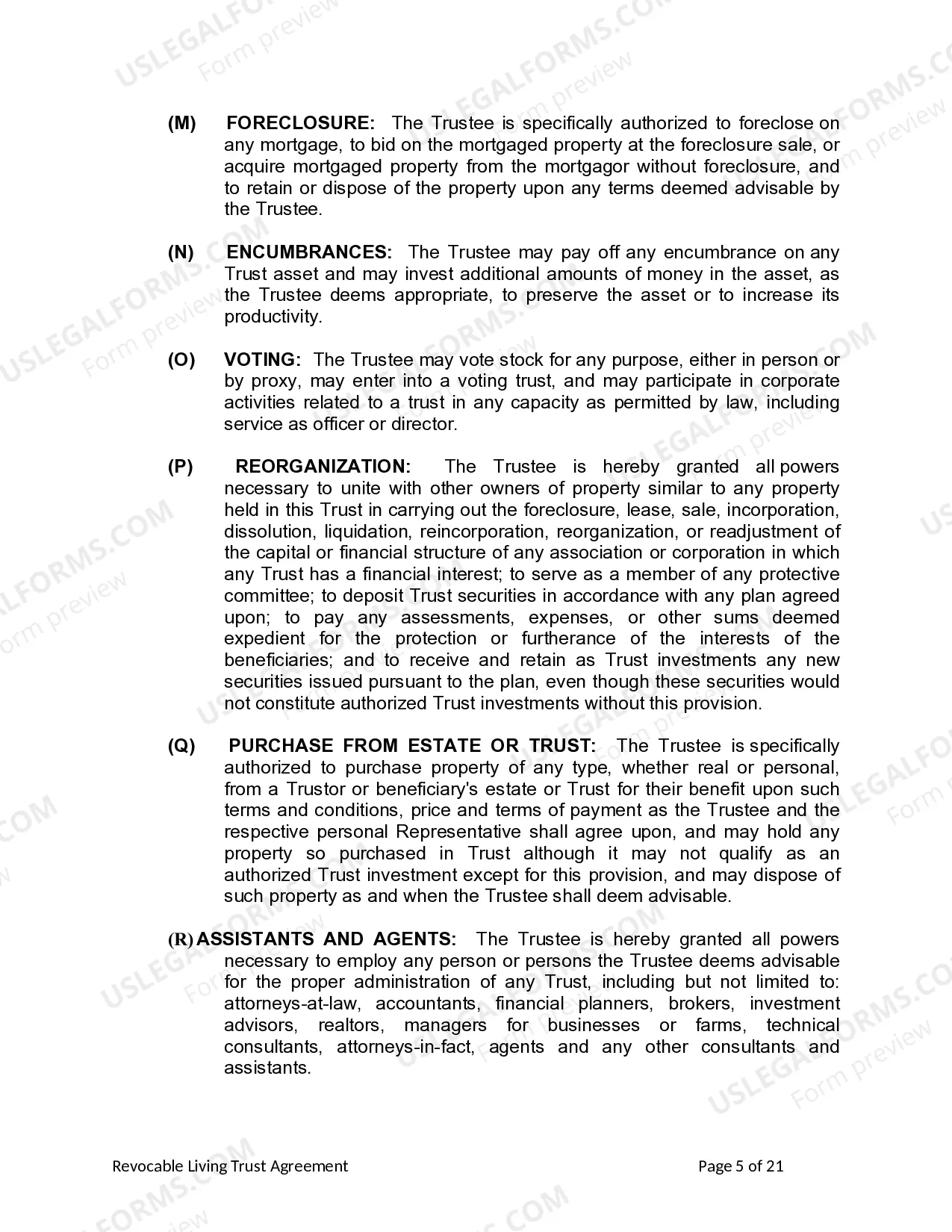
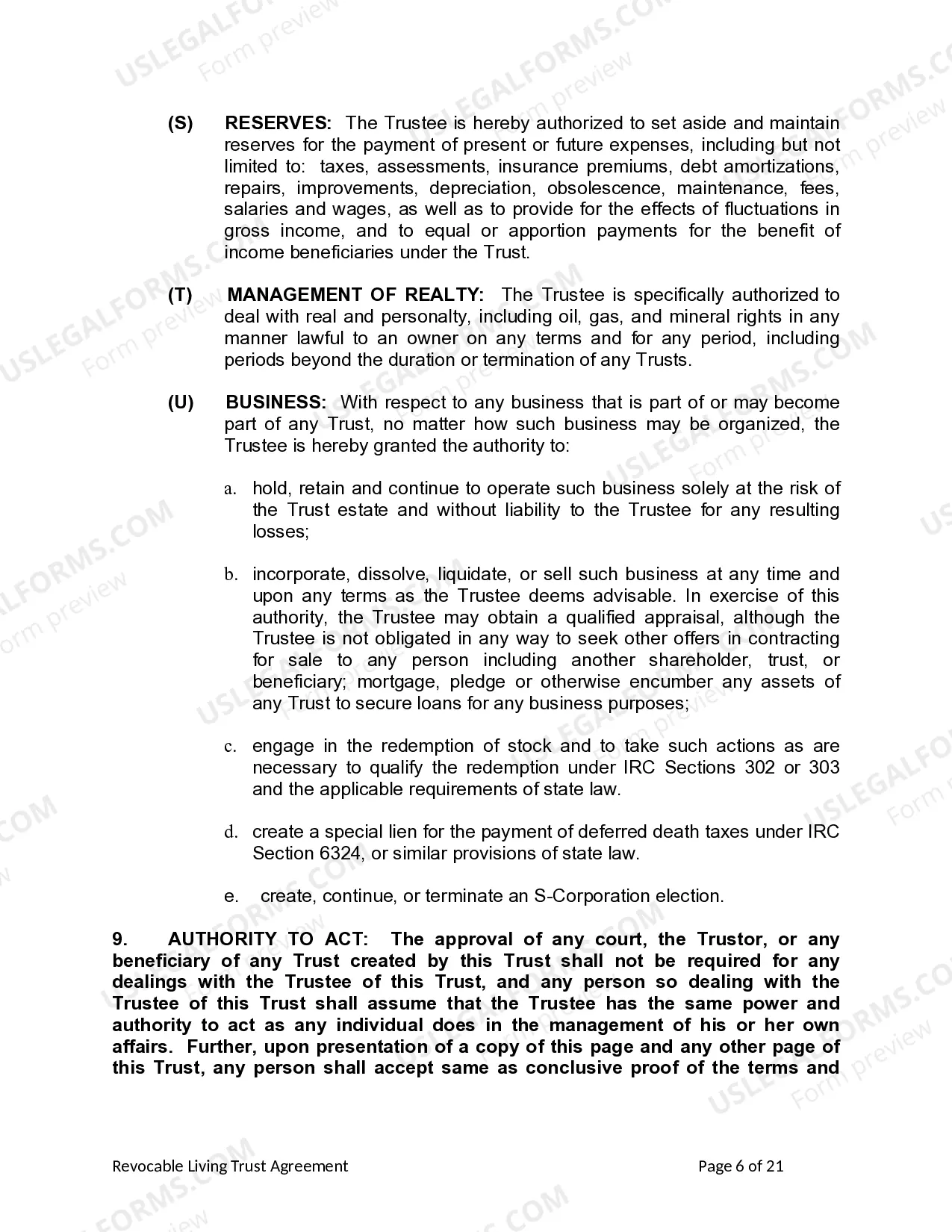
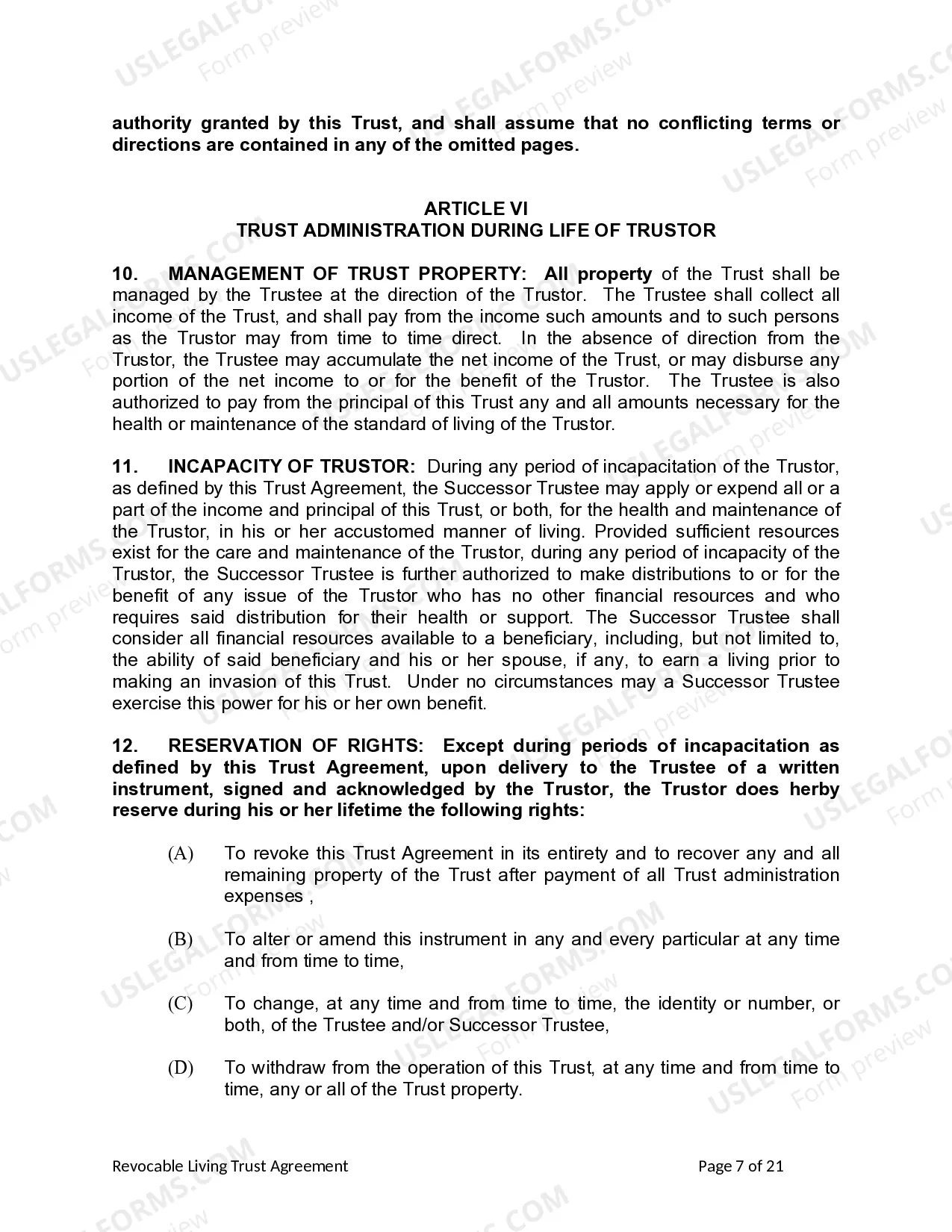
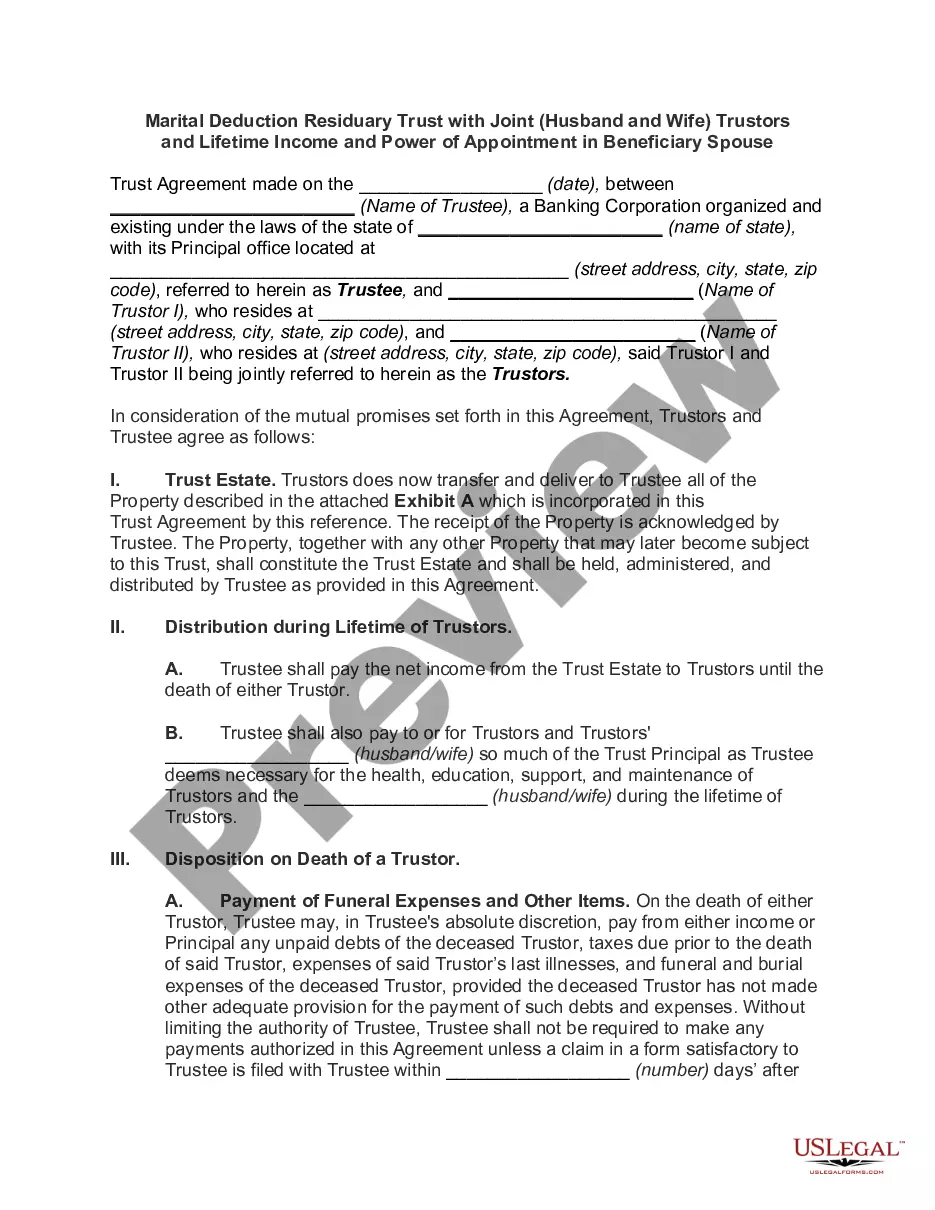
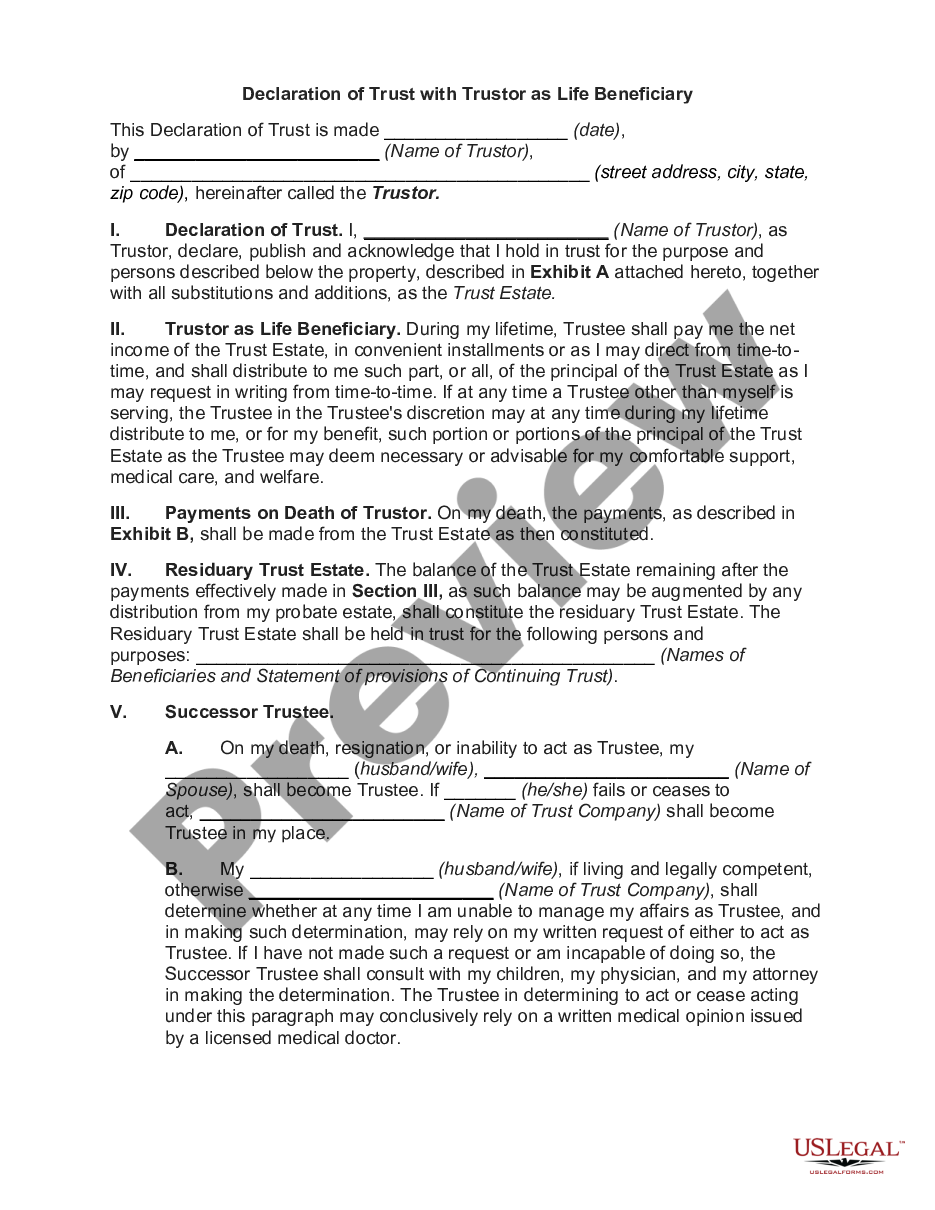
This Living Trust for Husband and Wife with Minor and/or Adult Children establishes a trust while both spouses are alive, enabling them to manage their combined assets during their lifetime. Unlike a will, a living trust allows for seamless transfer of assets without probate upon the death of one or both spouses. It is tailored specifically for couples who wish to manage their assets for the benefit of their children, whether they are minors or adults, ensuring control and protection of family wealth.
What’s included in this form
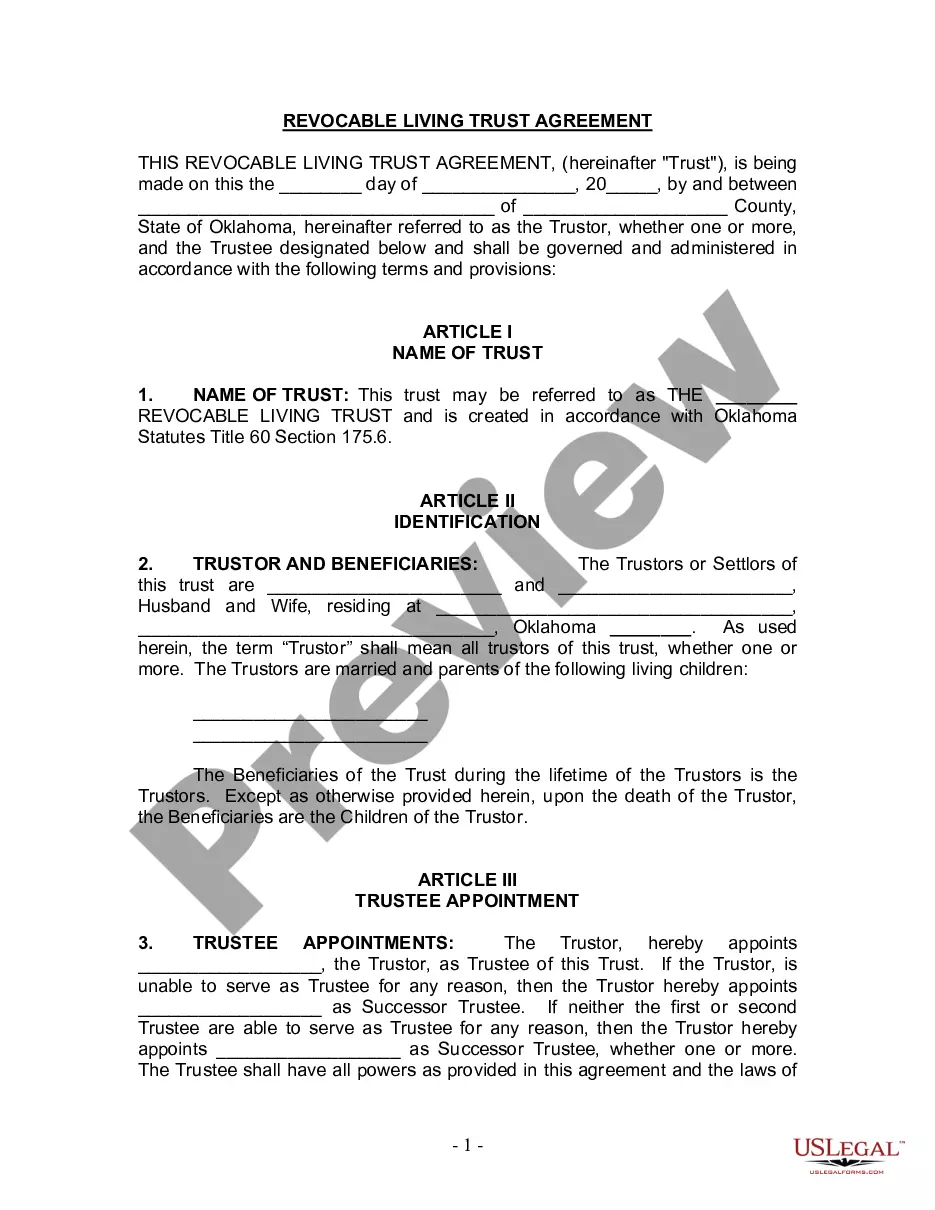
- Identification of Trustors and Beneficiaries.
- Appointment of Trustees, including successors.
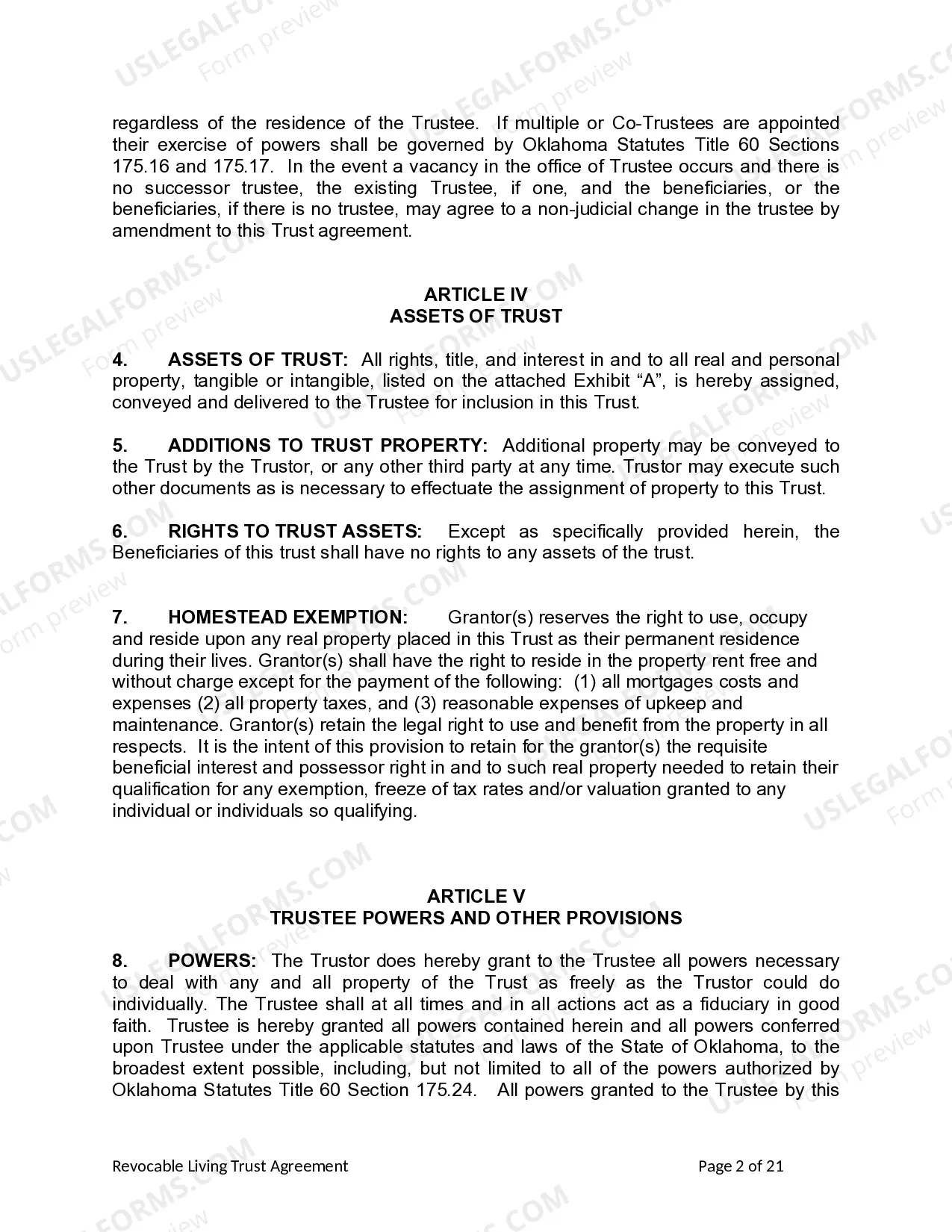
- Specification of Trust assets, including real and personal property.
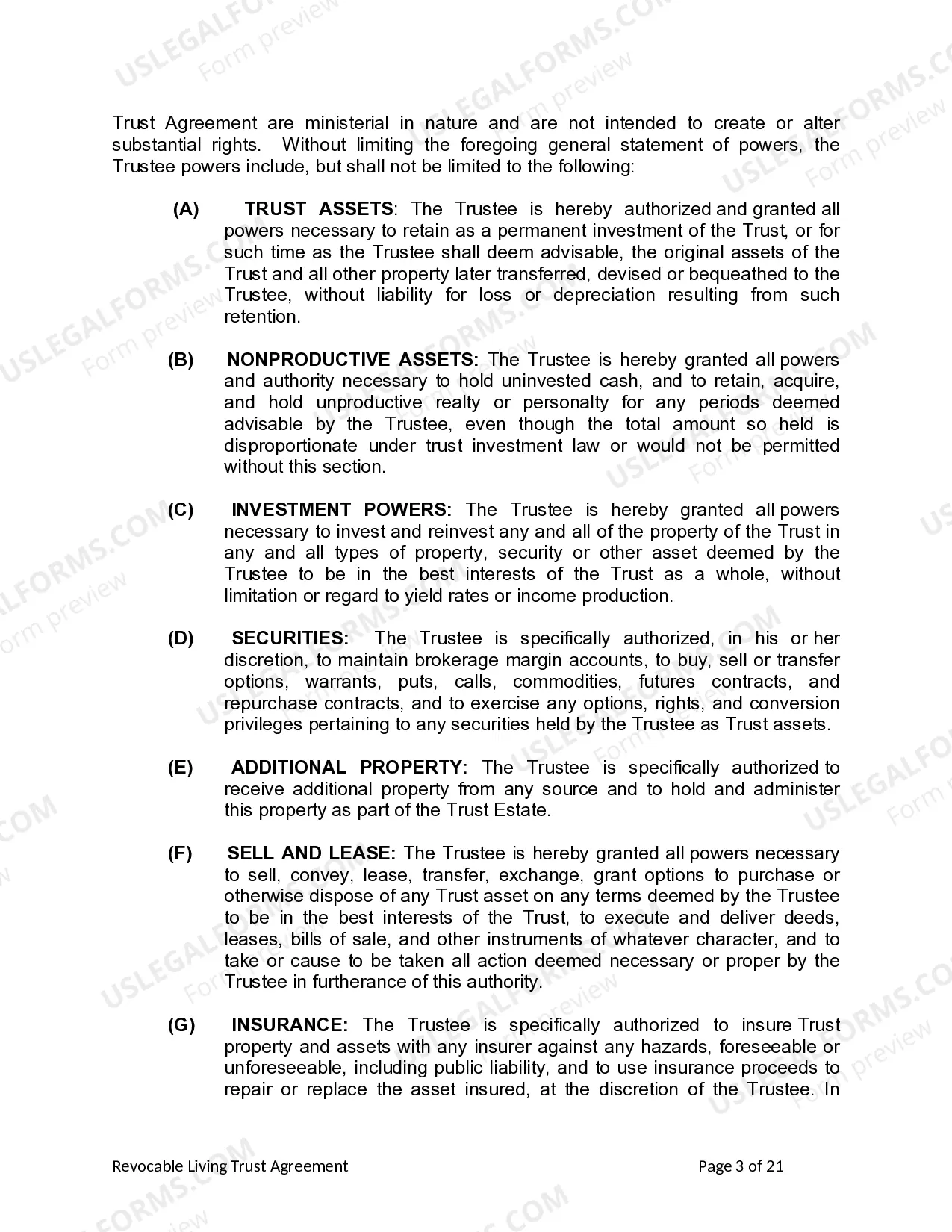
- Trustee powers and responsibilities.
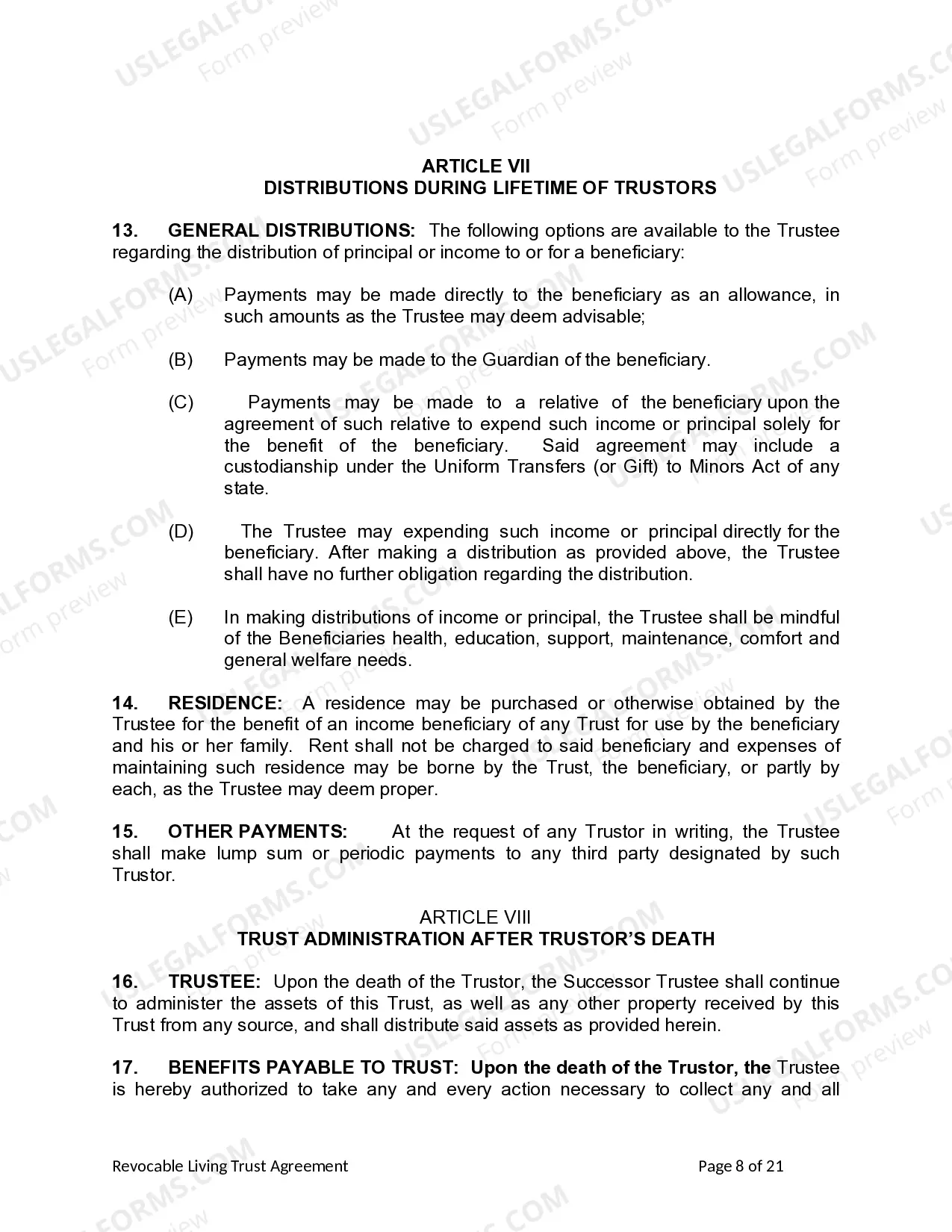
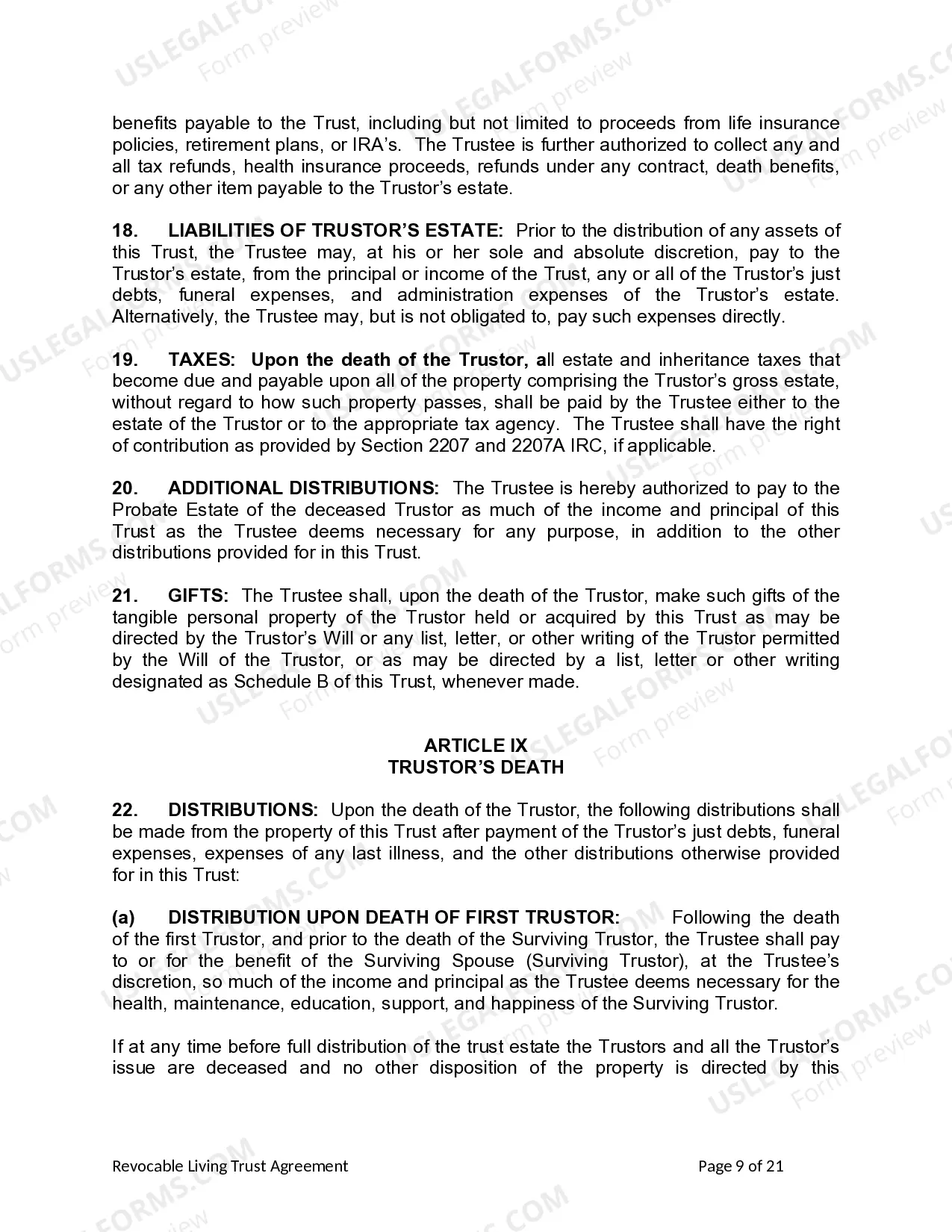
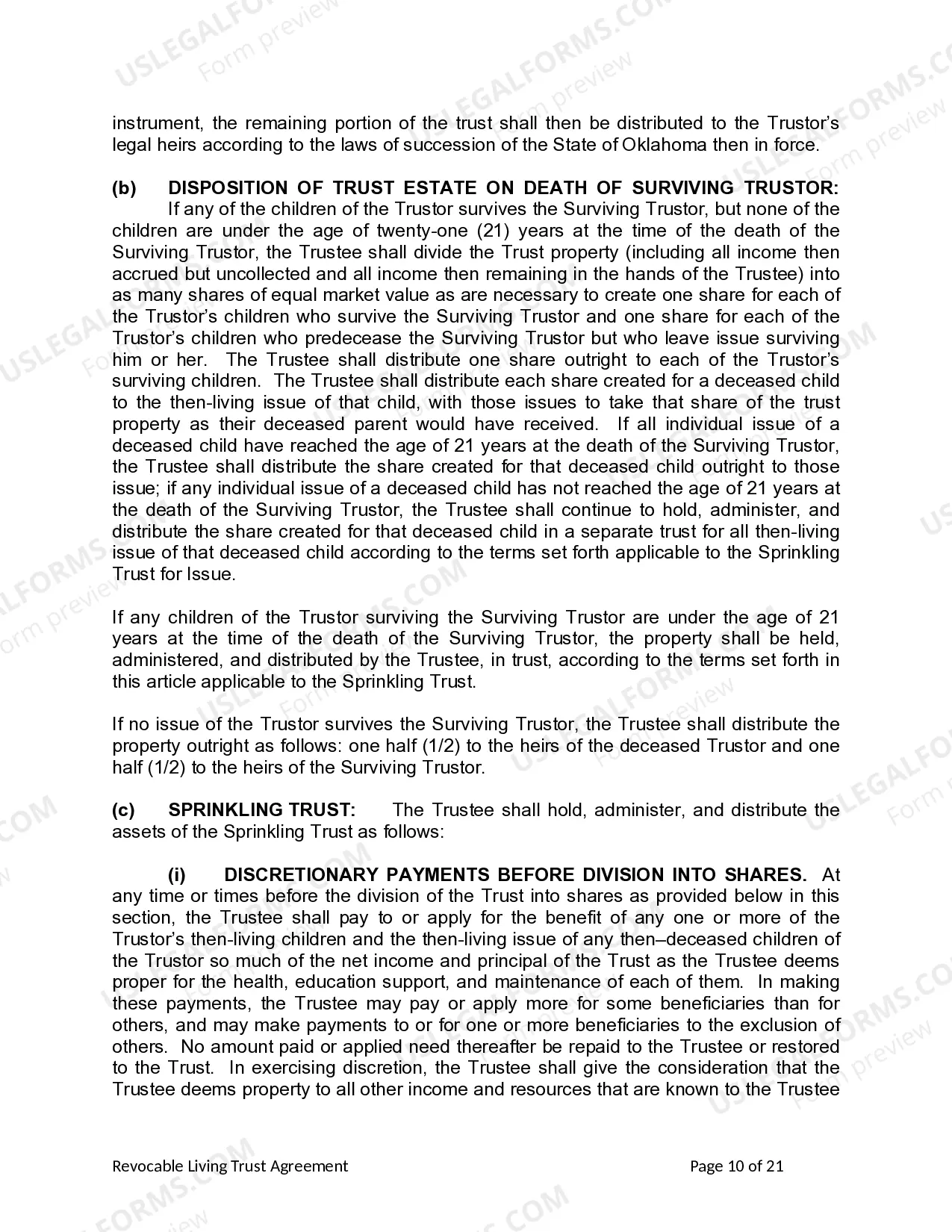
- Distribution of trust assets upon the death of the Trustor(s).



Situations where this form applies
This form is ideal for married couples who want to ensure that their assets are managed according to their wishes both during their lifetime and after their passing. Use this living trust to avoid the lengthy probate process, protect minor children, and simplify estate management. It is also useful if you want to maintain control over how and when your assets are distributed among your heirs.
Who this form is for
- Married couples with minor or adult children.
- Couples wishing to manage their assets together.
- Individuals looking for a more efficient way to transfer assets upon death.
- Those seeking to avoid the probate process.
Steps to complete this form
- Identify the Trustors (the husband and wife) and beneficiaries (the children).
- Appoint initial and successor Trustees who will manage the trust.
- List all assets to be included in the trust in the designated section.
- Specify the distribution wishes for the Trust upon the death of the Trustors.
- Ensure all parties sign the document in the presence of a notary if required.
Is notarization required?
This form must be notarized to be legally valid in Oklahoma. US Legal Forms offers integrated online notarization, providing a secure video call service for convenience and compliance.
Get your form ready online
Our built-in tools help you complete, sign, share, and store your documents in one place.
Make edits, fill in missing information, and update formatting in US Legal Forms—just like you would in MS Word.
Download a copy, print it, send it by email, or mail it via USPS—whatever works best for your next step.
Sign and collect signatures with our SignNow integration. Send to multiple recipients, set reminders, and more. Go Premium to unlock E-Sign.
If this form requires notarization, complete it online through a secure video call—no need to meet a notary in person or wait for an appointment.
We protect your documents and personal data by following strict security and privacy standards.

Make edits, fill in missing information, and update formatting in US Legal Forms—just like you would in MS Word.

Download a copy, print it, send it by email, or mail it via USPS—whatever works best for your next step.

Sign and collect signatures with our SignNow integration. Send to multiple recipients, set reminders, and more. Go Premium to unlock E-Sign.

If this form requires notarization, complete it online through a secure video call—no need to meet a notary in person or wait for an appointment.

We protect your documents and personal data by following strict security and privacy standards.
Common mistakes to avoid
- Failing to list all relevant assets in the trust.
- Not updating the trust after significant life events (births, deaths, marriage, divorce).
- Neglecting to appoint a successor trustee.
- Not having the document notarized when required.
Why complete this form online
- Convenient 24/7 access to legal documents without the need for in-person visits.
- Easy download and edit capabilities tailored to your specific needs.
- Reliability from templates drafted by licensed attorneys ensuring legal compliance.
Looking for another form?
Form popularity
FAQ
Pick a type of living trust. If you're married, you'll first need to decide whether you want a single or joint trust. Take stock of your property. Choose a trustee. Draw up the trust document. Sign the trust. Transfer your property to the trust.
There is no set price tag on setting up a living trust. It can range from just under $100 to more than $1,000. It all depends on how you create it and how complex your estate is. These days, you can shop around and find plenty of living trust software options.
You don't need a lawyer to complete most of your tasks during the first few months of a trust administration.If you'll be distributing all the trust property to beneficiaries quickly, you'll probably get most of your work done in about six months.
The process of funding your living trust by transferring your assets to the trustee is an important part of what helps your loved ones avoid probate court in the event of your death or incapacity. Qualified retirement accounts such as 401(k)s, 403(b)s, IRAs, and annuities, should not be put in a living trust.
The average cost for an attorney to create your trust ranges from $1,000 to $1,500 for an individual and $1,200 to $1,500 for a couple. Legal fees vary by location, so your costs could be much higher or slightly lower.
Choose whether to make an individual or shared trust. Decide what property to include in the trust. Choose a successor trustee. Decide who will be the trust's beneficiaries who will get the trust property. Create the trust document.
Funding a Trust Is Expensive... This is the major drawback to using a revocable living trust for many people, but it's not worth the time, money, and effort to create one if the trust isn't fully funded.
No, you don't need a lawyer to set up a trust, but it might be a good idea to seek legal advice to ensure the trust is set up correctly and that you have considered all long-term financial and estate planning aspects of the trust.Some living trusts are revocable, which means the trust can be changed at any time.
Paperwork. Setting up a living trust isn't difficult or expensive, but it requires some paperwork. Record Keeping. After a revocable living trust is created, little day-to-day record keeping is required. Transfer Taxes. Difficulty Refinancing Trust Property. No Cutoff of Creditors' Claims.