Oklahoma Commercial Rental Lease Application Questionnaire
About this form
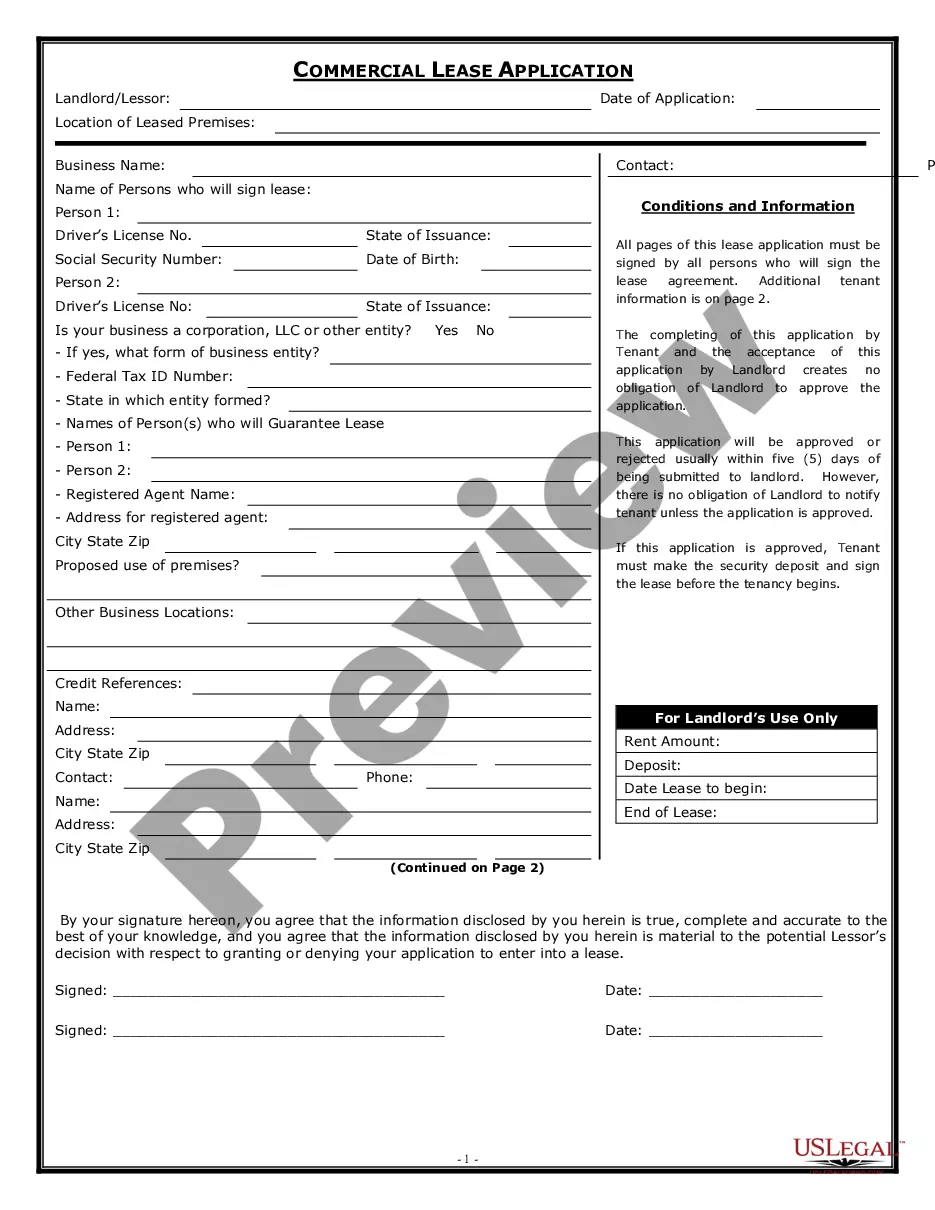
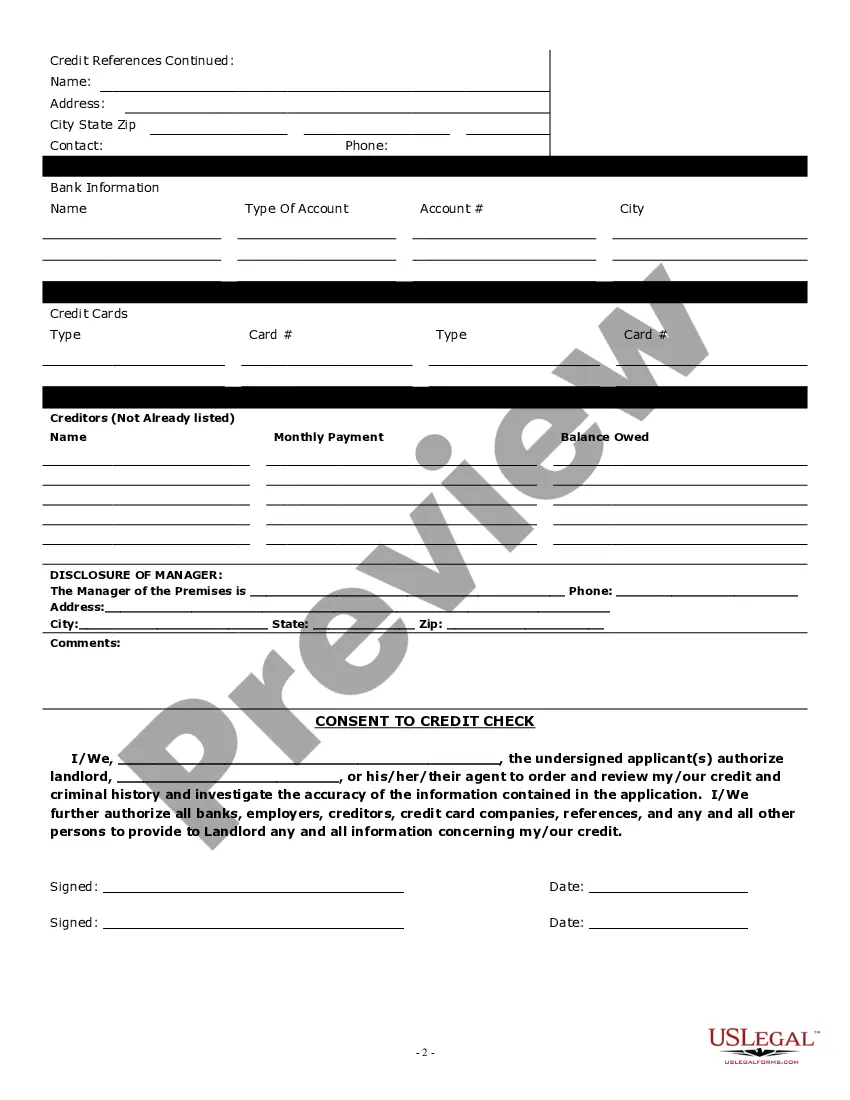
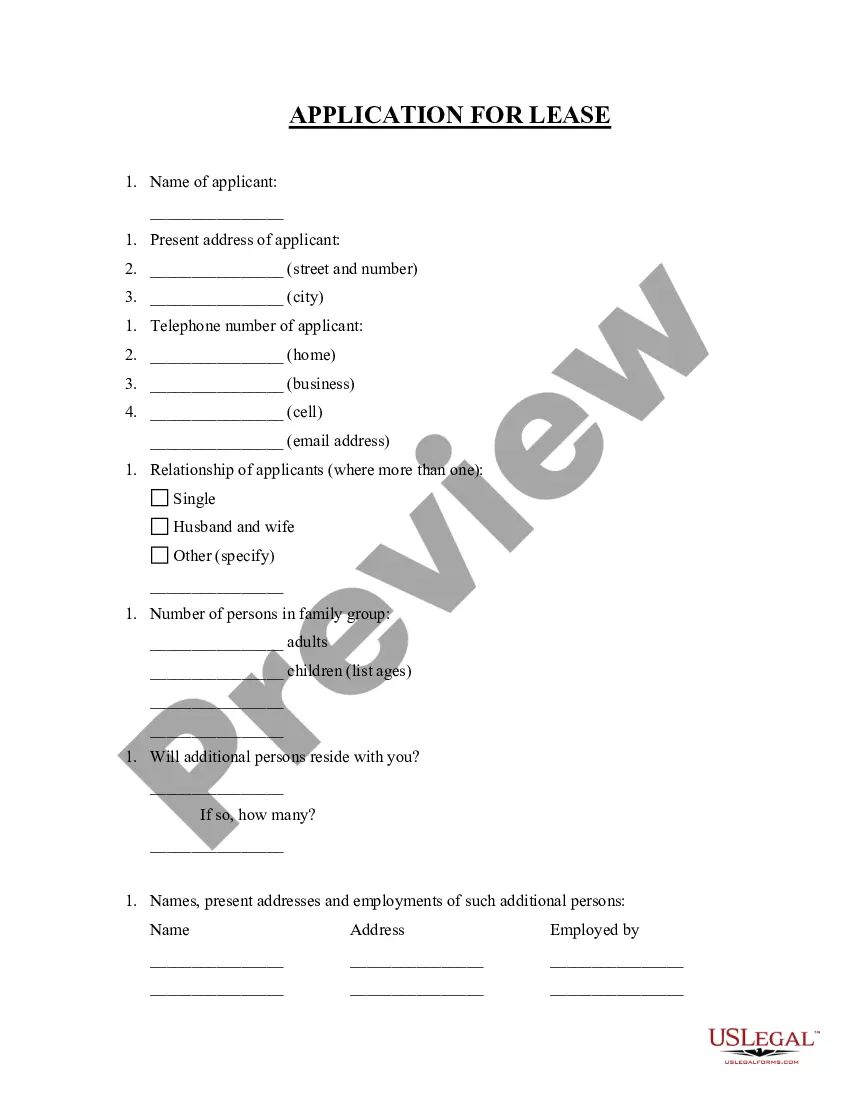
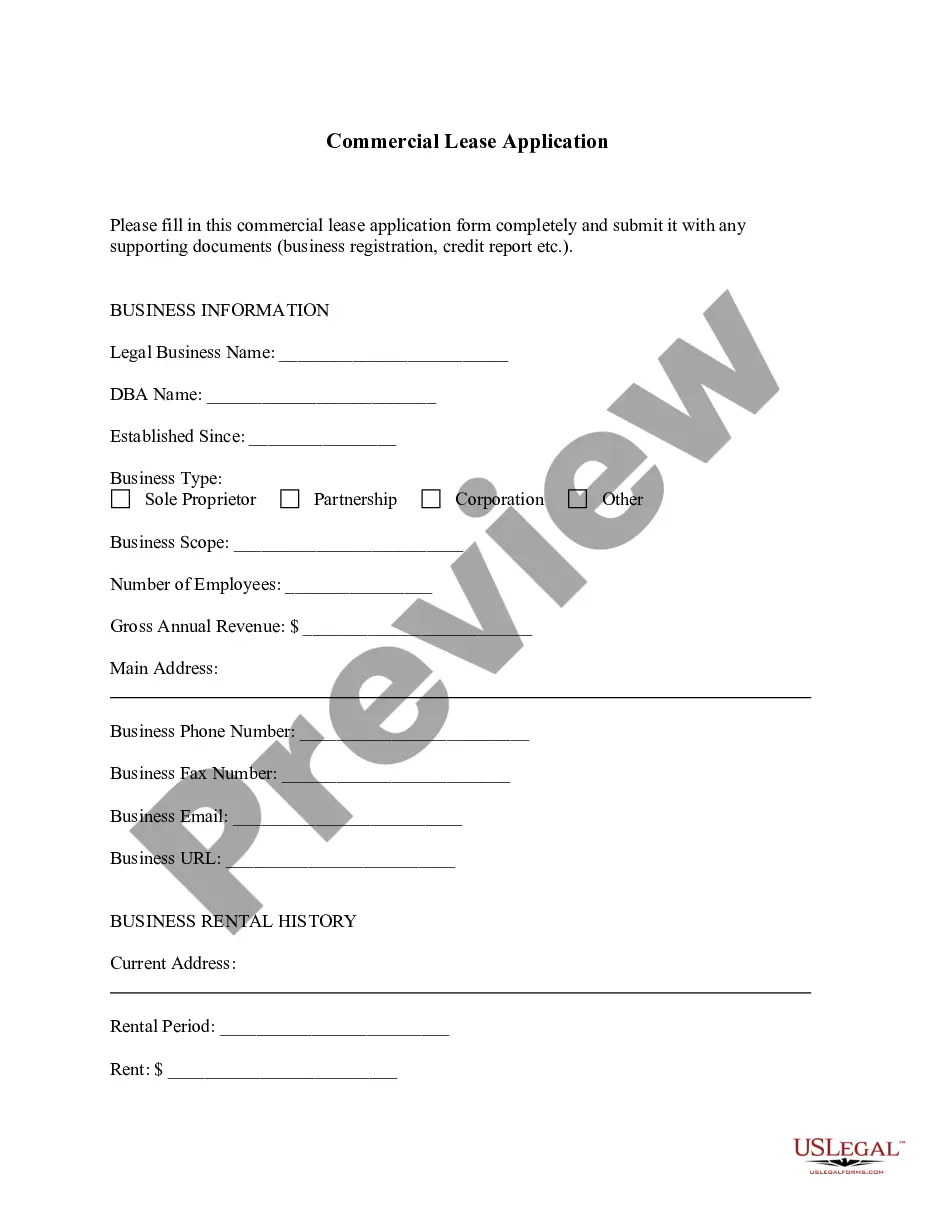
The Commercial Rental Lease Application Questionnaire is a form used by landlords (lessors) to gather essential information from prospective tenants (lessees) applying for a commercial lease. This document enables landlords to evaluate applicants' suitability for renting their commercial property, and it includes necessary disclosures and authorization for a credit check. Commercial rental leases often have more specific requirements and conditions compared to residential agreements, making this application particularly essential for both parties involved.
Main sections of this form
- Personal information about the applicant, including employment and credit references.
- Disclosure of the property managerâs contact information.
- Authorization for the landlord to conduct credit and criminal history checks.
- Conditions stating that submission of the application does not guarantee approval.
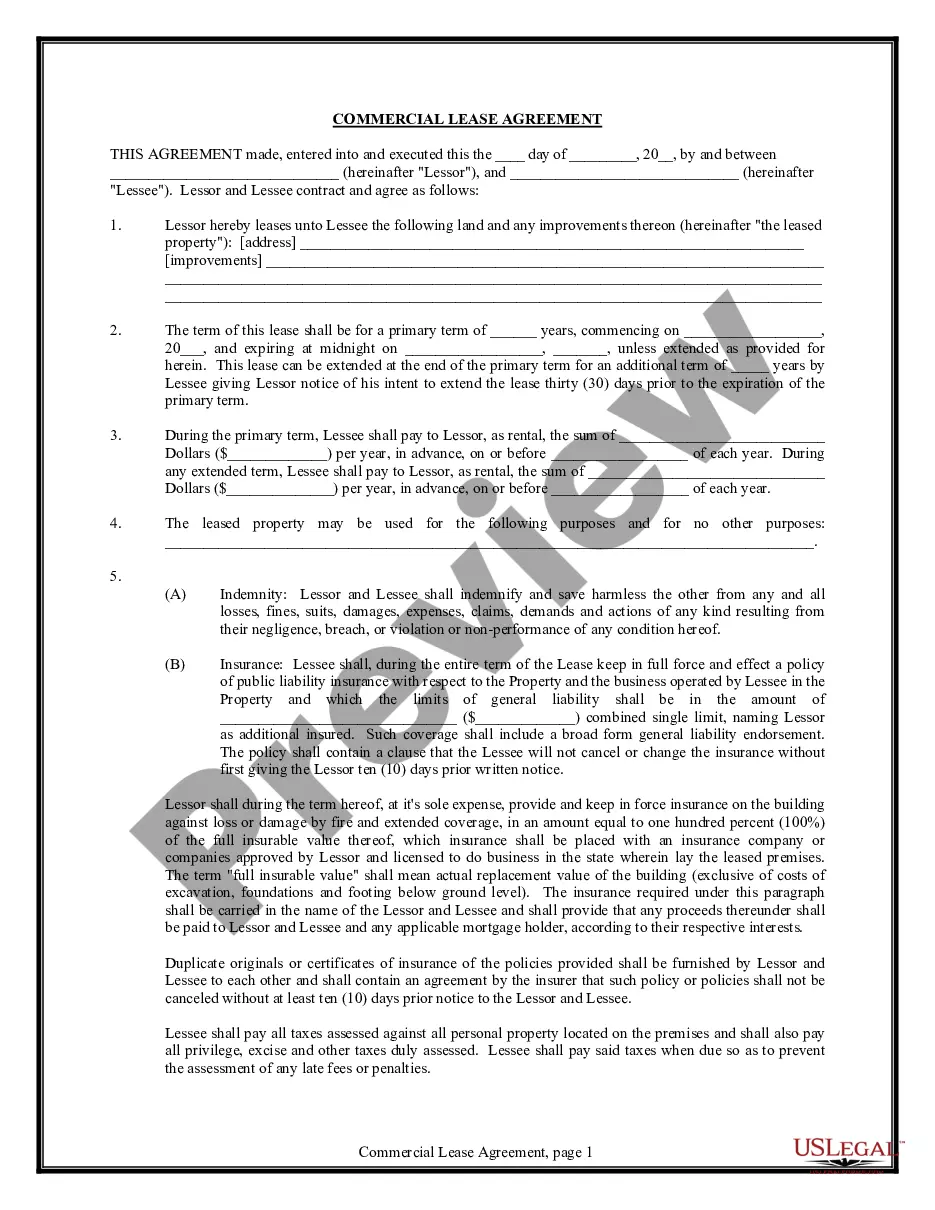
- Field for the proposed lease details, including rental amount and lease duration.

Common use cases
This form is necessary when a prospective tenant wishes to lease commercial property and must provide the property owner with critical information. Use this application when applying for retail spaces, office buildings, warehouses, or any other property intended for business use. It is essential to complete this questionnaire before entering into a lease agreement.
Who can use this document
- Business owners looking for commercial rental spaces.
- Property managers seeking to vet potential tenants.
- Landlords who require a formal application process from prospective lessees.
- Individuals who are responsible for signing lease agreements on behalf of a business.
Completing this form step by step
- Begin by filling out your personal information and details about your business.
- Provide credit and references to support your application.
- Enter the proposed rental terms, including the rent amount and duration of the lease.
- Review and sign the authorization for credit and criminal history checks.
- Ensure all required fields are completed, then submit the application to the landlord.
Notarization requirements for this form
This form does not typically require notarization unless specified by local law. Always verify your state-specific regulations to ensure compliance.
Get your form ready online
Our built-in tools help you complete, sign, share, and store your documents in one place.
Make edits, fill in missing information, and update formatting in US Legal Forms—just like you would in MS Word.
Download a copy, print it, send it by email, or mail it via USPS—whatever works best for your next step.
Sign and collect signatures with our SignNow integration. Send to multiple recipients, set reminders, and more. Go Premium to unlock E-Sign.
If this form requires notarization, complete it online through a secure video call—no need to meet a notary in person or wait for an appointment.
We protect your documents and personal data by following strict security and privacy standards.

Make edits, fill in missing information, and update formatting in US Legal Forms—just like you would in MS Word.

Download a copy, print it, send it by email, or mail it via USPS—whatever works best for your next step.

Sign and collect signatures with our SignNow integration. Send to multiple recipients, set reminders, and more. Go Premium to unlock E-Sign.

If this form requires notarization, complete it online through a secure video call—no need to meet a notary in person or wait for an appointment.

We protect your documents and personal data by following strict security and privacy standards.
Typical mistakes to avoid
- Failing to provide complete contact information for references.
- Not signing the application where required.
- Submitting incomplete financial details or omitting credit information.
- Assuming submission guarantees rental approval without understanding landlord criteria.
Benefits of using this form online
- Convenient access that allows for easy completion anytime, anywhere.
- Editability to ensure you can make changes before final submission.
- Reliability of templates drafted by licensed attorneys, ensuring legal compliance.
Quick recap
- The Commercial Rental Lease Application Questionnaire helps landlords evaluate potential commercial tenants.
- Completing this form accurately is crucial for a successful leasing process.
- Landlords should verify local regulations as they apply to the form's use and requirements.
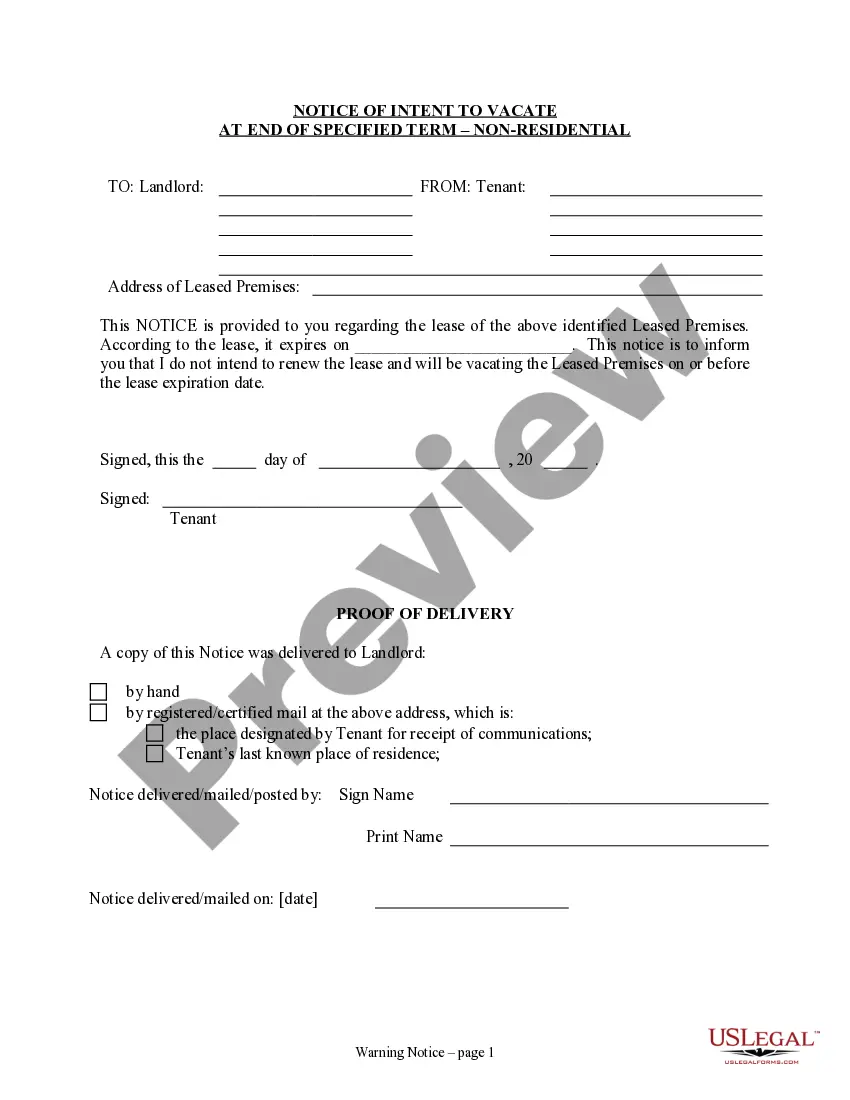
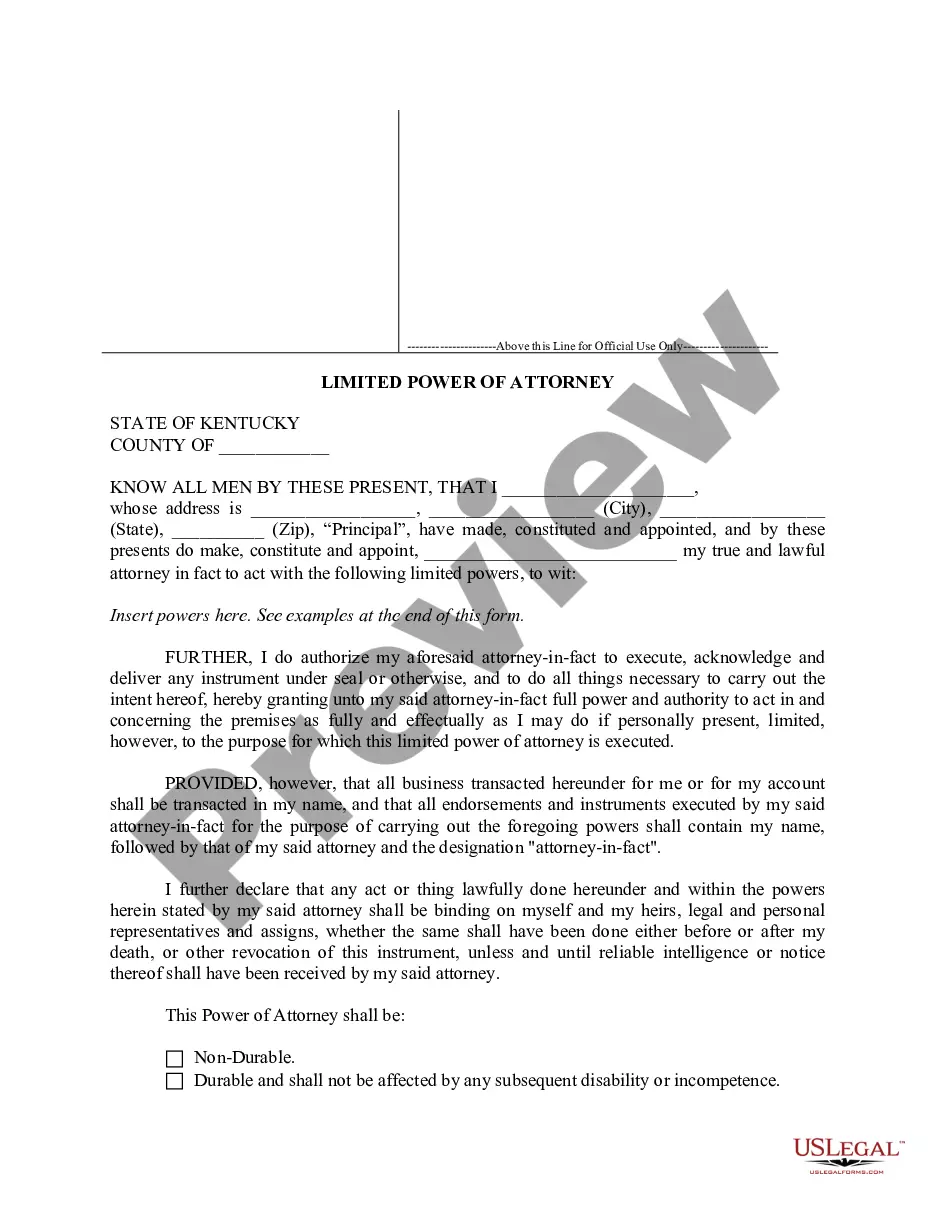
Looking for another form?
Form popularity
FAQ
A letter of intent is used to alert a property owner that you're interested in leasing or purchasing a commercial real estate property. Also, it provides the landlord with a more concrete view of how you'll use the property should they commit to a lease agreement with you.
Inspect the Property and Record Any Current Damages. Know What's Included in the Rent. Can You Make Adjustments and Customizations? Clearly Understand the Terms Within the Agreement and Anticipate Problems. Communicate with Your Landlord About Your Expectations.
A letter of intent is used to alert a property owner that you're interested in leasing or purchasing a commercial real estate property. Also, it provides the landlord with a more concrete view of how you'll use the property should they commit to a lease agreement with you.
ESSENTIAL ELEMENTS OF A VALID LEASE AGREEMENT. Competent Parties. Legal Purpose. Statute of Frauds. Reversionary Right. Property Description. Mutual Assent (Offer and Acceptance) Consideration.
Are you building for the future? Is the location safe? Is the office space adequately wired for your business and equipment needs. How much will furniture cost? How much will the rent increase each year? What's included in the lease? Who handles repairs?
Names of all tenants. Limits on occupancy. Term of the tenancy. Rent. Deposits and fees. Repairs and maintenance. Entry to rental property. Restrictions on tenant illegal activity.
A commercial lease letter of intent is almost always designed to be non-binding, meaning that it's not actually intended to be enforceable.Letters of intent are very important from a legal standpoint because they are the basis of the lease, but they don't generally include many legal specific terms.
The Letter of Intent should include the names of the parties negotiating, such as the name of the Tenant and the Property Owner/Landlord, and a list of industry standard list items. You should also include items that are important to your business when leasing commercial real estate.