Arizona Credit Denial - Notice
What is this form?
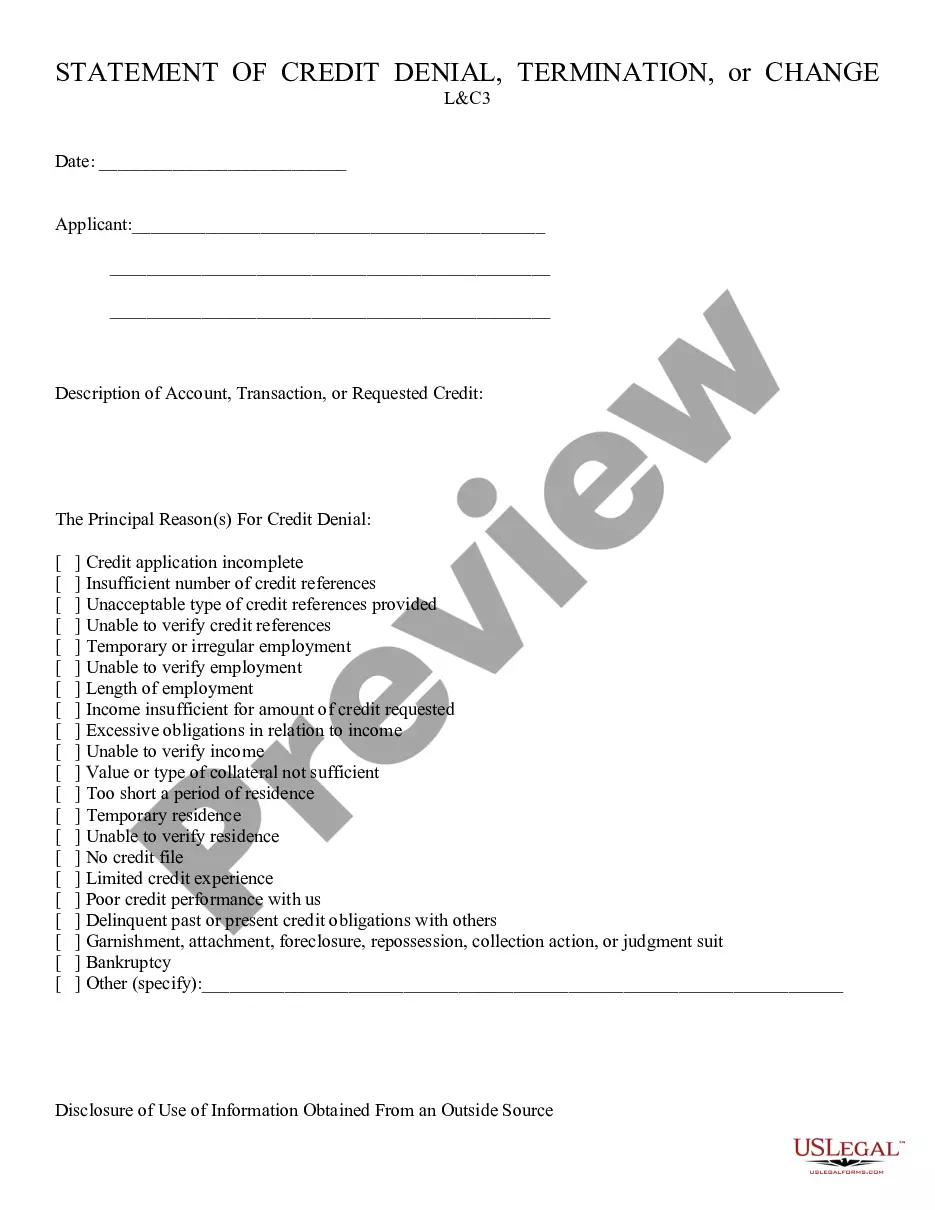
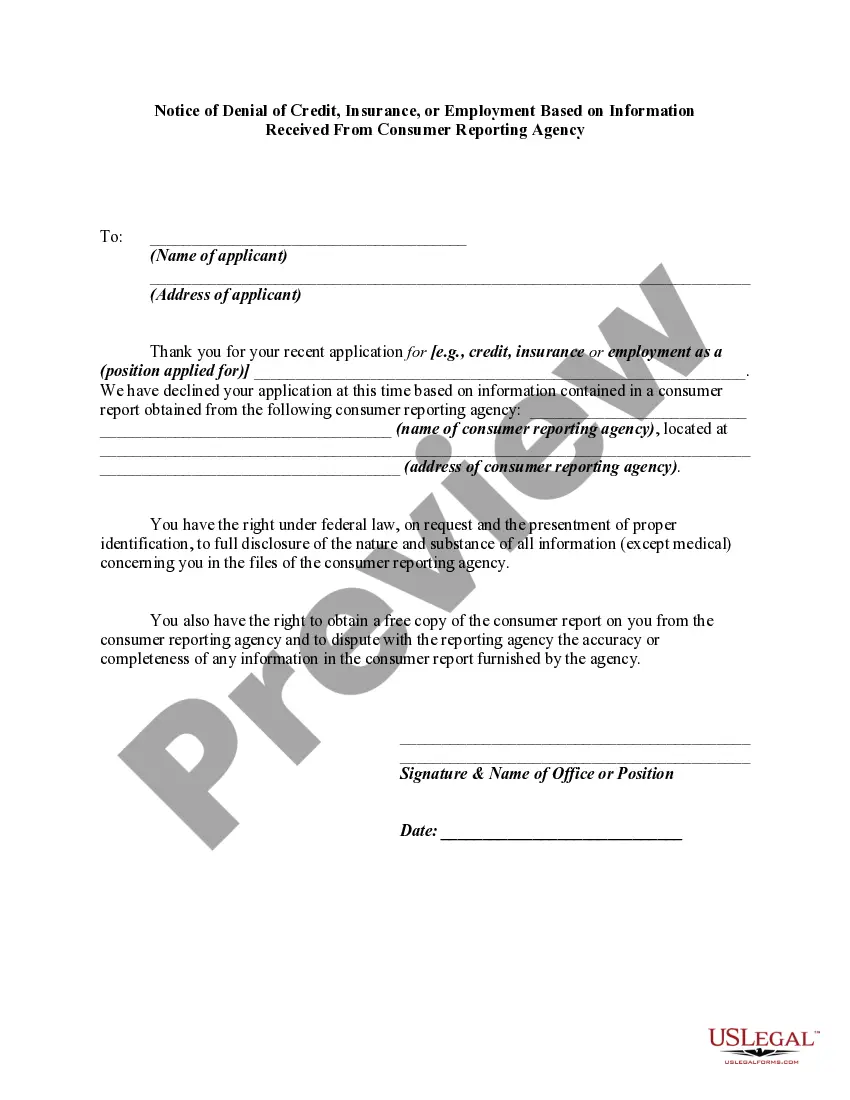
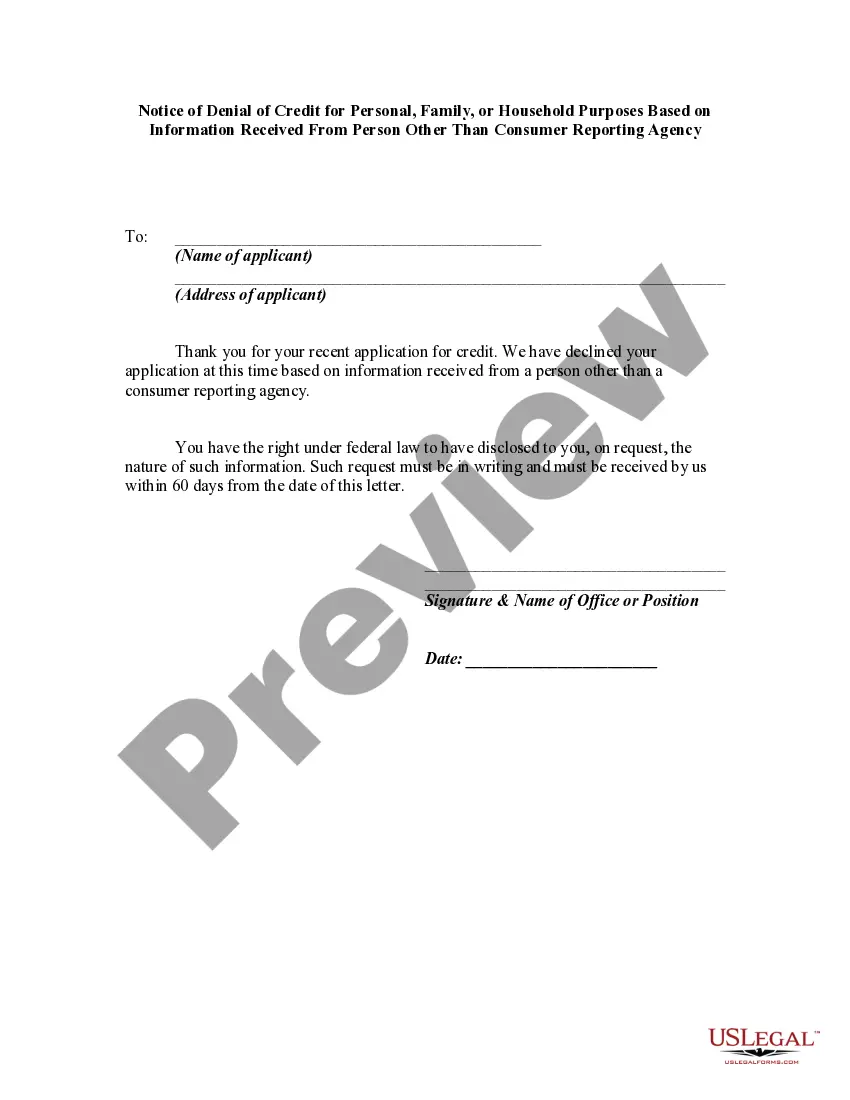
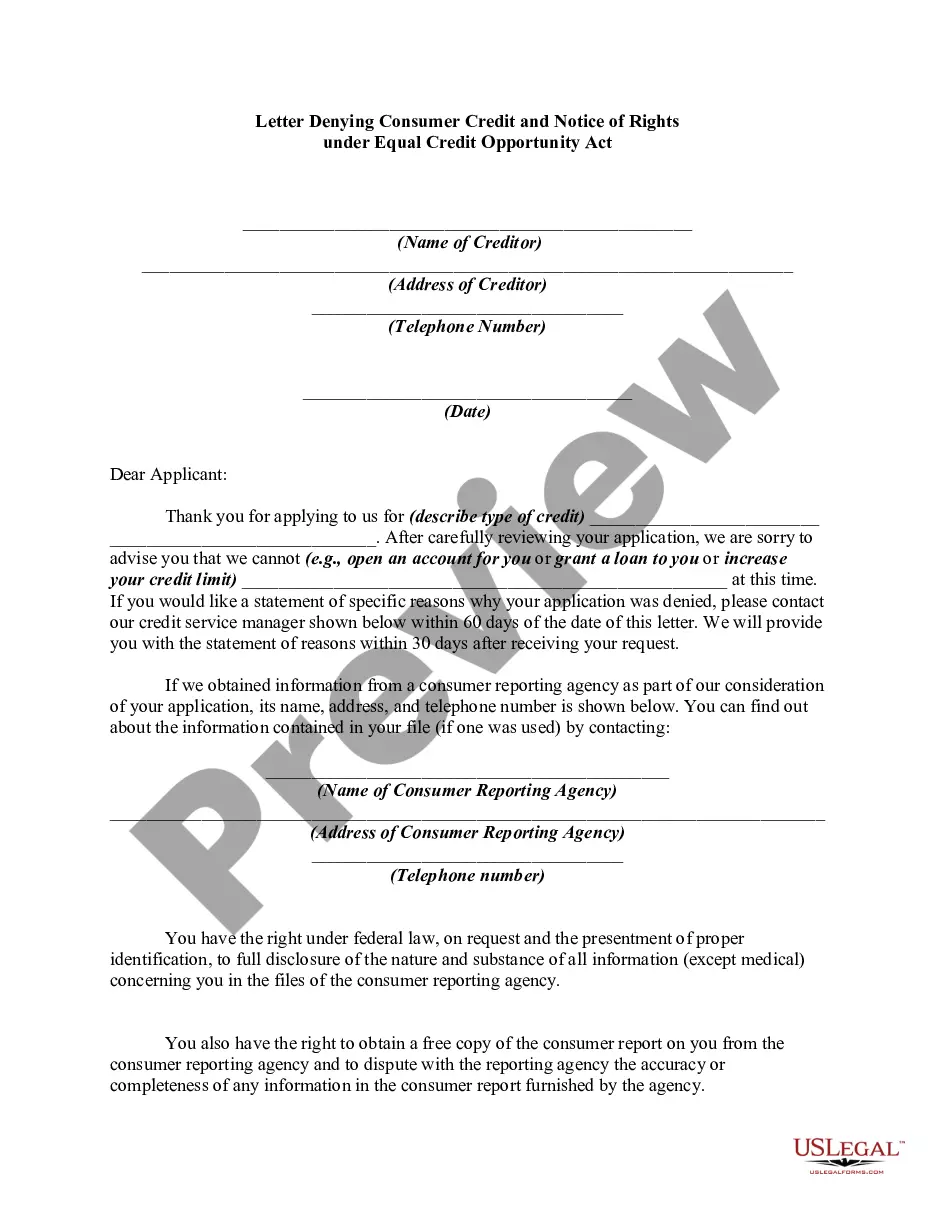
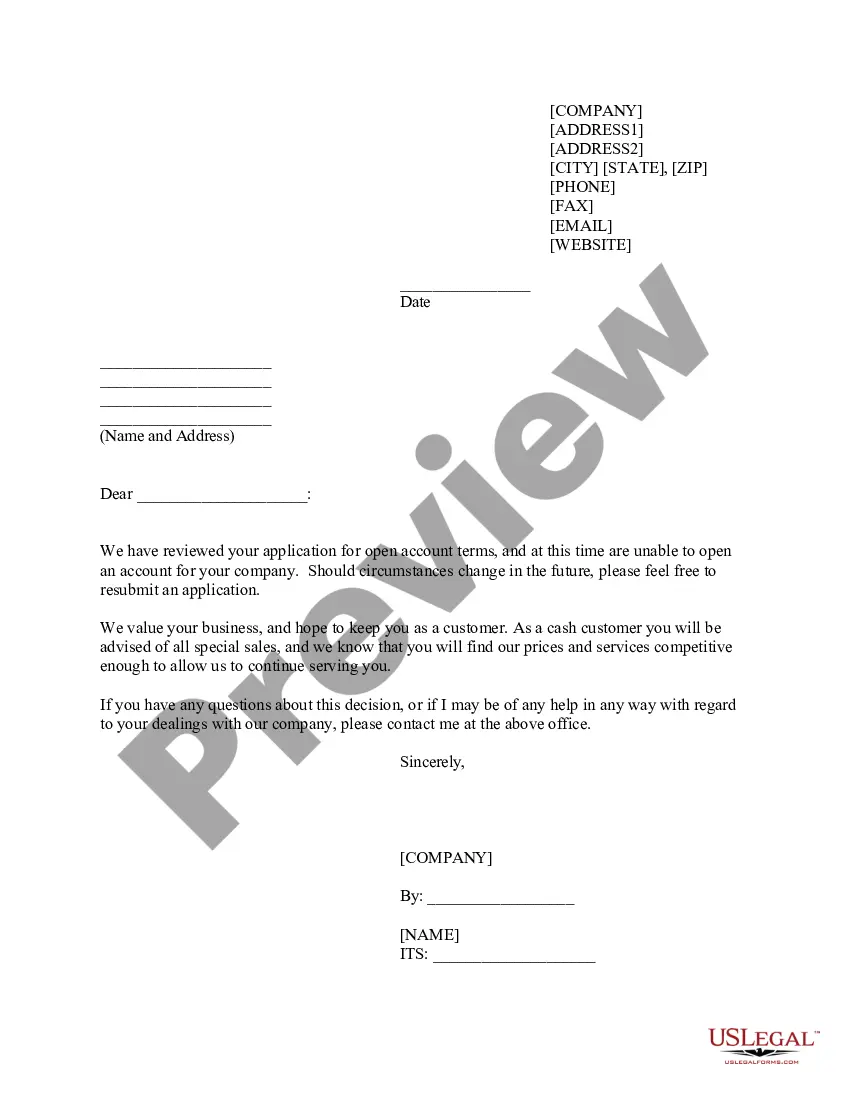
The Credit Denial - Notice is a formal document that informs an applicant that their request for credit has been denied. This notice not only rejects the application but also typically provides reasons for the denial, ensuring the applicant understands the specific issues that influenced the decision. This form serves a critical role in maintaining transparency in the credit evaluation process and complies with legal requirements established under the Fair Credit Reporting Act.
Key components of this form
- Date: The date the notice is sent to the applicant.
- Applicant Information: Fields for the applicant's name and contact details.
- Description of Account: A brief description of the credit requested.
- Reasons for Denial: Specific reasons for the credit denial, allowing the applicant to understand potential issues.
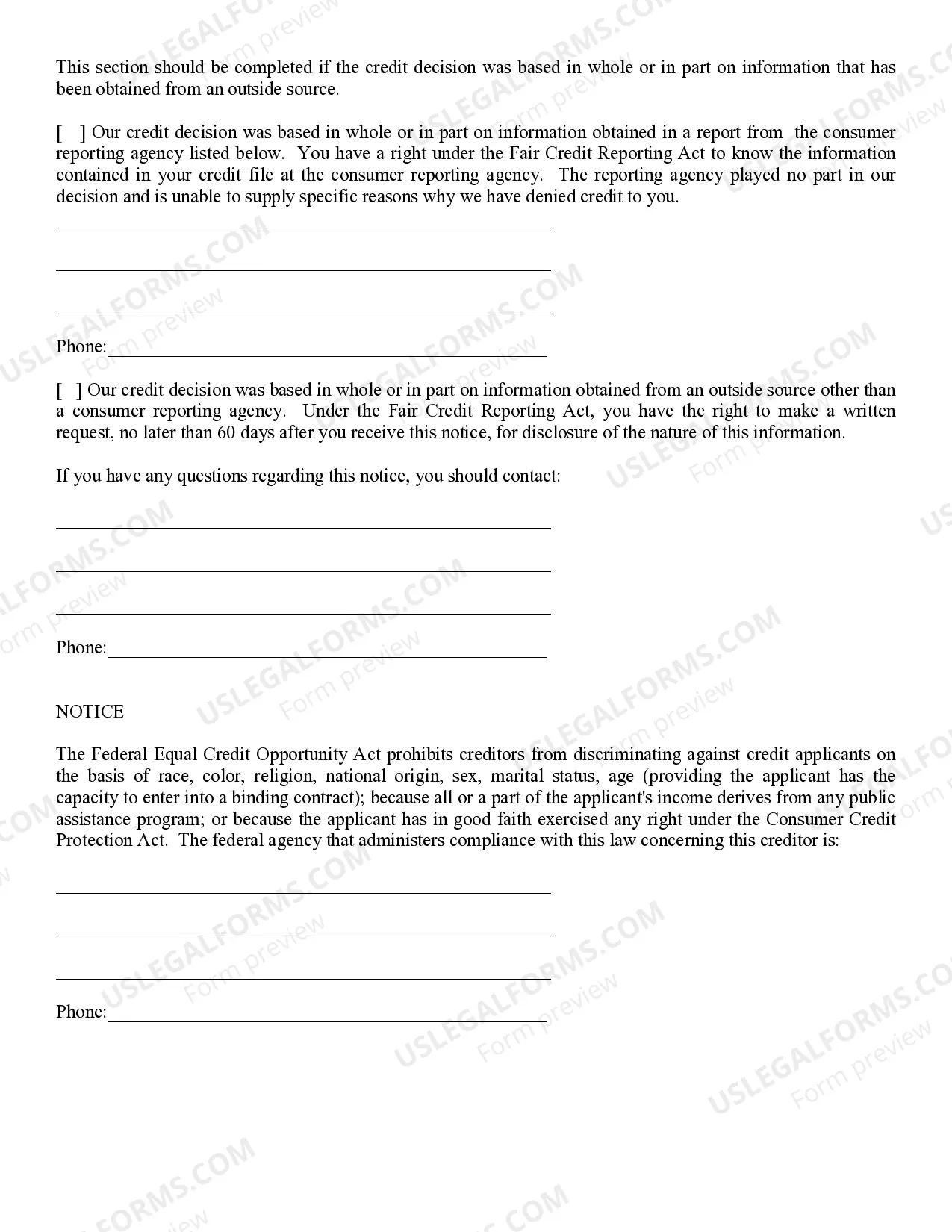
- Disclosure of Information Sources: Identifies if the decision was influenced by outside information sources and provides details on how to obtain further information.
- Legal Rights Notification: Information regarding the applicant's rights under federal law.
When this form is needed
This form should be used when a lender or creditor denies a line of credit to an applicant. It is essential whenever an application is rejected, ensuring compliance with legal standards and offering the applicant insight into the factors that led to the denial. Scenarios might include credit applications for loans, credit cards, or other financial services.
Who should use this form
The Credit Denial - Notice is intended for the following parties:
- Financial institutions or lenders that offer credit products.
- Credit card companies processing applications for new credit cards.
- Individuals handling credit application processes on behalf of organizations.
- Consumers who have received a credit denial and wish to understand their rights.
Instructions for completing this form
To complete the Credit Denial - Notice, follow these steps:
- Enter the date on which you are sending the notice.
- Fill in the applicant's name and contact information.
- Provide a brief description of the account or credit requested.
- Select and specify the principal reason(s) for the credit denial from the list provided.
- If applicable, disclose the credit reporting agency used in the decision process.
- Ensure the applicant is informed of their rights regarding discrimination under federal law.
Is notarization required?
This form does not typically require notarization unless specified by local law. However, it is essential to check any regulations that may affect your specific circumstances.
Get your form ready online
Our built-in tools help you complete, sign, share, and store your documents in one place.
Make edits, fill in missing information, and update formatting in US Legal Forms—just like you would in MS Word.
Download a copy, print it, send it by email, or mail it via USPS—whatever works best for your next step.
Sign and collect signatures with our SignNow integration. Send to multiple recipients, set reminders, and more. Go Premium to unlock E-Sign.
If this form requires notarization, complete it online through a secure video call—no need to meet a notary in person or wait for an appointment.
We protect your documents and personal data by following strict security and privacy standards.

Make edits, fill in missing information, and update formatting in US Legal Forms—just like you would in MS Word.

Download a copy, print it, send it by email, or mail it via USPS—whatever works best for your next step.

Sign and collect signatures with our SignNow integration. Send to multiple recipients, set reminders, and more. Go Premium to unlock E-Sign.

If this form requires notarization, complete it online through a secure video call—no need to meet a notary in person or wait for an appointment.

We protect your documents and personal data by following strict security and privacy standards.
Typical mistakes to avoid
- Failing to include the specific reasons for the credit denial, which is crucial for transparency.
- Neglecting to provide accurate contact information for the reporting agency.
- Not signing the notice, which can invalidate it as a formal communication.
- Using outdated forms that do not comply with current regulations.
Why use this form online
- Convenience: The form is available for immediate download, allowing for quick use.
- Editability: Forms can be customized to fit specific scenarios and details.
- Reliability: Ensures adherence to legal standards, protecting both the lender and applicant.
Looking for another form?

Form popularity
FAQ
A credit card company in Arizona generally has six years to sue you for an unpaid debt. This period begins when you default on the payment. It’s important to be aware of this timeframe, as waiting too long may affect your situation. Understanding Arizona Credit Denial - Notice could shed light on any legal actions you may face.
In Arizona, you typically have 20 days to file an answer to a summons if you were served in person, or 30 days if served by mail. Meeting this timeline is crucial to ensure that you do not forfeit your right to contest the claims against you. Note that specific cases may vary, so confirm your deadlines. Be aware of how Arizona Credit Denial - Notice may affect your timeline.
You should respond to a summons by filing your answer at the court specified in the summons document. Often, this is the court where the original complaint was filed. Additionally, you may need to send a copy of your response to the opposing party. It’s essential to keep track of these actions to comply with the Arizona Credit Denial - Notice regulations.
Filing an answer to a summons in Arizona requires preparing a document that addresses the claims made against you. After drafting your answer, you must file it with the court where the case is initiated. It's vital to ensure that you file within the designated time frame to avoid default. Consider researching Arizona Credit Denial - Notice to understand its implications.
To file an answer to a foreclosure summons in Arizona, you must prepare a written response and file it with the court. Include reasons for your defense and any counterclaims you may have. Ensure you adhere to Arizona law regarding timelines for your response. Understanding Arizona Credit Denial - Notice can also help you present your case effectively.
Responding to a summons without an attorney in Arizona involves submitting a written answer to the court. You must include the case number, your contact information, and a clear statement that you are responding to the summons. Make sure to follow the court's guidelines for formatting and filing. This process is crucial if you want to address any claims regarding Arizona Credit Denial - Notice.
The Fair Credit Reporting Act (FCRA) is a federal law that governs how consumer information is collected, shared, and utilized. In Arizona, this law provides consumers with rights regarding their credit reports, including access to their reports and the ability to dispute inaccuracies. This act also connects to Arizona Credit Denial - Notice, as it ensures you receive proper notification regarding your credit status. Understanding your rights under FCRA can empower you in financial matters.
Yes, credit repair is legal in Arizona, as long as it is conducted according to the law. A reputable credit repair company can help you address inaccuracies on your credit report. However, be cautious and research any company you consider working with. Be aware of your rights under laws like the Arizona Credit Denial - Notice to ensure you are protected during this process.
A credit denial letter is a formal notification informing you that your application for credit has been denied. This letter typically outlines the reasons for the denial and your right to dispute information if necessary. Understanding the contents of your credit denial letter is vital for your financial health. Ensure you respond appropriately, especially in light of the Arizona Credit Denial - Notice regulations.
The statutory interest rate in Arizona is set at 10% per year for unsecured loans unless the agreement specifies otherwise. This rate applies when no other rate is agreed upon. Understanding this helps you assess your contracts and manage your finances effectively. USClegalforms can aid you in clarifying your obligations regarding the Arizona Credit Denial - Notice.