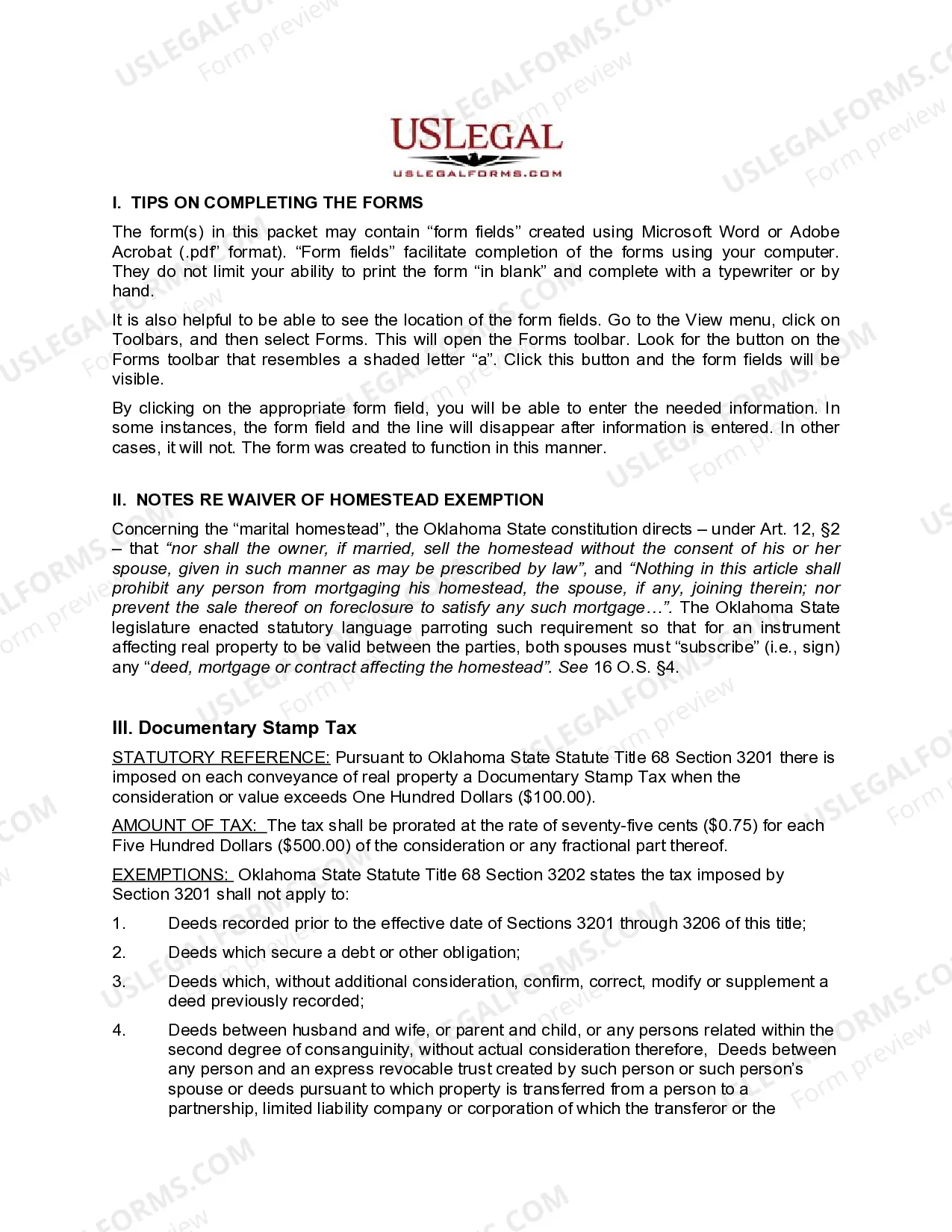
Oklahoma Warranty Deed from Individual to Corporation
Overview of this form
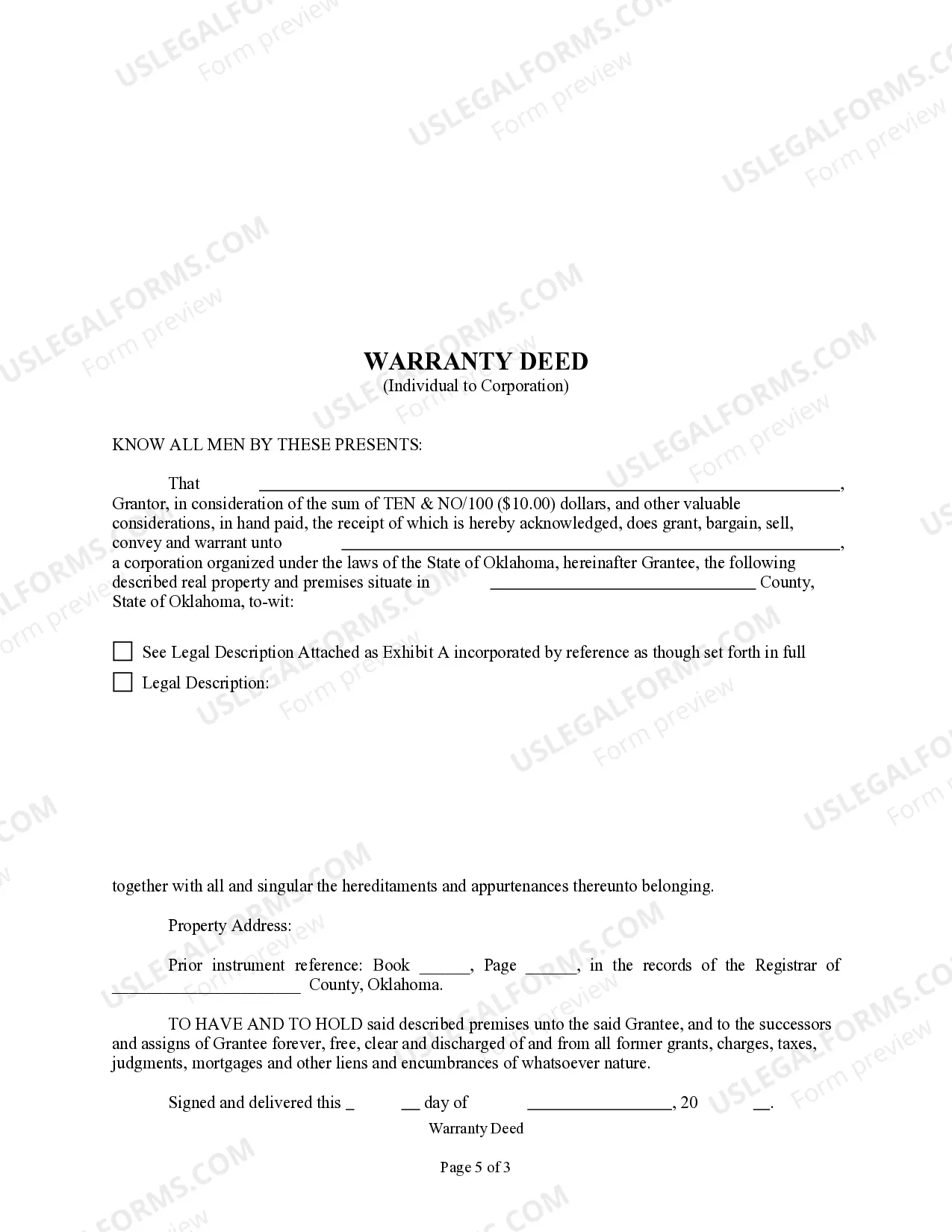
The Warranty Deed from Individual to Corporation is a legal document used to transfer property ownership from an individual (the grantor) to a corporation (the grantee). This form provides a reliable method of transferring real estate, ensuring that the ownership rights are clearly conveyed while reserving certain rights, such as oil, gas, and minerals, if applicable. This warranty deed differs from other types of deeds by specifically representing a transfer of property to a corporate entity.
Key parts of this document
- Grantor and grantee identification, including names and addresses.
- Legal description of the property being transferred.
- Statement of the reservation of rights concerning oil, gas, and minerals.
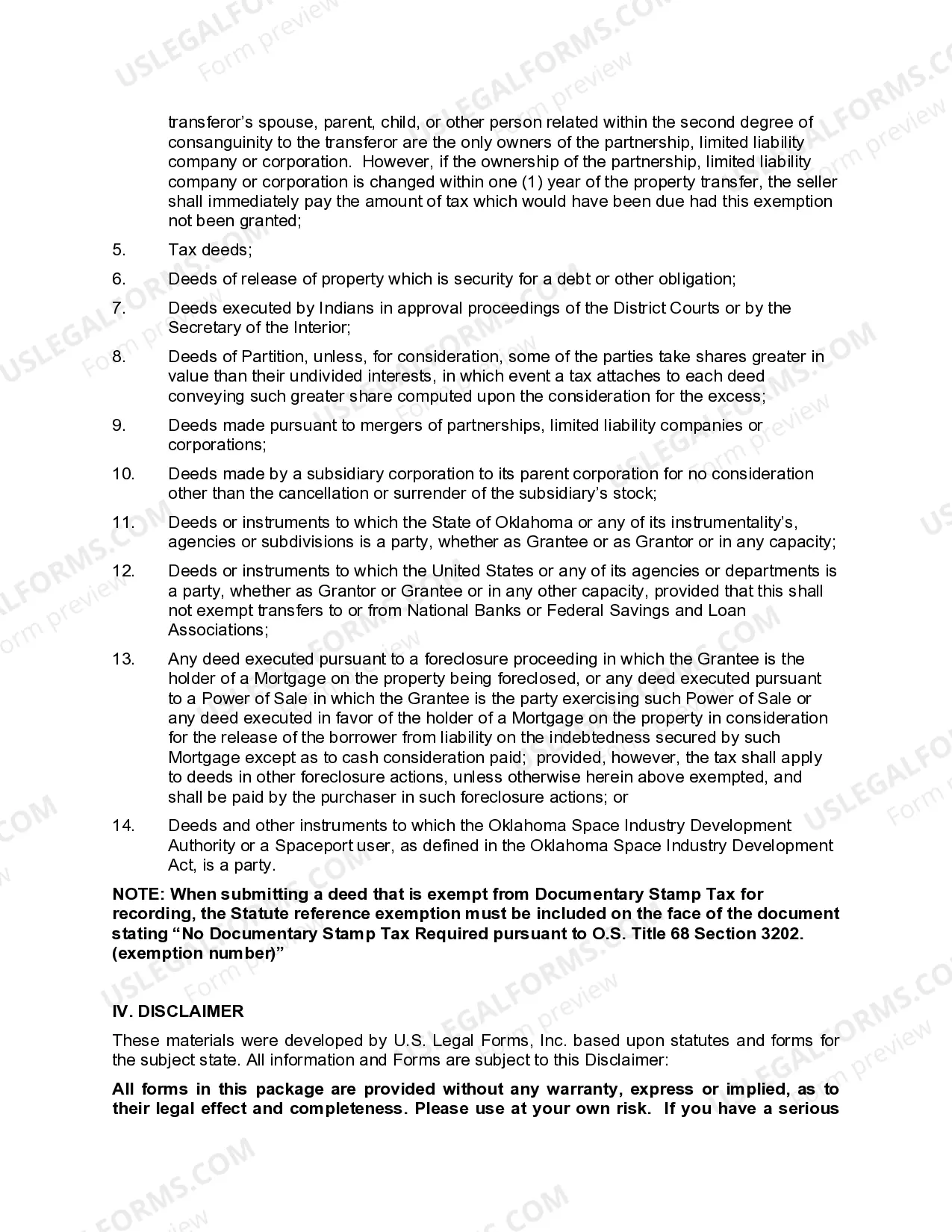
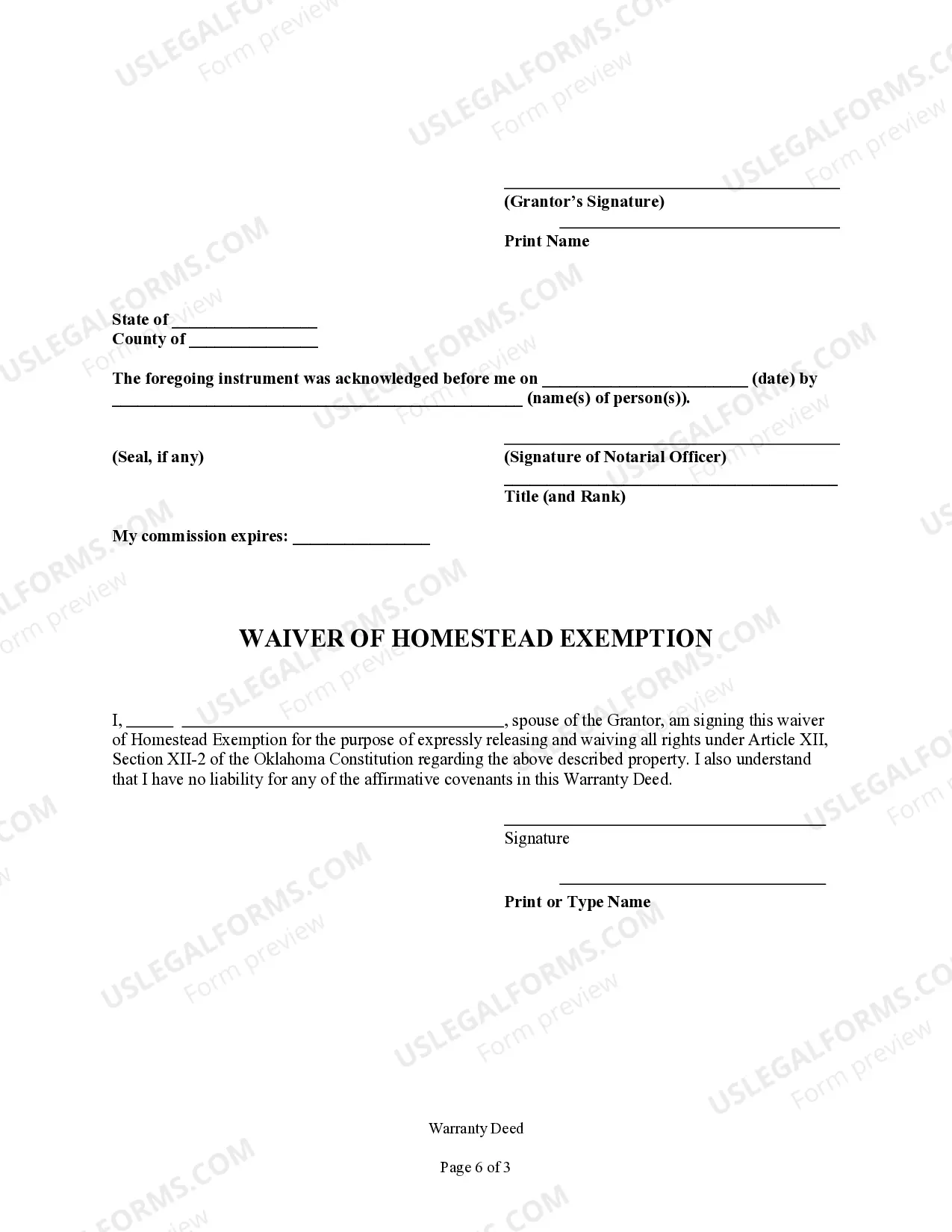
- Notices regarding the waiver of homestead exemption, if applicable.
- Documentary stamp tax information and exemptions.


When to use this document
This form is typically used in real estate transactions where an individual is transferring their property to a corporation, perhaps as part of a business setup or restructuring. It is also relevant when a corporate entity is acquiring property for investment or operational purposes. Knowing when to use this warranty deed can help ensure a smooth transfer of ownership and compliance with local laws.
Who should use this form
This form is suitable for:
- Individuals planning to transfer property ownership to a corporation.
- Business owners and corporate representatives involved in property transactions.
- Real estate professionals assisting clients with property transfers.
How to complete this form
Steps to Complete the Warranty Deed:
- Identify the parties involved by entering the full names and addresses of the grantor and grantee.
- Provide a legal description of the property being conveyed, ensuring accuracy.
- Include the specific reservation of rights concerning any oil, gas, or minerals.
- Ensure that both spouses sign the deed if it pertains to a marital homestead.
- Calculate and include the applicable documentary stamp tax, if necessary.
Is notarization required?
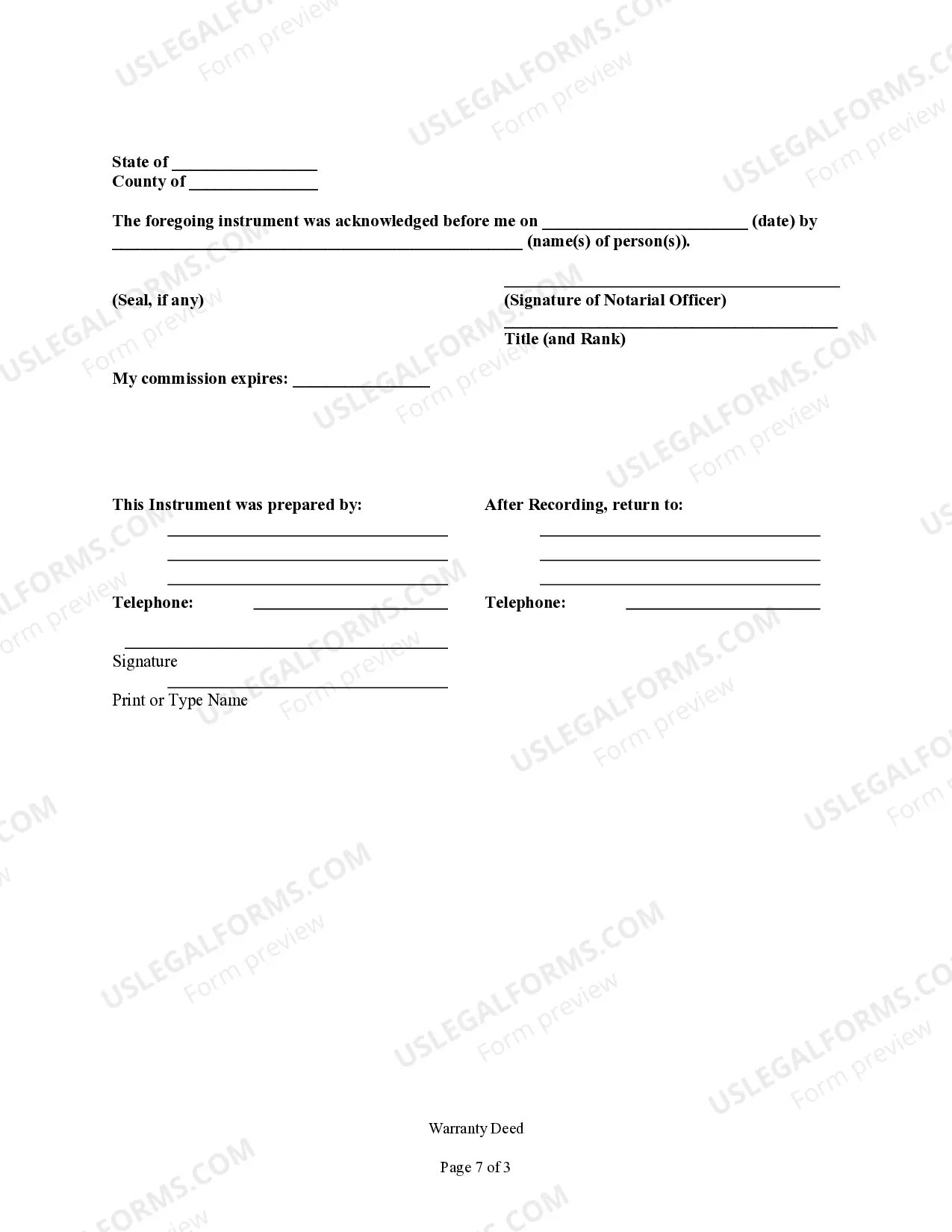
This form does not typically require notarization unless specified by local law. However, it is advisable to have the document notarized to enhance its legal validity and acceptance during the transaction.
Get your form ready online
Our built-in tools help you complete, sign, share, and store your documents in one place.
Make edits, fill in missing information, and update formatting in US Legal Forms—just like you would in MS Word.
Download a copy, print it, send it by email, or mail it via USPS—whatever works best for your next step.
Sign and collect signatures with our SignNow integration. Send to multiple recipients, set reminders, and more. Go Premium to unlock E-Sign.
If this form requires notarization, complete it online through a secure video call—no need to meet a notary in person or wait for an appointment.
We protect your documents and personal data by following strict security and privacy standards.

Make edits, fill in missing information, and update formatting in US Legal Forms—just like you would in MS Word.

Download a copy, print it, send it by email, or mail it via USPS—whatever works best for your next step.

Sign and collect signatures with our SignNow integration. Send to multiple recipients, set reminders, and more. Go Premium to unlock E-Sign.

If this form requires notarization, complete it online through a secure video call—no need to meet a notary in person or wait for an appointment.

We protect your documents and personal data by following strict security and privacy standards.
Common mistakes to avoid
- Failing to include a complete legal description of the property.
- Not obtaining both spousesâ signatures on a homestead property deed.
- Omitting to document the reservation of rights for oil, gas, and minerals.
- Neglecting to calculate the documentary stamp tax accurately.
Advantages of online completion
- Conveniently download the form for immediate use, speeding up the property transfer process.
- Edit the form electronically for accuracy and ease of completion.
- Ensure reliability as all templates are prepared by licensed attorneys.
Looking for another form?
Form popularity
FAQ
As defined in section 706.10(5) of the Wisconsin Statutes, a warranty deed conveys real property in fee simple to the grantee and contains covenants by the grantor that he or she holds title to the property and has "good right to convey the same land or its title." The grantor guarantees that the property is "free from
A warranty deed is a higher level of protection produced by the seller upon the real estate closing. It includes a full legal description of the property, and confirms the title is clear and free from all liens, encumbrances, or title defects. Most property sales make use of a warranty deed.
Corporate warranty deeds offer the seller's guarantee to the buyer in regards to the validity of the chain of title. Generally, special warranty deeds only protect against problems occurring since the seller purchased the property.
It's important to note that a warranty deed does not actually prove the grantor has ownership (a title search is the best way to prove that), but it is a promise by the grantor that they are transferring ownership and if it turns out they don't actually own the property, the grantor will be responsible for compensating
The mortgage company usually prepares this deed as part of the loan package and delivers it to the title company for you to sign at closing. The title company is commonly the trustee to the deed and holds legal title to the property until the loan gets fully repaid.
A special warranty deed is a deed to real estate where the seller of the propertyknown as the grantorwarrants only against anything that occurred during their physical ownership. In other words, the grantor doesn't guarantee against any defects in clear title that existed before they took possession of the property.
A warranty deed is a legal document used to transfer, or convey, rights in real property from a grantor (seller) to a grantee (buyer). For Kansas residential property, the primary methods for holding title in co-ownership are tenancy in common and joint tenancy.
A warranty deed, also known as a general warranty deed, is a legal real estate document between the seller (grantor) and the buyer (grantee). The deed protects the buyer by pledging that the seller holds clear title to the property and there are no encumbrances, outstanding liens, or mortgages against it.
Laws § 16-40. Recording (A§ 16-16) Must be filed with the Register of Deeds in the County where the property is located. Signing (A§ 16-26) The Grantor(s) are required to sign this form in the presence of a Notary Public. Step 1 Write in the date of the deed. Step 2 Fill in the name of the person selling.