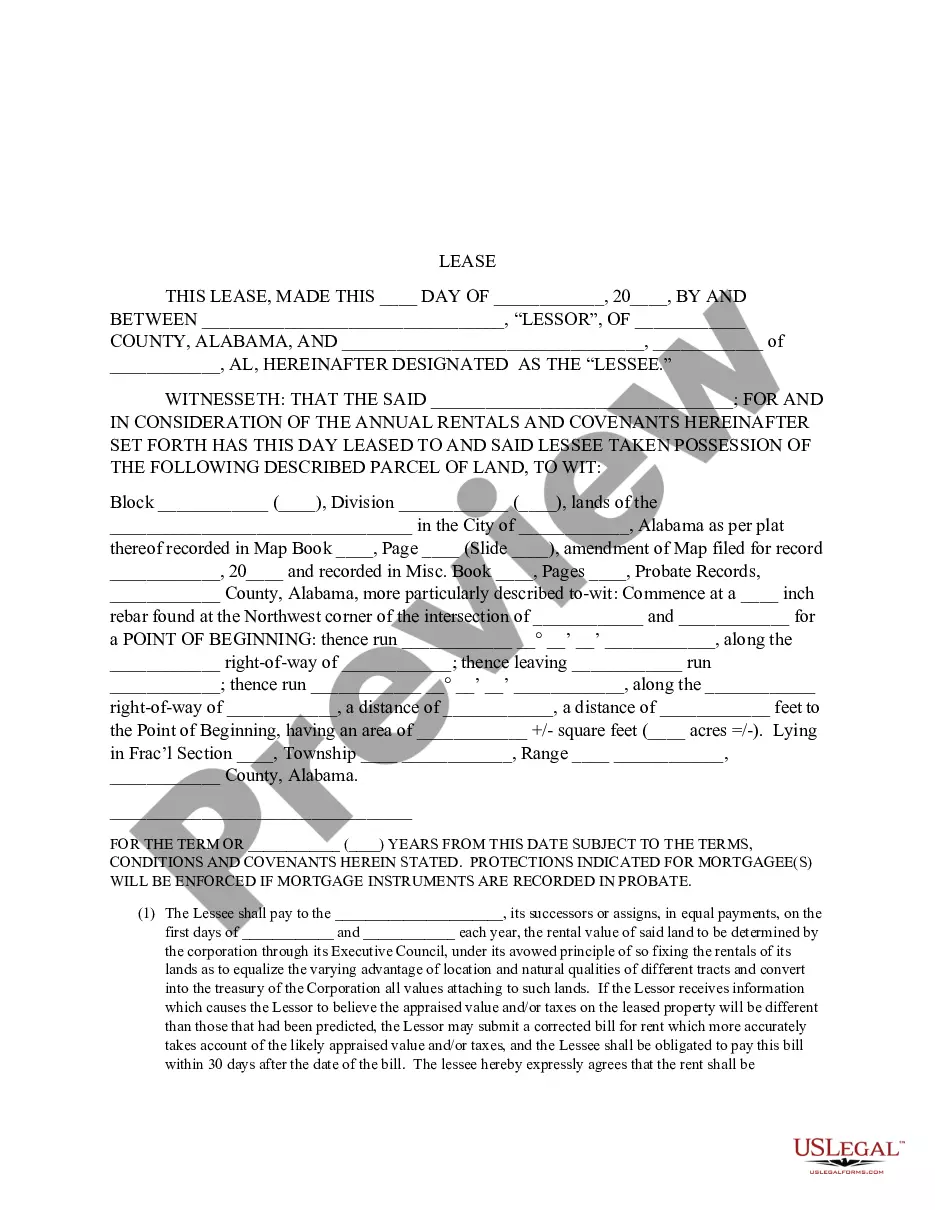
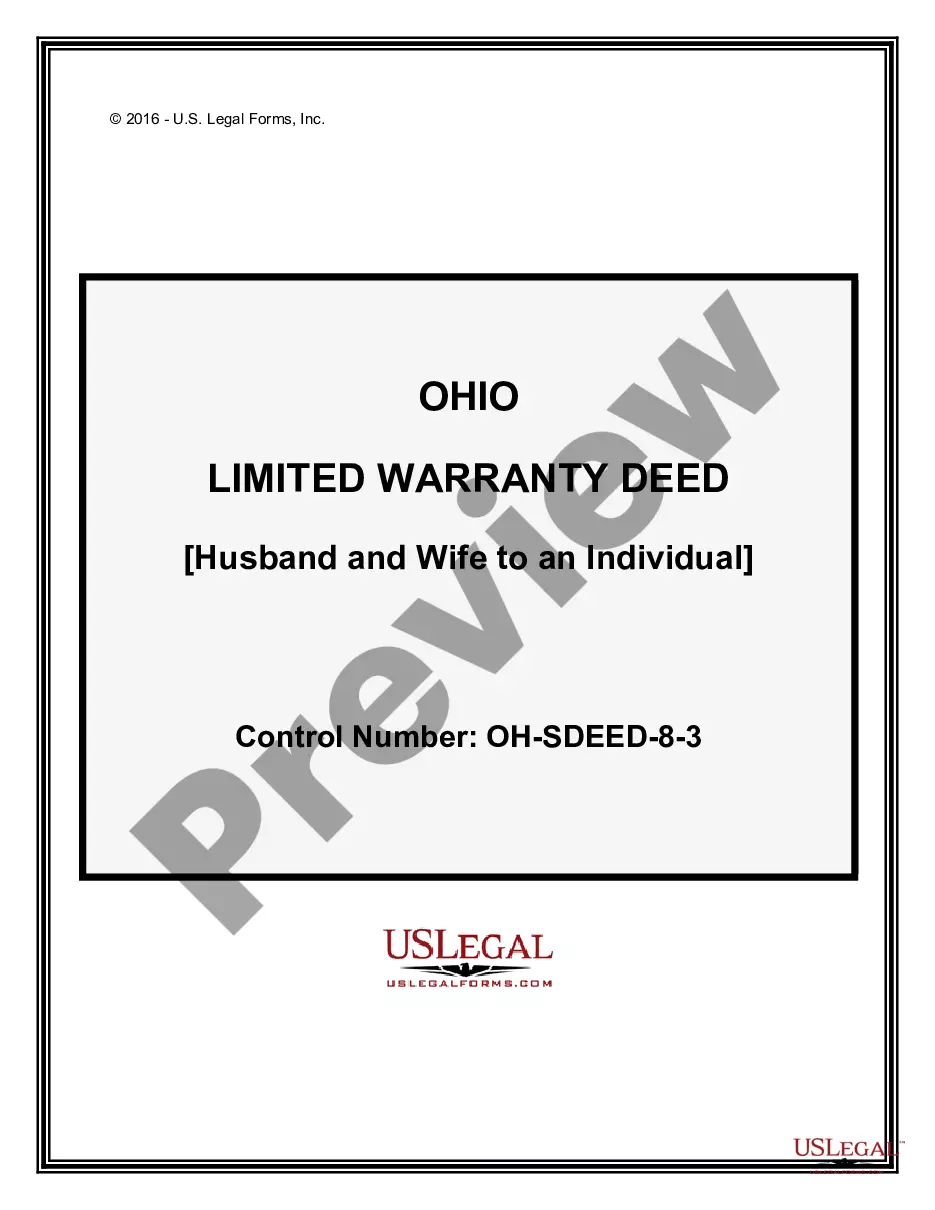
Ohio Limited Warranty Deed for Husband and Wife to an Individual
What is this form?
A Limited Warranty Deed for Husband and Wife to an Individual is a legal document that allows a married couple to transfer property ownership to an individual, ensuring some level of warranty against title defects. Unlike a general warranty deed, this form provides limited guarantees about the property's title, specifically ensuring it is free from encumbrances created by the grantors. This form helps protect the interests of the grantee while also formalizing the transfer of property between the parties involved.
Key components of this form
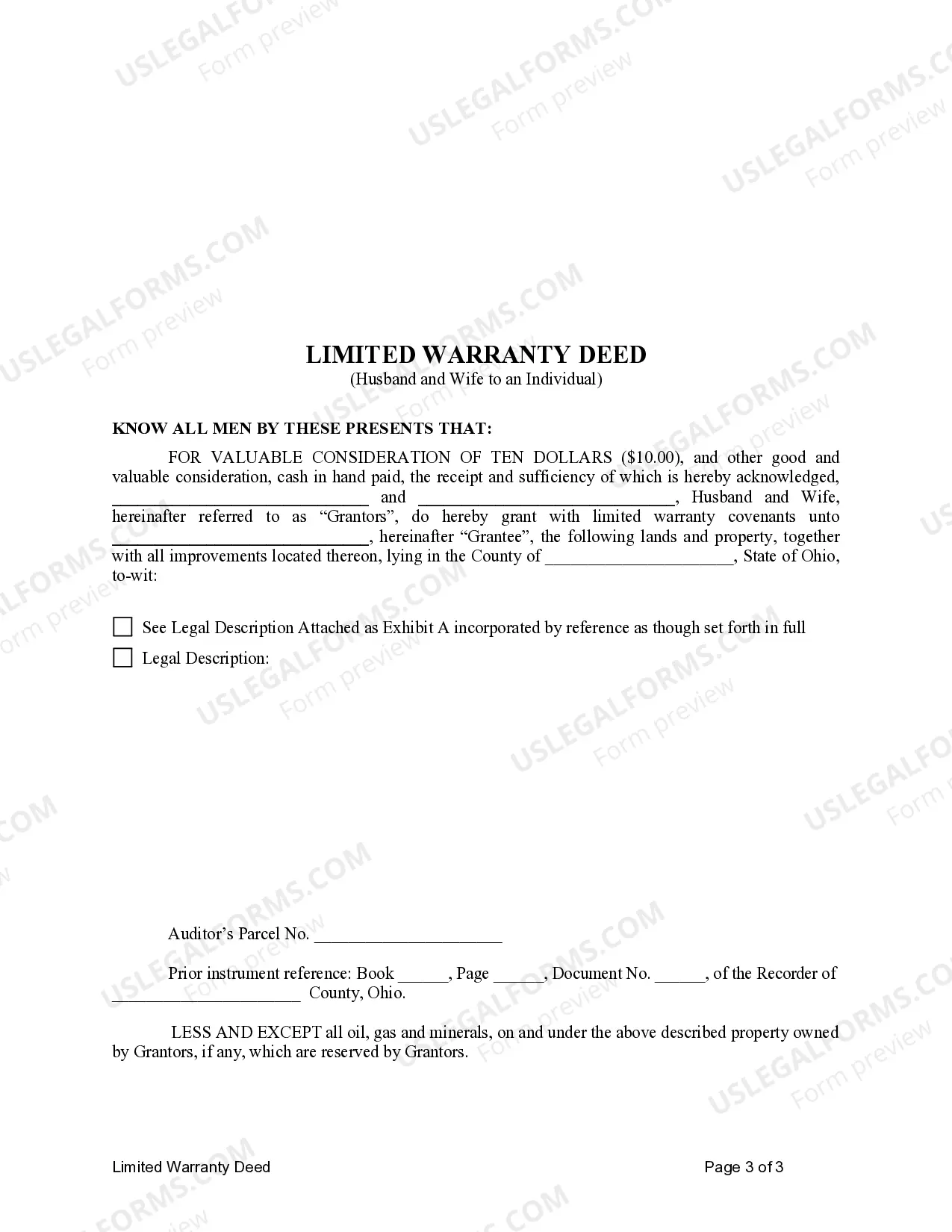
- Identification of the grantors (husband and wife)
- Identification of the grantee (individual receiving the property)
- Description of the property being conveyed
- Clauses regarding encumbrances and warranties
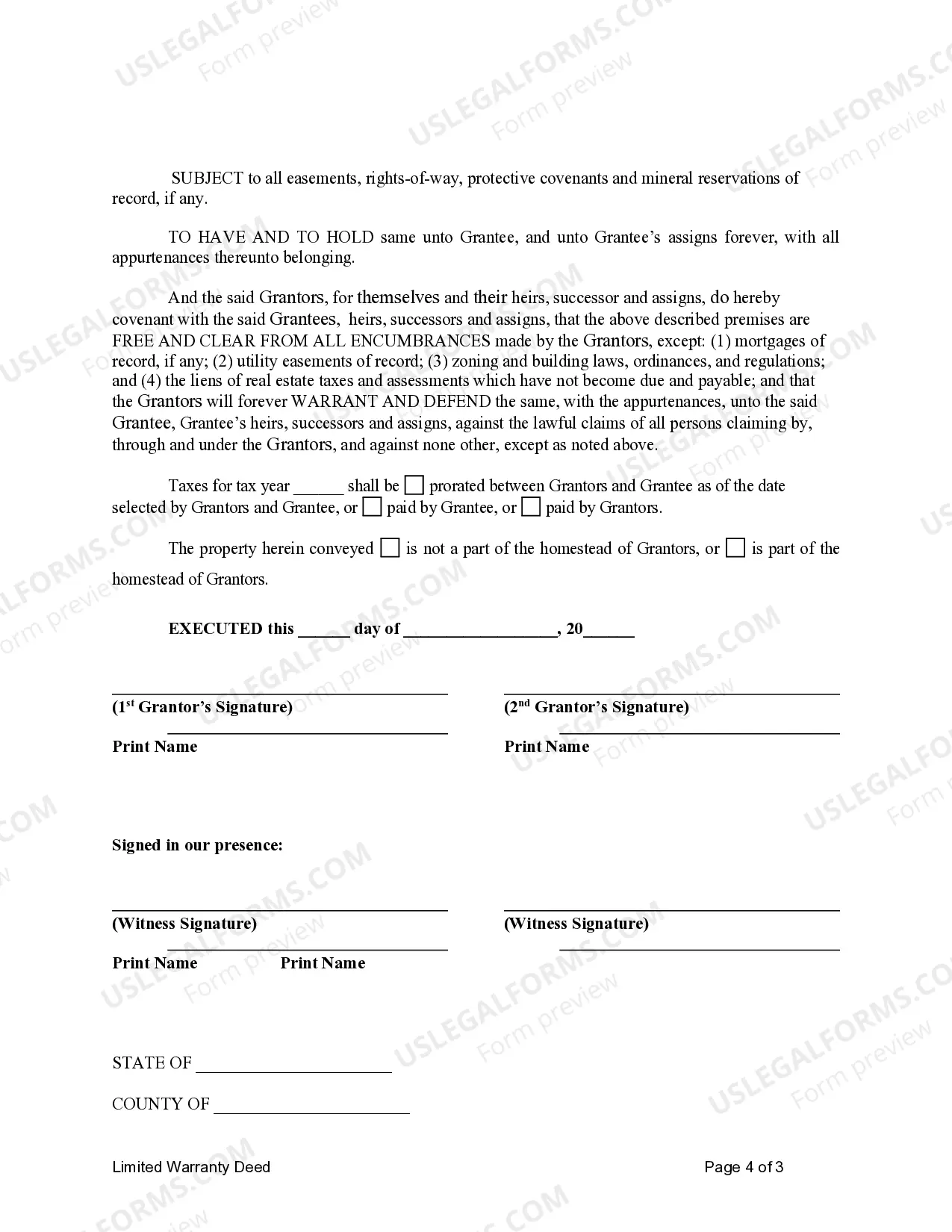
- Provisions for the proration of taxes between the parties
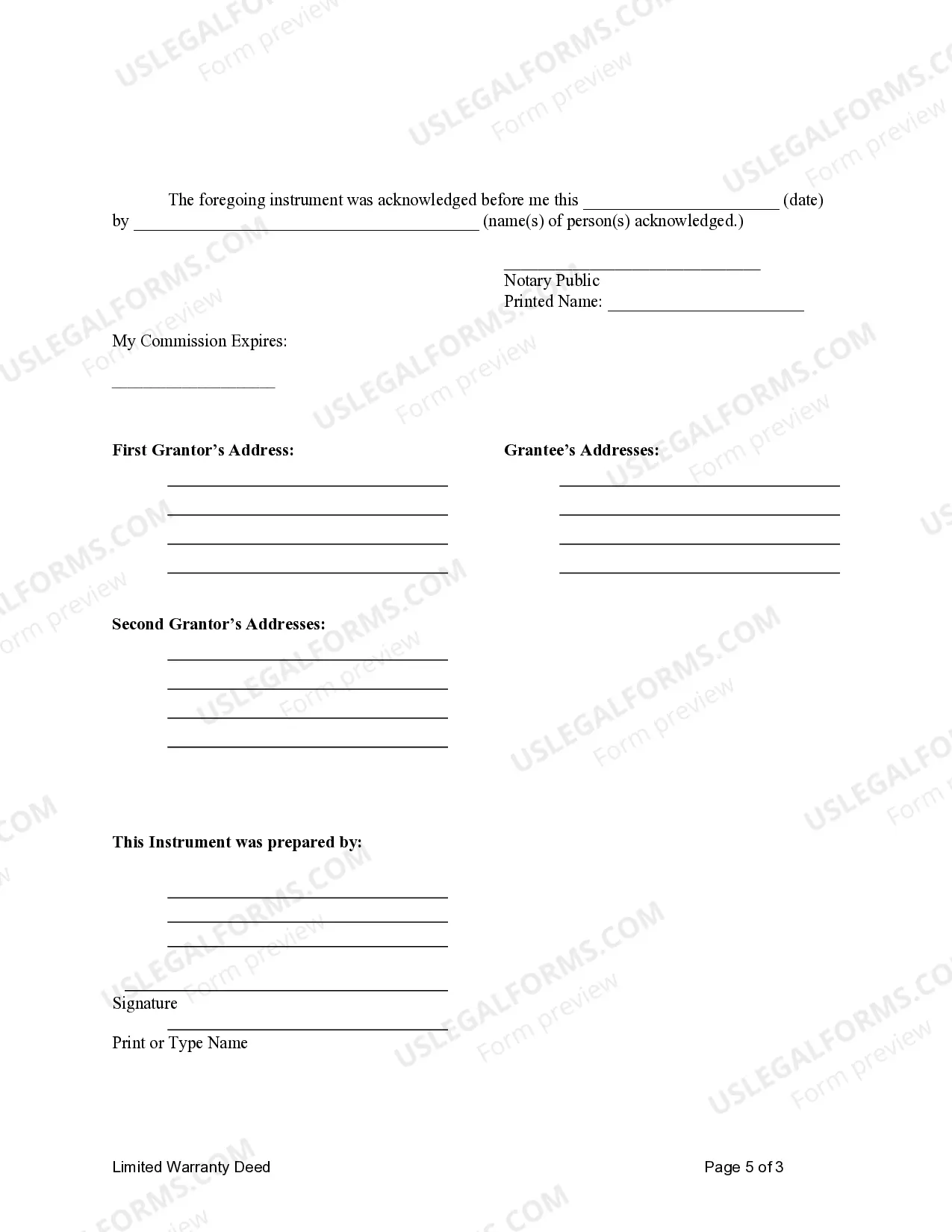
- Signature lines for the grantors and notarization requirements



When to use this form
This form should be used when a husband and wife want to transfer ownership of real property to an individual. Common scenarios include gifting property to a child, transferring ownership between family members, or facilitating an estate settlement. It is instrumental in situations where maintaining certain legal protections for the grantee is essential, given that the grantors provide limited warranties regarding the title.
Intended users of this form
This form is suitable for:
- Married couples looking to transfer property to an individual.
- Property owners who want to convey their interests while limiting their liability regarding future title issues.
- Individuals involved in estate planning or property transfers between family members.
Completing this form step by step
- Identify the parties involved by entering the names of both grantors (husband and wife) and the grantee (individual).
- Provide a complete legal description of the property being conveyed, including any identifier like a parcel number or physical address.
- Specify any encumbrances or special conditions related to the property, such as existing mortgages or easements.
- Fill in the date of the transfer and ensure both grantors sign the document in front of a notary.
- Complete any additional required fields for tax proration or other financial considerations, if applicable.
Is notarization required?
To make this form legally binding, it must be notarized. Our online notarization service, powered by Notarize, lets you verify and sign documents remotely through an encrypted video session.
Get your form ready online
Our built-in tools help you complete, sign, share, and store your documents in one place.
Make edits, fill in missing information, and update formatting in US Legal Forms—just like you would in MS Word.
Download a copy, print it, send it by email, or mail it via USPS—whatever works best for your next step.
Sign and collect signatures with our SignNow integration. Send to multiple recipients, set reminders, and more. Go Premium to unlock E-Sign.
If this form requires notarization, complete it online through a secure video call—no need to meet a notary in person or wait for an appointment.
We protect your documents and personal data by following strict security and privacy standards.

Make edits, fill in missing information, and update formatting in US Legal Forms—just like you would in MS Word.

Download a copy, print it, send it by email, or mail it via USPS—whatever works best for your next step.

Sign and collect signatures with our SignNow integration. Send to multiple recipients, set reminders, and more. Go Premium to unlock E-Sign.

If this form requires notarization, complete it online through a secure video call—no need to meet a notary in person or wait for an appointment.

We protect your documents and personal data by following strict security and privacy standards.
Typical mistakes to avoid
- Failing to include a complete legal description of the property.
- Not having the signatures notarized, which is essential for validity.
- Leaving out existing encumbrances, which can lead to disputes later.
- Incorrectly calculating tax proration responsibilities between the grantors and grantee.
Why complete this form online
- Convenience of downloading and completing the form from anywhere.
- Editability allows users to customize the document easily.
- Access to forms drafted by licensed attorneys, ensuring reliability.
Main things to remember
- A Limited Warranty Deed for Husband and Wife is essential for transferring property while limiting liability for the grantors.
- Ensure all details are accurately entered and the form is notarized for legality.
- This form can help facilitate family property transfers and estate planning.
Looking for another form?
Form popularity
FAQ
Adding someone to your house deed requires the filing of a legal form known as a quitclaim deed. When executed and notarized, the quitclaim deed legally overrides the current deed to your home. By filing the quitclaim deed, you can add someone to the title of your home, in effect transferring a share of ownership.
The simplest way to add a spouse to a deed is through a quitclaim deed. This type of deed transfers whatever ownership rights you have so that you and your spouse now become joint owners. No title search or complex transaction is necessary. The deed will list you as the grantor and you and your spouse as grantees.
To make the form legally binding, you must sign it in front of a notary public. You must then file your signed and notarized deed with the county office that's in charge of recording property documents. Once the grantee signs the warranty deed, he/she legally has ownership and claim to the property.
Adding someone to your house deed requires the filing of a legal form known as a quitclaim deed. When executed and notarized, the quitclaim deed legally overrides the current deed to your home. By filing the quitclaim deed, you can add someone to the title of your home, in effect transferring a share of ownership.
Yes you can. This is called a transfer of equity but you will need the permission of your lender. If you are not married or in a civil partnership you may wish to consider creating a deed of trust and a living together agreement which we can explain to you.
To add a spouse to a deed, all you have to do is literally fill out, sign and record a new deed in your county recorder's office.
If you live in a common-law state, you can keep your spouse's name off the title the document that says who owns the property.You can put your spouse on the title without putting them on the mortgage; this would mean that they share ownership of the home but aren't legally responsible for making mortgage payments.
First you will need to take your deed to the Geauga County Auditor's Office which is in the same building, two doors away. After completing the conveyance process, the Auditor will stamp the deed and return it to you. Bring the stamped original deed back to the Recorder's Office for recording.
The name and address of the seller (called the grantor) The name and address of the buyer (called the grantee) A legal description of the property (found on the previous deed) A statement that the grantor is transferring the property to the grantee.