Ohio Temporary Lease Agreement to Prospective Buyer of Residence prior to Closing
About this form
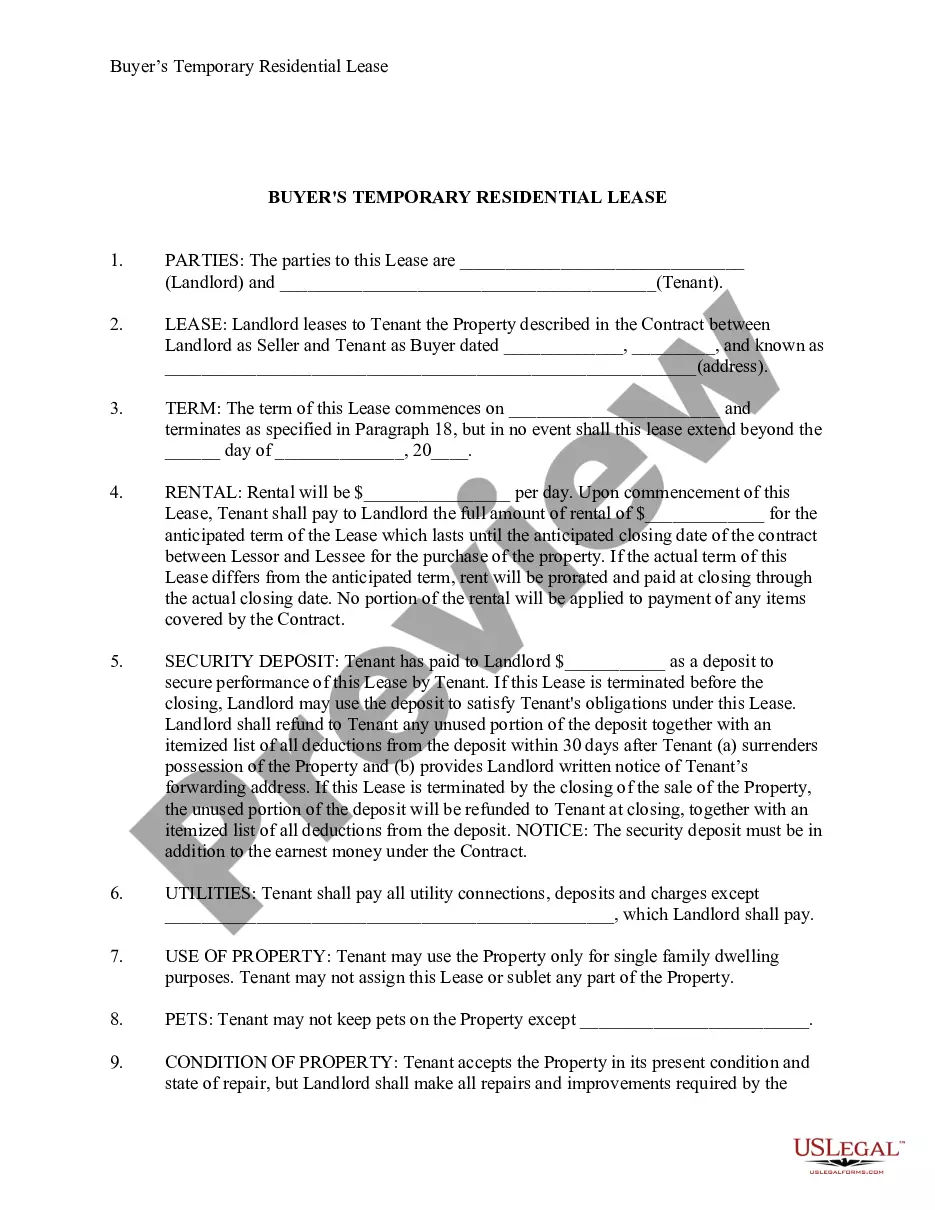
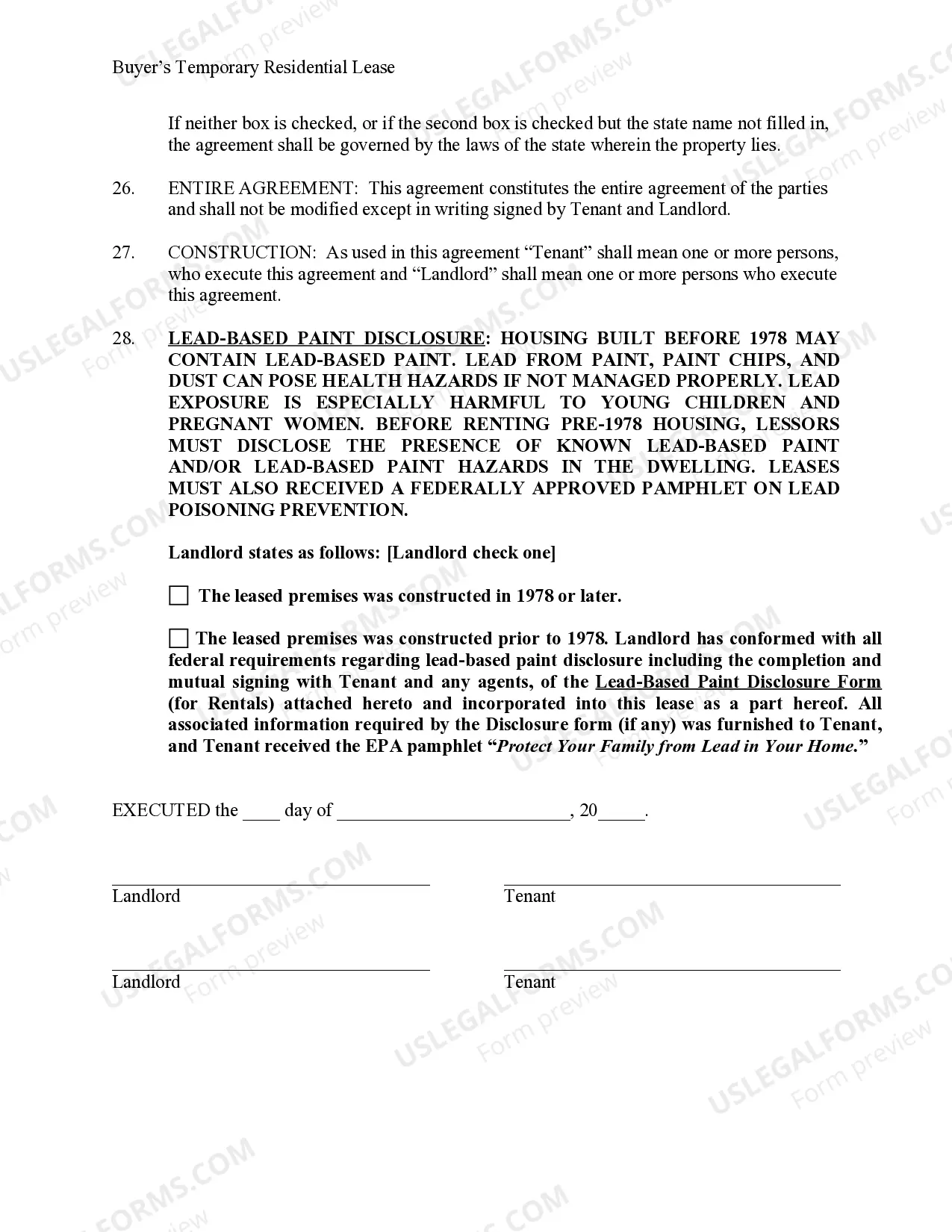
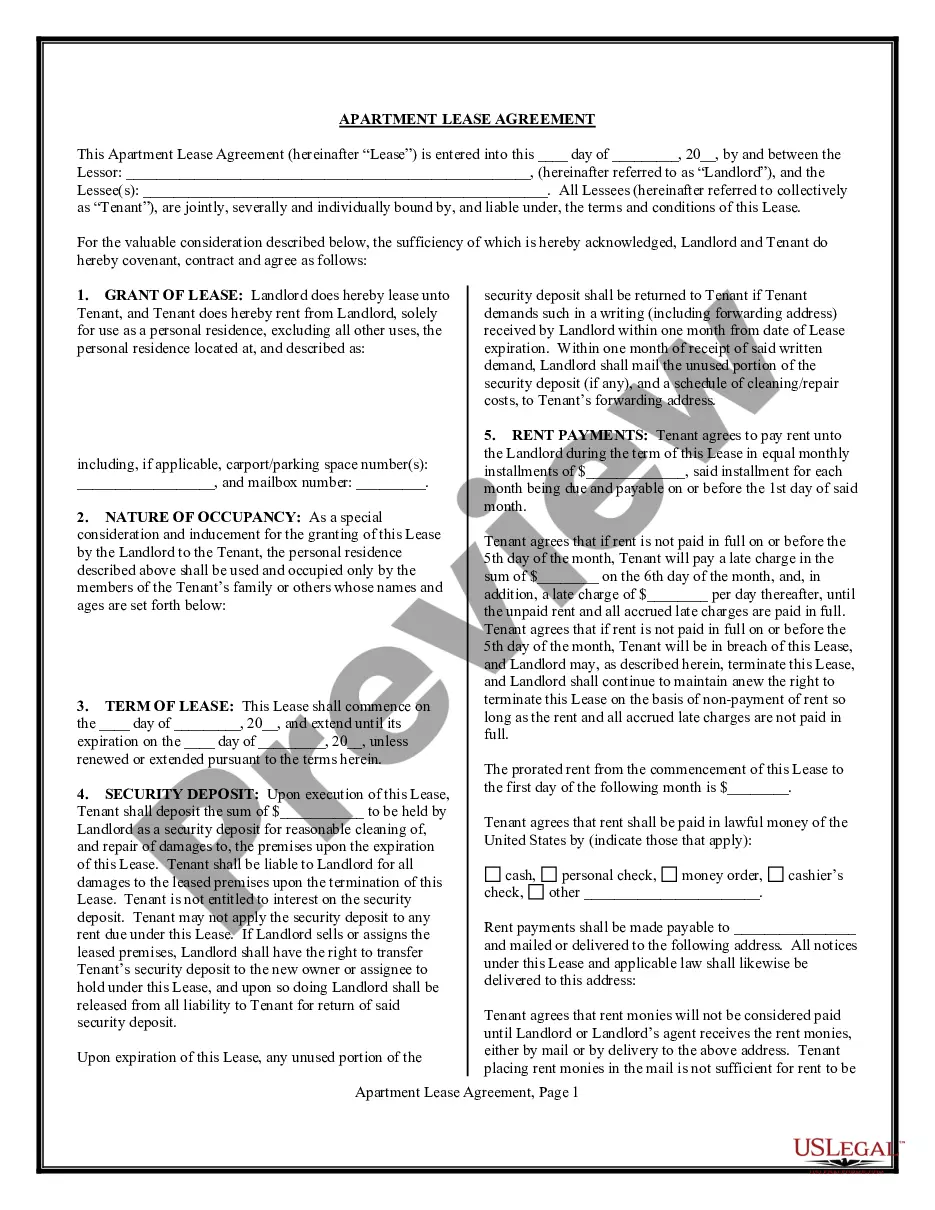
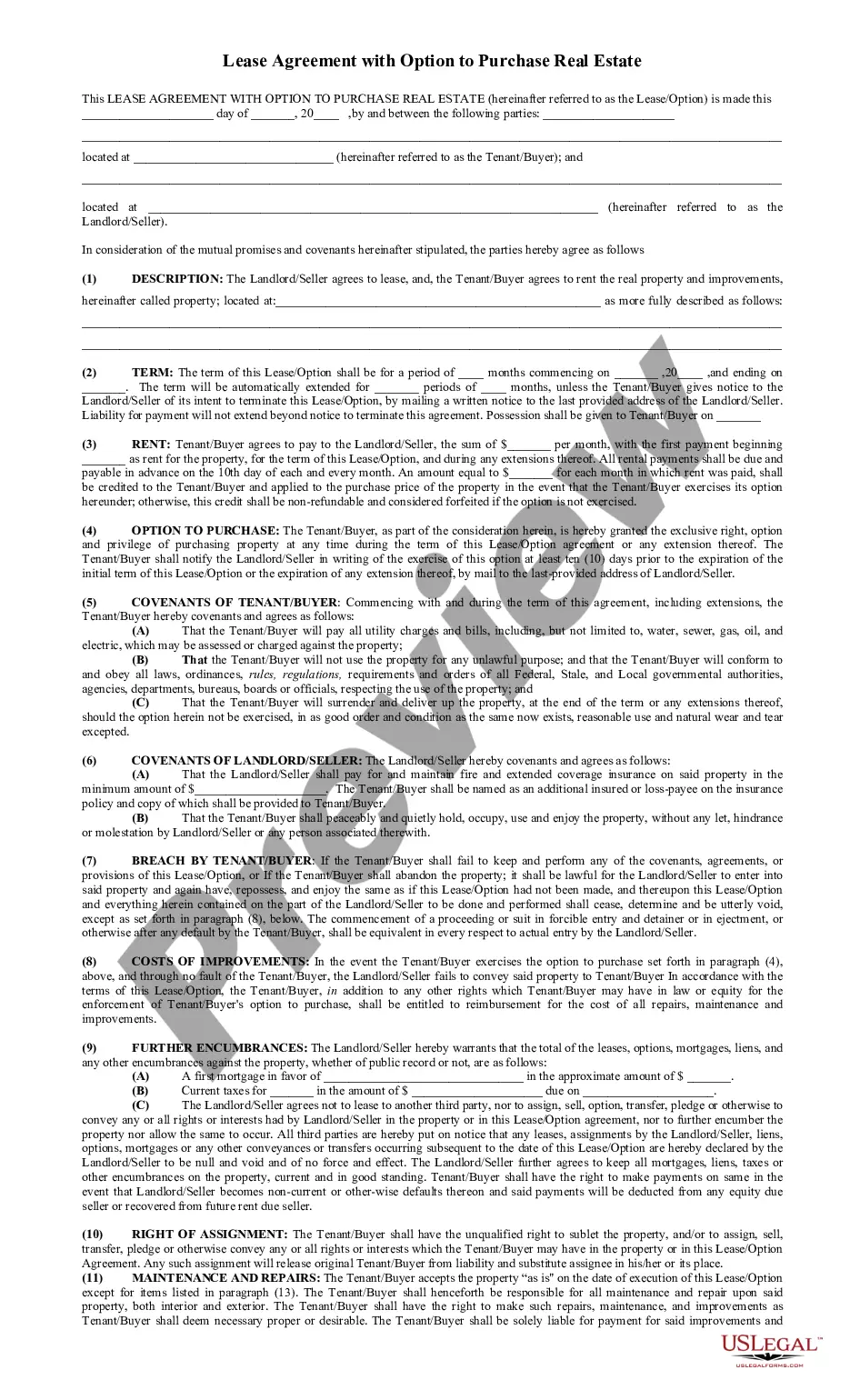
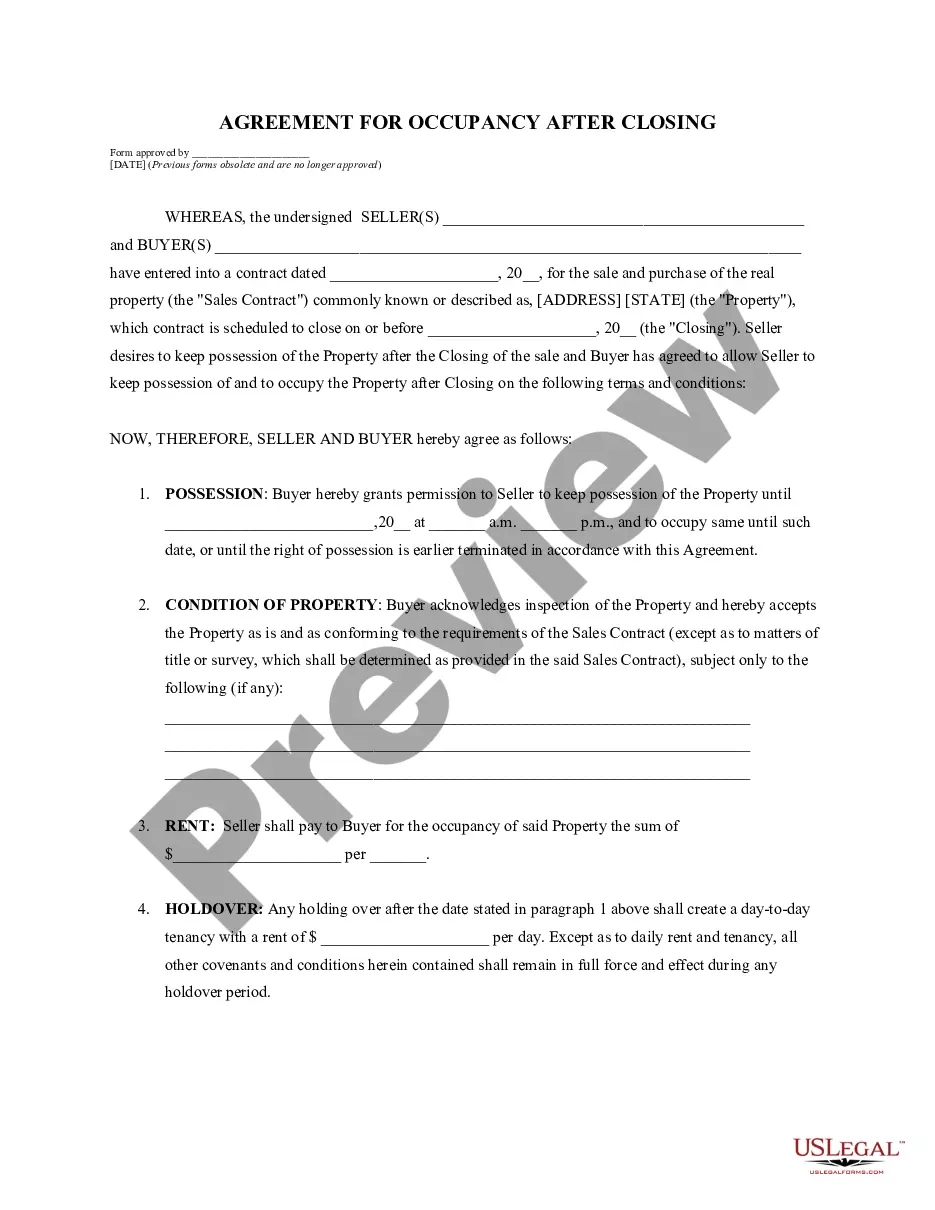
The Temporary Lease Agreement to Prospective Buyer of Residence prior to Closing is a legal document that allows a seller to lease their property to the buyer before the closing of the sale. Unlike a standard lease, this agreement is specifically designed for situations where the buyer wants to take possession of the residence early while the sale is being finalized.
Key parts of this document
- Parties: Identifies the landlord (seller) and tenant (buyer).
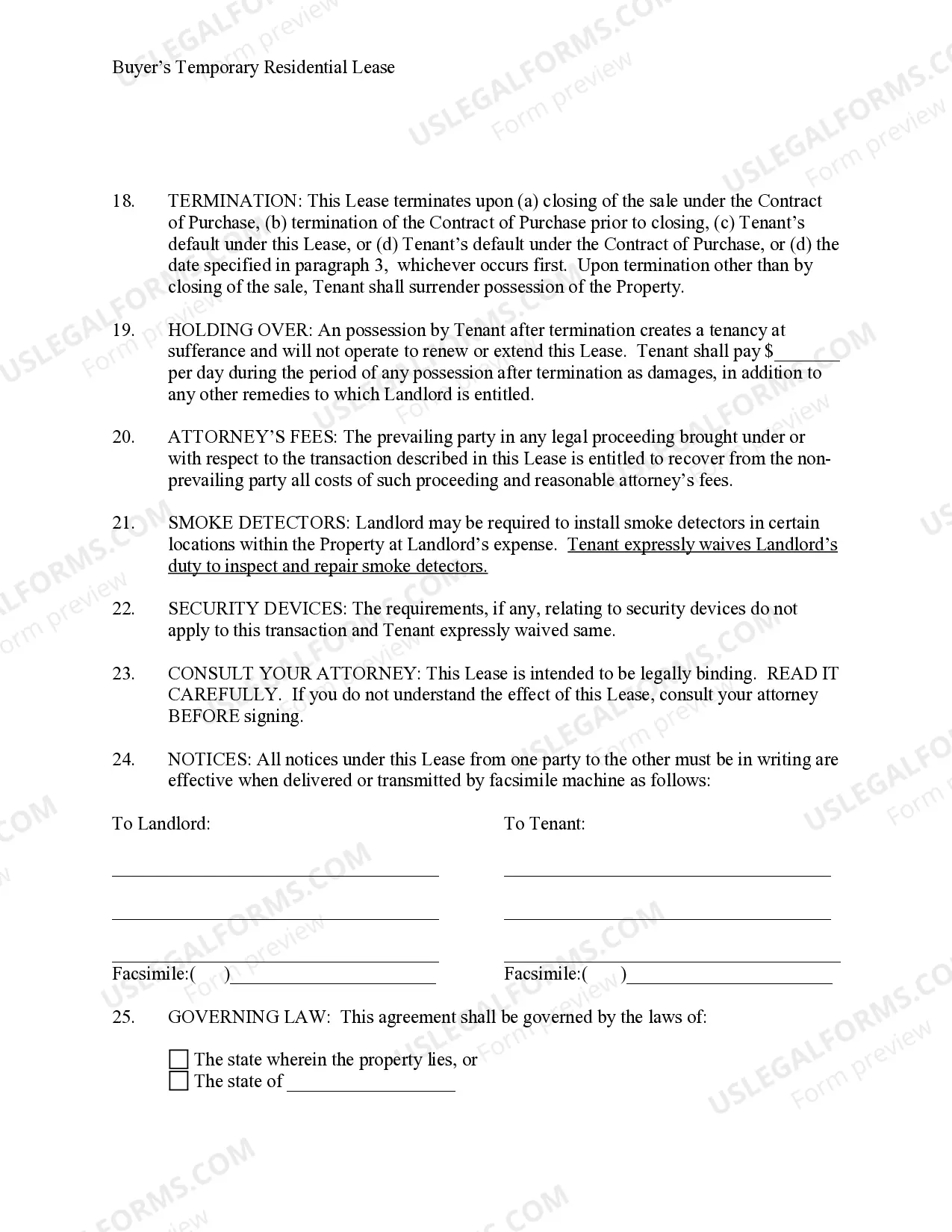
- Lease Term: Specifies the duration of the lease and termination conditions.
- Rental Amount: Details the daily rent and payment obligations.
- Security Deposit: Outlines the deposit amount and conditions for its return.
- Property Use: States that the property may only be used as a single-family dwelling.
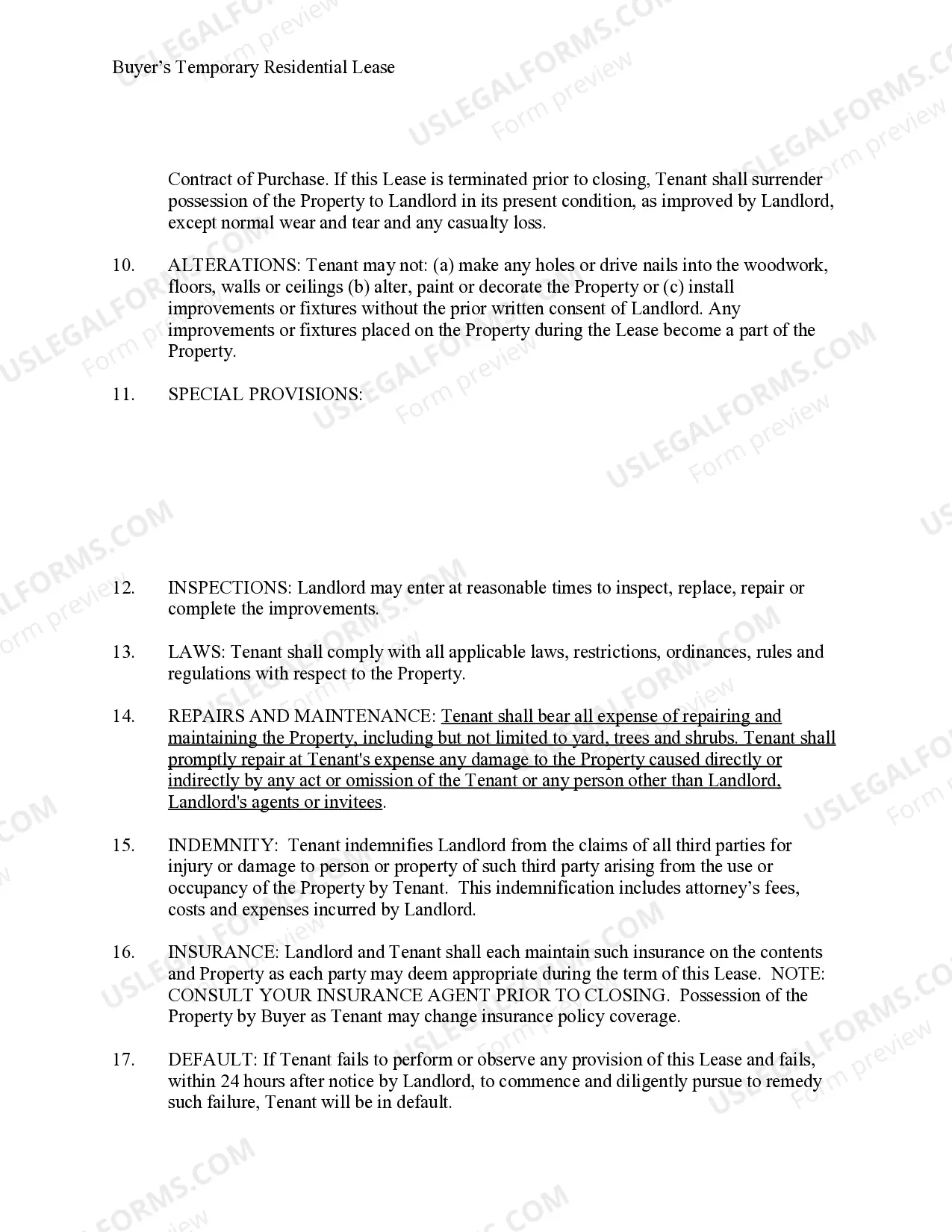
- Indemnity Clause: Indicates tenant responsibility for any third-party claims arising from their use of the property.

Common use cases
This form is ideal in situations where a property is sold, but the buyer needs to move in immediately before the sale is finalized. It is typically used in competitive real estate markets where buyers wish to secure the home while waiting for the closing date.
Who should use this form
- Home sellers who are selling their residence but want to allow buyers to occupy it early.
- Prospective buyers who need to move into a house before the contract of sale is officially closed.
- Real estate agents assisting in transactions that involve pre-closing possession agreements.
Steps to complete this form
- Identify the parties involved by entering the names of the landlord and tenant.
- Describe the property by entering its address as outlined in the sales contract.
- Specify the lease term by entering the start date and anticipated closing date.
- Fill in the rental amount and indicate the security deposit paid by the tenant.
- Include any specific clauses related to pets or property conditions as necessary.
Does this document require notarization?
In most cases, this form does not require notarization. However, some jurisdictions or signing circumstances might. US Legal Forms offers online notarization powered by Notarize, accessible 24/7 for a quick, remote process.
Get your form ready online
Our built-in tools help you complete, sign, share, and store your documents in one place.
Make edits, fill in missing information, and update formatting in US Legal Forms—just like you would in MS Word.
Download a copy, print it, send it by email, or mail it via USPS—whatever works best for your next step.
Sign and collect signatures with our SignNow integration. Send to multiple recipients, set reminders, and more. Go Premium to unlock E-Sign.
If this form requires notarization, complete it online through a secure video call—no need to meet a notary in person or wait for an appointment.
We protect your documents and personal data by following strict security and privacy standards.

Make edits, fill in missing information, and update formatting in US Legal Forms—just like you would in MS Word.

Download a copy, print it, send it by email, or mail it via USPS—whatever works best for your next step.

Sign and collect signatures with our SignNow integration. Send to multiple recipients, set reminders, and more. Go Premium to unlock E-Sign.

If this form requires notarization, complete it online through a secure video call—no need to meet a notary in person or wait for an appointment.

We protect your documents and personal data by following strict security and privacy standards.
Mistakes to watch out for
- Failing to specify the rental amount clearly, which can lead to misunderstandings.
- Not marking the correct lease termination date, possibly causing disputes.
- Neglecting to outline utilities and repair responsibilities, leading to confusion.
- Forgetting to have both parties sign and date the agreement, making it unenforceable.
Why use this form online
- Convenience: Downloadable and printable for immediate use.
- Editability: Customize the form as per your specific needs.
- Reliability: Created by licensed attorneys to ensure legal compliance.
Legal use & context
- This agreement is legally binding once signed by both parties.
- Each party should retain a copy of the lease for their records.
- The form helps prevent disputes by clearly outlining the responsibilities of both landlord and tenant before closing.
Key takeaways
- This Temporary Lease Agreement enables buyers to occupy their new home before the sale is finalized.
- Clear terms regarding rent, security deposits, and property use prevent confusion and disputes.
- Be mindful of state-specific rules and ensure all parties understand their obligations.
Looking for another form?
Form popularity
FAQ
The Lease Must be in Writing It does not matter if the lease is handwritten or typed.
A written agreement can act as a roadmap for the landlord-tenant relationship, especially if a dispute arises. Also, real estate (land) leases for more than one year must be in writing. If a lease for over one year is not in writing, it will generally not be enforceable in court.
A short-term lease generally refers to a lease that is either month-to-month, for three months or anything up to six months, while a long-term lease is anything longer than six months.
A lease can be written or verbal, but a verbal lease can be very difficult to enforce.Most leases are fairly standard and cover basic components such as rent amount, duration of lease term, resposiblities of each party and penalties for not following the terms.
If a lease was not signed but the parties are performing in accordance with its terms then most courts would deem the unsigned lease to be fully valid and enforceable even if it wasn't signed.
The lease becomes legally binding when all parties have signed: the landlord and all tenants living in the unit who are 18 and older. If you're worried about situations where a lease needs to end early, learn about breaking a lease and grounds for eviction.
Collect each party's information. Include specifics about your property. Consider all of the property's utilities and services. Know the terms of your lease. Set the monthly rent amount and due date. Calculate any additional fees. Determine a payment method. Consider your rights and obligations.
As long as the contract spells out specific details and both parties have signed that they agree to the contract's terms, a handwritten contract is legally binding and enforceable in court.