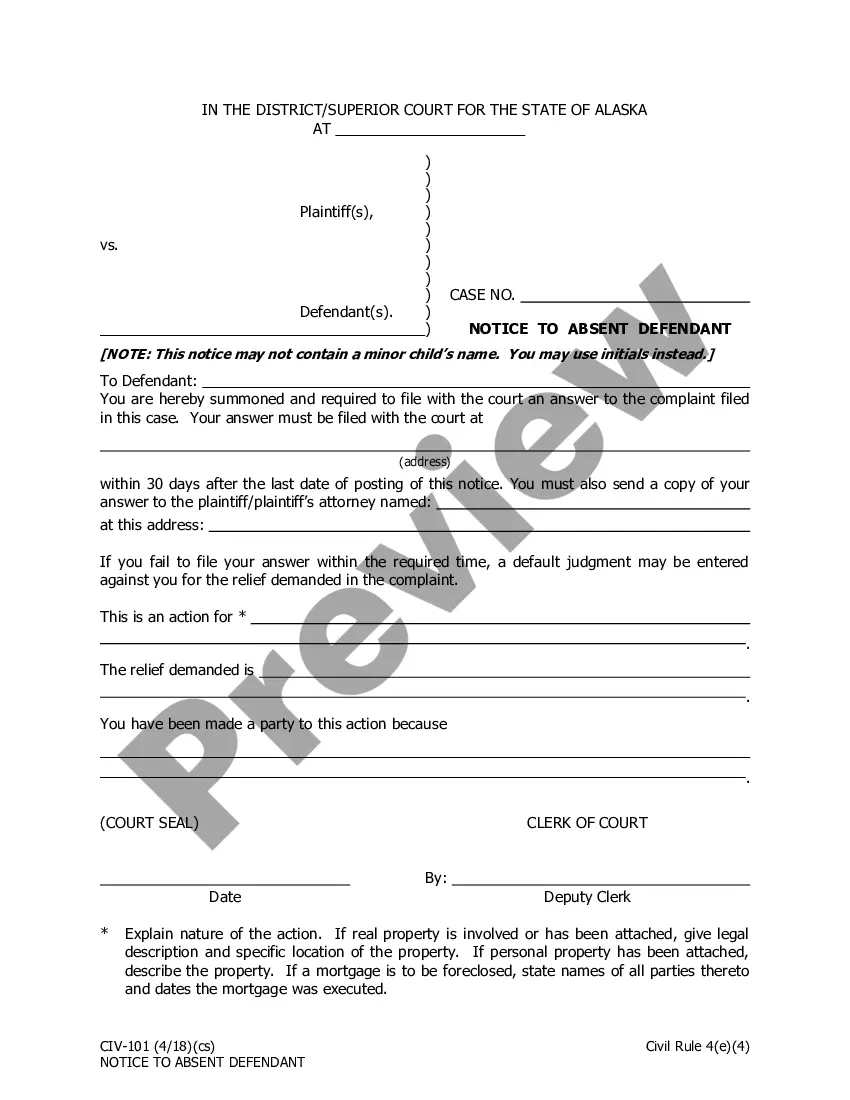
Ohio General Warranty Deed from Husband and Wife to a Trust
About this form
The General Warranty Deed from Husband and Wife to a Trust is a legal document used to transfer property ownership from married individuals (the grantors) to a trust (the grantee). This form ensures that the property is conveyed with a guarantee of clear title, meaning that the grantors affirm they have the right to transfer the property. Unlike other deeds, this warranty deed includes a promise that the property is free from any liens or encumbrances, providing added protection to the trust as the new owner.
What’s included in this form
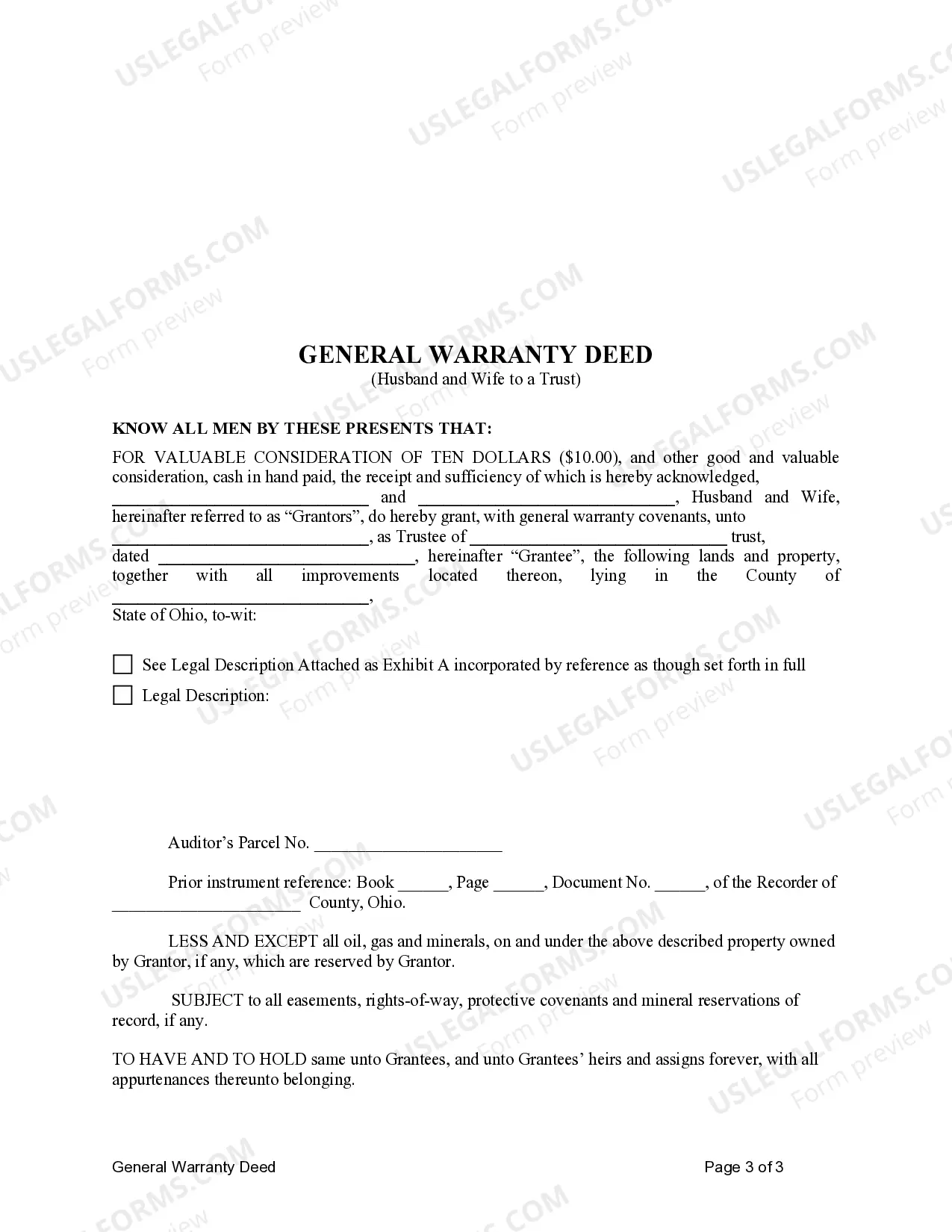
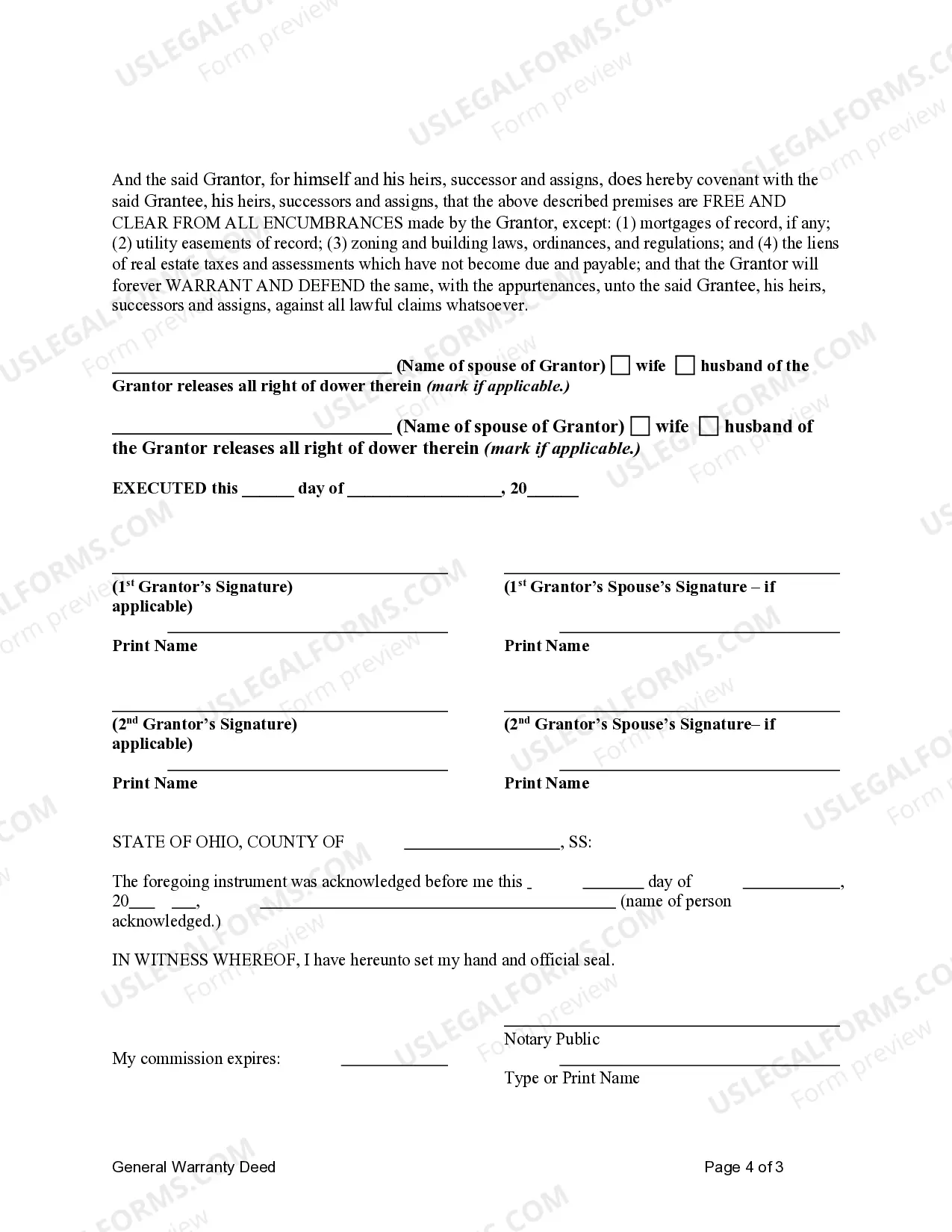
- Grantors' names: Identifies the husband and wife transferring the property.
- Grantee's name: Specifies the trust receiving the property.
- Property description: Details the property being transferred, including a legal description.
- Reservation clause: Includes any reservations of rights for oil, gas, and minerals beneath the property.
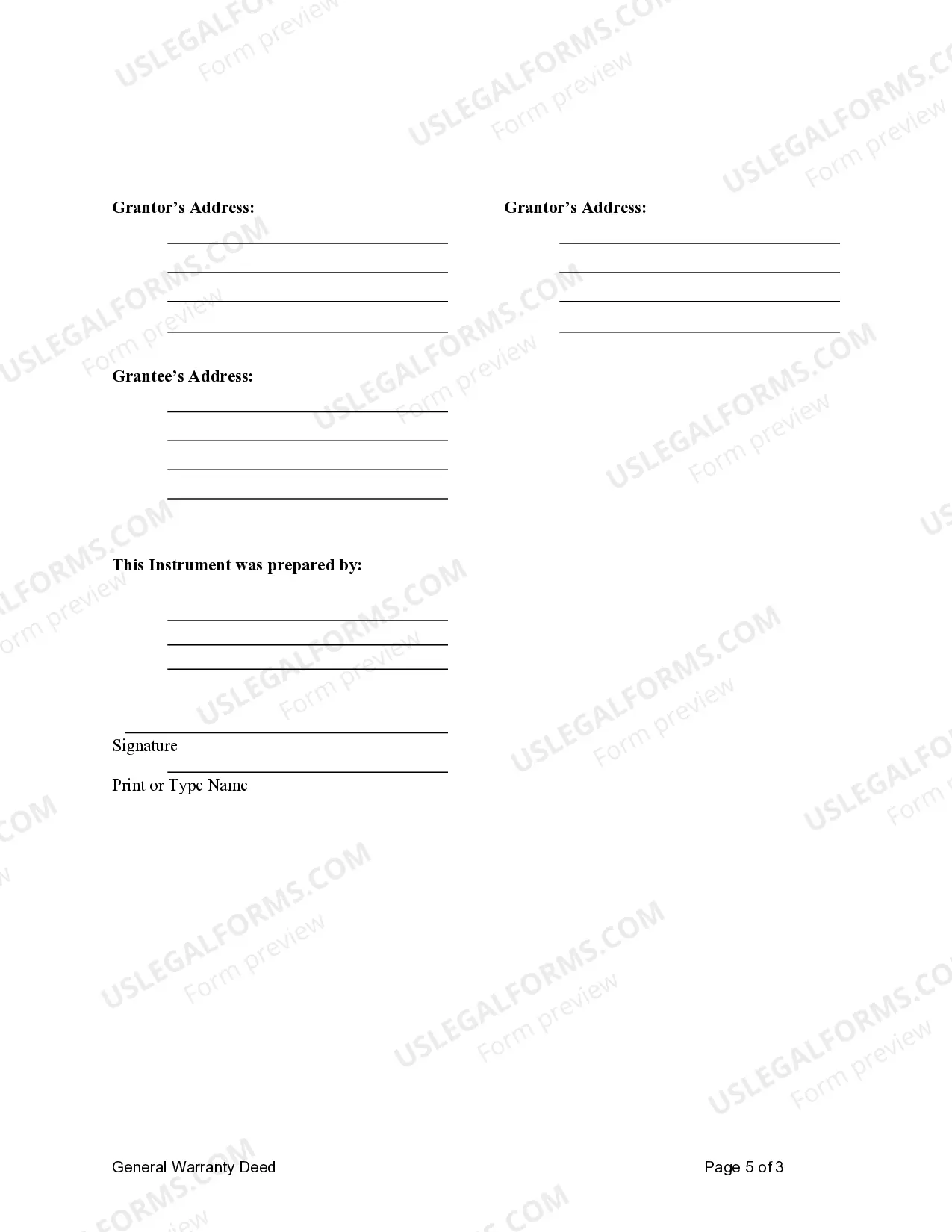
- Signatures: Spaces for grantors to sign, completing the transfer.





When this form is needed
This form is appropriate when a husband and wife wish to transfer their property into a trust they have established. Typical scenarios include estate planning purposes, asset protection strategies, or simplifying the transfer of property during their lifetime or after death. Using this warranty deed protects both the grantors and the trust by clearly documenting the transfer and guaranteeing the trustâs ownership rights.
Who needs this form
This form is intended for:
- Married couples looking to transfer property to their trust.
- Individuals involved in estate planning.
- Trustees managing property within a trust.
How to prepare this document
- Identify the parties involved: Enter the names of the husband and wife as grantors and the name of the trustee as grantee.
- Specify the property: Provide a complete description of the property being transferred.
- Enter the effective date: Specify the date when the transfer will take effect.
- Sign and date the form: Both grantors must sign the document in the presence of a notary if required by local law.
- Attach legal descriptions if needed: Include any relevant legal descriptions as an exhibit, if applicable.
Does this form need to be notarized?
This form does not typically require notarization unless specified by local law. However, it is advisable to have the document notarized to ensure its legal effectiveness and acceptance during property transfers.
Get your form ready online
Our built-in tools help you complete, sign, share, and store your documents in one place.
Make edits, fill in missing information, and update formatting in US Legal Forms—just like you would in MS Word.
Download a copy, print it, send it by email, or mail it via USPS—whatever works best for your next step.
Sign and collect signatures with our SignNow integration. Send to multiple recipients, set reminders, and more. Go Premium to unlock E-Sign.
If this form requires notarization, complete it online through a secure video call—no need to meet a notary in person or wait for an appointment.
We protect your documents and personal data by following strict security and privacy standards.

Make edits, fill in missing information, and update formatting in US Legal Forms—just like you would in MS Word.

Download a copy, print it, send it by email, or mail it via USPS—whatever works best for your next step.

Sign and collect signatures with our SignNow integration. Send to multiple recipients, set reminders, and more. Go Premium to unlock E-Sign.

If this form requires notarization, complete it online through a secure video call—no need to meet a notary in person or wait for an appointment.

We protect your documents and personal data by following strict security and privacy standards.
Mistakes to watch out for
- Forgetting to include the legal description of the property.
- Not obtaining necessary signatures from both grantors.
- Leaving sections blank, which can lead to confusion or invalidation.
- Neglecting to get the form notarized if required by law.
Why complete this form online
- Convenient access: Download and complete the form from anywhere at any time.
- Editability: Modify your form easily to suit your specific needs before finalizing.
- Reliable templates: Ensure you are using a legally sound document drafted by licensed attorneys.
Looking for another form?


Form popularity
FAQ
Go to the Deed Transfer Department to obtain a transfer form for a quit claim deed or warranty deed. Take the form, along with the person to whom the the property is being transferred, to a notary public. Take the form back to the Deed Transfer Department and turn it in to the County Auditor.
First you will need to take your deed to the Geauga County Auditor's Office which is in the same building, two doors away. After completing the conveyance process, the Auditor will stamp the deed and return it to you. Bring the stamped original deed back to the Recorder's Office for recording.
Today's question is is it possible to deed real estate to someone without them knowing it? Strictly speaking, the answer is no. Because it does not meet the acceptance element of a valid deed transfer. Us lawyers must learn to speak in elements because it governs everything that we do.
Adding someone to your house deed requires the filing of a legal form known as a quitclaim deed. When executed and notarized, the quitclaim deed legally overrides the current deed to your home. By filing the quitclaim deed, you can add someone to the title of your home, in effect transferring a share of ownership.
To add a spouse to a deed, all you have to do is literally fill out, sign and record a new deed in your county recorder's office.
It is possible to be named on the title deed of a home without being on the mortgage. However, doing so assumes risks of ownership because the title is not free and clear of liens and possible other encumbrances.If a mortgage exists, it's best to work with the lender to make sure everyone on the title is protected.
Retrieve your original deed. Get the appropriate deed form. Draft the deed. Sign the deed before a notary. Record the deed with the county recorder. Obtain the new original deed.
The name and address of the seller (called the grantor) The name and address of the buyer (called the grantee) A legal description of the property (found on the previous deed) A statement that the grantor is transferring the property to the grantee.
Go to the Deed Transfer Department to obtain a transfer form for a quit claim deed or warranty deed. Take the form, along with the person to whom the the property is being transferred, to a notary public. Take the form back to the Deed Transfer Department and turn it in to the County Auditor.