Ohio Seller's Disclosure of Financing Terms for Residential Property in connection with Contract or Agreement for Deed a/k/a Land Contract
Overview of this form
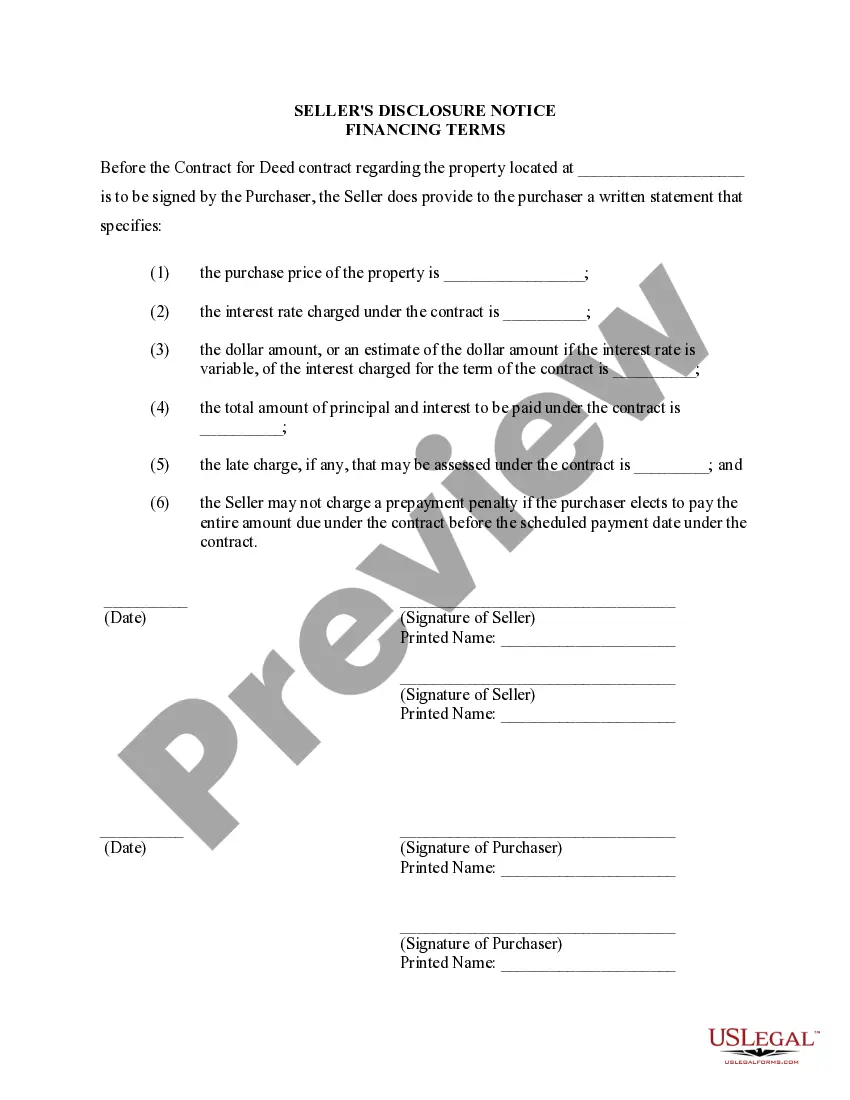
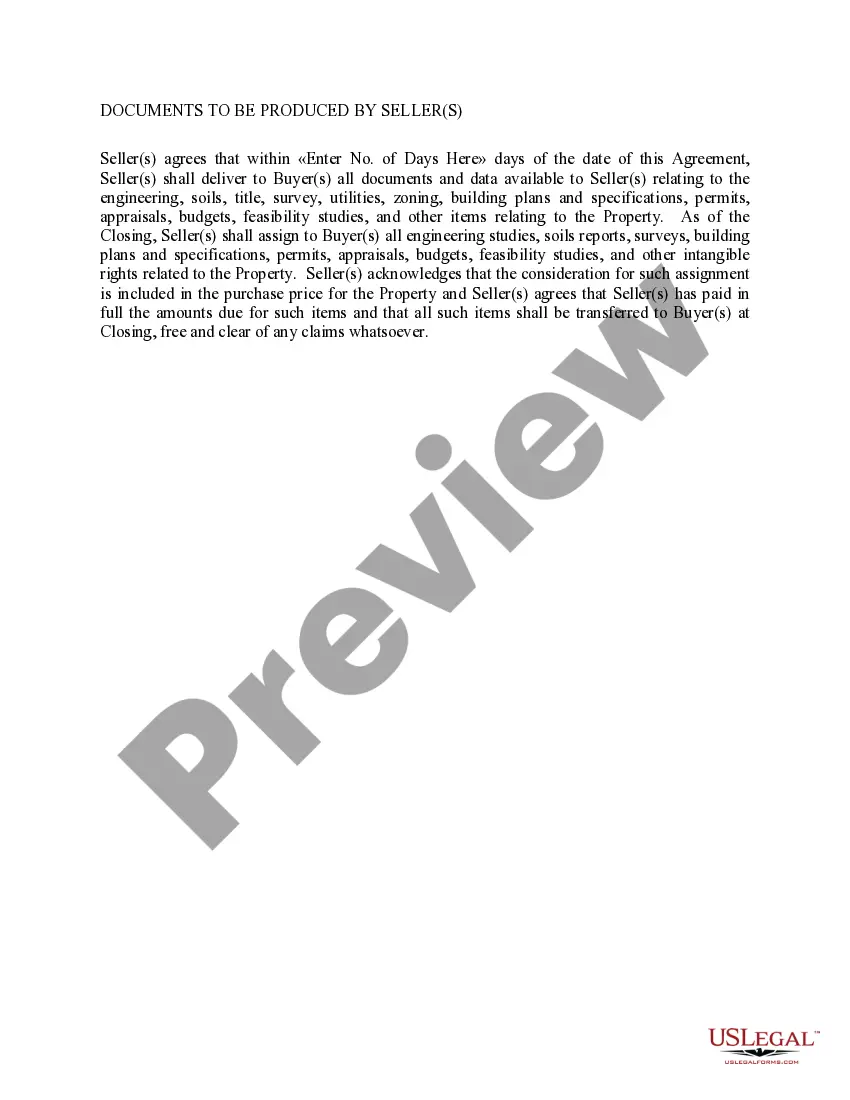
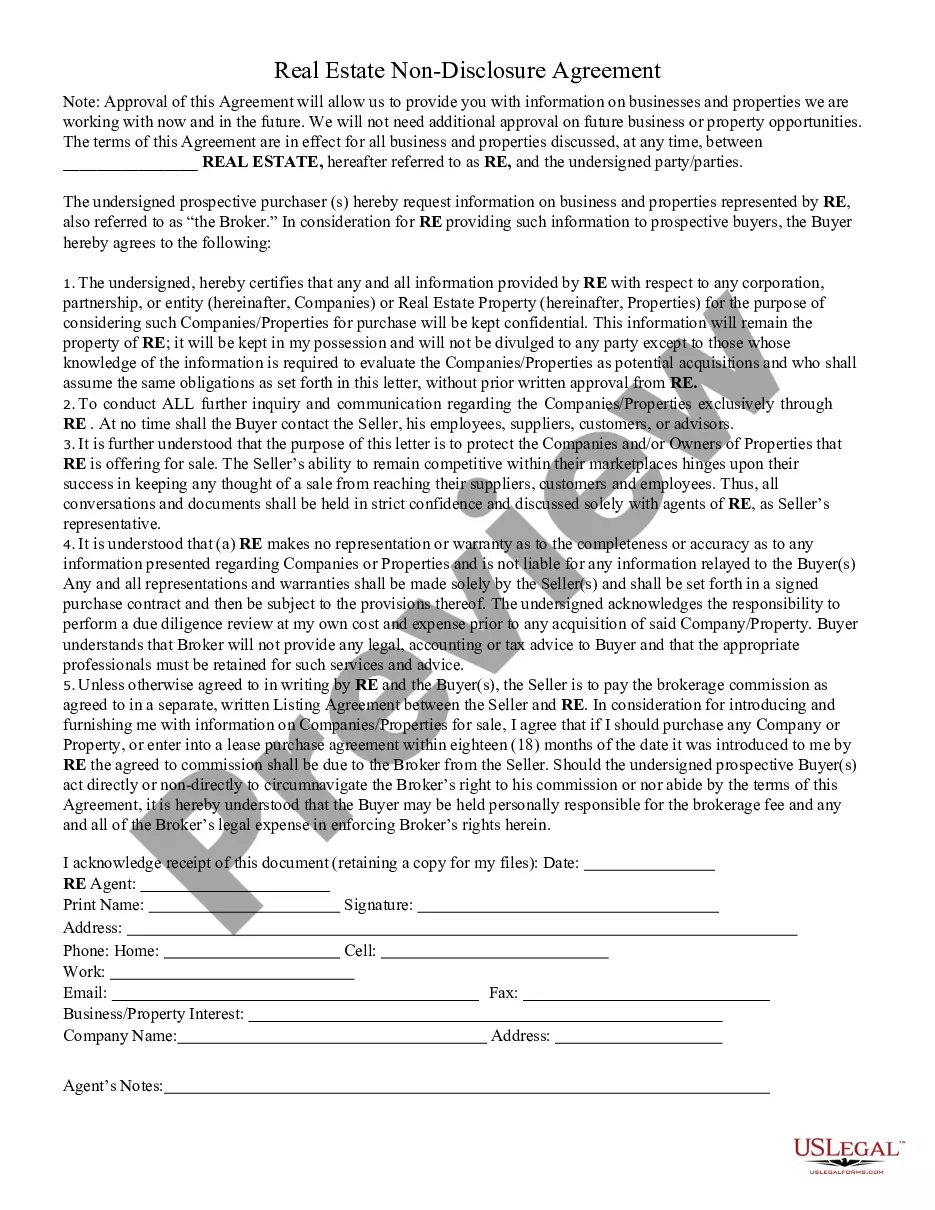
The Seller's Disclosure of Financing Terms for Residential Property in connection with a Contract or Agreement for Deed, also known as a Land Contract, is a legal document that informs the buyer about the financial aspects of a property sale. This form outlines the purchase price, payment schedule, interest rates, and possible late charges. It is specifically designed for sellers to provide essential financing details to potential buyers before finalizing the sale, ensuring transparency and clarity in the transaction.
Key parts of this document
- Purchase price of the property
- Details of payment terms
- Interest rate on the financing
- Information on late charges, if applicable
- Signatures of both the seller and buyer
When to use this form
This form should be used when a seller plans to finance the sale of residential property through a contract for deed. It is essential to provide this disclosure before the contract is signed, giving the buyer clear information about the financing terms and helping them make informed decisions regarding the purchase.
Intended users of this form
- Property sellers who are financing the sale
- Buyers who are entering into a contract for deed
- Real estate agents facilitating the transaction
- Attorneys involved in real estate transactions
Steps to complete this form
- Identify the seller and buyer, including full names and contact information.
- Specify the property address and legal description.
- Detail the purchase price and payment structure.
- Indicate the interest rate and terms for late charges, if any.
- Both parties should sign and date the form to finalize the disclosure.
Does this document require notarization?
This form needs to be notarized to ensure legal validity. US Legal Forms provides secure online notarization powered by Notarize, allowing you to complete the process through a verified video call, available anytime.
Get your form ready online
Our built-in tools help you complete, sign, share, and store your documents in one place.
Make edits, fill in missing information, and update formatting in US Legal Forms—just like you would in MS Word.
Download a copy, print it, send it by email, or mail it via USPS—whatever works best for your next step.
Sign and collect signatures with our SignNow integration. Send to multiple recipients, set reminders, and more. Go Premium to unlock E-Sign.
If this form requires notarization, complete it online through a secure video call—no need to meet a notary in person or wait for an appointment.
We protect your documents and personal data by following strict security and privacy standards.

Make edits, fill in missing information, and update formatting in US Legal Forms—just like you would in MS Word.

Download a copy, print it, send it by email, or mail it via USPS—whatever works best for your next step.

Sign and collect signatures with our SignNow integration. Send to multiple recipients, set reminders, and more. Go Premium to unlock E-Sign.

If this form requires notarization, complete it online through a secure video call—no need to meet a notary in person or wait for an appointment.

We protect your documents and personal data by following strict security and privacy standards.
Common mistakes
- Failing to provide complete contact information for all parties.
- Not including clear details on payment terms and conditions.
- Omitting signatures or dates, which can invalidate the form.
- Forgetting to review state-specific regulations that may impact the form.
Benefits of using this form online
- Easy access to legally accurate forms that are vetted by licensed attorneys.
- Convenience of downloading the form for immediate use.
- Editability allows personalization of terms to suit specific transaction needs.
- No need for physical visits; forms can be filled out from anywhere.
Main things to remember
- The Seller's Disclosure of Financing Terms is crucial for clear communication between seller and buyer.
- Ensure all financial details are accurately stated to prevent disputes.
- Review local laws to ensure compliance with any additional requirements.
- Use this form to promote transparency and facilitate a smooth real estate transaction.
Looking for another form?




Form popularity
FAQ
No statute prevents selling your mortgaged home using a contract for deed.A mortgage lender, though, can immediately foreclose its loan if it discovers a contract for deed sale took place. Other than mortgage lender permission to sell your home via contract for deed, you have no easy way around the due-on-sale clause.
A land contract is a form of seller financing. It is similar to a mortgage, but rather than borrowing money from a lender or bank to buy real estate, the buyer makes payments to the real estate owner, or seller, until the purchase price is paid in full.
A land contract is a form of seller financing. It is similar to a mortgage, but rather than borrowing money from a lender or bank to buy real estate, the buyer makes payments to the real estate owner, or seller, until the purchase price is paid in full.
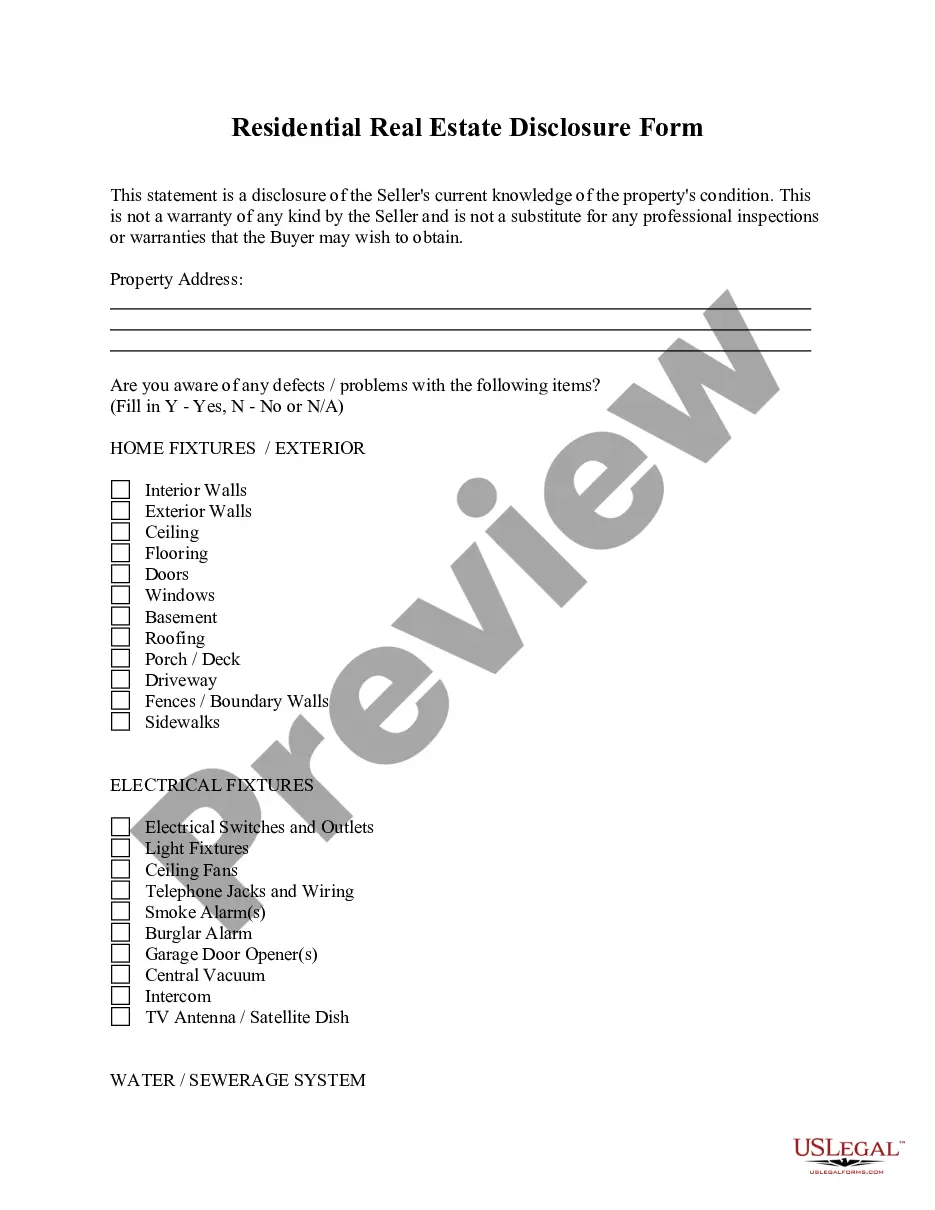
Property disclosure statements essentially outline any flaws that the home sellers (and their real estate agents) are aware of that could negatively affect the home's value. These statements are required by law in most areas of the country so buyers can know a property's good and bad points before they close the deal.
A: Yes you can, but you will need a good real estate attorney to do this for you, one that can structure this type of transaction.Ask someone who has recently sold a home or property, if they would recommend an attorney to get started.
As the property is mortgaged, you can not sell part of the land without first getting your lender's consent.You may find that the lender wants to have a professional valuation carried out, for which you will have to pay and if there is still sufficient equity to support your mortgage you should get consent.
Land contracts, or contracts for deed, are a security agreement between a seller, called a Vendor, and a buyer, called a Vendee: The Vendor agrees to sell a property by financing the purchase for the Vendee. The Vendor retains legal title and the Vendee receives equitable title.
You can sell your house on a land contract with an outstanding loan balance if your lender agrees and if the contract doesn't have a due-on-sale clause.
In general, a disclosure document is supposed to provide details about a property's condition that might negatively affect its value. Sellers who willfully conceal information can be sued and potentially convicted of a crime. Selling a property As Is will usually not exempt a seller from disclosures.