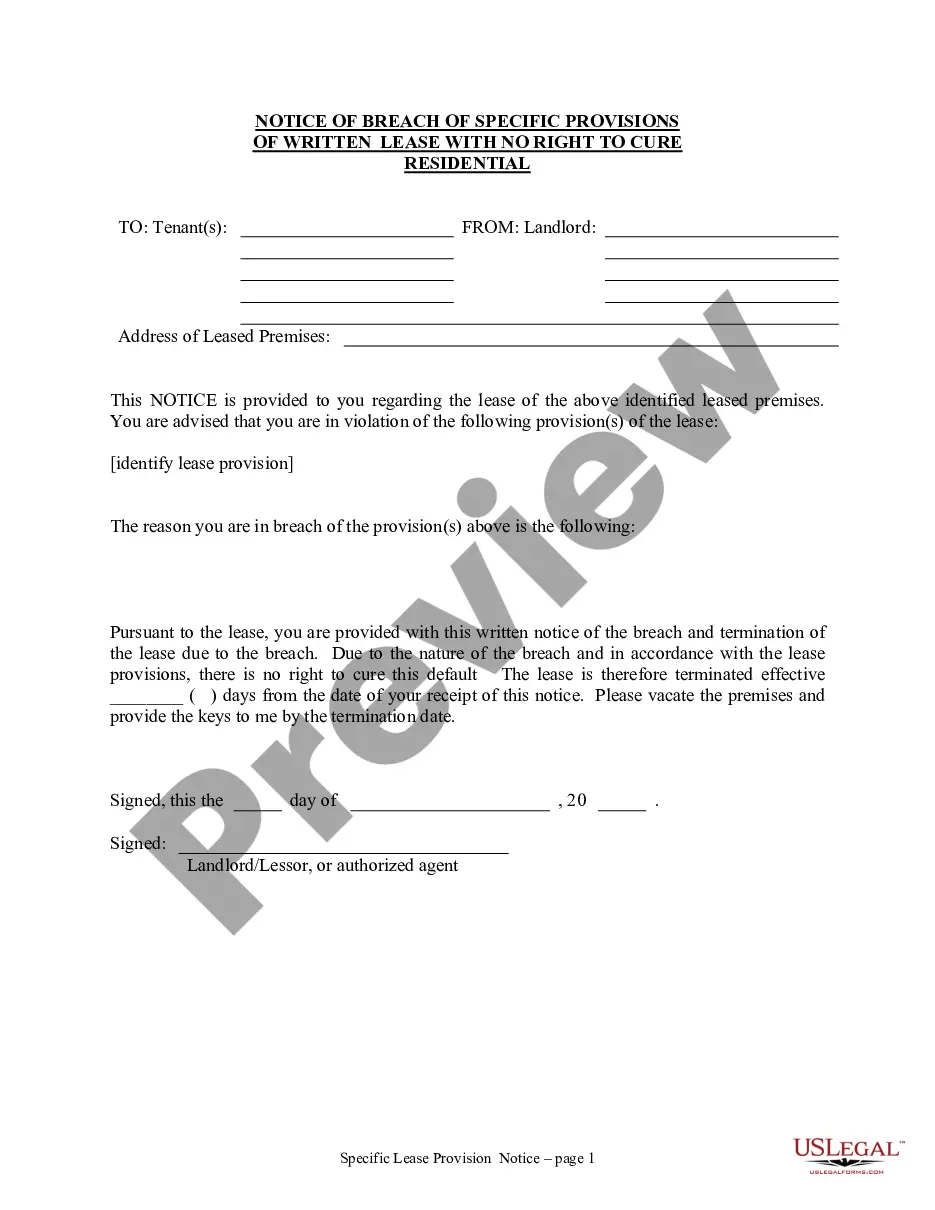
Ohio Commercial Contract for Contractor
What is this form?
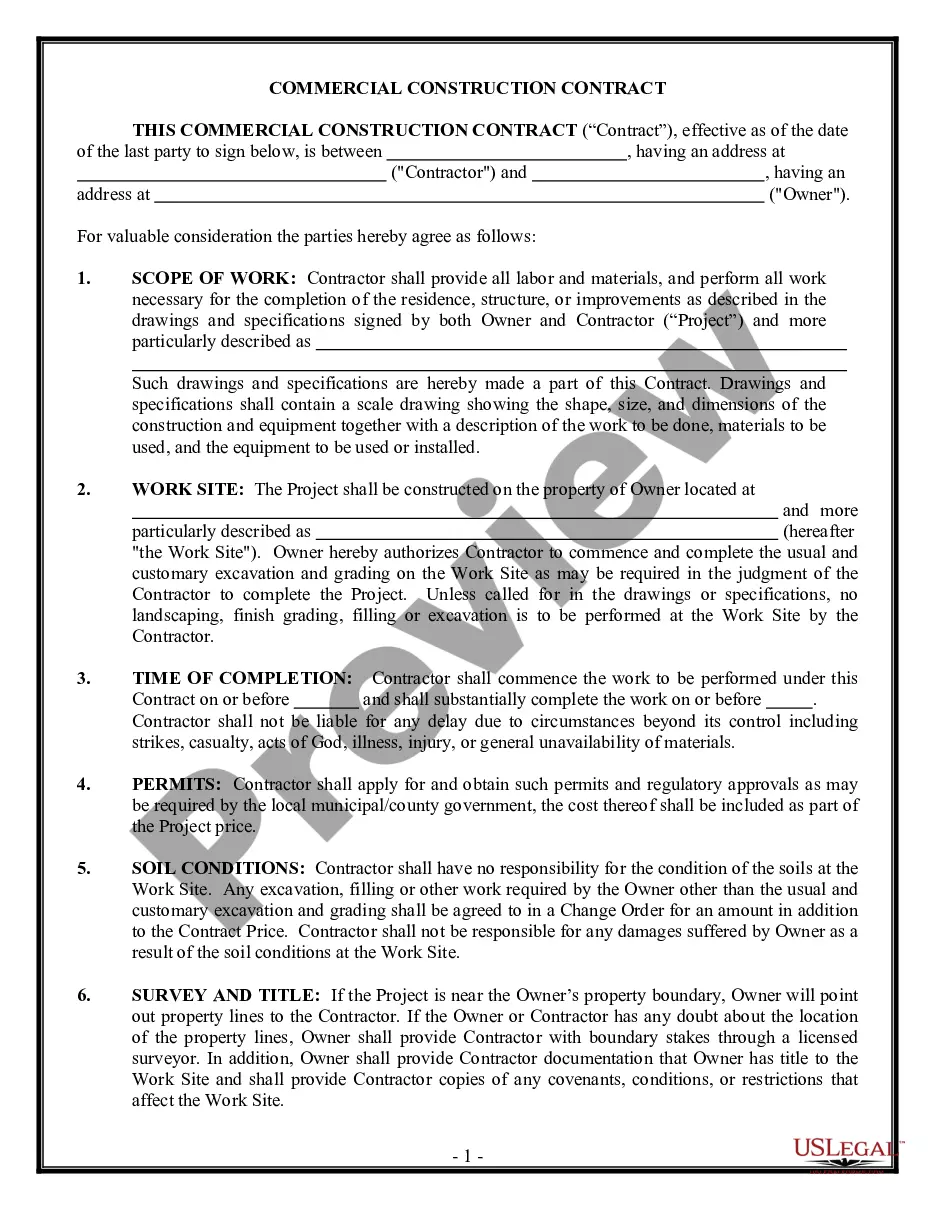
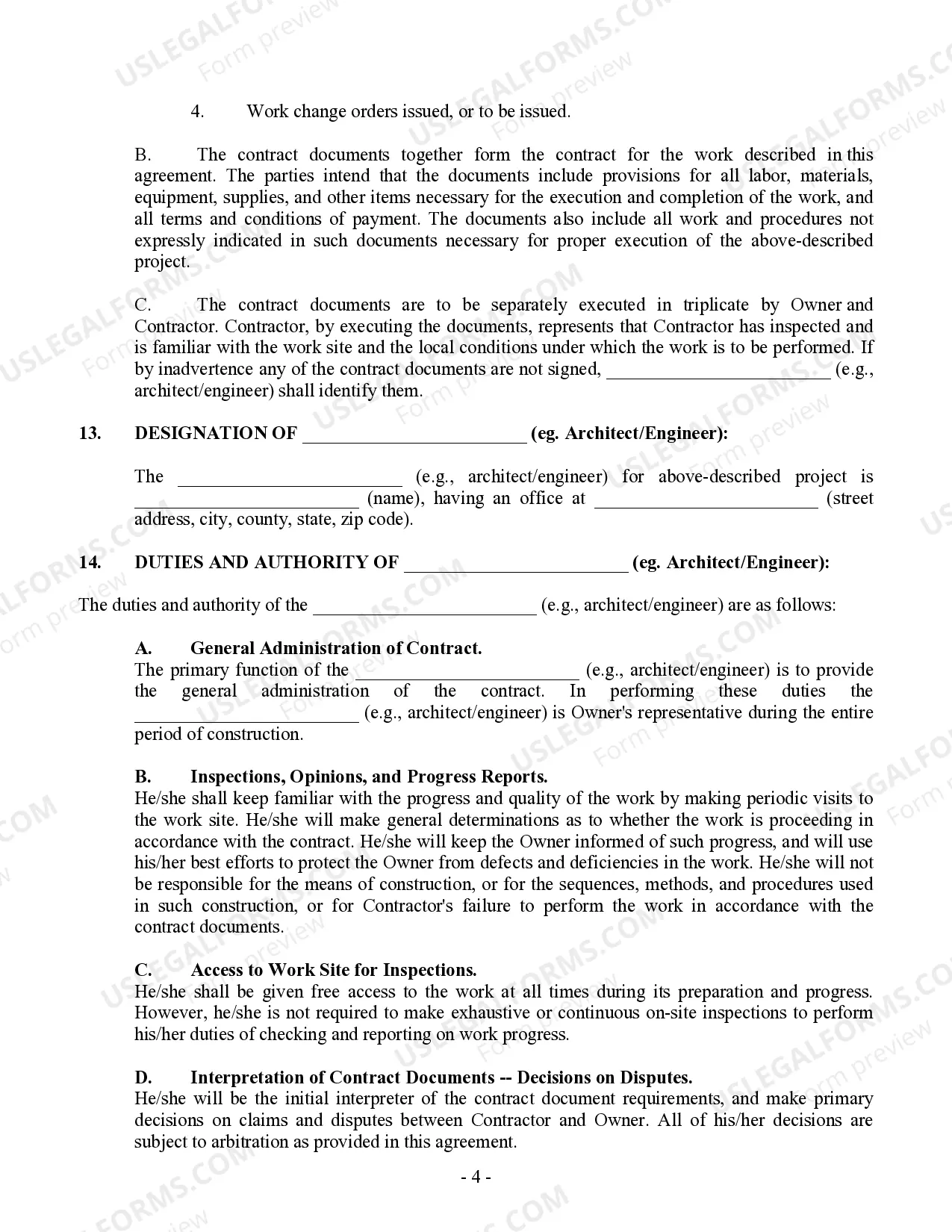
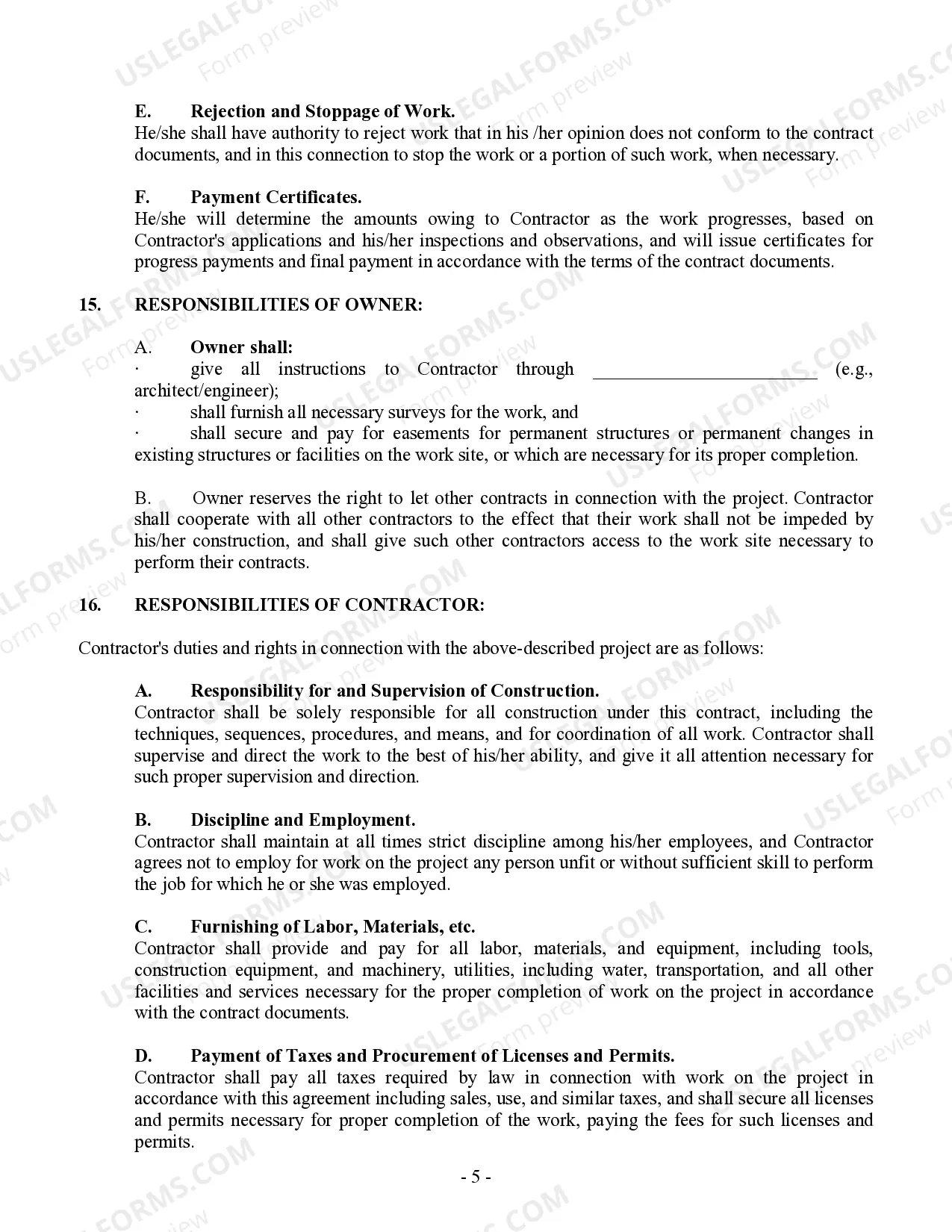
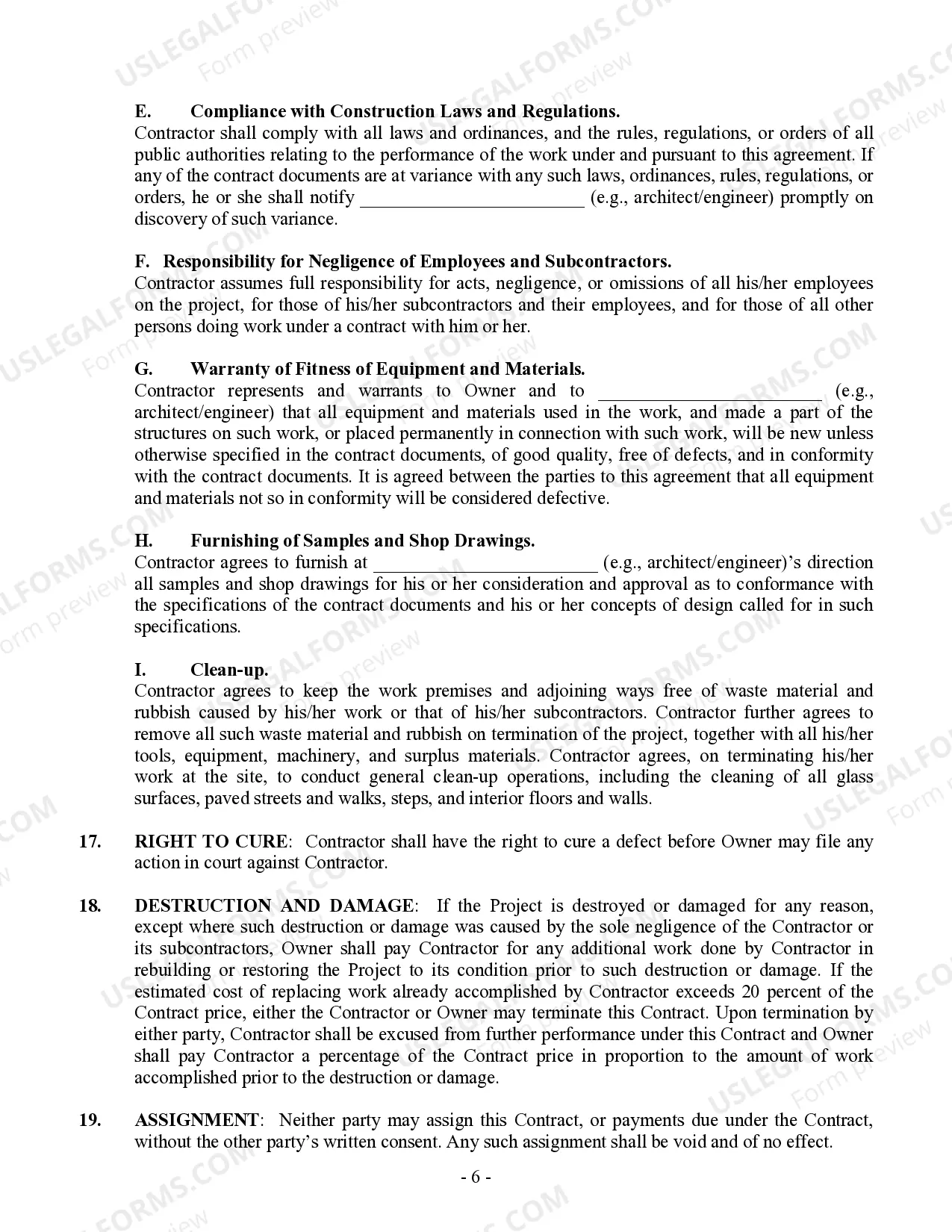
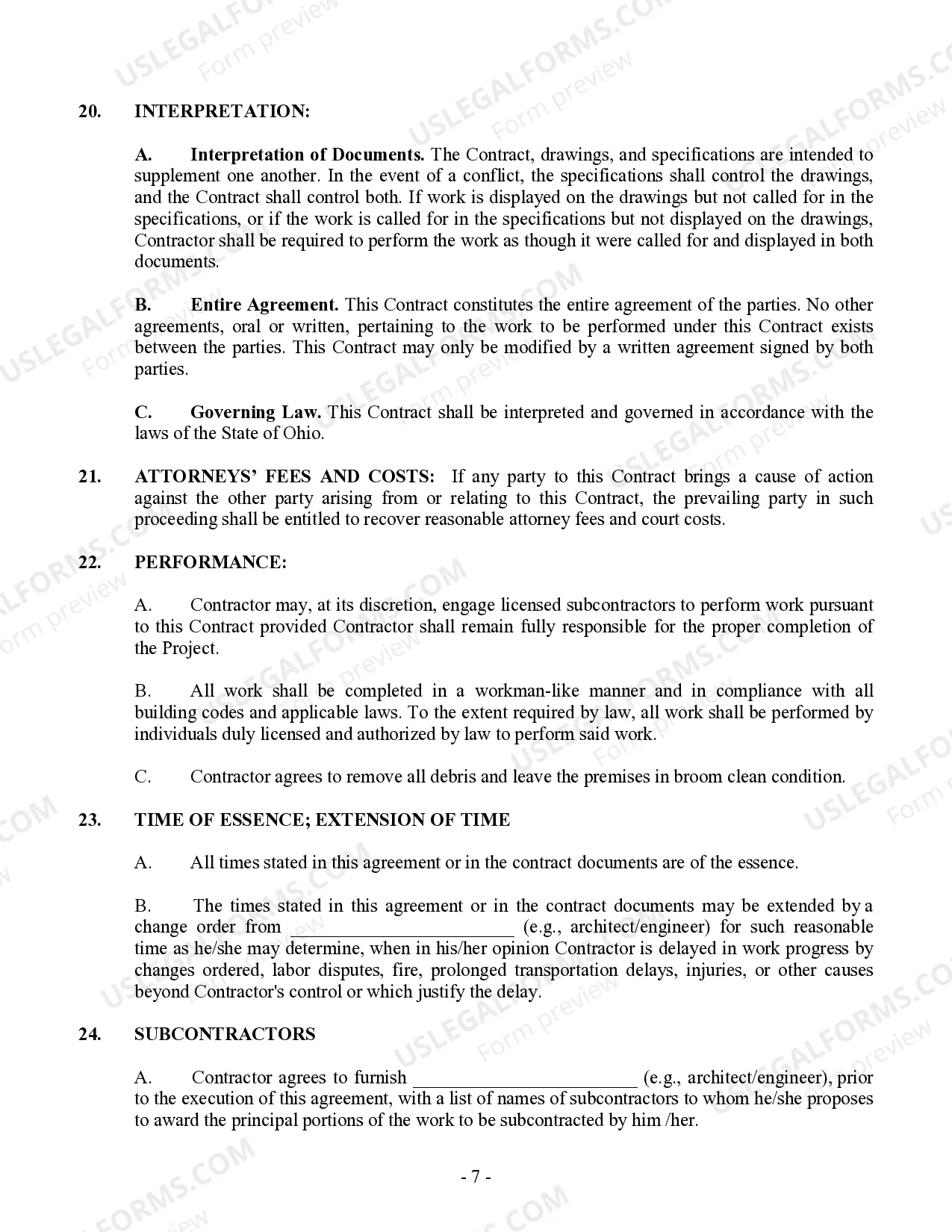
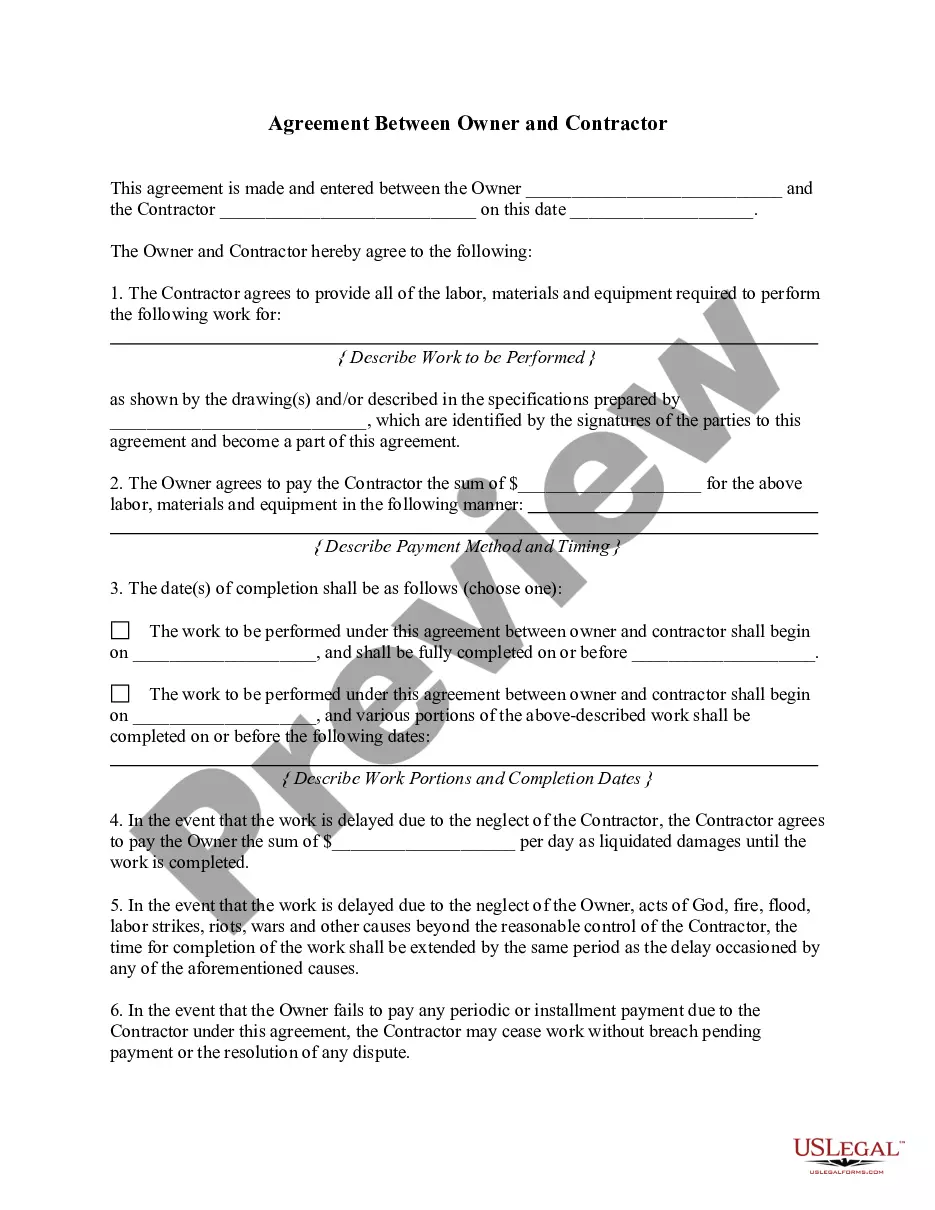
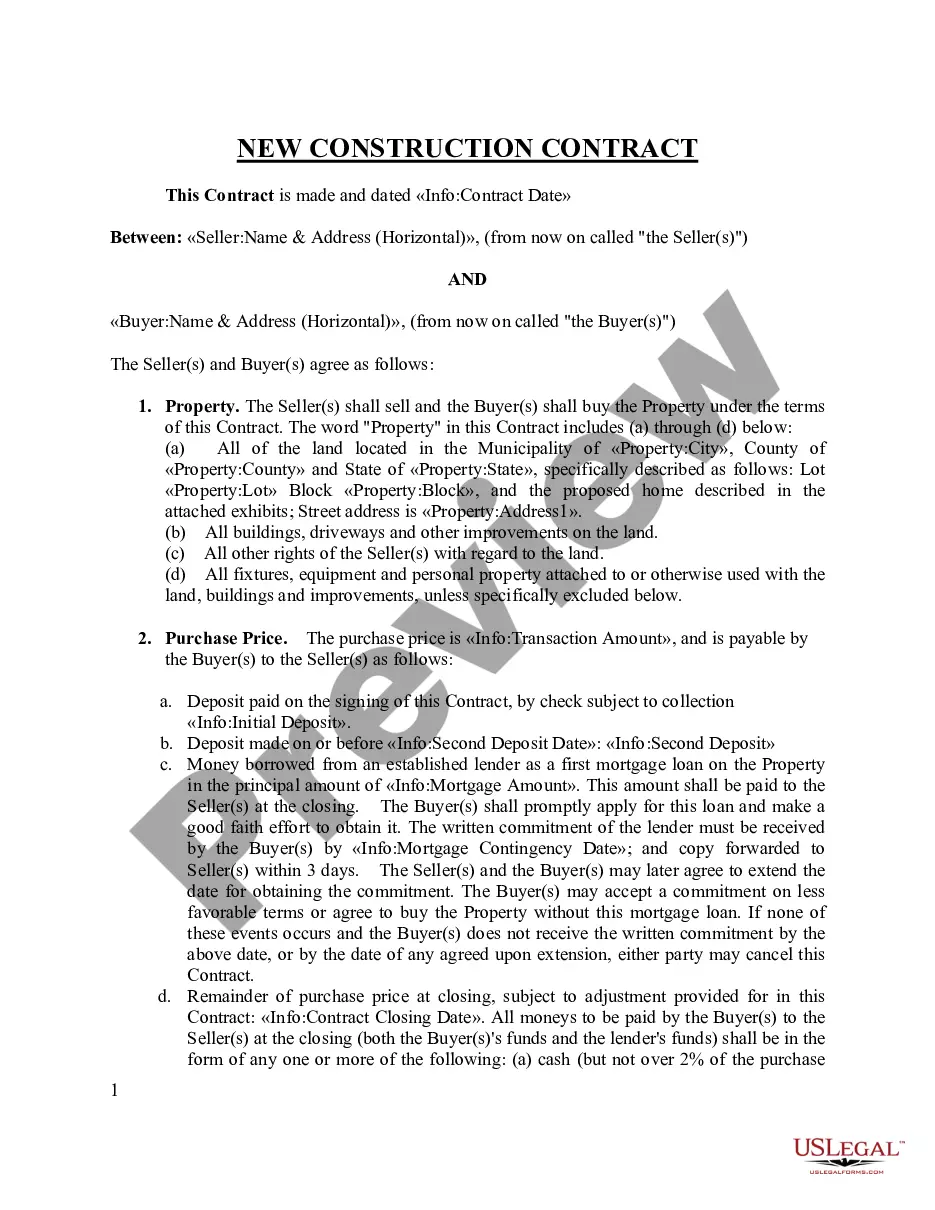
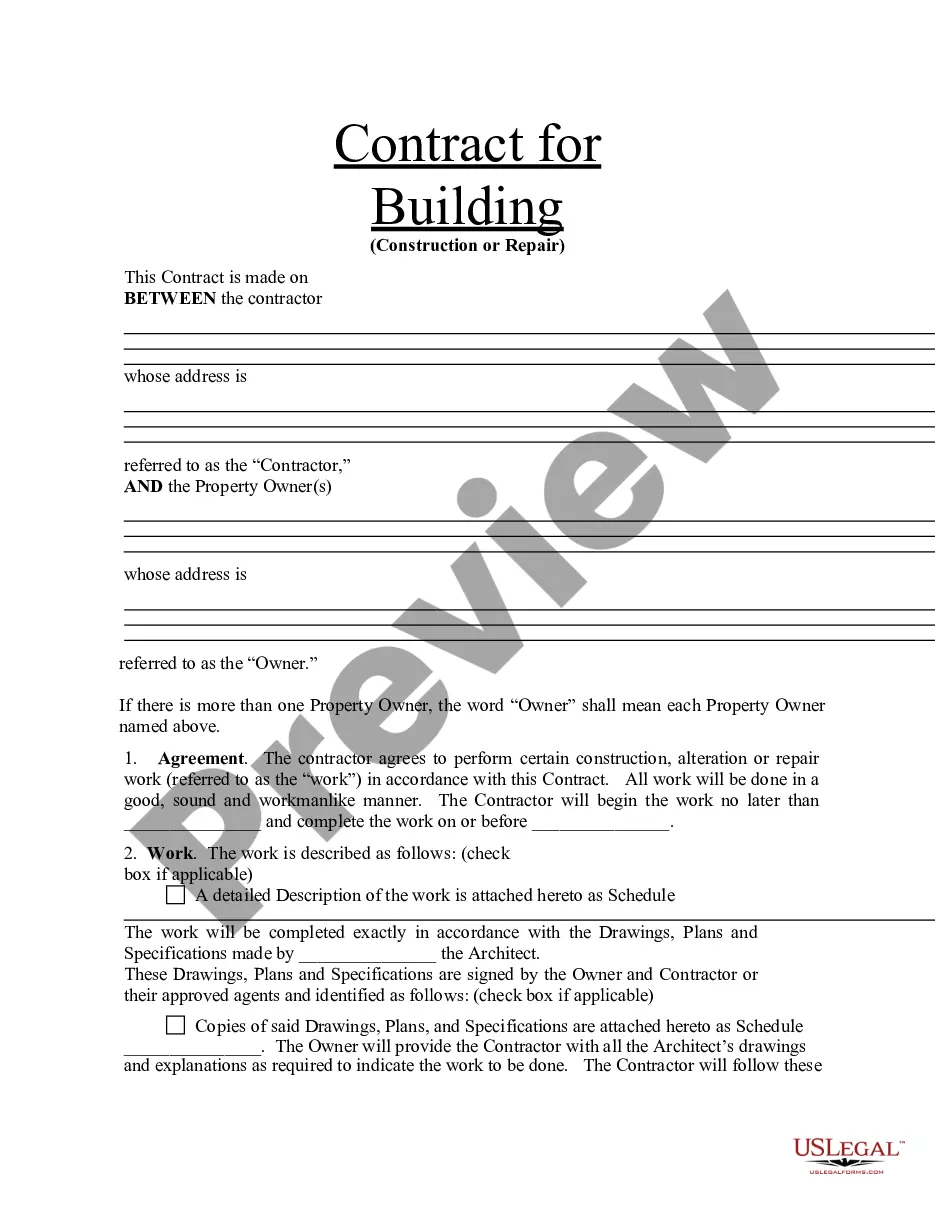
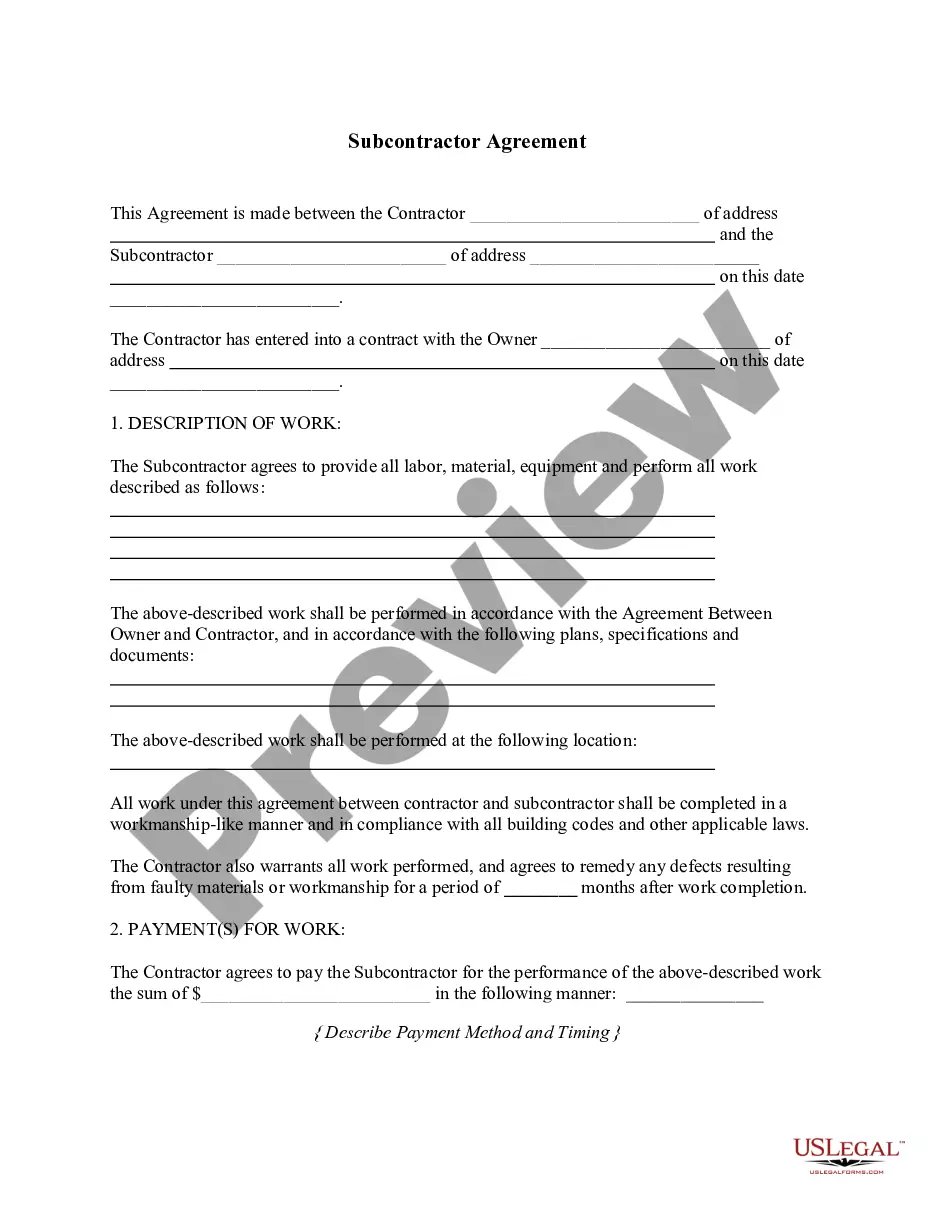
The Commercial Contract for Contractor is a legal document specifically designed for agreements between commercial contractors and property owners in Ohio. This form outlines terms related to cost plus or fixed fee payment arrangements and includes critical components like change orders, work site responsibilities, warranties, and insurance obligations. Unlike other contracts, this one is tailored to meet Ohio's specific legal requirements, ensuring compliance and clarity for both parties involved in commercial construction projects.
Key parts of this document
- Details of the work site and property location.
- Permitting responsibilities and associated costs.
- Soil condition disclaimers and excavation responsibilities.
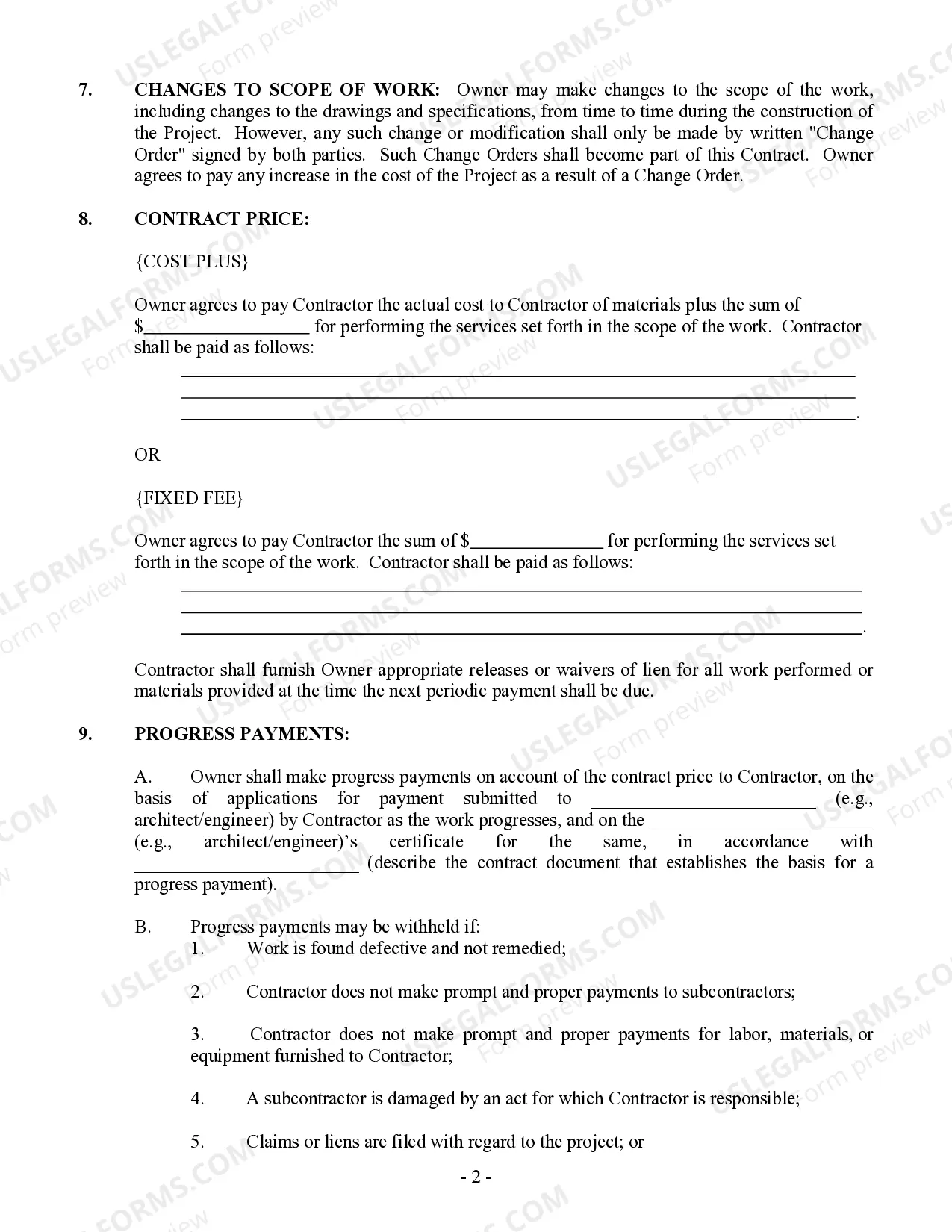
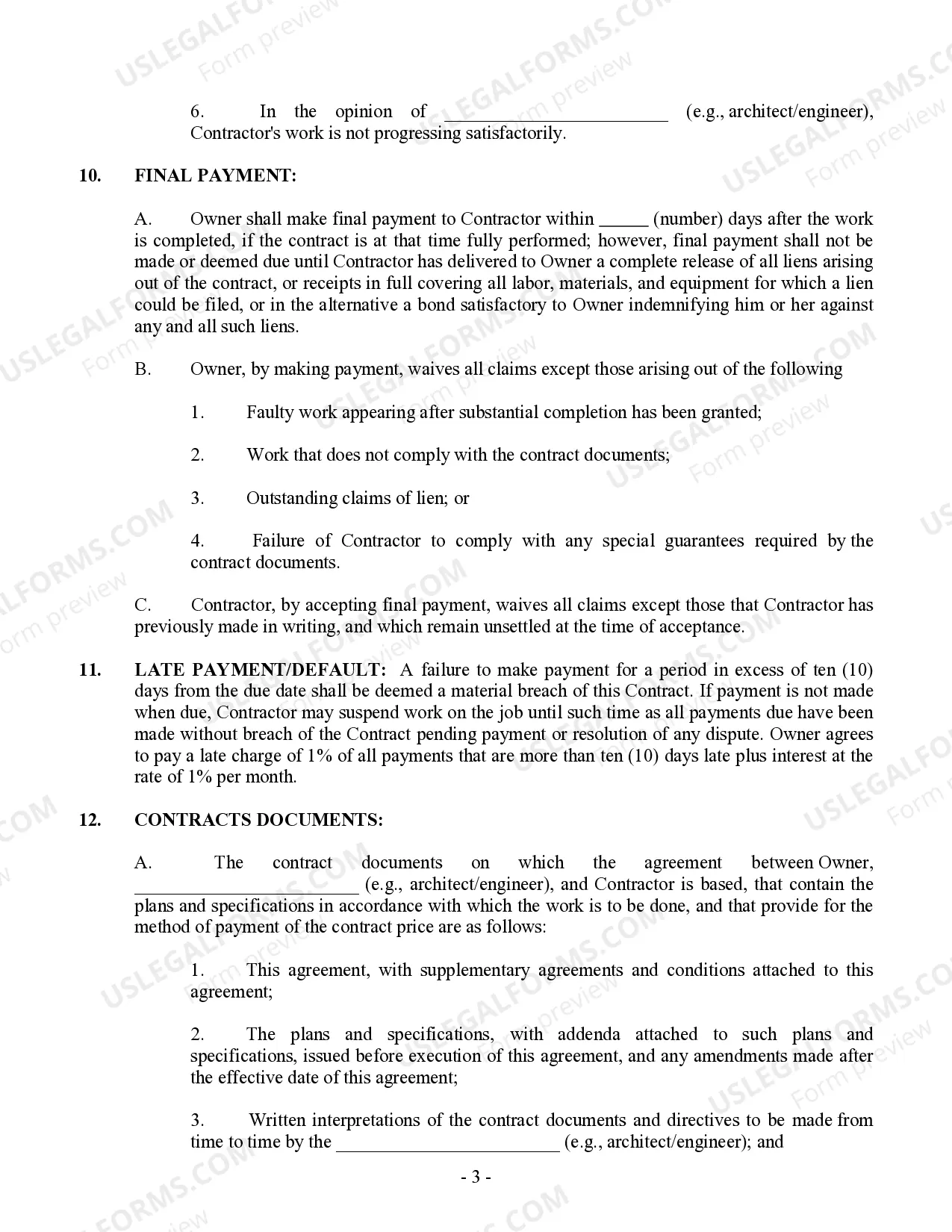
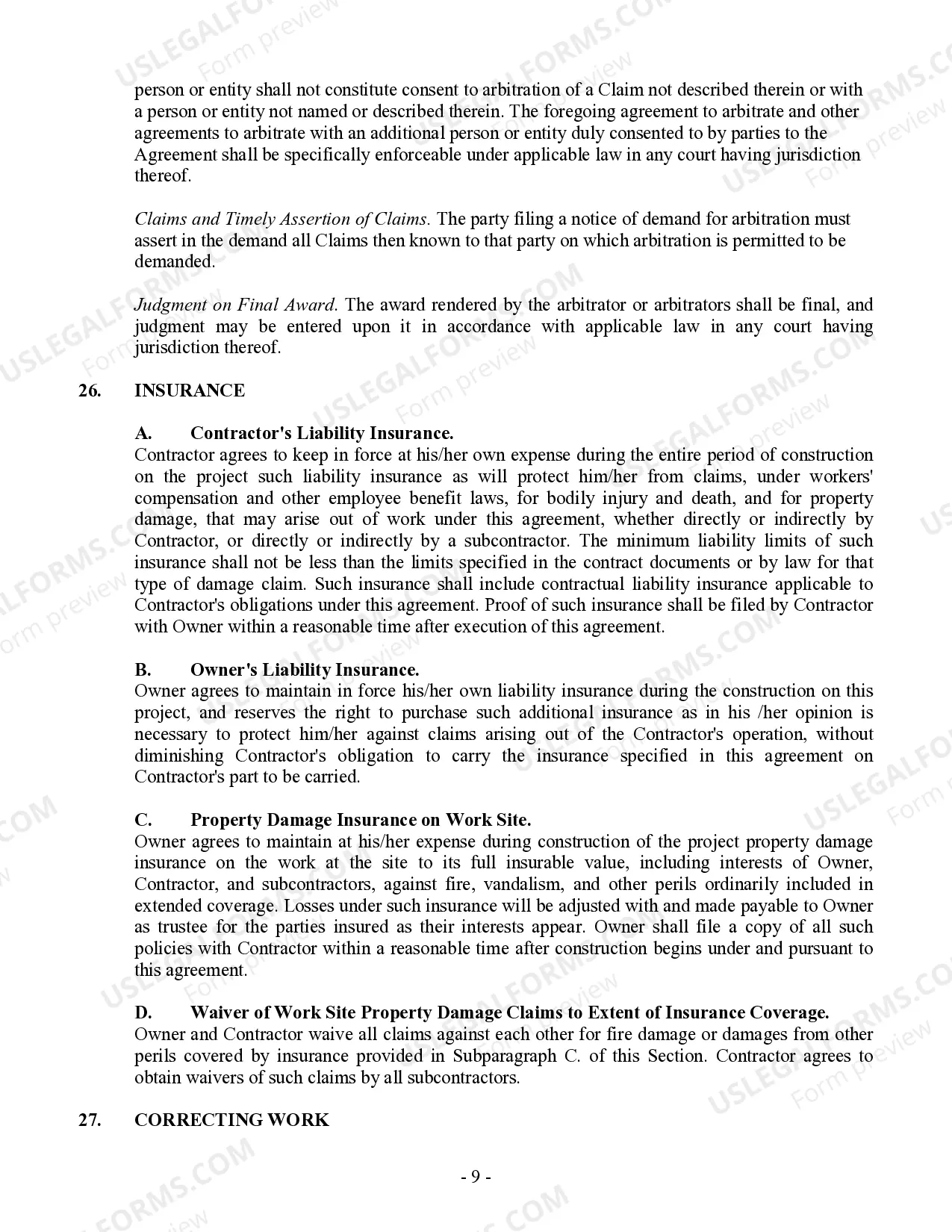
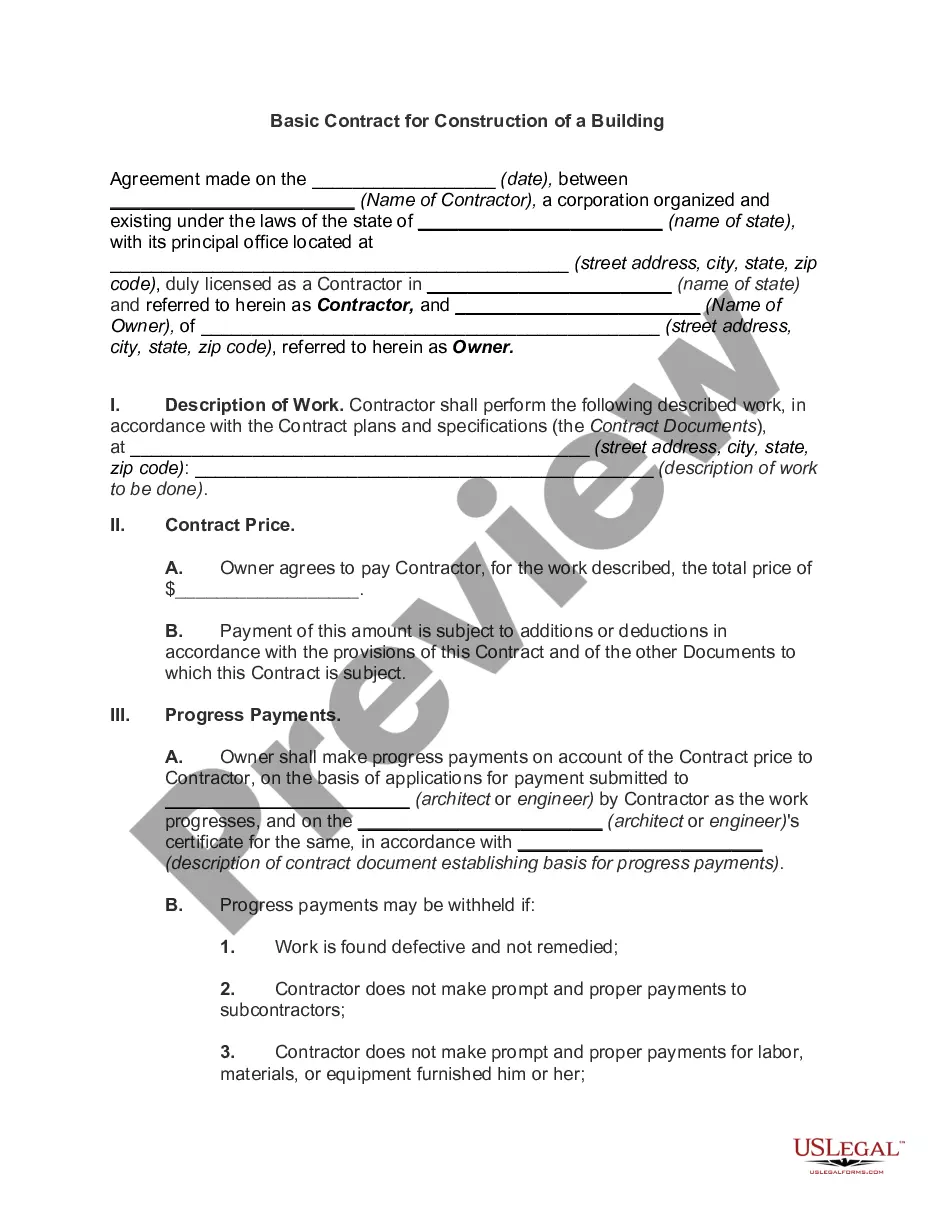
- Payment terms, including progress payments and conditions for withholding.
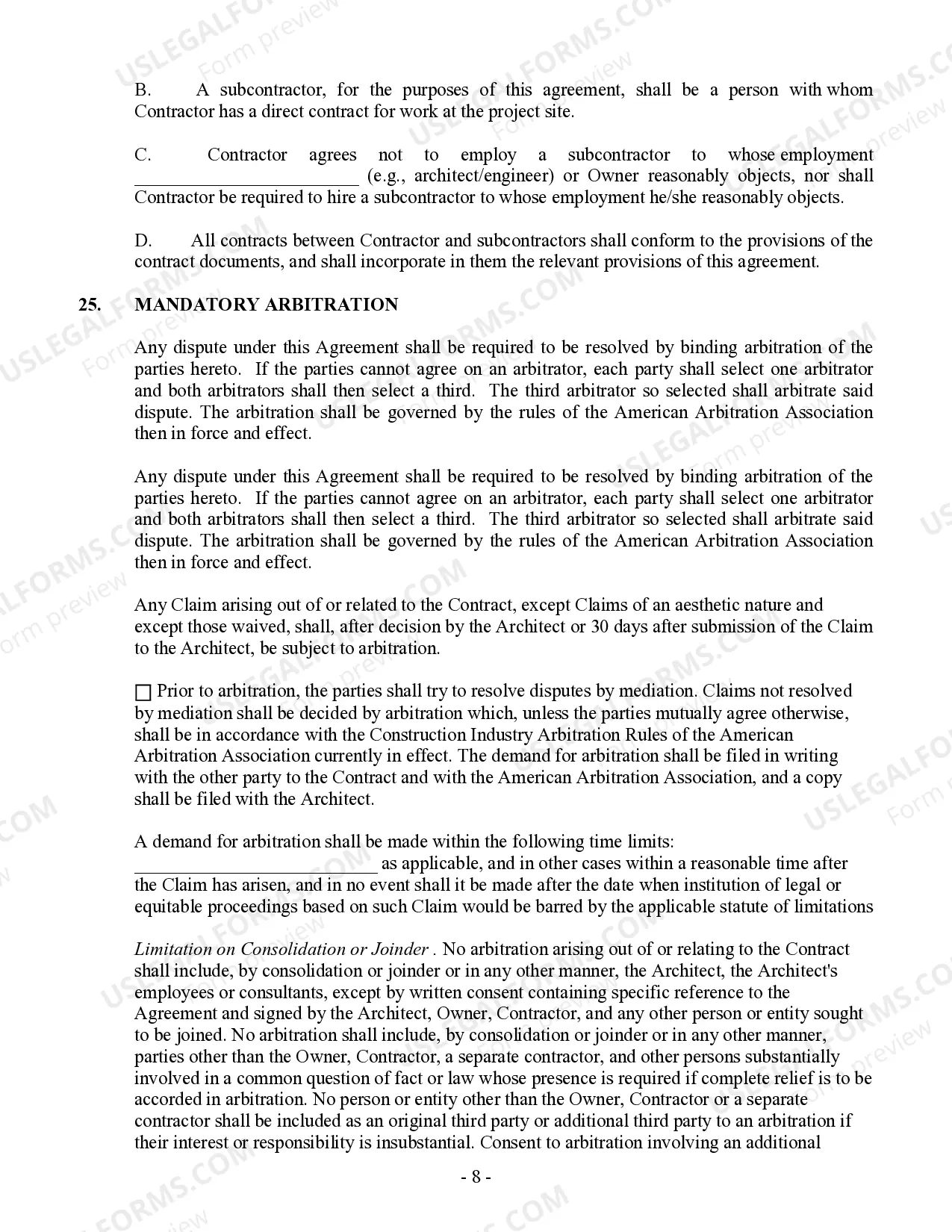
- Dispute resolution through binding arbitration.
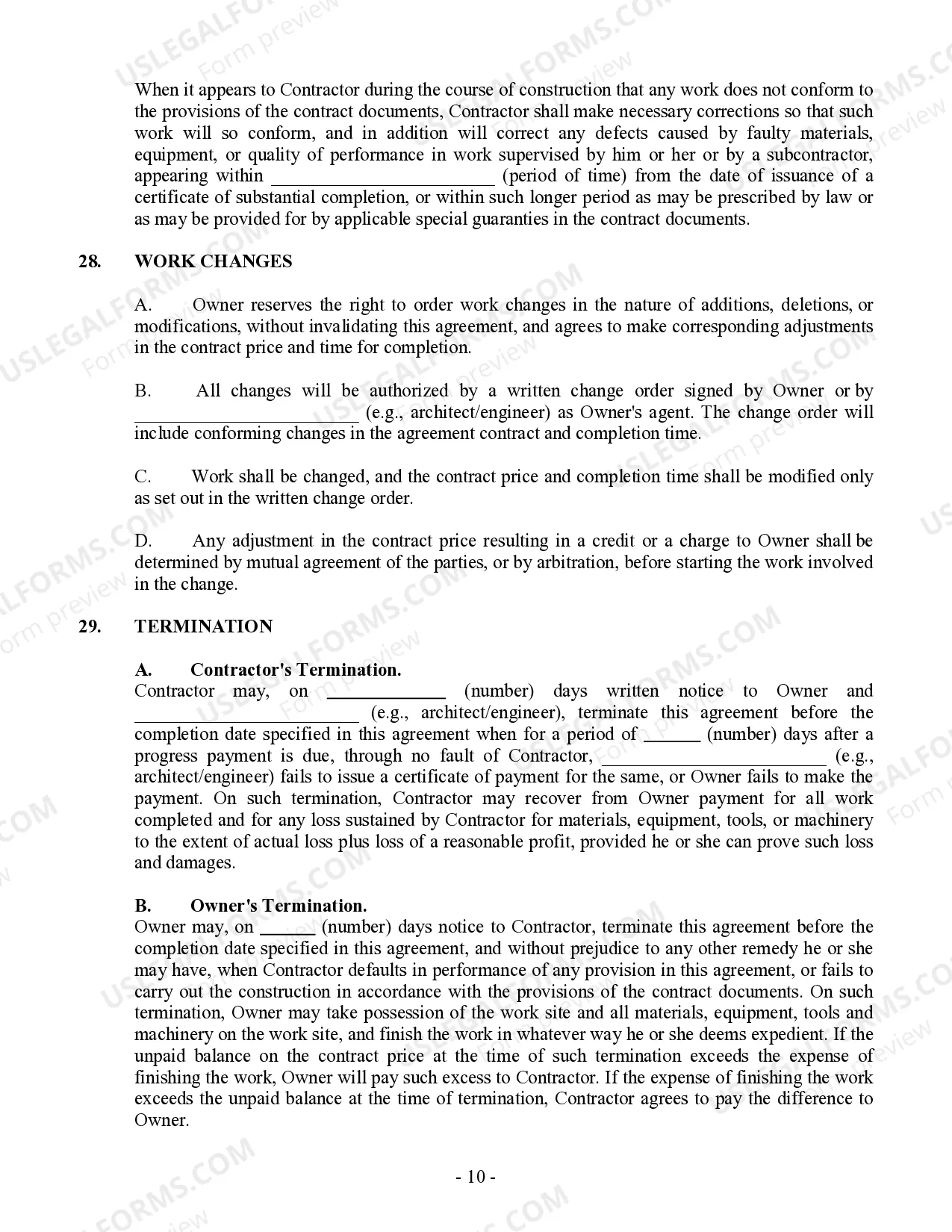
- Leverage of change orders for adjustments to project terms.

Common use cases
This form should be used when a property owner engages a commercial contractor for construction projects. It is critical for outlining payment structures, defining responsibilities, and establishing the terms governing changes throughout the project. Utilize this form to avoid misunderstandings and ensure that both parties have a clear agreement regarding the projectâs scope and obligations.
Who should use this form
This form is suitable for:
- Commercial property owners looking to hire contractors for construction projects.
- Contractors who need a formalized agreement with property owners.
- Legal professionals assisting clients in drafting or reviewing construction contracts.
Instructions for completing this form
- Identify the parties involved by entering the names and addresses of the contractor and property owner.
- Specify the address of the work site where the project will take place.
- Detail the payment arrangement, including whether it will be a cost plus or fixed fee agreement.
- Outline any necessary permits and approvals required for the project.
- Include any additional terms or change orders that may apply to the project.
Does this form need to be notarized?
This form does not typically require notarization unless specified by local law. However, it is recommended to ensure authenticity and protect all parties involved by having it notarized, particularly in formal agreements related to property and significant financial commitments.
Get your form ready online
Our built-in tools help you complete, sign, share, and store your documents in one place.
Make edits, fill in missing information, and update formatting in US Legal Forms—just like you would in MS Word.
Download a copy, print it, send it by email, or mail it via USPS—whatever works best for your next step.
Sign and collect signatures with our SignNow integration. Send to multiple recipients, set reminders, and more. Go Premium to unlock E-Sign.
If this form requires notarization, complete it online through a secure video call—no need to meet a notary in person or wait for an appointment.
We protect your documents and personal data by following strict security and privacy standards.

Make edits, fill in missing information, and update formatting in US Legal Forms—just like you would in MS Word.

Download a copy, print it, send it by email, or mail it via USPS—whatever works best for your next step.

Sign and collect signatures with our SignNow integration. Send to multiple recipients, set reminders, and more. Go Premium to unlock E-Sign.

If this form requires notarization, complete it online through a secure video call—no need to meet a notary in person or wait for an appointment.

We protect your documents and personal data by following strict security and privacy standards.
Avoid these common issues
- Failing to clearly define the work site location and property boundaries.
- Omitting necessary permits on the form, leading to compliance issues.
- Not specifying payment terms, which can cause disputes over costs.
- Neglecting to include change order procedures in case project requirements change.
Benefits of completing this form online
- Immediate access to a legally vetted form ensures compliance with state laws.
- Easy to customize for specific project details and agreements.
- Downloadable format provides flexibility for record keeping.
- Reduces the risk of errors compared to manually drafted contracts.
- The contract serves as a legally binding agreement between the contractor and property owner.
- It is enforceable in Ohio courts, provided all terms are adhered to and properly documented.
- Disputes arising from this contract must be resolved through arbitration as stipulated in the agreement.
Main things to remember
- The Commercial Contract for Contractor is essential for outlining responsibilities in a construction project.
- Clearly defined terms can prevent misunderstandings and legal disputes.
- This form is compliant with Ohio law, providing a strong legal foundation for both parties involved.
Looking for another form?


Form popularity
FAQ
Terms. This is the first section of any agreement or contract and states the names and locations of the parties involved. Responsibilities & Deliverables. Payment-Related Details. Confidentiality Clause. Contract Termination. Choice of Law.
Terms. This is the first section of any agreement or contract and states the names and locations of the parties involved. Responsibilities & Deliverables. Payment-Related Details. Confidentiality Clause. Contract Termination. Choice of Law.
Contractors, like all other taxpayers, owe use tax on their untaxed purchases of tangible personal property used in Ohio.Contractors and home remodelers do not collect sales tax on their work. They do however, pay sales tax on the supplies they purchase.
Get it in writing. Keep it simple. Deal with the right person. Identify each party correctly. Spell out all of the details. Specify payment obligations. Agree on circumstances that terminate the contract. Agree on a way to resolve disputes.
Timeframe or key milestones of the project; hours of work; deliverables of the project; and. way the business will pay the contractor for their services.
For most types of projects you hire an independent contractor (IC) to do, the law does not require you to put anything in writing. You can meet with the IC, agree on the terms of your arrangement, and have an oral contract or agreement that is legally binding. Just because you can doesn't mean you should, however.
The IRS requires contractors to fill out a Form W-9, request for Taxpayer Identification Number and Certification, which you should keep on file for at least four years after the hiring. This form is used to request the correct name and Taxpayer Identification Number, or TIN, of the worker or their entity.
Offer, Acceptance, Consideration, and Mutual ConsentEvery contract must include a specific offer and acceptance of that specific offer. Both parties must consent to their free will. Neither party can be coerced or forced to sign the contract, and both parties must agree to the same terms.