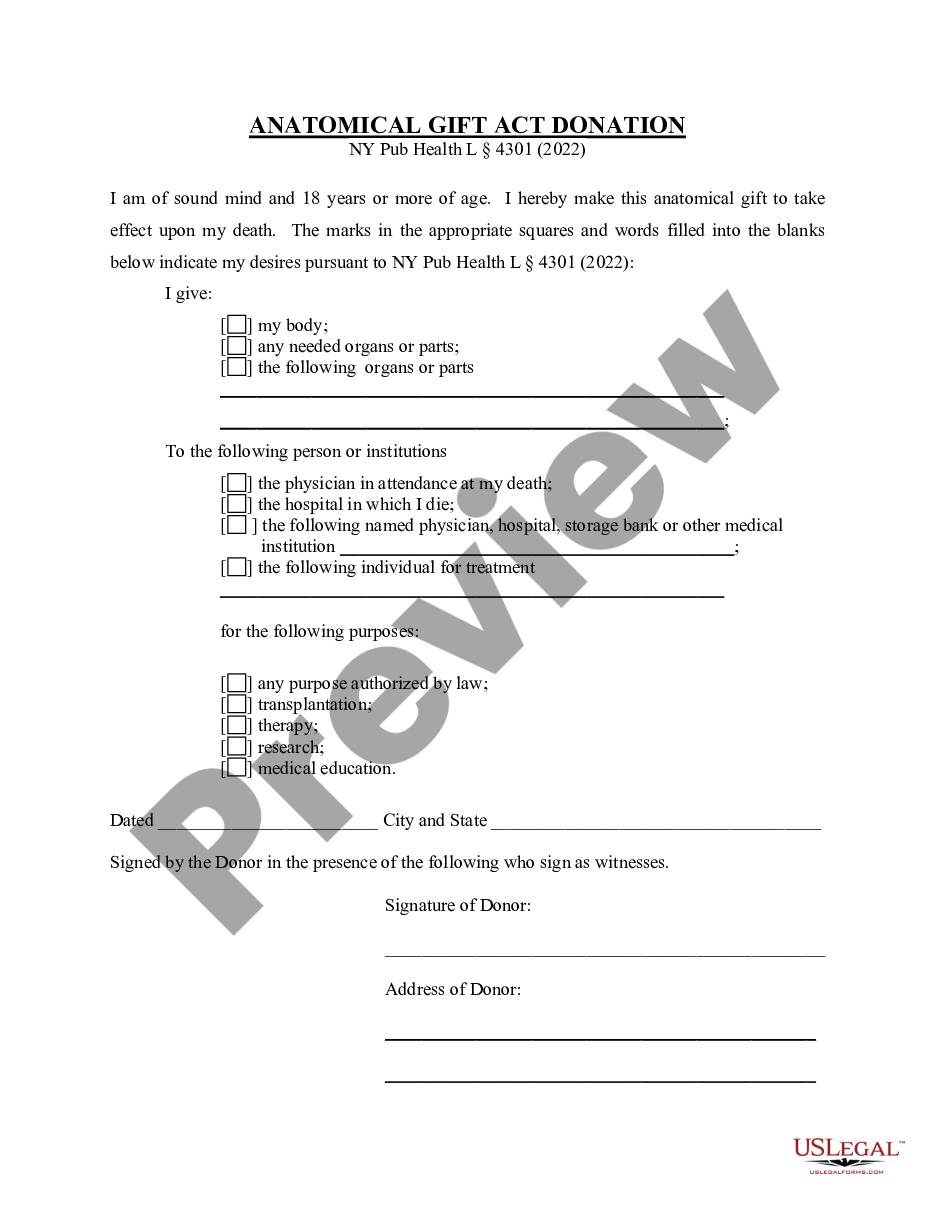
New York Uniform Anatomical Gift Act Donation
Understanding this form
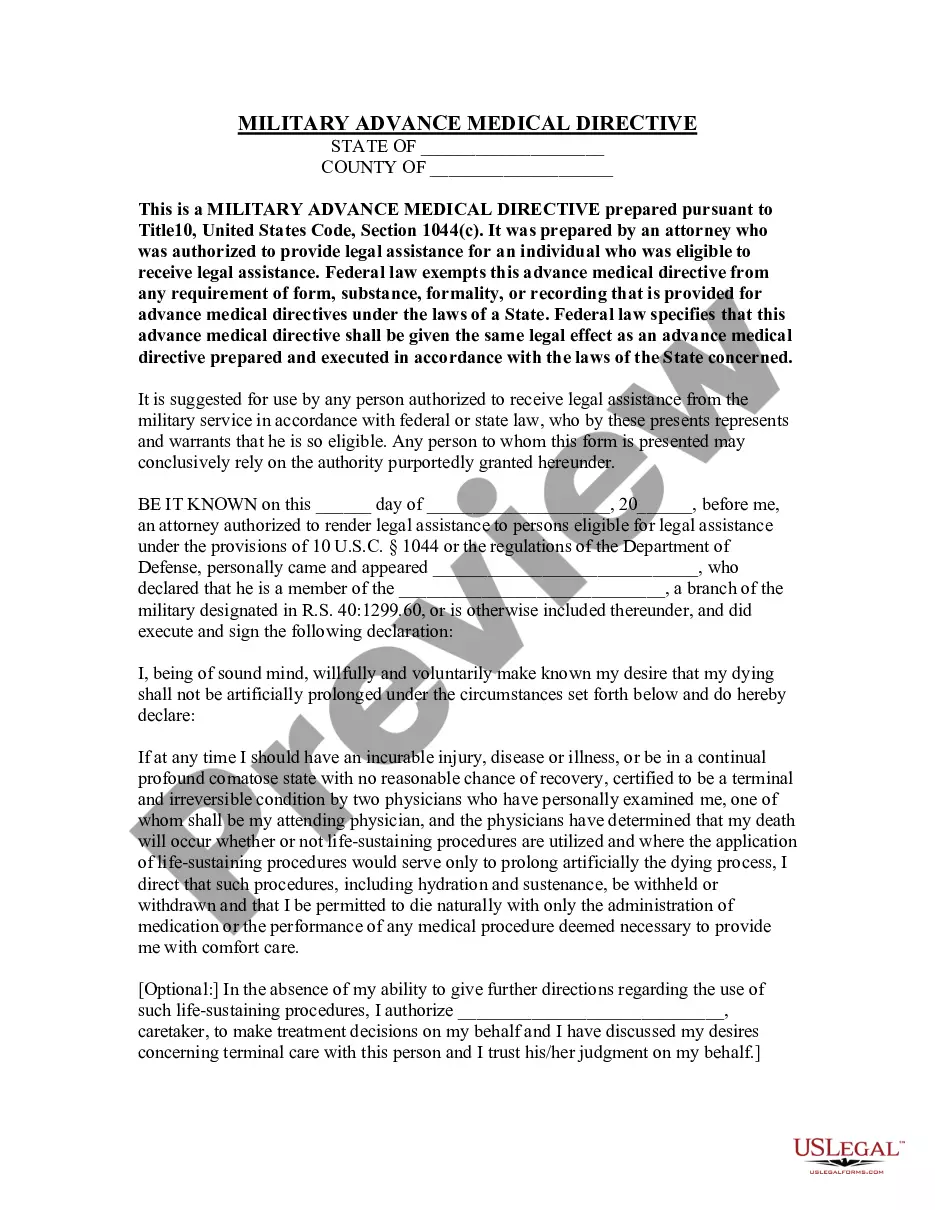
The Uniform Anatomical Gift Act Donation form is a legal document that allows individuals to specify which body parts or organs they wish to donate upon their death. This form is crucial for ensuring that your wishes regarding organ donation are respected and acted upon, distinguishing it from general wills or other estate planning documents.
Main sections of this form
- Statement of intent to make an anatomical gift upon death.
- Specific sections for indicating the body parts or organs to be donated.
- Option to designate recipient institutions or individuals.
- Witness signature requirements to validate the form.
- Field for the date and place where the document is signed.

Common use cases
This form should be used when an individual wants to ensure their wishes regarding organ and tissue donation are documented. It is appropriate for anyone aged eighteen years or older who is of sound mind and wants to prepare for end-of-life decisions, making their wishes clear to family and healthcare providers.
Who this form is for
- Individuals aged eighteen years or older.
- Persons wishing to donate specific organs or tissues upon their death.
- People looking for a clear and legally recognized way to communicate their donation preferences.
- Individuals who have considered their options and wish to act on their intentions regarding organ donation.
Completing this form step by step
- Identify yourself as the donor and confirm that you are of sound mind and over eighteen years old.
- Indicate which body parts or organs you wish to donate.
- Specify the recipient(s) for your donation, such as a physician, hospital, or medical institution.
- State the purpose of your donation, such as transplantation or research.
- Sign the document in the presence of at least two witnesses who will also sign the form.
Does this document require notarization?
Yes, this form must be notarized to be legally valid. This ensures that your intentions are documented securely and verified by a licensed notary. US Legal Forms offers integrated online notarization, allowing you to complete the process via a secure video call at your convenience.
Get your form ready online
Our built-in tools help you complete, sign, share, and store your documents in one place.
Make edits, fill in missing information, and update formatting in US Legal Forms—just like you would in MS Word.
Download a copy, print it, send it by email, or mail it via USPS—whatever works best for your next step.
Sign and collect signatures with our SignNow integration. Send to multiple recipients, set reminders, and more. Go Premium to unlock E-Sign.
If this form requires notarization, complete it online through a secure video call—no need to meet a notary in person or wait for an appointment.
We protect your documents and personal data by following strict security and privacy standards.

Make edits, fill in missing information, and update formatting in US Legal Forms—just like you would in MS Word.

Download a copy, print it, send it by email, or mail it via USPS—whatever works best for your next step.

Sign and collect signatures with our SignNow integration. Send to multiple recipients, set reminders, and more. Go Premium to unlock E-Sign.

If this form requires notarization, complete it online through a secure video call—no need to meet a notary in person or wait for an appointment.

We protect your documents and personal data by following strict security and privacy standards.
Typical mistakes to avoid
- Failing to properly witness and notarize the document according to legal requirements.
- Not specifying the exact organs or body parts to be donated.
- Inadequate identification of the intended recipient of the donation.
- Not understanding the implications of the donation decision.
Benefits of completing this form online
- Convenient access to a legally standardized form.
- Ability to fill out and edit online before printing.
- Reliable source with attorney-reviewed content to ensure accuracy.
Summary of main points
- The Uniform Anatomical Gift Act Donation form allows you to designate your organ donation wishes.
- Ensure your document is properly witnessed and notarized to be valid.
- It is crucial for anyone aged eighteen or older who wishes to make their donation intentions clear.
Looking for another form?
Form popularity
FAQ
To modify your gift or withdraw from the registry: Complete, sign and mail the Change and Specification Form or Removal Form to the address on the form or email to NYS Donate Life Registry at: registry@donatelife.ny.gov.
Important Revisions. The UAGA of 2006 allows for individuals to consent to organ donation by expressing their wish when obtaining a driver's license, through verbal expression, by writing it in a will or other advance directive, or in any other manner, simplifying the consent process.
The Act sets a regulatory framework for the donation of organs, tissues, and other human body parts in the US. The UAGA helps regulate body donations to science, medicine, and education. The Act has been consulted in discussions about abortion, fetal tissue transplants, and Body Worlds, an anatomy exhibition.
The Uniform Anatomical Gift Act (UAGA) has been revised in 2006 to permit the use of life support systems at or near death for the purpose of maximizing procurement opportunities of organs medically suitable for transplantation.
(3) "Anatomical gift" means a donation of all or part of a human body to take effect after the donor's death for the purpose of transplantation, therapy, research, or education.
That was a major first step. The Uniform Anatomical Gift Act was subsequently adopted by all 50 states and the District of Columbia.
The Uniform Anatomical Gift Act of 1987 The provisions of the UAGA of 1968 would ban the purchase and sale of body parts, facilitate the simplified process of obtaining authorization to retrieve organs, and ensure that medical staff establish procedures and guidelines to identify organ donors while under hospital care.