New York General Power of Attorney for Care and Custody of Child or Children
Understanding this form
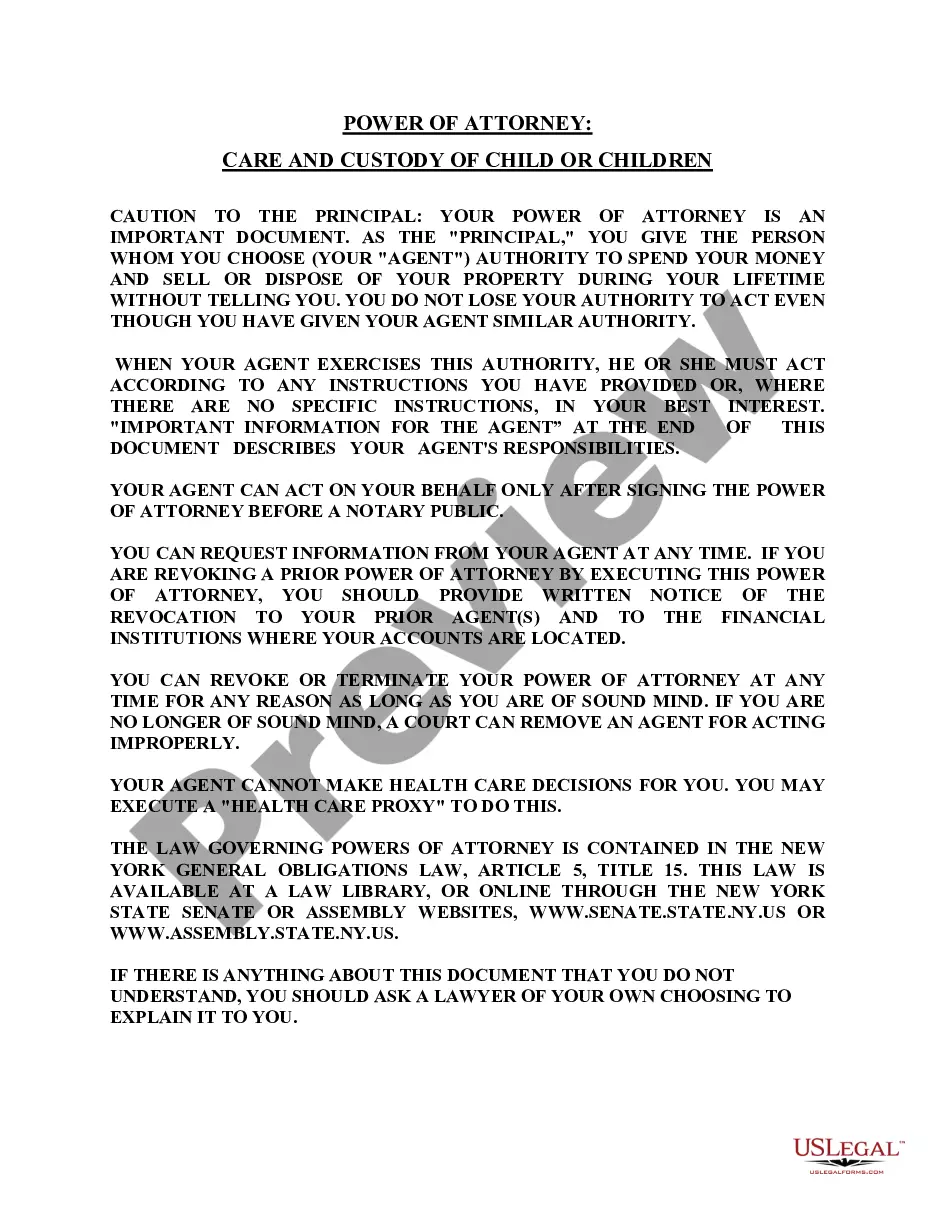
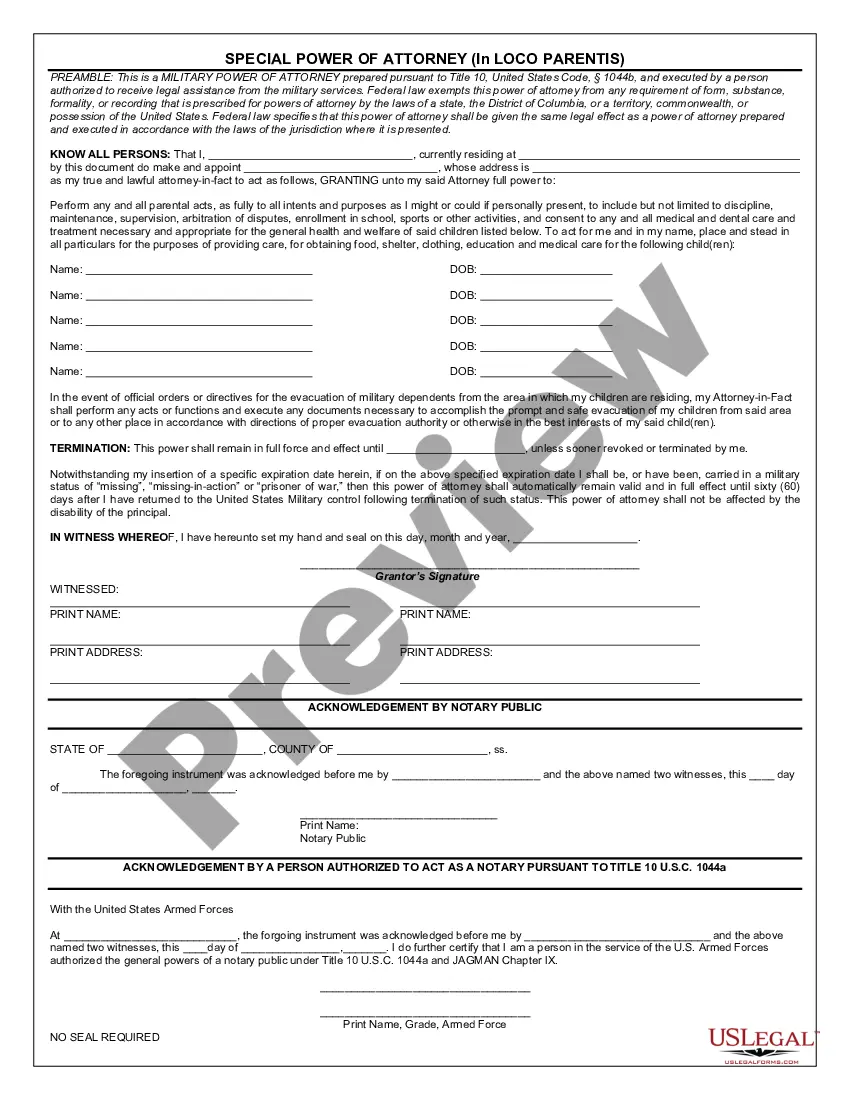
The General Power of Attorney for Care and Custody of Child or Children is a legal document that allows parents to designate an attorney-in-fact to make decisions regarding the care and custody of their minor children. This form empowers the appointed agent to handle various responsibilities, including health care and education decisions, while ensuring the parent's authority remains intact. Unlike other powers of attorney, this specific form focuses solely on matters related to children.
Main sections of this form
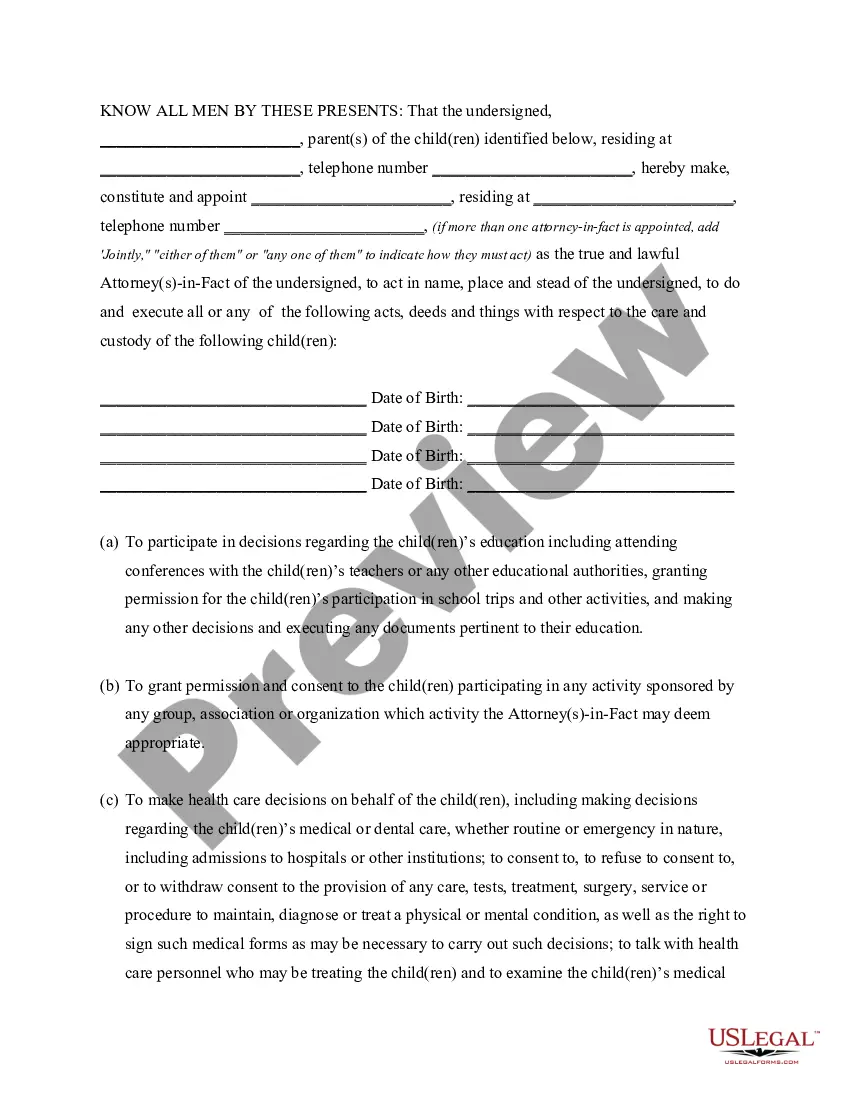
- Identification of the principal (the parent) and the agent (the attorney-in-fact).
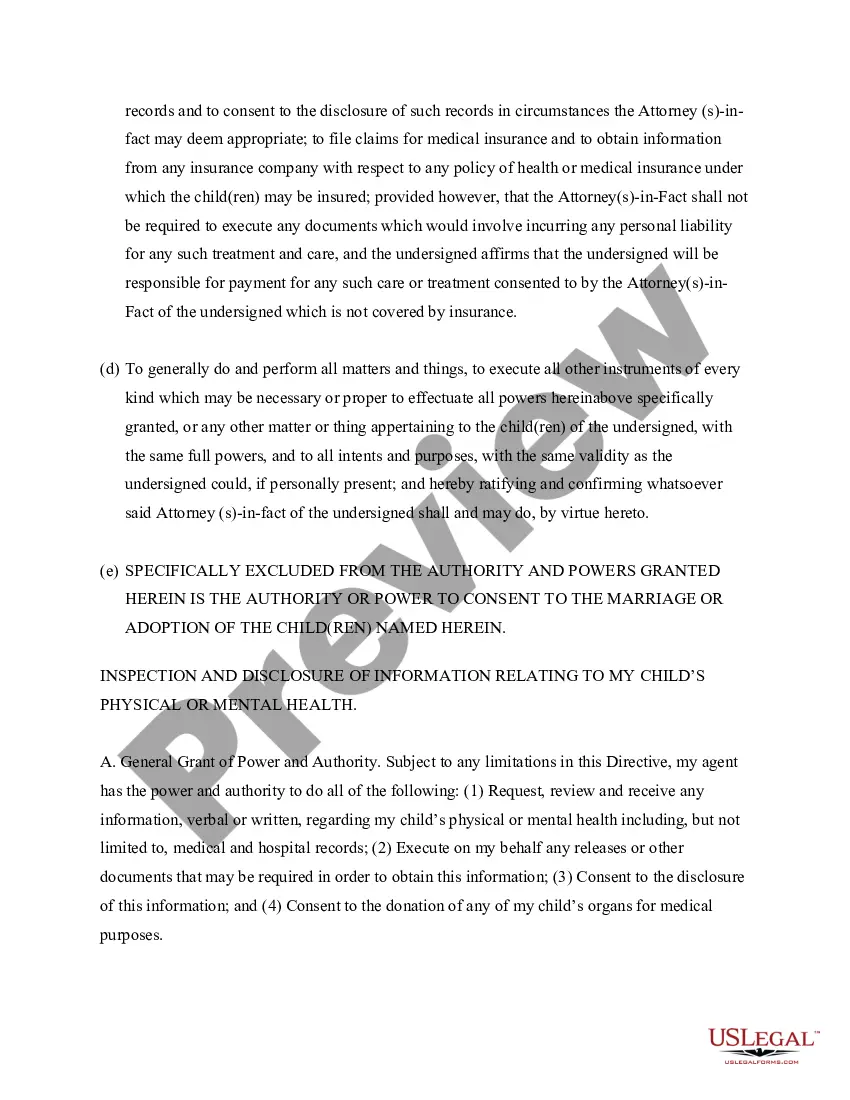
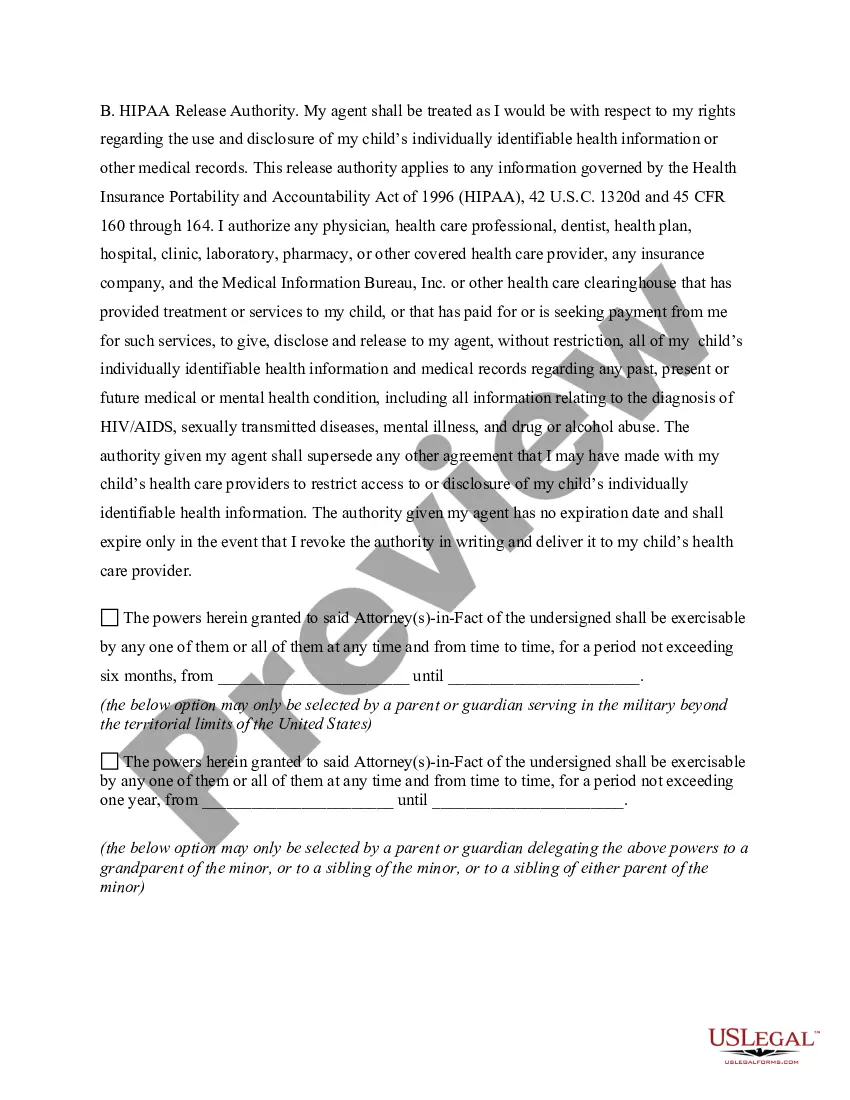
- Detailed powers granted to the agent, including health care and educational decisions.
- Exclusions from authority, such as consent to the childâs marriage or adoption.
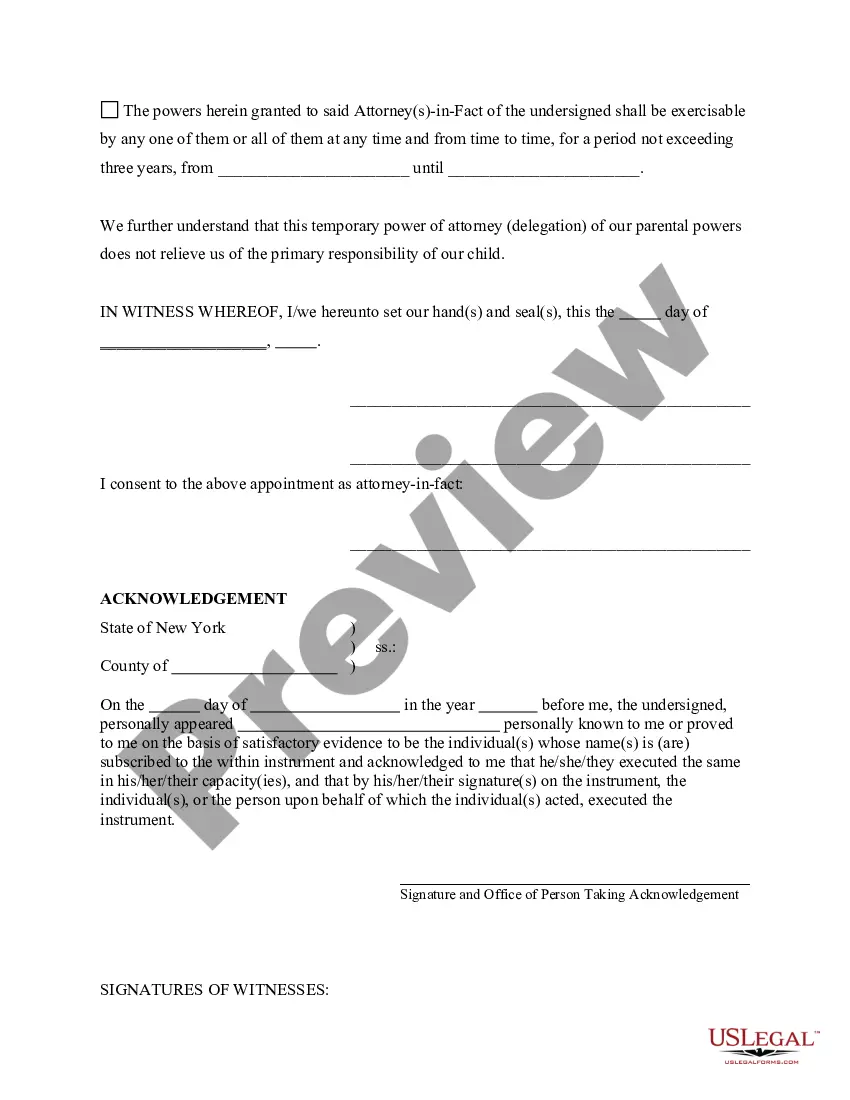
- Provisions for revocation of the power of attorney.
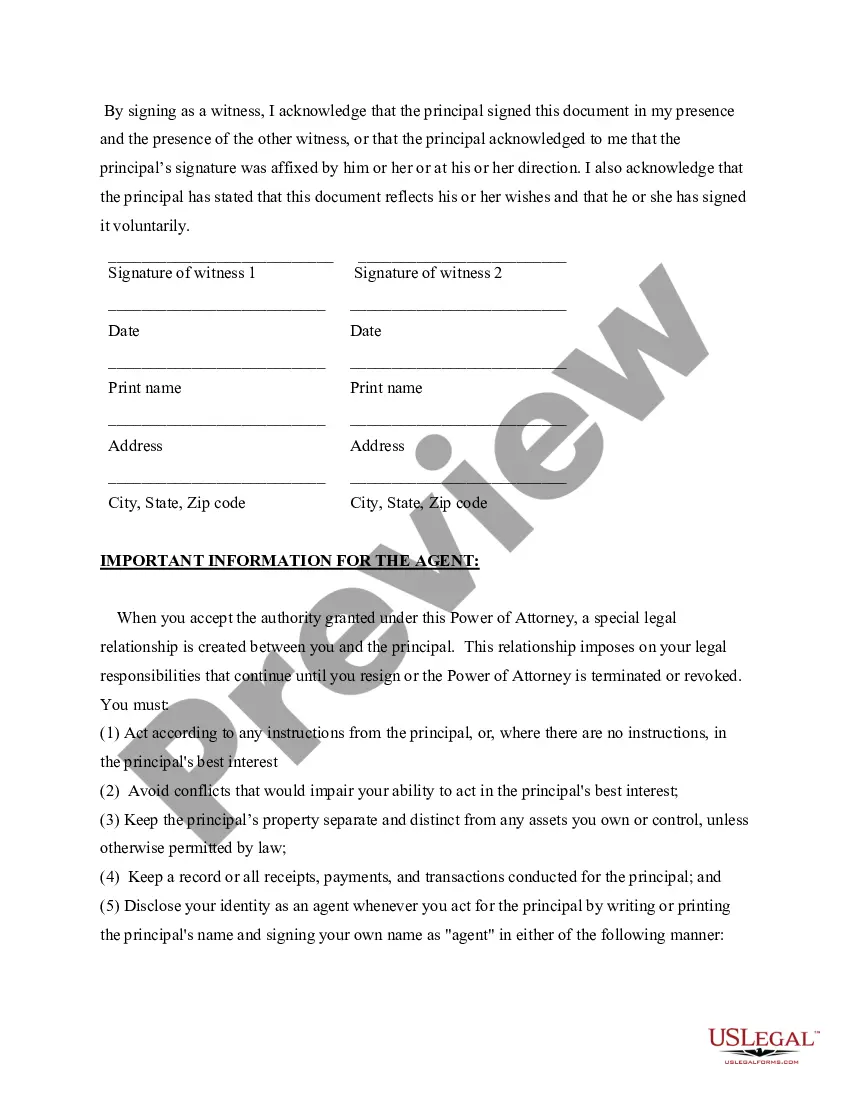
- Notarization requirements for legal validity.
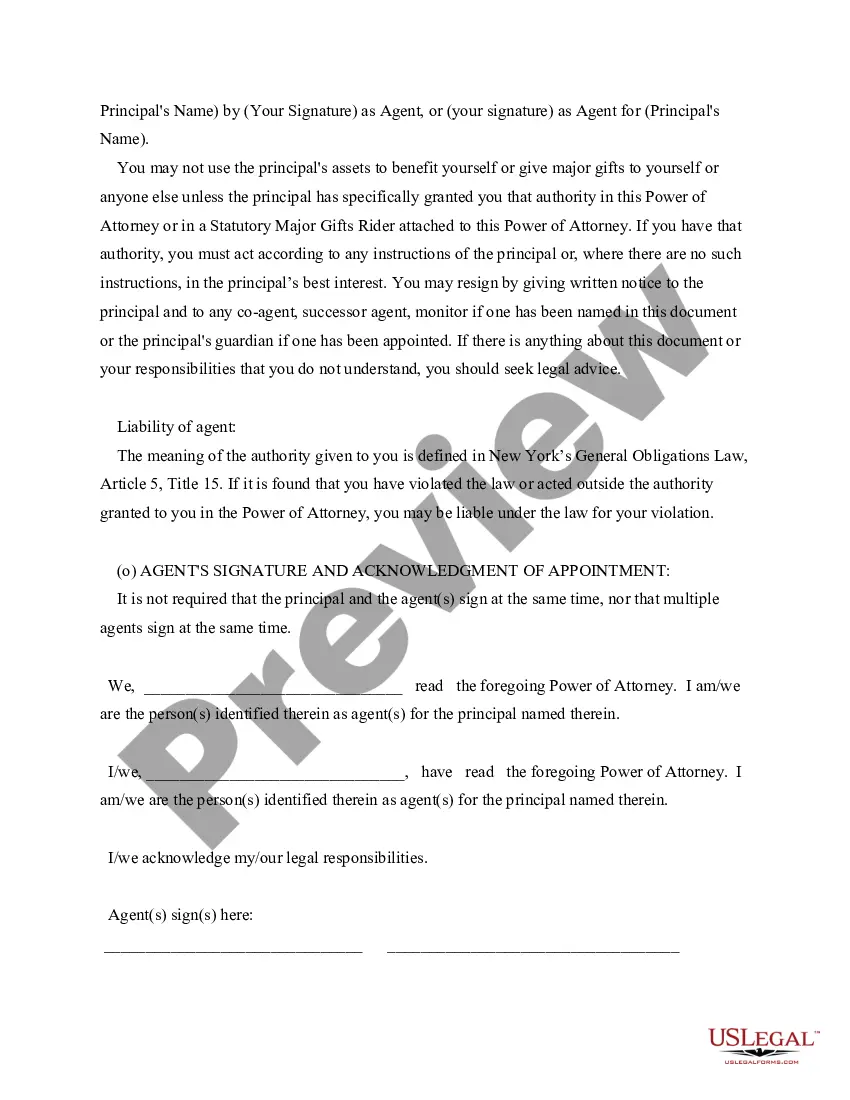
- Agent's responsibilities and duties in managing the childâs affairs.
When to use this document
This form is ideal for situations where a parent needs to delegate authority for their childâs care to another trusted individual. Common scenarios include temporary situations like travel or deployment, emergency situations where the parent cannot be present, or when the parent needs assistance in managing the childâs education and health care needs.
Who should use this form
- Parents or legal guardians of minor children.
- Individuals seeking to temporarily delegate decision-making authority to a trusted family member or friend.
- Military personnel who may be deployed away from their children.
- Any parent unsure of how to manage their childâs care during a significant absence.
Instructions for completing this form
- Identify the parents and their contact information at the top of the form.
- Specify the name and contact details of the appointed attorney-in-fact.
- List the names and birth dates of the children for whom care is being delegated.
- Outline the specific powers being granted, ensuring all necessary clauses are included.
- Sign the document in front of a notary public, ensuring witness signatures, if required.
Is notarization required?
Yes, this form must be notarized to be legally valid. US Legal Forms offers integrated online notarization services, making it easy and secure to complete this step without needing to travel, available 24/7 through a secure video call.
Get your form ready online
Our built-in tools help you complete, sign, share, and store your documents in one place.
Make edits, fill in missing information, and update formatting in US Legal Forms—just like you would in MS Word.
Download a copy, print it, send it by email, or mail it via USPS—whatever works best for your next step.
Sign and collect signatures with our SignNow integration. Send to multiple recipients, set reminders, and more. Go Premium to unlock E-Sign.
If this form requires notarization, complete it online through a secure video call—no need to meet a notary in person or wait for an appointment.
We protect your documents and personal data by following strict security and privacy standards.

Make edits, fill in missing information, and update formatting in US Legal Forms—just like you would in MS Word.

Download a copy, print it, send it by email, or mail it via USPS—whatever works best for your next step.

Sign and collect signatures with our SignNow integration. Send to multiple recipients, set reminders, and more. Go Premium to unlock E-Sign.

If this form requires notarization, complete it online through a secure video call—no need to meet a notary in person or wait for an appointment.

We protect your documents and personal data by following strict security and privacy standards.
Common mistakes to avoid
- Failing to identify an alternate agent in case the primary agent cannot serve.
- Not fully understanding the extent of authority being granted.
- Forgetting to have the document notarized, which may invalidate it.
- Omitting to notify any previous agents if revoking an existing power of attorney.
Why use this form online
- Convenience of instant access to the form from anywhere.
- Easy to edit and customize to fit individual needs.
- Reliable format ensuring legal compliance with local requirements.
- Immediate download options to have your forms ready when needed.
Legal use & context
- This form is legally binding and recognized in New York under its specific statutes.
- It enables a designated individual to act on behalf of the parent for the childâs care and well-being.
- Improper use or exceeding the scope of authority provided may result in legal consequences.
- The agent must act in the best interest of the child at all times.
What to keep in mind
- The General Power of Attorney for Care and Custody of Child or Children grants significant authority to an appointed individual.
- Parents must carefully consider who they choose as their attorney-in-fact, given the responsibilities involved.
- Consulting a legal professional is recommended if there are any uncertainties related to this form.
- Notarization and witness signatures are crucial for the document's validity.
Looking for another form?
Form popularity
FAQ
It is a New York form that lets a parent designate an attorney-in-fact to make decisions about a minor child's care and custody, including health care and education, while the parent's authority remains intact. Use it when the parent will be away, deployed, or otherwise unavailable and needs a trusted person to handle day-to-day child affairs. The form focuses only on child-related matters and includes revocation and notarization provisions to control and validate the arrangement.
Generally a POA ends if the principal revokes it, dies, or it expires. This form includes explicit revocation provisions to terminate the agent’s authority for the child’s care and custody. To ensure validity, follow the form’s execution and notarization requirements when revoking.
For this form, red flags include vague or overly broad powers (not clearly specifying health care and education decisions), missing a revocation clause, or failure to meet notarization requirements. The presence of such gaps can create difficulty enforcing the agent’s authority for the child’s care and custody.
Common mistakes include not clearly defining the agent’s powers (health care and education) within the New York General Power of Attorney for Care and Custody of Child or Children, omitting a revocation clause, neglecting notarization, and choosing an unreliable agent. The form’s main sections emphasize precise powers, revocation, and duties to avoid these issues.
Ideally, a trusted family member or close friend who can make timely health care and educational decisions for the child, especially during travel, deployment, or emergencies, while the parent retains ultimate authority.
This form, the New York General Power of Attorney for Care and Custody of Child or Children, covers only child-related matters and authorizes health care and educational decisions under the guardian’s care, with explicit exclusions like consent to marriage or adoption; it also includes specific revocation and notarization provisions.