New York Deed of Conservation Easement for Open Space and Development
About this form
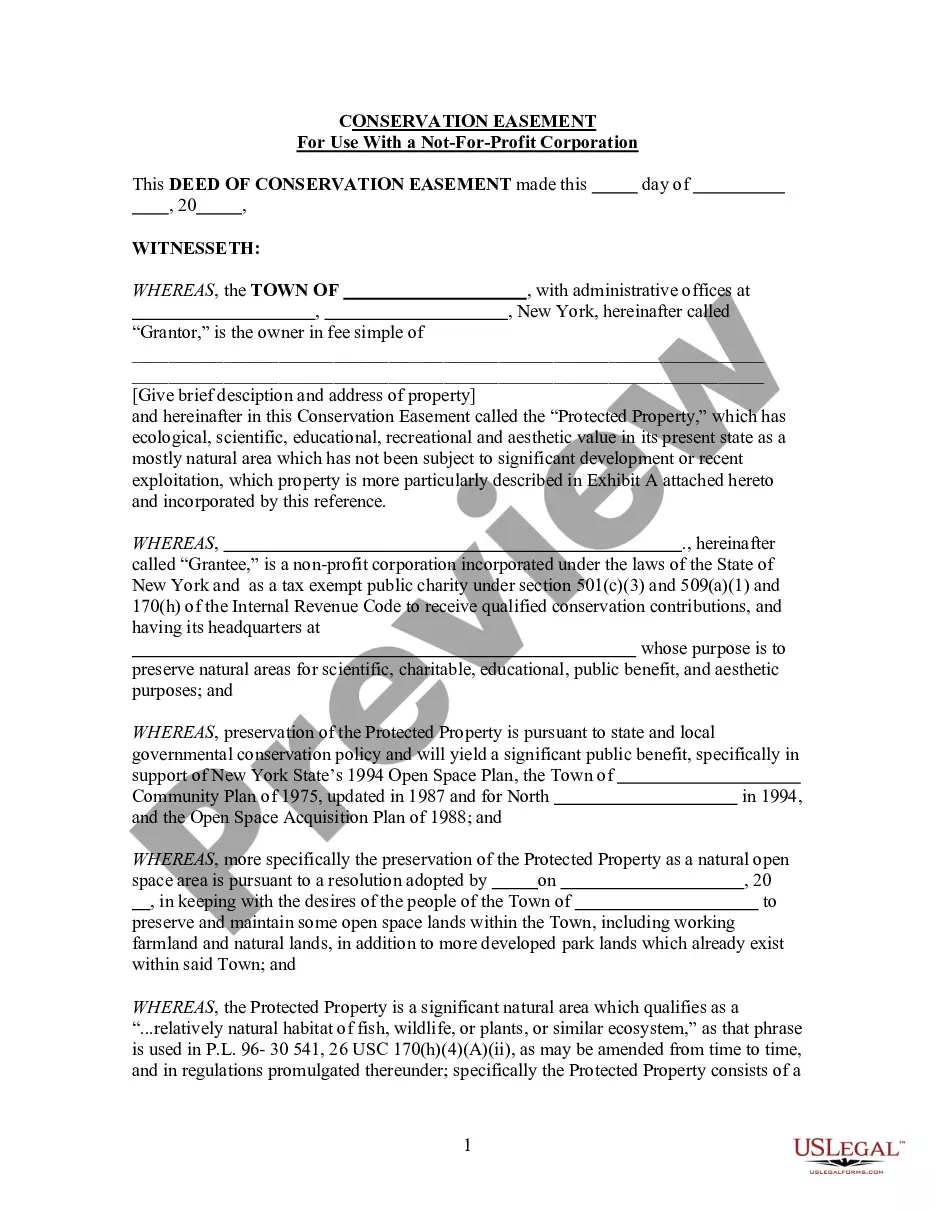
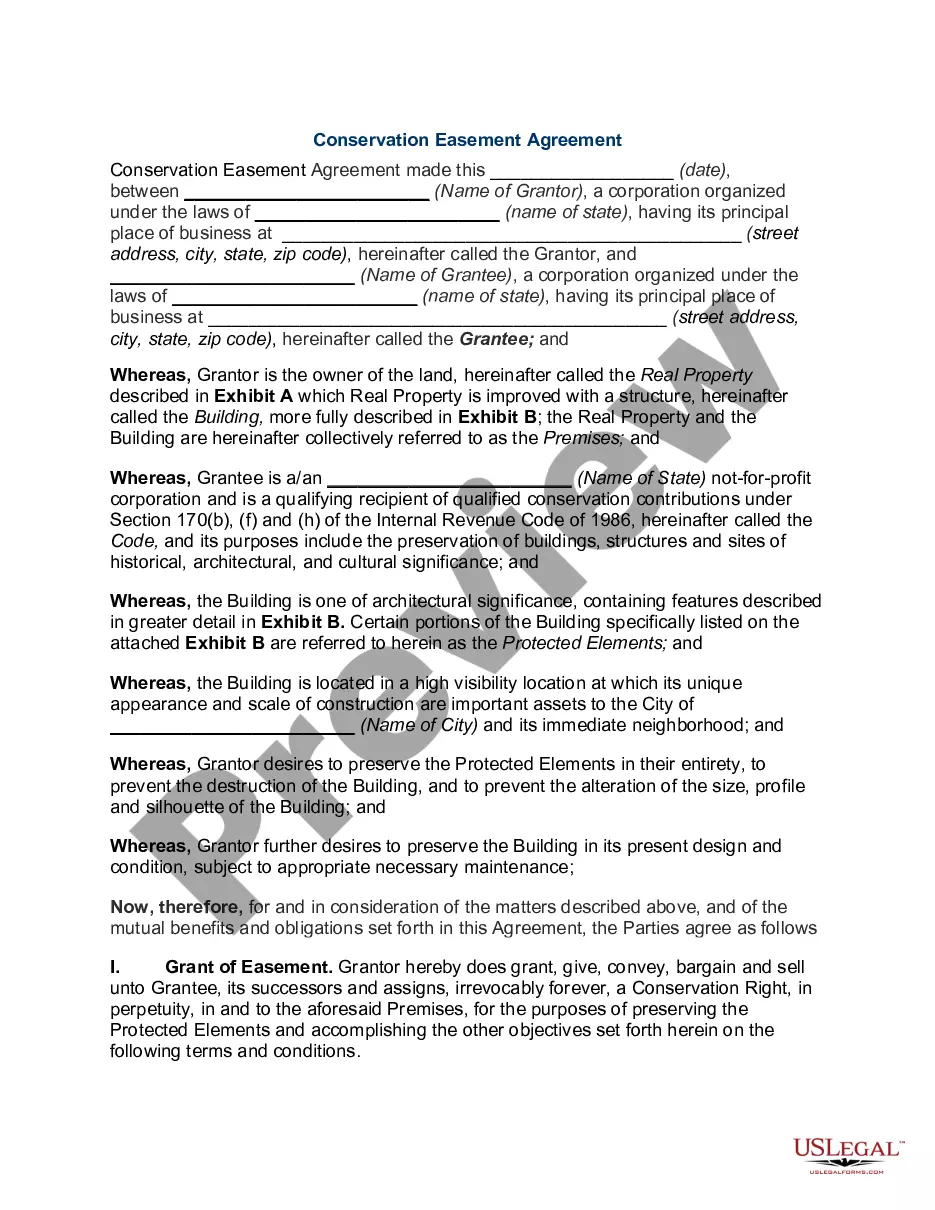
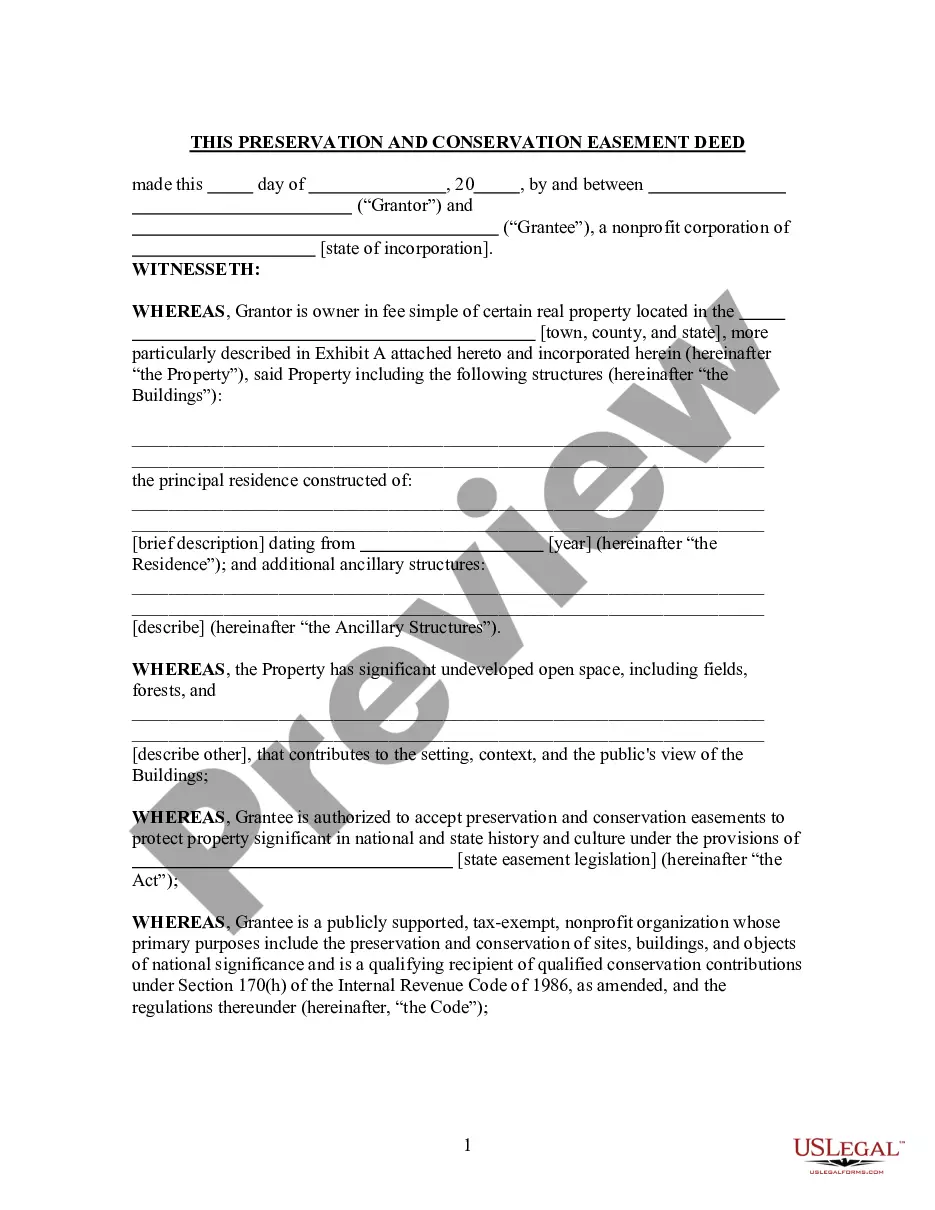
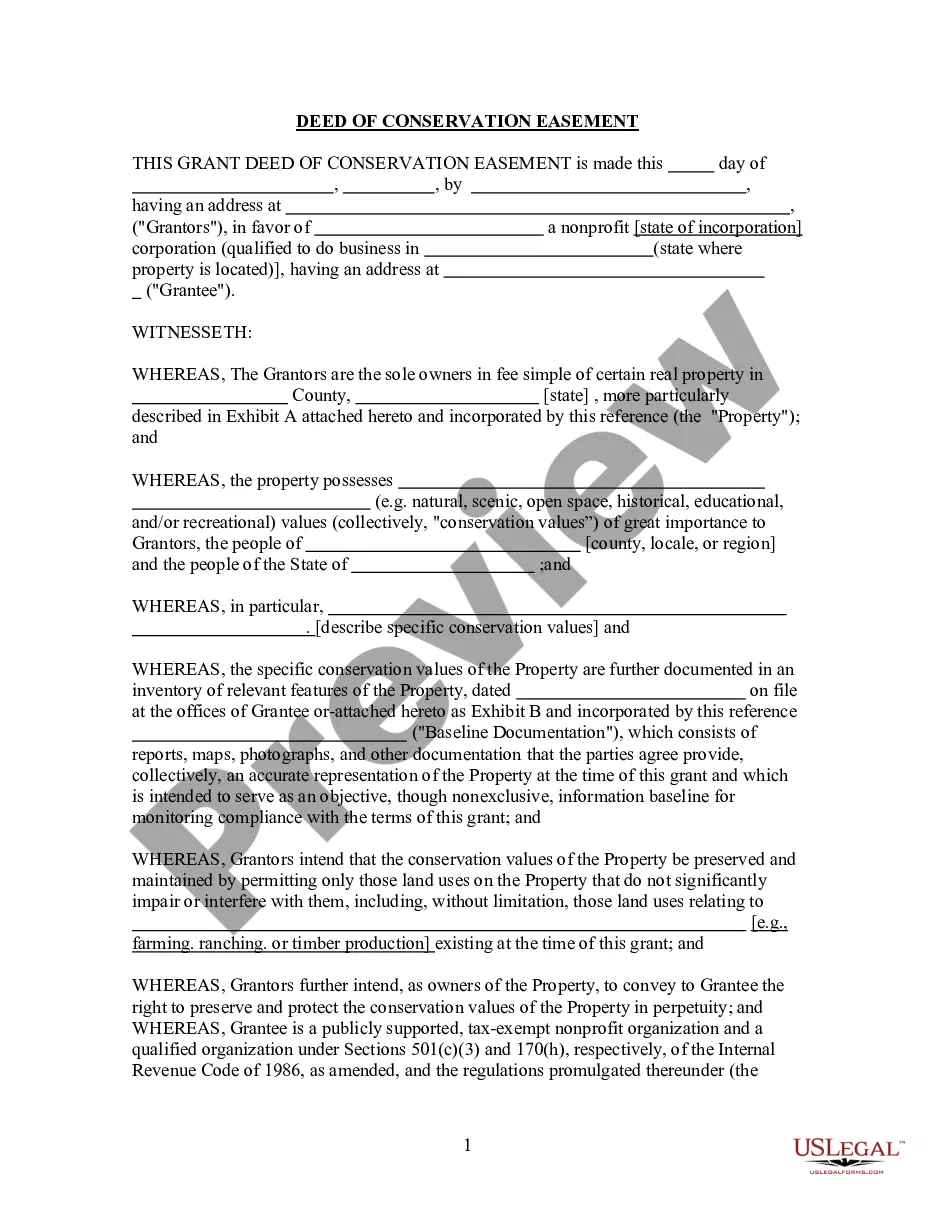
The Deed of Conservation Easement for Open Space and Development is a legal document designed to protect the conservation values of a property while allowing for limited development. Unlike other real estate forms, this easement specifies restrictions on development, preserving the environment and ensuring that the property remains available for public recreation and ecological health. This form is essential for landowners who wish to maintain the natural state of their property while balancing limited economic activities.
What’s included in this form
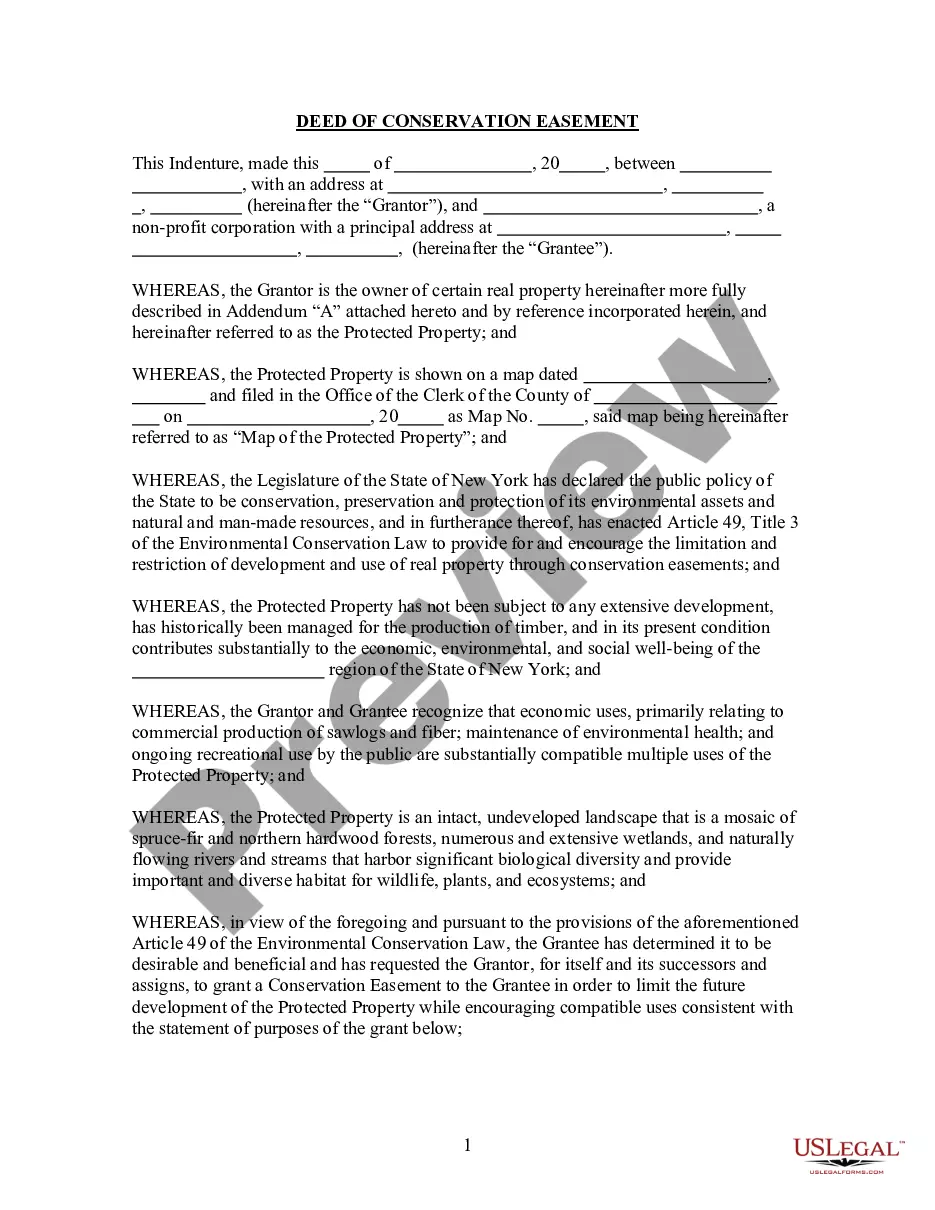
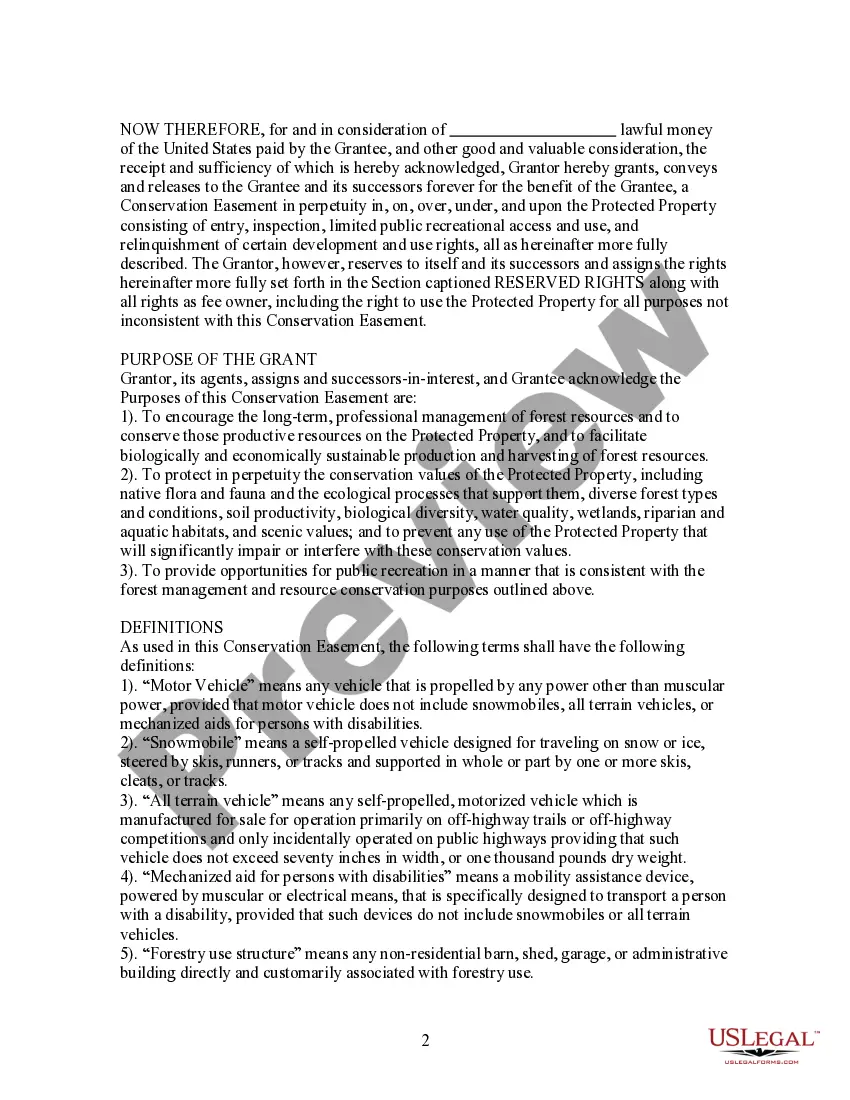
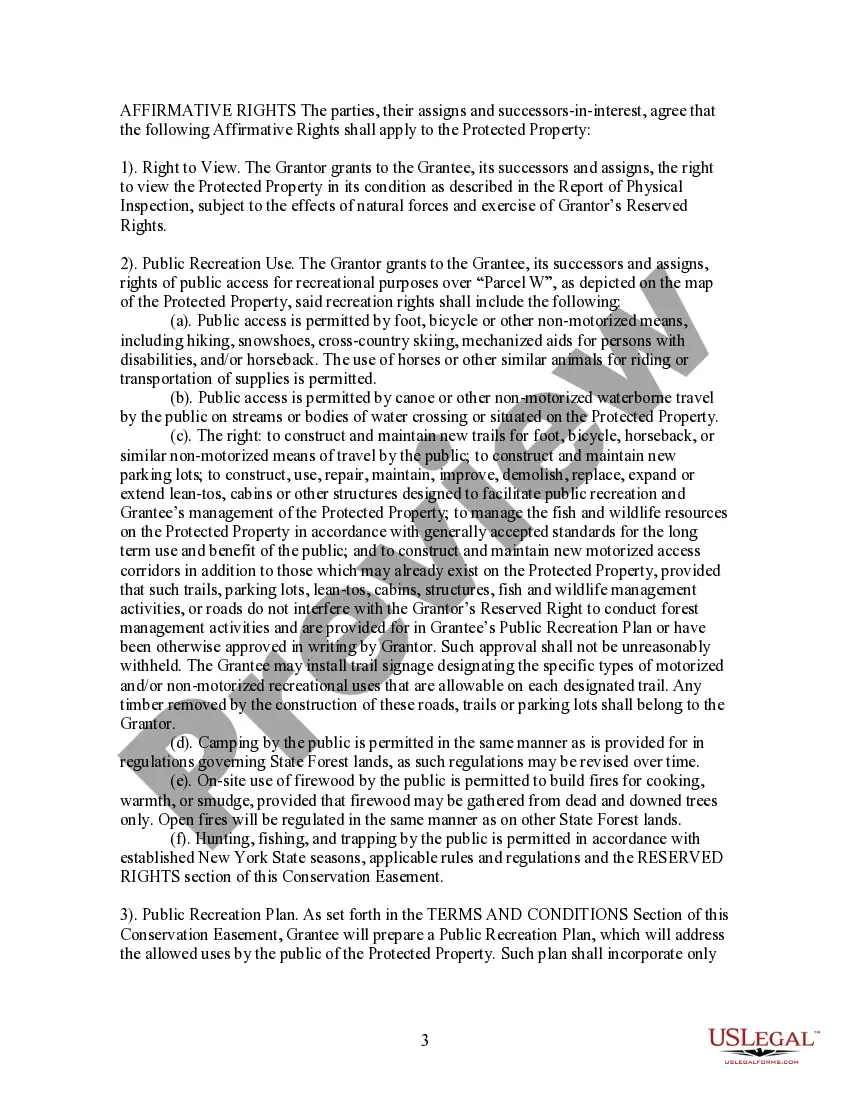
- Definitions of important terms, such as "motor vehicle" and "forestry use structure."
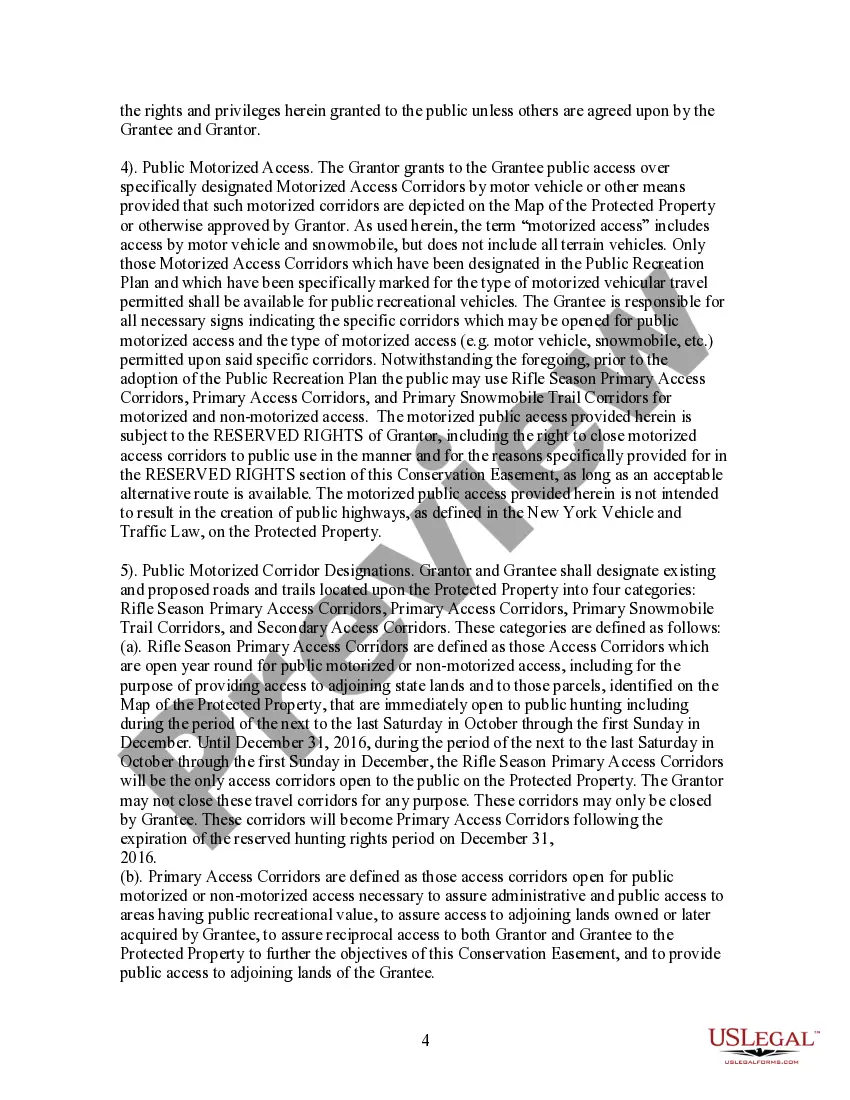
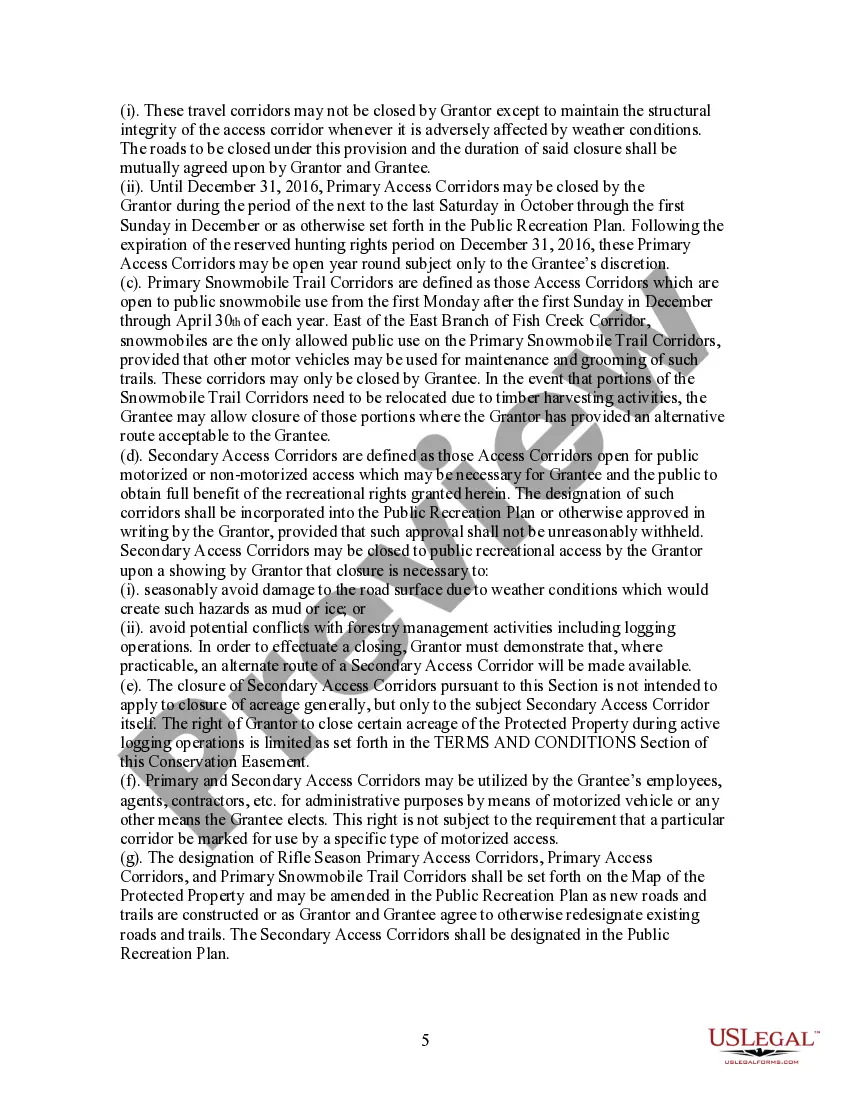
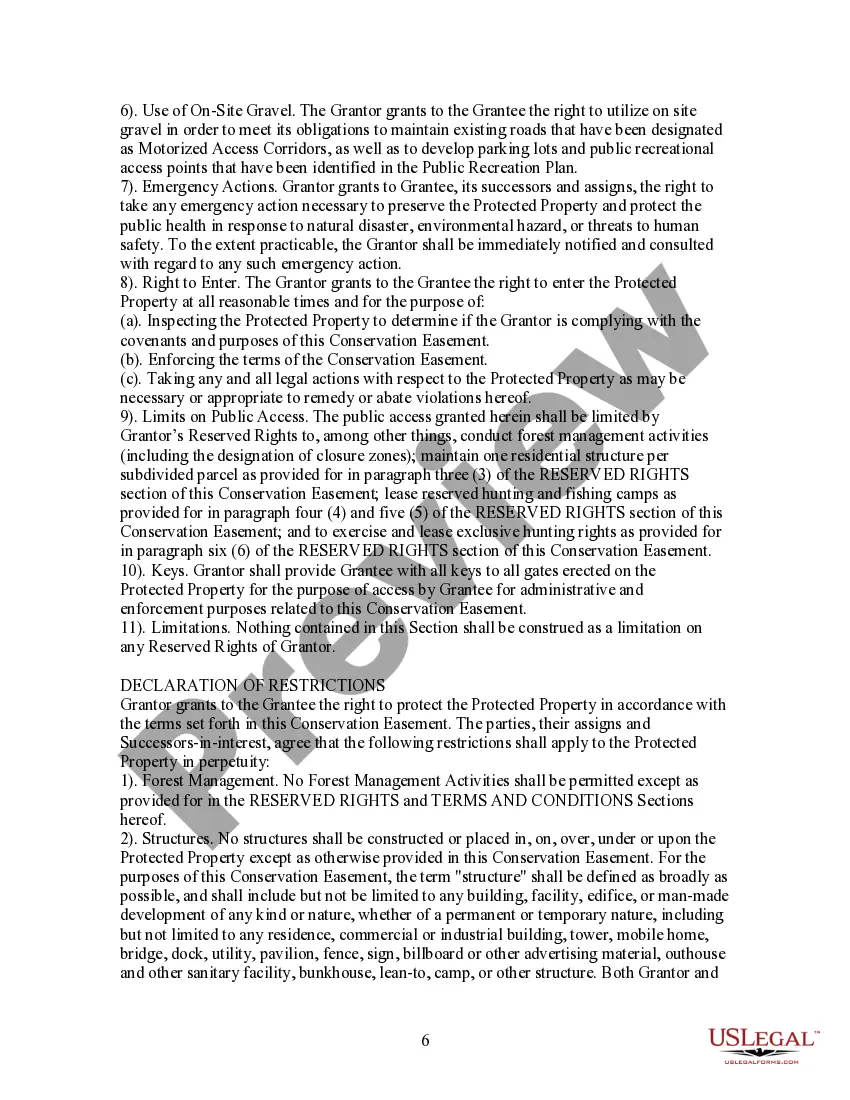
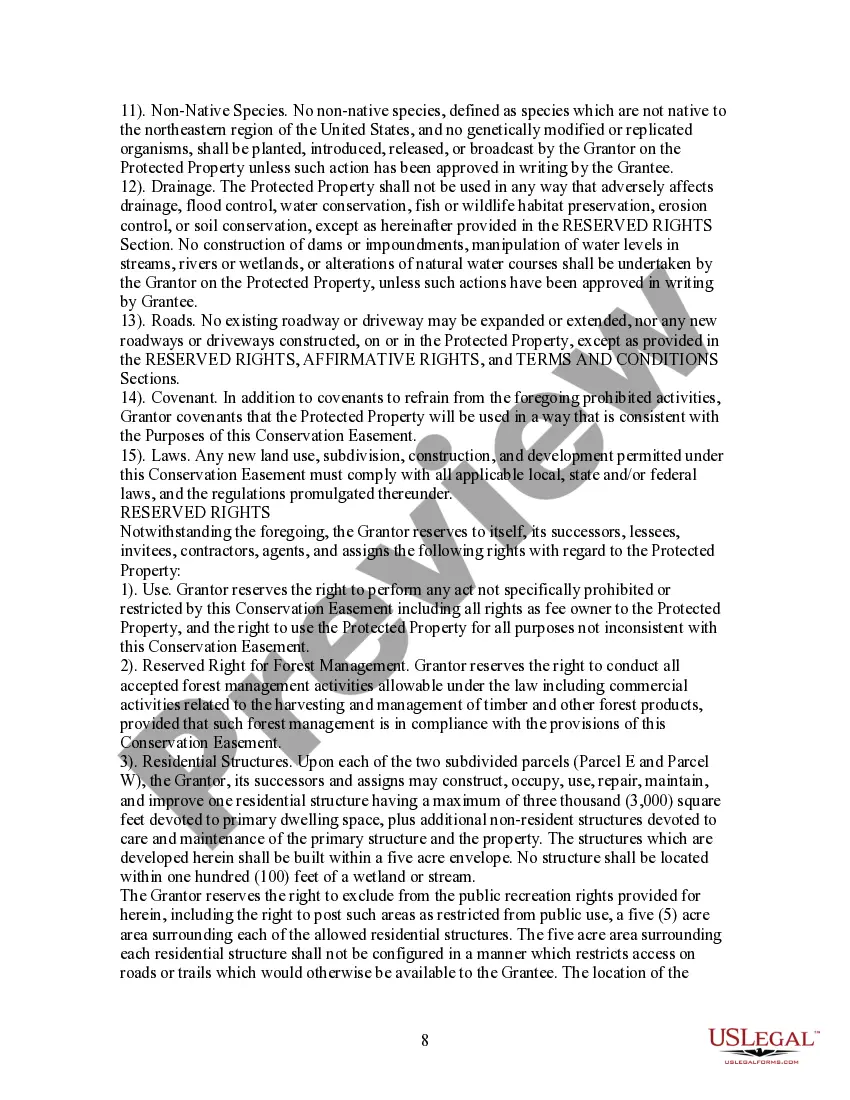
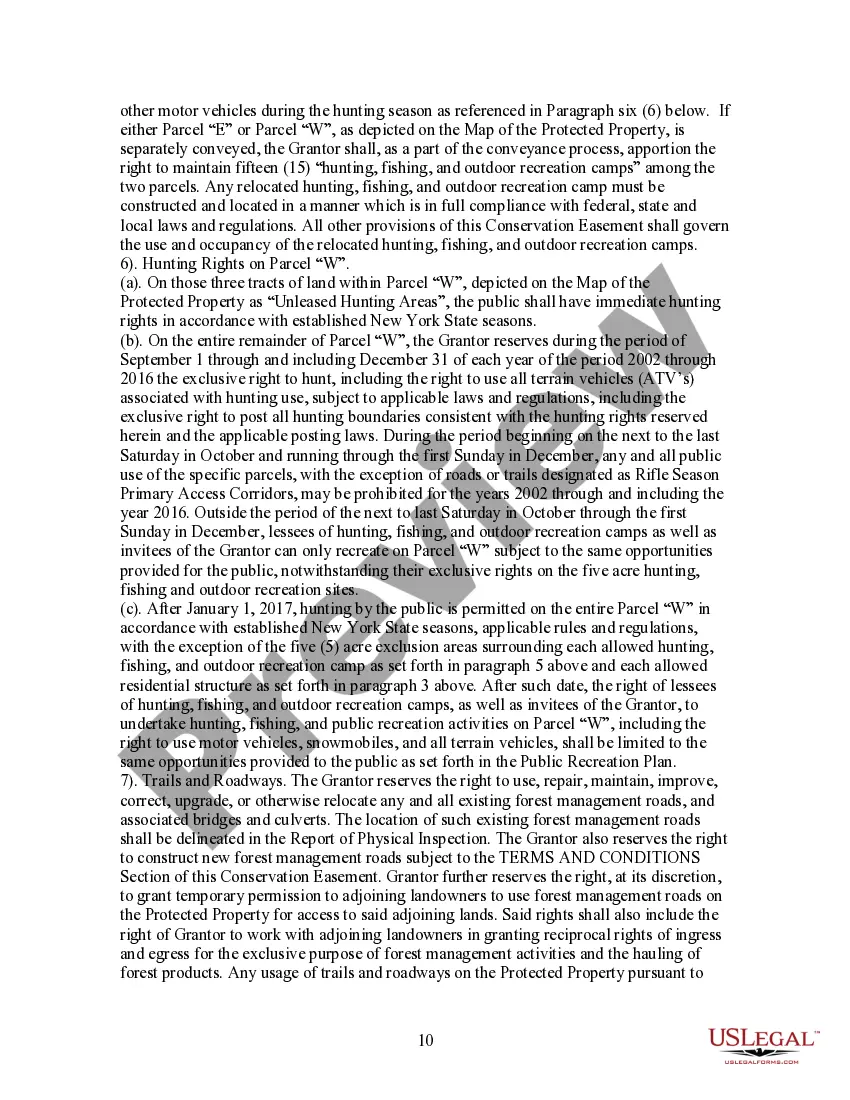
- Affirmative rights granted to the Grantee, including rights to inspect the property and manage public access for recreation.
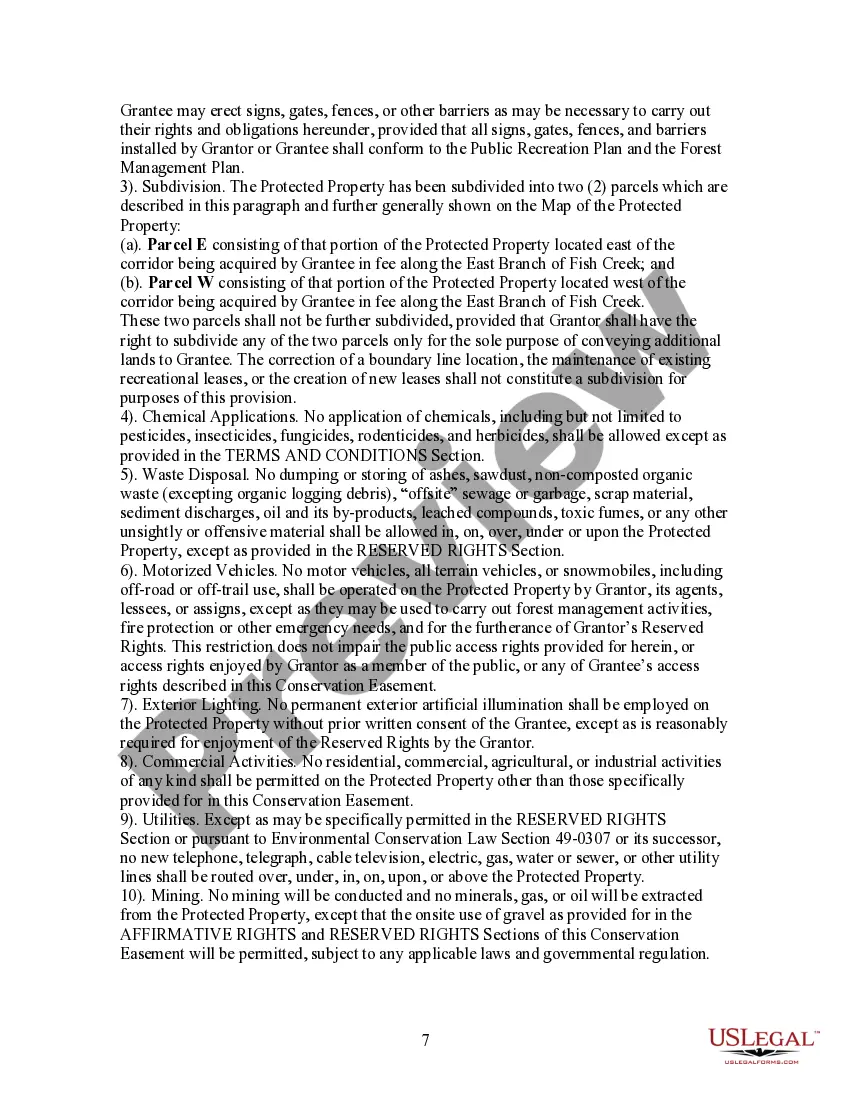
- Restrictions on land use, preventing commercial, agricultural, or industrial activities not in line with conservation goals.
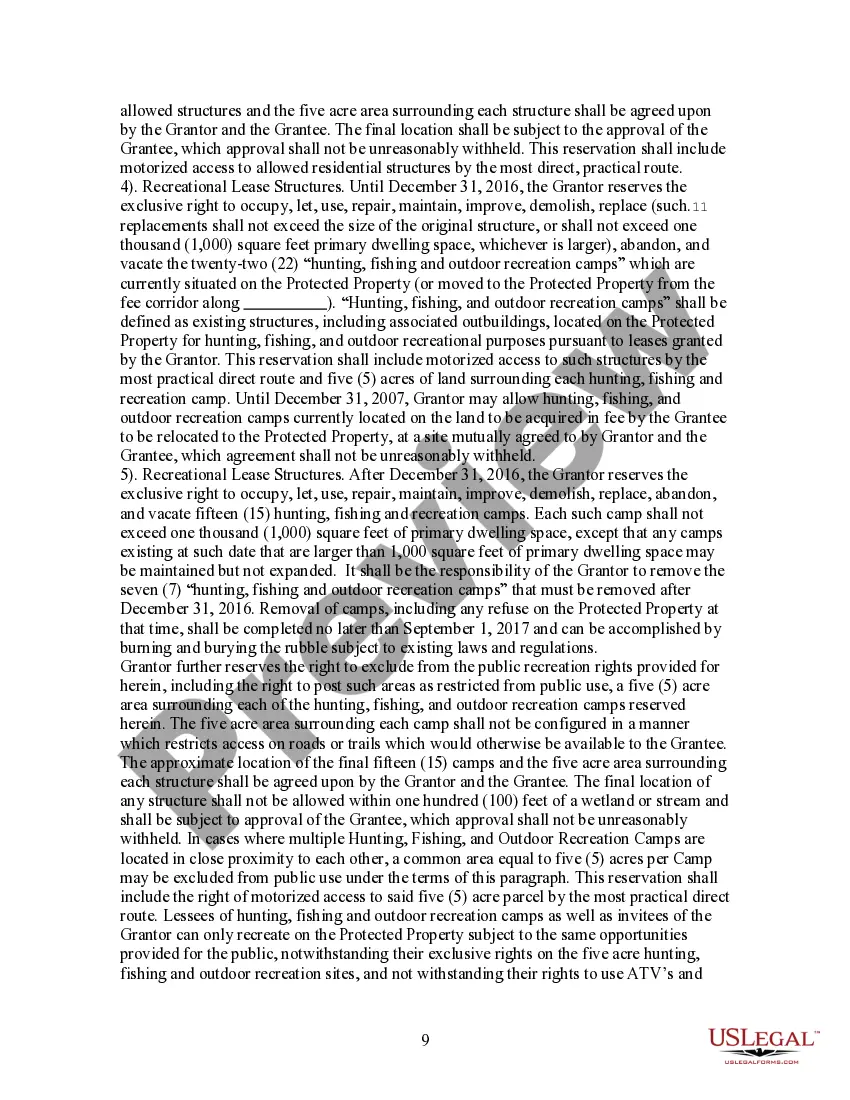
- Reserved rights of the Grantor, allowing for certain uses, including residential structures and forest management activities.
- Covenants detailing responsibilities for maintenance and management of the property.

Common use cases
This form is needed when a property owner (the Grantor) wishes to place a conservation easement on their land, ensuring its preservation while permitting some degree of development under specific conditions. It is often used in situations where environmental protection is a priority, and public access for recreation must be guaranteed. This form is crucial for land areas with significant biodiversity or scenic value, where the owner seeks to protect such attributes legally.
Intended users of this form
This form is suitable for:
- Property owners looking to protect their land's environmental resources while allowing limited development.
- Land trusts or conservation organizations interested in acquiring easements over properties to maintain ecological integrity.
- Local governments aiming to preserve open spaces in urban settings through cooperative agreements with private landowners.
Steps to complete this form
- Identify the parties involved (Grantor and Grantee) and provide their legal names and addresses.
- Specify the property by providing a legal description, including boundaries and relevant maps.
- Detail the specific conservation and development restrictions applicable to the property within the document.
- Include any affirmative rights granted to the Grantee and specify the reserved rights for the Grantor.
- Sign and date the form in the presence of a notary public, if required.
Notarization requirements for this form
This form needs to be notarized to ensure legal validity. US Legal Forms provides secure online notarization powered by Notarize, allowing you to complete the process through a verified video call, available anytime.
Get your form ready online
Our built-in tools help you complete, sign, share, and store your documents in one place.
Make edits, fill in missing information, and update formatting in US Legal Forms—just like you would in MS Word.
Download a copy, print it, send it by email, or mail it via USPS—whatever works best for your next step.
Sign and collect signatures with our SignNow integration. Send to multiple recipients, set reminders, and more. Go Premium to unlock E-Sign.
If this form requires notarization, complete it online through a secure video call—no need to meet a notary in person or wait for an appointment.
We protect your documents and personal data by following strict security and privacy standards.

Make edits, fill in missing information, and update formatting in US Legal Forms—just like you would in MS Word.

Download a copy, print it, send it by email, or mail it via USPS—whatever works best for your next step.

Sign and collect signatures with our SignNow integration. Send to multiple recipients, set reminders, and more. Go Premium to unlock E-Sign.

If this form requires notarization, complete it online through a secure video call—no need to meet a notary in person or wait for an appointment.

We protect your documents and personal data by following strict security and privacy standards.
Typical mistakes to avoid
- Failing to appropriately define the boundaries of the property.
- Not specifying the rights and restrictions clearly, leading to ambiguity.
- Forgetting to include necessary signatures or notarization, making the document invalid.
Why use this form online
- Convenience of completing the document from home at any time.
- Editability allows for specific adjustments tailored to individual property needs.
- Access to professionally drafted templates ensures legal compliance and reliability.
Looking for another form?
Form popularity
FAQ
Easements are legal designations that allow individuals or entities to use portions of your property (to build on or for physical access), even though you still own the land and technically have a right to build on it.There are utility easements that allow sewer and gas lines.
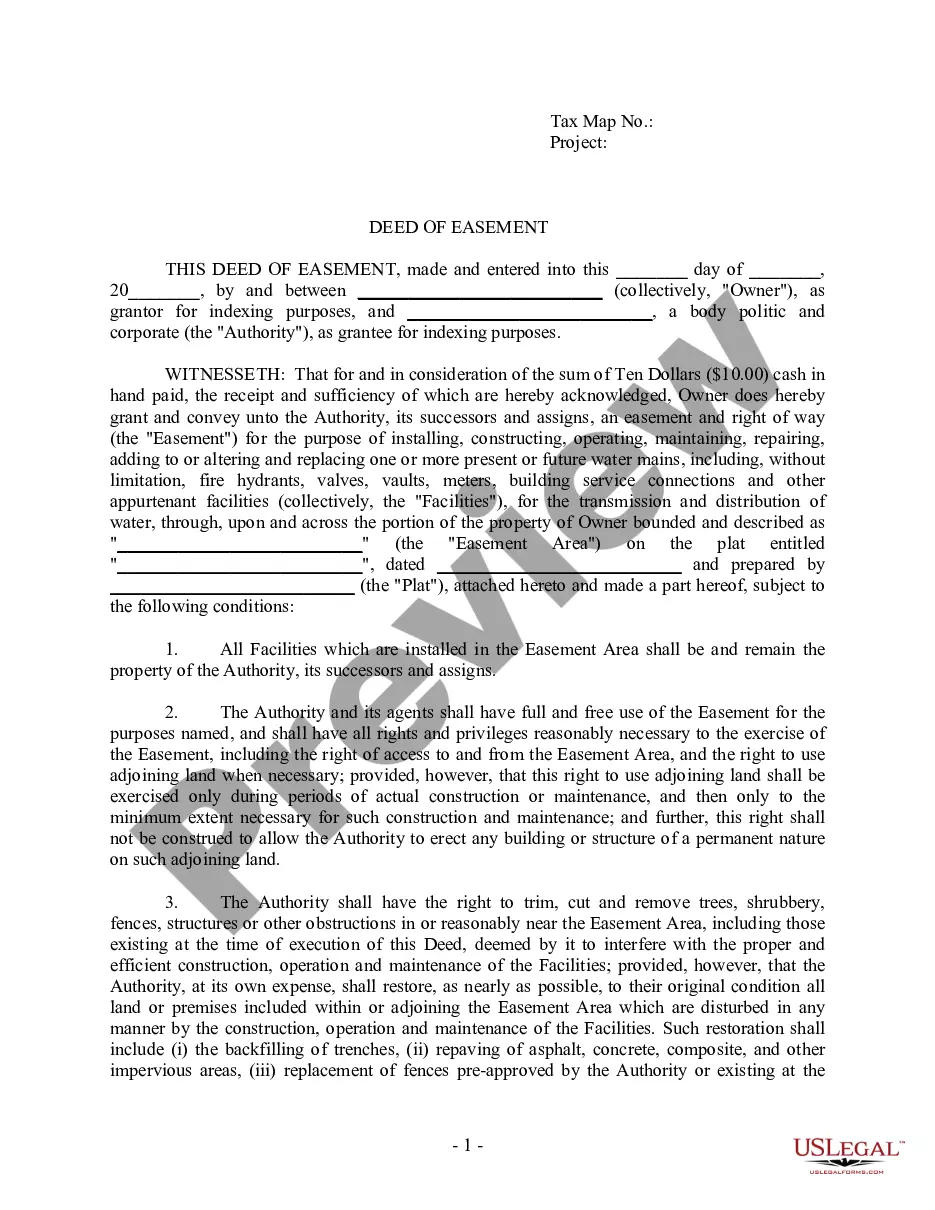
The legal term easement refers to the legal right to use another person's real property, for a specific purpose and a specific amount of time. An easement gives a person the legal right to go through another person's land, as long as the usage is consistent with the specified easement restrictions.
An easement is a "nonpossessory" property interest that allows the holder of the easement to have a right of way or use property that they do not own or possess.If the easement only benefits an individual personally, not as an owner of a particular piece of land, the easement is known as "in gross."
Types of Easements An easement may be classified as either an easement appurtenant or an easement in gross. Easement Appurtenant. An easement appurtenant is an easement that benefits one parcel of land, known as the dominant tenement, to the detriment of another parcel of land, known as the servient tenement.
When you're buying a house, you might find out that the property has an easement on it. Essentially this means that someone other than you could have access to the land. This isn't necessarily a bad thing. For example, utility companies typically hold easements in case they need to access pipes or cables.
LEASE: A lease is a contract where a landlord agrees to give a tenant the exclusive right to inhabit or occupy real property, such as a house, apartment or office.An easement, like the license, is the owner's permission to use OR prevent the use of the owner's real property.
1. A(n) __________ is the right of one property owner to use the property of another.The property which benefits from an easement is referred to as the: a) servient tenement.
A property easement is a legal situation in which the title to a specific piece land remains with the landowner, but another person or organization is given the right to use that land for a distinct purpose.
If an authority has an easement registered over your land, they have the right to access the easement to maintain or repair the easement land or their equipment on the land.