New York Amendment to Living Trust
What is this form?
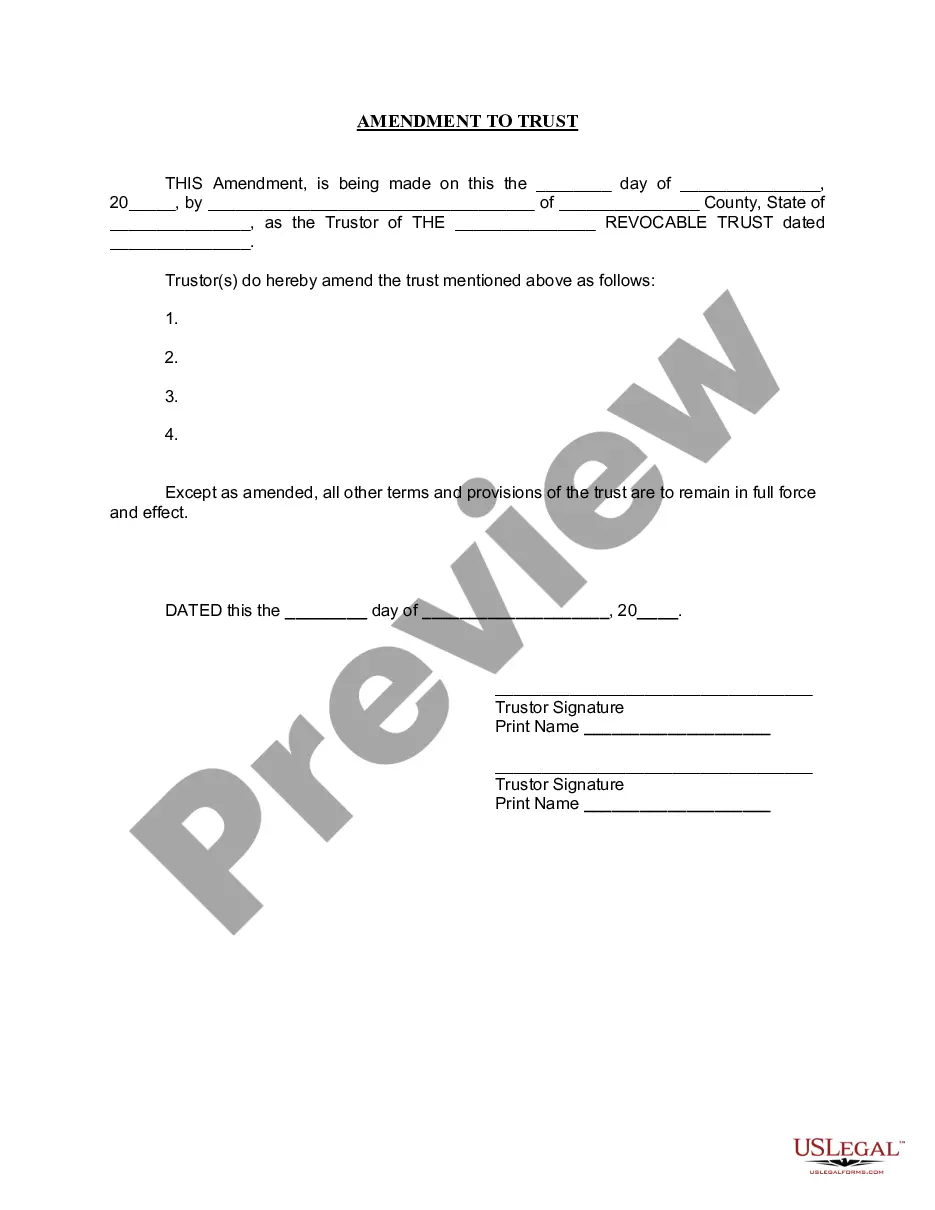
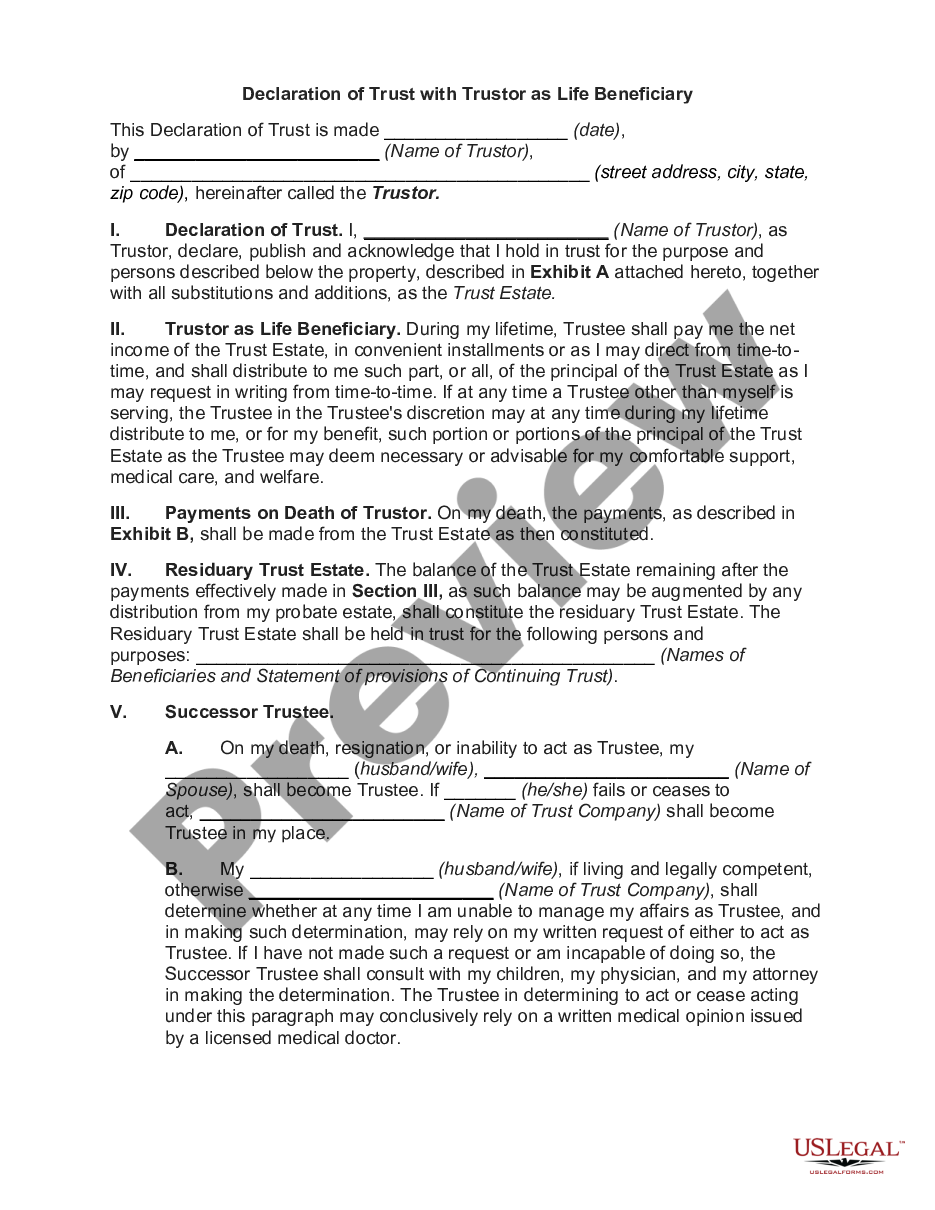
The Amendment to Living Trust is a legal document used to modify an existing living trust. A living trust is established during a personâs lifetime to manage assets and facilitate estate planning. This form allows the Trustor to change specific provisions of the trust while keeping the trust's overall purpose intact. Importantly, all unchanged sections of the trust will continue to be effective, ensuring seamless estate management.
Form components explained
- Identification of the Trustor and the trust being amended.
- Statement specifying the changes being made to the trust.
- Signature section for the Trustor(s), including printed names.
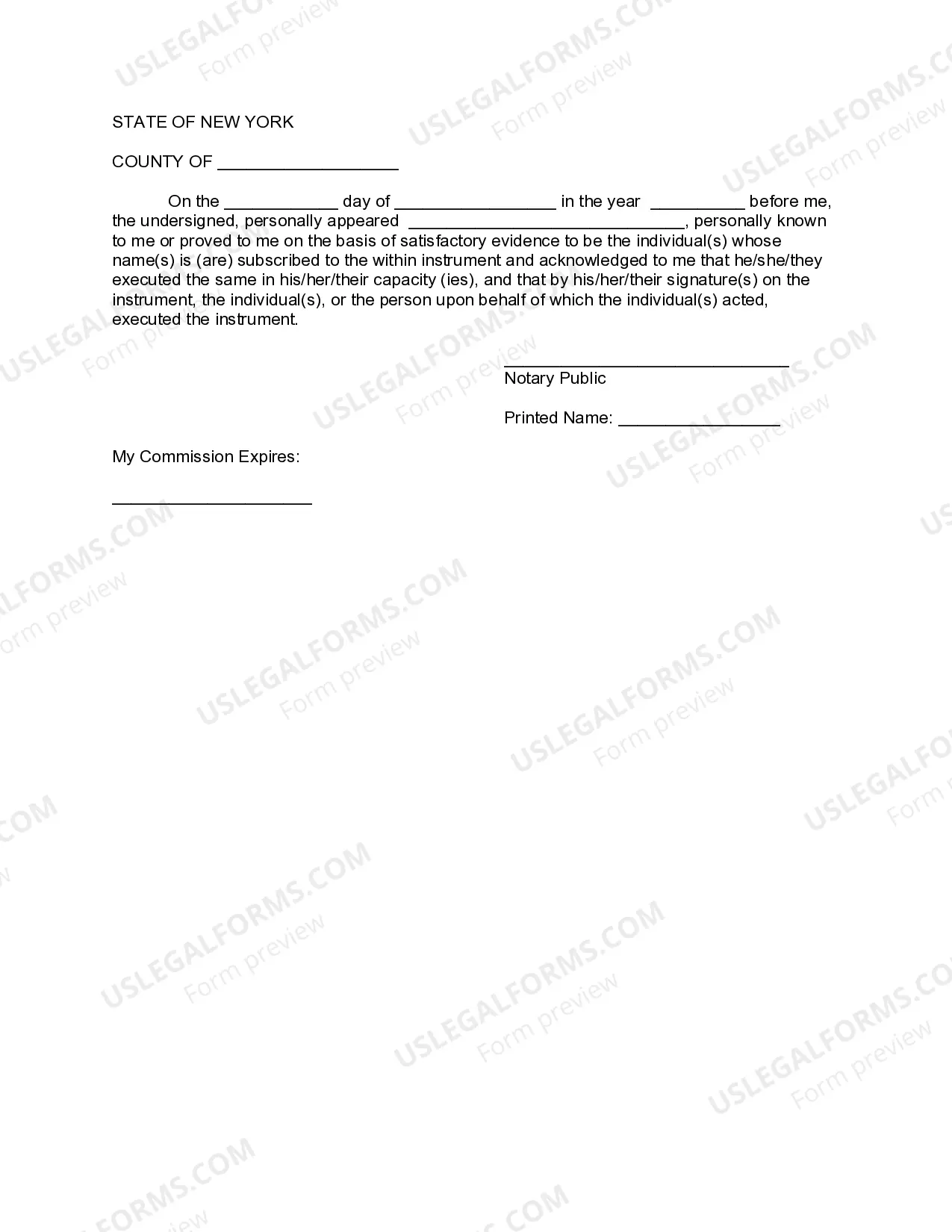
- Notary acknowledgment section for legal validation.


When this form is needed
This form is needed when a Trustor wishes to make changes to their existing living trust. This could be due to changes in the family structure, like marriage or divorce, the birth of children, or updates in asset management preferences. It is essential whenever an adjustment is required to align the trust with the Trustor's current wishes or legal needs.
Who can use this document
- Individuals who are currently Trustors of a living trust.
- Those who need to amend specific provisions of their trust.
- Anyone looking to update their estate planning documents to reflect changes in personal circumstances.
How to prepare this document
- Identify the Trustor by filling in their name and address.
- Specify the name of the trust being amended, including the date it was created.
- Clearly state the amendments being made to the trust.
- Both Trustors need to sign the document in the designated areas.
- Make sure the signatures are notarized to ensure legal validity.
Does this document require notarization?
Yes, this form must be notarized to be legally valid. Notarization confirms the identity of the signers and their understanding of the document's contents. US Legal Forms offers integrated online notarization services, allowing you to complete this process securely via a video call.
Get your form ready online
Our built-in tools help you complete, sign, share, and store your documents in one place.
Make edits, fill in missing information, and update formatting in US Legal Forms—just like you would in MS Word.
Download a copy, print it, send it by email, or mail it via USPS—whatever works best for your next step.
Sign and collect signatures with our SignNow integration. Send to multiple recipients, set reminders, and more. Go Premium to unlock E-Sign.
If this form requires notarization, complete it online through a secure video call—no need to meet a notary in person or wait for an appointment.
We protect your documents and personal data by following strict security and privacy standards.

Make edits, fill in missing information, and update formatting in US Legal Forms—just like you would in MS Word.

Download a copy, print it, send it by email, or mail it via USPS—whatever works best for your next step.

Sign and collect signatures with our SignNow integration. Send to multiple recipients, set reminders, and more. Go Premium to unlock E-Sign.

If this form requires notarization, complete it online through a secure video call—no need to meet a notary in person or wait for an appointment.

We protect your documents and personal data by following strict security and privacy standards.
Typical mistakes to avoid
- Failing to list all amendments clearly, leading to ambiguity.
- Not obtaining the necessary notarization for the signatures.
- Omitting important details about the trust, such as its full name or creation date.
Why use this form online
- Instant access to a downloadable template that can be easily customized.
- Convenience of filling out forms at your own pace.
- Reliability from a source drafted by licensed attorneys, ensuring legal validity.
- The option to complete and store your forms digitally.
Summary of main points
- The Amendment to Living Trust allows Trustors to modify their trust without starting over.
- Signatures must be notarized to ensure the amendments are legally enforceable.
- It's crucial to be clear and specific about the amendments made to avoid future confusion.
Looking for another form?
Form popularity
FAQ
You can change your living trust, usually without incurring lawyer bills.Because you and your spouse made the trust together, you should both sign the amendment, and when you sign it, get your signatures notarized, just like the original. Another way to go is to create a "restatement" of your trust.
Of course you can, however, "Codicil" is an amendment to a will. Amending a trust called "Amendment" to the trust, even if it is just amending a trustee's name. It needs to be notarized and some specific language to be sufficient.
Locate the original trust. The grantor must locate the original trust documents and identify the specific provisions that require amendment. Prepare an amendment form. Get the amendment form notarized. Attach amendment form to original trust.
Identify the section and content you want to change. The first step in amending your will is to review it. Type up the changes. Take the time to type up the codicil. Sign and date the codicil. Store your codicil in a safe place.
Find living trust forms online. Be as clear as possible. Include specific language. Have the amendment notarized. Keep your trust document and amendment together in a safe place. Alternatively, do what is called a restatement of the trust. Revoke your trust.
An amendment to a trust is not required to be notarized or witnessed unless the terms of the original trust require it.
Just about any writing will suffice to make a valid Trust amendment. Having the writing typed is not legally required. That's really the point of Trust amendments, to allow a Settlor to express his or her intent as easily as possible. As long as the Trust terms are followed, any writing will do.
Find living trust forms online. Be as clear as possible. Include specific language. Have the amendment notarized. Keep your trust document and amendment together in a safe place. Alternatively, do what is called a restatement of the trust. Revoke your trust.
1Locate the original trust. The grantor must locate the original trust documents and identify the specific provisions that require amendment.2Prepare an amendment form.3Get the amendment form notarized.4Attach amendment form to original trust.