New York Letter from Landlord to Tenant for Failure to keep all plumbing fixtures in the dwelling unit as clean as their condition permits - Remedy or lease terminates
What this document covers
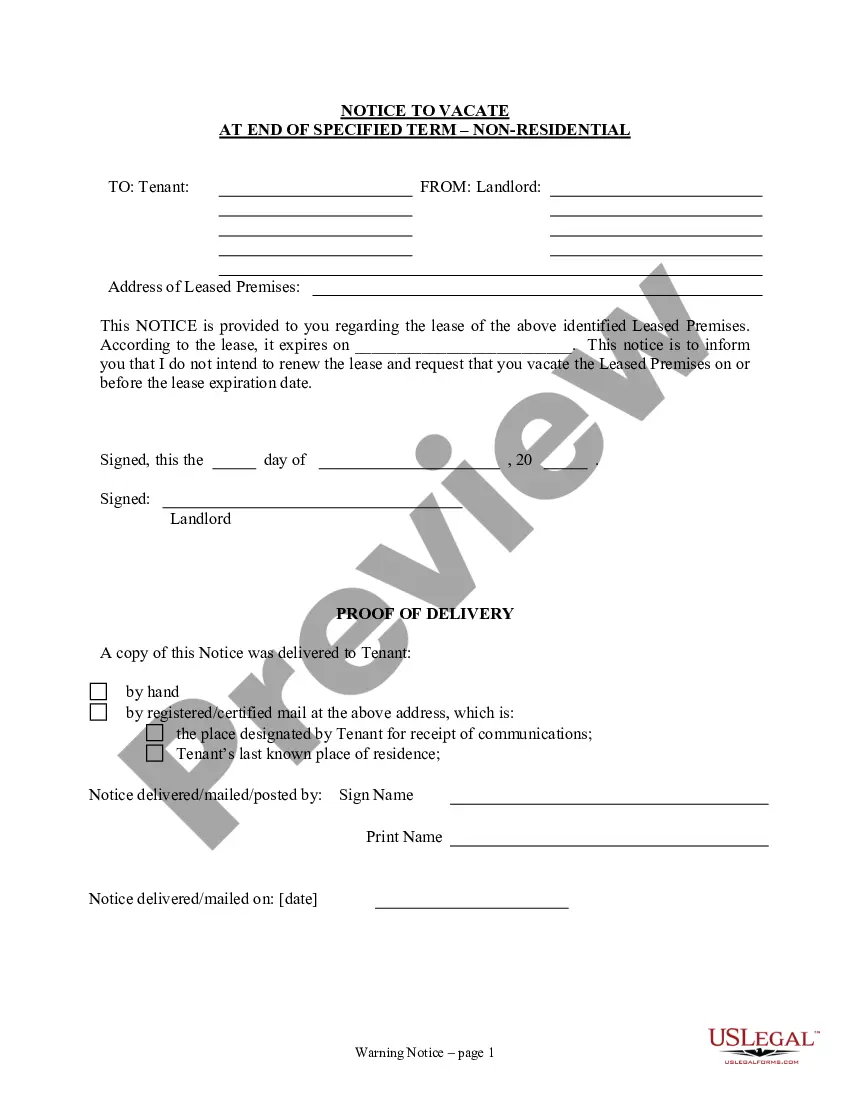
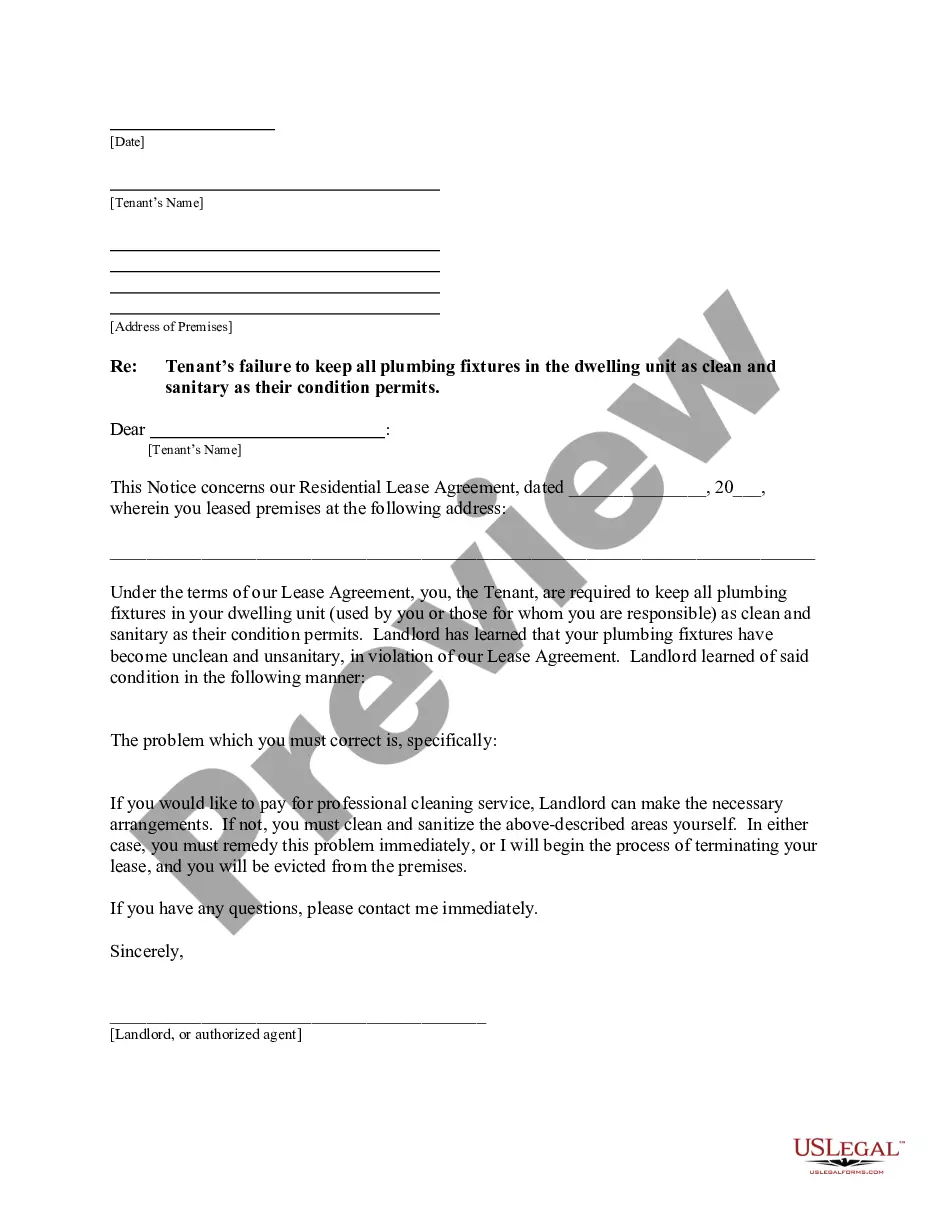
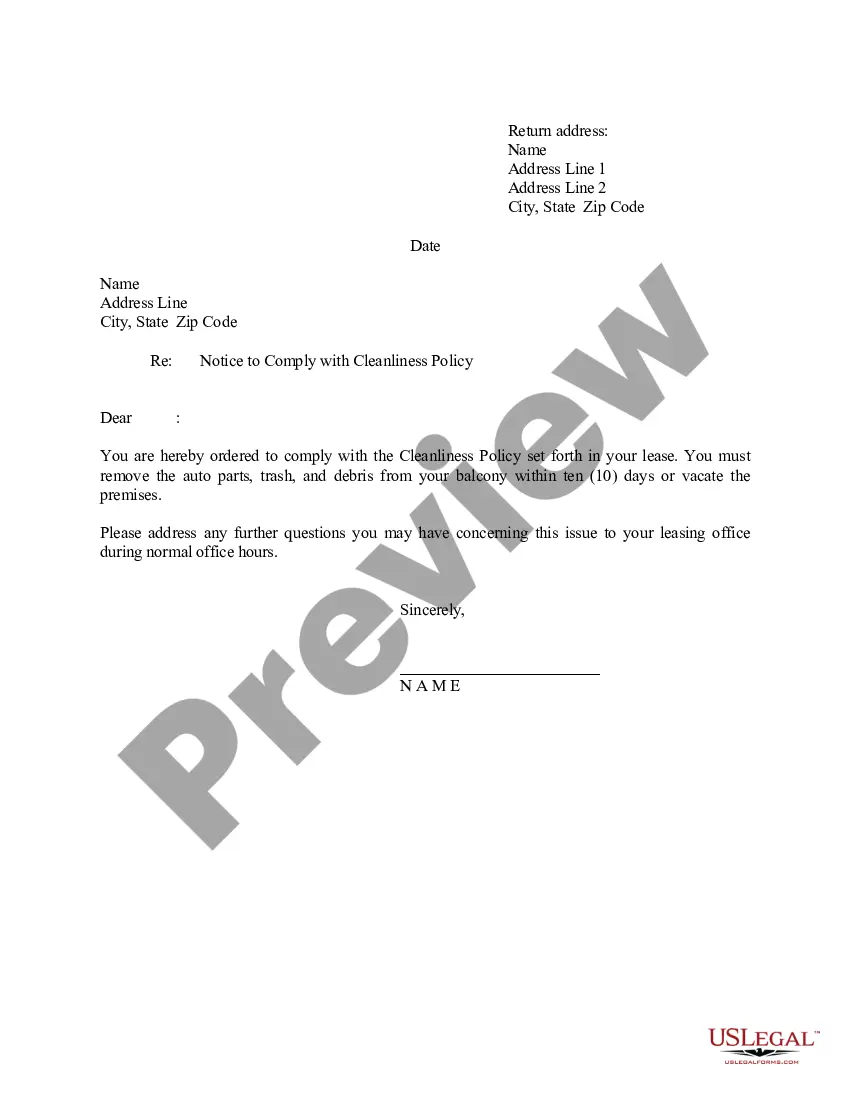
This form is a Letter from Landlord to Tenant for Failure to Keep All Plumbing Fixtures in the Dwelling Unit as Clean as Their Condition Permits. Its primary purpose is to notify the tenant about the deterioration of plumbing fixtures and the lack of maintenance required by the lease. This letter is crucial as it outlines the landlord's intention to terminate the lease if the tenant fails to remedy the situation, helping both parties understand their rights and responsibilities under the lease agreement.
Key components of this form
- Identification of the landlord and tenant.
- Details of the plumbing issues and lack of maintenance.
- Warning regarding lease termination if issues are not resolved.
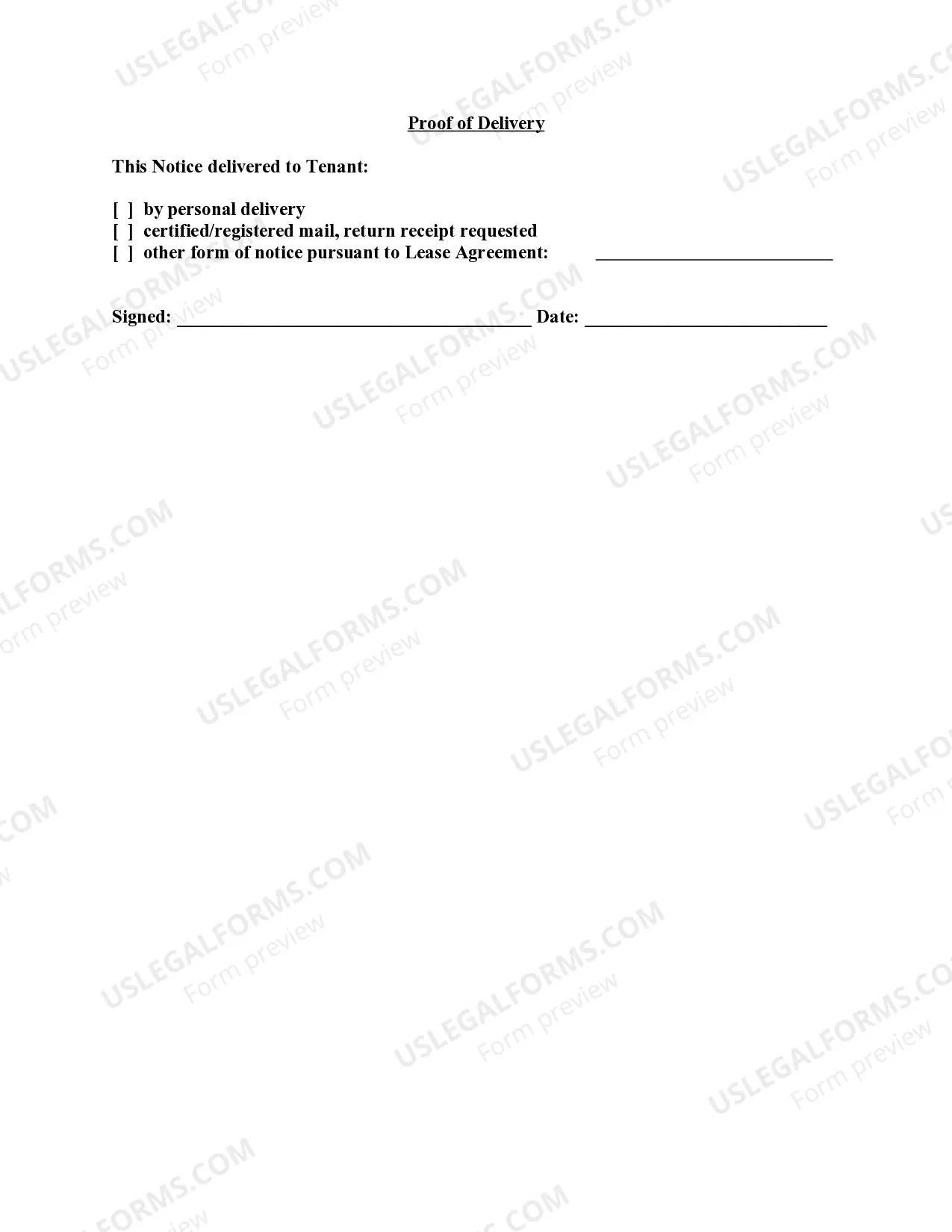
- Instructions for proof of delivery of the notice.
- Signature line for the landlord or authorized agent.


When to use this form
This form should be used when a landlord observes that the tenant has not maintained the plumbing fixtures in the rental unit as required by the lease. It serves as a formal notice to the tenant, urging them to take immediate action to clean and maintain the plumbing to avoid penalties, including potential lease termination.
Intended users of this form
- Landlords who manage residential rental properties.
- Property managers acting on behalf of landlords.
- Tenants who have received such a notice and need to understand their obligations.
Instructions for completing this form
- Identify the parties involved by entering the landlord's and tenant's names.
- Describe the specific plumbing issues that have occurred.
- Specify the timeframe given to the tenant to address the issues.
- Provide details of the legal consequences if the plumbing maintenance is not resolved.
- Sign and date the letter, and use the appropriate method to deliver the notice.
Is notarization required?
This form usually doesn’t need to be notarized. However, local laws or specific transactions may require it. Our online notarization service, powered by Notarize, lets you complete it remotely through a secure video session, available 24/7.
Get your form ready online
Our built-in tools help you complete, sign, share, and store your documents in one place.
Make edits, fill in missing information, and update formatting in US Legal Forms—just like you would in MS Word.
Download a copy, print it, send it by email, or mail it via USPS—whatever works best for your next step.
Sign and collect signatures with our SignNow integration. Send to multiple recipients, set reminders, and more. Go Premium to unlock E-Sign.
If this form requires notarization, complete it online through a secure video call—no need to meet a notary in person or wait for an appointment.
We protect your documents and personal data by following strict security and privacy standards.
Make edits, fill in missing information, and update formatting in US Legal Forms—just like you would in MS Word.
Download a copy, print it, send it by email, or mail it via USPS—whatever works best for your next step.
Sign and collect signatures with our SignNow integration. Send to multiple recipients, set reminders, and more. Go Premium to unlock E-Sign.
If this form requires notarization, complete it online through a secure video call—no need to meet a notary in person or wait for an appointment.
We protect your documents and personal data by following strict security and privacy standards.
Common mistakes
- Failing to provide specific details about the plumbing issues.
- Not informing the tenant of the timeline to remedy the problem.
- Omitting signatures or delivery proof, which can weaken the notice's enforceability.
Benefits of using this form online
- Easy access to professionally drafted legal documents at any time.
- Convenient editing features to customize the document to your specific situation.
- Secure and reliable format that ensures legal compliance and enforceability.
Looking for another form?


Form popularity
FAQ
One of your important tenant's rights is to a habitable residence. This means that the home must be safe to live in, without dangerous conditions and with usable heat, utilities, and water. Your landlord is required to make any necessary repairs to keep your unit in reasonable condition while you live there.
If you have lived there less than one year, the landlord must provide at least 30 days' notice. If you have lived there more than one year, but less than two years, the landlord must provide at least 60 days' notice. If you have lived there more than two years, the landlord must provide at least 90 days' notice.
No limit on how much your landlord can increase your rent. However, your landlord must give you advanced written notice before they can raise your rent 5% or more.
Generally, the landlord-tenant laws are landlord-friendly in both the state of New York and New York City.
In New York City, tenants have many rights relating to the safety and quality of their housing. Tenants should expect to live in safe, well-maintained buildings that are free from vermin, leaks, and hazardous conditions. Laws protect tenants from harassment and discrimination.
Rent-stabilization limits the rent a landlord can charge on an apartment and a fixed cap on rent increases which is calculated each year by the NYC Rent Guidelines Board. For example, the maximum rent increase for rent-stabilized apartments in 2020 was 1.5% for a 1-year lease and 2.5% for a 2-year lease.
According to the new law, the landlord must give prior notice of 30-days if he/she wants to increase rent by more than 5%. And the period of notice increases with the length of the lease. For example, if the tenant is living for more than a year, a prior notice of 60-days will be valid.
A landlord cannot evict a tenant without an adequately obtained eviction notice and sufficient time. A landlord cannot retaliate against a tenant for a complaint. A landlord cannot forego completing necessary repairs or force a tenant to do their own repairs.A landlord cannot remove a tenant's personal belongings.