New York Letter from Tenant to Landlord containing Notice that heater is broken, unsafe or inadequate and demand for immediate remedy
What is this form?
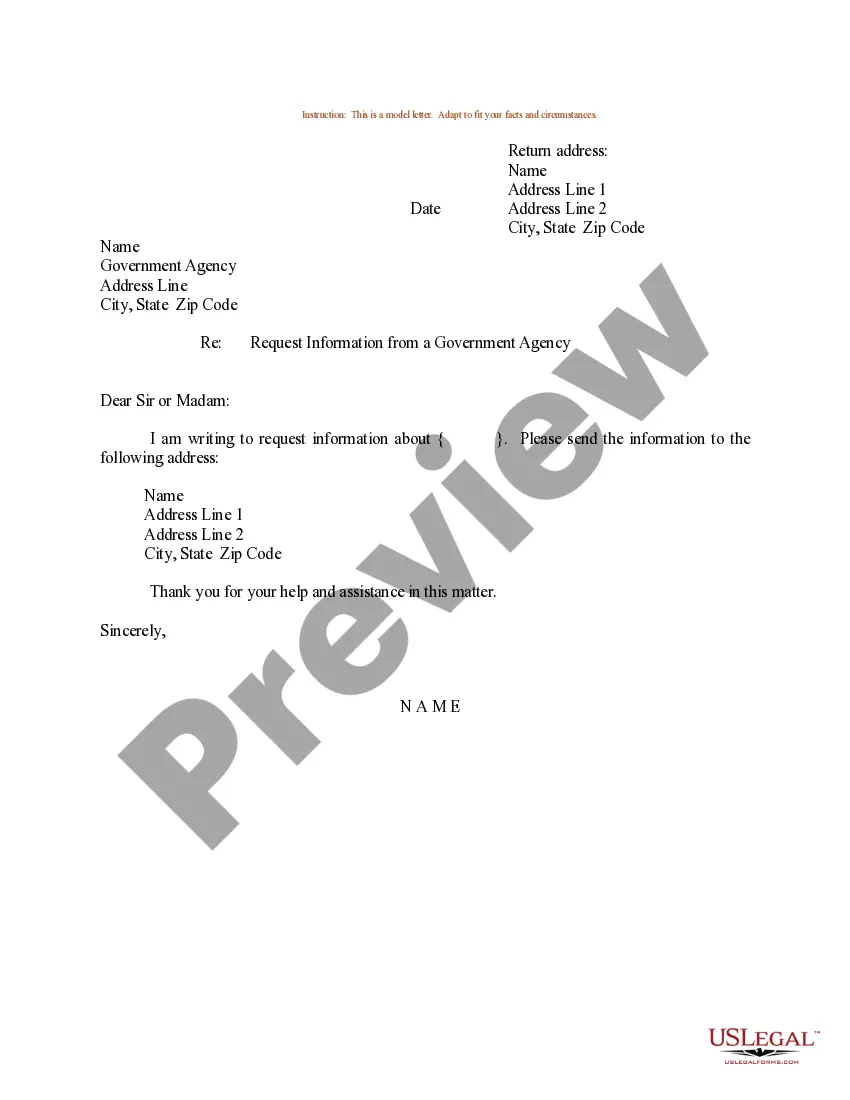
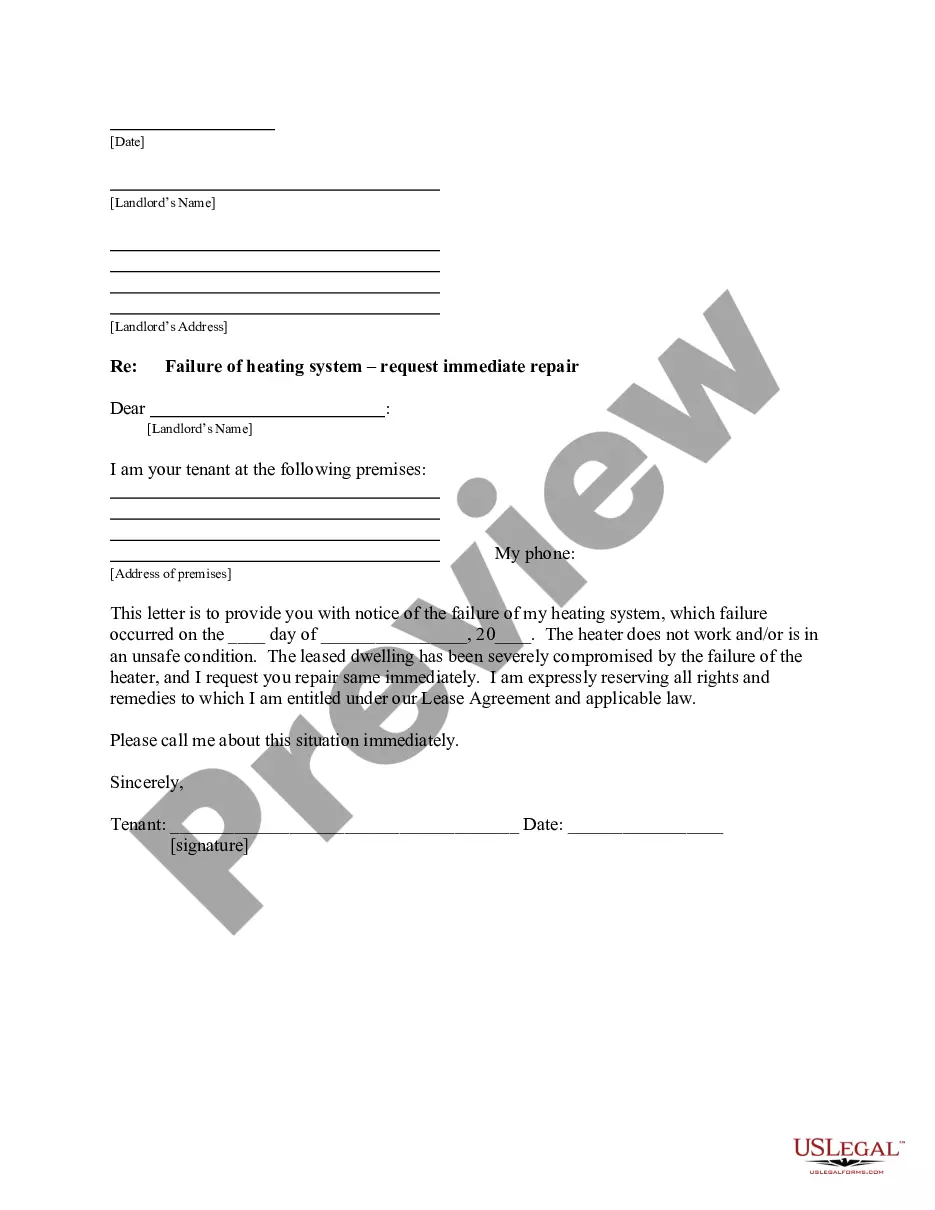
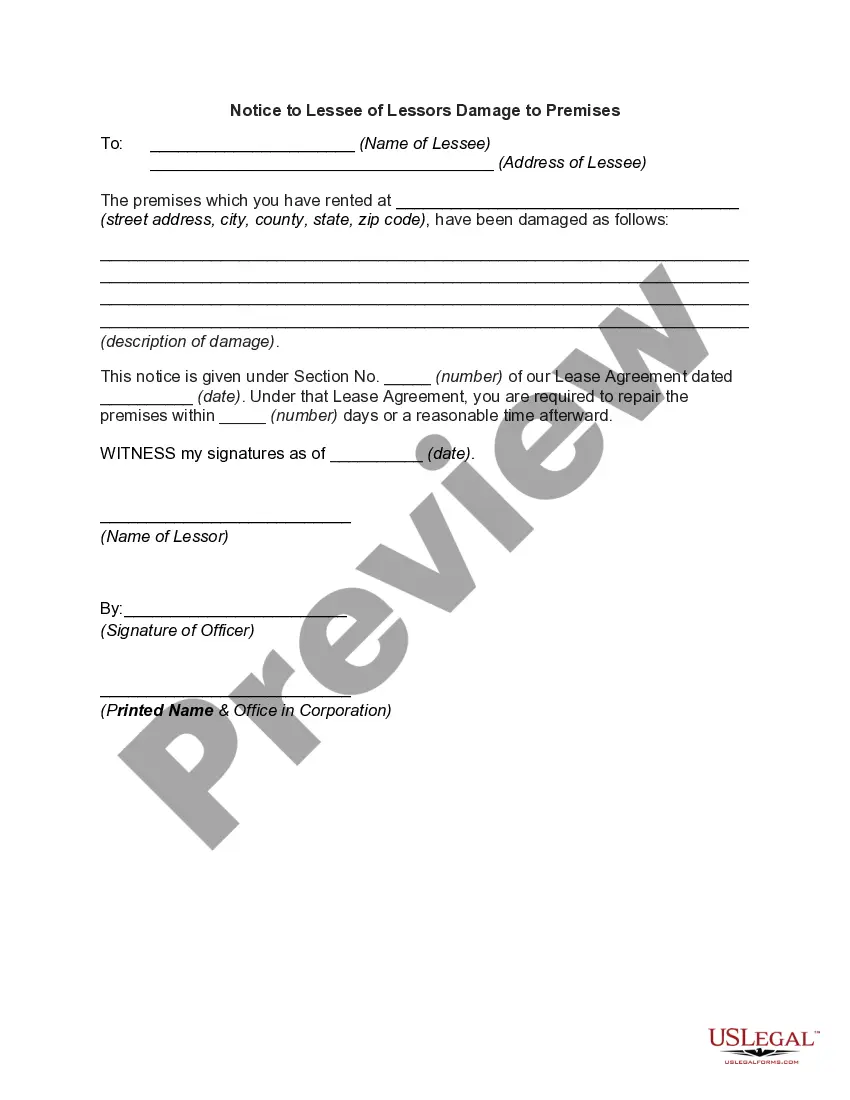
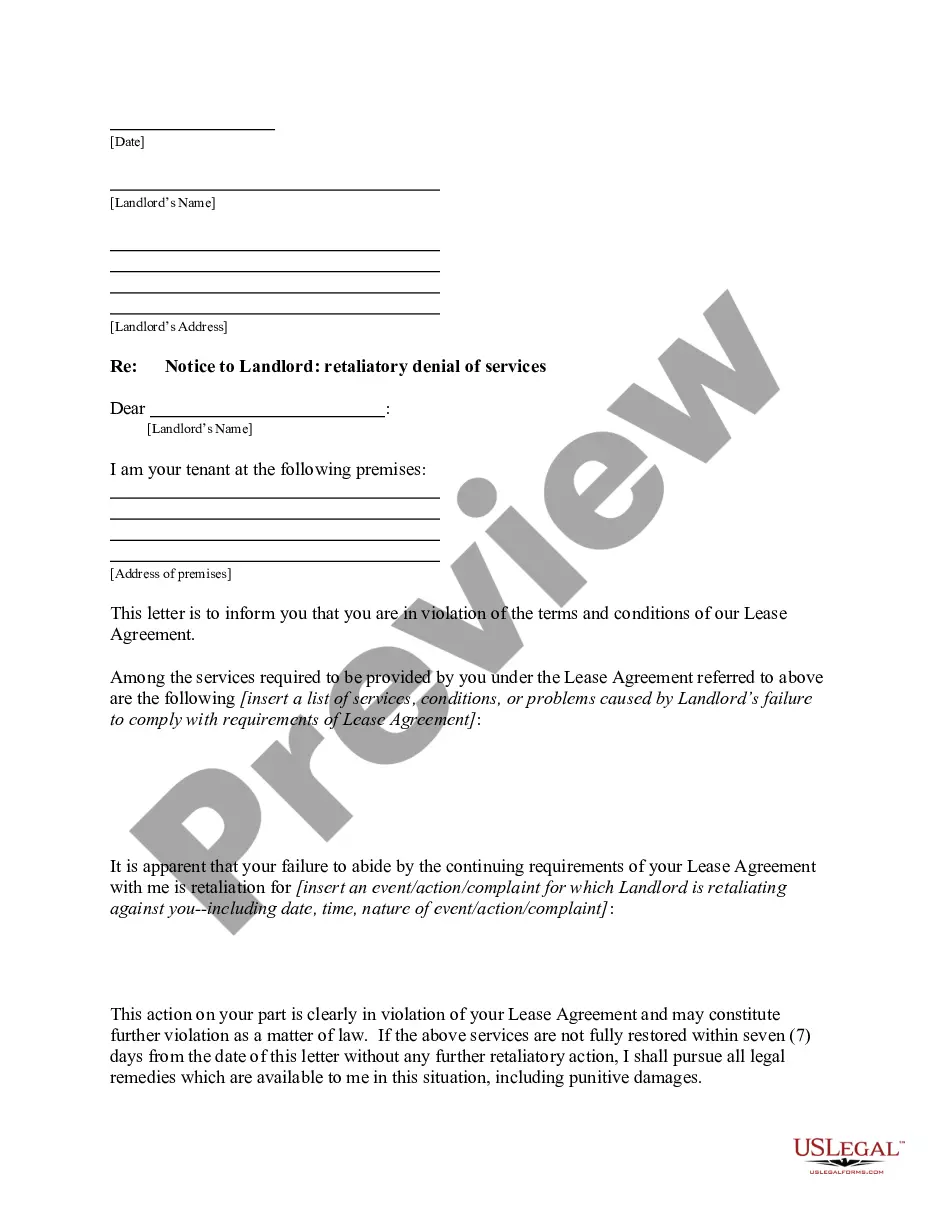
This form is a Letter from Tenant to Landlord regarding a broken or inadequate heating system. Its main purpose is to notify the landlord of an issue that compromises the habitability of the rental property. By using this form, tenants formally demand the necessary repairs, emphasizing the landlord's legal responsibility to maintain a safe living environment.
Form components explained
- Tenant's contact information: Identifies who is raising the issue.
- Landlord's contact information: Ensures the notice reaches the correct authority.
- Description of the problem: Clearly states that the heater is broken or inadequate.
- Request for immediate action: A formal demand for repairs to be made promptly.
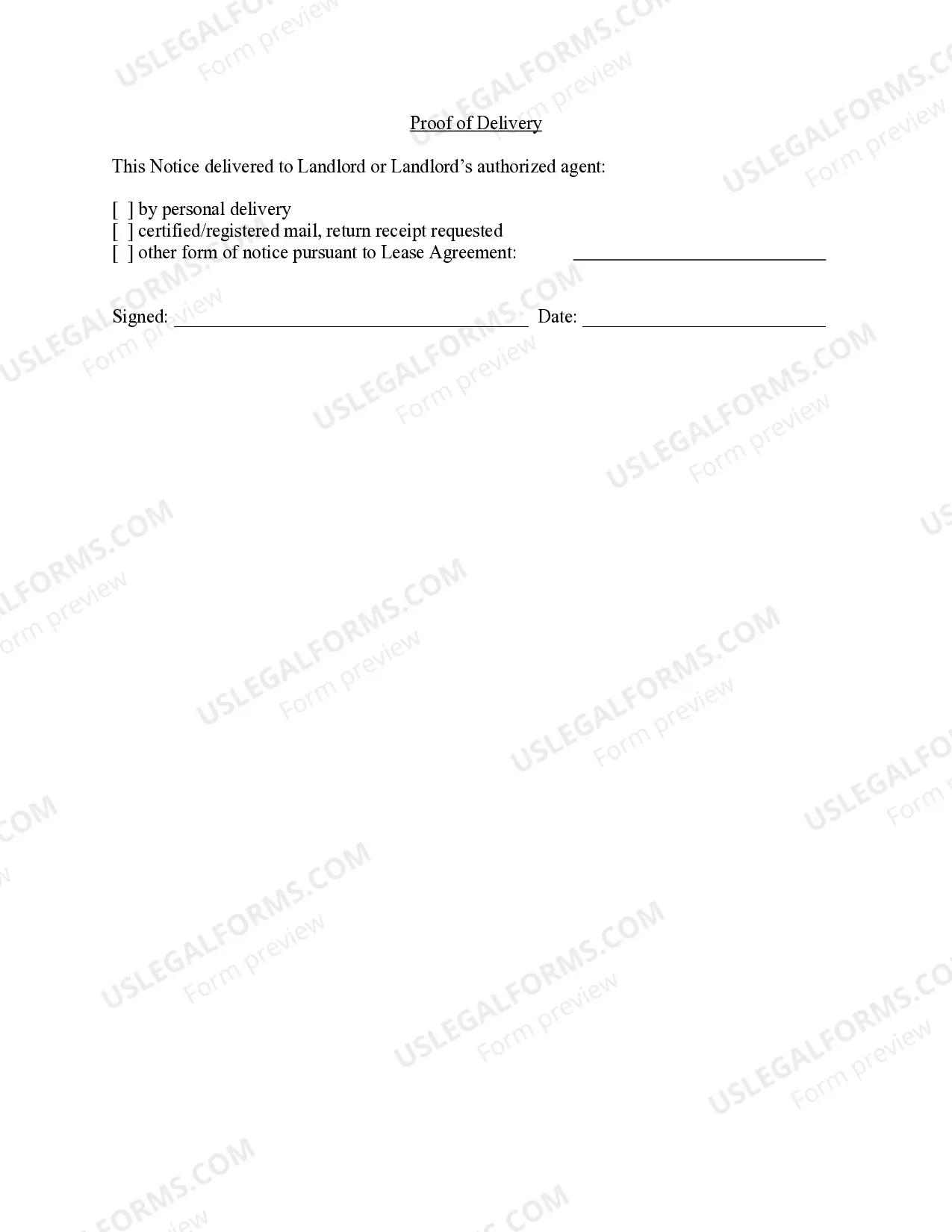
- Delivery proof section: Options for how the notice is delivered to the landlord.


When this form is needed
This form should be used when a tenant discovers that the heating system in their rental unit is not functioning properly, is unsafe, or is inadequate for their needs. Situations might include a complete heater breakdown during winter, inadequate heating leading to unsafe temperatures, or any failure that violates local housing codes regarding heating standards. It is crucial to address such issues promptly to maintain comfort and safety in the living space.
Who can use this document
This form is intended for:
- Tenants experiencing issues with their heating system.
- Individuals living in rental properties who require immediate repairs.
- Those looking to legally document their request for repairs for future reference.
Instructions for completing this form
- Identify and provide your contact information at the top of the form.
- Fill in the landlord's contact details accurately.
- Clearly describe the problem with the heating system.
- State your request for immediate repairs in a direct manner.
- Choose your delivery method and provide proof of delivery if necessary.
- Sign and date the notice to formalize your request.
Does this document require notarization?
This form does not typically require notarization unless specified by local law. However, it is always wise to check local regulations to ensure compliance.
Get your form ready online
Our built-in tools help you complete, sign, share, and store your documents in one place.
Make edits, fill in missing information, and update formatting in US Legal Forms—just like you would in MS Word.
Download a copy, print it, send it by email, or mail it via USPS—whatever works best for your next step.
Sign and collect signatures with our SignNow integration. Send to multiple recipients, set reminders, and more. Go Premium to unlock E-Sign.
If this form requires notarization, complete it online through a secure video call—no need to meet a notary in person or wait for an appointment.
We protect your documents and personal data by following strict security and privacy standards.

Make edits, fill in missing information, and update formatting in US Legal Forms—just like you would in MS Word.

Download a copy, print it, send it by email, or mail it via USPS—whatever works best for your next step.

Sign and collect signatures with our SignNow integration. Send to multiple recipients, set reminders, and more. Go Premium to unlock E-Sign.

If this form requires notarization, complete it online through a secure video call—no need to meet a notary in person or wait for an appointment.

We protect your documents and personal data by following strict security and privacy standards.
Typical mistakes to avoid
- Failing to include complete contact information for both tenant and landlord.
- Not specifying the nature of the heating issue clearly.
- Omitting the date when the notice is being delivered.
- Using an incorrect delivery method that does not provide proof of receipt.
Why complete this form online
- Convenience of downloading immediately for quick resolution of issues.
- Editability allows you to customize the form before printing.
- Reliable templates drafted by licensed attorneys ensure legal compliance.
- Accessible guidance for users with little legal experience.
Legal use & context
- Tenants have the legal right to demand repairs for essential services like heating.
- Failure to address heating issues can lead to further legal actions by tenants.
- This form serves as a formal notification that can be used as evidence if disputes arise.
Key takeaways
- This form formally notifies landlords of heating issues in rental properties.
- It emphasizes the landlord's duty to maintain a habitable environment.
- Completing this form correctly can help ensure timely repairs.
Looking for another form?
Form popularity
FAQ
Notice of Rent Increase According to the new law, the landlord must give prior notice of 30-days if he/she wants to increase rent by more than 5%. And the period of notice increases with the length of the lease. For example, if the tenant is living for more than a year, a prior notice of 60-days will be valid.
A landlord cannot evict a tenant without an adequately obtained eviction notice and sufficient time. A landlord cannot retaliate against a tenant for a complaint. A landlord cannot forego completing necessary repairs or force a tenant to do their own repairs.A landlord cannot remove a tenant's personal belongings.
Generally, the landlord-tenant laws are landlord-friendly in both the state of New York and New York City.
In New York City, tenants have many rights relating to the safety and quality of their housing. Tenants should expect to live in safe, well-maintained buildings that are free from vermin, leaks, and hazardous conditions. Laws protect tenants from harassment and discrimination.
If you have lived there less than one year, the landlord must provide at least 30 days' notice. If you have lived there more than one year, but less than two years, the landlord must provide at least 60 days' notice. If you have lived there more than two years, the landlord must provide at least 90 days' notice.
One of your important tenant's rights is to a habitable residence. This means that the home must be safe to live in, without dangerous conditions and with usable heat, utilities, and water. Your landlord is required to make any necessary repairs to keep your unit in reasonable condition while you live there.
The Landlord-Tenant Environment in New York Generally, the landlord-tenant laws are landlord-friendly in both the state of New York and New York City.