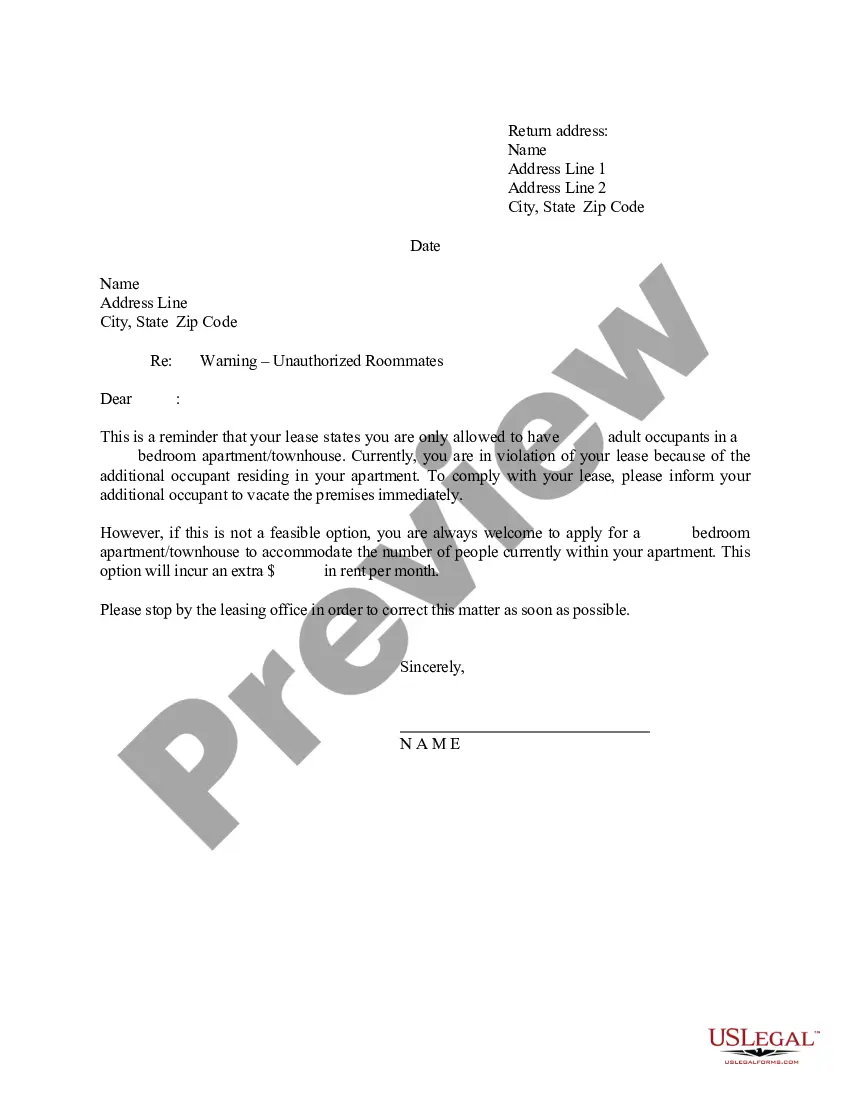
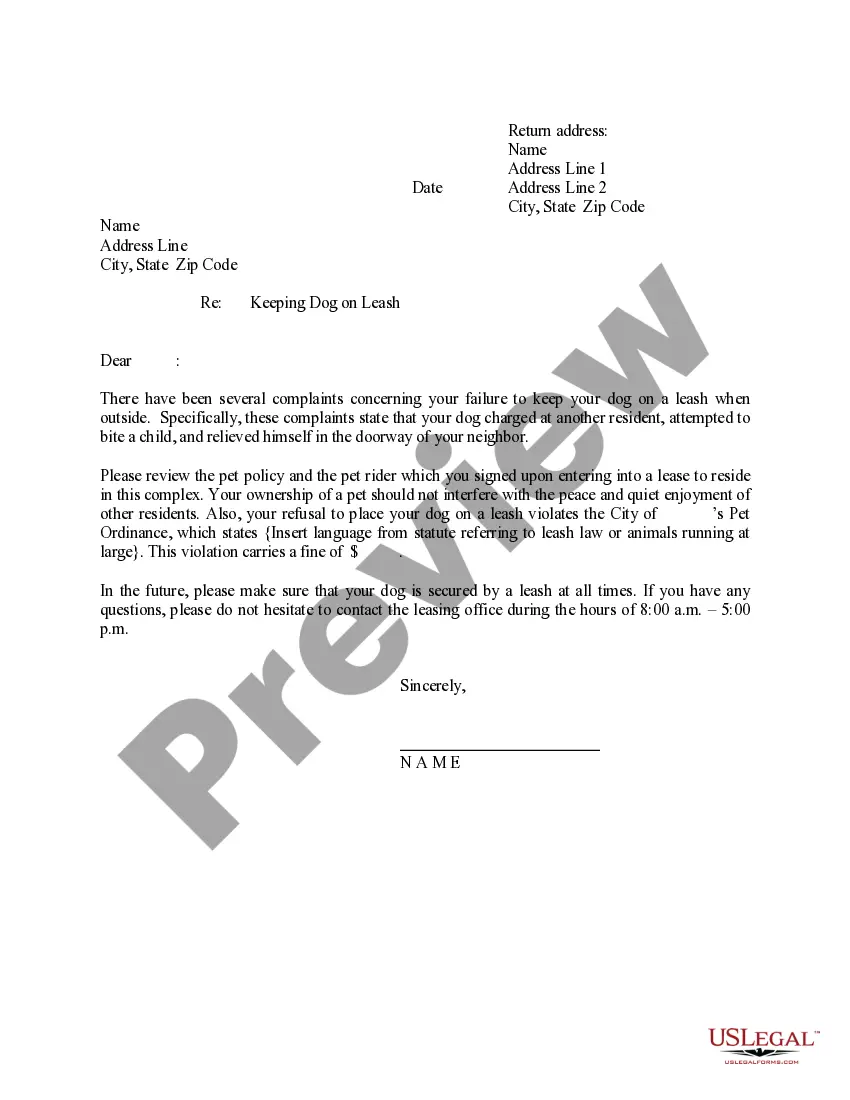
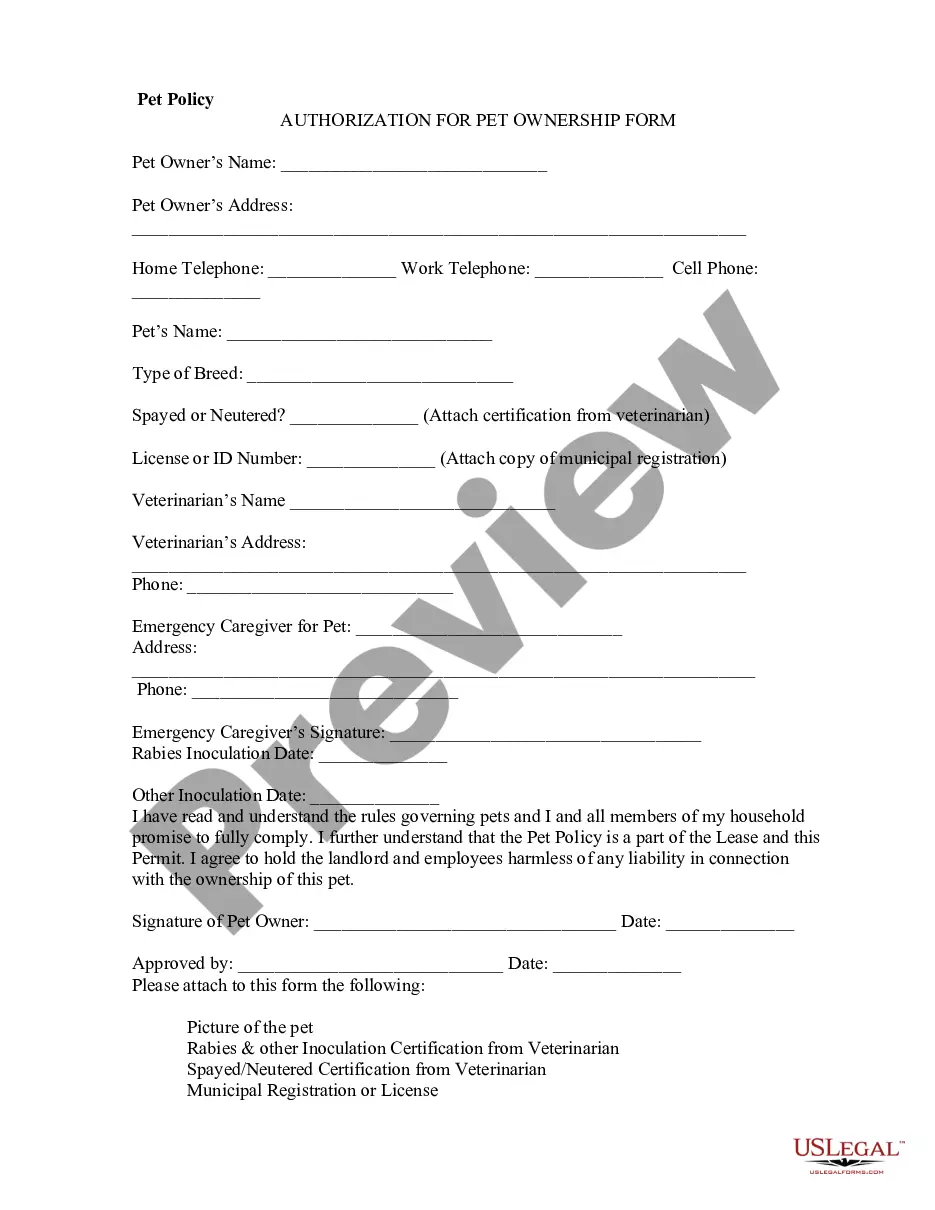
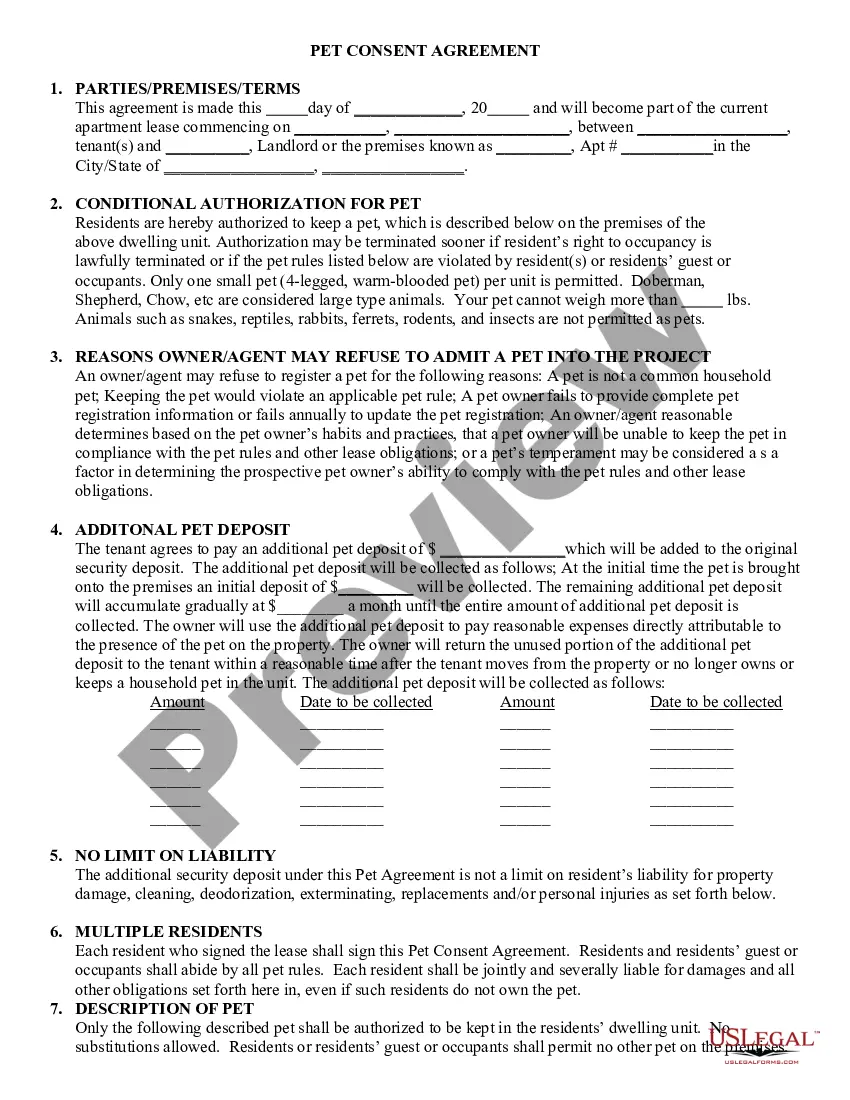
New York Letter from Landlord to Tenant as Notice to remove unauthorized pets from premises
Overview of this form
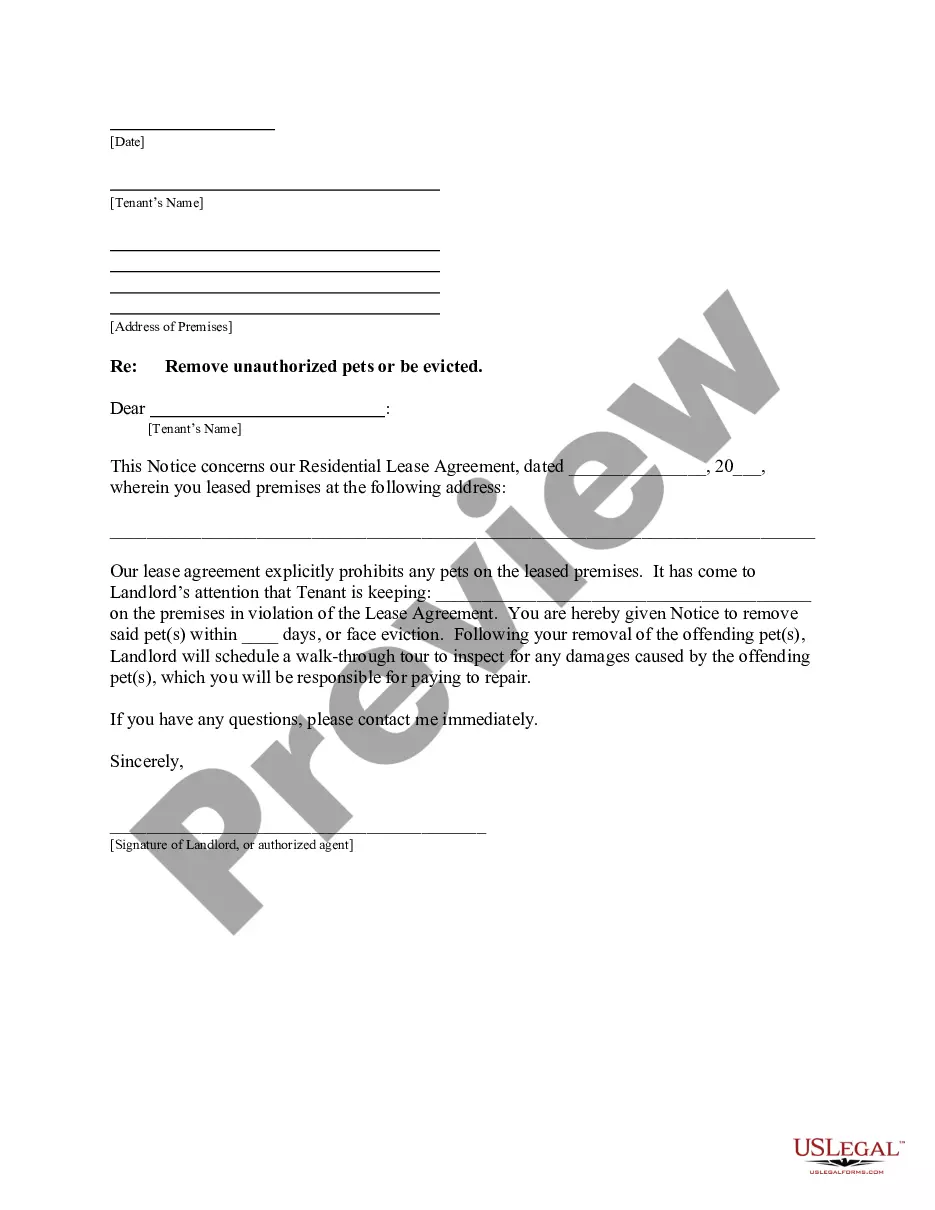
This form is a letter from the landlord to the tenant that serves as a formal notice requiring the tenant to remove unauthorized pets from the leased premises. This letter is essential for maintaining compliance with the Residential Lease Agreement and outlines potential consequences for non-compliance. It specifically addresses situations where the tenant may be breaching the lease by keeping pets, differentiating it from general eviction notices or warnings.
Main sections of this form
- Date of the lease agreement.
- Address of the leased premises.
- Description of unauthorized pets kept on the premises.
- Deadline for removing the unauthorized pets.
- Information about potential eviction and responsibility for damages.
- Contact information for further inquiries.
When this form is needed
This form should be used when a landlord discovers that a tenant is harboring pets on the property in violation of the lease agreement. It is critical to formally notify the tenant of this breach and provide them with an opportunity to comply by removing the unauthorized pets within a specified timeframe. Using this notice helps protect the landlord's rights and may be necessary before pursuing further legal action.
Intended users of this form
- Landlords who have a no-pet policy in their lease agreements.
- Property managers acting on behalf of landlords.
- Tenants who have been notified of unauthorized pets and need to understand their obligations.
How to complete this form
- Fill in the date of the lease agreement.
- Provide the address of the leased premises.
- Clearly describe the unauthorized pets that need to be removed.
- Set a specific deadline for the removal of pets.
- Sign and date the letter, including contact information for follow-up.
Notarization guidance
This form does not typically require notarization unless specified by local law. It's important to follow any additional requirements that may apply based on the jurisdiction.
Get your form ready online
Our built-in tools help you complete, sign, share, and store your documents in one place.
Make edits, fill in missing information, and update formatting in US Legal Forms—just like you would in MS Word.
Download a copy, print it, send it by email, or mail it via USPS—whatever works best for your next step.
Sign and collect signatures with our SignNow integration. Send to multiple recipients, set reminders, and more. Go Premium to unlock E-Sign.
If this form requires notarization, complete it online through a secure video call—no need to meet a notary in person or wait for an appointment.
We protect your documents and personal data by following strict security and privacy standards.

Make edits, fill in missing information, and update formatting in US Legal Forms—just like you would in MS Word.

Download a copy, print it, send it by email, or mail it via USPS—whatever works best for your next step.

Sign and collect signatures with our SignNow integration. Send to multiple recipients, set reminders, and more. Go Premium to unlock E-Sign.

If this form requires notarization, complete it online through a secure video call—no need to meet a notary in person or wait for an appointment.

We protect your documents and personal data by following strict security and privacy standards.
Common mistakes
- Not specifying the pets in question accurately.
- Failing to include the deadline for compliance.
- Omitting the signature or contact information.
- Using vague language that may confuse the tenant.
Why complete this form online
- Convenient access to a legally drafted template.
- Easy customization to fit your specific situation.
- Reliable and secure method for document storage.
Legal use & context
- This notice puts the tenant on clear legal notice of their lease violation.
- It helps maintain professionalism in landlord-tenant communications.
- The letter can serve as evidence in future legal actions, such as eviction proceedings.
Looking for another form?



Form popularity
FAQ
Dear (Name of landlord or manager), This letter constitutes my written (number of days' notice that you need to give based on your lease agreement)-day notice that I will be moving out of my apartment on (date), the end of my current lease. I am leaving because (new job, rent increase, etc.)
There is no written agreement When your roommate has month-to-month tenancy, California state law says that you can evict them by serving 30 or 60 days' notice without any reasoning.
Address the Tenant(s) Named in the Residential Lease. List the Lease Information. Notify the Tenant of the Eviction. Give a Reason for the Eviction. Serve the Eviction Notice to the Tenant(s)
Address the Tenant(s) Named in the Residential Lease. List the Lease Information. Notify the Tenant of the Eviction. Give a Reason for the Eviction. Serve the Eviction Notice to the Tenant(s)
Be in writing; Say the full name of the tenant or tenants; Say the address of the rental property; Say what the tenant did to violate the lease or rental agreement; and. Say the tenant has the chance to fix the problem or move out in 3 days (not counting Saturdays, Sundays, or court holidays).
Tell Them The Problem & Consequences. Explain the reason that you want the tenant to go. Offer Them a Way Out. Let the tenant know that you are willing to give them a lump sum of cash in agreement for leaving the property. The Release.
Send a 3-day notice to fix or quit. If the tenant doesn't follow through with a fix, visit your local courthouse and begin a filing for eviction. In some states, you can file to only evict the unauthorized tenant. In others, you'll have the option to evict your tenant as well as the unauthorized occupant.
A landlord can terminate a California tenancy early and evict the tenant for a variety of reasons, including failure to pay rent, violating the lease or rental agreement, or committing an illegal act. Before terminating the tenancy, the landlord must give the tenant written notice.
If the tenant refuses, you are permitted to send them a notice to agree or quit the property. The tenant refusing you access constitutes a breach in the lease agreement, so they could be evicted if they continue to deny access.