New York Renunciation And Disclaimer of Property from Will by Testate
Understanding this form
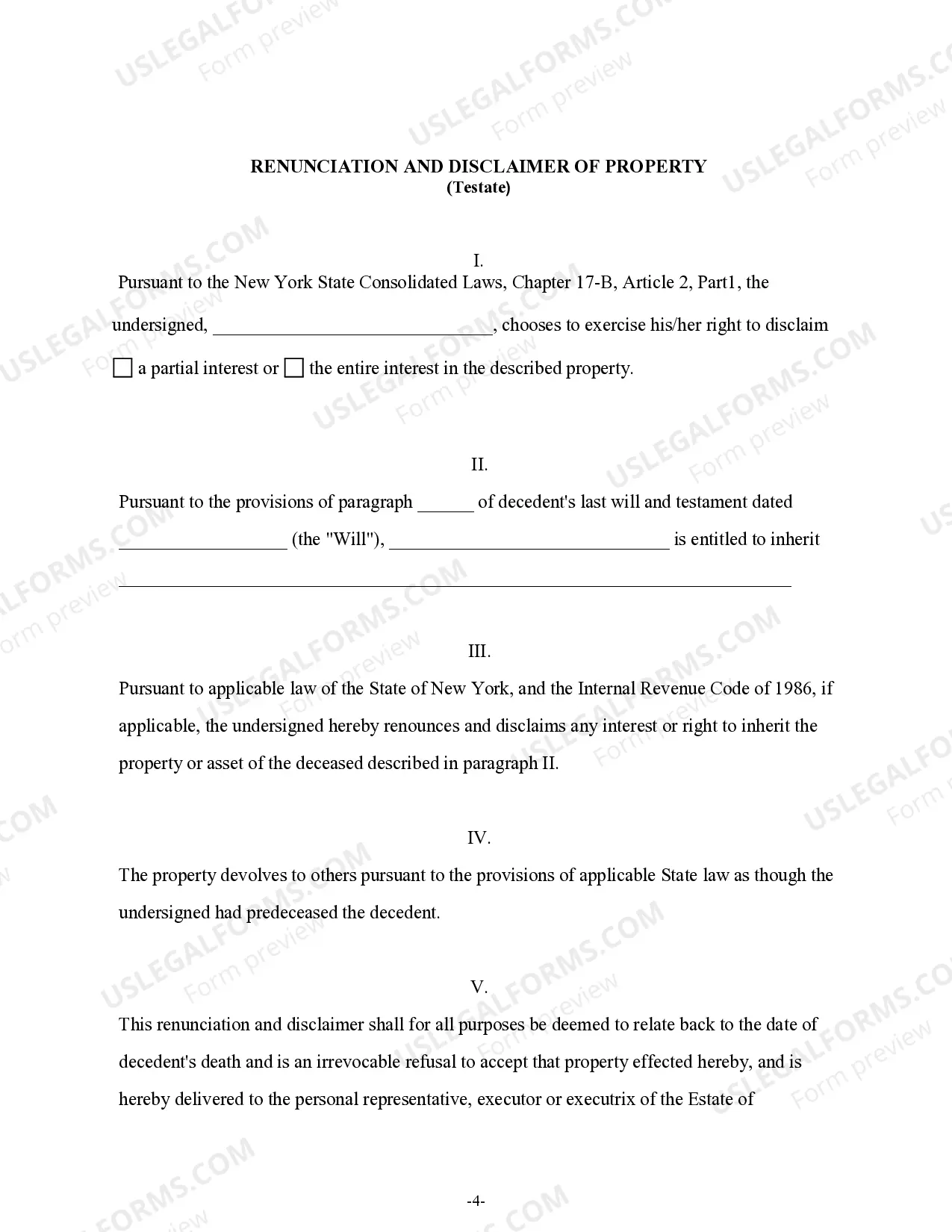
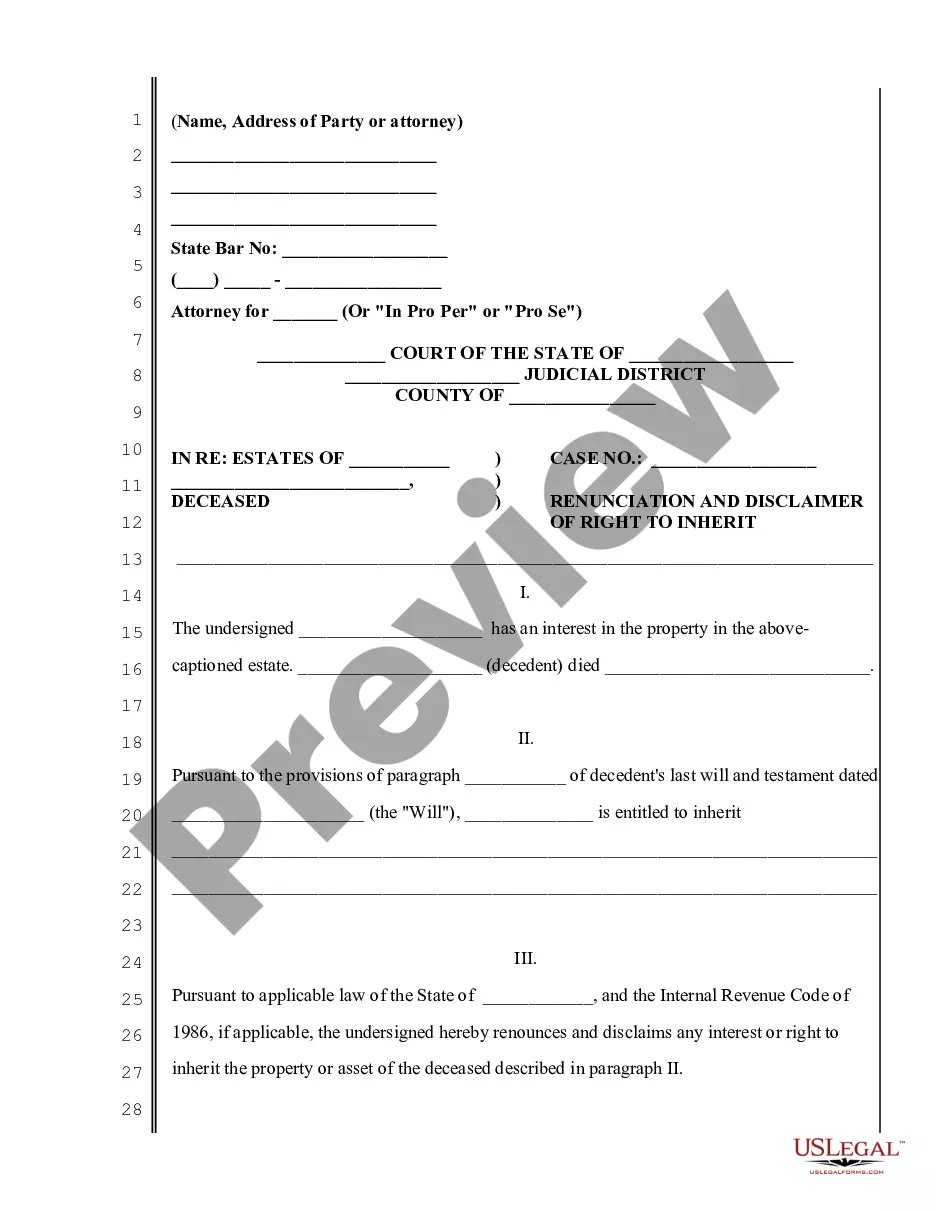
The Renunciation and Disclaimer of Property from Will by Testate is a legal document that allows a beneficiary to renounce their interest in property bequeathed to them in a decedent's will. By completing this form, the beneficiary effectively declines to accept their share, which then devolves to other heirs as if the beneficiary had predeceased the decedent. This form is particularly relevant under New York State law and provides a clear legal process for beneficiaries wishing to refuse their inheritance, distinguishing it from other estate planning documents like wills or trusts.
Main sections of this form
- Identification of the beneficiary and decedent.
- Details of the property or interest being renounced.
- Legal acknowledgment of the beneficiary's decision to disclaim the interest.
- A provision that the renunciation is irrevocable and relates back to the date of the decedent's death.
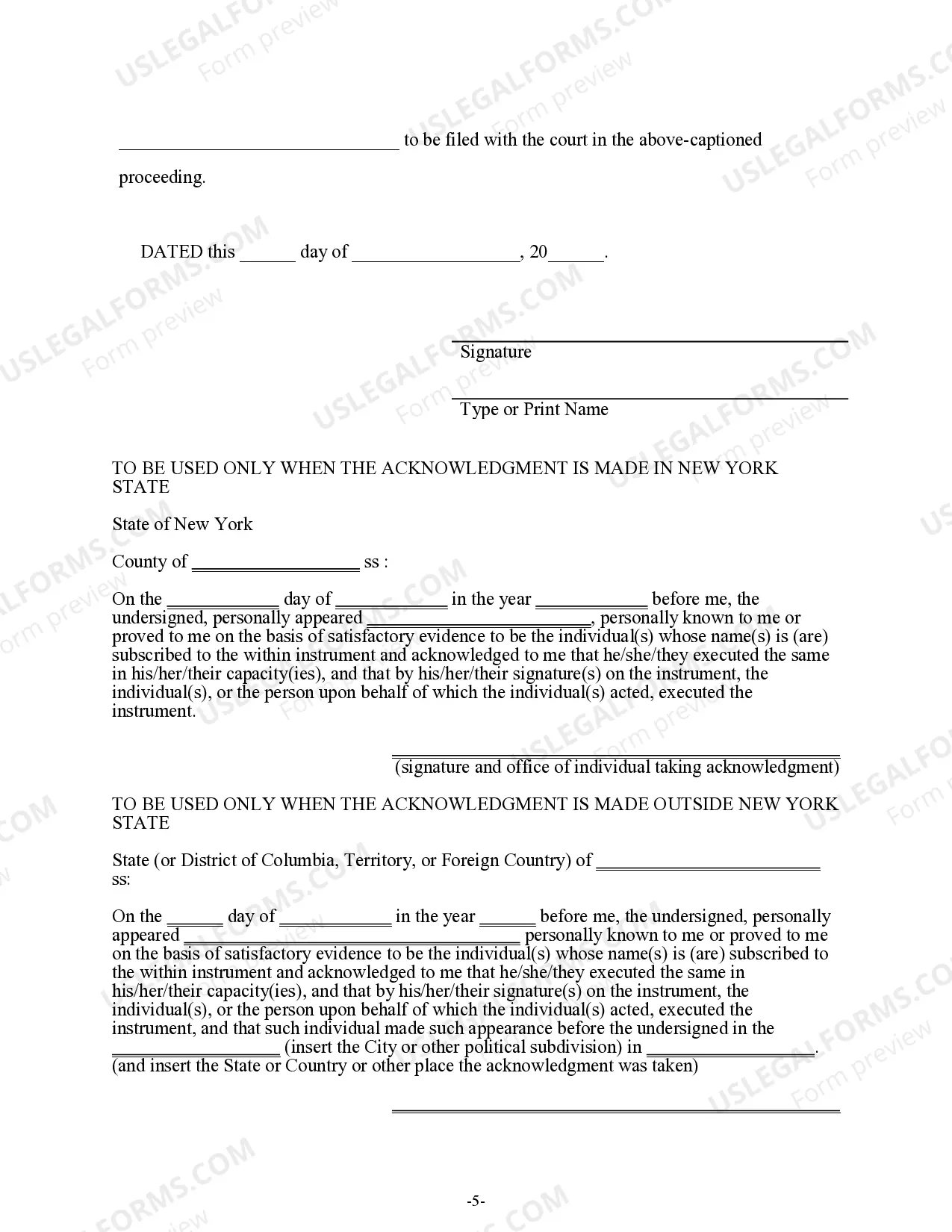
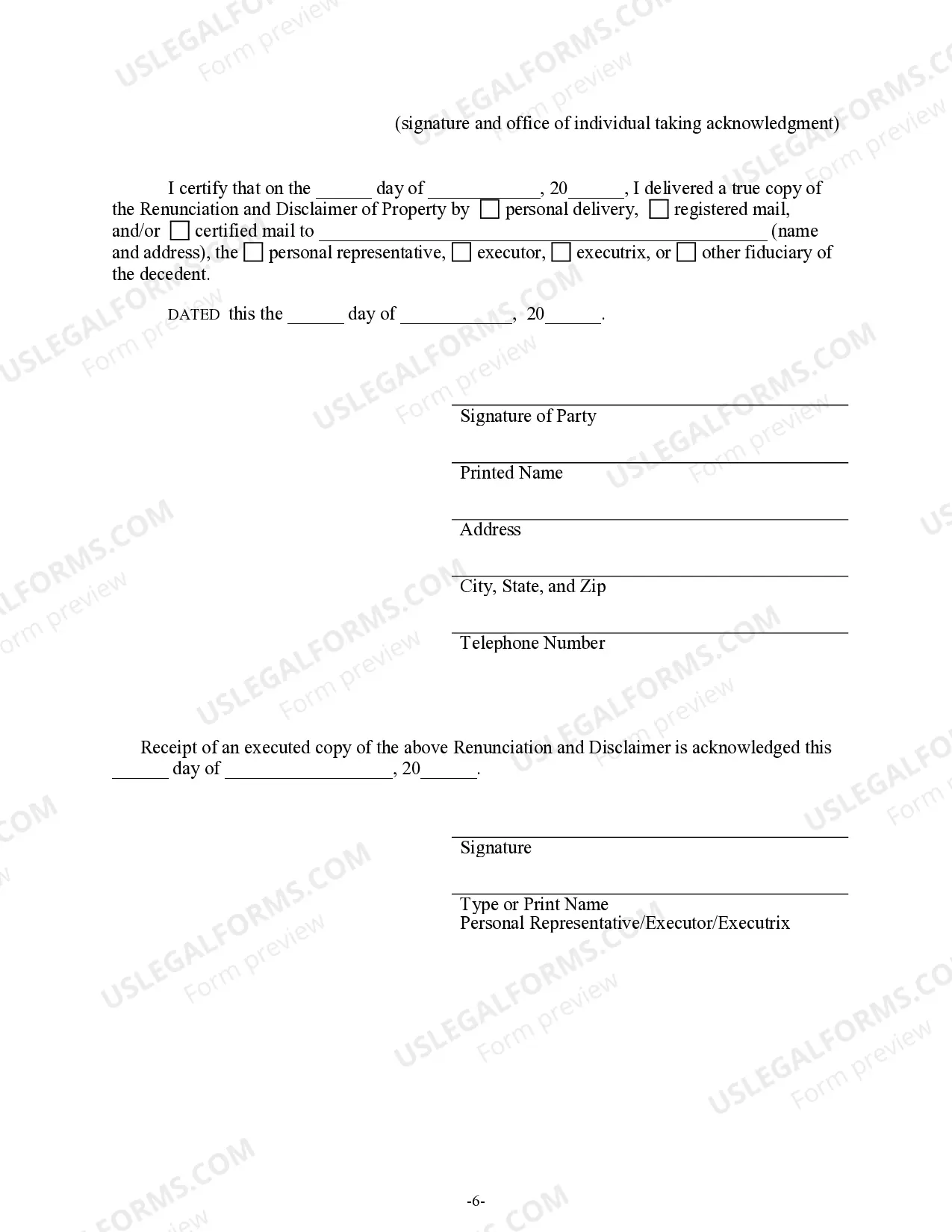
- Documentation of the delivery of the renunciation to the estate's personal representative.


When to use this document
You should use the Renunciation and Disclaimer of Property from Will when you have been named a beneficiary in a will but wish to forfeit your right to any property or assets specified in that will. This situation may arise if you prefer that the property passes to alternate beneficiaries, if you have personal reasons for rejecting the inheritance, or if accepting it would create tax liabilities or other complications.
Who needs this form
This form is suitable for:
- Beneficiaries of a will in New York State who wish to disclaim their inherited property.
- Individuals wanting to ensure that their renouncement is legally documented to avoid future claims.
- People who are concerned about the tax implications of accepting an inheritance.
How to complete this form
- Identify yourself as the beneficiary and the decedent in the designated fields.
- Specify the property or interest you are renouncing as described in the will.
- Indicate whether you are renouncing a partial interest or the entire interest in the property.
- Provide the date of the decedent's will and your signature, confirming the renunciation.
- Deliver a copy of the completed form to the estate's personal representative or executor as required.
Is notarization required?
This form does not typically require notarization unless specified by local law. However, it's important to verify specific requirements in New York State to ensure your form is valid and enforceable.
Get your form ready online
Our built-in tools help you complete, sign, share, and store your documents in one place.
Make edits, fill in missing information, and update formatting in US Legal Forms—just like you would in MS Word.
Download a copy, print it, send it by email, or mail it via USPS—whatever works best for your next step.
Sign and collect signatures with our SignNow integration. Send to multiple recipients, set reminders, and more. Go Premium to unlock E-Sign.
If this form requires notarization, complete it online through a secure video call—no need to meet a notary in person or wait for an appointment.
We protect your documents and personal data by following strict security and privacy standards.

Make edits, fill in missing information, and update formatting in US Legal Forms—just like you would in MS Word.

Download a copy, print it, send it by email, or mail it via USPS—whatever works best for your next step.

Sign and collect signatures with our SignNow integration. Send to multiple recipients, set reminders, and more. Go Premium to unlock E-Sign.

If this form requires notarization, complete it online through a secure video call—no need to meet a notary in person or wait for an appointment.

We protect your documents and personal data by following strict security and privacy standards.
Typical mistakes to avoid
- Failing to provide all required information about the property and parties involved.
- Not signing the form or providing the date of signature.
- Overlooking the requirement to deliver the form to the appropriate parties.
Advantages of online completion
- Convenient access allows you to complete the form at your own pace.
- Editable fields enable you to fill out the form with accurate information easily.
- Secure and reliable storage of your documents prevents loss or misplacement of critical legal paperwork.
Looking for another form?
Form popularity
FAQ
The New York Renunciation And Disclaimer of Property from Will by Testate is a form that lets a beneficiary named in a decedent’s will decline their bequest of property. The renunciation is irrevocable and treated as if the beneficiary had died at the decedent’s death, so the property passes to alternate heirs. Use it to avoid inheriting and related tax or liability issues and to document your decision with the estate's personal representative.
To fill out and execute this form in New York, identify the beneficiary and the decedent, describe the property or interest being renounced, and complete the legal acknowledgment that the renunciation is irrevocable and relates back to the decedent’s death. Then deliver the signed form to the estate’s personal representative.
The form description does not specify a notarization requirement. It requires the renunciation to be executed by the beneficiary and delivered to the estate’s personal representative. In New York, execution and witnessing rules can vary, so consult an attorney or the estate administrator to confirm proper execution.
Once the renunciation is delivered, the beneficiary is treated as if they predeceased the decedent for that bequest, so the property passes to other heirs under the will or applicable state law. The form provides an irrevocable decision and records the transfer to the estate’s personal representative.
Beneficiaries in New York who wish to disclaim inherited property, individuals wanting to ensure the renouncement is legally documented to prevent future claims, and those concerned about potential tax implications of accepting the inheritance are the intended audience for this form.
This form is tailored to New York law and to renunciation from a will by a testate decedent. It requires an irrevocable renunciation that relates back to the decedent’s death and must be delivered to the estate’s personal representative, which may not be required by a generic disclaimer form.