New York Framing Contract for Contractor
Overview of this form
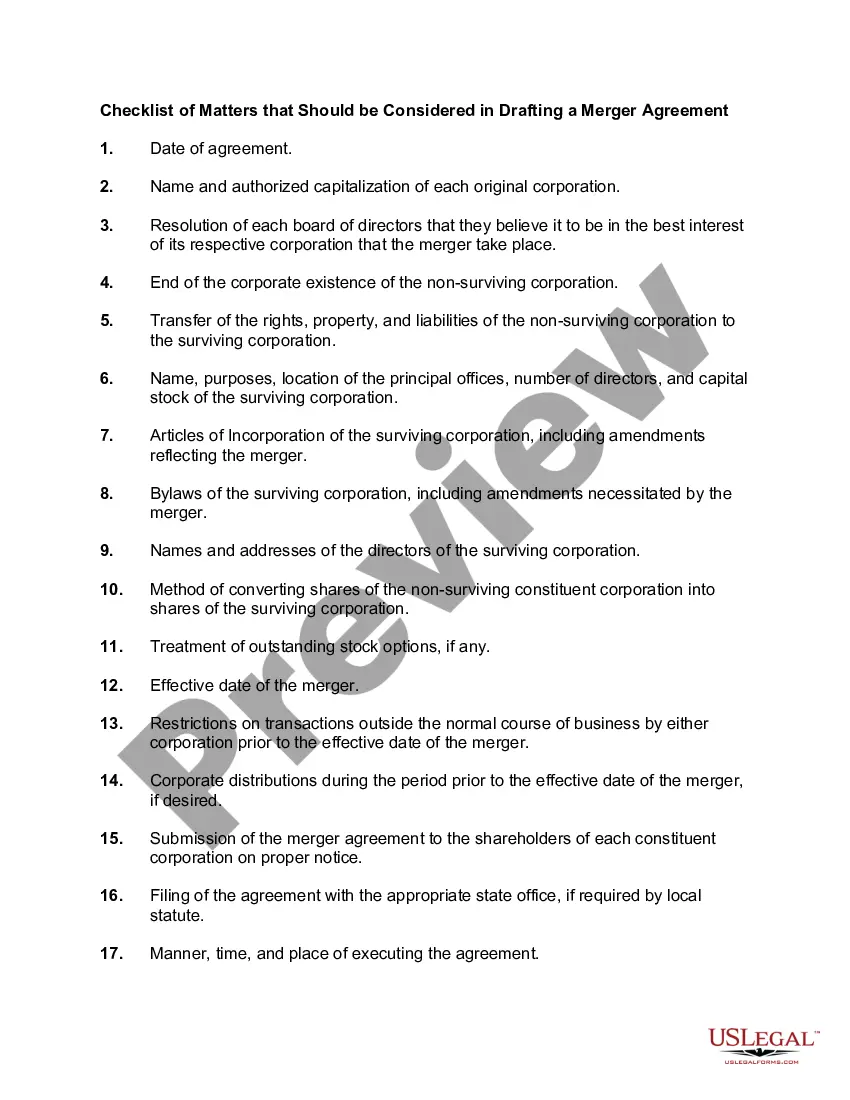
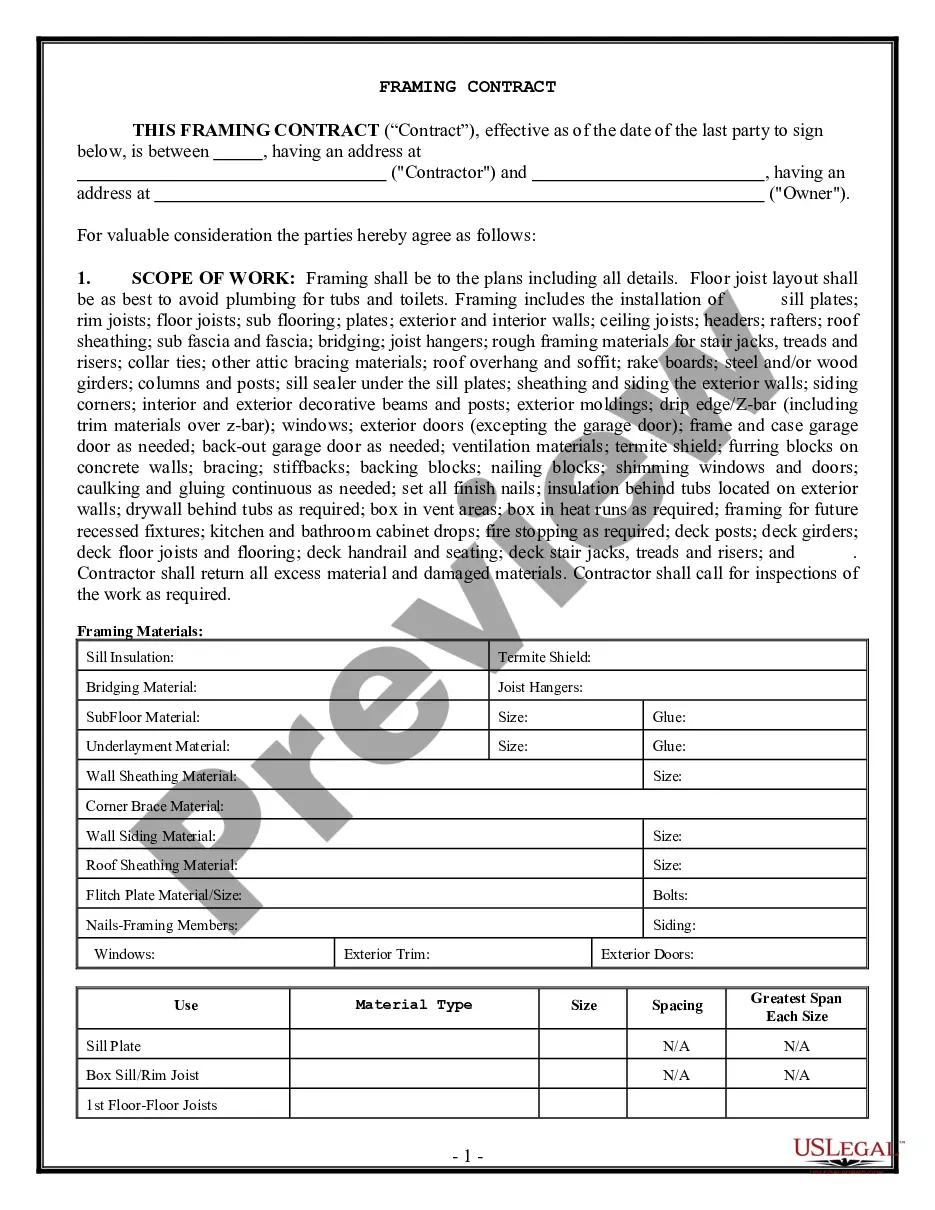
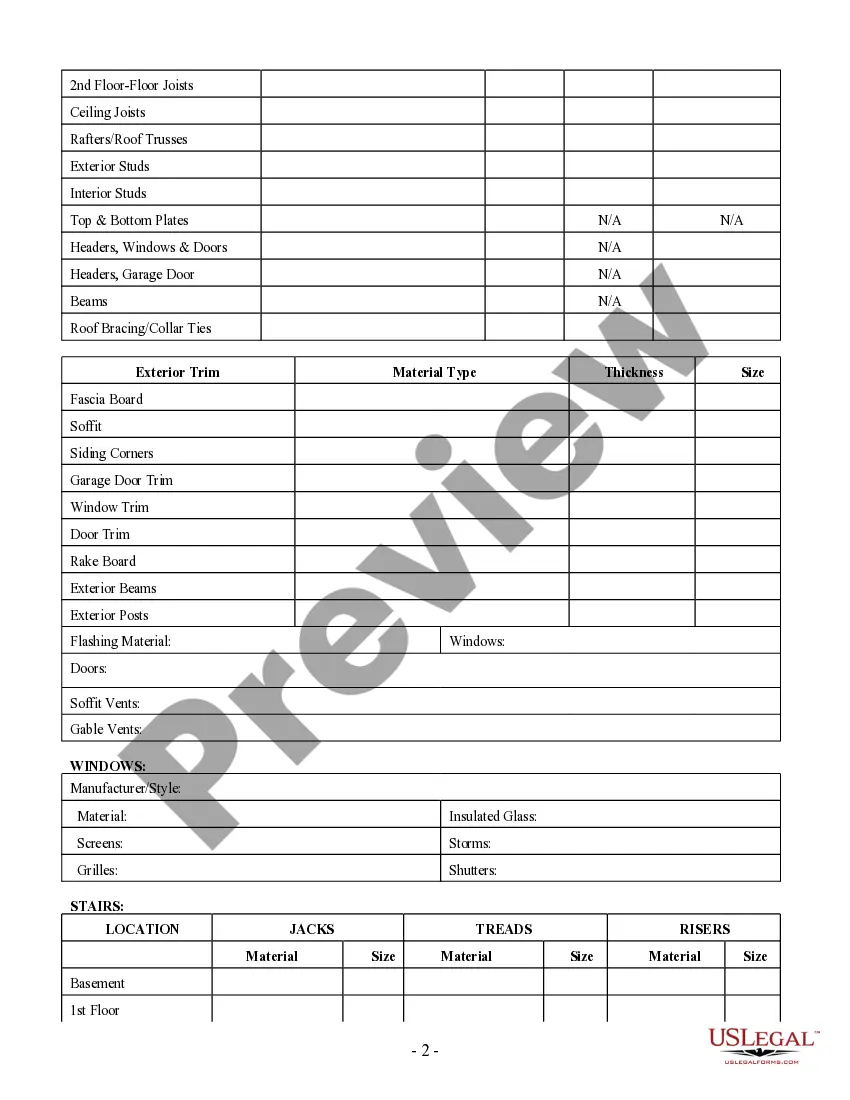
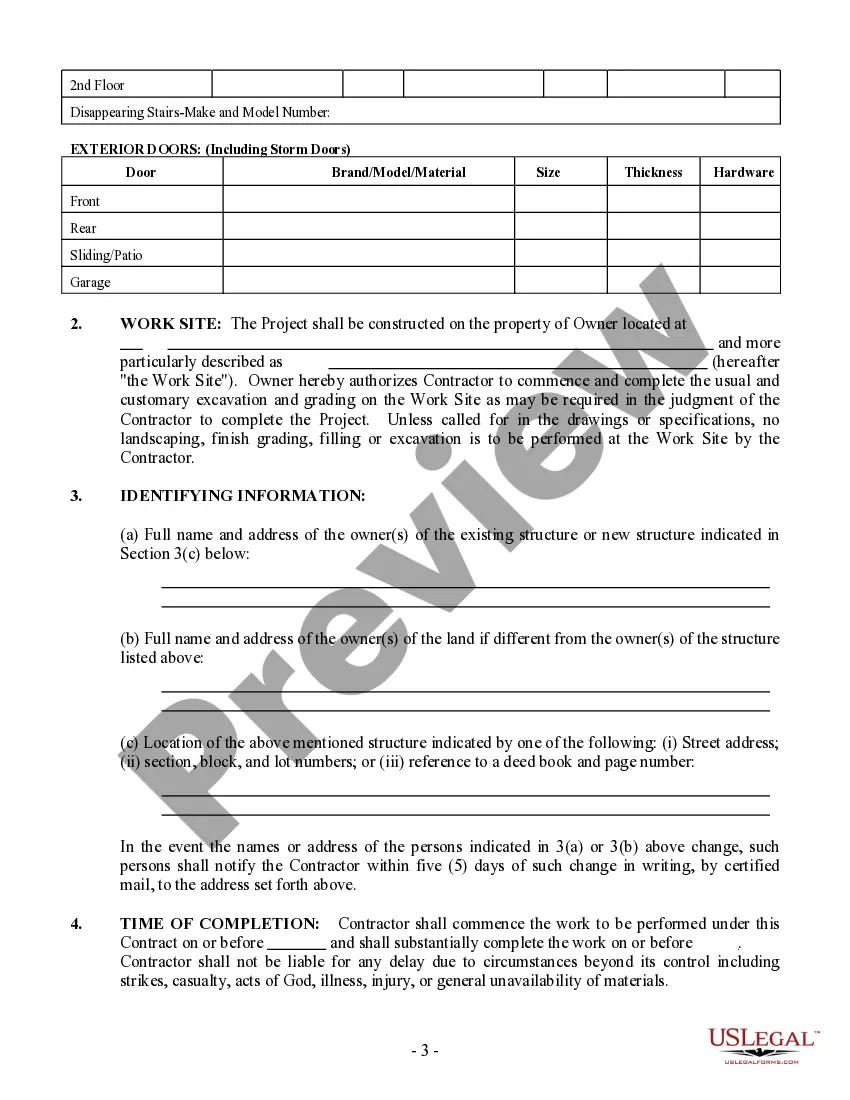
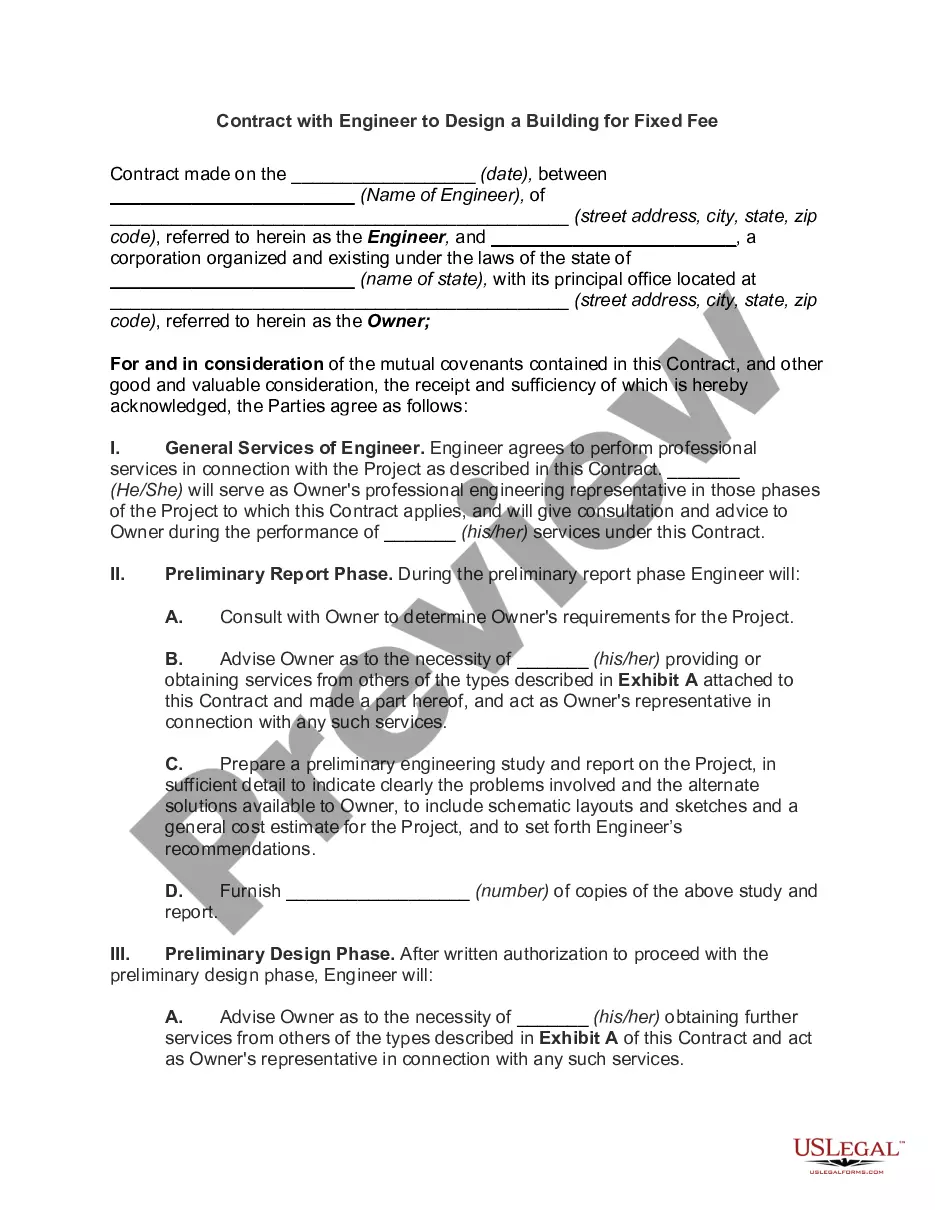
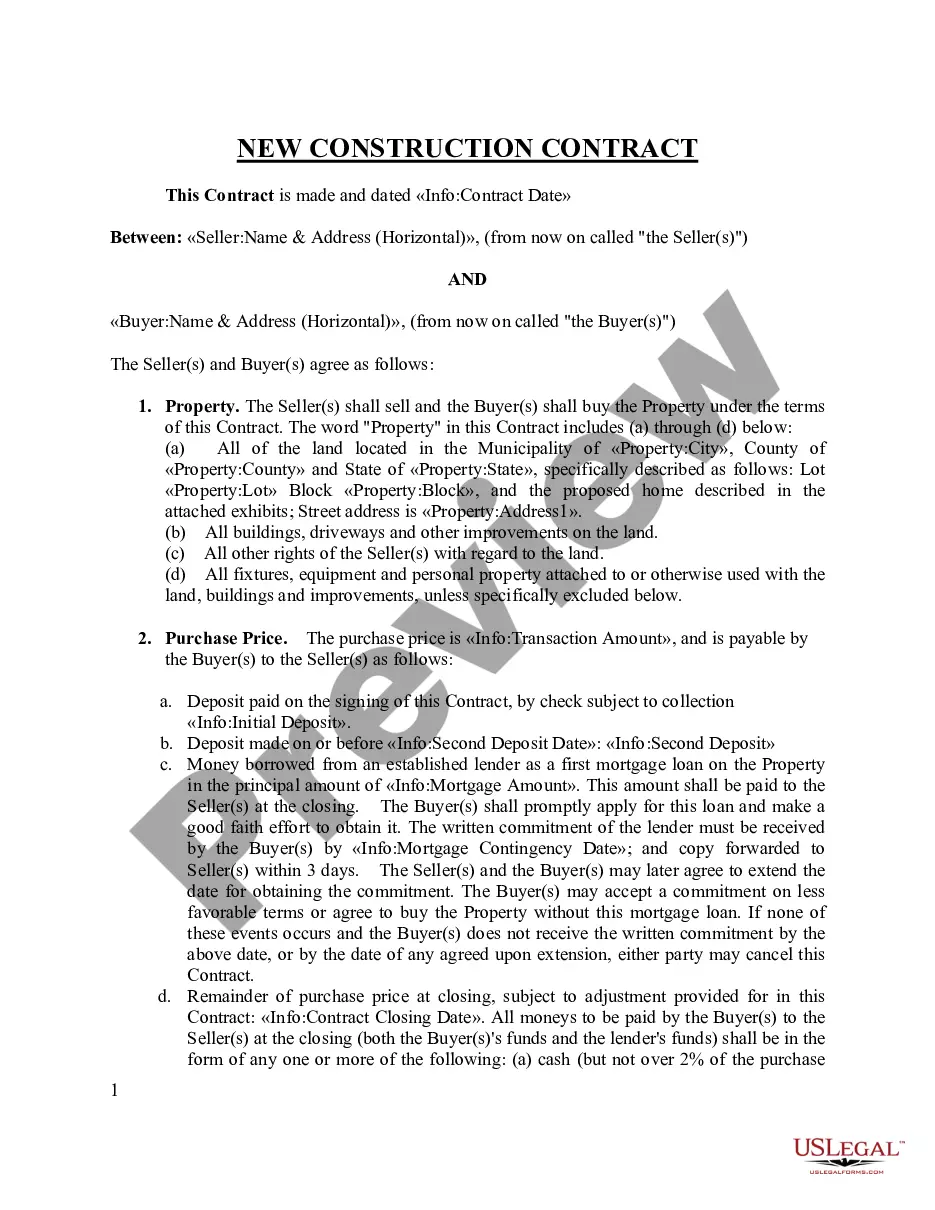
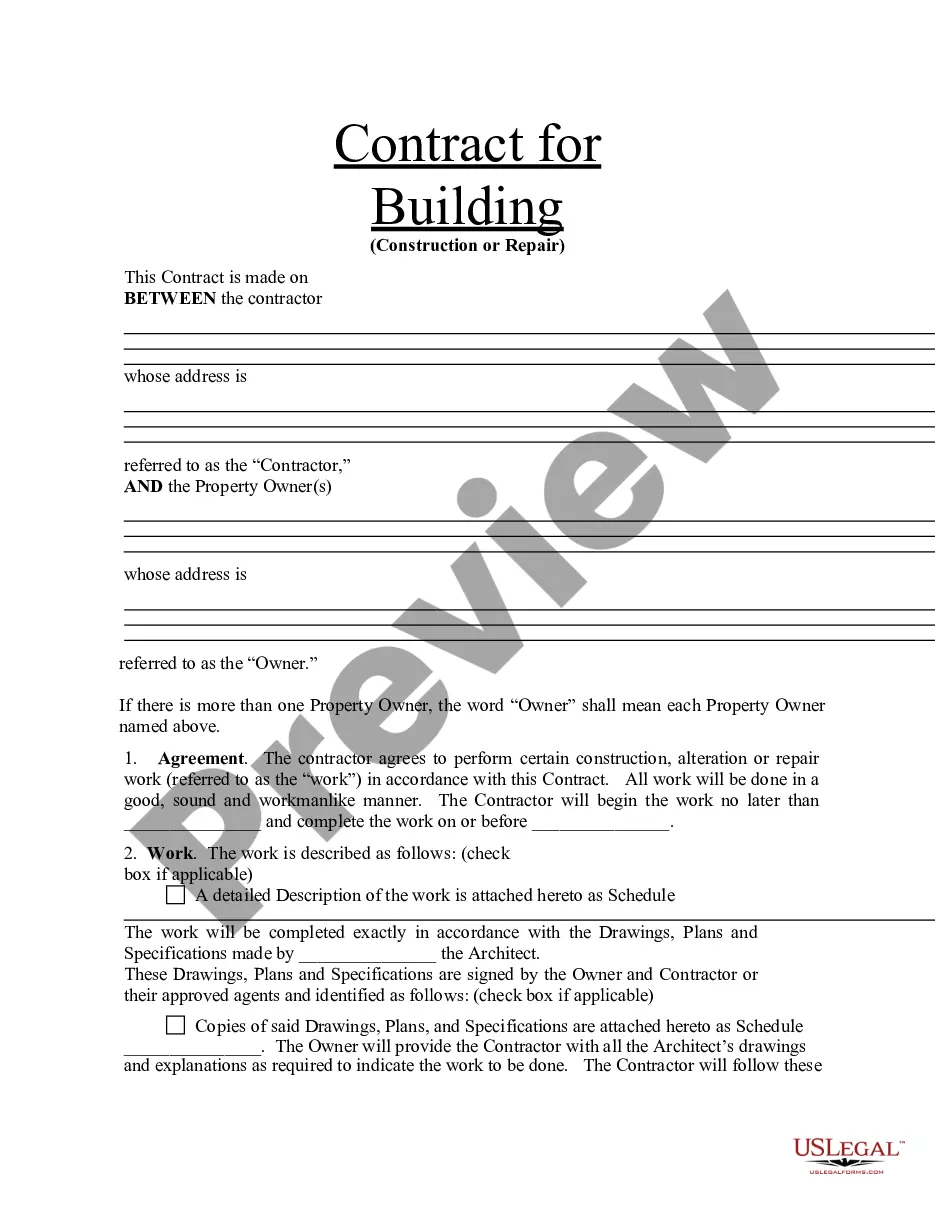
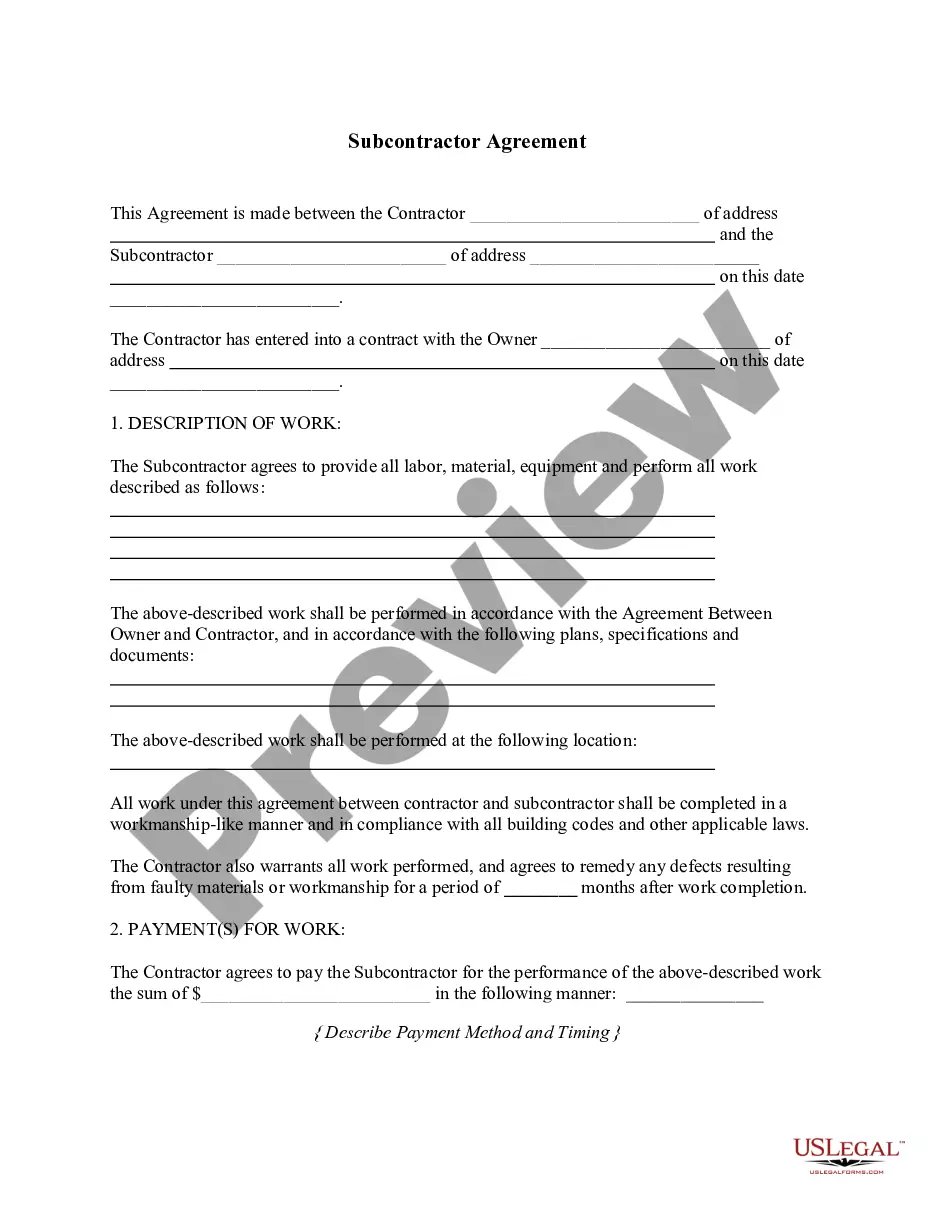
The Framing Contract for Contractor is a legal document that establishes an agreement between framing contractors and property owners in New York. This contract framework allows for either a cost-plus or fixed-fee payment arrangement. It outlines important aspects of the project, including change orders, work site information, warranty conditions, and insurance requirements, thereby ensuring a clear understanding of expectations and responsibilities for both parties involved in the framing project.
What’s included in this form
- Identifying information for the owner and project.
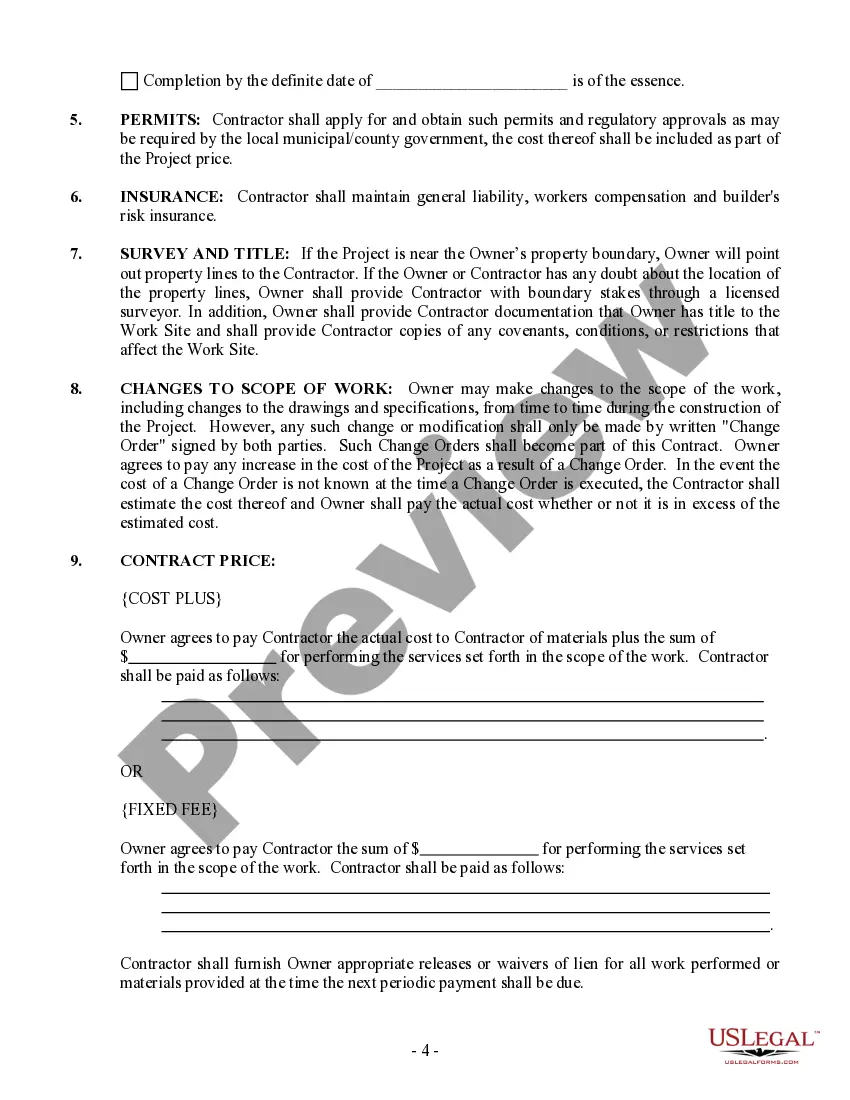
- Details on permits and regulatory approvals required for the project.
- Insurance coverage specifications such as general liability and workers' compensation.
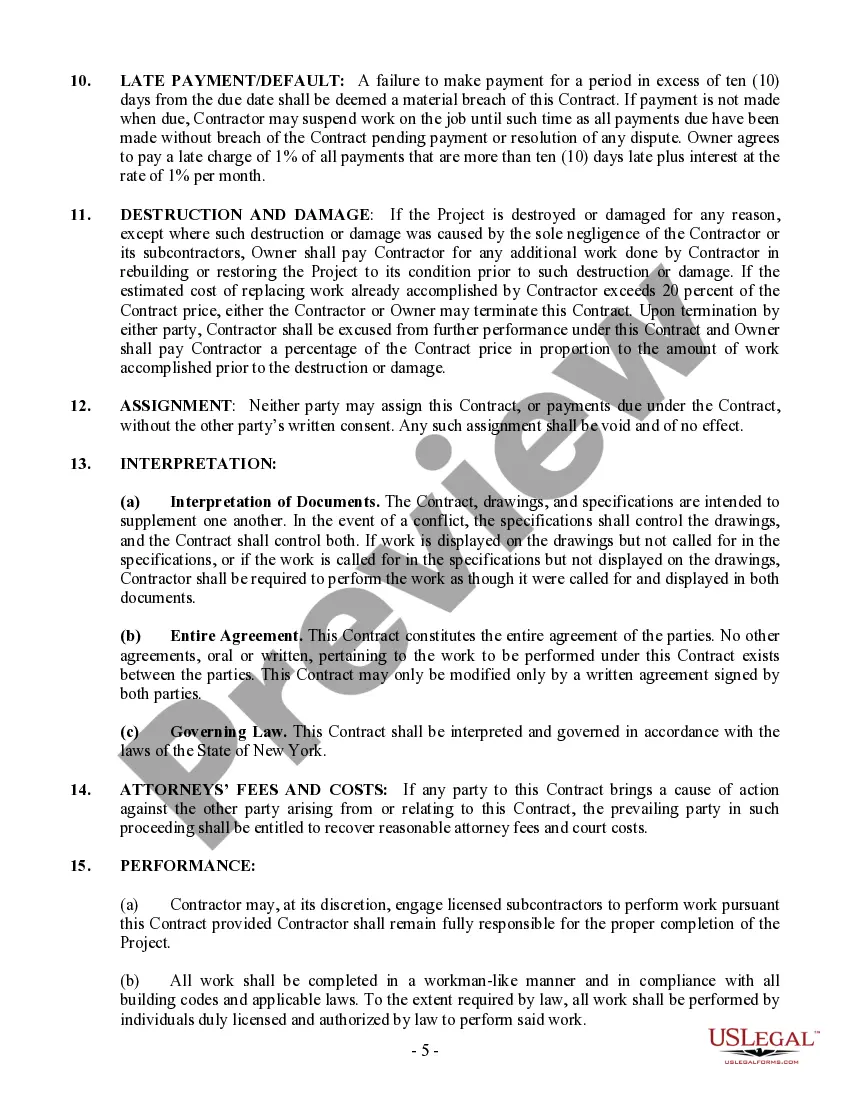
- Provisions regarding late payment and default conditions.
- Clauses outlining destruction and damage responsibilities during the contract period.
- Governing law and interpretation guidelines for the agreement.
Common use cases
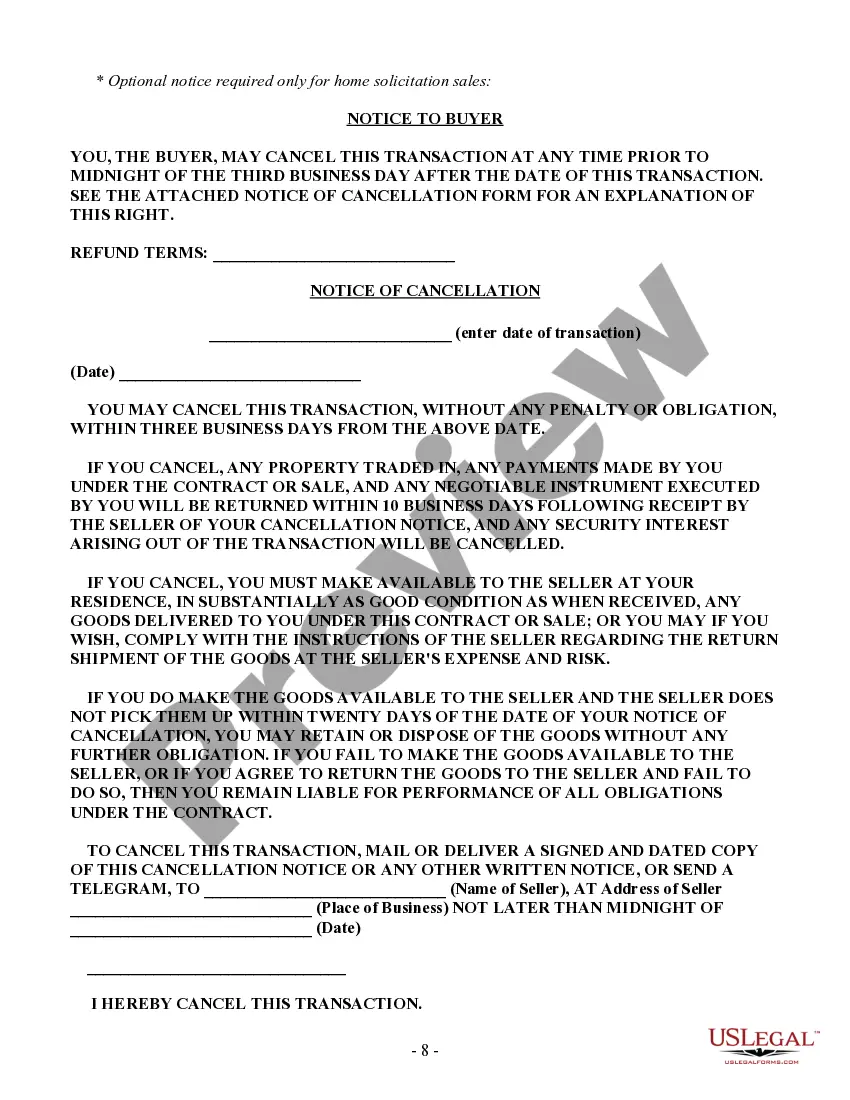
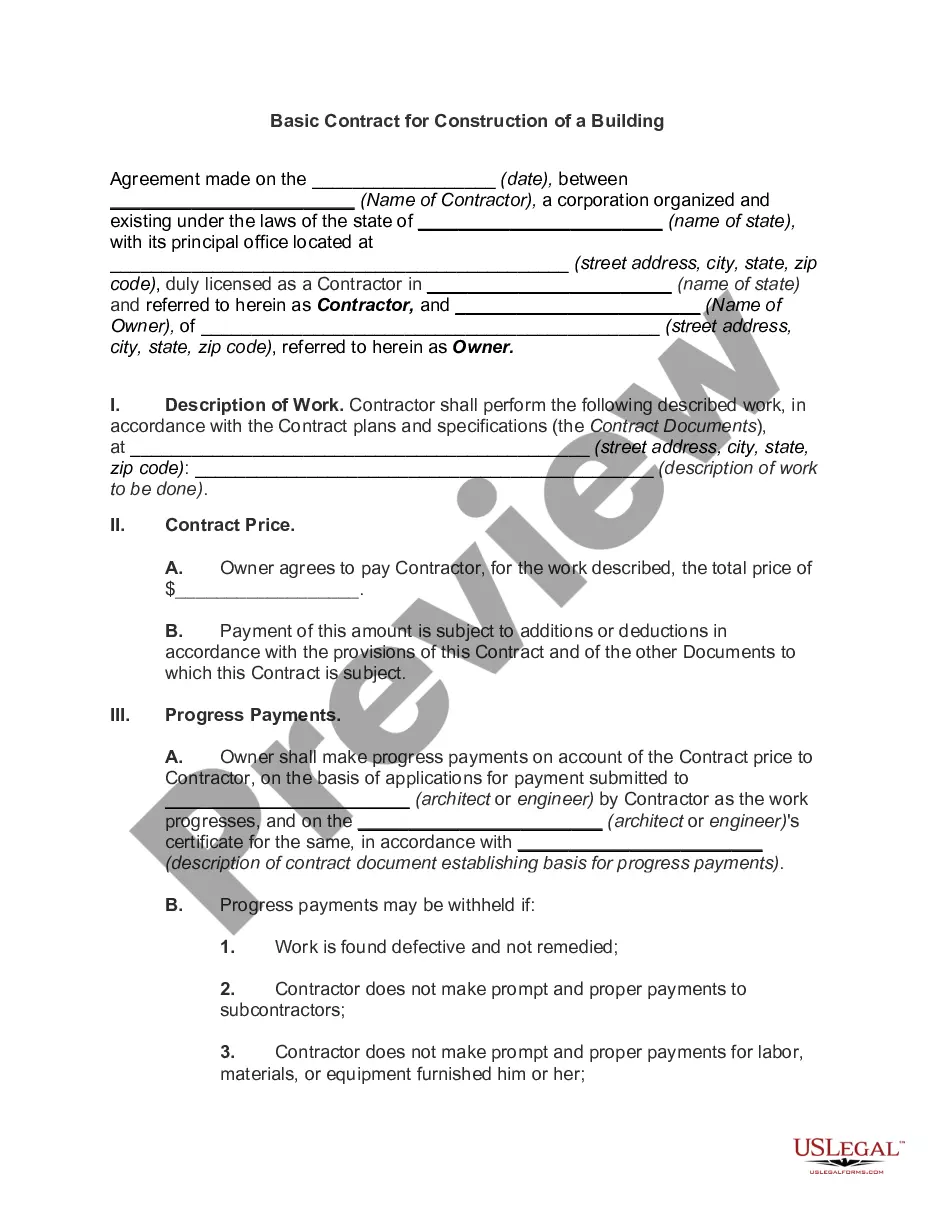
This form is ideal to use when a property owner hires a framing contractor for residential or commercial construction. It provides a formal agreement to ensure all necessary legal and regulatory aspects are covered. You should use this contract when you wish to clarify payment structures, project timelines, and warranty conditions to avoid future disputes.
Who should use this form
- Property owners seeking to have framing work done on new or existing structures.
- Framing contractors looking to establish a clear legal framework with property owners regarding their work.
- Individuals or businesses requiring an enforceable agreement that outlines costs and responsibilities associated with framing projects.
Instructions for completing this form
- Identify the parties involved by entering the full name and address of the owner.
- Specify the project details, including the expected completion date.
- Outline the necessary permits required for the project and indicate who will obtain them.
- Insert clauses regarding insurance coverage to protect against liabilities.
- Fill in details regarding payment terms, including payment amounts and timelines for potential late fees.
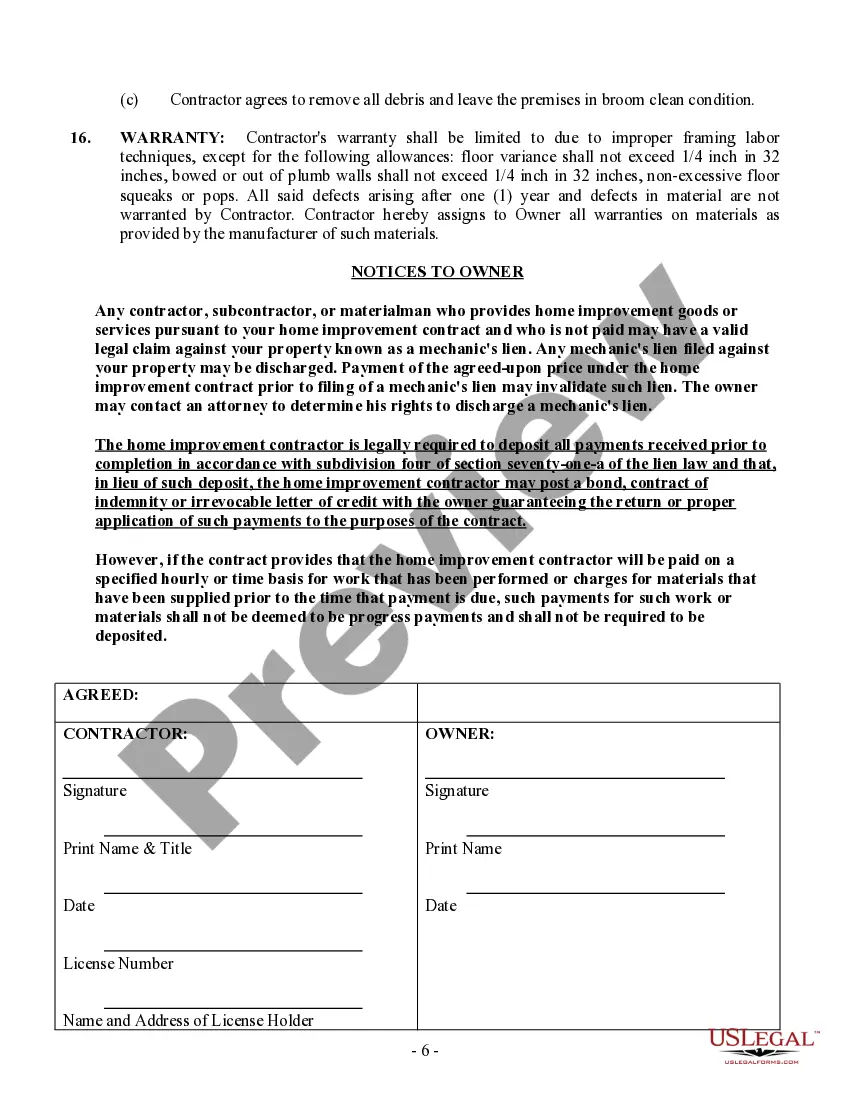
- Ensure both parties sign and date the contract upon completion.
Notarization requirements for this form
This form does not typically require notarization unless specified by local law. However, having the contract notarized can enhance its legal standing and serve as additional proof of the agreement should any disputes arise.
Get your form ready online
Our built-in tools help you complete, sign, share, and store your documents in one place.
Make edits, fill in missing information, and update formatting in US Legal Forms—just like you would in MS Word.
Download a copy, print it, send it by email, or mail it via USPS—whatever works best for your next step.
Sign and collect signatures with our SignNow integration. Send to multiple recipients, set reminders, and more. Go Premium to unlock E-Sign.
If this form requires notarization, complete it online through a secure video call—no need to meet a notary in person or wait for an appointment.
We protect your documents and personal data by following strict security and privacy standards.

Make edits, fill in missing information, and update formatting in US Legal Forms—just like you would in MS Word.

Download a copy, print it, send it by email, or mail it via USPS—whatever works best for your next step.

Sign and collect signatures with our SignNow integration. Send to multiple recipients, set reminders, and more. Go Premium to unlock E-Sign.

If this form requires notarization, complete it online through a secure video call—no need to meet a notary in person or wait for an appointment.

We protect your documents and personal data by following strict security and privacy standards.
Typical mistakes to avoid
- Failing to specify the completion date, which may lead to delays and disputes.
- Neglecting to detail payment terms, resulting in misunderstandings about compensation.
- Inadequate insurance stipulations, which could expose parties to liability risks.
- Not obtaining necessary permits beforehand, which may halt the project.
- Omitting signatures from both parties, rendering the contract unenforceable.
Benefits of completing this form online
- Convenient access to a professionally drafted document that adheres to legal standards.
- Easy editability allows users to customize the contract to their specific needs.
- Reliable templates reduce the risk of missing critical elements in the agreement.
- No need for trips to a lawyer, saving both time and costs.
Legal use & context
- This contract serves as a legally binding agreement between the property owner and contractor.
- It outlines the rights and responsibilities of each party regarding the framing project.
- Failure to adhere to its terms may result in legal disputes or claims against property.
Main things to remember
- The Framing Contract for Contractor is essential for framing projects in New York.
- It details payment terms, responsibilities, and project specifics.
- Proper completion and execution of the contract can mitigate future disputes.
Looking for another form?


Form popularity
FAQ
Writing Your Construction Contract. Write the title and a little preamble. Your title should describe the purpose of the contract. The preamble should simply state basics like: the date the agreement was entered into, the parties' names, the project, the work site location, and work commencement and end dates.
Identifying/Contact Information. Title and Description of the Project. Projected Timeline and Completion Date. Cost Estimate and Payment Schedule. Stop Work Clause and Stop Payment Clause. Act of God Clause. Change Order Agreement. Warranty.
Cost-plus construction contracts come in three flavors, and they are generally called negotiated contracts. Here, the owner selects the contractor, instead of putting the project out to bid, and the two work out the contract terms. The owner pays the contractor for the project costs plus a fee.
Both parties should sign the contract, and both should be bound by the terms and conditions spelled out in the agreement. In general that means the contractor will be obliged to provide specified materials and to perform certain services for you. In turn, you will be required to pay for those goods and that labor.
Search for contract opportunities in different sectors. find out what's coming up in the future. look up details of previous tenders and contracts.
Look for assistance from others who may have bid on construction contracts in the past or review a list bid service companies you can find through FedSpending.org or USASpending.gov. In addition to helping you locate and complete bid documents, a bid service may also alert you to available subcontracting opportunities.
If you run a small business that hires 1099 contractors, also known as independent contractors, it is vital that you have them sign an independent contractor contract. This is because there is a significant gray area between who is classified as an independent contractor and who is classified as an employee.
Look for assistance from others who may have bid on construction contracts in the past or review a list bid service companies you can find through FedSpending.org or USASpending.gov. In addition to helping you locate and complete bid documents, a bid service may also alert you to available subcontracting opportunities.
Payment Schedule In Your Contract Before any work begins, a contractor will ask a homeowner to secure the job with a down payment. It shouldn't be more than 10-20 percent of the total cost of the job. Homeowners should never pay a contractor more than 10-20% before they've even stepped foot in their home.