Nevada Limited Power of Attorney for Stock Transactions and Corporate Powers
About this form
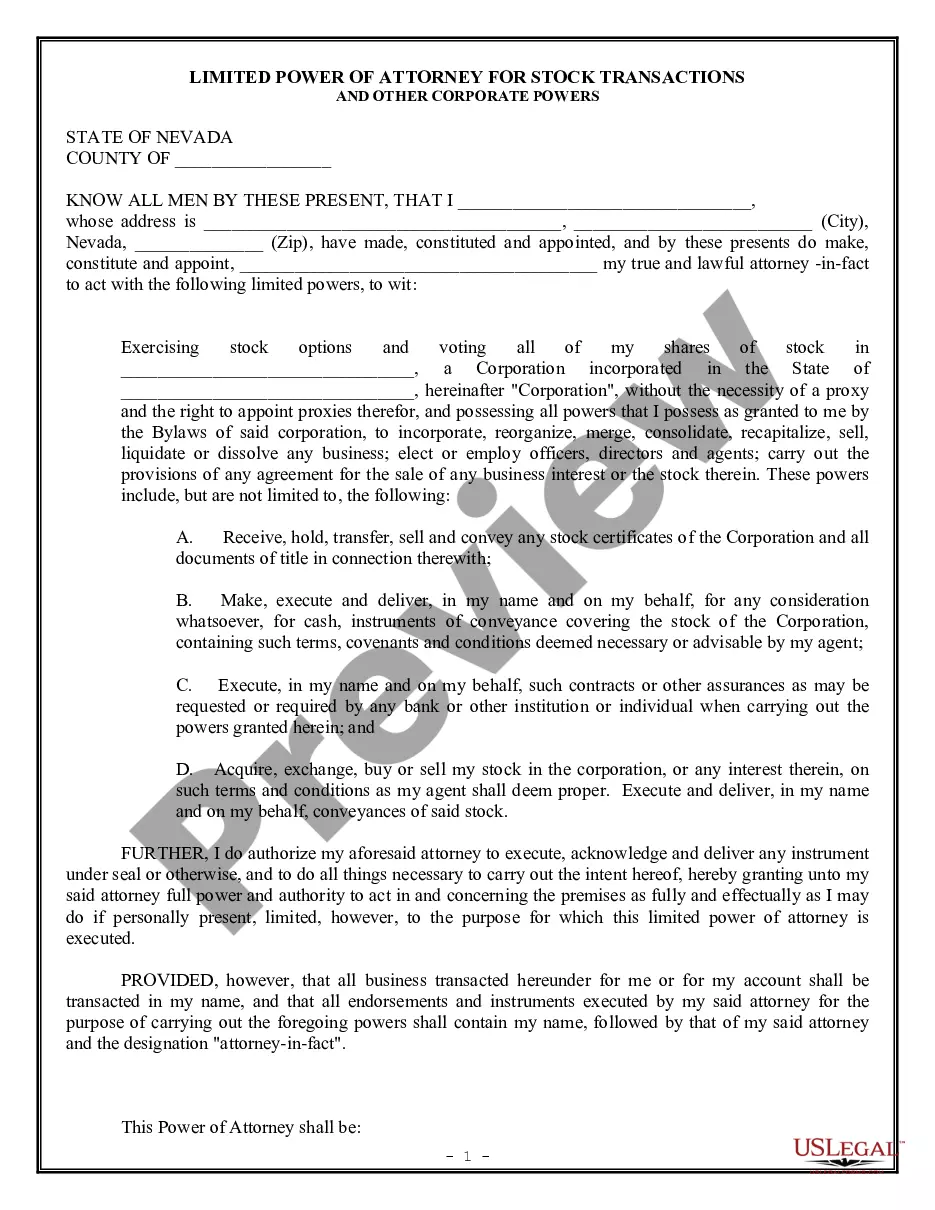
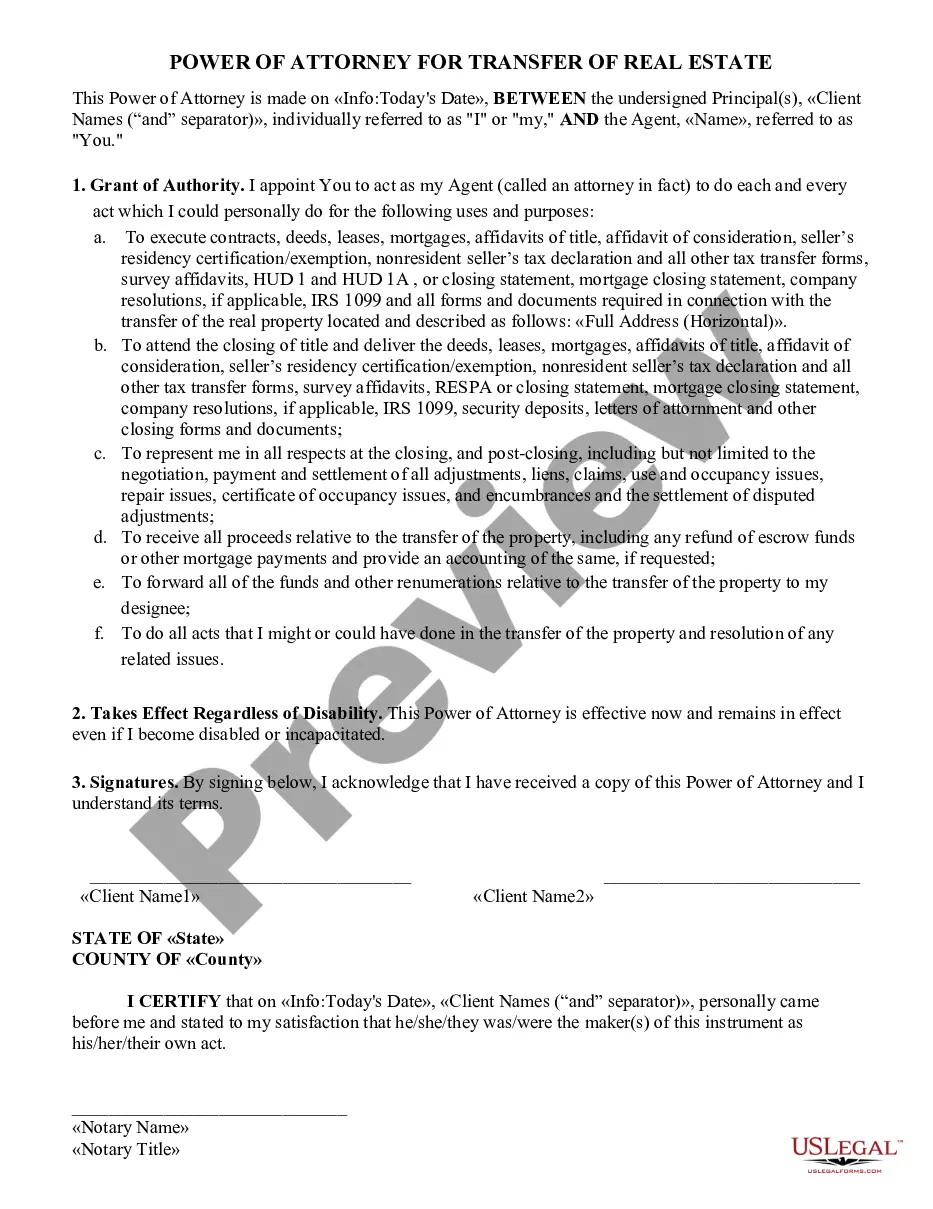
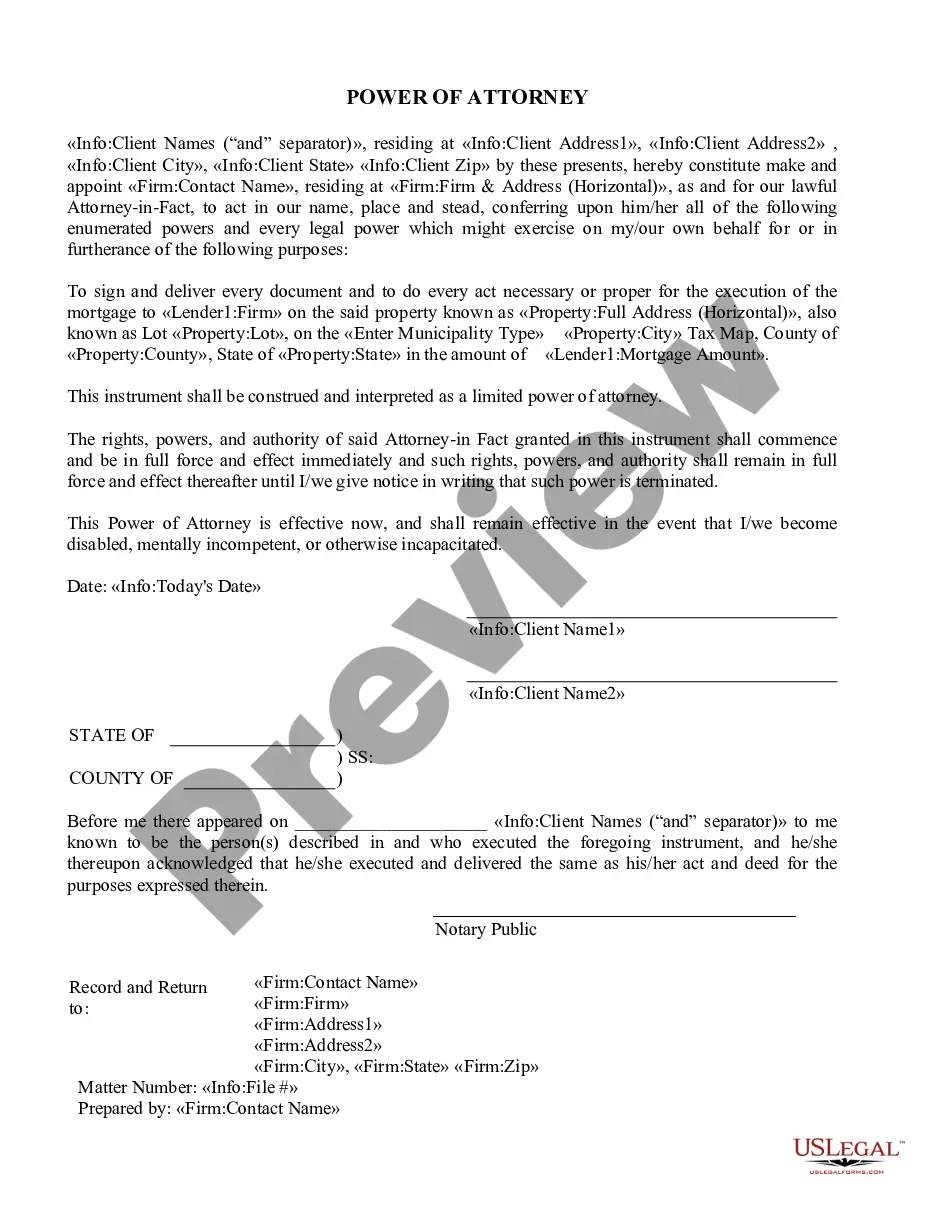
This Limited Power of Attorney for Stock Transactions and Corporate Powers allows a shareholder to authorize another person to manage specific stock-related decisions and corporate powers on their behalf. Unlike general powers of attorney, this form is tailored solely for stock transactions, ensuring that the attorney-in-fact can act without needing a proxy and can exercise voting rights for the designated stocks. It empowers an agent to perform actions such as executing contracts and making investments in the corporation's shares while maintaining the principal's best interests.
What’s included in this form
- Identification of the principal (the person granting power) and the attorney-in-fact (the person receiving power).
- Specification of the stock and corporation involved.
- Details on the powers granted, including voting rights, selling stock, and executing contracts.
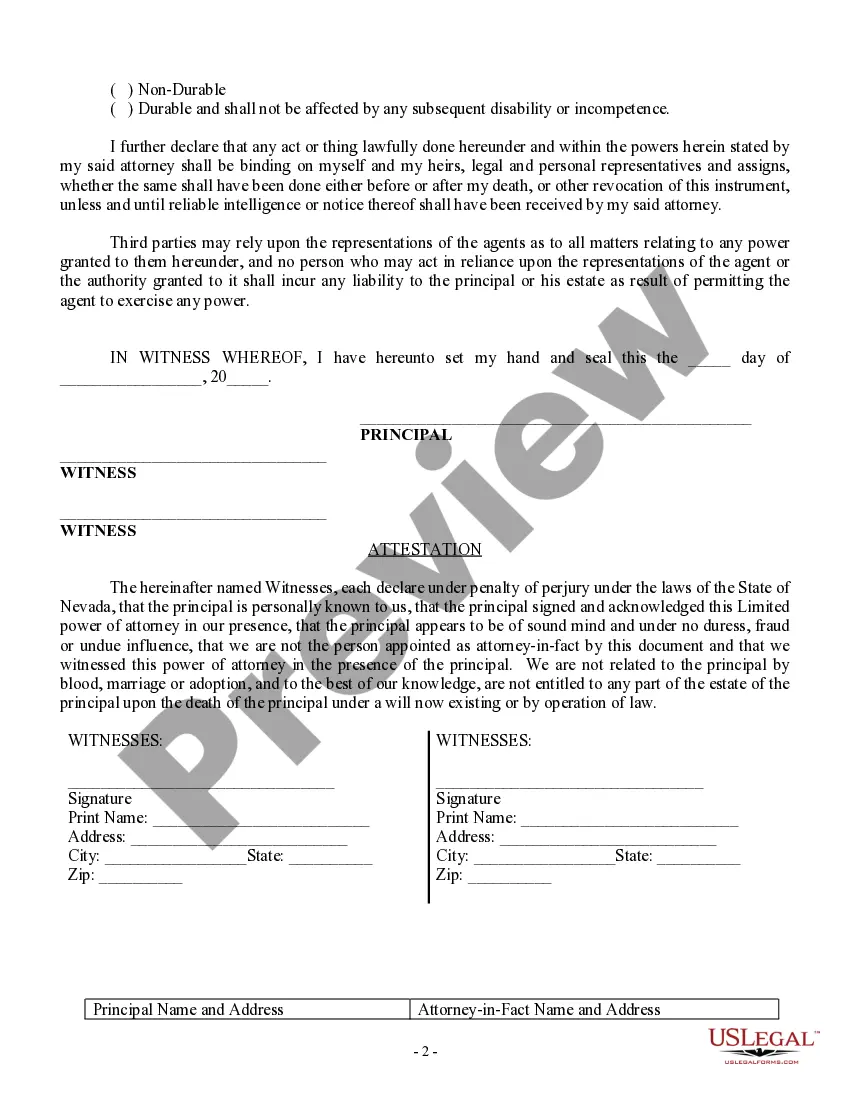
- Options for indicating whether the power of attorney is durable or non-durable.
- Witness signature requirements to validate the form.

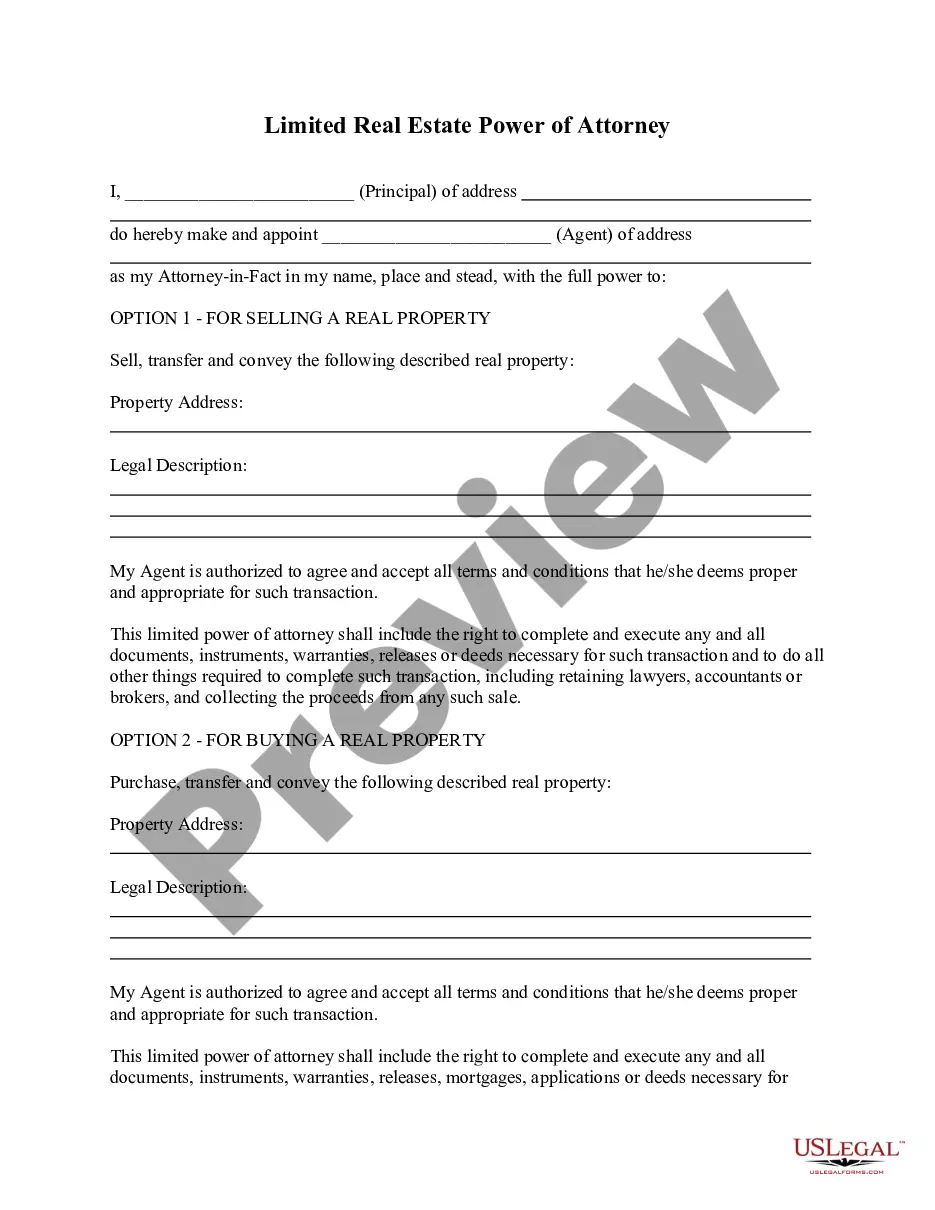
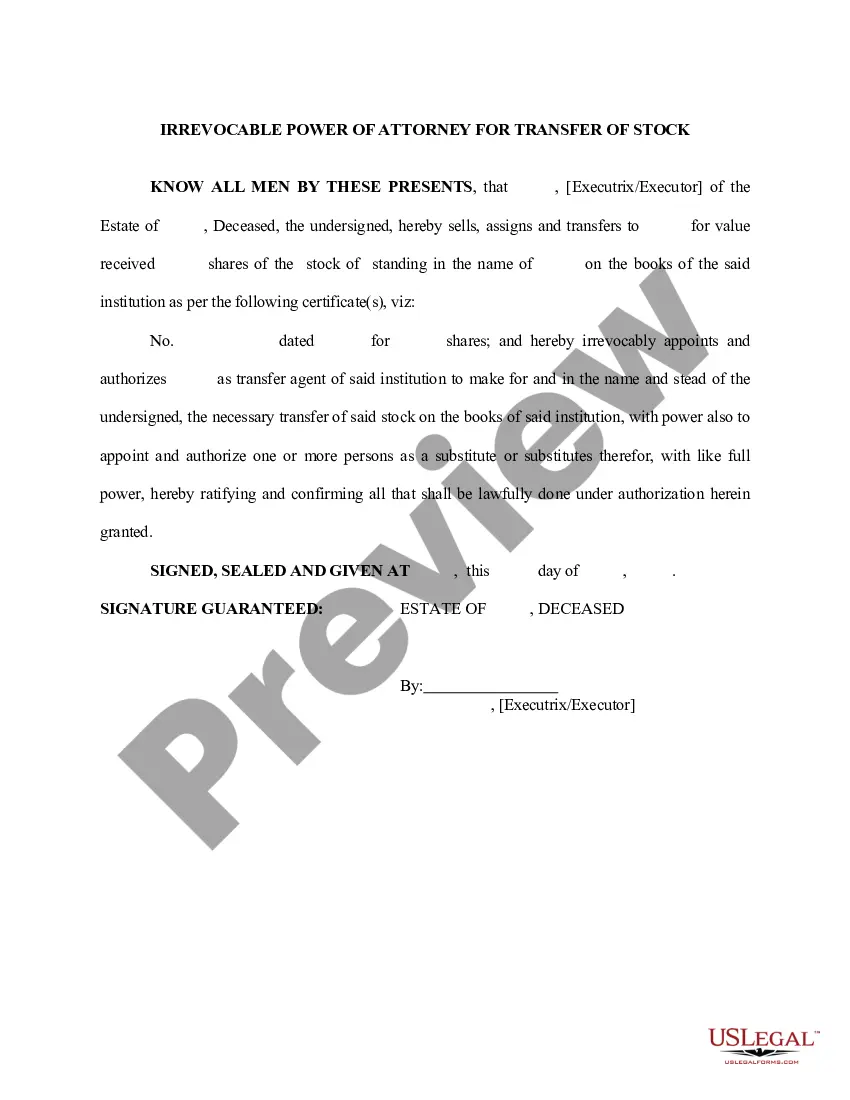
Situations where this form applies
This form is useful in situations where a shareholder cannot attend a corporate meeting to vote their shares or manage stock-related responsibilities. It is also applicable when a shareholder wants to ensure that specific stock transactions can be conducted by a trusted individual when they are unable to do so personally.
Who needs this form
- Shareholders who wish to delegate stock transaction authority to another individual.
- Investors who need someone to manage their stock voting and corporate decisions due to physical absence or incapacity.
- Business owners looking for a trusted person to handle corporate powers related to stock management.
How to prepare this document
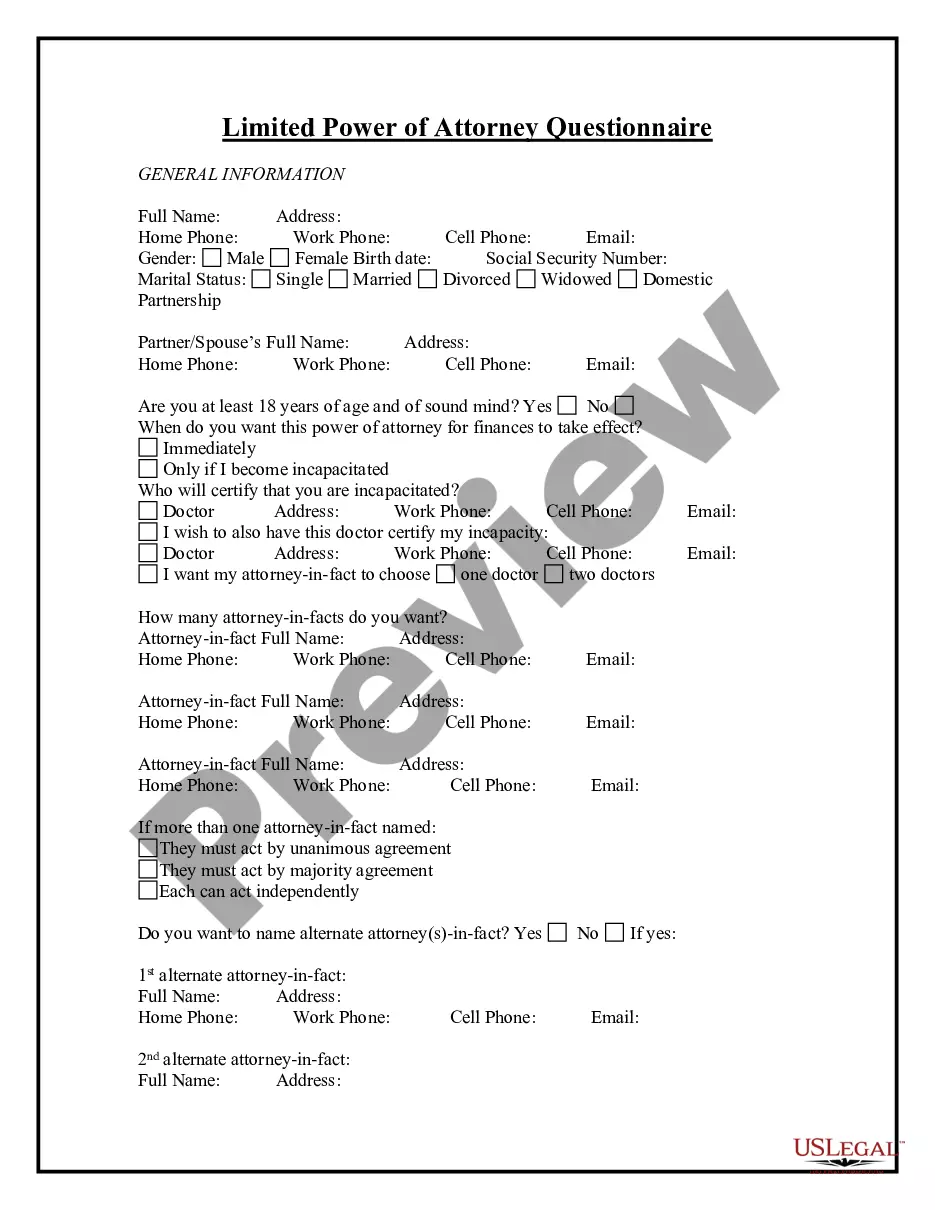
- Identify the principal by filling in their full name and address.
- Designate the attorney-in-fact by providing their name and address.
- Specify the corporation and describe the stock involved.
- Clearly outline the powers granted to the attorney-in-fact, including voting and selling stock.
- Sign the document in the presence of two witnesses, ensuring all parties complete their sections.
Does this form need to be notarized?
This form must be notarized to be legally valid. US Legal Forms provides secure online notarization powered by Notarize, allowing you to complete the process through a verified video call.
Get your form ready online
Our built-in tools help you complete, sign, share, and store your documents in one place.
Make edits, fill in missing information, and update formatting in US Legal Forms—just like you would in MS Word.
Download a copy, print it, send it by email, or mail it via USPS—whatever works best for your next step.
Sign and collect signatures with our SignNow integration. Send to multiple recipients, set reminders, and more. Go Premium to unlock E-Sign.
If this form requires notarization, complete it online through a secure video call—no need to meet a notary in person or wait for an appointment.
We protect your documents and personal data by following strict security and privacy standards.

Make edits, fill in missing information, and update formatting in US Legal Forms—just like you would in MS Word.

Download a copy, print it, send it by email, or mail it via USPS—whatever works best for your next step.

Sign and collect signatures with our SignNow integration. Send to multiple recipients, set reminders, and more. Go Premium to unlock E-Sign.

If this form requires notarization, complete it online through a secure video call—no need to meet a notary in person or wait for an appointment.

We protect your documents and personal data by following strict security and privacy standards.
Typical mistakes to avoid
- Failing to have the document signed in front of two witnesses, which may invalidate the form.
- Not clearly specifying the authorized powers, leading to potential disputes.
- Using outdated versions of the form that do not comply with current state laws.
Why complete this form online
- Immediate access to a professionally drafted template that can be customized for specific needs.
- Convenient editing options to adapt the form to unique situations without legal jargon.
- Secure storage of the document for future reference and peace of mind.
Legal use & context
- This form grants specific powers and is limited in scope, unlike a general power of attorney.
- Acts performed by the attorney-in-fact are binding and enforceable.
- Ensure compliance with relevant state laws to avoid issues in validity.
Key takeaways
- A Limited Power of Attorney is specifically for stock transactions and corporate actions.
- Proper completion requires signatures from the principal and witnesses.
- This document can be a critical tool for managing corporate affairs when you're unavailable.
Looking for another form?
Form popularity
FAQ
Besides a Power of Attorney, you may have a Guardian appoint to handle your affairs. If you desire to select someone with Power of Attorney on your own and, while you are still able to do, you may give this power to one or more individuals.
There is no recording of a power of attorney in Nevada. Typically when a new power of attorney is created, it will read that it supersedes and/or revokes any prior power of attorney made.
Limited Power of Attorney (LPOA) is an authorization that permits a portfolio manager to perform specific functions on behalf of the account owner.Before signing an LPOA, the client should be aware of the specific functions they have delegated to the portfolio manager, as the client remains liable for the decisions.
A Power of Attorney, like a Trust, does not need to be registered or recorded in the public records in order to be effective. It does have to be in writing, signed, witnessed and notarized.
When you give someone the POA, there are important limitations to the power the agent has. First, your agent must make decisions within the terms of the legal document and can't make decisions that break the agreement, and the agent can be held liable for any fraud or negligence.
Choose the limited power of attorney made for your state. Input personal information about both the principal and the agent or attorney-in-fact. Explain the powers of the agent. Include the date the limited power of attorney expires or will be revoked.
Draft a list of special powers. Decide what powers are springing. Pick an agent and a successor agent. Note the expiration date. Compile the information into one document. Execute the power of attorney letter.
Download the form. In just a few minutes, you can locate appropriate power of attorney forms from reputable sources. Appoint an agent. Your agent is the person you authorize to act on your behalf. Draft a statement of authority. Set time limits. Sign and date the form.
Limited Power of Attorney (LPOA) is an authorization that permits a portfolio manager to perform specific functions on behalf of the account owner. In general, the LPOA allows the manager to execute an agreed-upon investment strategy and take care of routine related business without contacting the account holder.