Nevada Apartment Rules and Regulations
What this document covers
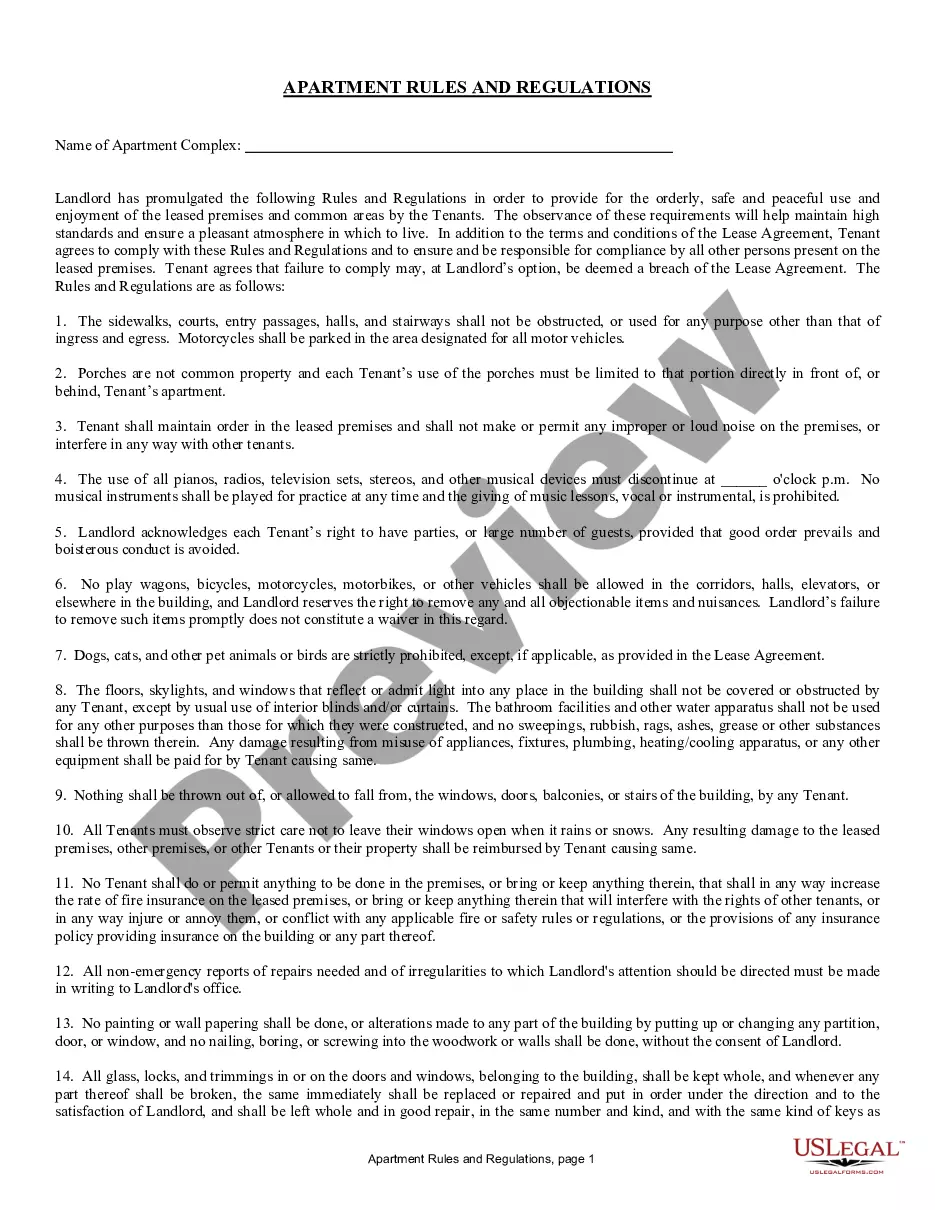
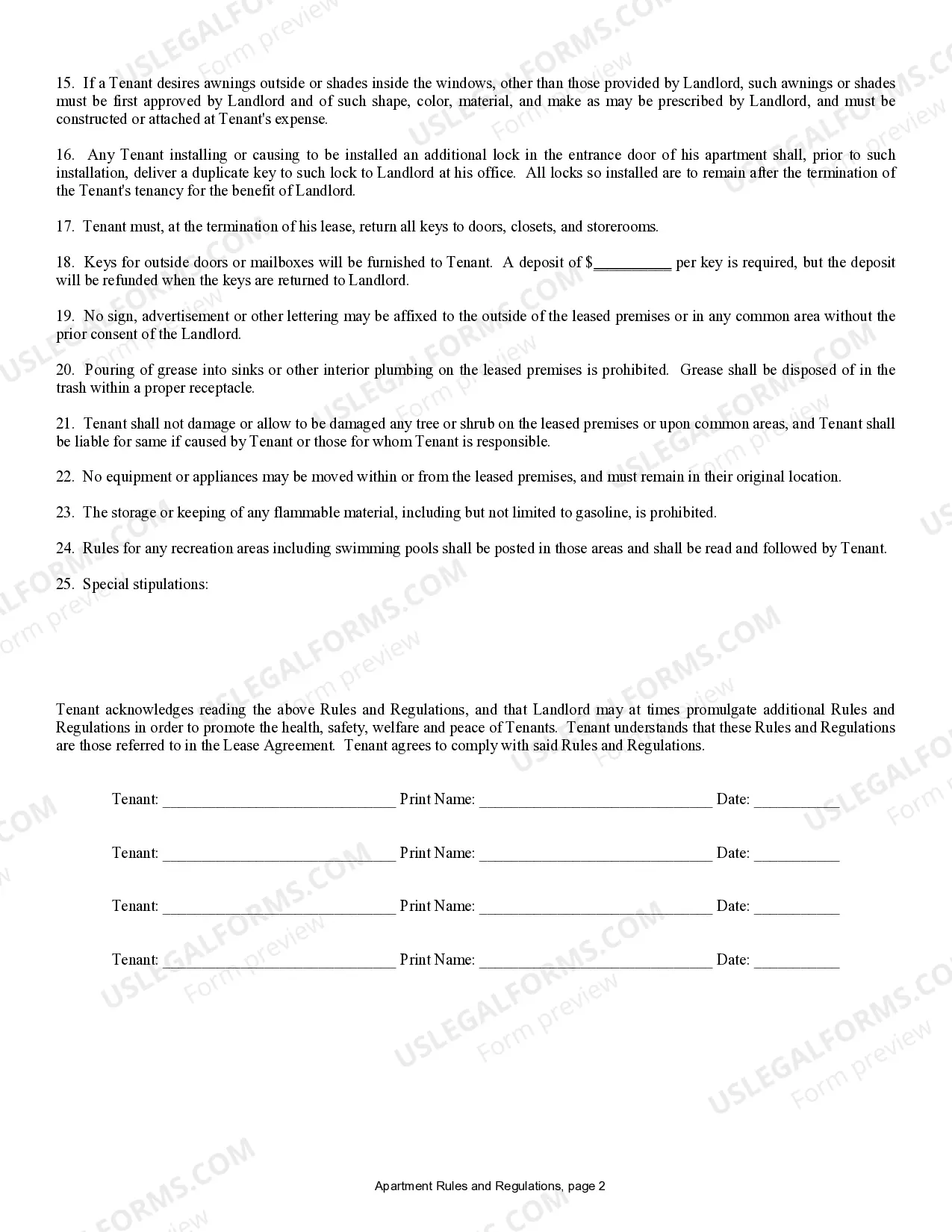
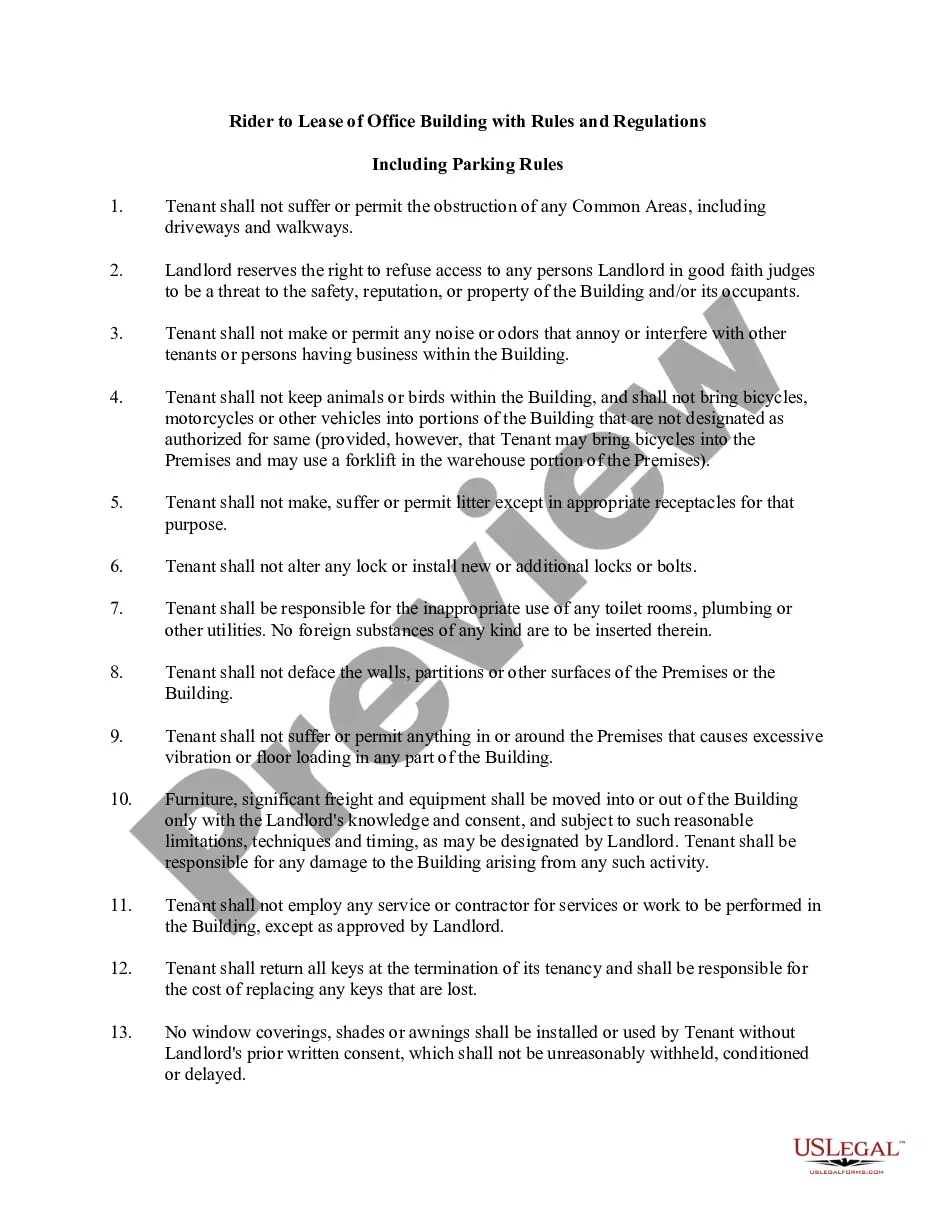
The Apartment Rules and Regulations form outlines the standard rules and guidelines that tenants must adhere to while residing in an apartment complex. This form serves to supplement the Apartment Lease Agreement by addressing specific expectations for tenant behavior and property usage. It helps ensure a safe, orderly, and enjoyable living environment for all residents.
Main sections of this form
- Identification of the apartment complex.
- Clear rules related to property maintenance and common area usage.
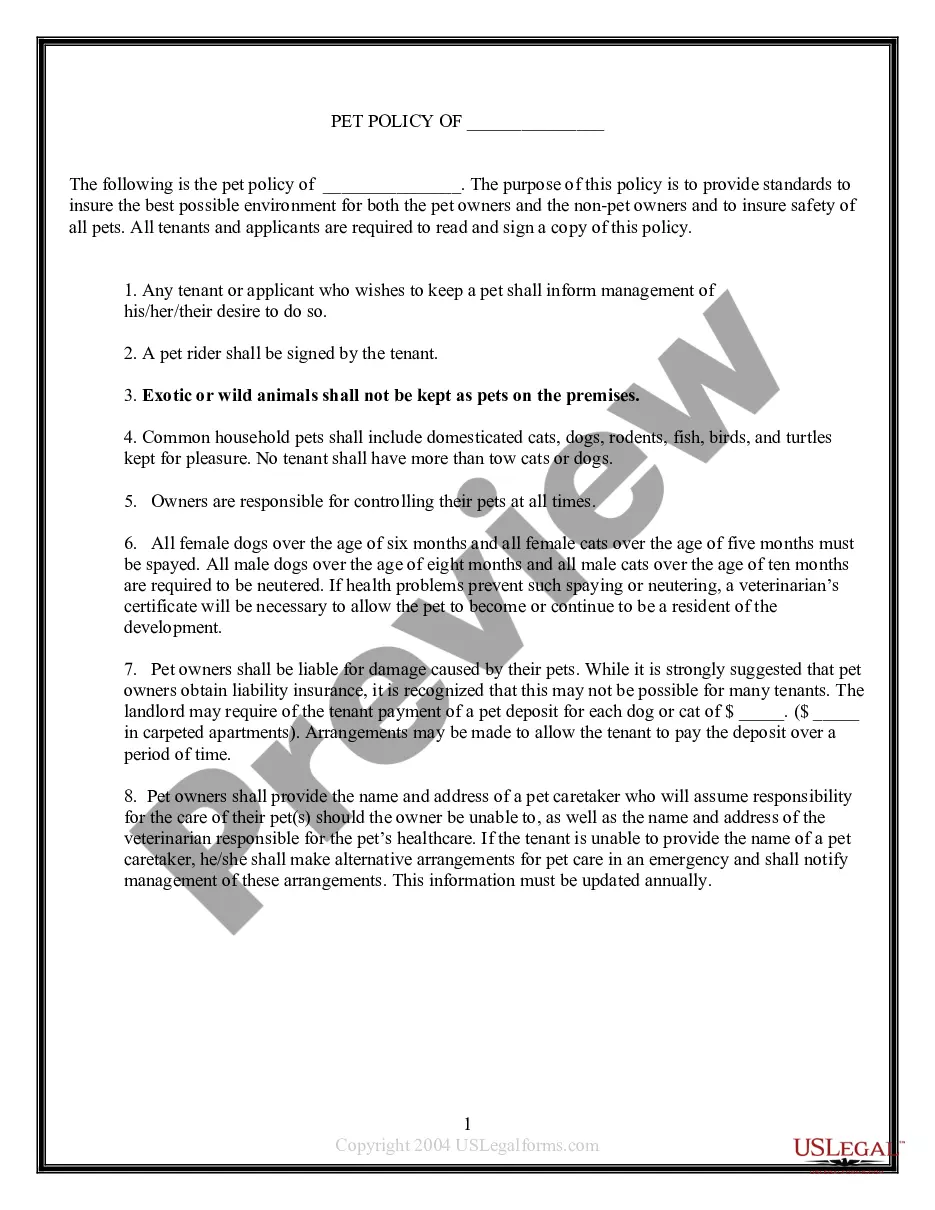
- Guidelines for tenant behavior, including noise restrictions and use of pets.
- Regulations regarding alterations to the unit and disposal of waste.
- Provisions for the installation of locks and return of keys upon lease termination.
- Enforcement details and consequences for non-compliance.
When to use this form
This form should be used by landlords or property managers to establish clear expectations for tenants. It is applicable when new tenants move in, or when existing tenants need to be reminded of the community standards. Utilizing this form helps reduce conflicts, ensuring that all residents understand their obligations and responsibilities.
Who this form is for
- Landlords or property managers looking to implement community rules.
- Tenants entering a rental agreement who need to understand the community guidelines.
- Real estate professionals involved in property management.
Steps to complete this form
- Write the name of the apartment complex at the top of the form.
- Fill in any specific rules and regulations that pertain to your property.
- Specify any rules regarding noise and common area usage.
- Enter any additional stipulations or modifications to the standard rules as necessary.
- Have all tenants sign and date the form to acknowledge their agreement.
Does this form need to be notarized?
This form does not typically require notarization unless specified by local law. Always verify local regulations to ensure compliance.
Get your form ready online
Our built-in tools help you complete, sign, share, and store your documents in one place.
Make edits, fill in missing information, and update formatting in US Legal Forms—just like you would in MS Word.
Download a copy, print it, send it by email, or mail it via USPS—whatever works best for your next step.
Sign and collect signatures with our SignNow integration. Send to multiple recipients, set reminders, and more. Go Premium to unlock E-Sign.
If this form requires notarization, complete it online through a secure video call—no need to meet a notary in person or wait for an appointment.
We protect your documents and personal data by following strict security and privacy standards.

Make edits, fill in missing information, and update formatting in US Legal Forms—just like you would in MS Word.

Download a copy, print it, send it by email, or mail it via USPS—whatever works best for your next step.

Sign and collect signatures with our SignNow integration. Send to multiple recipients, set reminders, and more. Go Premium to unlock E-Sign.

If this form requires notarization, complete it online through a secure video call—no need to meet a notary in person or wait for an appointment.

We protect your documents and personal data by following strict security and privacy standards.
Typical mistakes to avoid
- Not customizing the form to include complex-specific rules.
- Failing to have all tenants sign the form.
- Overlooking local regulations that may impact tenant rights.
Benefits of using this form online
- Convenient access to legal templates anytime, ensuring you can update rules as needed.
- Editable format allows for easy customization to meet specific property requirements.
- Reliable templates drafted by licensed attorneys to help ensure legal compliance.
Legal use & context
- This form reinforces regulations agreed upon in the lease agreement, making it enforceable in court.
- Clear rules help mitigate conflicts between tenants and management, fostering a better living environment.
Looking for another form?

Form popularity
FAQ
State law regulates several rent-related issues, including late and bounced-check fees, the amount of notice (at least 45 days in Nevada) landlords must give tenants to raise the rent, and how much time (five days in Nevada) a tenant has to pay overdue rent or move before a landlord can file for eviction.
In general, tenants do not have the right to withhold rent if the landlord does not carry out repairs. Doing so could jeopardise the tenant's right to remain in the accommodation. In certain circumstances, however, a tenant can pay for repairs and deduct the cost from future rent.
No Cause Notices Under Nevada law, NRS 40.251, the landlord can serve a No Cause Eviction Notice after your lease has expired. This Notice does not have to provide you with any reason for the eviction. If you rent by the week, the landlord must serve a 7 day notice.
Check if you have the right to withhold rent? You don't have the right to withhold rent because of your landlord's failure to do repairs. If you withhold rent your landlord may start possession proceedings against you and put you at risk of eviction.
Withhold rent Nevada landlord tenant law permits a tenant to withhold rent until the landlord is able to complete the repairs. Repair and deduct Tenants have the right to repair and deduct given that the cost of repair is less than $100 or one month's periodic rent, whichever amount is greater.
Nevada Revised Statutes require a seven-day notice to the tenant, instructing the tenant to either pay the rent or "quit" (leave) the rental property. To evict a tenant for nonpayment of rent, the landlord must "serve" (deliver) a Seven-Day Notice to Pay Rent or Quit to the tenant.
Tenant Rights to Withhold Rent in Nevada Tenants may withhold rent or exercise the right to repair and deduct if a landlord fails to take care of important repairs, such as a broken heater. For specifics, see Nevada Tenant Rights to Withhold Rent or Repair and Deduct.
The Centers for Disease Control (CDC) residential rental eviction moratorium has been extended through June 30, 2021.