New Mexico Last Will for a Widow or Widower with no Children
Understanding this form
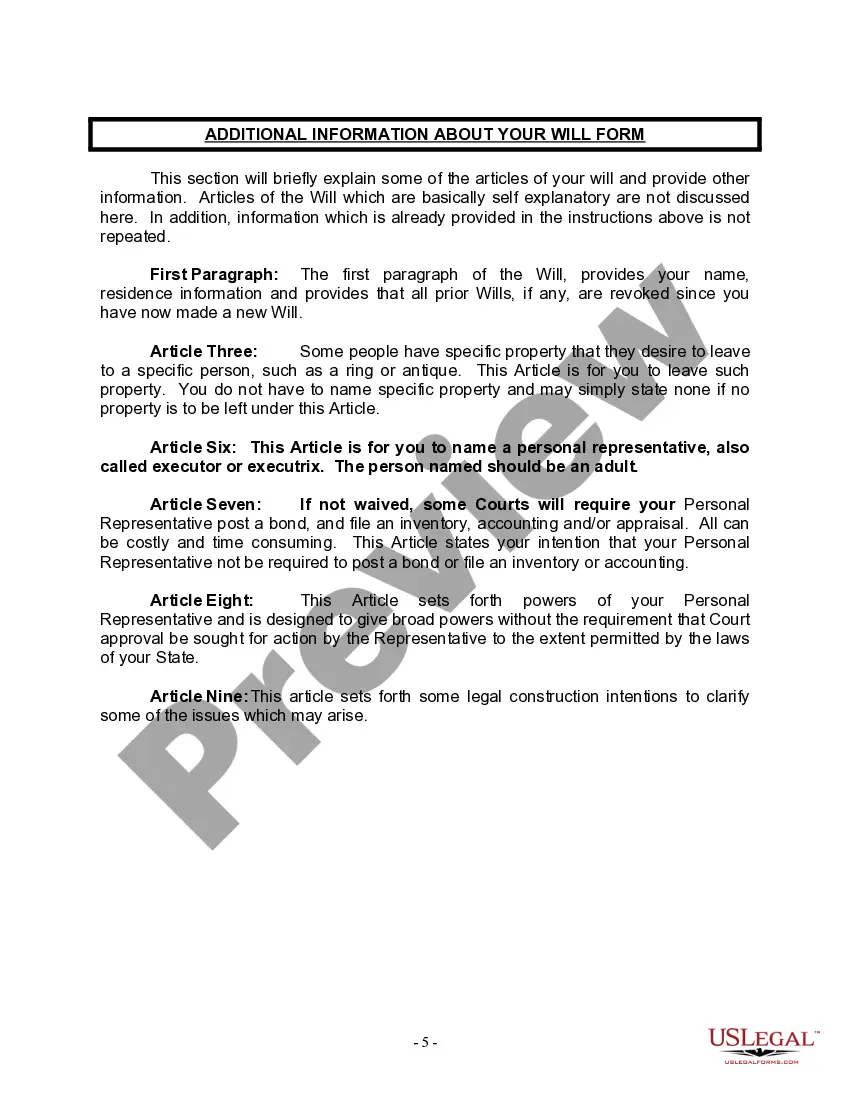
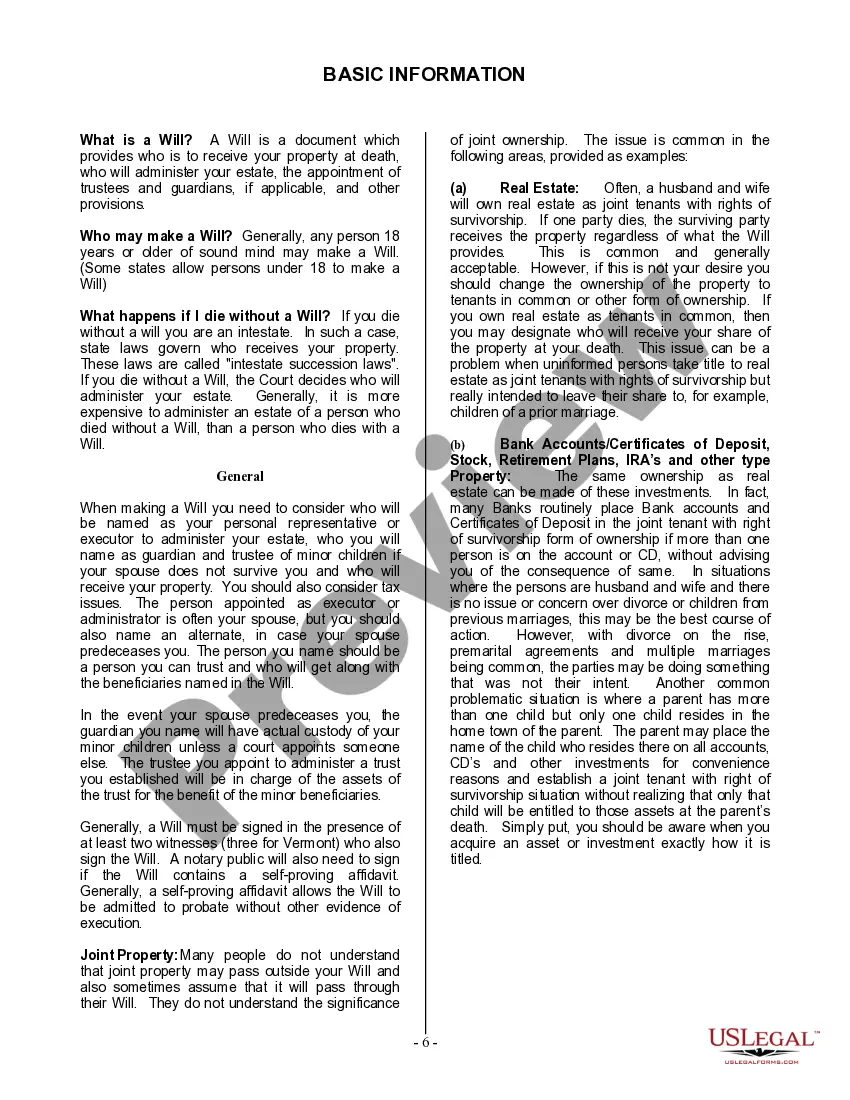
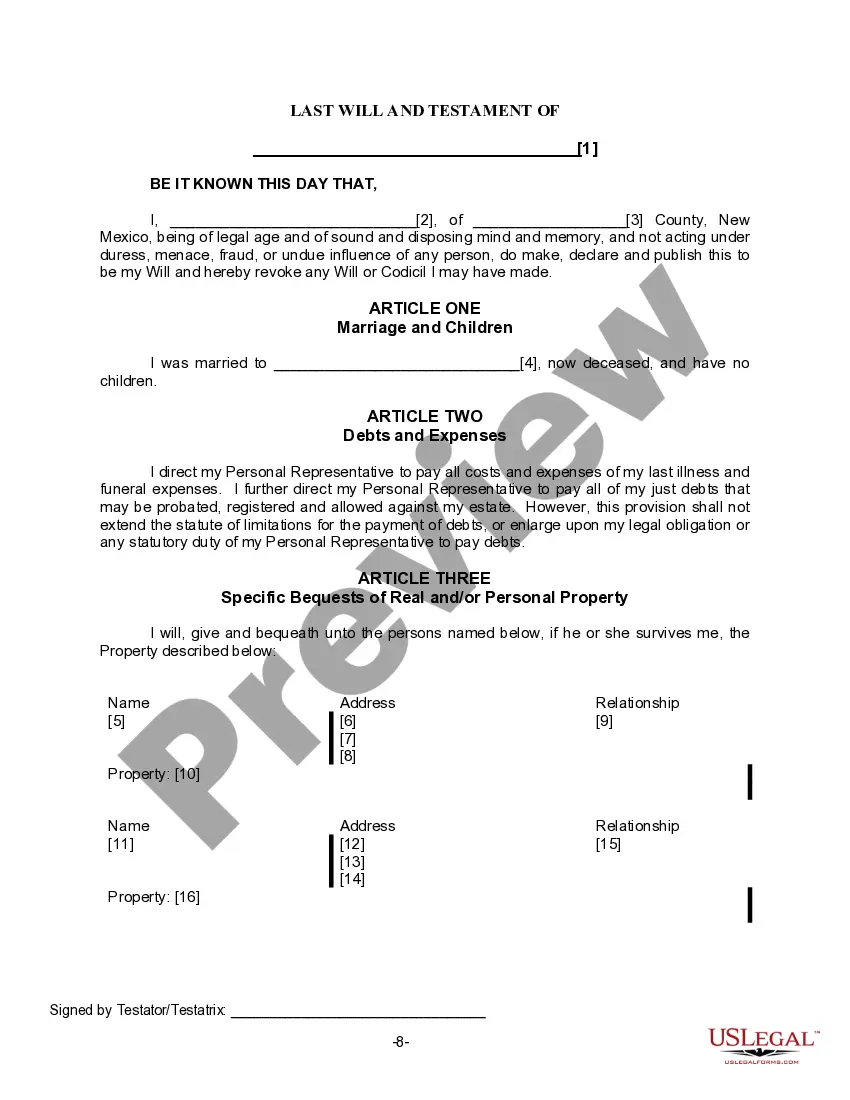
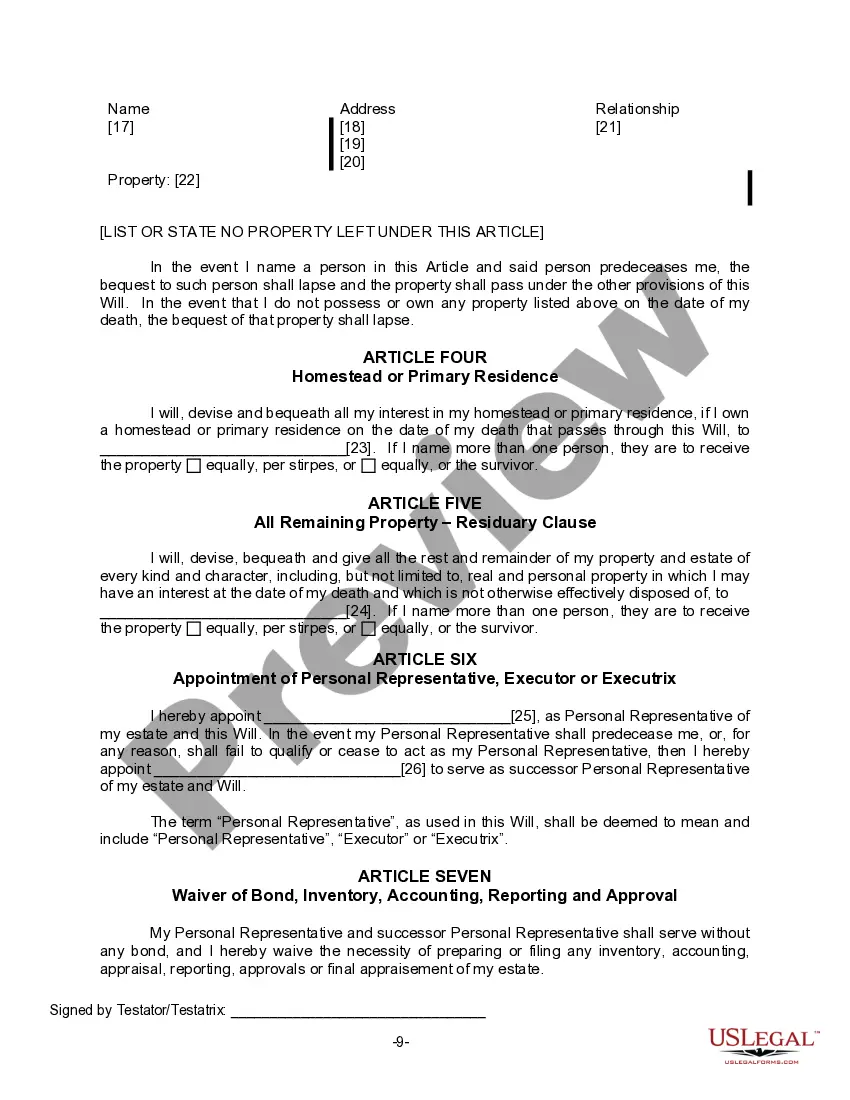
This Last Will for a Widow or Widower with no Children is a legal document that outlines how you want your assets distributed after your death. Designed specifically for individuals who have lost a spouse and do not have children, this form allows you to designate beneficiaries for your property, appoint a personal representative, and make clear your wishes. Unlike general wills, this form takes into account the unique circumstances of a widow or widower, ensuring that your estate is handled according to your specific desires.
What’s included in this form
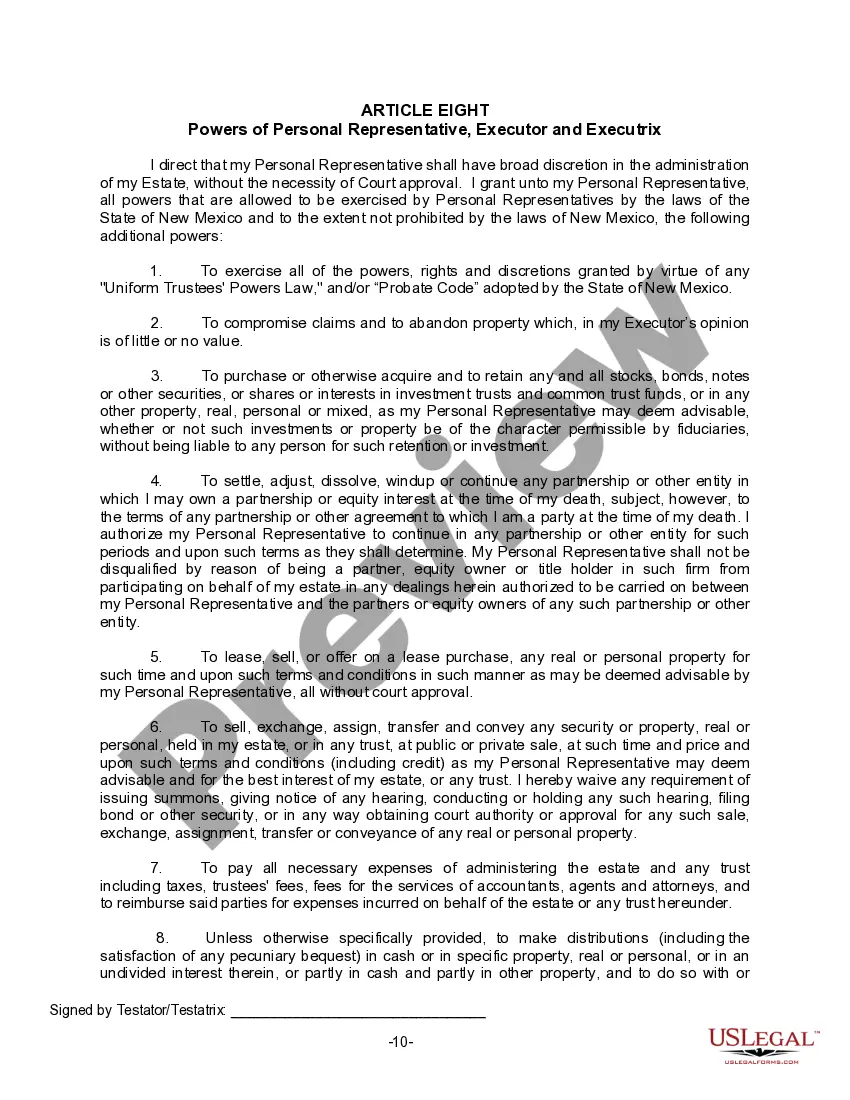
- Appointment of a personal representative to manage your estate.
- Designation of beneficiaries who will receive specific property or all other assets.
- Provisions for debts and expenses related to your estate.
- Instructions for signing and witnessing the will to ensure its validity.
- Optional self-proving affidavit to streamline the probate process.



Common use cases
This form is essential when a widow or widower wishes to ensure that their estate is distributed according to their wishes after passing away. You should use this will if you want to protect your legacy, provide clarity for your heirs, and avoid the default laws of intestate succession that might not align with your intentions.
Who this form is for
- Widows and widowers without children who wish to manage their estate effectively.
- Individuals looking to ensure their wishes are honored after their passing.
- Anyone seeking to minimize potential disputes among heirs regarding asset distribution.
Steps to complete this form
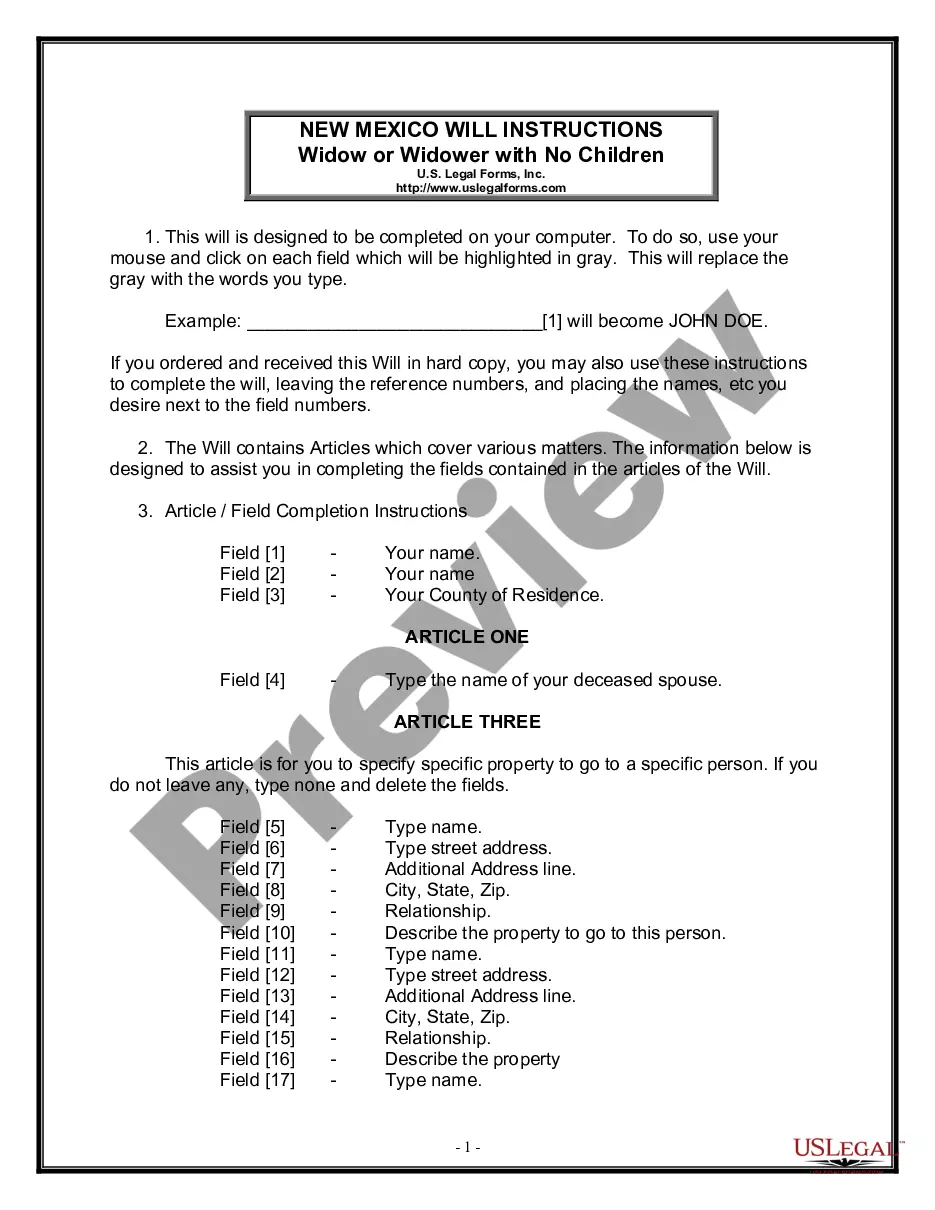
- Enter your full name and county of residence at the beginning of the document.
- Provide information about your deceased spouse in the designated fields.
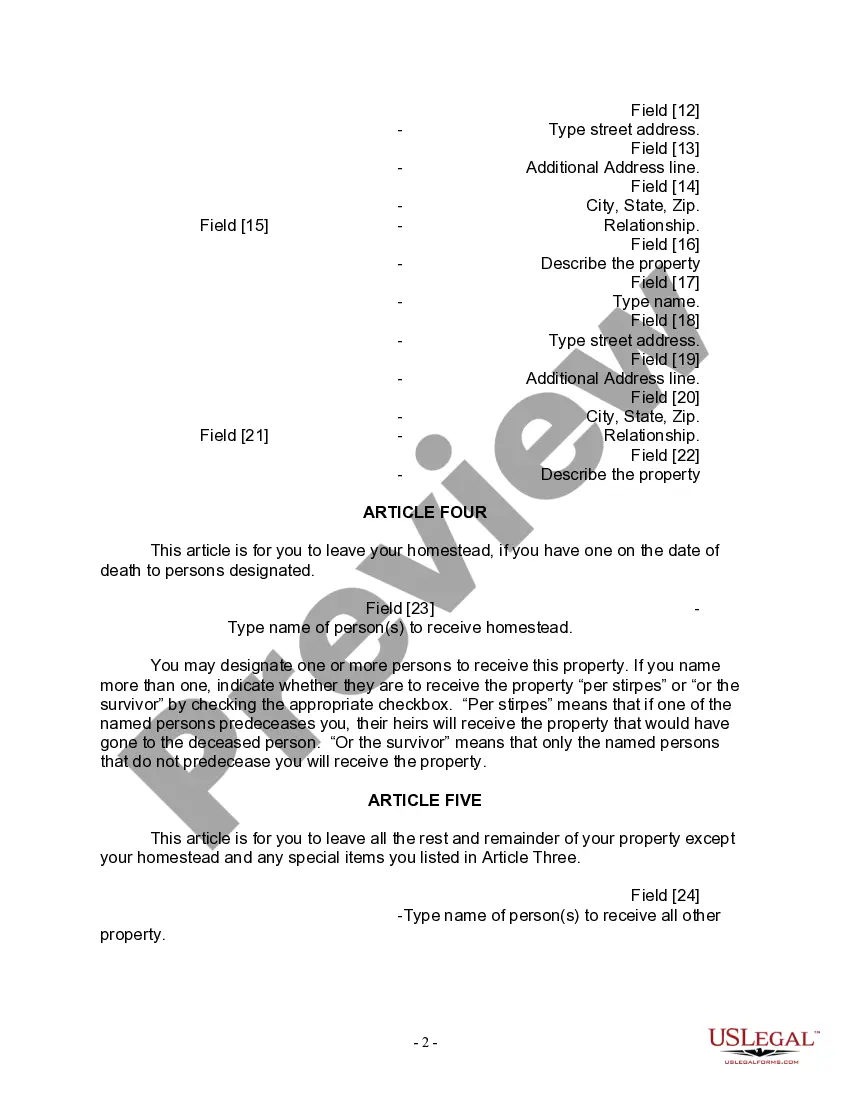
- List any specific property you wish to assign and designate individuals to receive it.
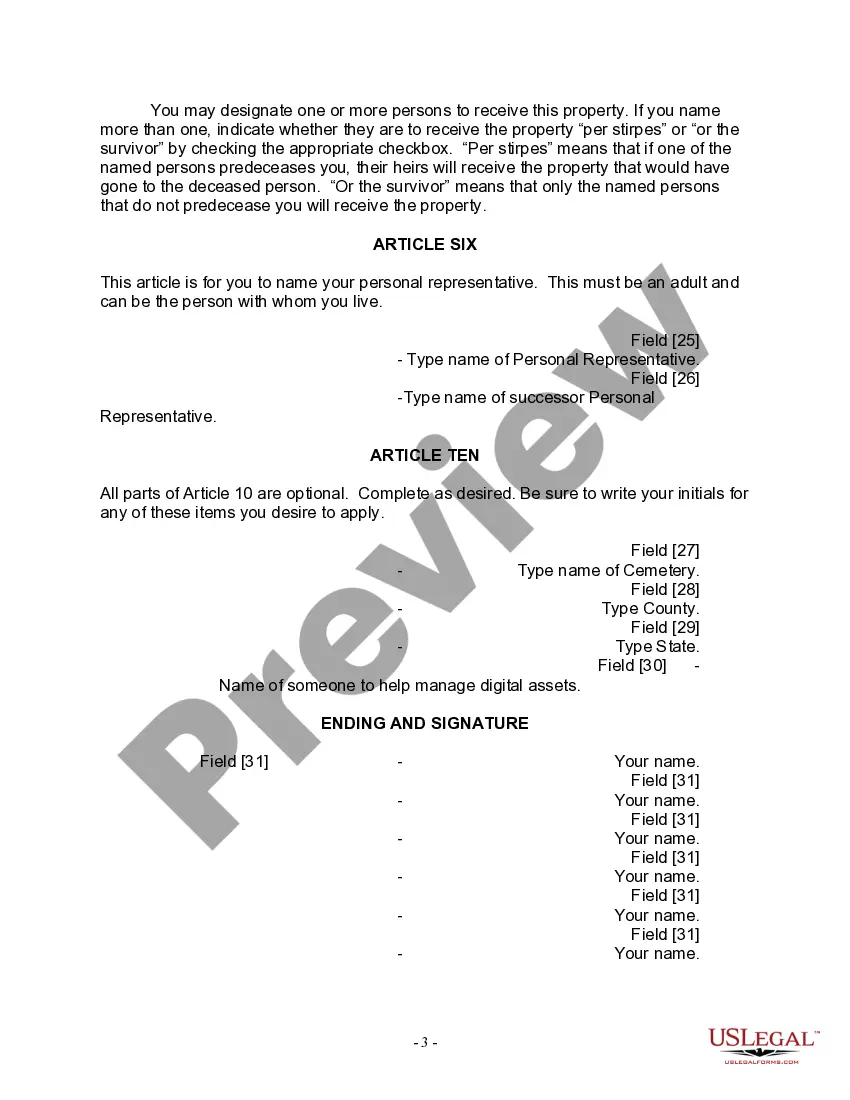
- Identify your personal representative and successor and enter their details.
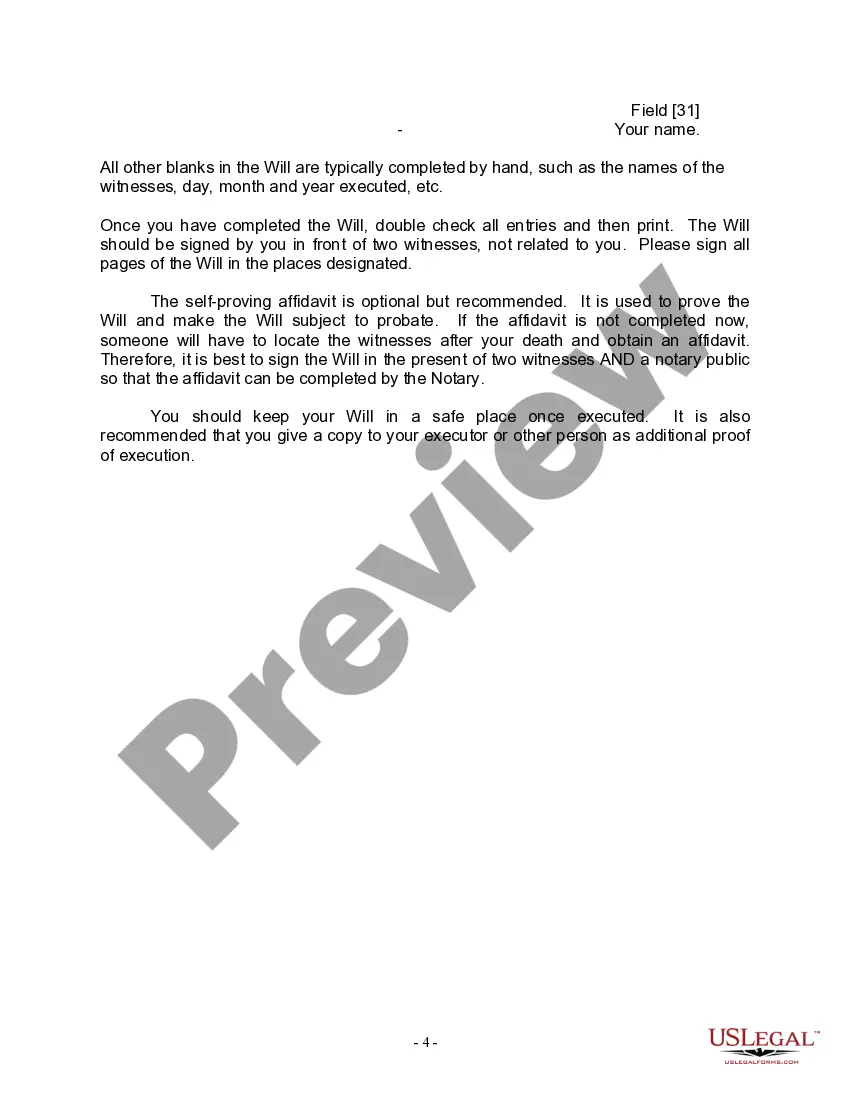
- Sign the will in the presence of two unrelated witnesses, ensuring all required signatures are included.
Does this form need to be notarized?
This form does not typically require notarization unless specified by local law. However, including a self-proving affidavit with the will can simplify the probate process, making notarization beneficial.
Get your form ready online
Our built-in tools help you complete, sign, share, and store your documents in one place.
Make edits, fill in missing information, and update formatting in US Legal Forms—just like you would in MS Word.
Download a copy, print it, send it by email, or mail it via USPS—whatever works best for your next step.
Sign and collect signatures with our SignNow integration. Send to multiple recipients, set reminders, and more. Go Premium to unlock E-Sign.
If this form requires notarization, complete it online through a secure video call—no need to meet a notary in person or wait for an appointment.
We protect your documents and personal data by following strict security and privacy standards.

Make edits, fill in missing information, and update formatting in US Legal Forms—just like you would in MS Word.

Download a copy, print it, send it by email, or mail it via USPS—whatever works best for your next step.

Sign and collect signatures with our SignNow integration. Send to multiple recipients, set reminders, and more. Go Premium to unlock E-Sign.

If this form requires notarization, complete it online through a secure video call—no need to meet a notary in person or wait for an appointment.

We protect your documents and personal data by following strict security and privacy standards.
Common mistakes
- Not having the will signed in front of the required number of witnesses.
- Failing to appoint a successor personal representative.
- Leaving property distributions vague or unspecified, which could lead to disputes.
- Overlooking to include a self-proving affidavit, which can complicate the probate process.
Benefits of completing this form online
- Conveniently complete the form from home using your computer or device.
- Edit and customize your will easily to reflect your exact wishes.
- Access reliable templates drafted by licensed attorneys, ensuring legal soundness.
Looking for another form?

Form popularity
FAQ
Age: The testator must be at least 18 years old. Capacity: The testator must be of sound mind. Signature: The will must be signed by the testator or by someone else in the testator's name in his conscious presence, by his direction.
A will can also be declared invalid if someone proves in court that it was procured by undue influence. This usually involves some evil-doer who occupies a position of trust -- for example, a caregiver or adult child -- manipulating a vulnerable person to leave all, or most, of his property to the manipulator instead
There are four main requirements to the formation of a valid will: The will must have been executed with testamentary intent;The will must have been executed free of fraud, duress, undue influence or mistake; and. The will must have been duly executed through a proper ceremony.
In most situations, a will template is an easy and inexpensive way to make sure your wishes are known and carried out. Most people can get everything they need by using a will template, with little cost or hassle.
The only requirements for a valid will in New Mexico are that it be: in writing; signed by you or signed by someone directed by you and in your presence; and signed by two witnesses who both sign in the presence of you and each other.
A handwritten will can be used in New Mexico, but only if it comports with other statutory requirements to create a valid will. Some states also require that the will be dated.
The Free Last Will and Testament Template for Word is compatible with Word 2003 or later versions.
No, in New Mexico, you do not need to notarize your will to make it legal. However, New Mexico allows you to make your will "self-proving" and you'll need to go to a notary if you want to do that. A self-proving will speeds up probate because the court can accept the will without contacting the witnesses who signed it.