New Mexico Buyer's Home Inspection Checklist
What is this form?
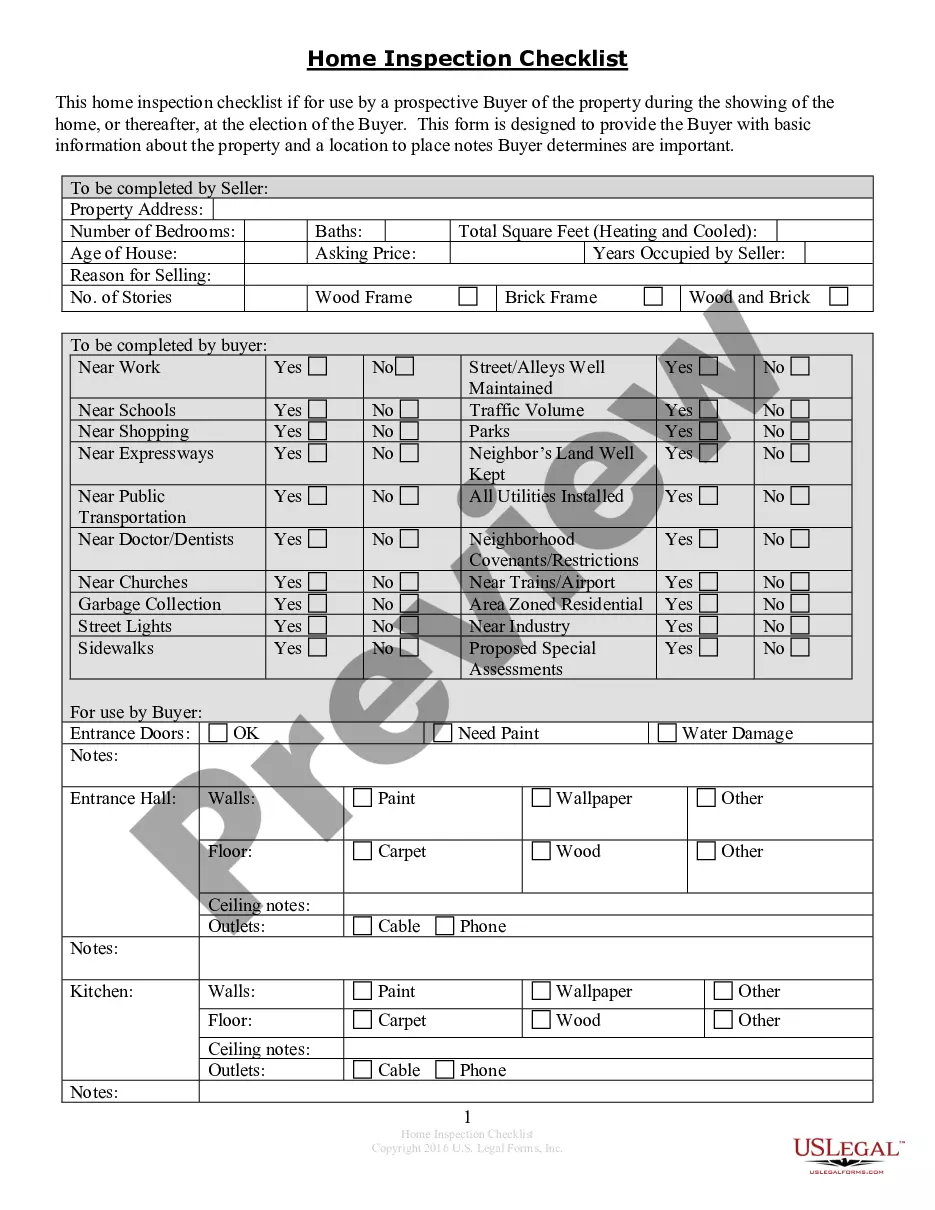
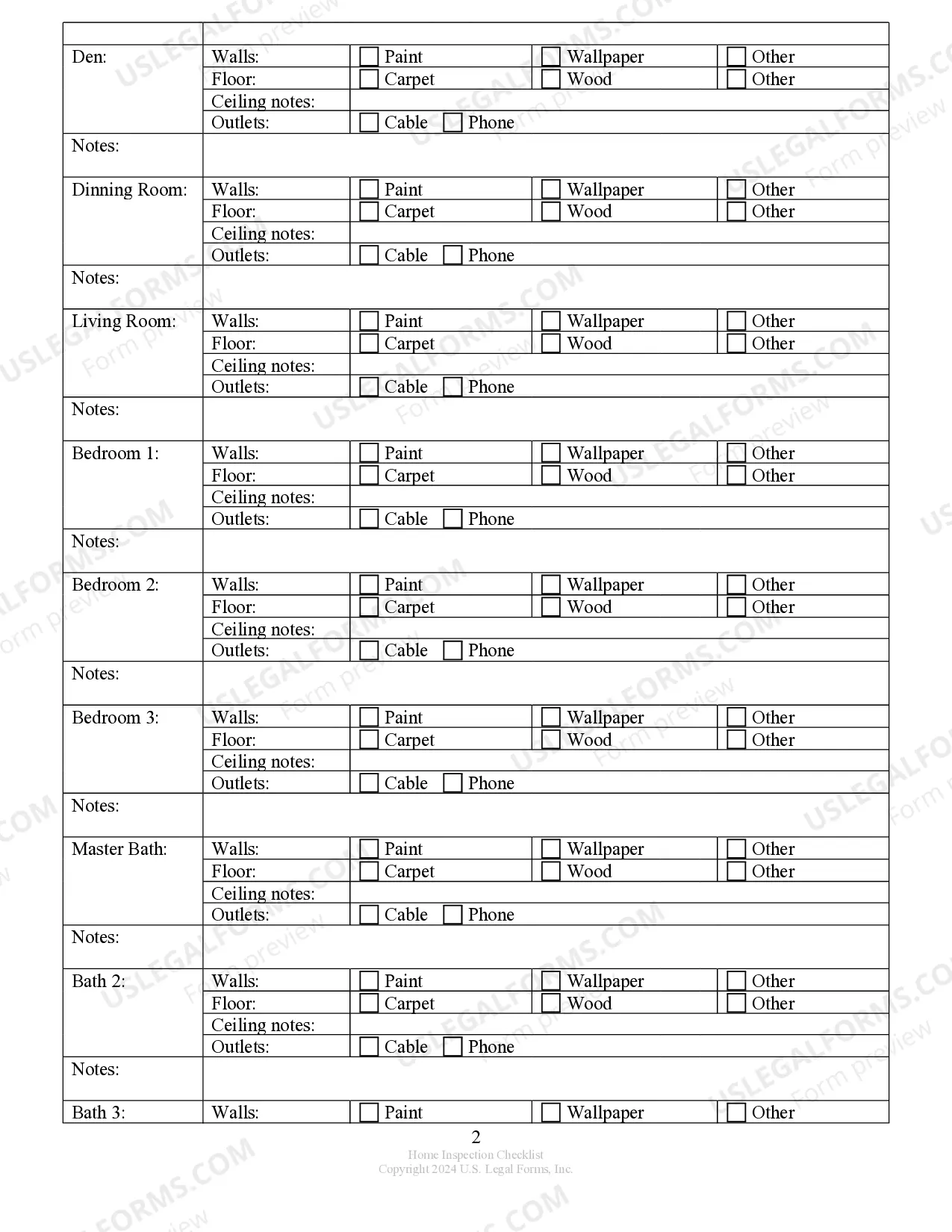
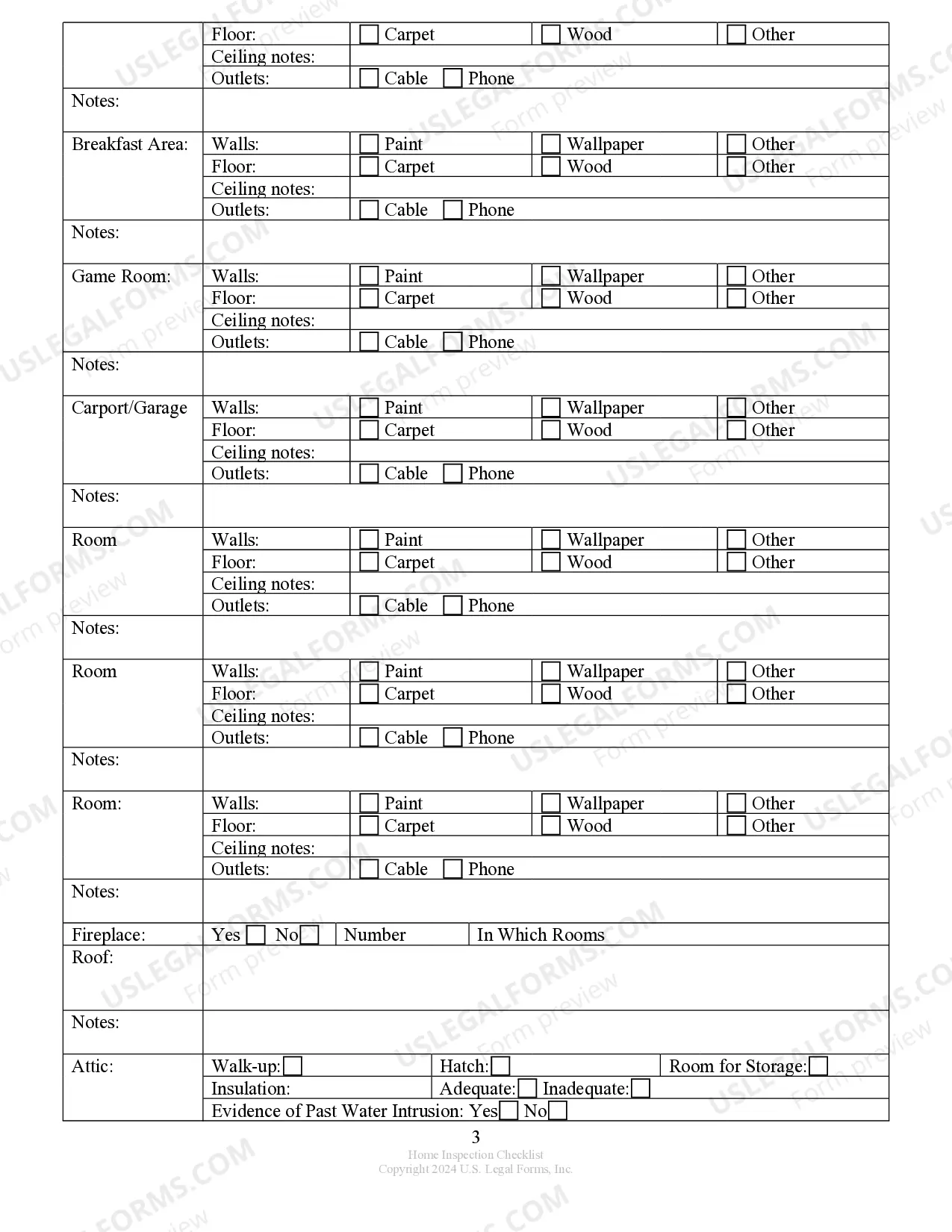
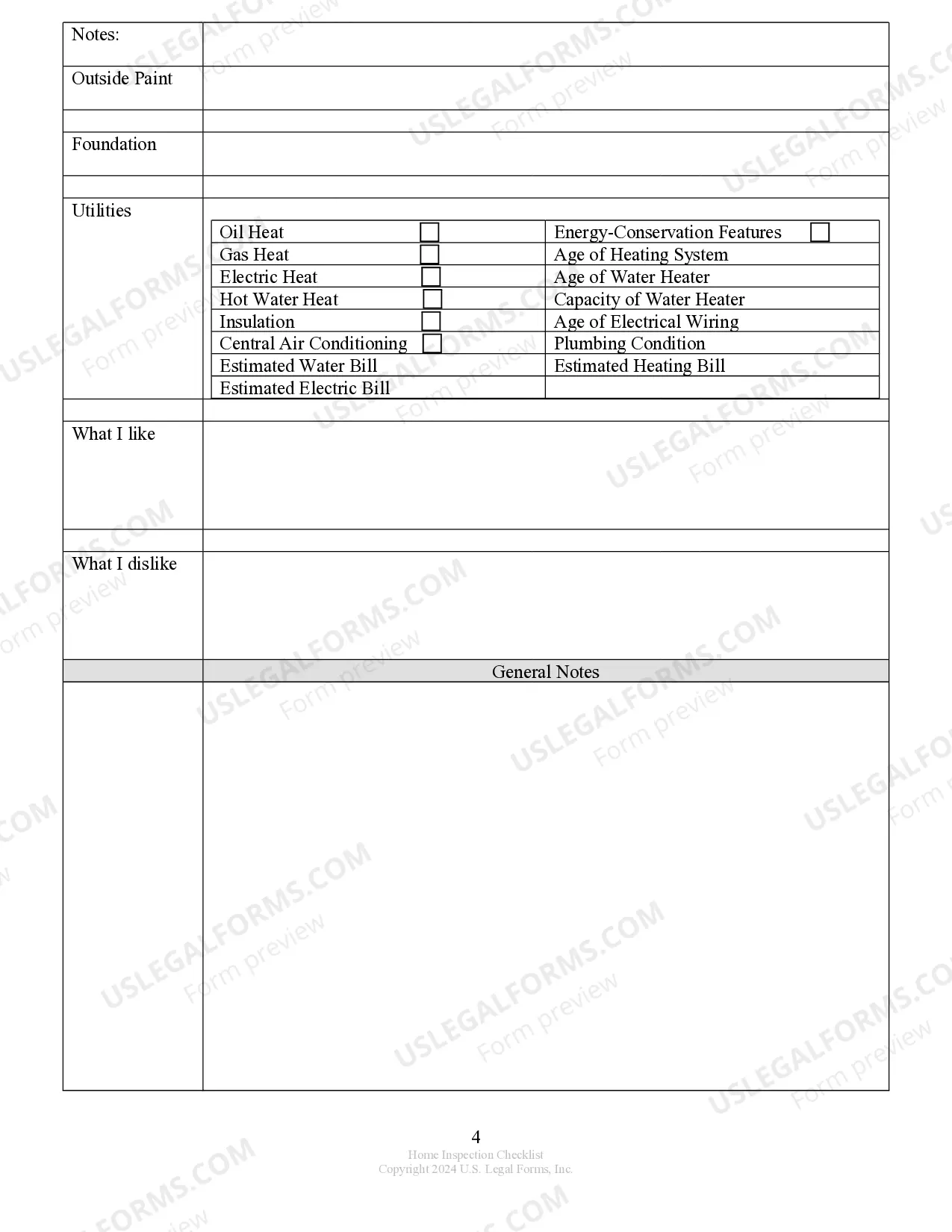
The Buyer's Home Inspection Checklist is a practical tool for prospective homebuyers in New Mexico. This form serves to guide buyers through the home inspection process, helping them to assess critical aspects of a property before making an offer. Unlike standard inspection reports, this checklist allows buyers to take notes and ask specific questions related to the home's condition, ensuring they have comprehensive information to inform their purchase decision.
Main sections of this form
- Property details: A section for entering relevant property information.
- Neighborhood assessment: Questions about the location, including nearby schools and amenities.
- Utilities and services: Fields to confirm if all utilities are installed and services like garbage collection are available.
- Yard and surroundings: Areas to note on the condition of neighboring properties and available greenery.
- Safety and zoning: Queries regarding neighborhood covenants and zoning designations.
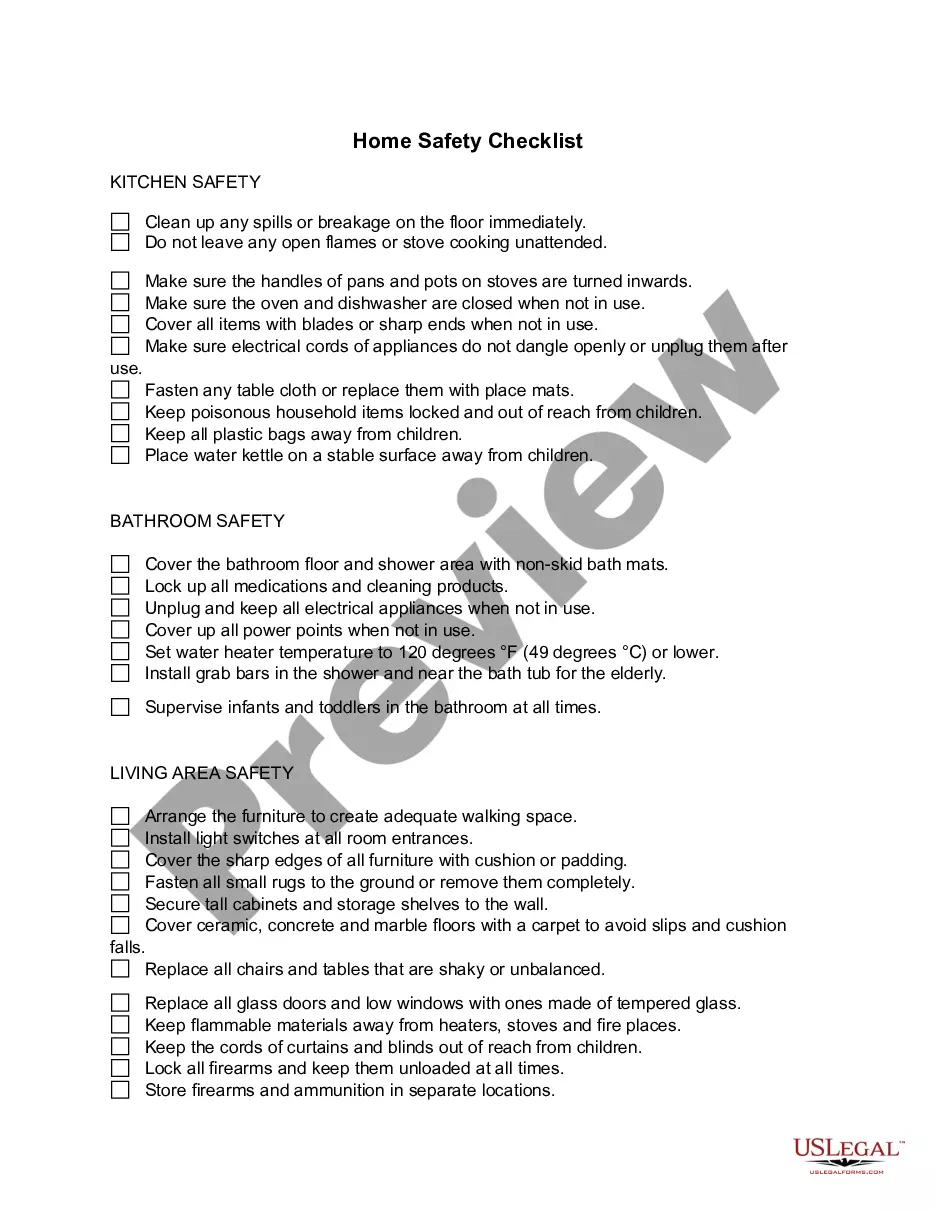
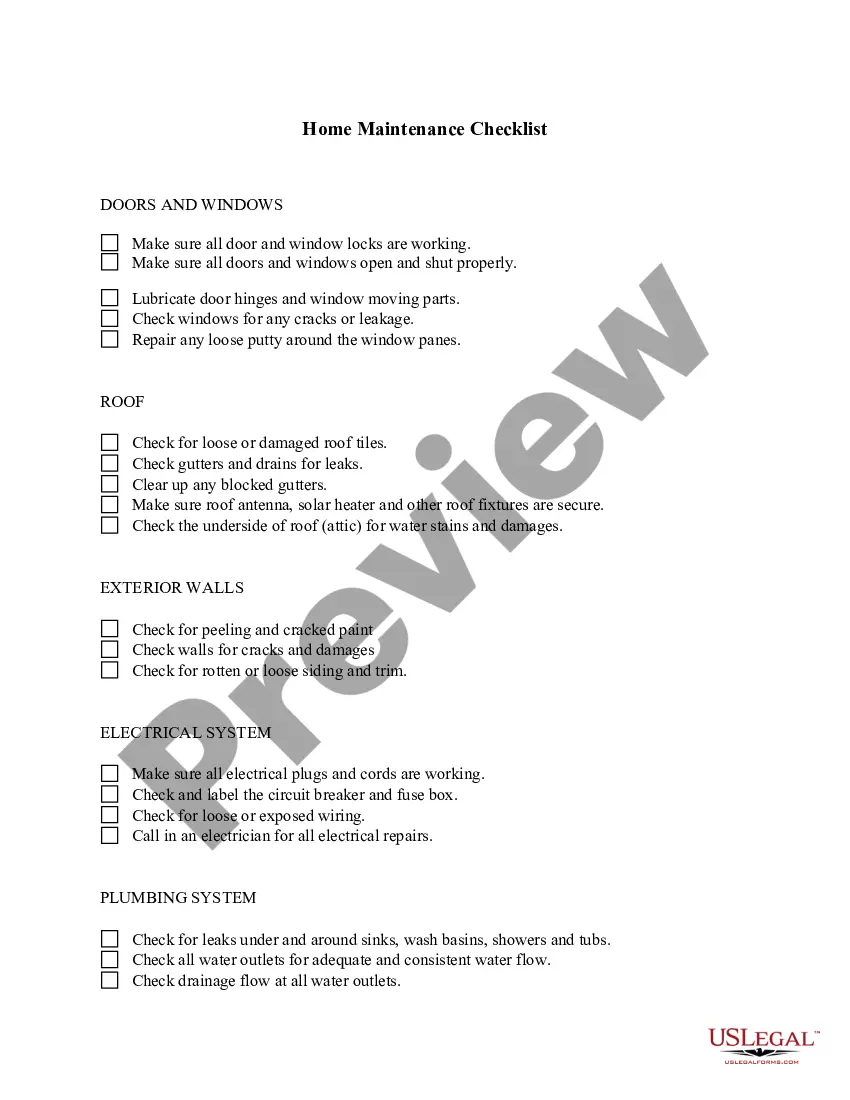
When to use this document
This form should be used during the initial property viewing or shortly thereafter. It is particularly beneficial when a buyer is considering making an offer on a home. By utilizing this checklist, buyers can gather essential information that may influence their decision to proceed with the purchase.
Who this form is for
- First-time homebuyers seeking guidance in assessing a property.
- Experienced buyers wishing to streamline their inspection process.
- Real estate agents looking to provide a comprehensive tool for their clients.
How to complete this form
- Identify the property: Fill in the address and any other relevant identifying details.
- Review the neighborhood: Assess surrounding amenities by answering related questions.
- Check utilities: Confirm the status of utilities by marking "Yes" or "No" where applicable.
- Inspect the exterior: Note the condition of any visible property features, like the yard and neighboring homes.
- Make observations: Use the designated space to add important notes regarding your findings.
Does this form need to be notarized?
This form does not typically require notarization to be legally valid. However, some jurisdictions or document types may still require it. US Legal Forms provides secure online notarization powered by Notarize, available 24/7 for added convenience.
Get your form ready online
Our built-in tools help you complete, sign, share, and store your documents in one place.
Make edits, fill in missing information, and update formatting in US Legal Forms—just like you would in MS Word.
Download a copy, print it, send it by email, or mail it via USPS—whatever works best for your next step.
Sign and collect signatures with our SignNow integration. Send to multiple recipients, set reminders, and more. Go Premium to unlock E-Sign.
If this form requires notarization, complete it online through a secure video call—no need to meet a notary in person or wait for an appointment.
We protect your documents and personal data by following strict security and privacy standards.

Make edits, fill in missing information, and update formatting in US Legal Forms—just like you would in MS Word.

Download a copy, print it, send it by email, or mail it via USPS—whatever works best for your next step.

Sign and collect signatures with our SignNow integration. Send to multiple recipients, set reminders, and more. Go Premium to unlock E-Sign.

If this form requires notarization, complete it online through a secure video call—no need to meet a notary in person or wait for an appointment.

We protect your documents and personal data by following strict security and privacy standards.
Mistakes to watch out for
- Overlooking important details when inspecting the property.
- Failing to ask the seller key questions about the home's maintenance.
- Not taking notes during the inspection, which can lead to forgotten observations.
Benefits of completing this form online
- Convenience: Access and download the form anytime, anywhere.
- Editability: Customize the checklist to fit your specific needs and preferences.
- Reliability: Use a professionally drafted form that ensures compliance with legal standards.
Legal use & context
- This checklist serves as a preliminary tool to guide prospective buyers; it does not replace a professional home inspection.
- Observations made using this checklist may support negotiation points in the purchase offer.
- Completion of this document does not constitute a legal obligation or guarantee regarding the property's condition.
Quick recap
- The Buyer's Home Inspection Checklist is essential for evaluating potential homes in New Mexico.
- Buyers should use this checklist during property showings to ensure no detail is overlooked.
- Customization options and online availability enhance the user experience and effectiveness of the form.
Looking for another form?
Form popularity
FAQ
A buyer and seller's real estate agents will be able to fill them in on the laws in their particular state, but in general a seller is responsible for paying to fix severe water damage or mold issues, to replace missing or broken smoke detectors, and to remedy building code violations, among other things.
Water Damage. Most home inspectors agree that water damage to the structure is one of the most damaging and costly problems you can encounter. Faulty Wiring. Poor Drainage and Grade Sloping. Problematic Gutters. Roof Issues. Foundation Flaws. General Disrepair. Faulty Plumbing.
It's a good idea for the buyer to attend the home inspection because it'll be the perfect chance to ask the inspector how the home's various systems work and hear about maintenance. I always encourage the buyer at the beginning of the inspection to share anything that they have questions about, Pretty says.
Replace light bulbs. Re-caulk around bathtubs and sinks. Repair any water damage in bathrooms. Remove any drain clogs. Update any dingy grout. Replace torn screens and cracked windows. Replace any missing roofing. Replace damaged insulation in attic and crawl space.
Ask the seller to make the repairs themselves. Ask for credits toward your closing costs. Ask the seller to reduce the sales price to make up for the repairs. Back out of the transaction (if you have an inspection contingency in place) Move forward with the deal.
Problem #1: Rundown roofing. Problem #2: Drainage issues. Problem #3: Faulty foundation. Problem #4: Plumbing problems. Problem #5: Pest infestations. Problem #6: Hidden mold. Problem #7: Failing heating systems. Problem#8: Electrical wiring.
Chimney Inspections. Electrical Inspections. Lead-Based Paint. Heating and Air Conditioning. Wood Damage. Foundation Inspections. Pool and Spa Inspections. Roof Inspections.
Provide open access to areas that need to be checked. Clear the perimeter. Check the roof. Keep a clean house. Replace any bulbs that are out. Make sure your toilets are functioning properly. Put in a fresh furnace return filter.
A home inspector will look at things like a home's foundation, structural components, roof, HVAC, plumbing, and electrical systems, then provide a written home inspection report with results.Buyers should attend the inspection so they can explore their new home in detail and ask questions during the process.