South Carolina ALTERING VEHICLE IDENTIFICATION NUMBERS
What is this form?
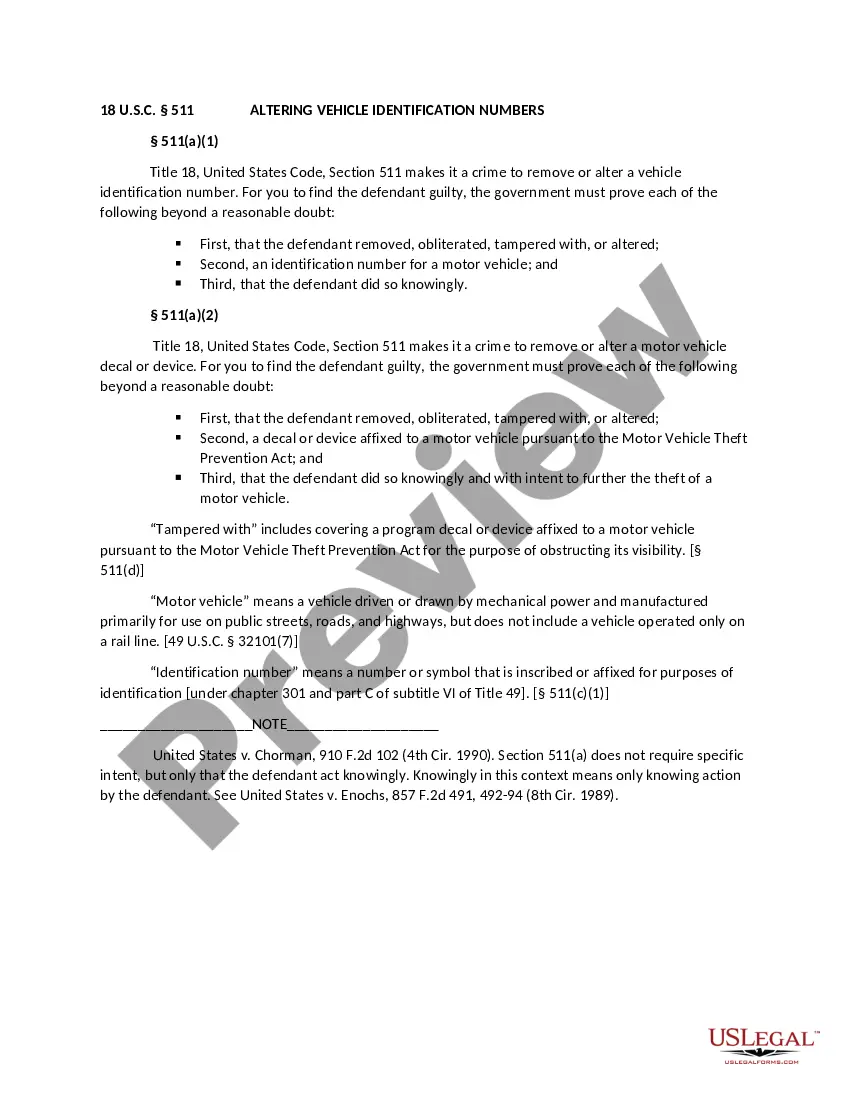
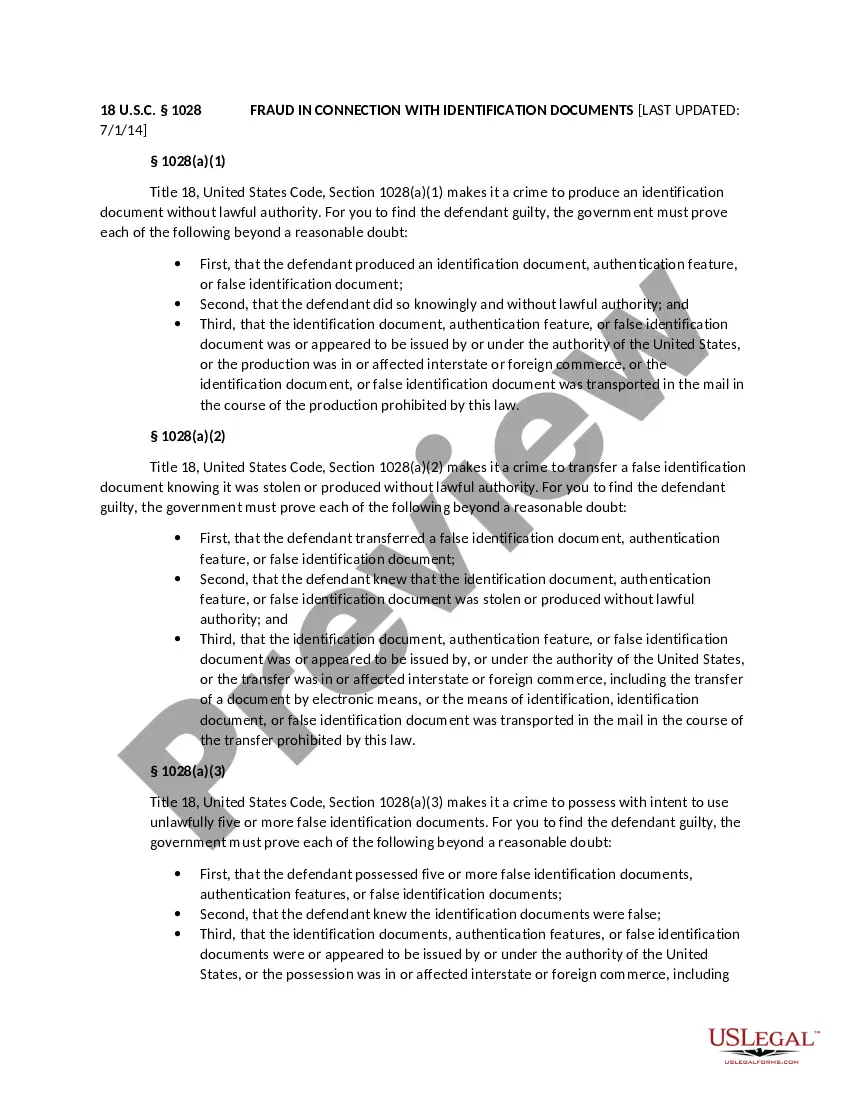
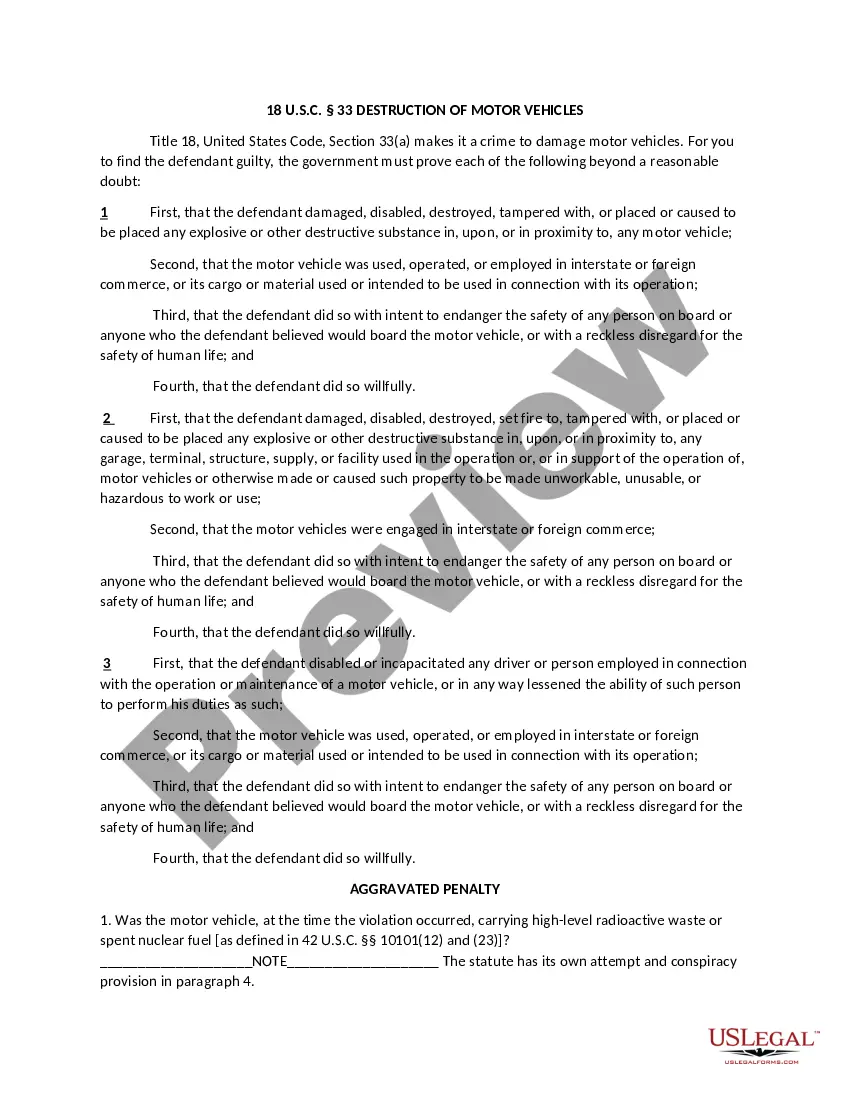
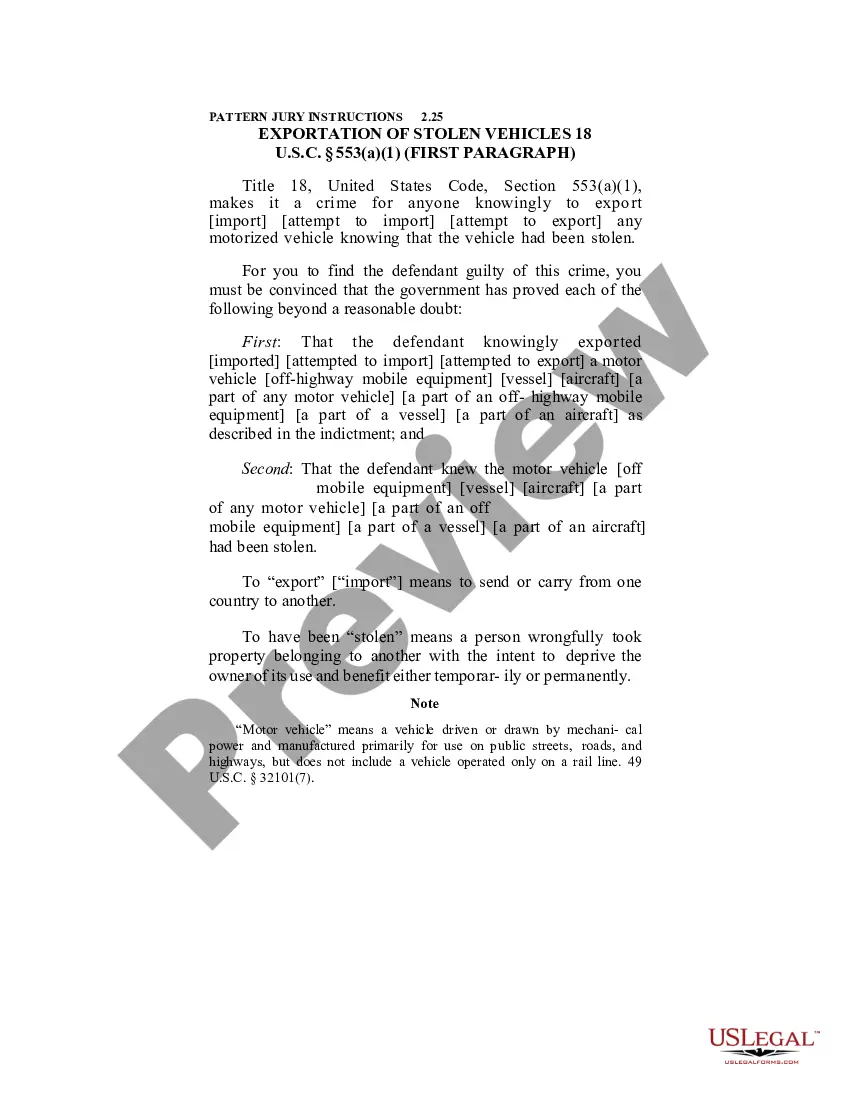
The Altering Vehicle Identification Numbers form is a legal document that addresses the criminal act of tampering with a vehicle's identification number (VIN) or its associated decals. This form outlines the legal definitions and requirements under Title 18, United States Code, Section 511, which makes it unlawful to remove, obliterate, tamper with, or alter a VIN or any related vehicle identification device. It is crucial for ensuring compliance with federal vehicle identification laws and differs from standard vehicle registration forms, as it pertains specifically to criminal liability associated with vehicle identification.
What’s included in this form
- Section 511(a)(1): Definitions and legal requirements for tampering with a VIN.
- Section 511(a)(2): Clarifications on the unlawful alteration of motor vehicle decals.
- Definitions of key terms: "motor vehicle" and "identification number."
- Legal standard: Knowledge requirement for establishing guilt.
Common use cases
This form is typically used in criminal cases where an individual is accused of unlawfully altering a vehicle's identification number or decals. It serves as a guideline for legal proceedings involving vehicle theft prevention and the integrity of vehicle identification. Use this form when preparing for a legal defense or when presenting evidence in court regarding allegations of tampering.
Who this form is for
- Individuals facing charges related to tampering with vehicle identification numbers.
- Defense attorneys representing clients accused of violations under Title 18, United States Code, Section 511.
- Legal professionals seeking to understand or present cases involving vehicle identification law.
How to prepare this document
- Review the sections pertaining to your specific charges or defense.
- Identify and confirm the elements required for proving or defending against the charges.
- Document any relevant evidence or witness statements that support your case.
- Clearly articulate facts demonstrating whether the actions were knowingly taken.
- Consult with a legal professional to ensure correct application of the form in the legal context.
Does this document require notarization?
In most cases, this form does not require notarization. However, some jurisdictions or signing circumstances might. US Legal Forms offers online notarization powered by Notarize, accessible 24/7 for a quick, remote process.
Get your form ready online
Our built-in tools help you complete, sign, share, and store your documents in one place.
Make edits, fill in missing information, and update formatting in US Legal Forms—just like you would in MS Word.
Download a copy, print it, send it by email, or mail it via USPS—whatever works best for your next step.
Sign and collect signatures with our SignNow integration. Send to multiple recipients, set reminders, and more. Go Premium to unlock E-Sign.
If this form requires notarization, complete it online through a secure video call—no need to meet a notary in person or wait for an appointment.
We protect your documents and personal data by following strict security and privacy standards.

Make edits, fill in missing information, and update formatting in US Legal Forms—just like you would in MS Word.

Download a copy, print it, send it by email, or mail it via USPS—whatever works best for your next step.

Sign and collect signatures with our SignNow integration. Send to multiple recipients, set reminders, and more. Go Premium to unlock E-Sign.

If this form requires notarization, complete it online through a secure video call—no need to meet a notary in person or wait for an appointment.

We protect your documents and personal data by following strict security and privacy standards.
Common mistakes
- Failing to understand the knowledge requirement for establishing guilt.
- Inaccurately defining the terms "motor vehicle" and "identification number."
- Overlooking local laws that may supplement federal requirements.
Why complete this form online
- Convenience of access from anywhere with internet connection.
- Editable format allowing you to tailor the document to your needs.
- Reliability of forms created by licensed attorneys.
Looking for another form?


Form popularity
FAQ
SECTION 16-21-80. Receiving, possessing, concealing, selling, or disposing of stolen vehicle.
More than one vehicle or vehicle part; with knowledge that the VIN has been altered for the purpose of misrepresenting or hiding its identity.
Section 511(a) of Title 18 makes it a felony knowingly to remove, obliterate, tamper with, or alter an identification number for a road motor vehicle or a road motor vehicle part.
You know, anybody can walk past your car and copy down the VIN number because it's right there in the windshield. Once they've copied your VIN number, they can apply for duplicate papers, and those papers can be used on another car that has been stolen or may have been reconstructed. How can you prevent it?
VIN Plate Tampering: A Federal Crime You Don't Want to Commit.
Yes, it is illegal to remove a VIN number. Doing so can violate state law. It is also a violation of federal law. There are, however, some exceptions that can apply.
How do you know if your VIN number has been tampered with? Inspect the car. Changing the VIN everywhere on the vehicle is a tough and time-consuming task.Check the vehicle registration documents. Get a vehicle history report. This is the silver bullet for all sorts of used car scams, and VINs are no exception.
Every officer authorized to direct or regulate traffic or to make arrests for violations of vehicular and traffic laws is a "police officer." HISTORY: 1962 Code Section 46-246; 1952 Code Section 46-246; 1949 (46) 466. SECTION 56-5-430. Street defined; highway defined.