New Jersey Last Will and Testament for Divorced Person Not Remarried with No Children
Overview of this form
This Last Will and Testament is a legal document designed specifically for a divorced person who is not remarried and has no children. It outlines how your property will be distributed after your death and allows you to appoint a personal representative or executor. Unlike other wills, this form caters to your specific family situation, ensuring that your assets are handled according to your wishes.
Main sections of this form
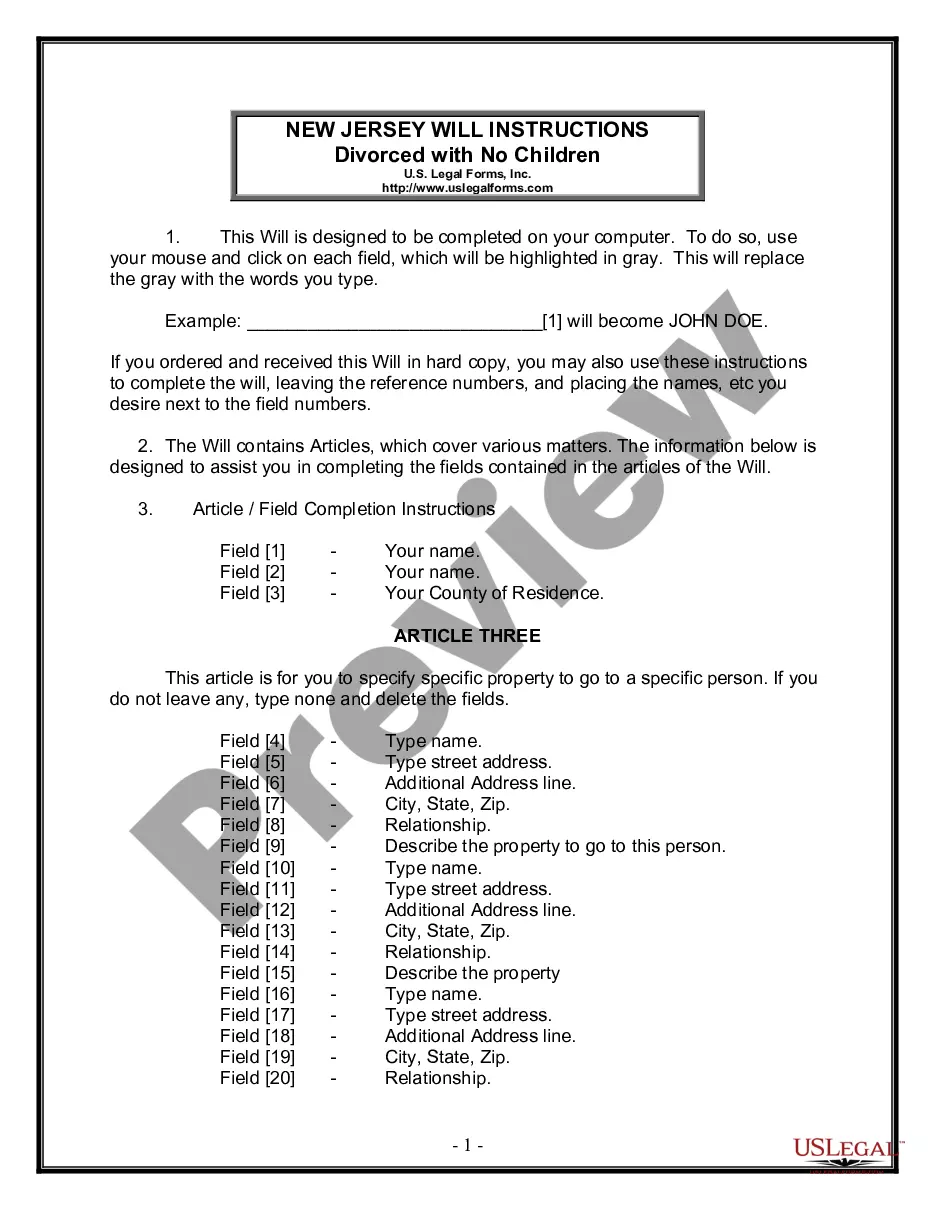
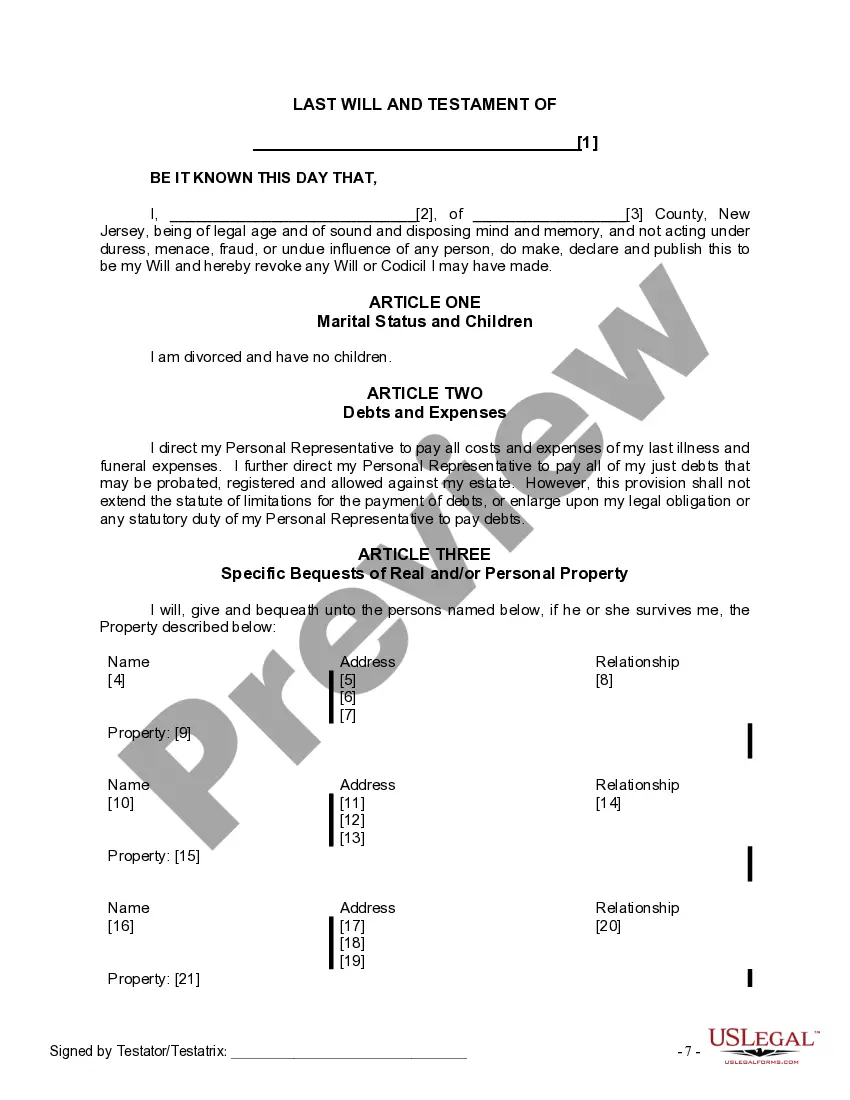
- Article One: Declares your marital status and absence of children.
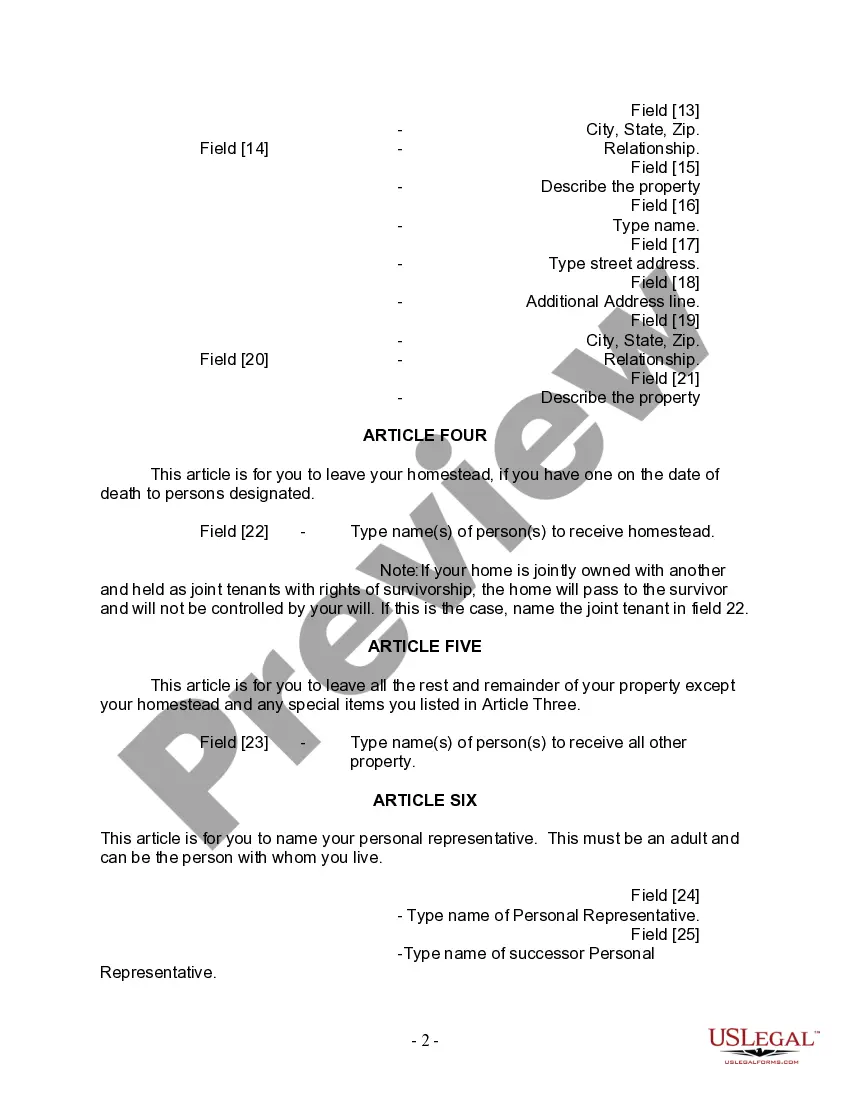
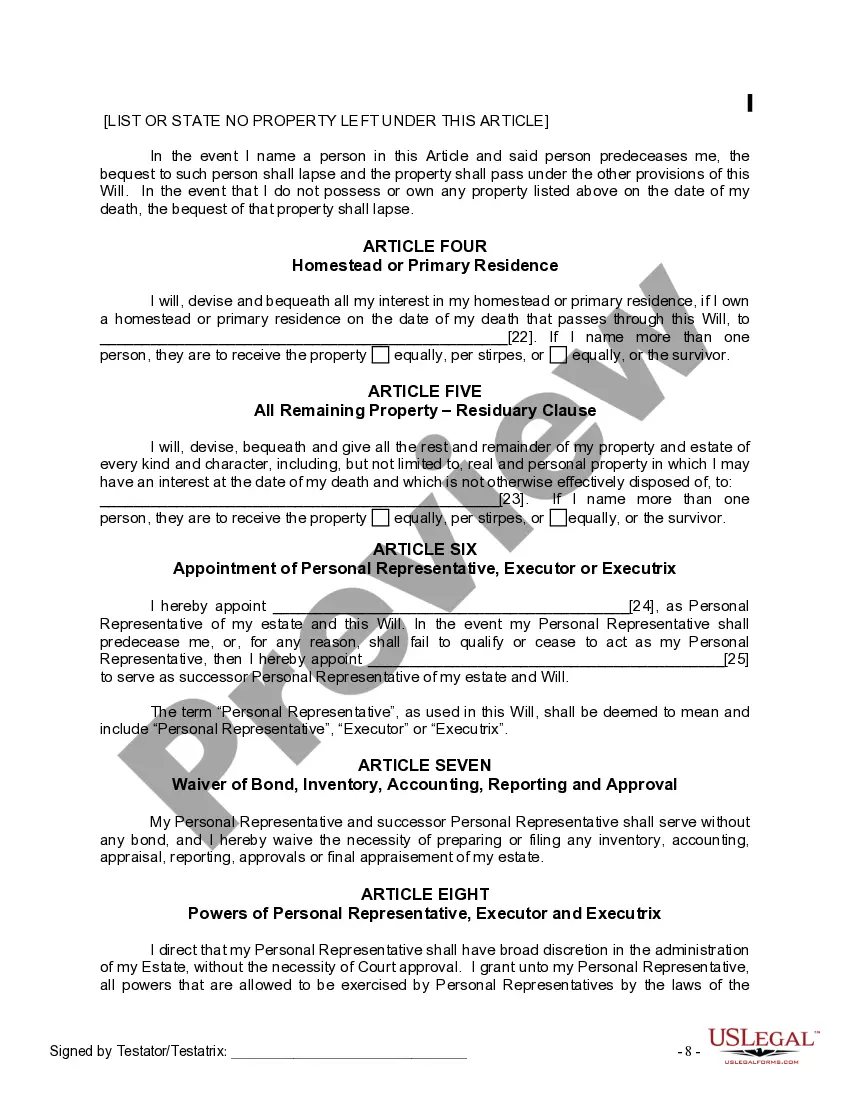
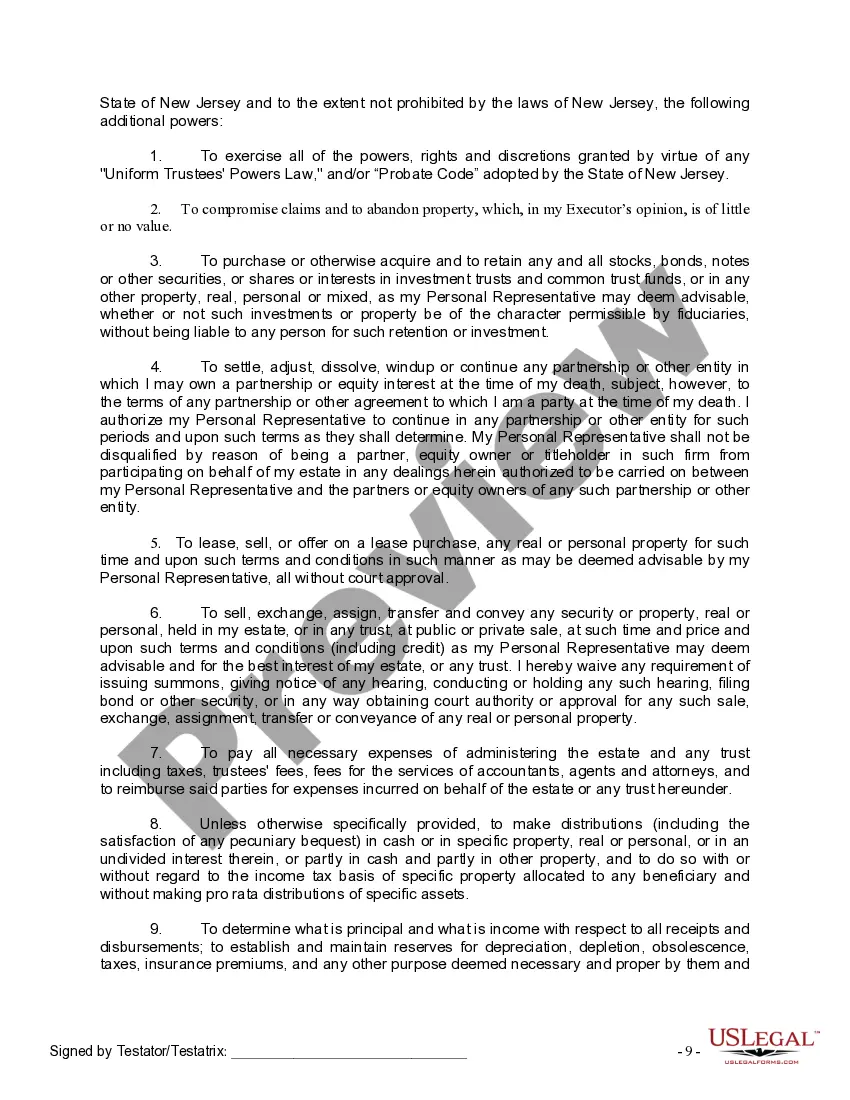
- Article Three: Allows you to specify particular property bequeathed to individuals.
- Article Four: Designates your homestead or primary residence.
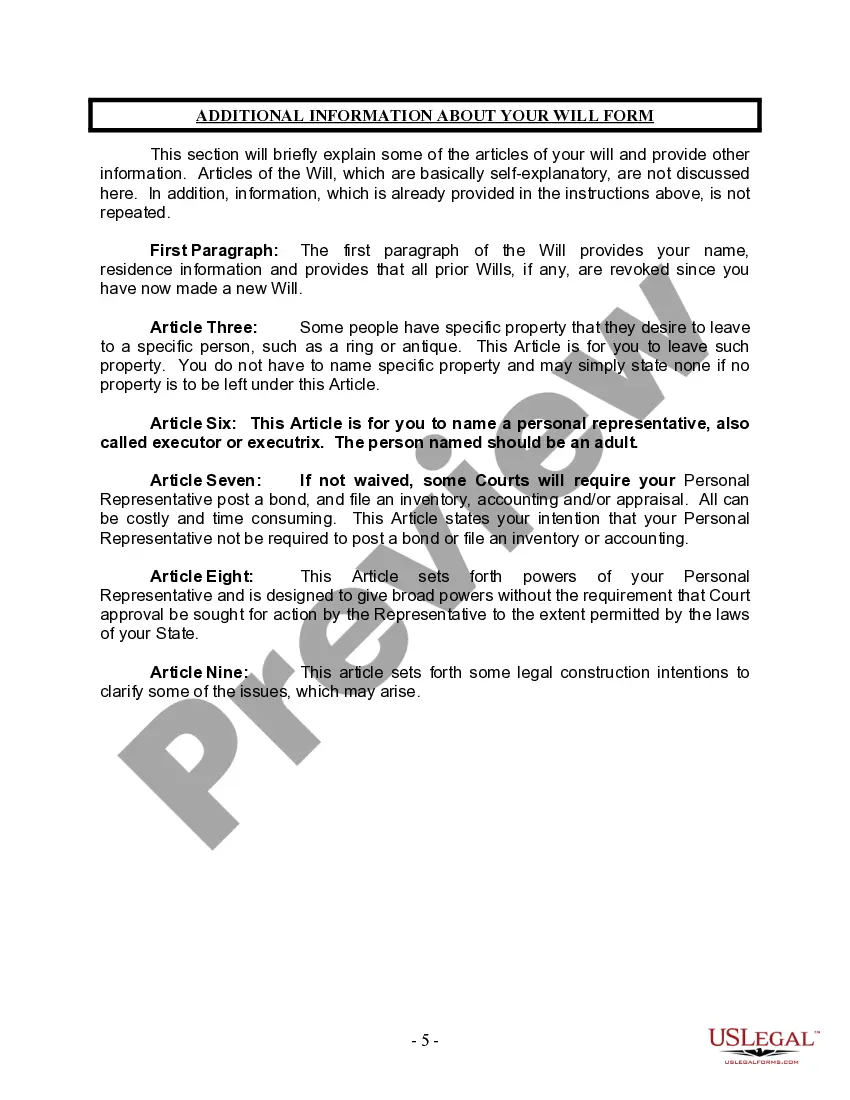
- Article Six: Appoints a personal representative for your estate.
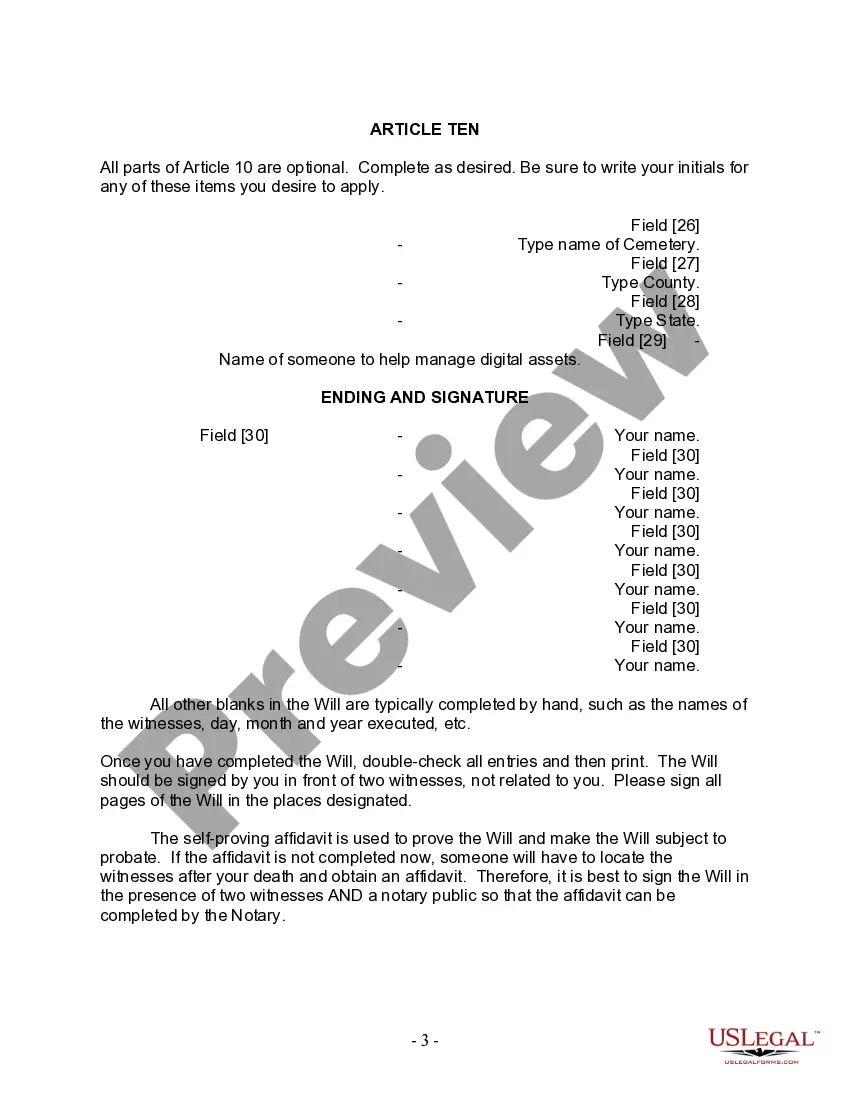
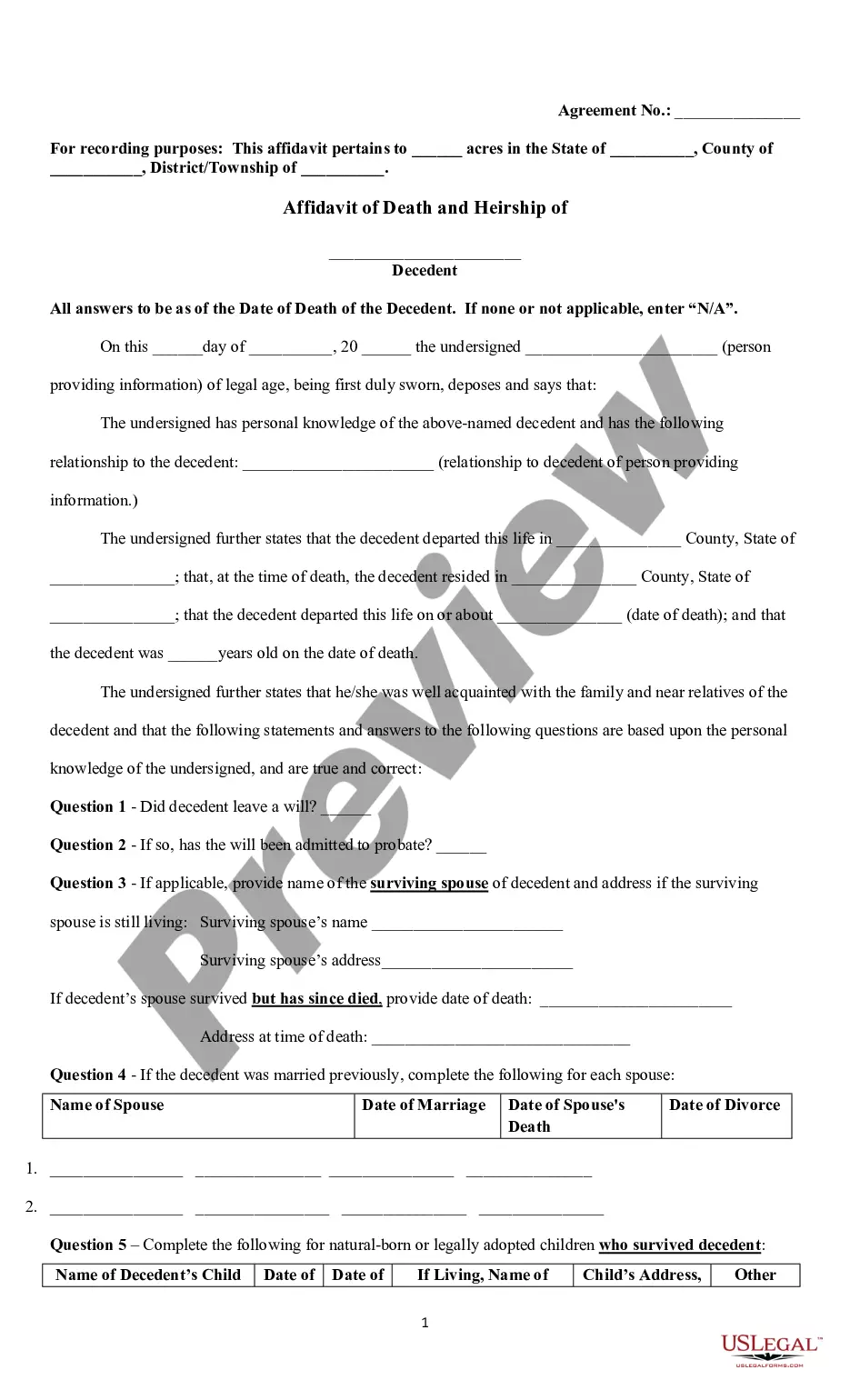
- Self-Proving Affidavit: Facilitates the probate process without requiring additional witness verification.



When to use this document
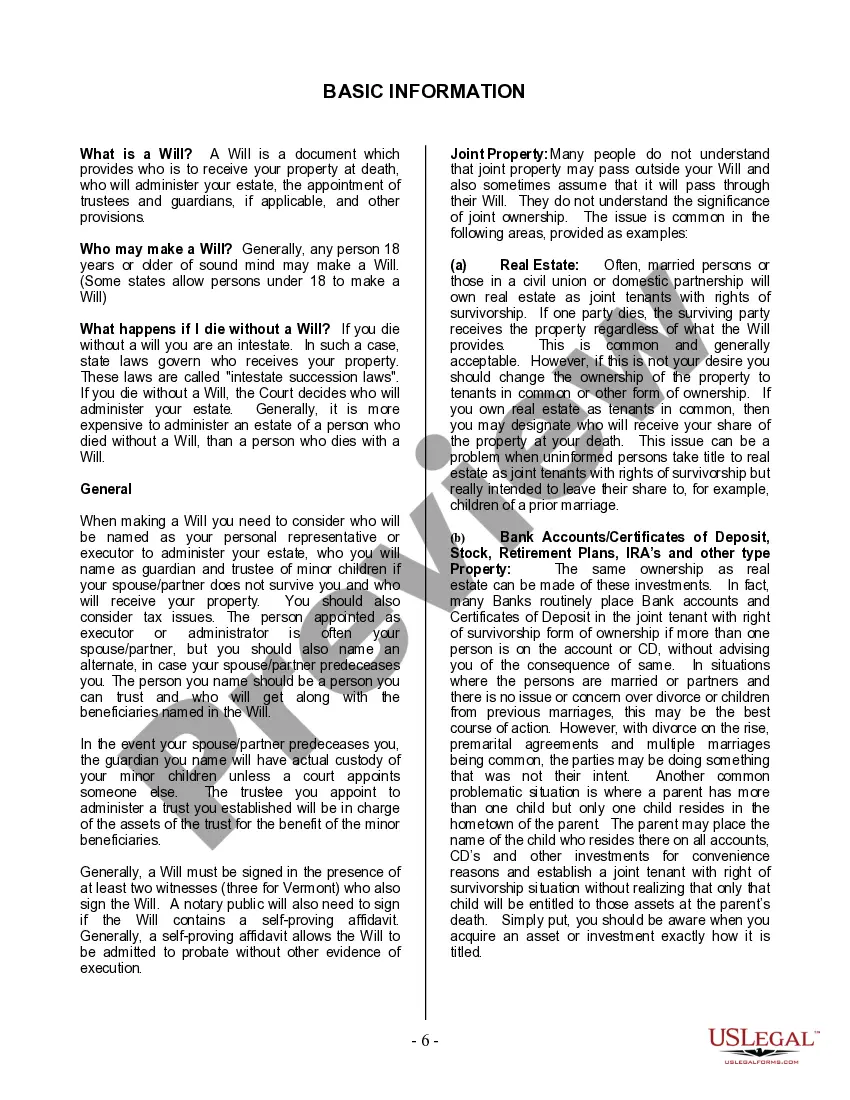
This Will should be used when a divorced individual without children wants to specify how their assets will be distributed upon their death. It is especially useful if you want to ensure that your ex-spouse does not inherit any part of your estate and if you have specific requests regarding personal property or assets.
Who this form is for
- Individuals who are divorced and not remarried.
- Persons without children who wish to arrange their estate.
- Anyone wanting to control the distribution of their assets after death.
How to complete this form
- Begin by entering your full name and county of residence at the designated fields.
- Specify any specific property you wish to bequeath in Article Three, or state "none" if not applicable.
- Designate the individual(s) who will receive your homestead if applicable, in Article Four.
- Appoint a personal representative to manage your estate in Article Six.
- Ensure all required signatures are obtained, including those of two witnesses, and, if applicable, a notary public.
Does this document require notarization?
Yes, this form must be notarized to be legally valid. The self-proving affidavit included allows your Will to be admitted to probate without additional evidence of execution. You can securely utilize online notarization through US Legal Forms, which offers convenient access 24/7 and ensures compliance with legal standards.
Get your form ready online
Our built-in tools help you complete, sign, share, and store your documents in one place.
Make edits, fill in missing information, and update formatting in US Legal Forms—just like you would in MS Word.
Download a copy, print it, send it by email, or mail it via USPS—whatever works best for your next step.
Sign and collect signatures with our SignNow integration. Send to multiple recipients, set reminders, and more. Go Premium to unlock E-Sign.
If this form requires notarization, complete it online through a secure video call—no need to meet a notary in person or wait for an appointment.
We protect your documents and personal data by following strict security and privacy standards.

Make edits, fill in missing information, and update formatting in US Legal Forms—just like you would in MS Word.

Download a copy, print it, send it by email, or mail it via USPS—whatever works best for your next step.

Sign and collect signatures with our SignNow integration. Send to multiple recipients, set reminders, and more. Go Premium to unlock E-Sign.

If this form requires notarization, complete it online through a secure video call—no need to meet a notary in person or wait for an appointment.

We protect your documents and personal data by following strict security and privacy standards.
Mistakes to watch out for
- Failing to have the Will signed by two disinterested witnesses.
- Neglecting to designate a personal representative.
- Not updating the Will after significant life changes, such as a divorce or acquiring new assets.
Benefits of using this form online
- Convenience: Complete the form from home at your own pace.
- Editability: Make changes easily before finalizing your Will.
- Reliability: Access professionally drafted legal documents that meet state requirements.
Legal use & context
- This Will is legally recognized in New Jersey and follows the state's specific guidelines for Wills.
- Failure to properly execute the Will may lead to disputes or unintentional intestacy.
- Using this form helps ensure that your estate is managed according to your wishes, rather than state intestacy laws.
What to keep in mind
- The Last Will and Testament is for divorced individuals with no children.
- Assets distribution is clearly defined, helping avoid complications.
- Notarization is essential for legal validity in New Jersey.
Looking for another form?
Form popularity
FAQ
The Probate process is required by the state of NJ whenever someone dies. It is the government's way of making sure the assets of the deceased pass properly to their decedents. And of course to insure that any taxes or lien's owed to the state or other parties are fully paid.You still have to go through probate.
In New Jersey, the will must be in writing. You must sign your own will, witnessed by two individuals over 18 (You must be at least age 18 as well.)Notarized wills are not required, but they do help speed the process, since a probate court doesn't have to track down the two witnesses.
It must be in writing. Generally, of course, wills are composed on a computer and printed out.The person who made it must have signed and dated it. A will must be signed and dated by the person who made it.Two adult witnesses must have signed it. Witnesses are crucial.
No, in New Jersey, you do not need to notarize your will to make it legal. However, New Jersey allows you to make your will "self-proving" and you'll need to go to a notary if you want to do that. A self-proving will speeds up probate because the court can accept the will without contacting the witnesses who signed it.
Under New Jersey law, a handwritten Will can be valid as a writing intended as a Will if the material portions of the document are in the handwriting of the decedent and signed by the decedent.
What makes a will valid in New Jersey? A person must be at least 18 years old and mentally competent to create a valid will. Generally, this means they understand the purpose of the will and know what they wish to happen to their property. The testator, as well as two witnesses, must sign a typed will.
A New Jersey self-proving affidavit form allows a last will and testament to be recognized by probate court to be self-proved.To make a will self-proved, the testator and the two (2) witnesses must appear before a notary public and sign the affidavit form; the notary public will complete the rest.
No, in New Jersey, you do not need to notarize your will to make it legal. However, New Jersey allows you to make your will "self-proving" and you'll need to go to a notary if you want to do that. A self-proving will speeds up probate because the court can accept the will without contacting the witnesses who signed it.